 Intellect Plus
Ideas & Philosophy
17,867 cards. Each one is a 40-second story with a five-minute read behind it. Page 242 of 298.
Subtopics: Abrahamic religions · Artificial intelligence · Attention · Classic philosophy · Cognitive biases · Consciousness · Cooperation · Cynicism · Decision making · Decision theory · Descartes · Dharmic religions · Dreams · Eastern philosophy · Eastern religions · Epistemology · Ethics · Evidence · Existentialism · Fairness · Famous psychology experiments · Free will · Game theory · Greek mythology · Historians · Identity · Infinity · Justice · Logic · Logical fallacies · Mathematics · Medieval philosophy · Mind · Mythology · Mythology of the ancient world · Other religions · Paradoxes · Philosophers · Philosophers, historians, political and social scientists · Philosophy · Philosophy of mind · Philosophy of science · Political philosophy · Probability · Psychology · Reality · Religion · Religion and spirituality · Religious figures · Self knowledge · Statistics · Stoicism · Strategy · Taoism · Thought experiments · Trivia & curiosities · Truth · Utopias & ideal worlds · Wellbeing · World religions · Writers
 Is the modern 'offence culture' a crisis or a social necessity?From 'cancel culture' to 'wokeness,' our era is defined by the friction of conflicting values. When we feel offended, it isn't just a personal slight; it is a psychological reacti…
 The hidden gap between intelligence and academic achievementA learning disorder is not a reflection of intellect. In many cases, people with these challenges possess average or even above-average intelligence, yet face a significant discon…
 How do perceptions of race and hair influence the experiences of young people?This short film explores the intersection of race, identity, and personal appearance. It examines how societal perceptions of hair can shape the lived realities of youth, offering…
 A religious movement or a multinational corporate conglomerate?While many see a church, the internal structure of Scientology reveals a complex web of interconnected corporations. From 1980s legal maneuvers to a sophisticated franchise model,…
 A dynastic feud magnified into a titanic epic of dharmaThe Kurukshetra War is more than a historical battle; it is the stage for the Bhagavad Gita. While scholars debate whether it was a minor skirmish or a mythic epoch-ender, the nar…
 A chance discovery in the Egyptian desert revealed a lost library of ancient wisdom.In 1945, an Egyptian farmer unearthed a sealed jar containing over fifty ancient texts. This collection, known as the Nag Hammadi library, challenged long-held assumptions about e…
 Is the Book of Wisdom a bridge between ancient Greek philosophy and Jewish tradition?Written in Alexandria around the turn of the era, the Book of Wisdom blends Hellenistic thought with biblical themes. It presents wisdom as a divine gift, personified as a female …
 Is the Book of Deuteronomy a divine revelation or a political reform document?Deuteronomy is the final book of the Torah, traditionally viewed as the words of Moses. Yet, modern scholars suggest it was a layered composition, evolving from a 7th-century BCE …
 The Great Thirteenth: How a Tibetan Leader Tried to Modernize a Hermit KingdomThubten Gyatso, the 13th Dalai Lama, navigated the collapse of empires and the rise of modern geopolitics. From fleeing Chinese invasions to introducing electricity and telephones…
 How Nietzsche’s sister forged his legacy to fuel a dangerous political mythElisabeth Förster-Nietzsche was more than a guardian; she was a master manipulator of her brother’s philosophy. By editing his manuscripts to align with her own nationalist and an…
 Is the world we perceive just a mental projection of our own internal architecture?Immanuel Kant argued that space and time are not external realities, but internal filters through which we must process the world. This radical shift suggests that we never experi…
 Strategy is not just a plan; it is the art of shaping an uncertain future.We often mistake strategy for a rigid roadmap, but it is actually a dynamic process of navigating uncertainty. Whether in military conflict or corporate competition, strategy is t…
 Why three complex biological systems are dedicated to processing your wasteBiology requires constant resource management. This episode examines the respiratory, digestive, and urinary systems, explaining how animals acquire resources and eliminate waste.…
 Does the shape of your champagne glass actually change how it tastes?Champagne flutes are the standard for celebrations, but science suggests their design might not be ideal. This video explores whether glass geometry influences your drinking exper…
 When the universe first became visible to itself, did humans matter?Dr. Katie Mack joins John Green to explore the cosmic epoch when the first stars ignited. This episode examines the moment the universe began to illuminate, while questioning our …
 Why our maps put the sunrise on the right sideThe word 'east' is a linguistic fossil of human observation. It encodes the movement of the sun into our very vocabulary, linking the cardinal direction to the dawn. But while it …
- Why the direction of the midday sun defines our understanding of the southSouth is more than a compass point. It is a linguistic relic of the sun's position, a navigational bearing of 180 degrees, and a loaded term for economic disparity. From the ancie…
 How a three-billion-letter code directs trillions of cellsDiscover the biological blueprint that powers your body. This video explores the intricate structure of DNA and the essential process of replication that allows your genetic instr…
 How scientists decode the hidden logic behind animal behaviorWhy do animals act the way they do? This video explores the scientific frameworks used to investigate the mechanics of animal decision-making and movement.
 Your body is a fortress protected by an Avengers-style biological defense system.Microbes and viruses constantly threaten our health, but animals possess a sophisticated, multi-layered immune system. This video explores the mechanisms that keep us safe, from t…
 Why do we value certain artworks enough to preserve them in museums?This video explores how we determine the worth of art beyond its monetary price tag. It examines the complex interplay of culture, history, society, and storytelling that shapes o…
 How the science of life shapes your everyday existenceIn this series finale, Dr. Sammy addresses viewer questions to demonstrate how biological principles are woven into the fabric of our daily lives and help us solve real-world prob…
 Is the concept of a perfect society a practical tool or a useless dream?Explore whether utopias are merely impractical daydreams or essential blueprints for navigating our political future. This episode examines various visions of the ideal world and …
 Must science and religion always be enemies, or can they coexist peacefully?This video examines the historical tension between scientific inquiry and religious belief. It moves beyond the common narrative of perpetual conflict to explore alternative frame…
 Is the lack of female action stars a matter of economics or bias?Hollywood often argues that films led by women fail to find an audience. This video examines whether that claim holds up against the reality of box office data.
 Can a machine really tell if you are lying? The science of polygraphs.Polygraph machines, commonly called lie detectors, monitor physiological responses to determine truthfulness. This video explores the mechanics behind these devices, explaining ho…
 Is the insanity defense as common in real courtrooms as it is in fiction?The insanity defense is a frequent trope in legal dramas, but its application in actual courtrooms is far more nuanced. This video clarifies the legal definition of insanity and d…
 How do spiders weave such diverse silks? The secret lies in their DNA.Dr. Cheryl Hayashi explores the biological blueprints behind spider silk. By analyzing gene sequences, she reveals how these arachnids evolved the ability to produce a vast array …
 Is critical geography a tool for social justice or just a way to fix maps?Today, critical geography is a radical, politically charged field aiming to dismantle systems of oppression. Yet, the term originally meant something entirely different: a technic…
 Why the elusive concept of genius remains scientifically undefined and culturally misunderstoodGenius is often romanticized as a rare, innate spark, yet science struggles to define it precisely. While high intelligence is a prerequisite, it is not sufficient. True genius re…
 Is emotional intelligence a genuine cognitive ability or just a popular management theory?Emotional intelligence promises to unlock leadership potential, yet it remains a battleground between rigorous science and pop psychology. While proponents argue it is a measurabl…
 Do the Darwin Awards actually track human evolution or just celebrate spectacular human stupidity?The Darwin Awards honor individuals who supposedly improve the human gene pool by removing themselves through extraordinarily idiotic actions. While these stories serve as dark co…
- Why Martin Heidegger’s 1927 Masterpiece Still Challenges Our Understanding of Being HumanMartin Heidegger’s Being and Time remains a towering, controversial pillar of existentialism. By rejecting the idea of humans as mere spectators of the world, Heidegger introduced…
 Is the Bible entirely free from error, or does it contain human imperfections?Biblical inerrancy is the theological claim that the original scriptures are completely free of error. While some traditions treat this as an absolute requirement for faith, other…
 Is the universe a single, living creature endowed with soul and reason?Ancient thinkers imagined the cosmos not as a cold machine, but as a living organism animated by a world soul. From Plato to Renaissance visionaries, this anima mundi connected al…
 Why the perfect society is literally a place that cannot existThe term utopia, coined by Sir Thomas More in 1516, is a linguistic trap. Derived from Greek, it means both good place and no place. This inherent contradiction defines the concep…
- How do verbs know which words belong to them? Meet the theta role.Every sentence is a puzzle of participants. To make sense of who does what, linguists use theta roles: formal devices that dictate how many and what type of arguments a verb requi…
 Is spoken language truly the foundation of human communication or a secondary cultural invention?We often assume writing is the pinnacle of language, but linguists argue speech is our only innate capability. While writing is a deliberate cultural invention, spoken language—wh…
 Why the present tense is rarely just about the presentWe often think of the present tense as a marker for 'now,' but grammar is far more slippery. From narrating history to scheduling tomorrow's trains, the present tense frequently e…
 Does human nature inevitably descend into chaos when stripped of adult authority and order?William Golding’s 1954 debut novel, Lord of the Flies, explores the fragility of civilization through stranded British schoolboys. While the story is a classic parable of inherent…
- Why the past tense is rarely just about the pastGrammar is rarely as simple as yesterday versus today. While we use the past tense to anchor events in time, many languages use these forms to express hypothetical desires, ongoin…
 Is the Great American Novel a literary masterpiece or just a persistent national myth?Coined in 1868, the Great American Novel remains an elusive target for writers. While critics often dismiss it as an impossible, cliché-ridden fantasy, the pursuit of this holy gr…
 Why the epistolary novel uses letters to create a world more real than fiction.An epistolary novel is built from letters, diaries, and documents rather than a traditional narrator. By placing these texts directly into the lives of characters, authors create …
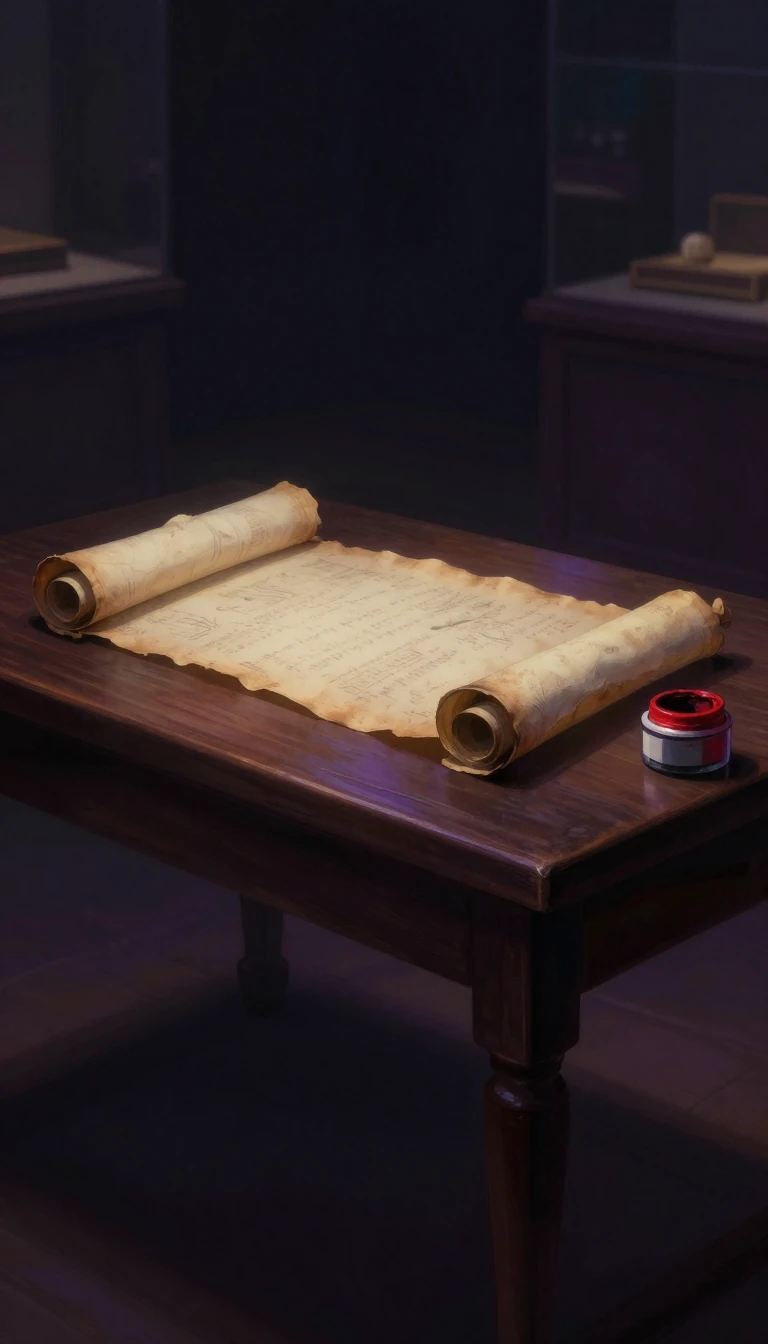 Why some books require more than just reading to make sense of themMost literature asks only for your eyes and the occasional turn of a page. But ergodic literature demands nontrivial effort, forcing you to navigate, configure, or even build the …
- Why the grammatical object is far more complex than a simple sentence targetIn English, we learn that objects are just the things receiving an action. But linguists know better. Across the world, languages treat objects in wildly different ways, from erga…
 How Anna Freud transformed child psychology by shifting the focus to the egoWhile her father Sigmund mapped the unconscious, Anna Freud pioneered the study of the ego and its defense mechanisms. By shifting the clinical focus toward the developmental line…
 Why the World Trade Center was designed as two towers instead of oneWhen architect Minoru Yamasaki was asked why he chose to build two 110-story skyscrapers rather than a single 220-story monolith, he offered a wry explanation: he did not want to …
 Why Stanislavski’s System is not just 'Method Acting' but a laboratory for human truthOften confused with the American Method, Stanislavski’s system is a holistic, psychophysical approach to performance. It treats the actor’s mind and body as a single continuum, us…
- Why your favorite intensifiers might be undermining your credibility and persuasive powerIntensifiers like very, really, or super are linguistic fillers that add emotional weight rather than factual substance. While they aim to emphasize a point, they often signal ins…
 Grammatical mood is the hidden architecture of how we express our attitude toward reality.Grammatical mood is not about your emotional state, but a linguistic feature used to signal modality. It defines whether a verb expresses a fact, a command, a wish, or a hypotheti…
- Is language a learned habit or an innate human capacity hardwired into our minds?Noam Chomsky revolutionized linguistics by arguing that language is not merely a conditioned response to stimuli, but a uniquely human, biologically based cognitive capacity. By p…
- Are languages living organisms that compete for survival, or just tools for human thought?Evolutionary linguistics treats language as a biological phenomenon, comparing words to species struggling for life. While some researchers argue grammar is an innate, crystallize…
 Why saying something is more unique is technically illogical but linguistically commonWe use degrees of comparison to rank qualities, but language rules often clash with reality. While grammar books insist that absolute terms like unique or perfect cannot be graded…
 Why you cannot understand a single word without the frame surrounding itContext is not just background noise; it is the essential architecture of meaning. Whether in linguistics, sociology, or neuroscience, your brain relies on surrounding cues to int…
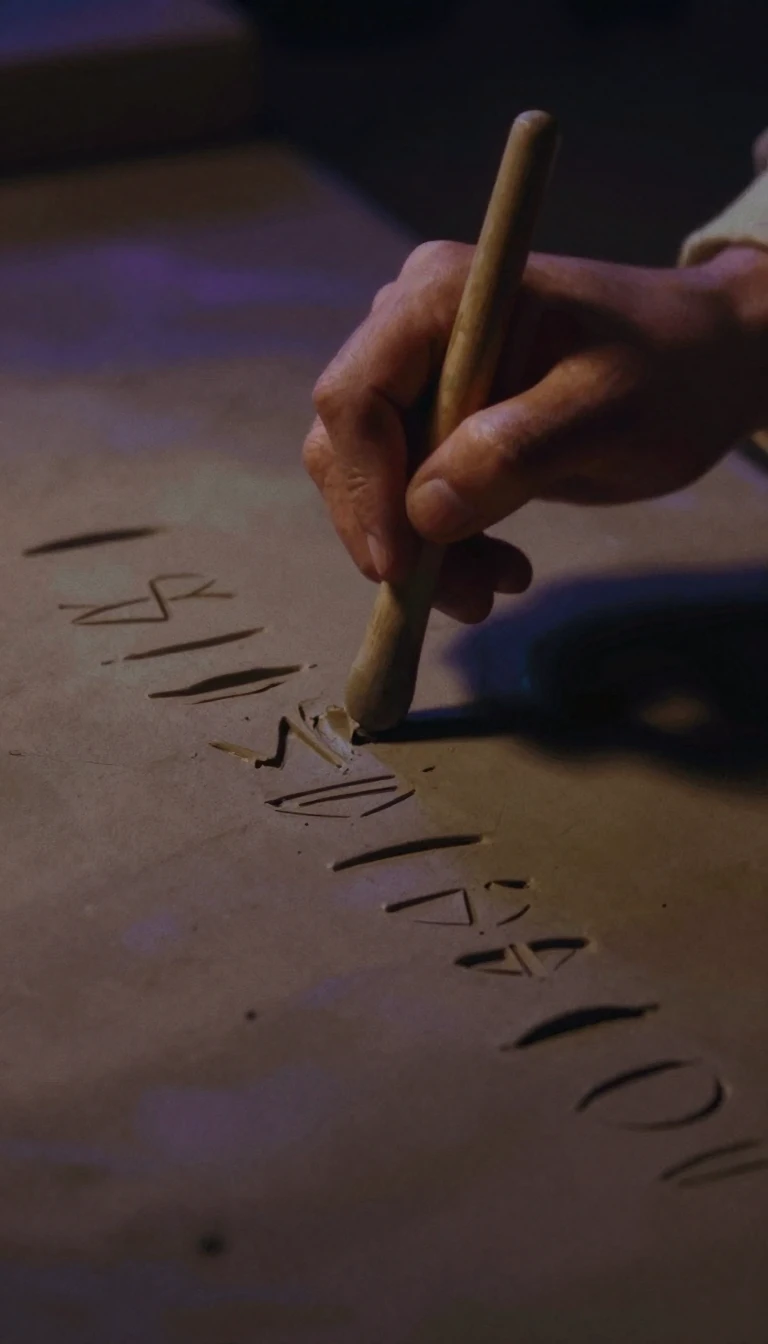 Is language a separate mental module, or just a byproduct of our physical bodies?Cognitive linguistics challenges the idea that language is a unique, innate faculty. Instead, it argues that our speech emerges from general cognitive abilities like categorizatio…
- Why the most efficient way to communicate is actually to be unclearWe often view ambiguity as a failure of clarity, but it is actually a hallmark of linguistic efficiency. By avoiding redundant information, languages rely on context and shared me…
 Is consumerism a tool for economic freedom or a trap of endless, wasteful materialism?Consumerism is a shapeshifting concept. To some, it represents the ultimate power of the buyer to dictate the economy. To others, it is a destructive force of mindless waste and s…
 Is the traditional ideal of journalistic objectivity actually a practical or possible standard?Advocacy journalism openly rejects the pursuit of a value-free viewpoint, arguing that all reporting carries some degree of implicit bias. By embracing explicit social or politica…
 Why your brain thinks a losing streak is actually a setup for a winThe gambler's fallacy is the persistent, incorrect belief that independent random events must balance out. If a coin lands on heads five times, you might feel tails is due. In rea…
 Why the greatest thinkers in history walked while they talkedAristotle’s followers were known as Peripatetics, named for the 'peripatos'—the covered walkways of the Lyceum. Unlike modern classrooms, these were informal spaces where students…