 Intellect Plus
Ideas & Philosophy
17,867 cards. Each one is a 40-second story with a five-minute read behind it. Page 244 of 298.
Subtopics: Abrahamic religions · Artificial intelligence · Attention · Classic philosophy · Cognitive biases · Consciousness · Cooperation · Cynicism · Decision making · Decision theory · Descartes · Dharmic religions · Dreams · Eastern philosophy · Eastern religions · Epistemology · Ethics · Evidence · Existentialism · Fairness · Famous psychology experiments · Free will · Game theory · Greek mythology · Historians · Identity · Infinity · Justice · Logic · Logical fallacies · Mathematics · Medieval philosophy · Mind · Mythology · Mythology of the ancient world · Other religions · Paradoxes · Philosophers · Philosophers, historians, political and social scientists · Philosophy · Philosophy of mind · Philosophy of science · Political philosophy · Probability · Psychology · Reality · Religion · Religion and spirituality · Religious figures · Self knowledge · Statistics · Stoicism · Strategy · Taoism · Thought experiments · Trivia & curiosities · Truth · Utopias & ideal worlds · Wellbeing · World religions · Writers
 The famous Pandora's box was actually a large storage jarWe often speak of opening a Pandora's box to describe unforeseen troubles. Yet, the original Greek myth never featured a box at all. This linguistic error transformed a simple sto…
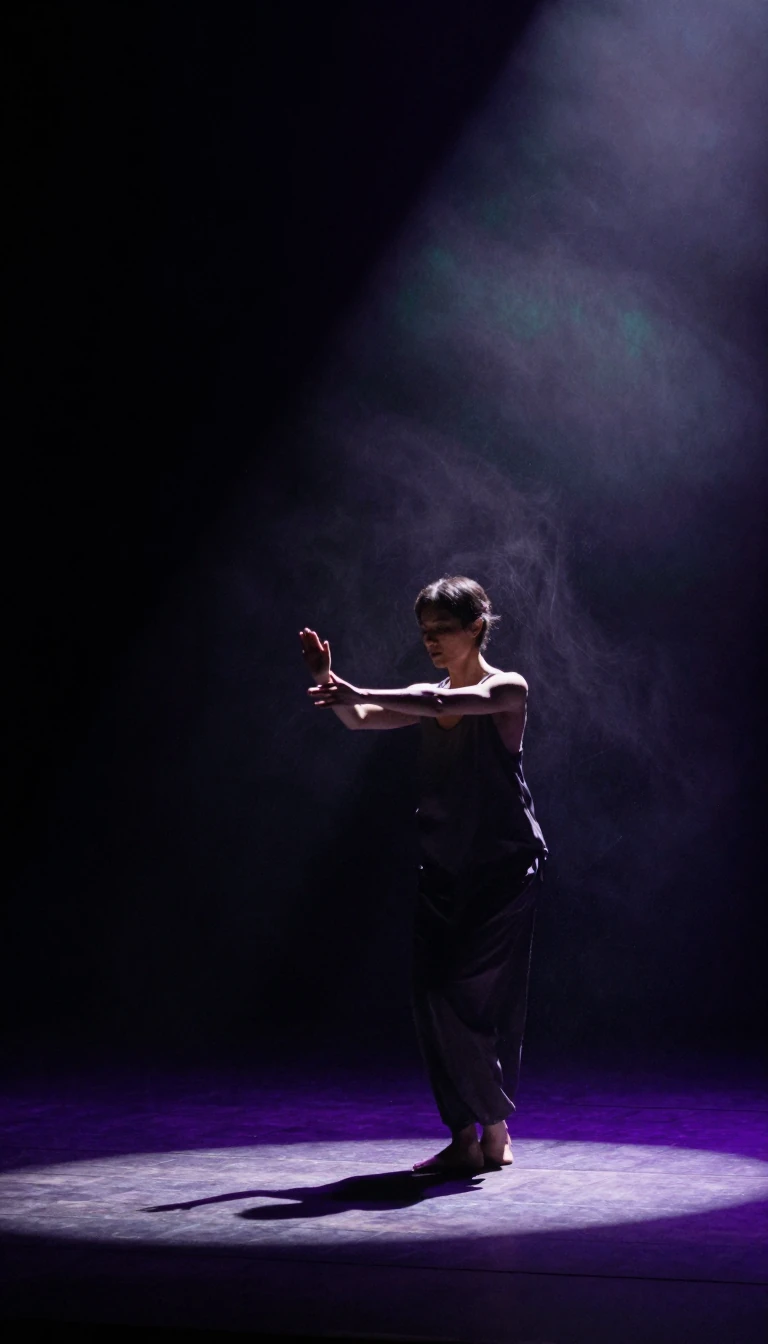 Method acting aims to replace divine inspiration with a systematic, repeatable psychological process.For centuries, great acting was dismissed as an intuitive, mysterious gift. Lee Strasberg changed this by codifying a rigorous training system that forces actors to relive persona…
 Ferdinand Buisson: The philosopher who defined secularism and championed peace in post-war EuropeFerdinand Buisson was a pivotal intellectual who shaped the French education system and coined the term laïcité. Beyond his administrative influence, he was a tireless advocate fo…
 How a French aristocrat’s obsession with bloodlines fueled modern racial pseudoscienceArthur de Gobineau, a 19th-century diplomat, transformed personal elitism into a global theory of racial determinism. By arguing that human history was driven by the biological su…
 Why Audre Lorde argued that the master's tools cannot dismantle the master's houseAudre Lorde, a self-described Black, lesbian, feminist, socialist, mother, and warrior poet, transformed her personal experiences of marginalization into a radical philosophy of l…
 Did the founder of Academic Skepticism actually believe that he knew absolutely nothing?Arcesilaus, the sixth head of Plato's Academy, famously claimed he knew nothing—not even his own ignorance. By rejecting the Stoic belief that reality could be comprehended with c…
 Was the Titan Pallas the true architect of victory and raw, unyielding power?In the complex tapestry of Greek mythology, Pallas stands as a shadowy yet foundational figure. Often identified as the Titan of warcraft and spring campaigns, he fathered the ver…
 Orphne: The Shadowy Nymph Who Embodied the Darkest Depths of the UnderworldIn the ancient Greek imagination, darkness was not merely an absence of light but a living, breathing entity. Orphne, a nymph dwelling within the subterranean realms of Hades, ser…
 The Ourea are not just mountains, but the living, breathing children of Mother Earth.In the vast tapestry of Greek mythology, the Ourea stand apart as primordial entities. Born directly from Gaia without a father, these ancient beings represent the rugged, majesti…
 Why the Greek goddess of poverty is the secret architect of human desireIn Greek mythology, Penia is the personification of need. Often dismissed as a mere beggar, she plays a pivotal role in the cosmos. By seducing the god of resourcefulness, she bir…
 How a nineteenth-century mathematician accidentally invented the blueprint for modern economic analysisAntoine Augustin Cournot was a French polymath who applied rigorous mathematical formulas to economic behavior. Though his groundbreaking work on monopolies and market competition…
 How a French educator turned parlor tricks into a systematic philosophy of the afterlifeBefore he became Allan Kardec, Hippolyte Léon Denizard Rivail was a respected academic and colleague of the famed pedagogue Pestalozzi. In his fifties, he encountered the popular …
 Anne Bradstreet was the first published poet in England's North American colonies.Born into a wealthy Puritan family, Anne Bradstreet navigated the rigid gender roles of 17th-century Massachusetts to become a celebrated literary voice. While she wrote primarily…
 The river god who became a disguise for a god of the seaIn ancient Greek mythology, Enipeus was a river deity associated with a waterway in Thessaly. While he was the object of affection for the mortal woman Tyro, his identity was famo…
 How Did a Religious Minority Forge a Modern State Concept?The trajectory of Shia Islamism reveals a profound shift in religious thought. What began as a niche theological concern evolved into a potent political force, fundamentally alter…
 How one man fooled the French literary establishment by winning their most prestigious prize twice.Romain Gary was a war hero, diplomat, and prolific novelist, but his greatest performance was his own identity. By inventing the pseudonym Émile Ajar, he became the only author to…
 From struggling child actor to Hollywood heavyweight: the unlikely evolution of Bryan CranstonBorn to parents in show business, Bryan Cranston initially shunned acting, only to find his calling after a cross-country motorcycle trip. He spent decades in minor roles before h…
 Why do authors pretend to be someone else, and does it matter?Pseudepigrapha are works falsely attributed to a figure from the past. While often dismissed as forgery, this practice spans centuries, from ancient religious texts to modern lite…
 The Second Temple era was not a monolith but a crucible of competing identities.Far from a uniform religious practice, the Second Temple period was a volatile era of sectarian rivalry, Hellenistic tension, and radical theological innovation. From the rise of …
 How to produce music by learning how not to produceRick Rubin is famous for a 'stripped-down' sound that eliminates unnecessary layers. While some critics blame him for the loudness war, many legendary artists credit his minimalis…
 Is a Bachelor of Science degree strictly for scientists, or is it a label?The Bachelor of Science, or BSc, is a staple of UK higher education, typically signaling a focus on data, technology, and analytical rigor. Yet, the distinction between a BSc and …
 Is Ahriman a god of evil or merely a destructive, non-existent shadow?In Zoroastrianism, Ahriman is the ultimate adversary. Yet, scholars debate his true nature: is he a co-equal cosmic power, a twin brother to the creator, or a non-entity whose inf…
 The first antipope was a brilliant, embittered scholar who died in a Sardinian mine.Hippolytus of Rome was a leading Christian intellectual of the third century, yet he spent years as a rival bishop to the papacy. A fierce conservative, he broke with Rome over th…
 The Sabians are a religious mystery that defined the early Islamic world's legal landscapeMentioned in the Quran as People of the Book, the Sabians remain an enigma. Because the term offered legal protection under Muslim rule, various groups—from star-worshipping pagan…
 The Vajra: A Ritual Tool Symbolizing Both the Irresistible Thunderbolt and Indestructible DiamondThe vajra is a legendary ritual implement used across Hinduism, Buddhism, and Jainism. Representing both the thunderbolt’s force and the diamond’s permanence, this metal scepter s…
 Can chanting a single phrase transform both your inner life and the entire nation?Thirteenth-century Japanese prophet Nichiren argued that society’s turmoil stemmed from spiritual error. He proposed a radical solution: devotion to the Lotus Sutra through a spec…
 Why the longest wisdom book of antiquity was excluded from the Hebrew BibleWritten by a scribe in the Second Temple period, the Book of Sirach is a unique masterpiece of ethical teaching. Though it contains the oldest known list of Jewish canonical texts…
 Is history a series of distinct divine eras? The framework of dispensationalism explained.Dispensationalism views human history as a sequence of distinct ages where God interacts with humanity through specific, changing rules. This theological framework, which emphasiz…
 The Old Catholic Church: A Schism Born from Rejection of Papal InfallibilityEmerging from the 1870 First Vatican Council, the Old Catholic movement sought to preserve the traditions of the undivided church while rejecting the newly defined dogma of papal …
 An orisha is not merely a god, but a complex link between people and power.In Yoruba tradition, an orisha is a multidimensional unity where divine command meets natural forces and ancestral memory. Far from simple anthropomorphic deities, these spirits g…
 Are we biological robots created by extraterrestrial scientists to serve as their genetic experiment?Raëlism, a secular UFO religion, claims humanity was engineered by an advanced extraterrestrial species called the Elohim. Founded in 1974 by Claude Vorilhon, the movement views h…
 Why the world's most famous economist predicted capitalism would eventually destroy itself from withinJoseph Schumpeter argued that capitalism is an evolutionary engine of creative destruction. While he championed the entrepreneur as the hero of economic progress, he paradoxically…
- The Yoga Sutras are a patchwork of ancient wisdom, not a single unified manual.Often viewed as the definitive guide to classical yoga, the Yoga Sutras of Patanjali are actually a complex compilation of diverse philosophical strands. Far from a singular, cohe…
 Is giftedness a measure of success or an inherent, lifelong capacity for learning?Giftedness is often misunderstood as a guarantee of future achievement. In reality, it is a persistent, lifelong trait defined by an aptitude for learning that begins at birth. Th…
 Your brain is not lazy when you rest; it is actually working quite hard.For decades, scientists assumed the brain went quiet during downtime. We now know the Default Mode Network (DMN) hums with activity whenever you are not focused on an external tas…
 Plato’s Academy was not a school, but a sacred grove for intellectual inquiryLong before it became the West's first institution of higher education, the Academy was a site dedicated to Athena. It lacked a formal curriculum, fees, or even a clear distinctio…
 Is existence inherently flawed, or is the human experience simply defined by endless striving?Philosophical pessimism suggests that life carries a negative value, arguing that suffering is not merely a byproduct of existence but its fundamental core. By examining the mecha…
 If your future is already written, is there any point in trying to change it?Fatalism is the belief that human events are inevitable and outside our control. Whether through divine decree, logical necessity, or cosmic destiny, this doctrine suggests that o…
- Pan-Islamism seeks to unite the global Muslim community under a single political entity.Far from a modern invention, Pan-Islamism is a political movement that prioritizes religious allegiance over ethnicity or national borders. By advocating for a unified Islamic sta…
 A fatwa is not a binding decree, but a legal opinion from a scholar.Often misunderstood as a mandatory edict, a fatwa is historically a nonbinding response to a specific question about Islamic law. Issued by a qualified jurist known as a mufti, th…
 Is morality good because God loves it, or does God love it because it is good?This ancient question, posed by Socrates in Plato's Euthyphro, forces a choice between two uncomfortable extremes. Either morality is independent of God, limiting his sovereignty,…
- How a stolen bucket and a fog-shrouded miracle defined a northern Italian powerhouse.Modena is more than a hub for luxury sports cars like Ferrari and Maserati. From its origins as a Roman military outpost to its survival through medieval sieges and floods, the ci…
 Why concrete and steel are the perfect, inseparable partners for modern structural engineeringConcrete is incredibly strong under compression but brittle and weak when pulled. Steel, conversely, excels at resisting tension. By embedding steel within concrete, engineers cre…
 Why your conscience might be a self-destructive illness born from ancient social controlFriedrich Nietzsche’s 1887 masterpiece, On the Genealogy of Morality, challenges the origins of our most sacred values. He argues that concepts like guilt and conscience are not d…
 Will cultural identities, rather than nations or ideologies, define the future of global conflict?In 1996, political scientist Samuel P. Huntington proposed that the post-Cold War world would be defined by clashes between civilizations. He argued that as global interactions in…
 How a radical philosopher went from academic theory to the dark side of the internetNick Land, once a celebrated academic at the University of Warwick, pioneered accelerationism—the belief that capitalism should be pushed to its limits to trigger a technological …
- Why We Pretend to See the Invisible: The Psychology of Collective IllusionsHans Christian Andersen’s 1837 fairy tale about a vain emperor and his invisible clothes is more than a children’s story. It is a profound exploration of social pressure, where in…
 Why your brain prefers the most likely story over the absolute truthAbductive reasoning is the mental shortcut we use to navigate uncertainty. By favoring the simplest explanation for what we observe, our minds quickly turn raw data into a coheren…
 Are we living in a computer simulation created by a posthuman civilization?The simulation hypothesis suggests our reality is a construct. In 2003, philosopher Nick Bostrom proposed a trilemma: either advanced civilizations never reach the posthuman stage…
 Why we blame people for their actions while ignoring the situation they faceWe often judge others by their character while excusing ourselves with circumstances. This tendency, known as the fundamental attribution error, suggests we are wired to see perso…
- Could you be a disembodied brain floating in a vat of liquid right now?The brain-in-a-vat scenario suggests your entire reality might be a computer simulation feeding electrical impulses to your neurons. If you cannot distinguish this from physical l…
 Can a civilization survive when its suns move in a chaotic, unpredictable dance?In Liu Cixin’s hard science fiction masterpiece, an alien race faces extinction due to the erratic orbital mechanics of their three-star system. Their desperate search for a new h…
 Beyond the mob: how Michael Imperioli built a career as a creative polymathMichael Imperioli is best known for his iconic portrayal of Christopher Moltisanti, but his artistic life extends far beyond the screen. From writing screenplays and directing fea…
 How Nintendo conquered its fear of 3D to build a handheld legacyAfter the commercial failure of the Virtual Boy in 1995, Nintendo spent years doubting the viability of 3D gaming. Yet, through persistent research into liquid crystal technology,…
 The National Archives holds over 13 billion pages, yet only a fraction is digitized.The National Archives and Records Administration is the guardian of American history, managing everything from the Declaration of Independence to classified intelligence. While it…
 Were the ten plagues of Egypt a historical reality or literary invention?From blood-red Nile waters to swarms of locusts, the biblical plagues are iconic. While some seek natural explanations like volcanic eruptions, scholars debate whether these disas…
 Can a group reach a decision without resorting to adversarial voting or majority rule?Consensus decision-making prioritizes broad agreement over simple majorities. By shifting the focus from competing preferences to collaborative problem-solving, this process aims …
- How a rejected stage name led David Thewlis to a career of iconic transformationsBorn David Wheeler, the actor adopted his mother's maiden name after discovering his birth name was already registered with the actors' union. This simple administrative hurdle ma…
 The volatile genius of David O. Russell: acclaimed cinema and a history of conflictDavid O. Russell is a celebrated director behind hits like The Fighter and Silver Linings Playbook. Yet, his career is defined by a paradox: he is as famous for his brilliant, awa…
 Why a legendary Shakespearean actor doubts Shakespeare actually wrote his own playsSir Derek Jacobi is a titan of the stage, knighted for his craft and celebrated for his definitive portrayals of Hamlet and Claudius. Yet, behind the accolades lies a provocative …