 Intellect Plus
Art
5,849 cards. Each one is a 40-second story with a five-minute read behind it. Page 75 of 98.
Subtopics: Art crime · Art history · Art museums · Arts: General · Baroque · Calligraphy · Ceramics · Children's literature · Classic literature · Colour · Concepts of fiction and narrative · Conceptual art · Conservation · Craft · Cultural venues · Dada · Detective fiction · Directors, producers and screenwriters · Dye · Entertainers · Expressionism · Fantasy literature · Fictional and legendary characters · Film and television · Filmmakers and theatre directors · Forgery · Fresco · History painting · Illustration · Impressionism · Literature · Medieval art · Michelangelo · Modern art · Mosaics & stained glass · Oil painting · Optics · Painting · Paris salon · Performing arts · Photography · Pigments · Poetry · Poets · Portraiture · Post impressionism · Printmaking · Renaissance · Romanticism · Science fiction literature · Sculpture · Shakespeare · Spanish golden age · Street art · Symbolism · Textiles · Theatre · UK & Ireland: arts · Van gogh · Vermeer · Victorian · Visual artists · Visual arts
 Why conflict defines the enduring legacy of American painter Winslow HomerCurators Stephanie Herdrich and Sylvia Yount lead a virtual tour of the exhibition Winslow Homer: Crosscurrents. This survey examines how the artist's career-long obsession with s…
 Channeling the 15th Century: Recreating the Aesthetic of a Medieval Unicorn HunterCecilia Zhou, Senior Guide at the Harvard Art Museums, demonstrates how to adapt the visual style of hunters depicted in the famous Unicorn Tapestries for a modern makeup look. Th…
 How Edouard Manet reconstructed a political execution through the lens of his own studio.This film explores the creative process behind Edouard Manet's four depictions of the 1867 execution of Emperor Maximilian of Mexico. By imagining the painter's internal monologue…
 Inside the private studio and enduring artistic legacy of painter Philip GustonMusa Guston Mayer offers an intimate look at her father, Philip Guston, reflecting on their personal connection and the stewardship of his artistic body of work. This exploration …
 Nairy Baghramian transforms The Met's facade with abstract, flotsam-inspired sculpturesArtist Nairy Baghramian discusses her first public installation in New York City, Scratching the Back. This conversation explores the creation of four polychrome sculptures design…
 How a contemporary Chinese artist reimagined a legendary icon of the ancient worldArtist Sui Jianguo discusses his unique take on the Discobolus, a classic sculpture of a discus thrower. This conversation with curator Ian Jenkins offers insight into how histori…
- How London's discarded debris creates a masterpiece of light and shadowContemporary artist Xu Bing transforms everyday waste into a towering, ethereal landscape. This video reveals the intricate process behind his five-metre installation at the Briti…
- How stilt-walking carnival sculptures at the British Museum reclaim African ancestry for the futureArtist Zak Ové transforms the tradition of the Moko Jumbie into towering sculptures, bridging African mythology with contemporary defiance. By blending ancestral stories of resist…
 How Betsabeé Romero reinterpreted traditional Day of the Dead rituals at the British Museum.This video captures a conversation about an art installation created for the British Museum's Days of the Dead festival. It offers a unique look at how contemporary Mexican art en…
 A 16th-century boxwood masterpiece that functions as both a devotional tool and a toy.Discover a portable miniature tabernacle from the northern Netherlands. This intricate boxwood microcarving unfolds like a flower to reveal detailed scenes from the life of Jesus …
 Three million years of artistic expression from South Africa in one exhibition.Curators John Giblin, Chris Spring, and Laura Snowling examine the vast creative history of South Africa. This exhibition showcases everything from ancient stone tools to contempo…
- How ancient ochre inspires a modern vision of South African unityKarel Nel’s artwork Potent Fields uses natural earth pigments to bridge deep history and contemporary politics. This video documents the preservation process, showing how curators…
 Why America's greatest artists turned to printmaking to capture a changing nationSince 1960, American artists have used printmaking to experiment with bold aesthetics and new technologies. This video introduces a British Museum exhibition showcasing how creato…
 Why artists use oil and water to create complex, painterly lithographic printsLithography relies on the fundamental chemical repulsion between oil and water to transfer images. This video demonstrates the practical techniques behind the process and explores…
- How artists use acid and smoke to create timeless, intricate etchingsPrintmaking student Peter Wylie demonstrates the traditional craft of etching. This video explores the essential tools and chemical processes that have defined the medium for cent…
 How screenprinting transformed the artistic process for modern masters and contemporary studentsWatch a demonstration of screenprinting techniques and discover how this technical medium shapes artistic practice. This film explores the intersection of traditional printmaking …
 Why is a simple black square considered a masterpiece of modern art?Kazimir Malevich’s 1915 painting, Black Square, remains one of the most controversial works in history. This video explores the origins of Suprematism and why this seemingly simpl…
- Can a herd of handmade wooden tables behave like living creatures?Artist Douglas Repetto invited museum visitors to construct small, walking tables from scrap wood and mechanical components. This project culminated in a public performance where …
- Can art rewrite the weight of history by turning the past upside down?Artist Mary Sibande uses sculpture to interrogate South Africa’s complex heritage. By casting her own body into two distinct figures, she creates a dialogue between the domestic l…
- How Maggi Hambling uses drawing to keep the deceased alive in her artArtist Maggi Hambling discusses her retrospective at the British Museum, which highlights drawing as the core of her practice. This video explores how she captures life through he…
 How Cold War aircraft and wartime bombers shaped a sculptor's abstract visionSculptor Richard Deacon explores how his lifelong fascination with aviation and the tactile construction of historic aircraft informs his large-scale abstract work. This look insi…
 Why Taiwan's streets and the Tainan Art Museum are essential viewing for art lovers.The Tainan Art Museum is a luminous, airy space situated in the center of the city. This video explores the museum's atmosphere and highlights how Taiwan's urban landscape is satu…
 L.S. Lowry’s industrial masterpiece finally returns home to Manchester after decades in storage.L.S. Lowry’s painting Going to Work is now on permanent display at IWM North. Commissioned during the Second World War to capture the industrial backbone of the British war effort…
- Why the most vital tool for any artist is simply learning to lookCurators Paris and Becky examine paintings from the Second World War era, arguing that the fundamental skill of an artist is the ability to truly observe. This video invites you t…
 Can poetry serve as a bridge to community, healing, and personal vulnerability?Spoken word poet Sarah Kay discusses her latest collection, A Little Daylight Left, in this interview. She explores how poetry has shaped her life, from childhood notes in her lun…
 Why creating art is a radical necessity rather than a self-indulgent distractionAmie McNee argues that maintaining a creative practice is essential, even when the world faces overwhelming challenges. This talk addresses the common feeling that artistic expres…
 How Cai Guo-Qiang uses gunpowder to bridge the gap between destruction and creation.Artist Cai Guo-Qiang transforms gunpowder from a tool of violence into a medium for breathtaking spectacle. This talk explores his evolution from a boy experimenting in his living…
 How over two thousand artisans resurrected the fire-ravaged Notre-Dame Cathedral in ParisChief architect Philippe Villeneuve details the monumental restoration of Notre-Dame following the devastating 2019 fire. This account highlights the collaborative dedication and …
 How a mobile payment service became the backbone of an entire nation's economyM-PESA CEO Sitoyo Lopokoiyit and Acumen CEO Jacqueline Novogratz discuss the evolution of Africa's largest fintech platform. They examine how trust and moral imagination transform…
 Can a poem capture the fleeting nature of wonder and human memory?Poet Safiya Sinclair performs her original work, Marigolds: A Letter to Wonder. This performance explores the delicate intersection of beauty, memory, and the fragility of existen…
- Why embracing life's inherent absurdity is the ultimate act of creative wisdomArtist Maira Kalman explores the beauty of existence through a lens of levity. By examining everything from the mundane joy of street food to the weight of mortality, she demonstr…
 Can technology preserve the human soul in the next generation of creative art?Visual effects artist Rob Bredow and curator Nora Atkinson explore how emerging tools like AI and LED walls are reshaping artistic expression. They discuss the balance between tec…
 Can Earth's most extreme landscapes power our entire future?Lei Zhang explores how the Gobi Desert, a landscape reminiscent of Mars, could serve as a vital engine for global energy. Discover how tapping into these harsh environments might …
 How one photographer captures the raw humanity behind the world's most famous facesPhotographer Platon shares his experiences capturing iconic figures, from Michelle Obama to Muhammad Ali. He explains his artistic approach, which aims to bypass public personas t…
- Lessons from a Hollywood director on managing difficult people in everyday lifeDirector Barry Sonnenfeld shares nine insights from his 40-year career in entertainment. He explains how the techniques used to manage cast and crew on high-budget film sets can b…
 Why making art is the best way to navigate life's daily predicamentsCartoonist Liana Finck explores how creative expression helps us process everything from minor social anxieties to profound existential questions. Her work demonstrates how drawin…
- What a country music icon can teach us about ending a storyIn this TED talk, Radiolab host Jad Abumrad shares a personal journey from a creative struggle to an unexpected moment of clarity inspired by Dolly Parton.
- Why migration is a fundamental, natural, and necessary part of the human experienceJournalist Sonia Shah and professor Zeke Hernandez challenge the common narrative that frames migration solely as a crisis. They explore how movement has historically shaped socie…
 Why your most ridiculous ideas might be your biggest successesMischief-making artist Gabe Whaley explores why leaning into the absurd can lead to viral success. He shares how a collective of artists turns seemingly useless concepts into high…
 The Evolution of the Supervillain: From Mythic Foes to Modern MirrorsA supervillain is more than a mere antagonist; they are a complex archetype designed to challenge the limits of heroism. By wielding superhuman powers, immense wealth, or genius i…
 A protagonist is not always a heroWe often conflate the main character of a story with moral goodness, but narrative history tells a different tale. From ancient Greek tragedies to modern antiheroes and villains, …
- Why the best stories rely on characters who never take the lead roleA great story needs more than just a protagonist. Supporting characters provide the depth, conflict, and wisdom that allow a hero to grow. From the loyal best friend to the challe…
 Why the classic three-act story structure is a modern invention, not an ancient rule.We often credit Aristotle with the three-act structure, but he actually favored a two-act model. The familiar setup, confrontation, and resolution framework was popularized much l…
- Why modern storytelling shifted from repeating loops to evolving, permanent character changeFor decades, popular media like comic books kept characters in a static loop, ensuring they never truly grew or changed. Today, the story arc has become the industry standard, tra…
- Are superheroes modern myths or just costumed crime fighters with a secret identity?Superhero fiction blends speculative fantasy with science fiction, centering on protagonists who protect the public while navigating dual identities. From ancient demigods to 20th…
 Beyond the Backdrop: How Setting Defines the Very Soul of a NarrativeA setting is far more than a simple stage for characters to walk across. It is a fundamental component of fiction, acting as a dynamic force that shapes mood, culture, and history…
 Why the most violent comedy in history is actually a refined form of artFarce is often dismissed as lowbrow, yet it demands the precision of an acrobat and the timing of a magician. From ancient mime to the slapstick of the Three Stooges, this genre t…
 Why ancient myths used shapeshifting to explain the unpredictable nature of human desire and fateFrom Greek gods seducing mortals to Celtic selkies shedding their skins, shapeshifting is one of humanity’s oldest narrative tools. It is rarely just a magical parlor trick; it is…
 Can architecture and art physically manifest our deepest psychological fears and internal mental states?Surrealist painter Roberto Matta believed that our environment should not be dictated by rational utility, but by the fluid, shifting nature of human desire. By merging geometry w…
 Why the most compelling stories often have no plot, no conflict, and no endingSlice of life is a narrative technique that ignores traditional dramatic structure. By stripping away exposition and high-stakes conflict, it focuses on the mundane, faithful repr…
 Why the most effective practical jokes are actually elaborate, long-term narrativesA practical joke is more than a quick gag; it is a physical, often long-running narrative designed to humble a target. While often lighthearted, these tricks can escalate into com…
- Why repeating a single detail can unlock the deepest meaning of a storyA motif is more than just a recurring element; it is a structural heartbeat. By repeating specific images, sounds, or phrases, creators weave a pattern that transforms concrete de…
- Why danger, not character, is the true engine of the classic adventure novelAdventure fiction is defined by events that pull protagonists from their ordinary lives into high-stakes peril. While other genres prioritize deep character studies or static sett…
 Why millions of people dream of being hit by a truck and reborn elsewhere.Isekai, the Japanese genre of being transported to another world, has become a global phenomenon. Whether through reincarnation or magical summoning, these stories offer a radical…
 Why the most intimate form of storytelling is also the most inherently deceptiveFirst-person narrative invites us into a character's mind, yet it is a fundamentally limited perspective. Because the narrator is an imperfect witness, they can be biased, forgetf…
 Why the best stories warn you about their endings before they even beginForeshadowing is the art of planting subtle warnings or suggestions about future events within a narrative. By dropping hints early on, authors heighten suspense and anticipation,…
 The epic is more than just a long story; it is a survival tool.While we often think of epics as grand novels or films, the genre began as a vital oral technology. For ancient societies, these sweeping narratives were the primary way to preser…
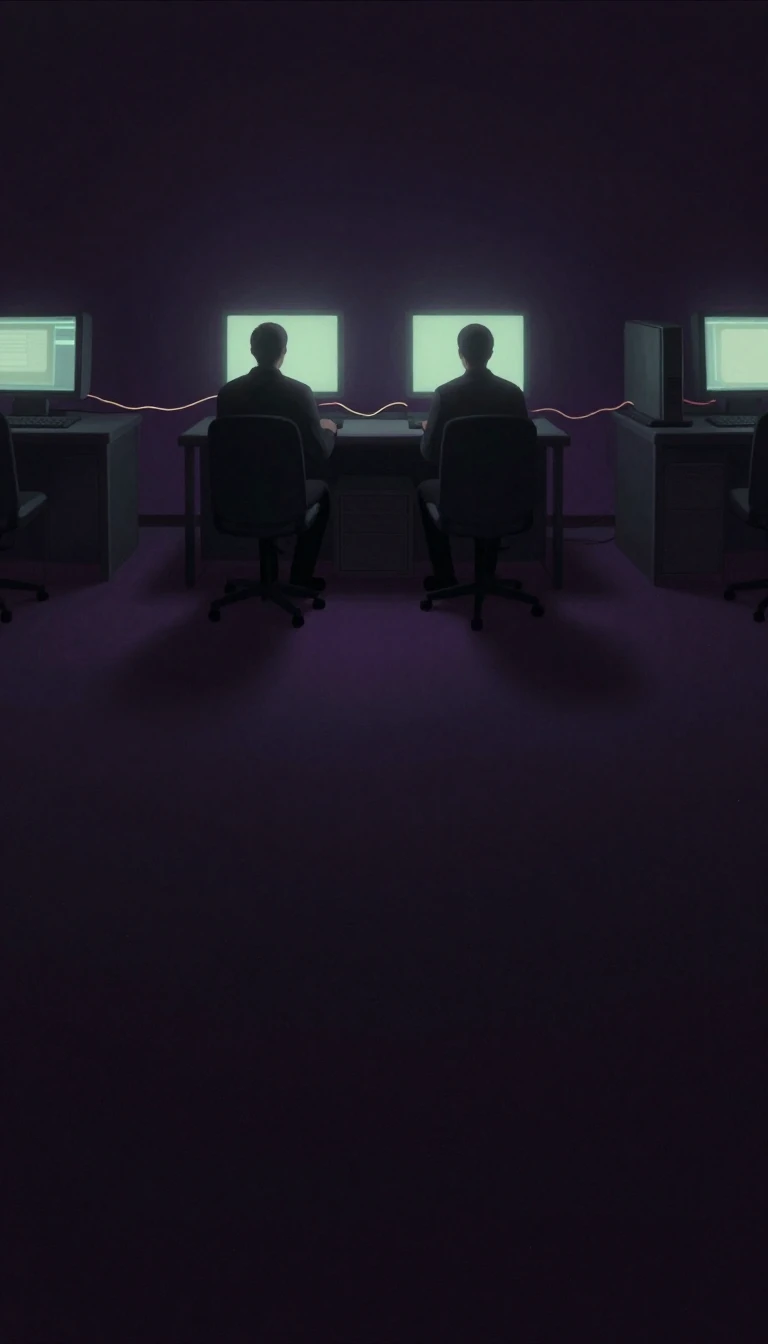 The term cyberspace was actually born in the visual arts, not science fictionWe often credit 1980s cyberpunk novels for the concept of cyberspace. However, the term first appeared in the late 1960s through a Danish art collective. Long before the internet,…
- The invisible art of making fiction feel realWhen a character's hat changes shape or a dead man suddenly reappears, it is more than a mistake. It is a breakdown in continuity—the essential thread of consistency that holds a …
- Who decides what is official in a fictional world, and why does it matter?Canon defines the authoritative events within a fictional universe, yet the concept is surprisingly fluid. From Star Wars' complex hierarchy to the deliberate ambiguity of Doctor …