 Intellect Plus
Gardening
2,464 cards. Each one is a 40-second story with a five-minute read behind it. Page 9 of 42.
Subtopics: Agriculture · Bonsai & topiary · Cacti & succulents · Composting & soil · Container & urban gardening · Famous gardens · Flowers · Fruit trees · Fungi · Garden design · Garden pests & diseases · Garden tools · Growing vegetables · Herbs · Houseplants · Hydroponics & greenhouses · Indigenous knowledge · Lawns · Other eukaryotes · Permaculture & organic · Plant history · Plant science · Plants · Pollination · Pollinators · Prokaryotes · Propagation · Roses · Soil · Techniques · Trees · Vegetables · Viruses · Water · Wildlife gardening
 The generational secret behind Australia's largest family-owned daffodil farmSuccess in large-scale agriculture often requires more than just good soil. For the Blyth family, it took three generations of manual labor and a specific leadership philosophy to…
 How to build a handmade drey for native ringtail possumsWhile brushtail possums often cause garden trouble, the smaller, timid ringtail is facing population declines. Learn how to construct a protective, insulated nesting habitat to su…
 A café’s waste is a composter’s goldYour morning latte leaves behind more than just a caffeine kick; it creates a valuable resource for the earth. In some communities, grassroots networks are turning daily cafe scra…
 How to transform a tiny urban courtyard into a lush, functional oasisShrinking backyards and concrete balconies do not have to mean sacrificing your green thumb. With the right strategic planning, even the smallest inner-city patches can become pro…
- Pruning Roses: Timing Depends Entirely on the Bloom CycleDo all roses require the same pruning schedule? Not at all. The timing and technique must shift based on whether your variety blooms only once or repeats its show. Understanding t…
 Why shrubs are the underrated structural backbone of your gardenMove beyond simple borders to discover how shrubs function as essential ecological corridors and versatile design tools. This guide explains how to select, shape, and maintain div…
- How a former tractor factory became a sky-high bushland oasisIn inner Sydney, an architect has achieved the impossible: a 350m2 garden that is significantly larger than the apartment it sits upon. By repurposing a heavy-duty industrial site…
 Can an invasive weed become a sanctuary for native wildlife?The camphor laurel is a relentless invader, using chemical warfare to smother local flora. Yet, ecologists are finding a way to turn this destructive force into a vital resource f…
- How a childhood memory of a single pea led to a passion for QuandongeryFor Richard, a simple afternoon in Northern Ireland sparked a lifelong obsession with Australian flora. Today, he cultivates the quandong, a semi-parasitic superfood. Discover the…
- Beyond the bloom: the surprising resilience and hidden potential of the camelliaOften viewed as delicate winter ornaments, camellias are actually hardy survivors capable of thriving in diverse climates. While most gardeners enjoy established cultivars, a deep…
 Beyond the single tree: the ancient art of creating miniature landscapesWhile many recognize bonsai as the Japanese art of miniature trees, its origins lie in China. Known as penjing, this practice transcends single specimens to create entire tray-bas…
- How to turn a chicken run into a functional garden benchYou don't have to choose between backyard utility and aesthetic beauty. By using curved steel mesh and salvaged timber, you can build a multi-use tunnel that serves as an extensio…
- How a depleted cow paddock became a sanctuary for eighty bird speciesIn the hills above Victor Harbor, a retired couple turned a degraded landscape into a thriving ecosystem. Through decades of careful planting and soil management, they have succes…
 How to harvest and prepare your own green tea at homeDiscover how to transform the young foliage of Camellia sinensis ‘Yabukita’ into fresh green tea. This guide demonstrates a simple method for processing tea leaves using just a mi…
- Why your garden's success depends on mastering the seasonal dance of lightA sunny summer afternoon can quickly turn into a period of extreme stress for many plants. To build a resilient landscape, you must look beyond the current season and plan for the…
 How a small community garden in Kakadu is transforming food securityIn the heart of Kakadu, a family-run garden is tackling the high cost and low freshness of remote food supplies. By blending traditional native species with modern horticulture, t…
- How a group of young activists turned abandoned land into a community pantryWhen pandemic lockdowns triggered fears of empty supermarket shelves, a group of young people in Brisbane chose direct action over hoarding. They bypassed bureaucracy to transform…
- Inside the conservatory housing a rare collection of tropical wondersStep into a lush conservatory to discover a diverse array of exotic species, from massive Titan Arums to rare epiphytic cycads, as curator Dr. Charles Clarke leads a tour of this …
 Why an arborist is fighting to change how we value native timberMost fallen trees are simply chipped into mulch, their potential lost to waste. But one specialist is using his expertise in arboriculture to rescue valuable wood, transforming sa…
- The serene power of community-led conservation in the Australian bushDiscover how 200 volunteers maintain a sprawling 33-hectare botanical sanctuary. This look at the Hunter Region Botanic Gardens reveals the personal dedication required to preserv…
- Can you survive a full year eating only what you grow?In 2019, Sonia embarked on a radical nutritional experiment: a 100% garden-based diet. It was a feat of endurance that tested the limits of self-sufficiency, proving that while a …
 How hydroponics and light science accelerate the creation of exotic plant hybridsTraditional gardening relies on soil and sun, but a new wave of growers is using engineering and science to master tropical plants. By controlling every variable from nutrient pH …
- Stop wasting money at the nursery by testing your soil texture todayBefore you buy your next round of plants, you need to know what is happening beneath the surface. Simple, equipment-free tests can reveal if your soil is sandy, clay-heavy, or eve…
 From hot air balloons to drones: the evolution of aerial crop dustingAerial application began with a tethered balloon in 1906 and evolved into a high-tech industry using specialized turbine aircraft. While it remains vital for forestry and large-sc…
 Agribusiness is more than just farming; it is a complex, global, and systemic endeavor.Agribusiness is not merely the act of growing crops. It is a vast, interconnected system spanning from seed suppliers to global retailers. Coined in the mid-20th century, this fie…
 How molecular chemistry feeds the world while balancing environmental and health trade-offsAgricultural chemistry is the science of managing the chemical reactions that sustain our food supply. By manipulating plant biochemistry and soil fertility, this field has enable…
- Why millions of farmers pool their resources to outcompete massive corporate giantsAgricultural cooperatives allow farmers to bypass investor-owned firms by pooling resources, sharing machinery, and collectively marketing products. By operating as democratic, me…
 The hidden rhythm of growth: mastering the essential stages of the agricultural cycleAgriculture is more than just planting seeds; it is a precise, annual sequence of interventions that transform soil into sustenance. From the delicate mechanics of grafting to the…
 Beyond the farm: How agricultural education evolved from oral tradition to high-tech scienceAgricultural education is far more than learning to plow a field. It is a sophisticated, multidisciplinary field that integrates biology, business, and data-driven technology. Fro…
- Can we feed a growing planet without destroying the last of our wild spaces?Global demand for agricultural commodities is set to surge by up to 100% by 2050. To meet this, we face a stark choice: expand farmland into natural habitats or intensify producti…
- How do we bridge the gap between laboratory breakthroughs and the actual farm field?Agricultural extension is the vital link that translates complex scientific research into practical, everyday applications for farmers. By providing non-formal education and relia…
- How human history and geography dictate the shape of our cultivated landscapesAgricultural geography examines the spatial relationship between humans and the land they cultivate. It is not just about farming; it is the study of how cultural, social, and env…
- Agricultural land covers nearly 40% of Earth, yet its definition remains surprisingly fluid.The term agricultural land is a technical category that often includes vast areas not currently used for farming. While it encompasses everything from grazing pastures to orchards…
 From Steam Engines to AI: How Automation Transformed the Global Food SupplyAgricultural machinery has evolved from animal-drawn tools to sophisticated robotics. While conventional tractors once merely automated physical labor, modern digital systems now …
 How governments once tried to command the flow of milk and farm goodsAgricultural marketing is more than just selling crops; it is a complex web of infrastructure, information, and regulation. While modern systems rely on market dynamics, mid-20th-…
 How the five-year legislative cycle shapes the food on your dinner tableIn the United States, agricultural policy is governed by a massive, recurring legislative package known as the Farm Bill. This complex framework does far more than support farmers…
 Modern farming feeds the world, but its hidden environmental costs are staggering and complex.Agriculture is essential for global food security, yet it acts as a primary driver of environmental degradation. From nitrogen runoff causing aquatic dead zones to the massive acc…
- Are agrochemicals the secret engine of modern food production or a hidden environmental risk?Agrochemicals, ranging from synthetic fertilizers to specialized pesticides, have fundamentally reshaped global agriculture since the mid-20th century. While these substances have…
- Is agroecology a science, a farming method, or a radical social movement?Agroecology defies simple categorization. It is simultaneously an academic discipline, a toolkit of sustainable farming practices, and a political movement for food sovereignty. B…
 Why modern agriculture is looking to the forest to solve its deepest problems.Agroforestry integrates trees and shrubs into farming to create resilient, diverse ecosystems. By mimicking natural forest structures, this ancient practice offers a low-cost, sus…
 How agrometeorology bridges the gap between the atmosphere and your next harvestAgrometeorology is the interdisciplinary science of using weather and climate data to optimize agriculture. By studying the complex, dynamic interactions between soil, plants, and…
 Aldrin: The Synthetic Insecticide That Once Defined Global Agriculture Before Its Eventual DownfallNamed after a Nobel-winning chemist, aldrin was a synthetic powerhouse that transformed pest control in the mid-20th century. While it effectively decimated soil-dwelling insects …
- Could the future of sustainable food, fuel, and carbon capture be microscopic?Algaculture, the farming of algae, is transforming from a niche practice into a pillar of the bioeconomy. By converting carbon dioxide and sunlight into everything from protein-ri…
- Can we engineer the perfect animal through the science of selective breeding?Animal breeding is the controlled propagation of domestic species to enhance specific traits. By blending genetics, statistics, and reproductive physiology, breeders aim to improv…
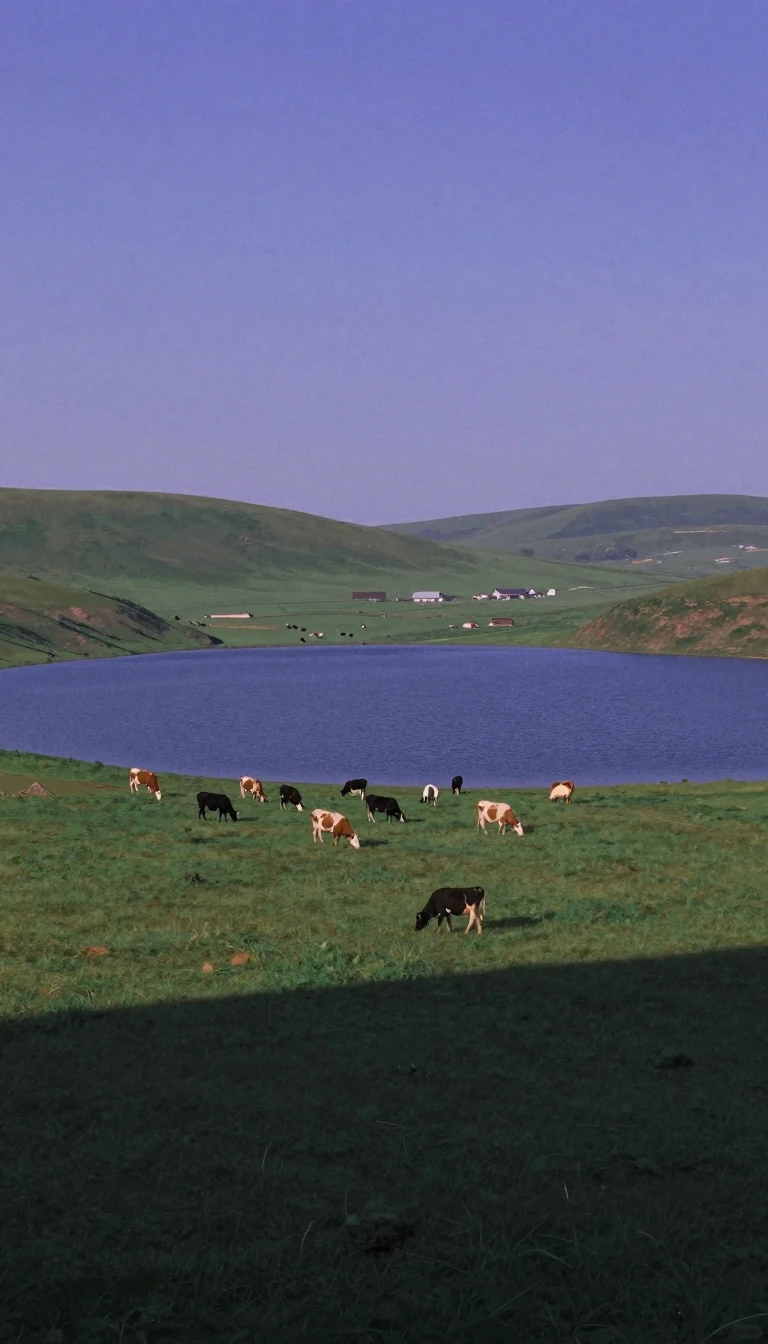 Is the future of livestock nutrition hidden in food waste and insect farms?Animal feed is the single largest cost in livestock production, yet it is currently a major driver of deforestation and climate change. As droughts threaten traditional grazing, f…
 How do we balance the industrial scale of global meat production with animal welfare?Every year, an estimated 80 billion land animals are slaughtered for food. While modern regulations aim to minimize pain through stunning technologies, the process remains a compl…
- Why the most successful apiaries are built on high ground and morning sunAn apiary is more than just a collection of hives; it is a carefully engineered ecosystem. From ancient Egyptian mud structures to modern urban rooftops, the placement of a bee ya…
- Is your farm actually arable? The surprising difference between potential and statistical realityWe often assume arable land is simply soil that can grow food. In reality, agricultural statistics define it by current use, not potential. While we can engineer non-arable land i…
 An arboretum is more than a park; it is a living museum of trees.While we often view trees as mere scenery, an arboretum is a curated, scientific collection designed for stewardship and study. From ancient Egyptian transplanting efforts to Vict…
 Arboriculture is the science of managing individual trees for human and environmental benefitArboriculture is more than just tree care; it is the deliberate cultivation and management of woody plants in populated settings. By balancing aesthetic beauty with risk mitigatio…
- Why your garden shrubs might be secretly cloning themselves beneath your feetMany plants possess a hidden survival strategy that bypasses seeds entirely. By sprouting clones directly from their roots or base, these species can rapidly reclaim land, stabili…
- From ancient clay to modern frames: the evolution of the human-made beehiveFor millennia, humans have housed honey bees in structures ranging from hollow logs to straw baskets. While these traditional methods often required destroying the colony to harve…
 Biological pest control uses nature's own predators to manage invasive species and crop damageInstead of relying solely on chemical pesticides, biological control employs natural enemies—predators, parasitoids, and pathogens—to manage pests. From ancient citrus farmers usi…
- Is the most valuable cash crop in the United States actually illegal to grow?While corn and wheat dominate American agricultural statistics, researchers suggest that cannabis may hold the top spot for value. This highlights the complex, often hidden, econo…
- Can chemical sterilization replace traditional pest control and surgical castration methods?Chemosterilants offer a way to manage populations by inducing infertility rather than killing. By disrupting reproductive cycles in insects or animals, these compounds aim to shri…
 Why Chinese gardens were designed to be read like a painted scrollFor over three millennia, the Chinese garden has functioned as a miniature, idealized landscape. Far from mere aesthetic displays, these spaces were designed to harmonize humanity…
- Can a subscription to a local harvest change the way we value our food?Community-supported agriculture turns the traditional food supply chain on its head. By subscribing to a farm's harvest, consumers share the inherent risks of farming while gainin…
 Why intentionally setting forests on fire is a vital tool for ecological survivalControlled burns are not just about destruction; they are a sophisticated land management technique used for millennia. By mimicking natural fire regimes, these intentional blazes…
- Why cutting a tree to its stump can actually help it live for centuriesCoppicing is a traditional pruning technique that keeps trees in a juvenile, vigorous state by repeatedly cutting them back to the base. Far from killing the plant, this ancient p…
 Is the family farm actually a corporation in disguise? The lines are blurring.We often imagine corporate farming as a monolith of industrial giants, while family farms are seen as small, independent operations. In reality, the distinction is increasingly fl…