 Intellect Plus
History
21,006 cards. Each one is a 40-second story with a five-minute read behind it. Page 160 of 351.
Subtopics: 19th century · 20th century · Africa · Age of Exploration · Ages & eras · Ancient · Ancient China · Ancient egypt · Ancient greece · Ancient rome · Ancient trade · Archaeological discoveries · Archaeology · Astronomy · Australia · Auxiliary historical sciences · Babylon · Basics · Born on this day · Bronze age · Buddhism · Case studies · Chefs, bartenders and winemakers · China · Cities · Climate · Columbus · Contemporary (1945-) · Cosmetics people · Crime · Criminals · Decipherment · Deep time · Disasters · Early modern · Education · Egypt · Empires · Empires & civilisations · Exploration · Explorers · Extinction · Fandom, conventions and festivals · History by continent and large region · History by continent and region · History by country · History by country, small region and city · History by ethnicity · History by subject matter · History by topic · Inca · India · Industrial Revolution · Japan · Kings & queens · London · Mass hysteria · Medicine · Medieval kingdoms · Medieval life · Mediterranean · Mercedes-Benz History · Mesopotamia · Middle ages · Military leaders and theorists · Military leaders, personnel, and theorists · Ming dynasty · Misconceptions · Modern · Modern (1800-1945) · Napoleon · Navigation · North africa · Other · Pacific · Pharaohs · Philippines · Pirates · Post-classical · Prehistory · Propaganda · Public health · Rebels, revolutionaries and activists · Renaissance · Researched · Second world war · Shipwrecks · Silk Road · South america · Tradespeople · UK & Ireland: history · United states · Vikings · Volcanoes · Women in history
 Was Edward Gierek a visionary modernizer or the architect of Poland's economic collapse?Edward Gierek transformed Poland into the Eastern Bloc's most liberal nation, promising prosperity through Western loans and industrial expansion. Yet, this golden age of consumer…
 Was the English King Edward the Martyr actually a saint or a violent tyrant?Edward the Martyr reigned for less than three years before his mysterious murder in 978. While later tradition canonized him as a holy martyr, contemporary accounts paint a far da…
 Was Elihu Root the ultimate architect of the modern American political establishment?Elihu Root moved seamlessly between the highest levels of government and the most powerful private law firms. As a pivotal advisor to presidents, he modernized the U.S. military, …
 How one man helped architect the transition of a nation from monarchy to republic.Sir Ellis Clarke was a central figure in the political evolution of Trinidad and Tobago. From drafting the 1962 independence constitution to serving as the nation's inaugural pres…
 How the Old Warrior transformed Ecuador through secularism, railroads, and radical political reformKnown as the Old Warrior, Eloy Alfaro spent decades fighting conservative regimes to reshape Ecuador. His legacy includes the Trans-Andean Railroad, the legalization of divorce, a…
 Elpidio Quirino led the Philippines through postwar reconstruction while battling a communist insurgency.Born in a provincial jail, Elpidio Quirino rose to become the sixth president of the Philippines. His administration navigated the volatile aftermath of World War II, balancing am…
 The Brazilian Miracle: How a Dictator Combined Explosive Economic Growth With Systematic State TerrorEmílio Garrastazu Médici presided over the most intense phase of Brazil's military regime. His term is defined by a paradoxical legacy: a period of rapid industrial expansion and …
 Was Emperor Gaozong of Tang a weak ruler or a partner in a dual monarchy?History often paints Emperor Gaozong as a passive figure dominated by his wife, Empress Wu. Yet, their reign was officially recognized as a dual monarchy, with both rulers titled …
 How one emperor’s failed restoration split Japan into two rival imperial courts for decades.Emperor Go-Daigo sought to reclaim absolute power from Japan’s military shogunate in the 14th century. His short-lived Kemmu Restoration succeeded in toppling the Kamakura regime,…
 How a humble farmer became the brilliant strategist who reunified the Chinese empireLiu Xiu was a cautious man content with farming until civil war forced his hand. Rising from the ashes of a usurped dynasty, he displayed a rare combination of military genius and…
 Was the last emperor of Northern Song a decadent failure or a visionary polymath?Emperor Huizong is often remembered as a negligent ruler whose reign ended in the catastrophe of the Jingkang Incident. Yet, modern scholarship suggests a more complex figure: an …
 The last Japanese emperor to rule before the modern era of fixed reign namesEmperor Kōmei reigned during Japan's turbulent transition from centuries of isolation to global engagement. Though he held only symbolic power, his vocal opposition to Western inf…
 Emperor Ninkō and the crumbling authority of the Tokugawa shogunate in nineteenth-century JapanEmperor Ninkō reigned from 1817 to 1846, a period defined by natural disasters, famine, and rising civil unrest. While the shōgun held political power, the foundations of the baku…
 Was Emperor Renzong the most benevolent ruler in the history of the Song Dynasty?Reigning for 41 years, Emperor Renzong presided over a golden age of Chinese culture and technological innovation. While his era saw the invention of movable type and the observat…
 How one man defied a dancing order to topple a massive empireIn 1112, a Jurchen chieftain named Aguda refused to dance for the Khitan emperor, sparking a rebellion that would dismantle the Liao dynasty. By uniting fragmented tribes and leve…
 How a unified China’s first emperor accidentally dismantled his own dynasty from withinEmperor Wu of Jin reunified China in 280, yet his reign sowed the seeds of total collapse. By empowering his relatives with independent military authority and ignoring the corrupt…
 A Xianbei Emperor’s Hidden Genetic Legacy and His Brutal Path to PowerEmperor Wu of Northern Zhou was a master of the long game. After years of living under the thumb of his cousin, he orchestrated a shocking palace assassination to seize control. A…
 How a nomadic emperor transformed his tribal state into a Chinese-style dynastyEmperor Xiaowen of the Northern Wei did not just rule; he fundamentally re-engineered his society. By mandating Chinese dress, language, and surnames, he successfully sinicized hi…
 From Prison Orphan to Superpower Architect: The Remarkable Rise of Emperor Xuan of HanBorn into a political purge and raised as a commoner, Emperor Xuan of Han ascended from a prison cell to the throne. His reign transformed the Han dynasty into a regional superpow…
 Was Emperor Yang of Sui a visionary architect of China or a reckless tyrant?Emperor Yang of Sui is often remembered as one of history's greatest villains, blamed for the rapid collapse of his dynasty. Yet, his reign saw the completion of the Grand Canal a…
 A child emperor, a powerful eunuch, and the collapse of Ming currency stabilityZhu Qizhen ascended the Ming throne at eight, becoming a puppet for regents and later a charismatic eunuch. His reign saw the empire transition from a golden age of stability to a…
 Empress Myeongseong: The Determined Queen Who Navigated Korea’s Modernization Amidst Imperial Power StrugglesBorn into the aristocratic Yeoheung Min clan, Empress Myeongseong rose from a quiet, scholarly bride to become the most influential political force in late 19th-century Korea. Her…
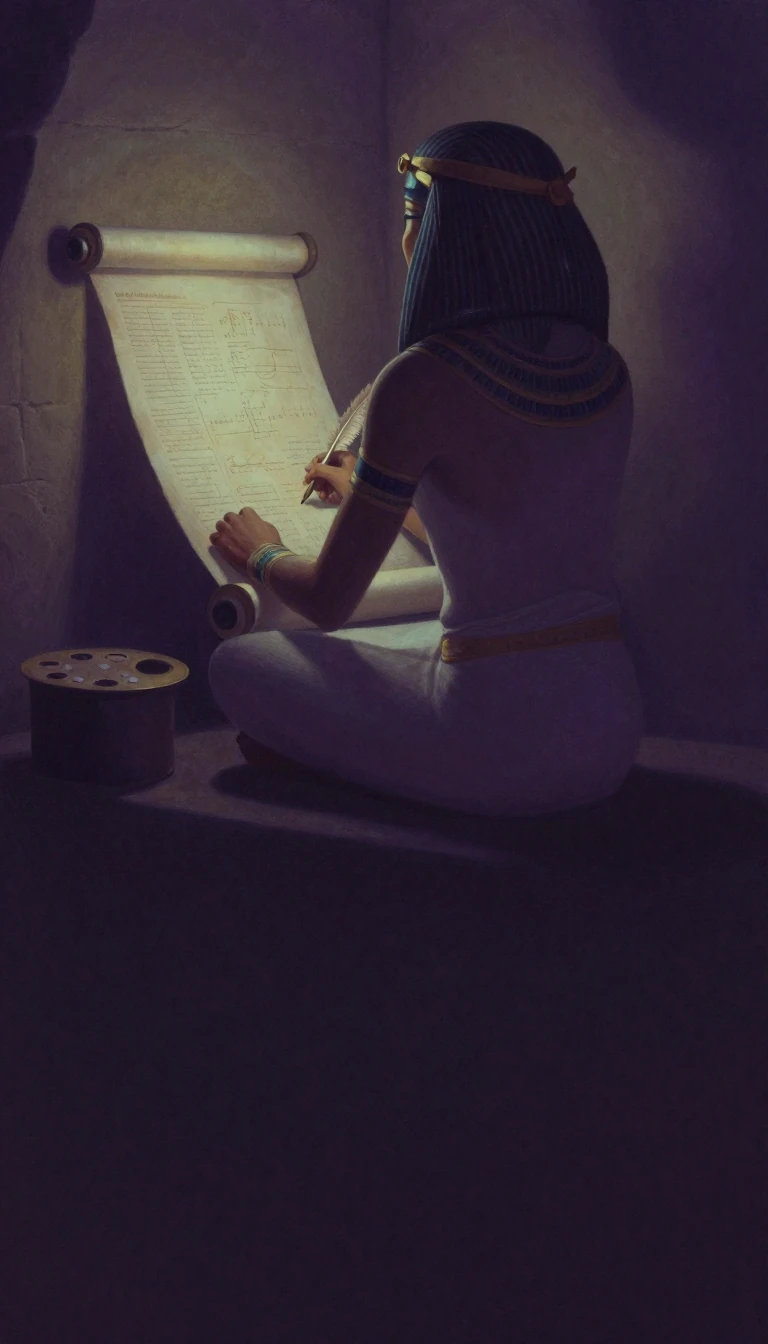 Did the legendary King Enmerkar of Uruk invent writing to solve a memory problem?Sumerian legend credits Enmerkar, the ancient ruler of Uruk, with the invention of writing. Faced with a messenger unable to recite complex instructions, the king supposedly press…
 The Brazilian president who won an election while living in FranceEpitácio Pessoa remains the only Brazilian president elected while residing abroad. A jurist and diplomat, he ascended to power in 1919 after the president-elect died before takin…
- Before he led the Stasi, Erich Mielke was a street-level political assassin in Berlin.Long before he became the feared head of East Germany's secret police, Erich Mielke was a young communist militant. In 1931, he gunned down two police captains in a cold-blooded p…
 The King who united Scandinavia only to lose it all through sheer stubbornnessErik of Pomerania once ruled Denmark, Norway, and Sweden as a single, powerful Baltic empire. Yet, his reign collapsed under the weight of endless wars, heavy taxation, and a publ…
 Was Ermanaric a vast imperial conqueror or a figure of mythic, treacherous legend?Ermanaric, a fourth-century Gothic king, exists in two worlds: the historical record of Roman chroniclers and the dark, sprawling landscape of Germanic folklore. While some histor…
 How a military dictator orchestrated Brazil's slow, calculated return to democratic ruleErnesto Geisel, a career army officer, led Brazil through a paradoxical era of authoritarian rule. While he oversaw the systematic execution of political opponents, he simultaneou…
 How a militant nationalist became one of history's most influential Nobel-winning pacifistsErnesto Teodoro Moneta was a paradox: a revolutionary soldier who fought for Italian independence, yet later dedicated his life to global arbitration. As a prominent journalist, h…
 Before leading Barbados to independence, Errol Barrow navigated bombers through the skies of Europe.Errol Barrow is remembered as the father of Barbadian independence, but his formative years were spent as a navigator in the Royal Air Force. From 1940 to 1947, he flew 48 combat …
- The Brazilian polymath whose life ended in a tragic, disputed duel over honorEuclides da Cunha was a celebrated journalist, engineer, and sociologist whose masterpiece, Os Sertões, chronicled a brutal military campaign in the Brazilian backlands. Yet, his …
 A military leader who falsified his age to join the army became Brazil's president.Eurico Gaspar Dutra rose from a young soldier expelled for rebellion to the first president of the Fourth Brazilian Republic. His administration navigated the early Cold War, bala…
 Eva Braun lived in the shadows of a dictator who hid her from public view.For over a decade, Eva Braun was the secret companion of Adolf Hitler. While she was a fixture within his private residences, the Nazi leader kept her entirely hidden from the Ger…
 How Ewuare the Great transformed Benin from a limited monarchy into a centralized empireEwuare, the twelfth Oba of Benin, rose to power in the mid-15th century after a period of exile and civil strife. Through military conquest, administrative reform, and the creatio…
 How a Fourth-Century King Transformed a Kingdom Through Coinage and ConversionEzana of Axum was a transformative ruler who steered his kingdom toward Coptic Christianity and expanded its reach across ancient trade routes. By shifting his royal iconography f…
 The young king who toured America before his violent end in a palace coupFaisal II, the final monarch of Iraq, ascended the throne as a toddler and spent his youth navigating the turbulence of the Second World War. Before his tragic execution in 1958, …
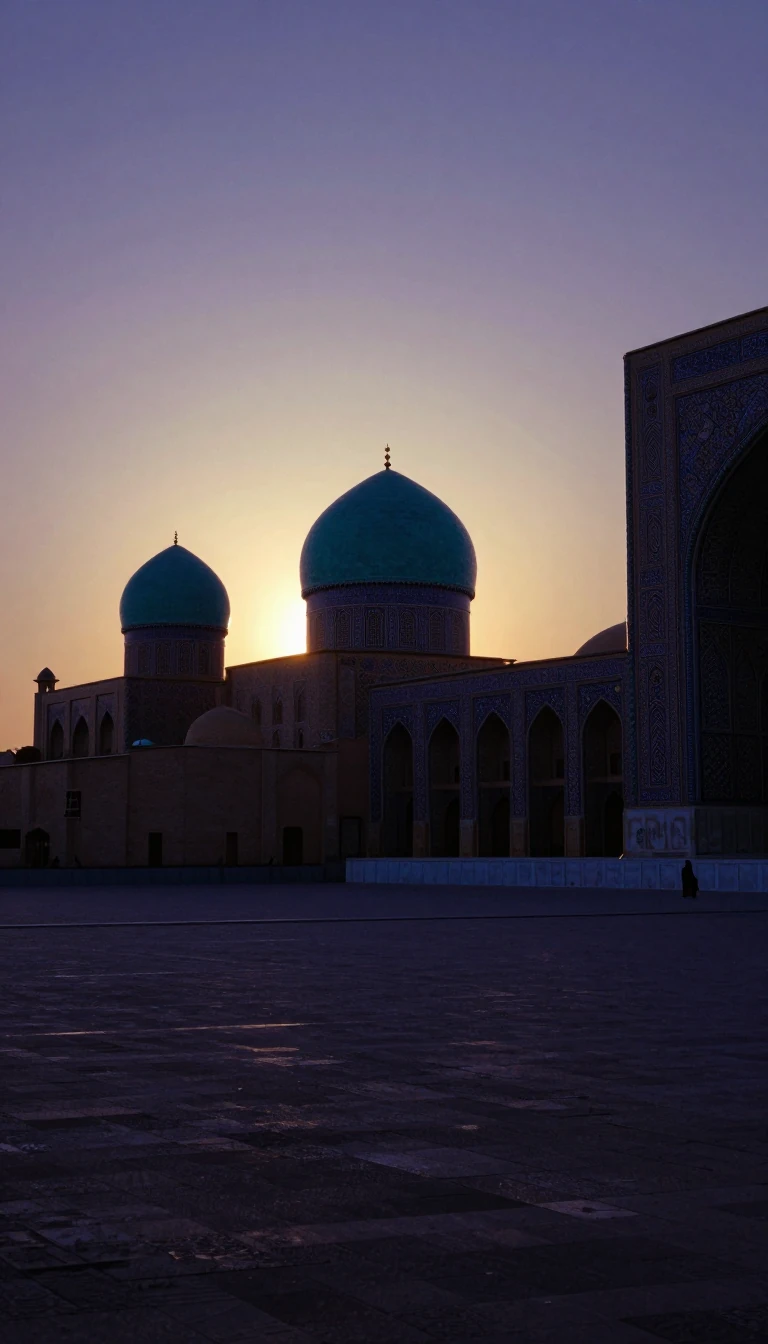 The Persian Shah who read the entire Britannica and claimed the title of MasterFath-Ali Shah Qajar ruled Iran for nearly four decades, leaving a legacy defined by both artistic brilliance and territorial collapse. While he successfully centralized the state …
 The dictator who declared war on Germany but could not win over the Americans.In 1917, Federico Tinoco Granados seized power in Costa Rica through a military coup, overthrowing his own president. Despite declaring war on the German Empire to gain internatio…
 The photographer who staged the first images of war and defined Asia for Europe.Felice Beato was a pioneer of photojournalism who captured the aftermath of the Indian Rebellion and the Second Opium War. By rearranging corpses for dramatic effect and hand-colo…
 The revolutionary who built the Soviet secret police was a Polish nobleman by birth.Felix Dzerzhinsky, the architect of the Cheka, was a polyglot aristocrat who spent years in tsarist prisons before becoming the face of Soviet state terror. Known as Iron Felix, h…
 Feodor the Bellringer: The pious, disabled Tsar who ended a centuries-old Russian dynastyFeodor I, son of Ivan the Terrible, was a man of quiet prayer who preferred ringing church bells to ruling an empire. While he occupied the throne, his brother-in-law Boris Goduno…
 The Crippled Tsar Who Tried to Modernize Russia Before Peter the GreatFeodor III of Russia reigned for only six years, yet his brief tenure as Tsar fundamentally altered the Russian state. Despite being half-paralyzed and disfigured from birth, he d…
 How a neglected king survived two depositions to rule the Kingdom of the Two SiciliesFerdinand I was groomed for idleness by a regent who feared his intellect. Yet, this unlikely monarch navigated the chaos of the Napoleonic Wars, survived two separate depositions…
 Ferdinand VI of Spain: The Melancholic King Who Prioritized Peace Over Imperial ExpansionFerdinand VI, known as the Learned and the Just, steered Spain through a rare era of neutrality during the mid-18th century. While he modernized the navy and treasury, his reign w…
 How a pro-French pharmacist became the revolutionary architect of an independent Algerian state.Ferhat Abbas began his career as a staunch advocate for French-Algerian equality, famously writing that he was France. Yet, decades of colonial disillusionment transformed him int…
 From Army Officer to President: The Turbulent Decade of François Bozizé in Central AfricaFrançois Bozizé rose from a military officer under a self-proclaimed emperor to the presidency of the Central African Republic. His decade in power was defined by persistent rebel…
 How a fake friar’s midnight ruse turned a Genoese noble into a legendIn 1297, Francesco Grimaldi secured his place in history by disguising himself as a monk to infiltrate the fortress of Monaco. While his daring coup was short-lived, the malicious…
 The French statesman who told the poor to get rich instead of votingFrançois Guizot was a brilliant historian and a dominant political force in 19th-century France. Yet, his rigid refusal to expand the franchise to the working class ultimately tri…
 Was this 18th-century journalist the world's first true revolutionary communist?François-Noël Babeuf, a radical French journalist, spent his life fighting for the abolition of private property and total social equality. Known as the leader of the Conspiracy o…
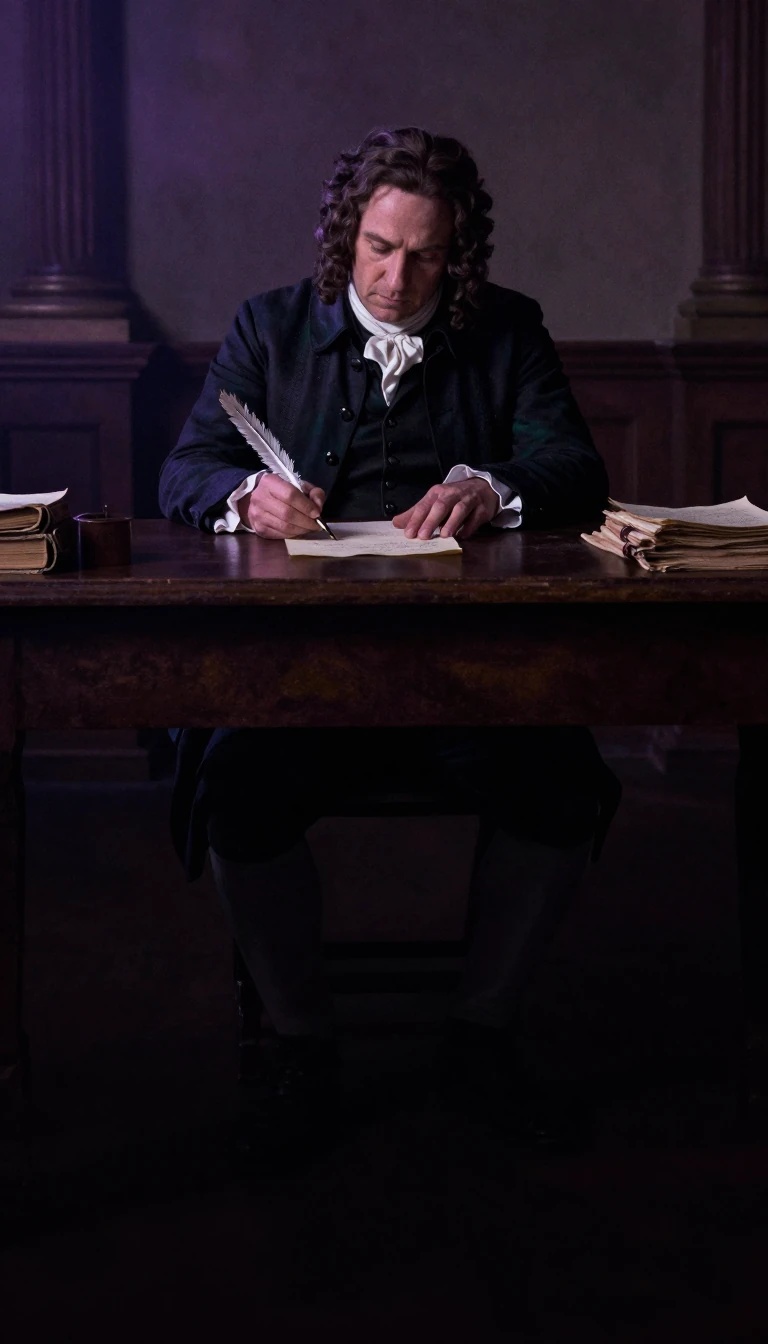 The Man of the Laws: How a Soldier Built Colombia's Democratic FoundationFrancisco de Paula Santander, a key architect of Colombian independence, transitioned from a battlefield commander to a rigorous statesman. Known as the Man of the Laws, he naviga…
 The ambitious military leader who nearly seized control of post-revolutionary Guatemala in 1949Francisco Javier Arana was a central figure in the 1944 revolution that toppled a dictator, yet he spent his final years maneuvering to reclaim power. His death in a 1949 shootout…
- How a Peruvian General Ended a Military Dictatorship and Faced Life Imprisonment AbroadFrancisco Morales Bermúdez led a coup to seize power in 1975, only to oversee the transition back to democracy five years later. His legacy remains deeply polarized: he is remembe…
 How a Paraguayan dictator’s obsession with Napoleon led to the destruction of his nationFrancisco Solano López transformed Paraguay into Latin America’s strongest military power, only to lead it into a catastrophic conflict against a triple alliance of neighbors. By …
 The East Timorese leader who served as president for only ten daysFrancisco Xavier do Amaral was the first president of East Timor, yet his initial term lasted barely over a week before war forced him into the mountains. Known affectionately as …
 How a career police officer became a central architect of the Nazi death campsFranz Stangl was not a fringe fanatic but a career policeman who sought order and security. His path from the Austrian force to the T4 Euthanasia Program and eventually the comman…
 Did the British Prime Minister who lost America actually lose the war effort?Frederick North, the British Prime Minister from 1770 to 1782, is famously remembered as the man who lost the American colonies. Yet, historians have long debated his legacy, ques…
 The Romantic King who rejected a crown because it was made of dirt and weeds.Frederick William IV of Prussia was a devout monarch who believed his power came directly from God. When revolutionaries offered him the title of Emperor of the Germans in 1849, h…
 How a displaced prince transformed a war-torn wasteland into the foundation of Prussian power.Inheriting a ravaged land occupied by foreign troops in 1640, Frederick William of Brandenburg turned a collection of disconnected territories into a centralized state. By buildin…
 Friedrich Ebert: The Proletarian Saddler Who Became Germany's First Democratically Elected PresidentBorn into poverty, Friedrich Ebert rose from a saddle-maker to the first president of the German Republic. A moderate socialist, he navigated the chaos of post-WWI revolution by f…
 The complex legacy of Fructuoso Rivera, Uruguay's first president and controversial founding figureFructuoso Rivera was a pivotal military commander and three-time president who founded the Colorado Party, which dominated Uruguayan politics for nearly a century. Yet, his legacy…