 Intellect Plus
Ideas & Philosophy
17,867 cards. Each one is a 40-second story with a five-minute read behind it. Page 183 of 298.
Subtopics: Abrahamic religions · Artificial intelligence · Attention · Classic philosophy · Cognitive biases · Consciousness · Cooperation · Cynicism · Decision making · Decision theory · Descartes · Dharmic religions · Dreams · Eastern philosophy · Eastern religions · Epistemology · Ethics · Evidence · Existentialism · Fairness · Famous psychology experiments · Free will · Game theory · Greek mythology · Historians · Identity · Infinity · Justice · Logic · Logical fallacies · Mathematics · Medieval philosophy · Mind · Mythology · Mythology of the ancient world · Other religions · Paradoxes · Philosophers · Philosophers, historians, political and social scientists · Philosophy · Philosophy of mind · Philosophy of science · Political philosophy · Probability · Psychology · Reality · Religion · Religion and spirituality · Religious figures · Self knowledge · Statistics · Stoicism · Strategy · Taoism · Thought experiments · Trivia & curiosities · Truth · Utopias & ideal worlds · Wellbeing · World religions · Writers
 Edward William Lane: The Victorian Scholar Who Lived as a Turk in CairoEdward William Lane was a British orientalist who immersed himself in 19th-century Egypt, adopting local dress and customs to document a vanishing world. While his work became fou…
 How a colonial-era student became the unofficial poet laureate of independent SingaporeBorn in 1933, Edwin Thumboo emerged from the shadows of British rule to define a new national identity. Through his poetry and academic leadership, he transformed Singaporean lite…
 Eileen Chang: The Modernist Genius Who Redefined Chinese Literature Through Domesticity and WarEileen Chang rose to fame in Japanese-occupied Shanghai, crafting a unique narrative style that bypassed grand revolutionary themes in favor of the intimate, daily lives of ordina…
 The prolific author who hid behind ten different names to conquer the literary worldEleanor Hibbert was a literary powerhouse who published over 200 books under a dozen pseudonyms. From historical royalty to gothic suspense, her novels sold over 100 million copie…
 Is Electra a grieving daughter or a cold-blooded mastermind of matricide?In Greek tragedy, Electra is the daughter of Agamemnon who seeks vengeance for his murder. Yet, her character shifts wildly across centuries of storytelling. From a reluctant part…
 Who is Elena Ferrante? The elusive author behind the world's most celebrated literary mystery.Elena Ferrante is a global literary phenomenon, yet her true identity remains a closely guarded secret. While her Neapolitan novels have sold millions and captivated critics, the …
 Elves were not always tiny, playful creatures; they were once feared as powerful, humanlike beings.Forget the diminutive, toy-making sprites of modern holiday lore. In medieval Germanic folklore, elves were formidable, human-sized entities capable of causing illness, seducing m…
 How a country doctor synthesized a national identity from the fragments of oral poetry.Elias Lönnrot was a polymath who spent his life documenting the vanishing folk traditions of Finland. By traveling through remote regions to record oral ballads, he compiled the K…
 Elisha: The Wonder-Working Prophet Who Inherited a Double Portion of PowerAn Israelite prophet and wonder-worker, Elisha served as a pivotal advisor to kings and a successor to Elijah. From multiplying oil to resuscitating the dead, his narrative is def…
 Why Elizabeth Bishop, a master of objective detail, rejected the confessional poetry movementElizabeth Bishop was one of the 20th century’s most celebrated poets, yet she famously avoided the confessional style of her peers. While others bared their souls, Bishop prioriti…
 The 17th-century polyglot who wrote England's first original play by a womanElizabeth Cary was a brilliant scholar who mastered six languages before adulthood. Despite being forbidden to read by her mother-in-law, she became a prolific writer and the firs…
 Elizabeth Gaskell: The Victorian novelist who turned industrial tragedy into enduring literary artBorn in 1810, Elizabeth Gaskell navigated the grim realities of industrial Manchester to become a celebrated voice of her era. Encouraged by her husband to write through the grief…
 Else Lasker-Schüler: The Expressionist Poet Who Found Exile in a Blue PianoA central figure of German Expressionism, Else Lasker-Schüler was a visionary poet whose life spanned from a privileged upbringing in Wuppertal to a destitute, lonely exile in Jer…
 Why Japanese worshippers leave wooden plaques to communicate their deepest desires to the godsEma are small wooden plaques used in Japan to send prayers to the kami. Once a luxury for the wealthy, these offerings have evolved from live horses into artistic symbols, and tod…
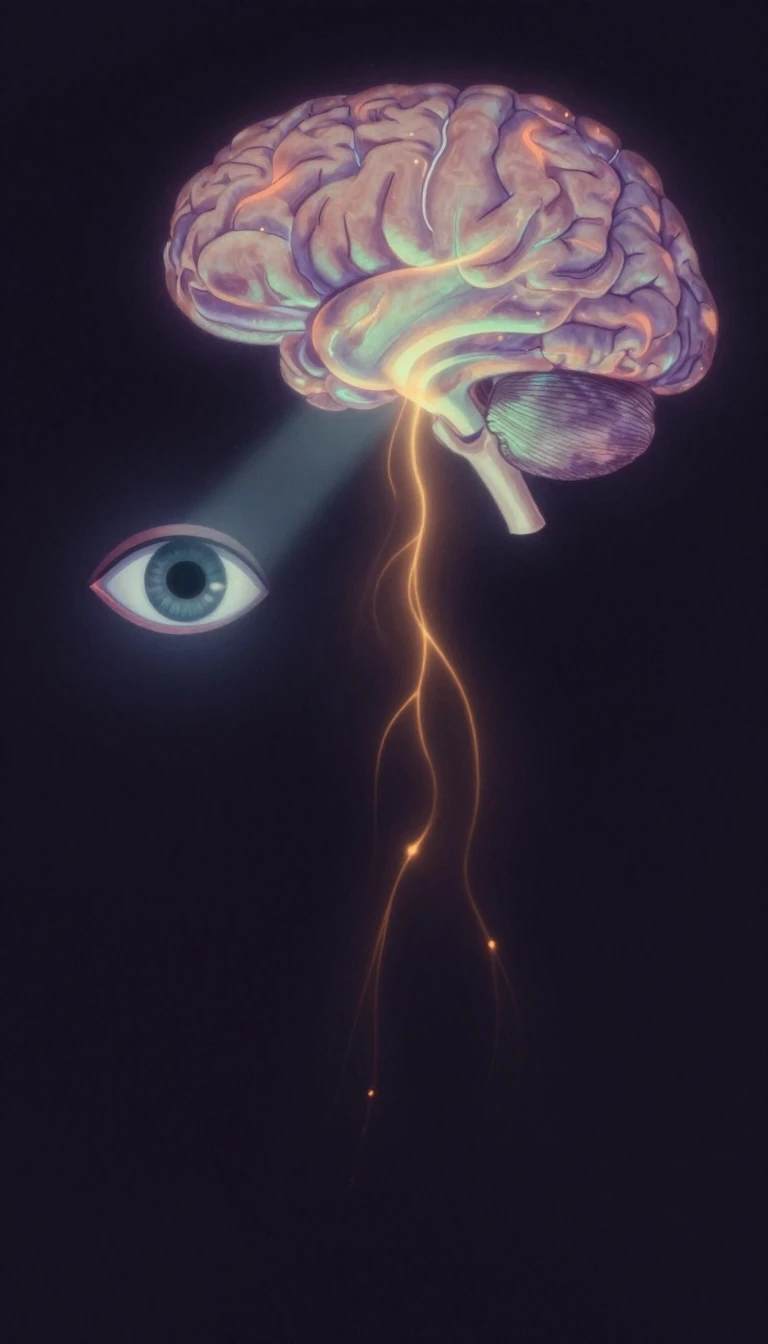 Why You Unconsciously Adopt the Moods and Behaviors of People Around YouEver felt anxious just by sitting near a stressed coworker, or found yourself smiling because a stranger did? This is emotional contagion, an unconscious process where we mirror t…
 Why the word enlightenment is a misleading translation for the Buddhist concept of bodhiWe often think of enlightenment as a sudden flash of divine illumination. But in early Buddhism, the term bodhi—the root of Buddha—actually means to wake up. It is a process-orien…
 Why envy is a uniquely destructive emotion that offers no promise of rewardEnvy is often mistaken for simple desire, but it is a far more corrosive force. While other vices offer the illusion of pleasure or security, envy delivers only bitterness. It is …
 Is the ancient Indian timeline a record of history or a mythological cycle?Hindu tradition maps the past through the Epic-Puranic chronology, a vast framework of royal genealogies and cosmic ages. While some scholars seek to anchor these stories in archa…
 The German novelist who was branded unpatriotic for writing the truth about warErich Maria Remarque defined the literature of the Great War, yet his success made him a target for the Nazis. Branded a traitor and stripped of his citizenship, he spent his life…
 The divine warrior with three eyes who once split a mountain to save his mother.Erlang Shen is a powerhouse of Chinese mythology, blending historical engineering feats with celestial drama. Whether he is the deified son of a hydraulic expert or the nephew of …
 Erlik Khan: The Fallen Architect of the Underworld in Ancient Turkic MythologyIn the vast, non-written traditions of Tengrism, Erlik stands as the formidable lord of the underworld. Often cast as the brother of the creator deity, he is the architect of sin,…
 The Nicaraguan priest-poet who reconciled the Gospels with Marxist revolutionErnesto Cardenal was a Roman Catholic priest and revolutionary who believed the four Gospels were inherently communist. His radical synthesis of liberation theology and Marxism de…
- The novelist who warned of German invasion and later smuggled guns for Irish rebels.Erskine Childers was a British imperialist who became an Irish republican martyr. His 1903 bestseller, The Riddle of the Sands, predicted a German naval invasion, prompting Winsto…
 How a nineteenth-century Argentine writer turned a slaughterhouse into a political battlefieldEsteban Echeverría, a pivotal figure in Latin American Romanticism, transformed literature into a weapon against dictatorship. By framing the struggle between European-style civil…
 Is the biblical Queen Esther a historical figure or a reimagined Babylonian goddess?The Book of Esther tells a dramatic tale of a Jewish queen who saves her people from genocide in the Persian Empire. Yet, scholars largely view the narrative as fiction, suggestin…
 Eugène Sue: The Surgeon Who Invented the Modern Serial NovelBefore he became a literary sensation, Eugène Sue served as a military surgeon. He later channeled his socialist convictions into massive, controversial serial novels that captiva…
 Eugenio Montale: The Nobel Laureate Who Found Truth in a World Without IllusionsBefore he became a titan of twentieth-century literature, Eugenio Montale was a trained opera singer. War and personal loss steered him toward poetry, where he developed a distinc…
 Why the brain requires a full-system activation to experience the sensation of true euphoriaEuphoria is more than just a fleeting feeling of happiness. It is a complex physiological state that requires the simultaneous activation of specific brain regions known as hedoni…
 Why the European dragon evolved from a simple serpent into a fire-breathing winged beast.The dragon of medieval lore was not always a winged, fire-breathing monster. Originally, the term simply described large snakes. Over centuries, these serpentine figures merged wi…
 Was Eve the first woman, or a symbol of life, snakes, and ancient myths?Eve is the foundational figure of Abrahamic origin stories, yet her identity shifts across traditions. Is she a literal ancestor, a rib-born companion, or a metaphorical vessel fo…
 Why ancient traditions imagined celestial beings descending to earth to corrupt humanityThe concept of fallen angels is a complex tapestry woven from ancient myths, not a single biblical narrative. While often associated with Satan's rebellion, these figures original…
- Why blood feuds were once considered a legitimate and necessary form of legal justiceFor centuries, the blood feud was not merely a chaotic outburst of violence but a regulated, socially accepted mechanism for justice. In societies lacking centralized law, kinship…
 The man who mentored the giants of literature but died feeling like a failureFord Madox Ford was a central architect of modern literature, editing the journals that launched Ezra Pound, D.H. Lawrence, and James Joyce. Yet, despite writing masterpieces like…
- Can psychology truly determine if a defendant is fit to stand trial?Forensic psychology merges scientific inquiry with the courtroom, tackling everything from criminal profiling to competency evaluations. While these experts influence high-stakes …
- Forgetting is not always a failure; it is a fundamental, systematic feature of memory.We often view forgetting as a flaw, yet it is a complex process essential to how our minds function. From the rapid decay of new information to the social forces that shape what w…
- Forugh Farrokhzad was an iconoclastic Iranian poet who defied tradition and redefined modern literature.Dying at 32 in a car accident, Forugh Farrokhzad left behind a legacy that transcended her controversial life. A modernist pioneer and feminist icon, she challenged the rigid poet…
- Why humanity remains obsessed with a mythical spring that never actually existedFor centuries, legends of a fountain capable of reversing aging have captivated the human imagination. From ancient poets to modern explorers, the dream of eternal youth persists …
- How a rural poet revived a dying language and won the Nobel PrizeFrédéric Mistral dedicated his life to restoring Provençal, the first literary language of civilized Europe. By weaving epic poetry with rigorous lexicography, he transformed a re…
 How an unhappy, alcoholic lawyer became the national poet of an entire country.France Prešeren lived a life of profound personal tragedy, marked by unrequited love, alcoholism, and professional failure. Yet, this 19th-century Slovene poet transformed his pri…
 How a children’s book author inadvertently changed British copyright law foreverFrances Hodgson Burnett was a literary sensation whose most famous character, Little Lord Fauntleroy, became a global fashion nightmare for young boys. Beyond her sentimental nove…
 Frances Sargent Osgood was the literary star who captivated Edgar Allan Poe's world.A celebrated poet in the 1840s, Frances Sargent Osgood was known for her conversational verse and high-profile literary romances. While her public life was defined by intense, fli…
 Was the legendary Beaumont and Fletcher partnership actually a literary myth?For centuries, the names Beaumont and Fletcher were inseparable, representing a singular voice in Jacobean theatre. Yet, modern scholarship reveals their collaboration was far mor…
- Why this French poet spent his life obsessively describing oranges, potatoes, and soapFrancis Ponge rejected the emotional excess of traditional poetry to focus on the mundane. By minutely examining everyday objects through prose poems, he sought to restore the pur…
 Frank O'Hara wrote poetry like a diary, capturing life between two people, not pages.A curator at the Museum of Modern Art, Frank O'Hara transformed American verse by treating poems as off-the-cuff records of daily life. He rejected academic formality, preferring …
 How a Finnish peasant's son became a Nobel laureate through life's chaotic accidentsBorn on a desolate croft, Frans Eemil Sillanpää rose from poverty to win the 1939 Nobel Prize in Literature. His journey was defined by serendipity, from an accidental education t…
- How a Jewish writer became a voice for the Armenian genocide and Catholic saintsFranz Werfel was a central figure in early 20th-century literature, moving from Prague's cafes to Hollywood fame. His life was defined by a complex relationship with faith, a harr…
 Before he was a novelist, Frederick Marryat was a heroic naval officer and inventor.Frederick Marryat is best remembered for pioneering nautical fiction, but his life at sea was defined by daring rescues and technical innovation. From inventing a specialized life…
- Is the goddess Frigg actually the same deity as the Norse goddess Freyja?Frigg, the wife of Odin and queen of the gods, remains one of the most enigmatic figures in Germanic mythology. While she is associated with marriage and prophecy, scholars have l…
- Why your brain turns blocked goals into anger and how to master the feelingFrustration is more than simple annoyance; it is a complex psychological response to perceived barriers. Whether the obstacle is internal, like self-doubt, or external, like a phy…
- Why functional psychology shifted our focus from the anatomy of mind to its utilityIn the late 19th century, a quiet revolution in psychology challenged the rigid study of mental structures. Instead of dissecting consciousness into static parts, functionalists a…
 Was the legendary first emperor of China a serpent-bodied deity or a human patriarch?Fuxi stands at the dawn of Chinese civilization, credited with inventing writing, cooking, and the family unit. Often depicted as a divine being with a serpent's body, he represen…
 Fyodor Sologub: The Russian Symbolist who turned provincial misery into a masterpiece of paranoia.Born into poverty and raised in a servant's quarters, Fyodor Sologub spent decades as a weary schoolteacher before shocking Russia with The Petty Demon. His work bridged the gap b…
- Why did a celebrated French Romantic poet walk a lobster on a silk leash?Gérard de Nerval was a literary giant who translated Goethe and influenced Marcel Proust. Yet, he is equally remembered for his eccentric habit of walking a pet lobster through Pa…
 How a penniless orphan became the foundational voice of modern Tatar literatureBorn into poverty and orphaned at five months, Gabdulla Tukay rose from the Peçən Bazaar to transform Tatar letters. By blending traditional Oriental poetic structures with the in…
- How a self-taught Chilean teacher became the first Latin American Nobel laureate in literature.Gabriela Mistral rose from rural poverty and limited formal education to become a global literary icon. A poet, diplomat, and educator, she navigated personal tragedy and politica…
 Why some Hindus worship the elephant-headed Ganesha as the supreme, singular divine beingWhile most Hindus invoke Ganesha as the god of beginnings, the Ganapatya sect elevates him further, declaring him the Parabrahman—the supreme reality. This distinct tradition, whi…
- How a misdiagnosed cancer scare birthed a Nobel Prize-winning literary masterpieceWhen Gao Xingjian was wrongly diagnosed with lung cancer in 1986, he embarked on a ten-month trek along the Yangtze River. That journey became Soul Mountain, a genre-defying novel…
 How a childhood accident and a library card shaped a Pulitzer-winning poet's lifeGary Snyder, a celebrated poet and environmental thinker, credits a four-month childhood illness for his literary trajectory. Bedridden at seven, he devoured books from the Seattl…
- Before Pushkin, Russia’s greatest poet was a soldier who survived being baked in an oven.Gavrila Derzhavin rose from an impoverished, sickly childhood to become a powerful statesman and the most celebrated poet of the Russian Empire. His verse broke the rigid rules of…
 Is the world's most famous Vedic mantra actually missing a syllable?The Gayatri Mantra, a cornerstone of Hindu liturgy and Vedic tradition, is technically incomplete. While it is celebrated as a twenty-four-syllable masterpiece, the original text …