 Intellect Plus
Technology
10,995 cards. Each one is a 40-second story with a five-minute read behind it. Page 183 of 184.
Subtopics: 3D printing & manufacturing · AI & machine learning: practical · Aircraft · Automata · Aviation · Batteries · Binary · Biotechnology · Bridges · Cameras & imaging · Cars · Chemical engineering · Chips · Codes · Compression · Computing · Computing and information technology · Computing history · Cryptography · Cybersecurity · Electric vehicles · Electronics · Energy · Engineering · Everyday tech · Famous patents · Future Frontier · How it works · How Things Work: GPS to the Phone · How Things Work: Jets, Propellers and Ships · Industry · Infrastructure · Internet · Inventions · Inventors · Machinery and tools · Maths · Media and communication · Medical technology · Medieval clockmaking · Mercedes-Benz Engineering · Military technology · Motorbikes · Navigation and timekeeping · Networks · Nuclear power · Optical technology · Physics · Pioneers · Programming · Programming languages · Radar · Radio · Researched · Robotics: practical · Robots · Rockets · Security · Semiconductors · Ships & boats · Skyscrapers · Smartphones · Software · Sound & audio technology · Spaceflight · Super-series Wave 1: Car To Wheels · Super-series Wave 1: From Power Station To Pc · Super-series Wave 1: The Journey Of Crude Oil · Technology today · Technology: General · Textiles · Trains & locomotives · Transportation · UK & Ireland: inventions · Video game technology · Web · Wireless
 The hidden feedback loops that power our modern worldFrom ancient water clocks to the complex logic of modern factories, automation is more than just machines replacing humans. It is the science of self-governing systems using feedb…
 The flammable legacy and heavy engineering of the world's first airshipsBefore the era of sleek jet engines, the sky belonged to massive, gas-filled giants. These 'ships of the air' offered unprecedented control, but their reliance on highly flammable…
 Why the heavy cost of horses once drove the rise of the tramBefore the electric revolution, urban transit relied on animal power. But the high cost of maintaining, feeding, and cleaning up after horses created a logistical nightmare. Disco…
 Why experts are retiring the word accident from our vocabularyWhen a vehicle strikes a tree or another car, we instinctively call it an accident. However, many global authorities are now demanding a linguistic shift. They argue that calling …
 How a 19th-century newspaper became a digital titan with 11 million subscribersFrom exposing political corruption in the 1870s to navigating the dot-com crash, The New York Times has survived centuries of upheaval. Today, it stands as a digital powerhouse, b…
 From ancient novelties to the engines that powered the Industrial RevolutionLong before they drove locomotives across continents, steam-powered devices were merely scientific curiosities. What began as an experimental toy in Roman Egypt eventually evolved…
 Is selling an art form or a measurable scientific process?While many view sales as a persuasive art, it is actually a structured system of repeatable milestones. From finding prospects to closing deals, professional selling relies on a m…
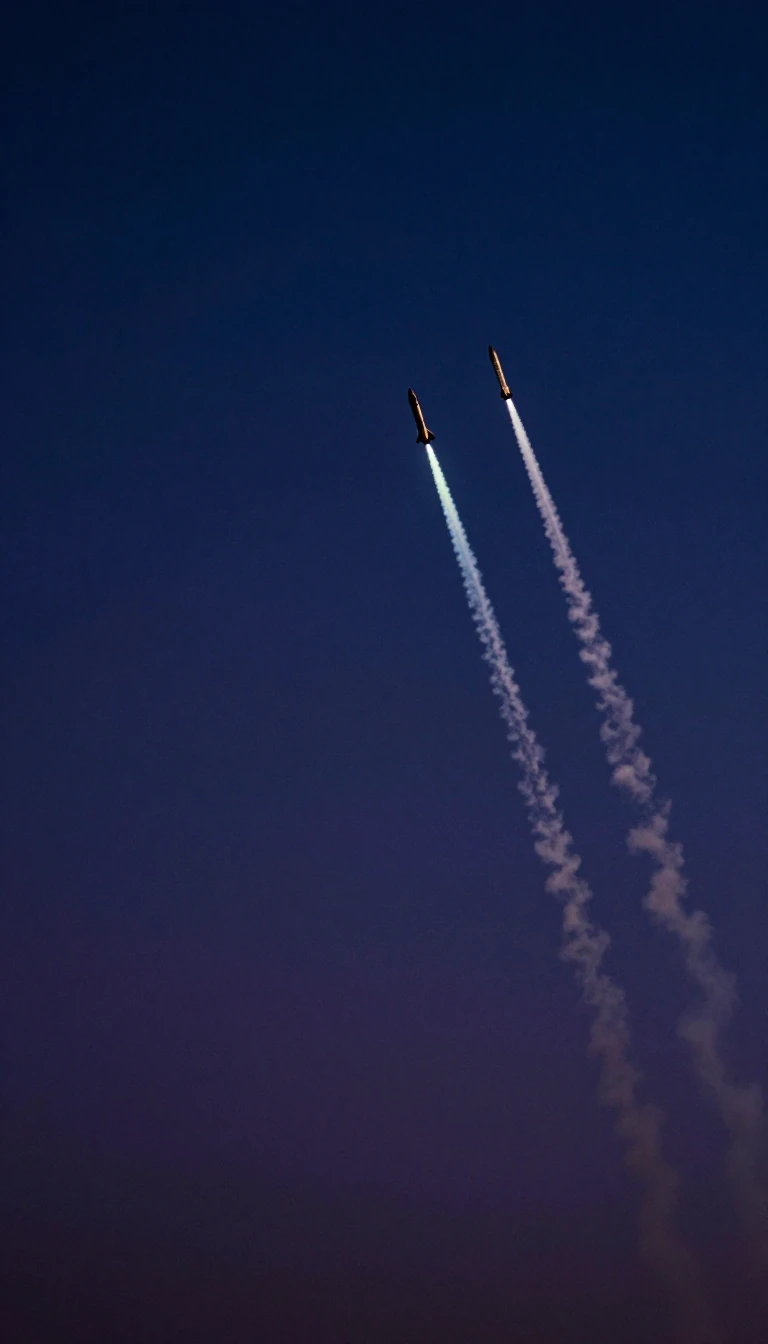 The man who dreamed of Mars while the world mocked himBefore the Space Age, Robert Goddard was ridiculed by the press for suggesting rockets could reach the moon. A shy physicist with little public support, he pioneered the very tech…
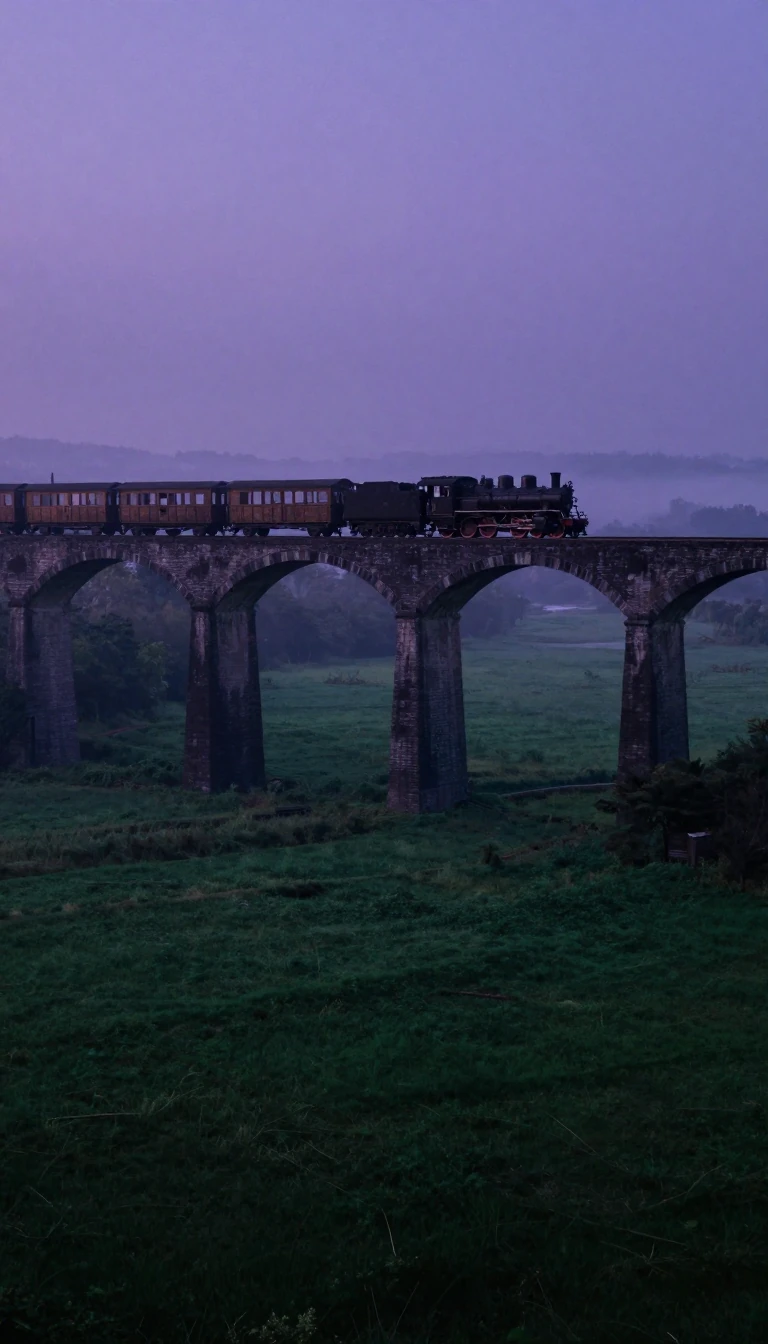 The heavy metal evolution of the world's most efficient land transportRail transport carries 8% of global freight and passengers, yet its modern form was born from a brutal struggle between materials. From brittle cast iron to the high-strength stee…
 The invisible engineering that makes modern cars lighter and more efficientWhile we often focus on the metal frame, nearly half of a modern car's volume is actually made of plastic. This high-tech substitution isn't just about cost; it is a critical leve…
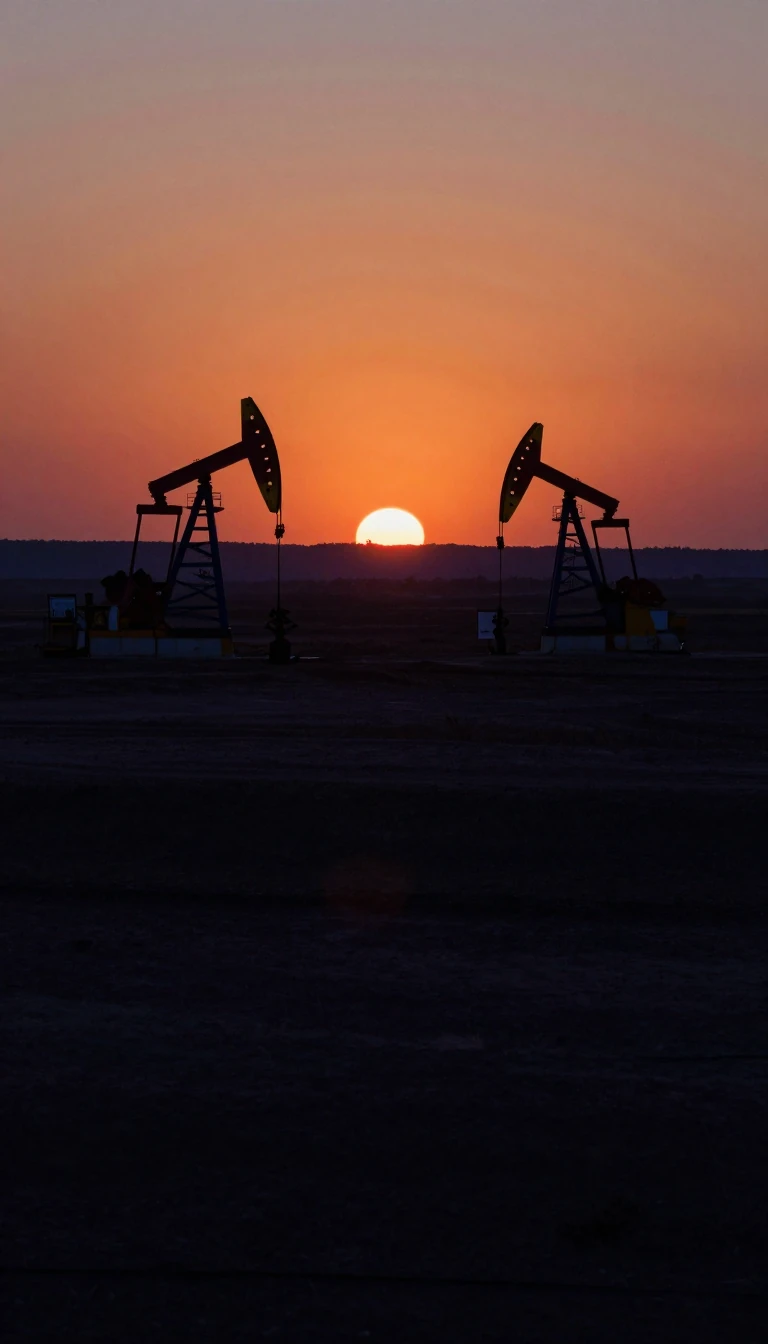 From ancient medicine to global power: the long, oily history of petroleumLong before it fueled the Second Industrial Revolution, petroleum was a tool of war, a medicinal salve, and a construction material. This complex mixture of hydrocarbons has shape…
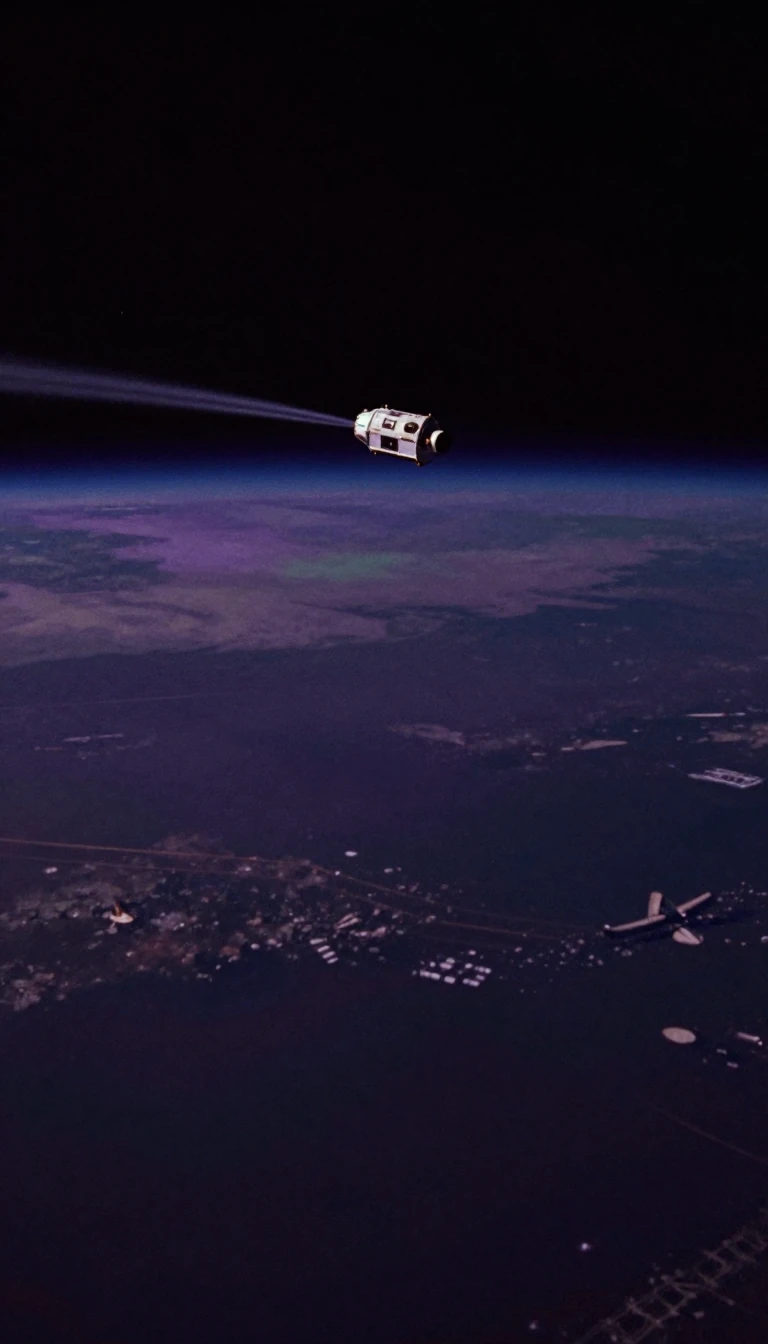 How much speed do you need to never fall back to Earth?We often think of orbits as perfect circles, but the reality is far more dynamic. From Newton’s cannonball to Einstein’s curved spacetime, understanding how objects move through t…
- The surprising history of gasoline: from industrial waste to global necessityIn the 19th century, gasoline was considered a useless byproduct of kerosene production, often dumped directly into rivers. Today, the global refining capacity reaches over 100 mi…
 From flint to Ford: the million-year evolution of making thingsManufacturing is often viewed as a modern industrial phenomenon, but its roots stretch back over two million years. From the first stone tools in the Great Rift Valley to the elec…
 The ancient origins of the modern machine are hidden in a stone hand axeWe often think of machines as complex digital systems, but the first true machine was a simple piece of chipped flint. From prehistoric wedges to programmable 9th-century robots, …
- The hidden evolution of the engine that moved the worldBefore the high-speed electric rails of today, the world relied on muscle, gravity, and steam. Discover how a 19th-century breakthrough in high-pressure steam transformed simple r…
 The explosive heart of modern mobility: how internal combustion engines workFrom the jet engines powering flight to the pistons in your car, the internal combustion engine transforms chemical energy into kinetic motion. But how does a controlled explosion…
 The 1958 origin of a term we use every single dayWe often treat 'Information Technology' as a modern buzzword, but the name itself was a deliberate choice made decades ago to describe a new era of computing. Discover how a simpl…
 The misleading myth of the precious and semi-precious distinctionWe often categorize gems into 'precious' and 'semi-precious' based on ancient Greek traditions. But in the modern market, this hierarchy is often an illusion. A common garnet can …
- The chemical engineering behind the high-octane fuel that powered the Allied air warModern gasoline is far more than just a simple liquid. It is a highly engineered cocktail of hydrocarbons, precisely blended to prevent engine knocking and maximize power. From th…
 The 1876 breakthrough that powers the modern worldMost cars rely on a rhythmic, four-part dance of metal and fire. While we call it the Otto cycle, the true history of this mechanical heartbeat involves patent battles, failed exp…
 The invisible engine of modern life is a masterpiece of energy transformationWe often take the flip of a switch for granted, but electricity is not a natural resource waiting to be harvested. It must be meticulously produced by transforming kinetic, therma…
- The brilliant mistake that powered the industrial worldRudolf Diesel set out to build a perfect engine based on the Carnot cycle, but his original design was physically impossible. Instead, he stumbled upon a compression-ignition syst…
 The unexpected marriage that fueled the birth of the modern automobileBefore the world knew the name Benz, the inventor’s success relied on a dowry. While Carl Benz designed the engines, his wife Bertha provided the capital and the first legendary l…
- The 1913 innovation that transformed a luxury toy into a global necessityBefore the moving assembly line, building a car was a slow, artisanal process. One radical shift in manufacturing didn't just slash production time by 85 percent; it fundamentally…
 The fundamental difference between a raft and a boat is how they handle wavesWhile both float, a raft is a 'flow through' structure that allows waves to pass through its components. A boat, however, relies on a waterproof hull to exclude water. This distin…
- From birdcages to billions: the shifting tides of global car productionThe automotive industry was once dominated by American giants, but the landscape has transformed. Today, a massive global market worth roughly $2.75 trillion in 2025 is being resh…
 The Pentagon's 'Last Supper' and the era of aerospace consolidationIn 1993, US defense officials invited industry executives to a meeting known as the 'Last Supper.' The message was clear: there were too many suppliers. This sparked a massive wav…
 The unexpected evolution of the tire from metal bands to pneumatic perfectionBefore they were the flexible cushions we rely on today, tires were heavy metal bands designed to hold wooden wheels together. The journey from blacksmith-forged iron to high-perf…
 From spinning disks to the cloud: the evolution of the moving imageBefore high-definition streaming and smart TVs, television was a mechanical marvel of spinning disks and silhouettes. We often forget that the medium's origins lay in experimental…
- Most watches now tick quartz; luxury still winds springsA watch is a personal timepiece built to keep steady time while you move—on a wrist strap or otherwise. From the sixteenth century, mechanical watches wound mainsprings and counte…
 Navigation means monitoring craft from here to thereNavigation studies how to track and steer vehicles between places. Marine practice keeps ships safe with charts and position fixes; the English word arrives in the 1530s from Lati…
 Radar times radio echoes to map distance and speedRadar systems transmit radio or microwave pulses and read returning echoes to find range, angles, and radial velocity. A transmitter, antennas, and receiver—often sharing one dish…
 GNSS turns orbiting clocks into a global gridSatellite navigation uses spacecraft to fix positions on Earth. A GNSS offers worldwide coverage; regional augmentation systems such as Japan's QZSS, India's GAGAN, and Europe's E…
 Hadley's double-reflection sextant fixed altitude sightsA sextant measures angular distance between two visible objects—usually a star or Sun and the horizon—to plot a position line. John Hadley and Thomas Godfrey implemented the doubl…
 Leonardo listened underwater with a tube in 1490Sonar—sound navigation and ranging—uses underwater sound to navigate, range, and detect objects. Passive modes only listen; active modes ping and hear echoes. Leonardo da Vinci re…
 Time zones follow borders more than neat meridiansA time zone is a region sharing one legal standard time for commerce and daily life. Offsets from UTC stretch from −12:00 to +14:00, usually whole hours, with a few half- or quart…
- Satellites read Earth without ever touching the groundRemote sensing gathers data about objects without touching them, especially Earth and other planets, using airborne or orbital sensors. Passive instruments catch reflected sunligh…
 Surveyors turn angles and distances into legal ground truthLand surveying locates points from measured distances and angles so that maps, property lines, and construction can agree. From Egyptian rope stretchers redrawing fields after the…
 Toy Story proved a full feature could be pure CGIComputer animation grew from lab demos and wire-frame hands into Saturday-morning series and blockbuster features. Below about twelve frames a second, motion looks jerky; theaters…
- Dead reckoning is not short for deduced reckoningBefore GPS, navigators tracked position from a last known fix, speed, heading, and elapsed time. Errors compound over distance, yet the method still powers inertial systems in air…
 At near-light speed, one year could mean ten on EarthThe future is not one shared timeline but a contested idea—shaped by physics, philosophy, religion, and grammar. Special relativity even suggests fast travellers could age less th…
 Foucault watched the Earth turn through a spinning wheelA gyroscope's spinning rotor resists tilting because angular momentum wants to hold its axis steady. That stubbornness powers ship compasses, camera stabilizers, spacecraft attitu…
 Islam's lunar calendar drifts eleven days every solar yearThe Hijri calendar counts twelve moon-based months, so Ramadan and Hajj rotate through every season over a thirty-three-year cycle. Its epoch marks the Prophet's 622 CE migration …
- The second is defined by caesium atoms ticking 9.19 billion timesAtomic clocks keep time by watching atoms' resonant frequencies. The SI second fixes the caesium-133 ground-state hyperfine transition at exactly 9,192,631,770 hertz. Ensembles of…
 Calendar comes from Romans calling out the new moonA calendar names days, weeks, months and years so people can agree on dates. Most track the sun, the moon or both. The English word comes from Latin kalendae, the first day of the…
- Sailors fix position by timing angles to the skyCelestial navigation, or astronavigation, finds location using stars, sun, moon, or planets. Navigators take sights—timed angular measures between a body and the horizon—then redu…
 China recorded one hundred two official calendars across historyThe traditional Chinese calendar is lunisolar: twelve moon-linked months plus leap months when needed to track the solar year. Historians count 102 officially recorded calendar sy…
- Modern clocks are harmonic oscillators in a boxA clock measures and shows time, one of humanity's oldest inventions for dividing the day into smaller pieces. Sundials and water clocks came first. The word itself means bell: ho…
- China's compass began as a Han-dynasty divination toolA compass shows cardinal directions, usually via a magnetized needle aligning with Earth's magnetic field. Degrees often run clockwise from north at zero. Among China's Four Great…
- UTC replaced everyday GMT starting in the 1960sCoordinated Universal Time is the world's main civil time standard, successor to Greenwich Mean Time in common use. It rides on International Atomic Time—a weighted average of hun…
 The first general-purpose computer was designed in 1837, and never built.Charles Babbage's Analytical Engine had a memory, a processor, loops and conditional branching, fed by punched cards. In principle it could compute anything a modern computer can.…
 During the first Moon landing, the computer overloaded, and its design saved the mission.Minutes before Apollo 11 touched down, the Apollo Guidance Computer flashed alarms 1202 and 1201: it had more work than time. Instead of crashing, it restarted, dropped its least …
 A single number too big for its box destroyed a rocket 37 seconds after launch.On 4 June 1996, Europe's new Ariane 5 rocket veered off course and self-destructed on its first flight, taking four science satellites with it. The cause was old software reused f…
 The first message on the internet's ancestor was 'lo'. Then it crashed.On 29 October 1969, a UCLA student tried to log in to a computer at Stanford Research Institute over the new ARPANET. He typed 'l', then 'o', and the remote machine crashed. An ho…
 The Brooklyn Bridge was built with fraudulent wire, and it held anyway.During construction, engineers discovered a supplier had slipped substandard wire into the Brooklyn Bridge's main cables. It was too late to take it out. The bridge survived becau…
 Nearly a third of the world's tallest building is a spire nobody can use.The Burj Khalifa in Dubai rises 828 metres. But its top 244 metres is a steel spire with almost no usable space, which one study said could be a skyscraper on its own. Without it,…
 Two teams dug under the sea from opposite shores and missed by only 30 centimetres.Building the Channel Tunnel, British and French crews bored towards each other beneath the seabed. When the service tunnel broke through in 1990, the two halves were misaligned by…
 The early internet's address book was a single text file kept in California.Before 1983, every computer on the ARPANET found others using one file, HOSTS.TXT, maintained at the Stanford Research Institute. It could not keep up. Paul Mockapetris replaced i…
 The first programmers of ENIAC were six women nobody invited to the party.ENIAC, unveiled in 1946, was the first programmable, electronic, general-purpose computer. There were no programming languages yet, so six women worked out how to make it compute …