 Intellect Plus
Technology
10,995 cards. Each one is a 40-second story with a five-minute read behind it. Page 182 of 184.
Subtopics: 3D printing & manufacturing · AI & machine learning: practical · Aircraft · Automata · Aviation · Batteries · Binary · Biotechnology · Bridges · Cameras & imaging · Cars · Chemical engineering · Chips · Codes · Compression · Computing · Computing and information technology · Computing history · Cryptography · Cybersecurity · Electric vehicles · Electronics · Energy · Engineering · Everyday tech · Famous patents · Future Frontier · How it works · How Things Work: GPS to the Phone · How Things Work: Jets, Propellers and Ships · Industry · Infrastructure · Internet · Inventions · Inventors · Machinery and tools · Maths · Media and communication · Medical technology · Medieval clockmaking · Mercedes-Benz Engineering · Military technology · Motorbikes · Navigation and timekeeping · Networks · Nuclear power · Optical technology · Physics · Pioneers · Programming · Programming languages · Radar · Radio · Researched · Robotics: practical · Robots · Rockets · Security · Semiconductors · Ships & boats · Skyscrapers · Smartphones · Software · Sound & audio technology · Spaceflight · Super-series Wave 1: Car To Wheels · Super-series Wave 1: From Power Station To Pc · Super-series Wave 1: The Journey Of Crude Oil · Technology today · Technology: General · Textiles · Trains & locomotives · Transportation · UK & Ireland: inventions · Video game technology · Web · Wireless
 The hard part of a circuit breaker is killing the sparkOpening a switch sounds simple, yet pulling two contacts apart while a large current flows makes the electricity leap the gap as a glowing arc. Left alone, that arc can vaporise m…
 Designing an electronic circuit starts with boxes whose insides are ignoredBefore an engineer picks a single resistor, a new circuit usually exists as a diagram of empty boxes. Each box states a job, such as amplify, filter or power, with no thought yet …
 Why shops once sorted gadgets into black, brown and white goodsWalk into an American electronics shop decades ago and the radios, televisions and stereos were black goods, named for their dark casings. British sellers called the same things b…
 The diode is an electrical one-way valve with a two-path nameA diode lets current flow one way and all but blocks it the other, much like a check valve in plumbing. That humble trick turns household alternating current into the steady direc…
 How the humble book, folded from awkward scrolls, won the ancient worldFor centuries the written word came rolled up, and finding a passage near the far end meant winding through everything before it. The fix was to fold the roll into pages and bind …
- A dial-up modem was secretly playing a very fast tune to send dataOld telephone lines were built for voices, not for zeros and ones, so computers talked over them by singing. A modem turned pairs of bits into distinct tones, like an instrument w…
 The oldest recordings of a human voice waited 150 years to be heardIn 1857 a Parisian inventor captured sound waves as wavy lines scratched through soot on paper. His machine could record but never play back; it was meant only for looking at soun…
 HAL's dying song in 2001 came from a real Bell Labs computer demoIn 1961 an IBM 7090 at Bell Labs sang Daisy Bell in a synthetic voice. Arthur C. Clarke happened to be visiting a friend there and heard it. He was so struck that he wrote the mom…
 Great Wall smoke signals could warn of armies but never spell a wordChinese signallers on the Great Wall threw wolf dung onto fires to make dark smoke by day, and by the Tang dynasty a warning could travel 1,100 kilometres in a single day. Impress…
 Fifteen years before Bell, a German inventor's phone said the horse won't eat cucumber saladIn October 1861 Johann Philipp Reis showed the Physical Society of Frankfurt a device that turned a voice into electrical signals, and used it to transmit a deliberately odd sente…
 Why a satellite dish never moves, and why rain can blank the pictureA satellite dish bolted to a wall can stay pointed at one spot forever because the satellite it listens to circles Earth exactly as fast as the planet spins. Parked about 36,000 k…
 Charles Babbage designed a computer printer that waited until 2000 to be builtThe first computer printer was designed in the 19th century by Charles Babbage, as a mechanical output for his difference engine. Nobody actually built it until 2000. He also sket…
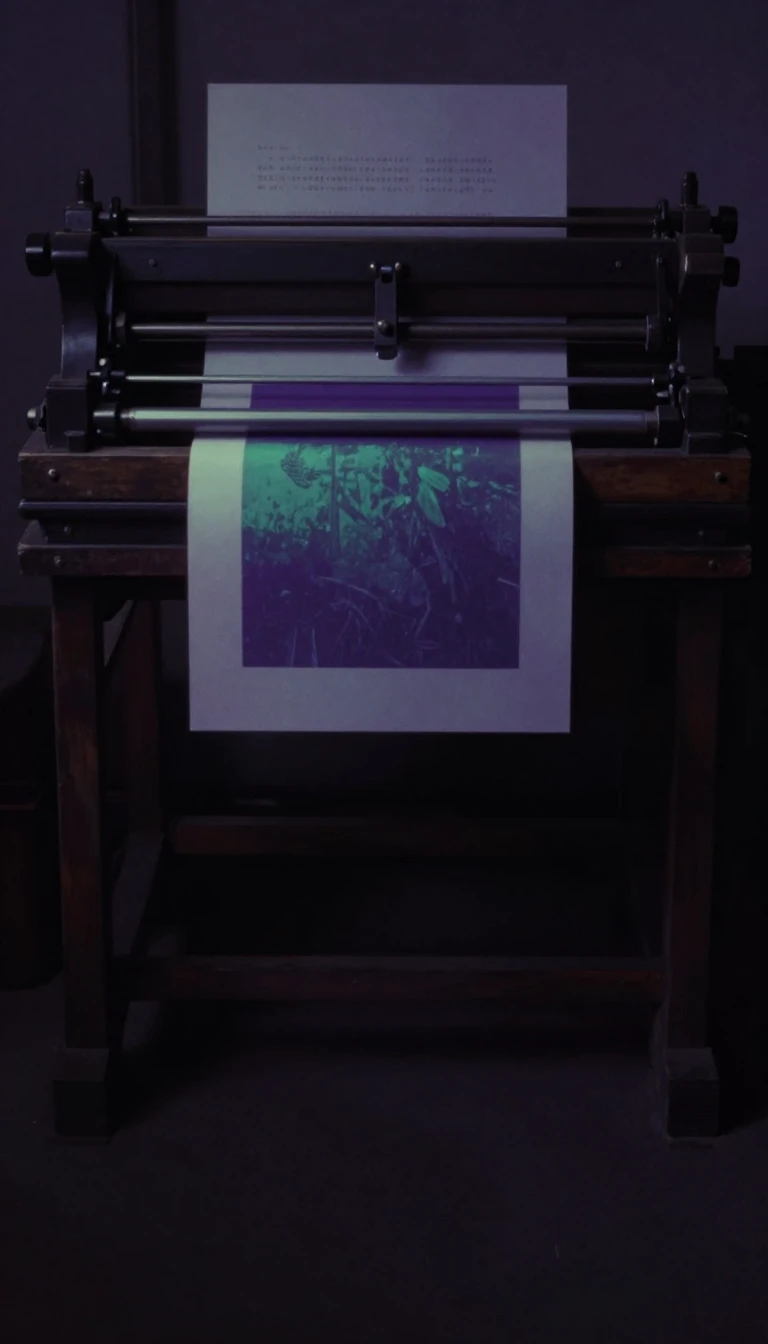 Medieval tricksters secretly printed amulets and sold them as handwrittenBetween roughly 900 and 1444, street magicians across the Islamic world known as the Banū Sāsān printed amulets bearing Quranic verses from wooden and tin blocks. They kept the me…
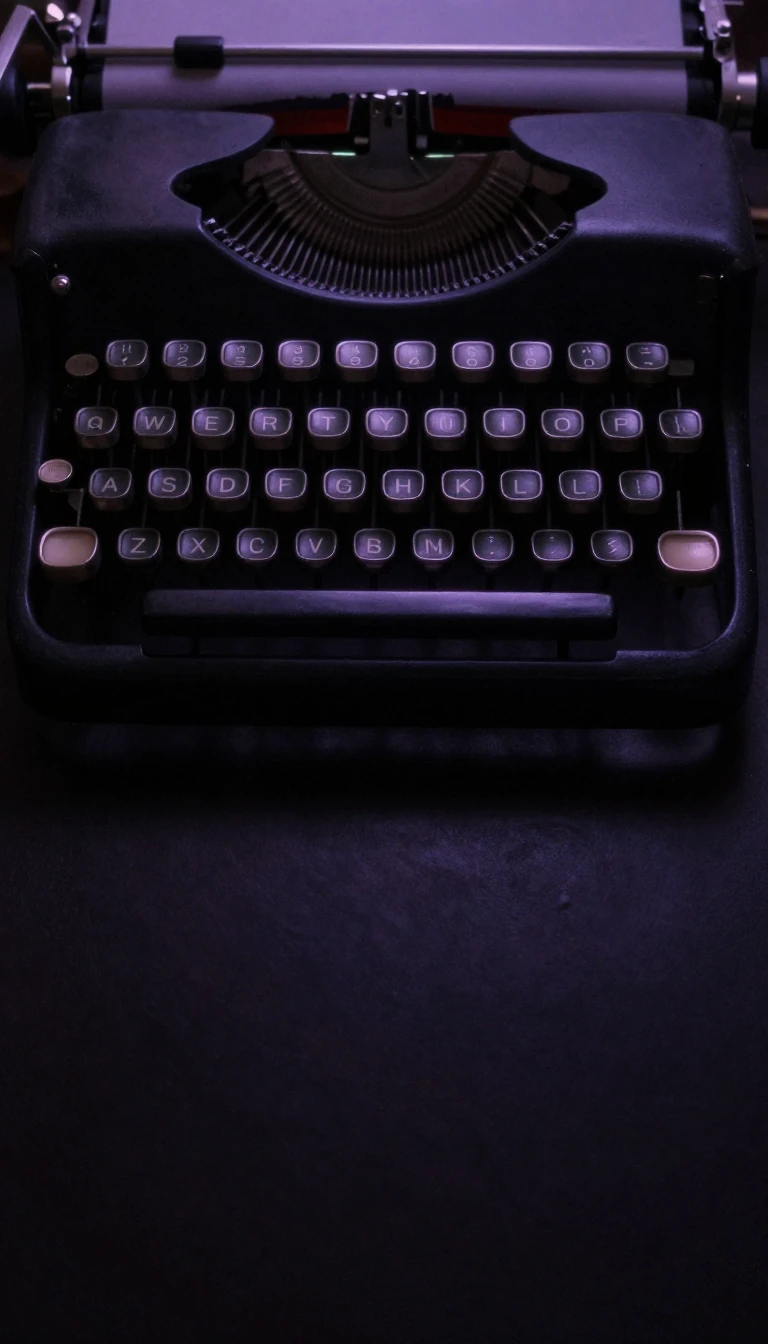 Gutenberg's genius was combining four old inventions, including a wine pressThe printing press that transformed Europe around 1440 was built largely from borrowed parts: a Roman-era screw press used for grapes and olives, movable type, the book format and…
 The word radio started as a label on telegrams before meaning broadcastsIn December 1904, the British Post Office told telegraph operators to mark messages sent without wires with the word radio. Two years later an international convention in Berlin m…
- Before radio stations, Europeans heard the news down telephone linesLong before radio, some European cities had telephone newspapers that piped news and entertainment to paying subscribers. They could bill every listener but reached only one town,…
- The photocopier was born in a kitchen and rejected by IBMChester Carlson, a patent attorney with arthritis, hated copying documents by hand, so he experimented in his kitchen. In 1938 he made the first photocopy, the words 10-22-38 Asto…
 Podcasts had a 1965 ancestor: sales lessons on cassette for the carIn 1965 the scriptwriting firm Storycraft made hour-long audio programmes on then-new Philips cassettes so Westinghouse salespeople could learn while driving. Called Salespoint, i…
 British stamps still carry no country name, a privilege of going firstEvery nation's postage stamps must name the issuing country, with one exception: the United Kingdom. Britain launched the idea on 1 May 1840 with the Penny Black, bearing Queen Vi…
 The engineering secrets behind the perfect heavy loadWe often think of backpacks as simple fabric sacks, but the evolution of the pack is a masterclass in physics. From 19th-century military patents to modern trekking gear, the true…
 How a secretive project called 'Purple' redefined the modern smartphoneIn 2004, a team of 1,000 employees began working on a confidential mission. What started as a potential tablet evolved into a device that would eventually sell over 3 billion unit…
 The 1984 California law that birthed a trillion-dollar digital economyLong before Amazon dominated your doorstep, a legislative milestone in California defined the rules of electronic commerce. What began as a specific state act has evolved into a g…
 The digital postman: how a store-and-forward system keeps us connectedBefore instant messaging, there was a system designed for reliability over speed. Email doesn't require you and your recipient to be online at the same time. By using a clever sto…
 The terrifying physics of the world's most destructive machinesFrom the 15-kiloton blast in Hiroshima to the 50-megaton Tsar Bomba, nuclear weapons harness the fundamental energy of the atom. Whether through fission or fusion, these devices c…
 How the decline of domestic servants birthed the modern American kitchenThe rise of the self-contained electric appliance was more than a technical feat; it was a social response to a changing workforce. As full-time domestic servants disappeared in t…
 The unexpected political architect behind the English ReformationWe often remember Henry VIII for his six wives and tyrannical whims. But the structural transformation of England—the break from Rome and the birth of the Church of England—was dr…
- From vacuum tubes to 13 sextillion transistors: the evolution of modern electronicsThe digital world we inhabit was built on a series of monumental shifts. It began with the discovery of the electron and the bulky vacuum tube, eventually leading to the mass prod…
 From bankruptcy to Bezos: the turbulent evolution of a national newspaper of recordFounded in 1877, The Washington Post has survived financial ruin, political scandals, and ownership shifts. Today, as it navigates a digital-first era under Jeff Bezos, the paper …
 The invisible toll of our industrial legacy is far deadlier than warPollution is often viewed as a mere nuisance, but the scale of its impact is staggering. Recent data suggests that annual deaths from environmental contaminants are significantly …
 From burning cattle to buying personalities: the ancient evolution of the brandLong before logos and slogans, branding was a literal act of fire. What began as a way to mark livestock and identify ownership has transformed into a sophisticated psychological …
 The shifting definition of terror: from revolutionary justice to the weapon of the weakestIs terrorism a modern phenomenon or an ancient impulse? While the term originated during the French Revolution to describe state-led political violence, it has evolved into a comp…
- From smoke signals to the internet: the evolution of remote thoughtLong before the digital age, humans relied on homing pigeons and hilltop beacons to bridge distances. Today, we transmit exabytes of data across the globe instantly. But how did w…
- The pocket-sized supercomputer that replaced your entire gadget collectionIt is more than a phone. From GPS and cameras to heart rate monitors and barometers, the smartphone has swallowed the PDA, the camcorder, and the e-reader. But how did a single sl…
 The Great Energy Shift: From 68% Fossil Fuels to a Renewable FutureA decade ago, fossil fuels dominated the global energy landscape. Today, a massive structural transition is underway. As solar and wind costs plummet, the global electricity suppl…
 From ancient skull drilling to quantum computing: the epic challenge of the brainFor centuries, we believed the heart was the seat of intelligence, treating the brain as mere cranial stuffing. Today, neuroscience is a multidisciplinary frontier, attempting to …
 How a subtle electric field turns liquid crystals into a digital canvasModern screens don't actually emit light; they act as sophisticated shutters. By applying tiny voltages to a layer of liquid crystals, we can twist or untwist molecules to precise…
 How a failed login attempt helped birth the modern internetIn 1969, the first message sent between two network gateways was supposed to be 'LOGIN'. Instead, the system crashed after only two letters. This glitch occurred during the infanc…
 The invisible architecture that powers every click on the webEvery time you tap a link, a complex conversation begins. Behind the seamless interface of your browser lies the Hypertext Transfer Protocol, a sophisticated request-response syst…
 Is it enough to do good, or must you do the most good?When faced with a difficult choice, do you focus on your duties or the final outcome? The study of ethics explores these fundamental tensions, offering frameworks to navigate ever…
 The ancient art of steering is the foundation of modern control theoryLong before the digital age, a single metaphor unified biology, engineering, and sociology. By studying how a ship's rudder responds to the sea, scientists discovered the power of…
 From 'Water Carriers' to Modern War Machines: The Tank's Secret Naming HistoryThe armored fighting vehicle we know today has a surprisingly bureaucratic origin story. Before it was a symbol of modern warfare, its name was deliberately obscured by military c…
 Computer science is about much more than just the computers we useWhile we often associate the field with hardware and silicon, its true essence lies in the logic of automation. From ancient abacuses to modern artificial intelligence, the discip…
 From punch cards to microprocessors: the evolution of the computer programBefore software was a digital file, it was a physical labor. Early programming involved heavy cables, rotating knobs, and manual switches. Today, we write code in human-readable l…
 Before they were machines, computers were peopleLong before the silicon chip, a 'computer' was a job title held by humans. In the mid-20th century, these individuals—often women—performed the grueling, manual arithmetic require…
- The invisible architects translating human logic into machine codeEvery time you run an app, a silent translator has already been at work. Compilers bridge the gap between high-level human thought and the raw ones and zeros of hardware, performi…
 The enduring architecture of the modern computer's brainFrom the massive, hand-wired ENIAC to the tiny chip in your smartphone, the fundamental way a central processing unit operates has remained remarkably stable for decades. Discover…
- How a single microprocessor changed the world of computing foreverIn 1970, calculators were a massive pillar of global computing power. Today, they are nearly invisible. Discover how the Intel 4004 and the shift from mechanical gears to integrat…
 The modern dictator no longer relies solely on the swordWhile we often imagine autocrats ruling through terror, a new era of governance is emerging. Instead of mass violence, many modern regimes are mastering the art of information man…
 The ancient math that became the modern algorithmWe often think of algorithms as modern digital enigmas, but their roots reach back to ancient Mesopotamia. From 2500 BC clay tablets to 9th-century Persian breakthroughs, the conc…
 The surprising linguistic and historical roots of the modern taxicabBeyond the iconic yellow paint and city streets lies a complex history of linguistic evolution and wartime heroism. From 17th-century horse-drawn carriages in London to the motori…
 The accidental discovery that turned the human body transparentIn a darkened laboratory in 1895, Wilhelm Röntgen noticed a strange, ghostly shimmer on a distant screen. He had unintentionally unleashed a new form of radiation, a discovery so …
 From reed boats to rocket cars: the long evolution of self-propulsionHumanity's drive to move has spanned millennia, evolving from ancient logboats to the Saturn V rocket. While we often focus on modern cars, the history of vehicles is a complex sa…
- Before Google, the web was indexed entirely by handToday, automated crawlers map billions of pages in seconds. But in the early 1990s, finding information required manual effort and curated lists. Discover how we moved from human-…
 From 2-kilogram bricks to global ubiquity: the evolution of the cellular networkIn 1973, the first handheld mobile phone weighed about 2 kilograms and required a massive battery. Today, mobile subscriptions exceed 9.1 billion. How did we transition from manua…
 The brilliant, inefficient mistake that powered the Industrial RevolutionWe often credit James Watt with inventing the steam engine, but he actually inherited a failure. By identifying a massive thermal leak in the existing Newcomen design, he engineer…
- How a single piece of silicon replaced a world of tangled wiresBefore the microchip, electronic progress was stalled by the sheer complexity of manual wiring. The invention of the integrated circuit changed everything, allowing engineers to p…
 The surprising evolution from handheld stones to ear-hooking spectaclesBefore they rested on your nose, glasses were heavy spheres you had to hold over a page. It took centuries for eyewear to move from simple magnifying tools to the sophisticated, m…
- The statesman who revolutionized science through the power of doubtBefore the scientific revolution, knowledge was often trapped in ancient logic and mystical alchemy. Francis Bacon changed everything by championing a skeptical, methodical approa…
 From Benjamin Franklin's jars to the future of the global power gridWhat began in 1749 as a collection of linked capacitors is now a global industry poised to reshape our energy landscape. As we transition toward decarbonization, the humble batter…
 The linguistic evolution of a system once called 'economic individualism'We call it capitalism, but the term itself is a subject of intense debate. Some historians argue the word is a modern misnomer, a rhetorical device used by critics to describe wha…