 Intellect Plus
Technology
10,995 cards. Each one is a 40-second story with a five-minute read behind it. Page 179 of 184.
Subtopics: 3D printing & manufacturing · AI & machine learning: practical · Aircraft · Automata · Aviation · Batteries · Binary · Biotechnology · Bridges · Cameras & imaging · Cars · Chemical engineering · Chips · Codes · Compression · Computing · Computing and information technology · Computing history · Cryptography · Cybersecurity · Electric vehicles · Electronics · Energy · Engineering · Everyday tech · Famous patents · Future Frontier · How it works · How Things Work: GPS to the Phone · How Things Work: Jets, Propellers and Ships · Industry · Infrastructure · Internet · Inventions · Inventors · Machinery and tools · Maths · Media and communication · Medical technology · Medieval clockmaking · Mercedes-Benz Engineering · Military technology · Motorbikes · Navigation and timekeeping · Networks · Nuclear power · Optical technology · Physics · Pioneers · Programming · Programming languages · Radar · Radio · Researched · Robotics: practical · Robots · Rockets · Security · Semiconductors · Ships & boats · Skyscrapers · Smartphones · Software · Sound & audio technology · Spaceflight · Super-series Wave 1: Car To Wheels · Super-series Wave 1: From Power Station To Pc · Super-series Wave 1: The Journey Of Crude Oil · Technology today · Technology: General · Textiles · Trains & locomotives · Transportation · UK & Ireland: inventions · Video game technology · Web · Wireless
 The famous postal motto on a New York post office is PersianCarved across the James Farley Post Office in New York is a line about couriers undeterred by snow, rain, heat or gloom of night. It comes from Herodotus, who was describing Persi…
 Radio hobbyists proudly call themselves hams, a word that began as a telegraph insultIn 19th-century wired telegraphy, professionals mocked clumsy Morse senders as ham-fisted, or simply hams. When hobbyists started tinkering with wireless, professional operators o…
 Assembly language speaks almost directly to the processor, one instruction at a timeBeneath every app sits machine code, raw numbers a processor understands. Assembly language is the thinnest human-readable layer over those numbers, usually one written line per m…
 An infamous art forger's son faked his father's paintings, complete with certificatesHan van Meegeren became notorious for forging art. Then his son went one layer deeper, producing fakes of his father's own work and supplying provenance certificates to go with th…
 Broadcasting borrowed its name from farmers flinging seed across a fieldLong before radio, to broadcast meant sowing seed by scattering it widely by hand. The word later stretched to cover spreading news through print and telegraph, and by 1898 it des…
 Cable television began with antennas on hilltops feeding towns that mountains cut offIn 1948, rural American communities hidden behind hills could barely pull in a television picture. The fix was blunt: raise one enormous antenna on high ground, taller than anyone…
 Retro gamers still hunt old tube televisions because light guns refuse to work without themFlat screens replaced bulky picture tubes years ago, yet some players still haul the old sets home. Light guns in classic games work only with cathode ray tubes, because they depe…
 Every letter you type is secretly a number, and agreeing on which number was hardA computer cannot store the letter g, only numbers. Character encoding is the agreement about which number stands for which symbol. Getting everyone to share one scheme proved sur…
 Engineers once scattered 350 million copper needles in orbit to bounce radio signalsBefore satellites could reliably amplify signals, engineers tried simply reflecting them off something up high. The Moon served as one mirror. Another experiment, Project West For…
 Calculator salesmen reportedly fled Russia after watching skilled abacus operators at workAccording to the writer Yakov Perelman, some businessmen who tried to sell mechanical calculators in the Russian Empire gave up in despair once they saw how fast a practised abacu…
 The world's most used operating system began as software for digital camerasWhen Andy Rubin and Chris White founded Android Inc. in Palo Alto in October 2003, they were building an operating system for digital cameras. Investors were unimpressed, the offi…
 Early AI mastered logic puzzles but stumbled over everyday common senseThe first researchers in artificial intelligence taught machines to reason step by step, the way people work through a puzzle. It turned out humans rarely think that way. Most of …
 Brewing beer counts as one of humanity's oldest biotechnologiesLong before anyone spliced a gene, people in ancient Mesopotamia, Egypt, China and India were putting microbes to work. Malted grain turned starch into sugar, and added yeast turn…
 Nature was cloning organisms hundreds of millions of years before DollyDolly the sheep made headlines in 1996 as the first mammal cloned from an adult body cell, but cloning itself is ancient. Bacteria splitting in two, plants sprouting from runners …
 Scientists sort DNA by size using a slab of jelly made from seaweedOne of molecular biology's workhorse tools is basically a race through jelly. Load DNA into a slab of gel, switch on an electric field, and fragments crawl toward the positive end…
- A 1951 science fiction novel used the phrase genetic engineering before DNA was understoodJack Williamson's novel Dragon's Island talked about genetic engineering in 1951, a year before Alfred Hershey and Martha Chase confirmed DNA's role in heredity and two years befo…
- Computer networking began in 1940 with a teletype and a very long cableIn 1940 George Stibitz sat a teletype at Dartmouth and had it drive his calculator at Bell Labs in New York, the first time anyone used a computer remotely in real time. From that…
 Programmers spend more time reading code than writing itProgramming sounds like writing, but most of a programmer's day goes to reading: working out what existing code does, reusing it and changing it. That is why readability matters s…
 Even a sealed-off computer can leak secrets through faint radio emissionsCutting a machine off from every network does not make it private. Its circuits give off weak electromagnetic signals, and a listener nearby can reconstruct what it is doing. The …
 The transistor was imagined in 1925, two decades before anyone built oneJulius Lilienfeld described a field-effect transistor in 1925, but the device that finally worked came from Bell Labs in 1947, and the silicon version that made modern chips possi…
- Before the 1970s, every secret message relied on a shared keyFor thousands of years, sender and receiver had to agree a secret beforehand, and anyone who stole it could read everything. Then asymmetric systems let people publish one key ope…
 C began as a tweak to a failed language so two men could rewrite UnixHalf a century after Dennis Ritchie created it at Bell Labs, C still runs underneath much of computing, in operating system kernels, device drivers and tiny embedded chips. It beg…
 Computer architecture borrowed its name from building design, and its logic tooIn 1959 an IBM researcher writing about the Stretch supercomputer decided that machine organization sounded too dull, and called his subject system architecture instead. The label…
 Deleting a file usually just cuts a thread that points to itOn Unix-like systems, the command to remove a file does not erase any data. It snips one named link to the file; only when every link is gone does the system mark that space as fr…
 Heat, not cleverness, now sets the limit on how fast computers getFor nearly two decades, from 1986 to 2003, computer hardware got more than 50 percent faster every year. Then the gains slowed. The binding constraint became getting power into ch…
- Your keyboard's ancestors sent stock prices down telegraph wiresThe keyboard on your desk descends less from the typewriter than from two workhorses of the telegraph and census era: the teleprinter, which relayed stock prices as early as the 1…
 The first computer monitor was a panel of light bulbsEngineers on early computers watched rows of bulbs, each showing whether one bit inside the machine was on or off. That panel let them monitor the computer, and the name stuck to …
 The mouse was nearly beaten by a knee pedal and a bowling ballBefore settling on the mouse, Douglas Engelbart's lab tried pointers worked by the chin, the nose and a knee under the desk. An earlier Canadian navy tracker rolled a standard fiv…
 The word digital began with fingers and an anti-aircraft gunDigital shares its root with digit and the Latin digitus, finger, because people counted on their hands. Its modern sense arrived in 1942, when George Stibitz of Bell Telephone La…
- From an Egyptian tomb to the internet: four thousand years of secret writingAround 1900 BC, the tomb of an Egyptian named Khnumhotep II used inscriptions that swapped ordinary symbols for unusual ones, one of the earliest known examples of encryption. The…
 Ethernet is named after a substance physicists no longer believe existsIn a memo dated 22 May 1973, Robert Metcalfe of Xerox PARC called his new office network The Ether Network. The name recalled the old idea of a luminiferous aether filling space a…
- File system meant a way of organising paper long before computersAround 1900, a file system was a method for arranging paper documents in an office. By 1961 the phrase was being borrowed for computers, and by 1964 it was everyday jargon. The jo…
- A 1930s theory of pure functions became a whole way of programmingDuring the 1930s Alonzo Church devised a formal system of computation built from nothing but functions and their application. Alan Turing showed in 1937 that it was as powerful as…
 The first hard drive was as big as two refrigerators and held under four megabytesIBM's first production hard disk, the 350, shipped in 1957 as part of the 305 RAMAC computer. Roughly the size of two large fridges, it spun a stack of 52 platters to hold five mi…
 The first public guide to HTML listed only eighteen tagsWhen Tim Berners-Lee first mentioned a document called HTML Tags online in late 1991, it described a mere 18 elements. Most were borrowed from an in-house documentation format use…
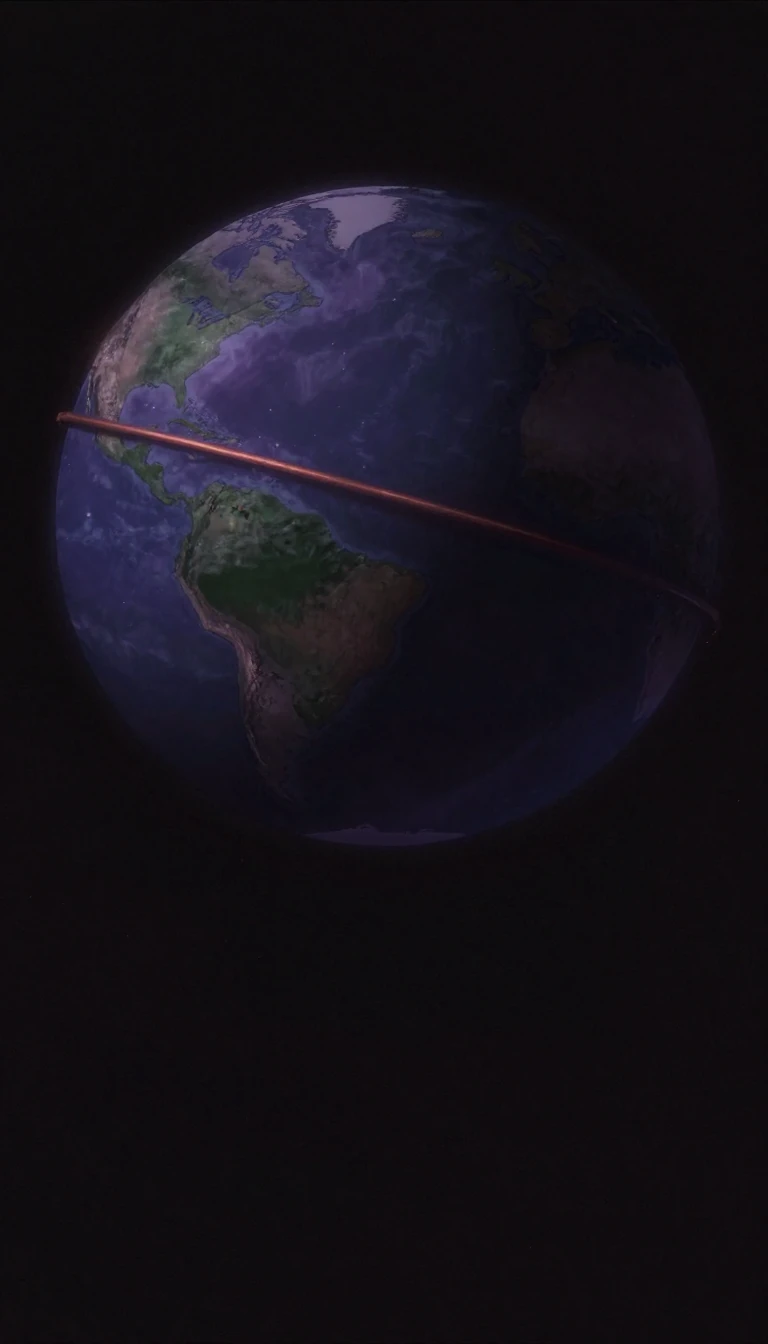 The internet began as two linked computers in California in 1969On 29 October 1969, a computer at the University of California, Los Angeles was connected to one at the Stanford Research Institute. That two-node link was the first piece of ARPA…
- CSS let web pages change their whole look by editing one fileEarly web pages carried their fonts, colours and borders inside the markup, repeated wherever they appeared. Want every heading blue instead of red? You hunted down each one. Casc…
- The first electrical data links were digital long before computers existedIt is tempting to think digital communication began with computers. Yet the electrical telegraph of 1809 and the teletypewriter of 1906 both sent discrete, digital signals, and th…
- In 1986 barely one percent of stored information was digitalWithin about two decades, the world flipped from storing its information mostly on paper, film and tape to storing almost all of it digitally. Around one percent of global storage…
- Before Edgar Codd, finding data meant following a trail of pointersEarly databases worked like a maze: to reach a record, programs followed links from one entry to the next, often via physical disk addresses. In 1970 an IBM researcher named Edgar…
 Early memory cards cost 100 dollars per megabyte and needed batteriesSome of the first PCMCIA memory cards held just 1 to 5 megabytes at around 100 dollars per megabyte, and many relied on a lithium battery to keep their contents alive. In 1992 San…
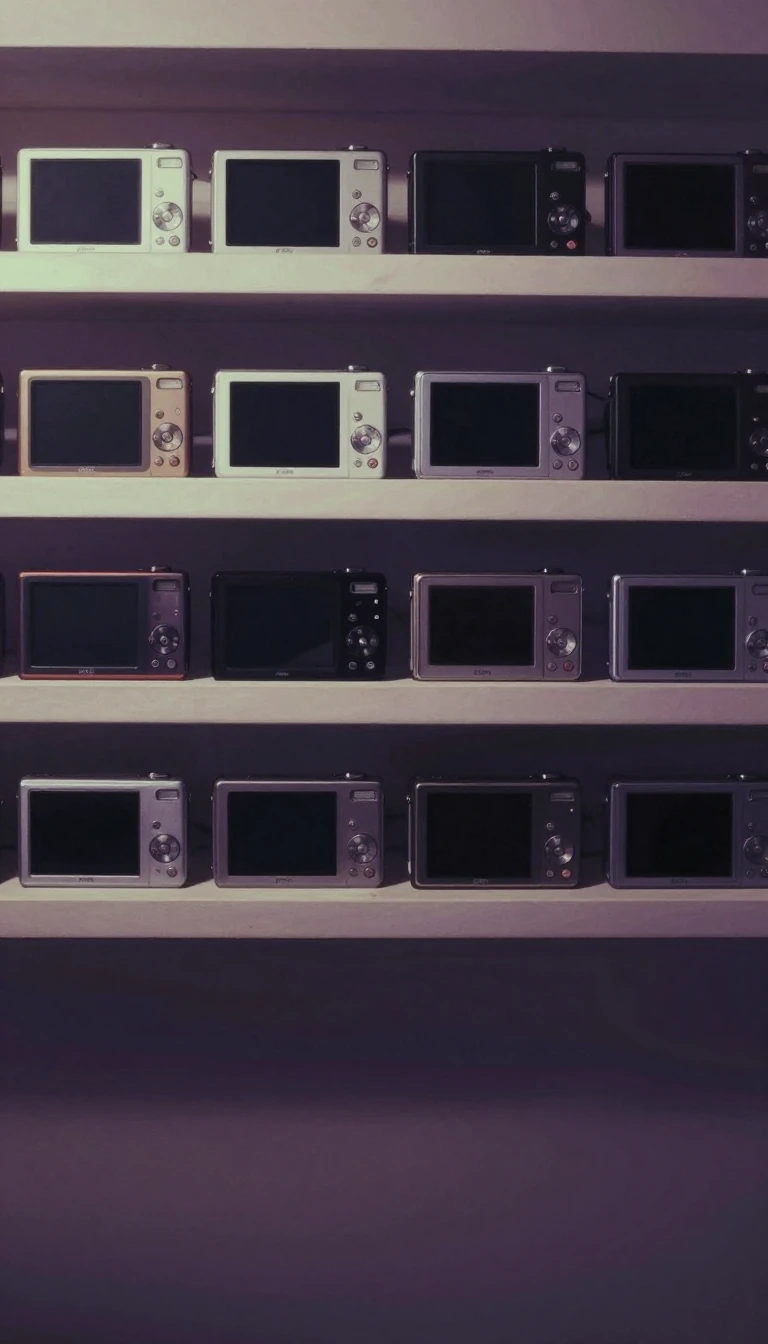 Your smartphone isn't really mobile; you areStrictly speaking, a smartphone is not a mobile device at all. It goes nowhere on its own; the person carrying it does the moving. Truly mobile computers move themselves, like rob…
 Microsoft bought the system that became MS-DOS for 25,000 dollarsIn July 1981, Microsoft needed an operating system for IBM's upcoming personal computer, so it bought one: 86-DOS, written by Tim Paterson at Seattle Computer Products, for 25,000…
 Object-oriented programming grew from simulating ships in Norwegian cargo portsBetween 1961 and 1967, Norwegian researchers built Simula, a language mainly for physical modelling, such as tracking ships and their cargo through ports. Along the way it introdu…
 The term 'open source' was coined to dodge the word 'free'Programmers had shared source code since the 1950s, and a free software movement took shape in the 1980s. But 'free' confused people, meaning both liberty and no cost, and made bu…
 Java was first named Oak, after the tree outside its creator's officeWhen James Gosling, Mike Sheridan and Patrick Naughton started their language project at Sun Microsystems in June 1991, Gosling named it Oak after a tree visible from his office. …
 JavaScript got its name as a marketing ploy, not from JavaBrendan Eich's new browser language first shipped in a Netscape beta in September 1995 as LiveScript. By the official release that December it had been renamed JavaScript, riding …
- A Helsinki student's hobby kernel now runs every top supercomputerIn 1991 Linus Torvalds, a University of Helsinki student frustrated that the teaching system Minix was restricted to education, began writing his own operating system kernel. He r…
- An early 1960s learning machine had a 'goof' button for mistakesRaytheon's Cybertron, built by the early 1960s, stored its memory on punched tape and learned to recognise sonar signals, heart traces and speech through repeated coaching by a hu…
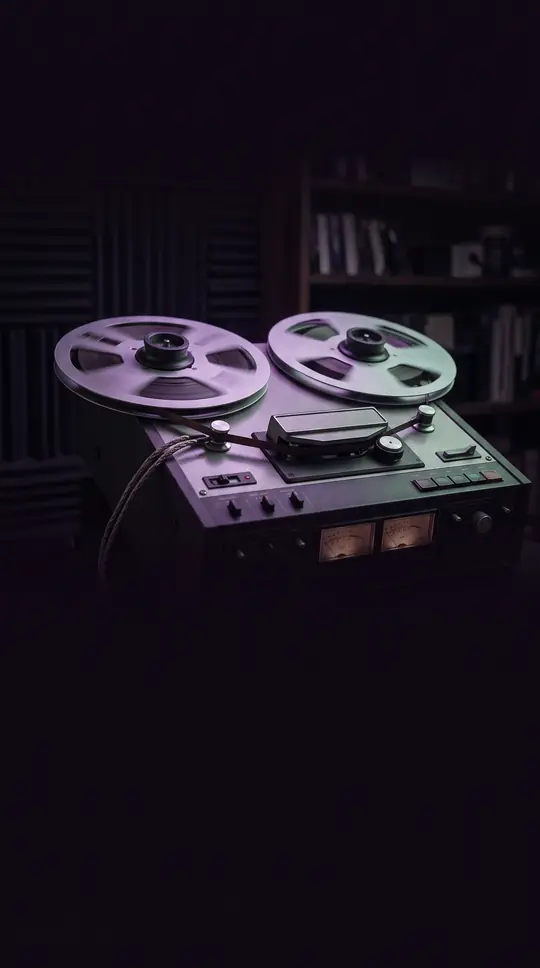 Allied troops only discovered Germany's tape recorders at war's endDuring the Second World War, Allied listeners monitoring Nazi radio realised Germany had some new way of recording broadcasts, but they could not work out what it was. The answer,…
 Computer viruses began as a theory by John von NeumannLong before anyone wrote a virus, the mathematician John von Neumann showed in theory that a program could copy itself. Fred Cohen later confirmed it experimentally and wrote a 19…
- Heat, not ambition, pushed every computer into doing many things at onceFor about two decades, chips got faster mainly by ticking faster. Then power use and heat hit a wall, and on 8 May 2004 Intel cancelled two planned processors, a moment often cite…
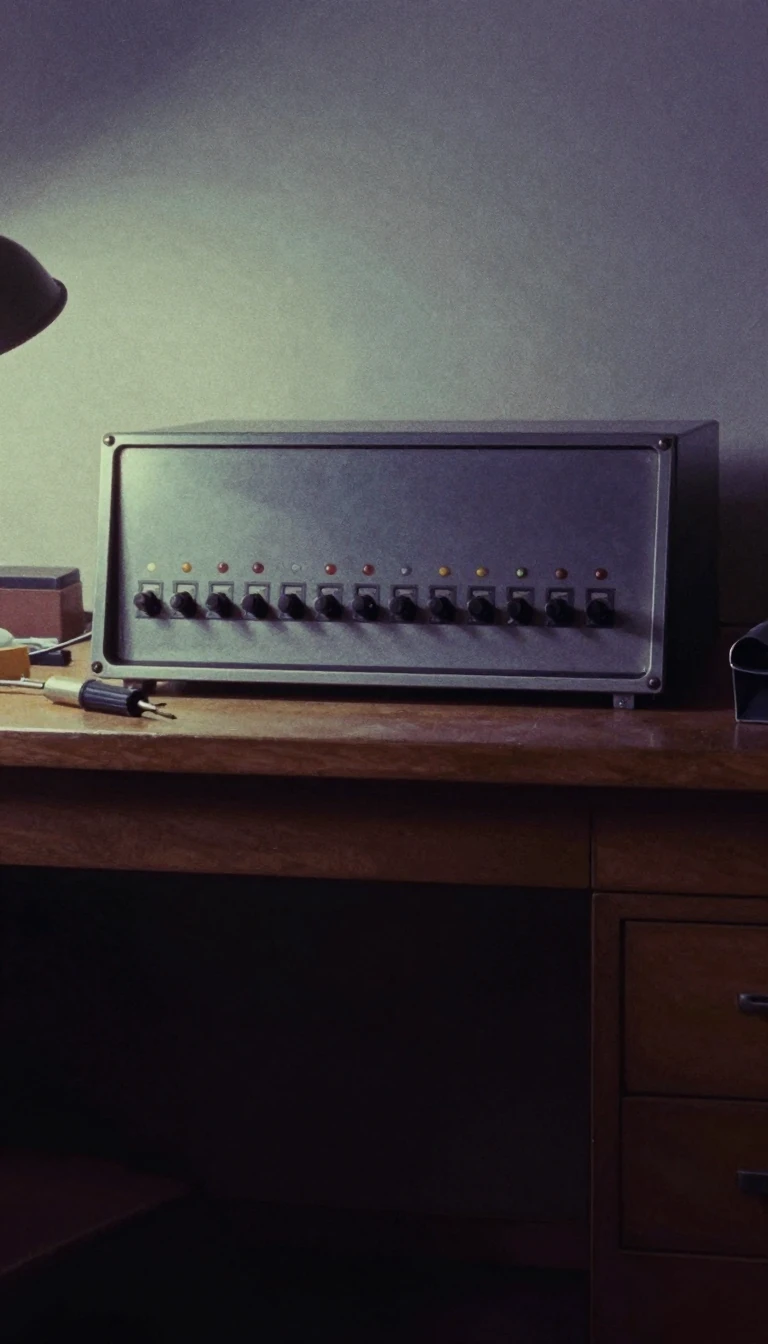 The first Apple computers shipped without a case, keyboard or power supplyWhen a shop owner ordered 50 Apple I computers in 1976, he insisted they arrive assembled, not as a kit for solder-wielding hobbyists. What Steve Jobs and Steve Wozniak delivered …
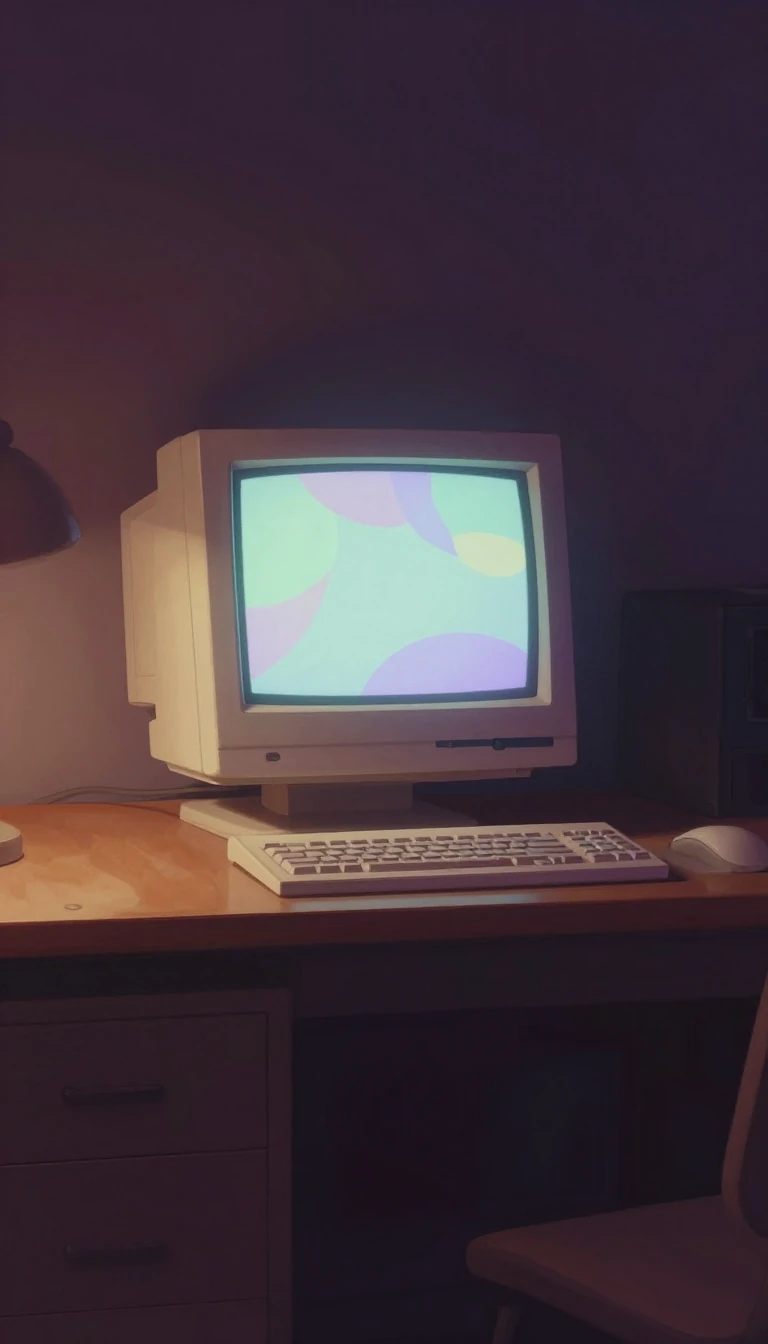 The word pixel entered print through pictures from Moon and Mars probesIn 1965 Frederic Billingsley of the Jet Propulsion Laboratory used the word pixel in print to describe the dots making up scanned images sent back by space probes. He had picked i…
 A language few people used became the ancestor of Java, C and PascalALGOL, released in 1958 and revised in 1960, never sold well. Yet it became the standard way to describe algorithms in computing journals, and most of today's popular imperative l…
 Programming styles are defined as much by what they ban as by what they allowStructured programming outlawed the goto statement. Pure functional programming forbids side effects. Each new way of writing code is partly a list of prohibitions, which is why v…
- The first stored-program computer was built mainly to test its memoryOn 21 June 1948, a machine in Manchester nicknamed the Baby ran the first program ever held in electronic memory. The Baby was not the main goal. Engineers built it as a testbed t…
- Read-only memory spent fifty years learning how to be rewrittenThe Apollo Guidance Computer stored its programs by threading wires through tiny magnetic rings, a memory nobody could change once woven. Early chip-based ROM was just as permanen…
 Routers began as gateways that deliberately refused to guarantee deliveryThe designers of the first internet gateways made a surprising choice: their devices would pass data along without any promise that they arrived. Checking and resending would be l…
 A teaching operating system from 1987 now hides inside most Intel chipsMINIX was written in 1987 as a stripped-down version of UNIX so students could study how operating systems work. It went on to inspire Linux, and since 2008 it has quietly run on …