 Intellect Plus
Technology
10,995 cards. Each one is a 40-second story with a five-minute read behind it. Page 38 of 184.
Subtopics: 3D printing & manufacturing · AI & machine learning: practical · Aircraft · Automata · Aviation · Batteries · Binary · Biotechnology · Bridges · Cameras & imaging · Cars · Chemical engineering · Chips · Codes · Compression · Computing · Computing and information technology · Computing history · Cryptography · Cybersecurity · Electric vehicles · Electronics · Energy · Engineering · Everyday tech · Famous patents · Future Frontier · How it works · How Things Work: GPS to the Phone · How Things Work: Jets, Propellers and Ships · Industry · Infrastructure · Internet · Inventions · Inventors · Machinery and tools · Maths · Media and communication · Medical technology · Medieval clockmaking · Mercedes-Benz Engineering · Military technology · Motorbikes · Navigation and timekeeping · Networks · Nuclear power · Optical technology · Physics · Pioneers · Programming · Programming languages · Radar · Radio · Researched · Robotics: practical · Robots · Rockets · Security · Semiconductors · Ships & boats · Skyscrapers · Smartphones · Software · Sound & audio technology · Spaceflight · Super-series Wave 1: Car To Wheels · Super-series Wave 1: From Power Station To Pc · Super-series Wave 1: The Journey Of Crude Oil · Technology today · Technology: General · Textiles · Trains & locomotives · Transportation · UK & Ireland: inventions · Video game technology · Web · Wireless
 The American-built jet that redefined tactical bombing for the USAFIn 1950, the US Air Force desperately needed an all-weather interdiction aircraft. After testing several domestic designs, they turned to a foreign contender: the British English …
 The multi-mission workhorse designed to survive the world's harshest seasFrom hunting submarines 500 meters deep to transporting strike teams through pirate-infested waters, the AS565 Panther is a master of versatility. It isn't just a helicopter; it i…
 How a Russian license sparked China's quest for independent air powerThe Shenyang J-11, or 'Responsive Dragon,' began as a Russian-licensed derivative of the Sukhoi Su-27. What started as a co-production agreement eventually evolved into a mission …
 The massive ship that nearly hit a bridge with 2 feet to spareWhen Oasis of the Seas first departed Finland in 2009, it faced a physics puzzle: how to fit a record-breaking hull under a low bridge. The solution required a mix of specialized …
 The Australian vehicle that redefined infantry mobility and protectionDesigned to protect soldiers from small arms and IEDs, the Bushmaster has become a global standard. Originally an infantry mobility vehicle, its high-hardness steel hull proved su…
 How Wi-Fi 5 uses spatial geometry to multiply your internet speedStandard Wi-Fi often feels like a single lane on a highway, where only one car can move at a time. 802.11ac changed the architecture by creating multiple lanes simultaneously thro…
 A single engine error led to a fatal pilot misdiagnosisIn February 2015, a TransAsia Airways flight departed Taipei for Kinmen with 58 people on board. Just two minutes into the climb, a technical fault triggered a catastrophic chain …
 The Car That Crumples to Save YouHow a car's frontal crash structure is engineered to absorb crash energy and keep the occupants' survival space intact, and the trade-offs engineers weigh to get there.
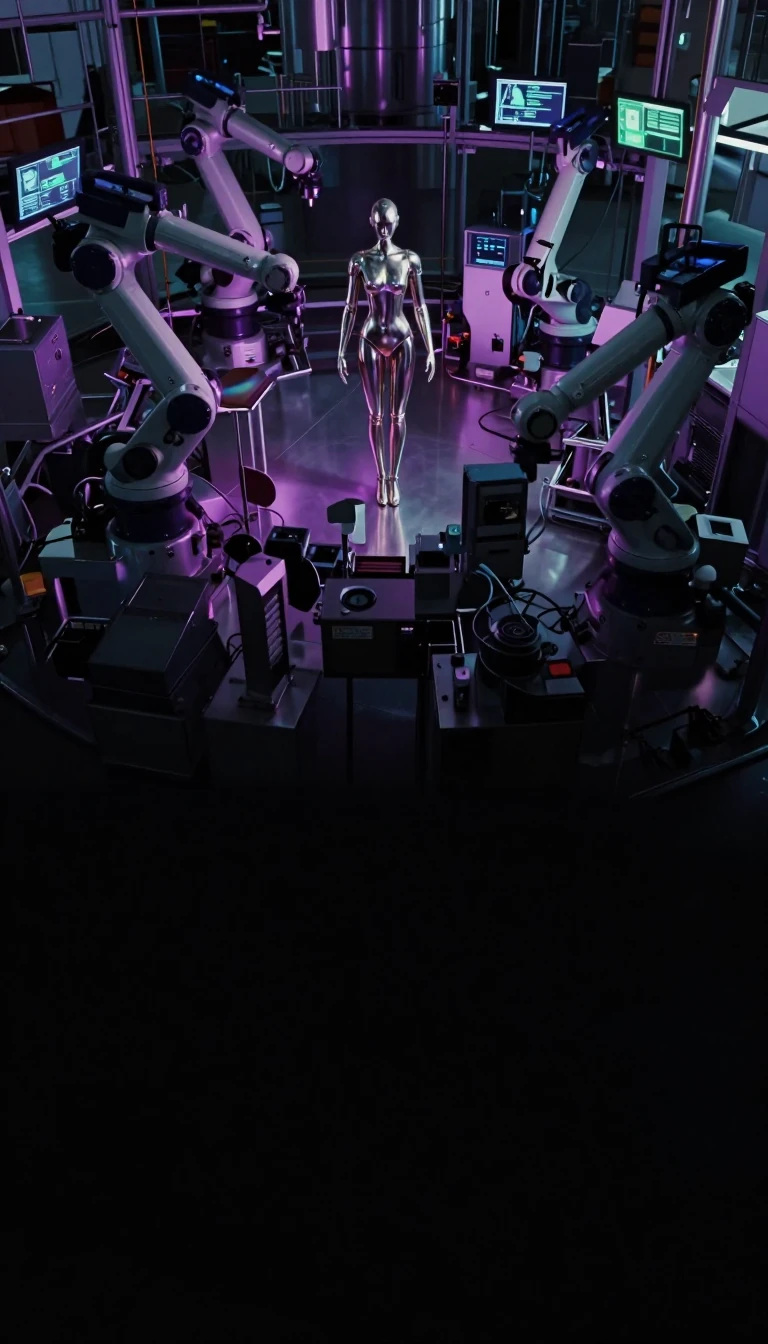 From Illinois farms to a $19 billion empire of humanoid robotsBorn on a third-generation farm in Illinois, Brett Adcock has become a central figure in the artificial intelligence revolution. From talent marketplaces to electric aviation, his…
 The high-stakes race to turn the sky into a metropolitan highwayImagine bypassing gridlock by hopping into a silent, electric air taxi. Archer Aviation is building the hardware for this urban revolution, but the path from prototype to passenge…
- The rifle that moves its piston twice as far as rivalsMost modern rifles rely on tiny, rapid movements to cycle ammunition. The Beretta ARX160 breaks this convention with a unique short-stroke piston system designed for constant pres…
 How to capture the cosmos with a digital camera and a tripodProfessor Ian Morison demonstrates how accessible technology can reveal the universe, from the Moon's surface to the distant reaches of remote galaxies.
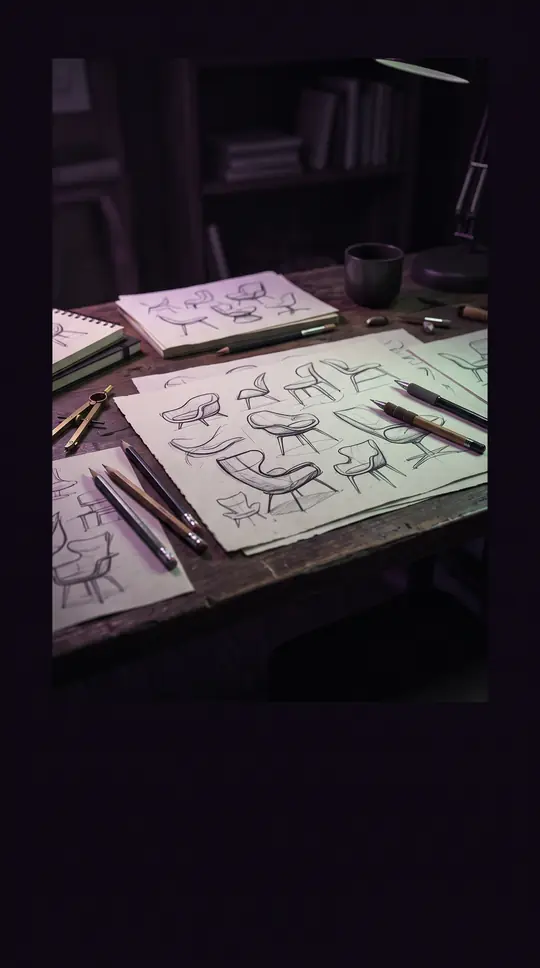 Can we build software that is mathematically guaranteed to never fail?Most software is built by writing code, testing it, and fixing the errors found. This traditional cycle often leaves behind a trail of defects. But what if we could construct soft…
- Could a 3D digital twin of Earth save our disappearing heritage?We preserve films, newspapers, and seeds, yet we lack a complete record of our planet's surface. Archaeologist Chris Fisher proposes using LiDAR—lasers fired from aircraft—to crea…
 Can a map truly represent the world if billions are missing?Explore how the Humanitarian OpenStreetMap Team is leveraging open-source software and global volunteers to bridge the gap in global mapping.
 Why we need a global weather service for waterEntrepreneur Sonaar Luthra argues that monitoring water shortages requires a global data collection effort, similar to how we track storm movements to forecast environmental risks.
 Your smartphone can become a hidden spy without leaving a single traceBeyond state-sponsored hacking lies a multibillion-dollar, unregulated bazaar of privatized mass surveillance. Advanced commercial spyware can transform your mobile device into a …
 Can the essence of humanity survive the age of artificial intelligence?As AI begins to reshape the fundamental pillars of work, education, and even intimacy, psychotherapist Esther Perel and Sal Khan explore what remains uniquely ours.
 Two Clocks: Bulletin Boards and Live ChatBulletin boards and live chat gave online community two different rhythms: messages posted for all to read, and conversation that unfolds in real time.
 The First Electric-Car EraElectric taxis and cars worked city streets in the 1890s, and their fade before petrol owed as much to slow-growing electricity grids as to the machines themselves.
 VHS vs Betamax: The Better Picture That LostHow Sony's Betamax, first to the home and sharper on screen, lost to JVC's VHS through recording time, alliances and the slow pull of a market bandwagon.
 Lost Futures: Part 1Technologies and companies that arrived early, chose the wrong path, or show the future existed earlier than people remember. Episodes: 1. The Victorian Internet; 2. VHS vs Betama…
 Lost Futures: Part 2Technologies and companies that arrived early, chose the wrong path, or show the future existed earlier than people remember. Episodes: 1. The Fax Machine Before the Telephone; 2.…
 Kodak Built the Digital CameraIn 1975 a Kodak engineer built a toaster-sized digital camera, and Kodak invested in digital for decades, yet the company still could not hold on to its dominance.
 The Victorian InternetFrom French semaphore towers to the Atlantic cable of 1866, the telegraph brought near-instant long-distance communication generations before the internet, which still depends on …
 ICQ: Before WhatsAppICQ, short for 'I Seek You', was available by the mid-1990s and had an estimated 12 million users when AOL announced it was buying its Israeli maker, Mirabilis. Some ideas from ea…
 Nokia: How a Giant Lost the Smartphone EraNokia announced a smartphone in 1996 and at its peak sold nearly 40% of the world's phones, but as competition shifted from devices to software platforms and their ecosystems it s…
 VHS vs Betamax: The Better Picture That LostHow Betamax, the format with the sharper early picture, lost the home video standard to VHS, and how recording time, price, wider supply and rental shelves weighed against quality…
 BlackBerry: From Essential to Almost GoneBlackBerry built its success on secure email and physical keyboards, then lost its place over several years as touchscreens and app-rich consumer phones changed what a smartphone …
 From a Ton of Disks to a FingernailThe first commercial hard disk drive held about 3.75 megabytes in a cabinet that weighed over a ton with its compressor, and this film follows how the space information needs has …
 The First Electric-Car EraAround 1900 electric cars were a major part of American motoring, and one major study argues that they faded less because they were worse than because the electricity grid spread …
 When Did We Stop "Going Online"?From dialling into a basement bulletin board in 1978 to being online almost constantly, this film traces how going online stopped being a deliberate act.
 FidoNet: When BBSs Started Talking to Each OtherHow hobbyist bulletin boards, linked by FidoNet's periodic store-and-forward calls, built a worldwide message network while the Internet was still mainly a research network.
 From Social Graph to Interest GraphHow online feeds moved from showing us the people we know to predicting what we may like, and how the explore-exploit dilemma shared by slime molds, birds and fish points to recom…
 Google+ and the Network EffectGoogle launched Google+ in 2011 with Search, Gmail, YouTube and Android behind it, and consumers still stayed where their friends already were, until the network closed to consume…
 The Eight-Digit Key: Life on BBMHow an eight-digit PIN, a single status and a buzzing ping made BlackBerry Messenger part of everyday social life, until BlackBerry's era came to a close.
 When Did the Feed Take Over?How social media moved from people browsing profiles to ranked feeds choosing what appears next, from Facebook's News Feed to TikTok's For You page.
 Did Mark Zuckerberg Build Facebook?Facebook began as a PHP site launched at Harvard in February 2004 and grew into photo stores, caches and custom data centres built to serve billions of requests.
 What Was the First Social Network?Decades before modern social media, coin-operated terminals in Berkeley, dial-up bulletin boards in Chicago and early instant messengers worked out the habits of online community …
 The Fax Machine Before the TelephoneDecades before the telephone, inventors were sending pictures over telegraph wires, from Alexander Bain's 1843 patent to Giovanni Caselli's short-lived Paris–Lyon fax service, yet…
 Before Social Media, There Was the BBSIn 1978 two Chicago hobbyists connected a home-built computer to a basement phone line, and the bulletin board systems that followed made the computer a place where people gathere…
 Friendster: Huge, Then GoneHow Friendster, an early social network built on real names and friends of friends, grew fast, slowed under its own weight, found a second home in Southeast Asia and finally close…
 What Was AOL?How AOL combined dial-up access, chat rooms, e-mail, a famous spoken greeting and instant messaging into a self-contained online world, and became what going online felt like for …
 From Scarce to Six Billion: The Rise of Being Social OnlineA short documentary tracing how online networks grew from a 1969 research link between four universities to an estimated 6 billion people online by 2025, with U.S. social media us…
 Why Did the Internet Used to Scream at You?The dial-up modem's scream was two machines detecting each other, agreeing on a speed and testing the line, all in voice-like sounds sent over the telephone network.
 Myspace: When the Internet Became PersonalHow Myspace, founded in 2003, let teenagers and young adults design their own pages, gave new bands a free stage, and grew to 55.8 million monthly visitors before Facebook supplan…
 Community Memory: Social Media Before the WebIn 1973, Community Memory put a public computer terminal in a Berkeley record store, and the Computer History Museum calls it a pre-Web social network where anyone could post and …
 CompuServe Before AOLHow CompuServe turned idle evening mainframe time into a commercial consumer service with email, message boards and special interest groups, documented by 1989.
 IRC: The Global Chat RoomHow Internet Relay Chat, born at a Finnish university, carried live conversations across a world-wide tree of linked servers, and what that design gave and cost.
 Why Was Music So Important to MySpace?How music gave MySpace its distinct identity, from independent bands streaming tracks on their own profiles to a venture with major labels and the site's later attempts to rebuild…
 The Victorian InternetGenerations before the internet, semaphore towers, electric wires and an Atlantic cable made near-instant long-distance communication real, and their message codes laid groundwork…
 A Day With a Computer, ImaginedAn imagined ordinary day a few years from now, spoken rather than clicked, weighed against today's evidence on what computer-use agents can and cannot yet do reliably.
 Does Email Survive?Email's decades-old protocol still carries our messages, and this film weighs the evidence for and against AI agents taking over the reading while people approve only what matters.
 The AI That Never Leaves Your ComputerA look at whether personal AI can live mostly at home, weighing the privacy and speed benefits of local models against their memory, security and capability limits, and why a mix …
 Why Does Every Smart Device Need Its Own App?Why smart devices remain fragmented, what device standards and on-device language models show so far, and why speed, accuracy and security keep any forecast of one personal AI cau…
 Will Your Next Computer Have 1 TB of Memory?Desk-side machines already reach hundreds of gigabytes of fast memory, but flat DRAM costs, AI-driven shortages and smarter compression all shape whether a terabyte personal AI co…
 If Moore's Law Continued, Why Didn't Processors Get Infinitely Faster?Moore's Law kept adding transistors, but once voltage stopped shrinking and leakage grew, heat capped clock speeds, and chipmakers turned the extra transistors into cores and cach…
 Moore's Law: The First Ten YearsIn 1965 Gordon Moore projected 65,000 components per chip by 1975. Ten years later the chip on his own chart held about half that, which was right in scale and a factor of 2 short…
 The Victorian InternetBefore the age of networks, semaphore towers, electric telegraph wires and a permanent Atlantic cable cut the time news took to travel from weeks to hours.
 What If Your Computer Writes Its Own Apps?A look at the idea of software written on demand and then discarded, weighing today's evidence on capability, security and cost, and why it remains a prediction to check later.