 Intellect Plus
Technology
10,995 cards. Each one is a 40-second story with a five-minute read behind it. Page 84 of 184.
Subtopics: 3D printing & manufacturing · AI & machine learning: practical · Aircraft · Automata · Aviation · Batteries · Binary · Biotechnology · Bridges · Cameras & imaging · Cars · Chemical engineering · Chips · Codes · Compression · Computing · Computing and information technology · Computing history · Cryptography · Cybersecurity · Electric vehicles · Electronics · Energy · Engineering · Everyday tech · Famous patents · Future Frontier · How it works · How Things Work: GPS to the Phone · How Things Work: Jets, Propellers and Ships · Industry · Infrastructure · Internet · Inventions · Inventors · Machinery and tools · Maths · Media and communication · Medical technology · Medieval clockmaking · Mercedes-Benz Engineering · Military technology · Motorbikes · Navigation and timekeeping · Networks · Nuclear power · Optical technology · Physics · Pioneers · Programming · Programming languages · Radar · Radio · Researched · Robotics: practical · Robots · Rockets · Security · Semiconductors · Ships & boats · Skyscrapers · Smartphones · Software · Sound & audio technology · Spaceflight · Super-series Wave 1: Car To Wheels · Super-series Wave 1: From Power Station To Pc · Super-series Wave 1: The Journey Of Crude Oil · Technology today · Technology: General · Textiles · Trains & locomotives · Transportation · UK & Ireland: inventions · Video game technology · Web · Wireless
 The high-speed machine that revolutionized biology by spinning samples at 100,000 times gravityThe ultracentrifuge is a powerhouse of modern science, capable of generating forces up to 100,000 times that of Earth's gravity. By spinning samples at extreme speeds, this instru…
 Why ultralight aviation is the most accessible way to take to the skiesBorn from the hang gliding movement of the late 1970s, ultralight aviation offers an affordable path to powered flight. These lightweight, slow-flying aircraft range from traditio…
 Why burying power lines is a costly battle between aesthetics and reliabilityUndergrounding power lines eliminates the visual clutter of pylons and protects grids from storms and wildfires. Yet, the transition is rarely simple. Burying cables can cost up t…
 Why engineers are burying transport beneath the sea instead of building bridges above itUnderwater tunnels offer a permanent solution to the limitations of bridges and ferries. By bypassing weather disruptions, shipping congestion, and the environmental costs of foss…
 How the UNIVAC I transformed the Census Bureau into a modern computing powerhouseBefore the digital age, the U.S. Census Bureau relied on mechanical counting machines. The arrival of the UNIVAC I changed everything, marking the first successful transition to e…
 The Universal Disk Format is the hidden architect behind your optical media's longevity.Before cloud storage dominated, the Universal Disk Format (UDF) quietly standardized how we read and write to optical discs. Developed by the Optical Storage Technology Associatio…
 Universal Flash Storage: The high-speed standard replacing legacy memory in your mobile devicesUniversal Flash Storage is the high-performance memory standard designed to replace slower eMMC and SD cards in smartphones and cameras. By utilizing a full-duplex serial interfac…
 Why the term Unix-like is a legal minefield for software developersThe label Unix-like describes systems that behave like the original Bell Labs creation, yet it lacks a formal technical definition. While users and developers rely on the term to …
 The surprising engineering behind the public urinal and the quest for waterless efficiencyUrinals are marvels of resource efficiency, designed to save space, time, and water in high-traffic environments. While they have evolved from simple wall-mounted fixtures to soph…
 USB-C is not a protocol, but a versatile physical gateway for modern computingUSB-C is often mistaken for a data speed or a specific charging standard, but it is actually a 24-pin physical connector designed to replace a chaotic array of legacy cables. Whil…
 Why the term user is a flawed abstraction for the people behind screensIn computing, a user is simply anyone interacting with a system, yet the label often masks a complex reality. From power users mastering advanced features to end users requiring m…
 The catastrophic end of the USS Arizona was sealed by a single, well-placed bomb.Commissioned in 1916, the USS Arizona was a formidable Pennsylvania-class battleship designed to project American power. Yet, its career ended in tragedy on December 7, 1941, when…
 How a 1797 Frigate Became the Oldest Commissioned Naval Vessel Still Afloat TodayLaunched in 1797, the USS Constitution was designed to outgun any frigate while outrunning any ship of the line. Known as Old Ironsides, this wooden-hulled legend survived wars, m…
 Did a coal fire, not a Spanish mine, sink the USS Maine in 1898?The explosion of the USS Maine in Havana Harbor killed 268 sailors and ignited the Spanish-American War. While newspapers blamed Spanish sabotage, modern analysis suggests a far m…
- The ironclad that ended the age of wood and changed naval warfare forever.During the American Civil War, the USS Monitor emerged as a radical, steam-powered solution to the Confederate threat. With its revolutionary rotating turret and low-profile iron …
 How a napkin sketch in a New Jersey diner conquered the entire digital worldUTF-8 is the invisible language of the internet, powering 99.1% of all websites. Born from a casual conversation in 1992, this clever encoding standard solved the chaos of interna…
 Why the world never agreed on a single frequency for its electrical power gridsYour wall outlet delivers electricity at 50 or 60 Hz, but this wasn't a scientific choice. In the late 19th century, engineers juggled competing needs for lighting, motors, and tr…
 The utility knife is a half-million-year-old tool that evolved from stone to steel.From the first stone implements crafted by human ancestors to the modern retractable box cutter, the utility knife has remained a fundamental, multi-purpose instrument. While its …
 Why the humble utility pole is a masterpiece of engineering and safetyUtility poles are more than just wooden posts holding up wires. They are complex, multi-layered infrastructure hubs that manage high-voltage electricity, telecommunications, and l…
- Why the most advanced fighter jets prefer a short runway over vertical flightV/STOL aircraft are famous for their ability to take off vertically, yet they rarely do so in combat. While the capability to hover is a technical marvel, the physics of flight di…
 Why the quest for nothingness required centuries of engineering and a few dead horsesA vacuum is not merely empty space; it is a technical frontier. From 17th-century experiments with horses to modern semiconductor manufacturing, creating a vacuum requires overcom…
 A record-breaking dam that stands tall today, despite causing one of history's worst disasters.Completed in 1960, the Vajont Dam in Italy was an engineering marvel designed to power industrial growth. Yet, it became the site of a catastrophic 1963 landslide that sent a mass…
 The silent giants of the deep: Britain's Vanguard-class nuclear deterrentFor over three decades, four massive submarines have served as the backbone of the United Kingdom's nuclear security. Weighing nearly 16,000 tonnes, these vessels represent the la…
 How changing the physical geometry of a device allows us to tune the worldA variable capacitor is a fundamental electronic component that allows for the intentional, repeated adjustment of capacitance. By altering the physical overlap of plates or the d…
 A variable is not just a container; it is a bridge between human intent and memory.In programming, a variable is a named identifier linked to a specific storage location. While math variables are abstract, computing variables are physical, managing data that cha…
 Why variable renewable energy is not as unpredictable as the weather might suggestVariable renewable energy sources like wind and solar are often dismissed as unreliable due to their fluctuating nature. Yet, grid operators manage uncertainty daily. By integrati…
 Why did engineers spend decades trying to build airplanes with wings that change shape?For decades, aviation designers chased the holy grail of flight: a wing that could adapt mid-air. By sweeping wings back for supersonic speed and extending them for efficient take…
 Varnish is a complex chemical film, not just a simple coat for wood.Varnish is a protective, transparent film that has evolved from ancient resin mixtures to modern synthetic polymers. While often confused with wood stain, it serves a distinct pur…
 How a World's Fair transformed Lisbon's skyline and solved a massive traffic crisis.When Lisbon hosted the 1998 World's Fair, it triggered the city's most ambitious renewal project since the 1755 earthquake. The centerpiece was the Vasco da Gama Bridge, a massive…
 Why modern tank armour is a complex sandwich of steel, ceramics, and explosivesVehicle armour is far more than just thick metal plates. From the bathtub-shaped titanium shells protecting pilots to reactive layers that explode outward to shatter incoming proj…
 The accidental invention of a space-age fastener inspired by a simple walk in nature.Born from a Swiss engineer's observation of burdock burs in 1941, this iconic fastener was initially rejected by industry experts. It eventually found its footing in the aerospace…
 How mechanical ventilators sustain life when the body can no longer breathe on its ownWhen a patient cannot breathe independently, a ventilator becomes their lifeline. Far more than a simple pump, these sophisticated machines manage oxygen levels, clear airways, an…
 How a 17th-century French invention lets us measure the invisible gaps between marks.A standard ruler is limited by the human eye, but the vernier scale bypasses this constraint. By sliding an auxiliary scale against a main one, it uses the brain's natural ability…
 How a massive suspension bridge transformed Staten Island from an isolated outpost into a borough.For decades, Staten Island remained disconnected from the rest of New York City, accessible only by ferry. The Verrazzano-Narrows Bridge, a feat of engineering that briefly held t…
- Version control is the invisible engine that prevents digital chaos in modern software development.Version control tracks every change made to files, allowing teams to revert errors, manage concurrent edits, and maintain history. Whether through simple file locking or complex d…
 How packing billions of transistors onto silicon chips changed the world foreverVery-large-scale integration, or VLSI, is the engine of modern computing. By shrinking millions and eventually billions of transistors onto a single semiconductor chip, engineers …
 Why shifting complexity from hardware to software can create faster, more efficient processors.Very Long Instruction Word (VLIW) architectures swap complex, power-hungry scheduling hardware for smarter compilers. By explicitly defining parallel operations at compile time, t…
 Why Roman engineering still dictates how we cross the world's deepest valleys todayA viaduct is more than just a long bridge; it is a masterclass in efficiency. Originally developed by Roman engineers to span difficult terrain, these structures use repeated arch…
 Why your video files are actually complex containers, not just simple digital movies.We often mistake video files for single entities, but they are actually sophisticated bundles. A video file is typically a container, like MP4, holding separate streams of encoded…
 How a magnetic ribbon revolutionized television and changed how we watch the worldBefore videotape, television was almost entirely live. The invention of the practical videotape recorder in 1956 allowed broadcasters to shift schedules and preserve history. This…
 Why the videophone was a billion-dollar flop before it became our daily realityFor decades, the videophone was a futuristic dream that consistently failed to find an audience. Despite massive corporate investment and early demonstrations, the technology stru…
 Why does a decades-old text editor remain a staple for modern software developers?Vim, short for Vi IMproved, is a legendary text editor that prioritizes keyboard efficiency over mouse interaction. Born in 1988, it has evolved from a simple clone into a highly …
 A virtual machine is an efficient, isolated duplicate of a real computer system.Virtual machines allow you to run multiple operating systems or programs on a single physical host. By abstracting hardware or software, they enable everything from server consoli…
 Virtual memory creates the illusion of infinite space on finite computer hardwareModern computers seem to possess far more memory than they actually contain. This trick is achieved through virtual memory, a sophisticated system that maps software requests to p…
 Can thousands of home batteries and solar panels replace a massive power plant?A virtual power plant aggregates thousands of small, distributed energy resources—like home batteries, electric vehicles, and solar panels—into a single, coordinated grid asset. B…
 Virtual reality is not a modern invention but the culmination of centuries of illusionVirtual reality is often framed as a futuristic digital frontier, yet its roots lie in the 18th-century obsession with immersive panoramas and military training simulations. By ma…
 From toilet paper tubes to spatial computers: the evolution of virtual reality headsetsVirtual reality headsets have evolved from clunky, failed 1990s experiments into sophisticated spatial computers. By merging stereoscopic displays with advanced motion tracking an…
- How VirtualBox runs entire operating systems inside a single window on your computerVirtualBox is a powerful hypervisor that allows you to run multiple guest operating systems simultaneously on one host machine. By leveraging hardware-assisted virtualization, it …
 Is Visual Basic a relic or a foundational pillar of modern Windows development?Launched in 2002 as the successor to classic Visual Basic, Visual Basic .NET transformed from an object-based language into a fully object-oriented powerhouse. While Microsoft has…
 Born as a French student project, VLC is now the world's most versatile player.Originally designed to stream video across a university campus in 1996, VLC has evolved into a global powerhouse with over 6 billion downloads. This open-source software handles a…
- How a 1930s speech synthesizer became the secret backbone of modern digital communication.Invented at Bell Labs to conserve bandwidth, the vocoder analyzes the human voice by breaking it into frequency bands and transmitting only the essential parameters. This process,…
- Why your computer forgets everything the moment you pull the power plugVolatile memory is the high-speed engine of your computer, yet it is inherently fleeting. Unlike storage that keeps files safe after a shutdown, volatile memory requires a constan…
 How voltage regulators keep our modern world from flickering out of controlWhether powering a delicate computer processor or stabilizing a massive electrical grid, voltage regulators are the silent sentinels of energy. From simple diodes to complex switc…
 Why a kitchen accident in 1839 revolutionized the durability of modern rubberBefore the 1830s, rubber was notoriously unreliable, turning sticky and soft in the heat. It took a serendipitous accident in a frying pan to reveal the secret to hardening it. To…
 Vulkan is the cross-platform engine powering the next generation of high-performance 3D graphics.Vulkan is a low-level API designed to give developers granular control over modern GPUs and multi-core CPUs. By reducing driver overhead and streamlining shader compilation, it of…
- Why perfect code is a myth and every system harbors hidden security flawsNo matter how diligent an administrator is, hardware and software inevitably contain bugs. These flaws, known as vulnerabilities, act as gateways for malicious actors to compromis…
- The walkie-talkie was a secret wartime innovation that redefined portable two-way communication foreverBorn from clandestine World War II research, the walkie-talkie evolved from heavy, backpack-mounted military gear into a ubiquitous tool for industry and play. These half-duplex d…
 How a modified journalist's recorder transformed global music consumption and created the Walkman effect.In 1979, Sony transformed a bulky professional tape recorder into a portable stereo, sparking a cultural revolution. By enabling private, mobile listening, the device fundamentall…
 Why the war hammer became the ultimate solution to impenetrable medieval plate armorAs armor evolved to deflect swords and axes, soldiers needed a new way to neutralize opponents. The war hammer emerged as a brutal, physics-defying answer. By focusing immense for…
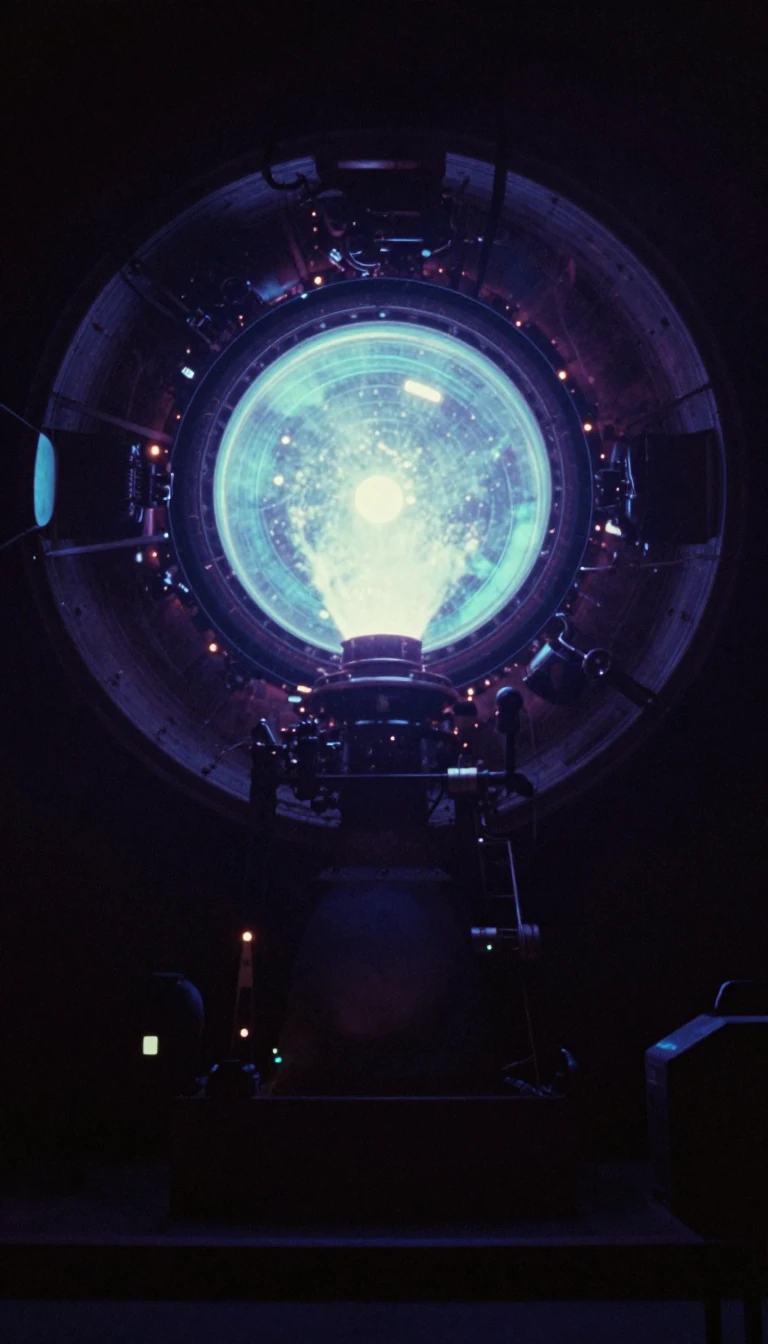 A warhead is more than just an explosion; it is a precision delivery system.A warhead is the business end of a missile, rocket, or bomb, housing the destructive agent that reaches the target. While we often imagine simple blasts, engineers have developed …