 Intellect Plus
Technology
10,995 cards. Each one is a 40-second story with a five-minute read behind it. Page 82 of 184.
Subtopics: 3D printing & manufacturing · AI & machine learning: practical · Aircraft · Automata · Aviation · Batteries · Binary · Biotechnology · Bridges · Cameras & imaging · Cars · Chemical engineering · Chips · Codes · Compression · Computing · Computing and information technology · Computing history · Cryptography · Cybersecurity · Electric vehicles · Electronics · Energy · Engineering · Everyday tech · Famous patents · Future Frontier · How it works · How Things Work: GPS to the Phone · How Things Work: Jets, Propellers and Ships · Industry · Infrastructure · Internet · Inventions · Inventors · Machinery and tools · Maths · Media and communication · Medical technology · Medieval clockmaking · Mercedes-Benz Engineering · Military technology · Motorbikes · Navigation and timekeeping · Networks · Nuclear power · Optical technology · Physics · Pioneers · Programming · Programming languages · Radar · Radio · Researched · Robotics: practical · Robots · Rockets · Security · Semiconductors · Ships & boats · Skyscrapers · Smartphones · Software · Sound & audio technology · Spaceflight · Super-series Wave 1: Car To Wheels · Super-series Wave 1: From Power Station To Pc · Super-series Wave 1: The Journey Of Crude Oil · Technology today · Technology: General · Textiles · Trains & locomotives · Transportation · UK & Ireland: inventions · Video game technology · Web · Wireless
 How engineers ensure buildings stand tall without needing to build them firstStructural analysis is the silent engine behind modern engineering. By using sophisticated mathematical models to simulate how bridges, aircraft, and towers handle stress and load…
 Why the once-feared goto statement is still lurking in modern codeStructured programming revolutionized software by replacing chaotic goto jumps with predictable blocks. Yet, even as this paradigm became the industry standard, debates over its r…
 How a flashbang weapon uses blinding light and deafening sound to disorient targetsDesigned to overwhelm human senses without lethal force, stun grenades create a momentary sensory blackout. By combining intense pyrotechnic flashes with concussive noise, these d…
 The submachine gun was born from the desperate need for close-quarters trench firepower.Engineered to bridge the gap between a pistol and a machine gun, the submachine gun emerged during World War I. By firing low-energy cartridges at high speeds, it transformed infa…
 How subnetting turns a single network into a structured, efficient digital hierarchySubnetting is the logical division of an IP network into smaller, manageable segments. By partitioning address space, engineers improve routing efficiency and organizational contr…
 Why the silent, fenced-off yards in your neighborhood are the grid's heartbeatSubstations are the unsung infrastructure of modern life, transforming high-voltage electricity into the usable power that reaches your home. These unattended hubs do more than ju…
 How digital circuits perform subtraction using the same logic as additionComputers do not subtract in the way humans do on paper. Instead, they leverage clever binary logic to turn subtraction into a variation of addition. By using specific gates to ha…
 Why your subwoofer is the secret to feeling music in your bonesA subwoofer does more than just add volume; it reproduces the fundamental tones of thunder, explosions, and deep bass that standard speakers simply cannot reach. By offloading the…
 Why the softest leather in your closet is also the most fragileSuede is prized for its velvety texture and pliability, but this luxury comes with a trade-off. By utilizing the underside of animal skin rather than the tough exterior, suede gai…
 Are sugar substitutes actually a healthier choice or just a different kind of risk?Swapping sugar for artificial alternatives seems like a simple way to dodge calories and health risks. Yet, the science is far from settled. While some experts warn of potential m…
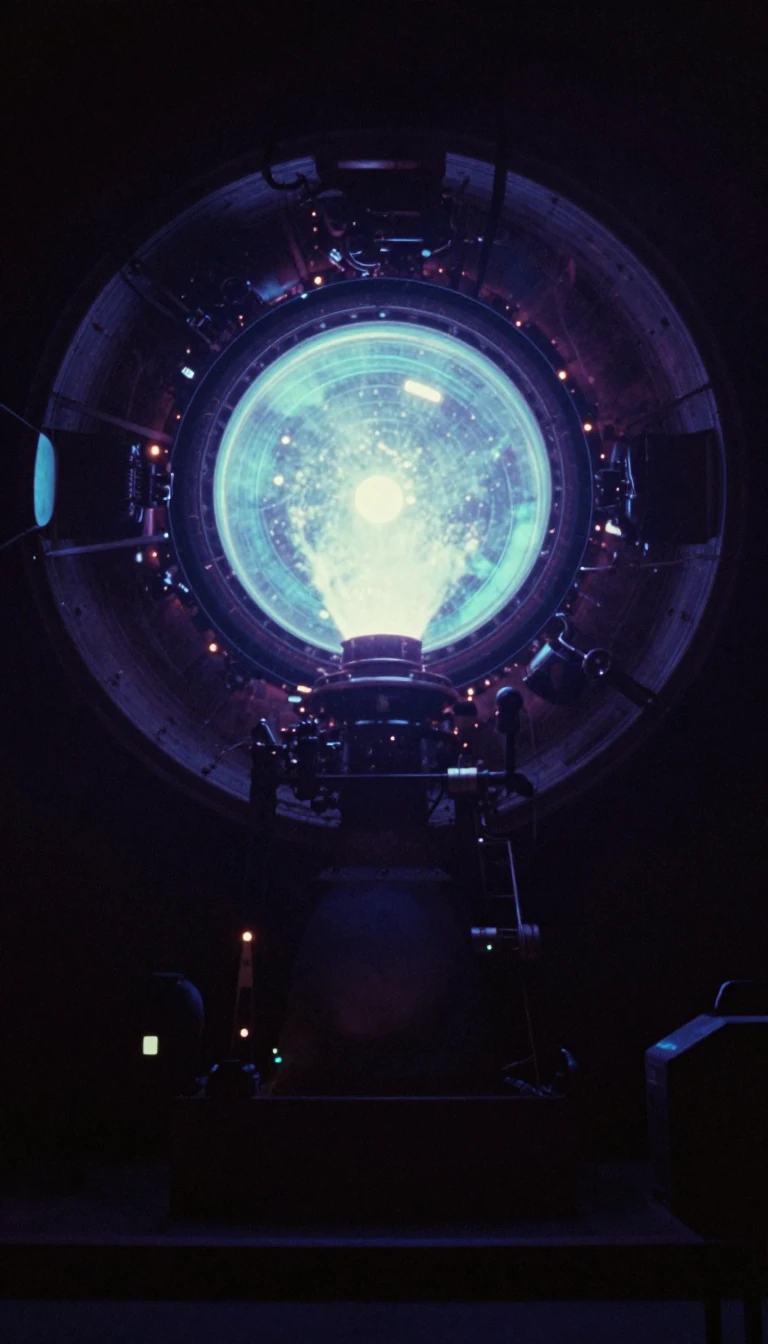 How a dense, electronegative gas became the backbone of modern electrical grid safetySulfur hexafluoride circuit breakers are the silent guardians of our power grids. By using a specialized gas to quench massive electrical arcs, they allow for compact, reliable pr…
 Could a global super grid finally solve our reliance on fossil fuels?A super grid is a massive, transcontinental transmission network designed to move high volumes of renewable energy across vast distances. By smoothing out the intermittency of win…
 Supercapacitors bridge the gap between traditional capacitors and long-term chemical batteriesSupercapacitors store energy using physical charge separation rather than bulk chemical reactions. By utilizing porous carbon electrodes and an electrolyte, they achieve massive c…
 How a clever frequency shift conquered the chaos of early radio broadcastingBefore the superheterodyne receiver, tuning a radio was a frustrating, multi-knob ordeal. By shifting incoming signals to a fixed intermediate frequency, this design separated tun…
 Why the dream of supersonic commercial travel stalled after the Concorde eraThe Concorde promised a future of rapid, global supersonic travel, cutting flight times between London and New York to just three hours. Yet, despite its technological brilliance,…
 From anti-aircraft guns to precision missiles: how we learned to hunt the skySurface-to-air missiles evolved from the limitations of traditional artillery, which struggled against high-altitude, high-speed bombers. Today, these systems range from sophistic…
 Beyond the stitch: how modern surgery selects the perfect thread for every woundSurgical sutures are far more than simple thread. Choosing the right material requires balancing tensile strength, tissue reactivity, and elasticity to match the specific needs of…
 From hydrogen balloons to AI-powered jets, how aerial surveillance reshaped modern conflict and control.Aerial surveillance has evolved from 18th-century hydrogen balloons to sophisticated unmanned systems capable of persistent global monitoring. While these aircraft provide critica…
 The surveyor's wheel: a simple, rolling solution for measuring long distances across terrainBefore digital lasers, surveyors relied on a rolling wheel to map the world. Known by many names, including the perambulator and waywiser, this device translates rotations into di…
 Why renewable energy and sustainable energy are not the same thingWhile often used interchangeably, renewable and sustainable energy are distinct concepts. Renewable energy focuses on the replenishment rate of resources, whereas sustainable ener…
 Why Scalable Vector Graphics became the internet's universal language for crisp, interactive imageryBefore the web became a high-definition playground, designers struggled with pixelated images that broke when resized. Scalable Vector Graphics (SVG) changed this by treating imag…
 The swather is the unsung hero of the harvest, turning crops into neat rows.Before a combine harvester can process grain or hay, the crop often needs to dry. A swather, or windrower, automates the ancient labor of scything by cutting stems and arranging t…
 Why angling wings backward allows modern jets to break the sound barrier safelyA swept wing is more than a sleek aesthetic choice. By angling wings away from the perpendicular, engineers delay the onset of shock waves and aerodynamic drag. This clever geomet…
 How Apple replaced a decades-old language to make modern software safer and fasterCreated by Chris Lattner in 2010, Swift was designed to modernize Apple development. By replacing the aging Objective-C, it introduced automatic memory management, strict safety c…
 The Swiss Army knife was not originally made in Switzerland by its famous brand.While synonymous with Swiss precision, the iconic multi-tool began as a desperate military contract. When the Swiss Army sought a folding knife for soldiers in 1891, no local comp…
- The switchblade is a marvel of spring-loaded engineering, yet globally feared as a weapon.A switchblade uses a concealed spring to deploy its blade instantly at the press of a button. While these mechanisms are feats of mechanical ingenuity, they triggered a moral pani…
 Before iOS and Android, Symbian was the world's most popular smartphone operating system.Born from Psion's EPOC in 1997, Symbian defined the early smartphone era. It dominated the global market for over a decade, reaching a 67% share in 2006. Yet, despite its massive …
 Why the same secret key is the backbone of modern digital privacySymmetric-key algorithms use a single shared secret to lock and unlock data. While they require both parties to hold the same key, their speed and efficiency make them the workhor…
 How a single rhythmic pulse keeps the world of digital computing in perfect orderIn the complex architecture of modern electronics, chaos is the enemy. Synchronous circuits solve this by tethering every memory change to a single, rhythmic clock signal. By forc…
- Why your code might be grammatically perfect yet completely impossible to runProgramming languages rely on strict syntax to function, much like natural language. However, a program can follow every rule of grammar and still fail to execute. Understanding t…
 How your software talks to your hardware without breaking the entire computer system.Every time you open a file or use a camera, your software must ask the operating system for permission. This request is a system call, a vital bridge that allows programs to acces…
 System software is the invisible foundation that allows your digital world to function properly.Ever wonder what keeps your computer running while you browse the web or play games? It is not the apps you see, but the silent, essential layer of system software beneath them. T…
 How computers keep track of time, and why they might stop in 2038Computers do not experience time like humans. Instead, they rely on a system clock that counts ticks since an arbitrary starting point known as the epoch. While this simple mechan…
 Systems engineering is the art of making complex, interconnected parts work as one whole.Systems engineering is not just another branch of engineering; it is a holistic technique for managing complexity. By focusing on how subsystems interact rather than just individu…
 The Soviet T-54/T-55 is the most-produced tank in historyEmerging from the shadow of World War II, the T-54 and T-55 series became the backbone of Soviet armored forces. With up to 100,000 units built, these tanks defined Cold War milit…
 The humble T-square remains a cornerstone of precision in design and construction workNamed for its distinct shape, the T-square is a fundamental tool for draftsmen and builders alike. While its primary purpose is guiding horizontal lines on a drafting table, its u…
 From Science Fiction Dreams to Global Ubiquity: The Evolution of the Tablet ComputerLong before they were household staples, tablets lived in the pages of novels and on television screens. From Star Trek to 2001: A Space Odyssey, the concept of a flat, portable t…
- Why the most flexible bridge in the world became a cautionary tale for engineersWhen the Tacoma Narrows Bridge opened in 1940, it was hailed as a marvel of sleek, flexible design. Just four months later, it twisted apart in high winds, becoming a global sensa…
 The talwar: How a medieval Indian sword mastered the art of the draw cutThe talwar is a signature curved sword of the Indian subcontinent, born from a fusion of Central Asian blade geometry and distinctively sturdy, all-metal Indo-Muslim hilts. While …
- The humble tappet: how a 300-year-old mechanical trick keeps your engine runningBefore modern electronics, mechanical automation relied on the simple, rhythmic strike of the tappet. From the steam engines of 1715 to the high-performance cars of today, this un…
 Can a massive engineering marvel survive the slow, silent threat of river sediment?Tarbela Dam is the world's largest earth-and-rock-fill dam by volume, a cornerstone of Pakistan's water security since 1976. Yet, this titan faces an existential challenge: decade…
- Tasers are marketed as less-lethal, but they can still cause death and serious injury.Developed from a 1911 novel, the Taser uses high-voltage pulses to induce neuromuscular incapacitation. While police agencies worldwide adopt them to reduce lethal force, the devi…
- Why the humble pickup truck became the world's most feared improvised war machineThe technical—a civilian pickup truck retrofitted with heavy weaponry—is the defining symbol of irregular warfare. From the deserts of Chad to the streets of Mogadishu, these agil…
 Does technology dictate our future, or are we the ones in the driver's seat?Technological determinism suggests that innovation follows an inevitable path, shaping our culture and social structures regardless of human intent. From the printing press to the…
 Why new technology adoption follows a predictable path from innovators to laggardsThe technology adoption lifecycle maps how new products spread through society. By categorizing users based on their psychological and demographic traits, this sociological model …
- Technology is not a neutral force; it is a mirror of our social choices.We often treat technology as an unstoppable, autonomous machine that evolves on its own. In reality, every innovation is the product of human values, political priorities, and eco…
- Why the most advanced healthcare technology often fails to reach the patientInnovation in healthcare is not just about engineering; it is about meeting rigorous baseline standards. In the UK, the Digital Technology Assessment Criteria (DTAC) determines wh…
 Why every breakthrough technology eventually follows the same predictable path to obsolescenceFrom the bleeding edge of research to the inevitable decline, every innovation traces an S-curve. Understanding this life cycle is not just for economists; it is the secret to kno…
 How do scientific breakthroughs move from the laboratory bench to the global marketplace?Technology transfer is the complex, often non-linear process of moving inventions from creators to users. Whether through formal licensing or informal collaboration, this mechanis…
 How the Victorian Internet laid the foundation for our modern global communication networks.Telecommunications engineering is the invisible architecture connecting our world. From the 19th-century telegraph to today's high-speed fiber optics and satellite relays, enginee…
 How the humble telephone evolved from manual switchboards to a global digital networkTelephony began as a manual task for switchboard operators connecting physical wires. Today, it is a sophisticated digital infrastructure driven by silicon chips and internet prot…
 From bulky wooden cabinets to rollable screens, the evolution of the television setThe television has transformed from a mechanical curiosity into a dominant household fixture. Once a bulky piece of furniture requiring lead glass for safety, it has evolved throu…
 Why seventeenth-century fortress designers built pincers into their defensive wallsA tenaille is a specialized defensive outwork, named for its resemblance to a pair of tongs. By placing these V-shaped structures in front of fortress walls, military engineers cr…
 Why billions still rely on the invisible radio waves of terrestrial televisionWhile streaming dominates the modern media landscape, terrestrial television remains a global powerhouse. Transmitted via radio waves from Earth-based stations, this original broa…
 Why a computer scientist created a legendary typesetting system to save his own books.In 1977, Donald Knuth was so disappointed by the inferior quality of his own typeset work that he decided to build a better system from scratch. The result was TeX, a sophisticate…
 Why the humble text file remains the most resilient format in digital historyA text file is more than just a document; it is a fundamental container for information. By stripping away complex formatting, these files avoid the corruption and compatibility t…
 Textile printing is the ancient art of bonding color to fabric with precisionFor centuries, artisans have transformed plain cloth into vibrant patterns using woodblocks, stencils, and chemical ingenuity. By thickening dyes to prevent bleeding and mastering…
 Thatching is the world's most common roofing method, yet it remains widely misunderstood.Far from being a primitive relic, thatching is a sophisticated, sustainable technology used globally for millennia. While often dismissed as a fire hazard or a sign of poverty, th…
- The world's first cast-iron bridge was built using techniques borrowed from woodworking.In 1779, a revolutionary structure spanned the River Severn in Shropshire, England. Designed by Thomas Farnolls Pritchard and erected by Abraham Darby III, the Iron Bridge replace…
 Beyond batteries: how we can store massive amounts of energy as simple heatTo balance renewable energy grids, we must store power when it is abundant and release it when demand peaks. While chemical batteries dominate the conversation, thermal energy sto…