 Intellect Plus
Technology
10,995 cards. Each one is a 40-second story with a five-minute read behind it. Page 83 of 184.
Subtopics: 3D printing & manufacturing · AI & machine learning: practical · Aircraft · Automata · Aviation · Batteries · Binary · Biotechnology · Bridges · Cameras & imaging · Cars · Chemical engineering · Chips · Codes · Compression · Computing · Computing and information technology · Computing history · Cryptography · Cybersecurity · Electric vehicles · Electronics · Energy · Engineering · Everyday tech · Famous patents · Future Frontier · How it works · How Things Work: GPS to the Phone · How Things Work: Jets, Propellers and Ships · Industry · Infrastructure · Internet · Inventions · Inventors · Machinery and tools · Maths · Media and communication · Medical technology · Medieval clockmaking · Mercedes-Benz Engineering · Military technology · Motorbikes · Navigation and timekeeping · Networks · Nuclear power · Optical technology · Physics · Pioneers · Programming · Programming languages · Radar · Radio · Researched · Robotics: practical · Robots · Rockets · Security · Semiconductors · Ships & boats · Skyscrapers · Smartphones · Software · Sound & audio technology · Spaceflight · Super-series Wave 1: Car To Wheels · Super-series Wave 1: From Power Station To Pc · Super-series Wave 1: The Journey Of Crude Oil · Technology today · Technology: General · Textiles · Trains & locomotives · Transportation · UK & Ireland: inventions · Video game technology · Web · Wireless
 These tiny ceramic components are the silent sentinels of your electronic devices' thermal health.A thermistor is a specialized resistor that changes its electrical resistance in response to temperature shifts. By leveraging this sensitivity, these devices act as precise senso…
 Thermobaric weapons turn the very air around a target into a lethal explosive force.Unlike conventional bombs that carry their own oxidizer, thermobaric weapons pull oxygen from the atmosphere to fuel a massive, sustained blast. This unique mechanism creates a pr…
- How a simple wax pellet or bimetallic strip keeps your modern world runningFrom regulating the temperature of your car engine to ensuring your shower water does not scald you, thermostats are the silent sentinels of energy management. These closed-loop d…
 Why physicists pretend lenses have no thickness to simplify the complex world of opticsIn the world of optical engineering, the thin lens approximation is a powerful mental shortcut. By treating a lens as having negligible thickness, physicists strip away complex ge…
 Why your computer sometimes grinds to a halt despite having plenty of powerWhen a computer spends more time shuffling data between RAM and the hard drive than actually executing your commands, it is thrashing. This performance collapse occurs when a syst…
 Why your computer runs multiple tasks at once without crashing your entire systemA thread is the smallest unit of execution your computer can manage. By sharing memory and resources within a single process, threads allow software to perform multiple tasks conc…
 The machine that transformed agriculture and sparked a violent revolt in 1830s England.Before the 18th century, threshing grain was a grueling manual task consuming a quarter of all agricultural labor. The invention of the threshing machine mechanized this drudgery,…
 Why the throwing knife is a masterclass in physics, balance, and ancient designA throwing knife is not just a blade; it is a precision-engineered projectile. By aligning the center of gravity with the geometric center, these tools create predictable flight p…
 Why jet engines sometimes blow forward to help an aircraft stop on the groundThrust reversal is a critical safety feature that redirects engine exhaust forward to assist wheel braking. While it is not required for aircraft certification, airlines rely on i…
 Thrust vectoring allows aircraft and missiles to maneuver by manipulating their engine exhaust direction.By shifting the direction of engine thrust, vehicles can achieve extreme agility, vertical takeoff, or precise control in the vacuum of space. From early rocket vanes to cutting-e…
 How a high-speed data bridge evolved from experimental light beams to universal connectivityThunderbolt began as a vision for optical data transmission, but it found its true power in copper. By merging PCI Express and DisplayPort signals into a single, versatile cable, …
 Why the next big leap in renewable energy is hiding in our own oceansWhile wind and solar struggle with unpredictable weather patterns, tidal energy offers a reliable, constant alternative. By harnessing the gravitational pull of the moon and sun, …
 From ancient clay to modern streets, the humble tile has shaped human civilization.Tiles are more than simple floor coverings; they are a sophisticated technology of protection and art. From the earliest fired bricks in Mesopotamia to the intricate geometric pat…
 How a simple bubble level helps scientists predict the fury of active volcanoesTiltmeters are precision instruments designed to detect minute shifts in the Earth's surface, measuring changes as small as one arc second. From monitoring the structural integrit…
 How 1960s computing pioneers turned expensive, idle mainframes into shared interactive powerhouses.Before the 1970s, computers were solitary, expensive machines that sat idle while users manually entered code. Time-sharing changed everything by allowing multiple users to intera…
 Can we grow replacement organs in a lab to repair the human body?Tissue engineering merges biology and engineering to create living substitutes for damaged tissues. By seeding cells onto biodegradable scaffolds and using growth factors to guide…
 From road repairs to studio acoustics, tissue paper is a surprisingly versatile industrial tool.Beyond the bathroom and the tissue box, this thin, gauzy material serves as a critical component in everything from high-end audio engineering to heavy-duty infrastructure mainten…
 The tomahawk evolved from a stone-age tool into a modern tactical rescue instrument.Originating as a versatile hand axe among North American Indigenous peoples, the tomahawk has transformed through centuries of cultural exchange. From colonial-era diplomatic gift…
 From peasant tool to police staple: the surprising evolution of the T-batonThe tonfa is a versatile melee weapon defined by its perpendicular handle and forearm-length shaft. While often linked to Okinawan traditions, its true origins remain a subject of…
 The ancient tool that solved the paradox of how the first smith beganTongs are more than simple kitchen utensils; they are a fundamental mechanical extension of the human hand. From ancient Egyptian crucibles to the delicate precision required for …
 Tor is not a magic cloak of invisibility, but a complex, layered routing system.Tor protects user anonymity by bouncing internet traffic through a global network of volunteer-operated relays. While often associated with the dark web, it is a vital tool for jo…
 From ancient wedding rituals to modern juggling, the torch remains a powerful, enduring symbol.The word torch stems from the Old French for a twisted thing, yet its legacy is far from simple. Beyond its practical origins as a portable light source, the flame has evolved int…
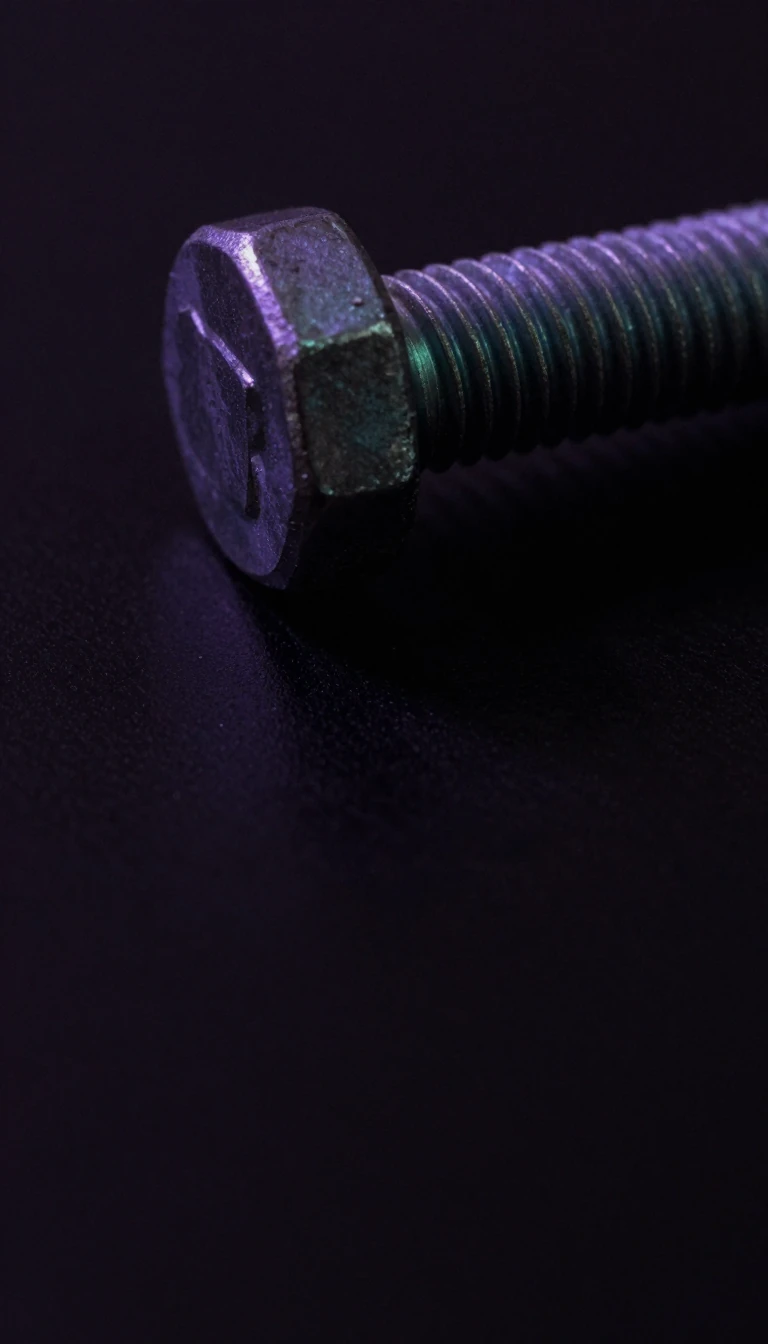 The torque wrench is a precision instrument designed to prevent mechanical failure through exact tension.A torque wrench is more than just a heavy-duty tool; it is a calibrated device that ensures nuts and bolts are tightened to precise specifications. By preventing both under-tighte…
- How total stations turn invisible coordinates into the physical world of modern constructionA total station is the surveyor's primary tool for bridging the gap between digital blueprints and physical reality. By combining precise angle measurement with distance-sensing l…
 The touchpad began as a circular device called the Cat on a 1980 workstation.Before they became the standard interface for laptops, touchpads were experimental tools for business machines. From the Xerox 860 to modern multitouch surfaces, these devices hav…
 From ancient bronze straps to microprocessors, the evolution of the life-saving tourniquet.For centuries, the tourniquet was a crude, dangerous last resort. Today, it is a precision medical instrument. By shifting from static, high-pressure settings to personalized, lim…
 How Rome built the longest bridge in the world for over a millenniumTo conquer Dacia, Emperor Trajan demanded the impossible: a bridge spanning the mighty Danube. Designed by Apollodorus of Damascus, this engineering marvel stood as the longest ar…
 Transducers are the silent bridges between the physical world and our digital systems.A transducer is a device that converts one form of energy into another, acting as a translator between physical stimuli and measurable signals. From the microphones capturing your…
 How the graphics revolution of 1999 changed gaming performance foreverBefore 1999, your PC processor did all the heavy lifting to render 3D worlds. When hardware transform, clipping, and lighting arrived, it offloaded these complex tasks to dedicate…
- How the transistor radio shrank the world and birthed the youth culture eraBefore the 1950s, portable radios were heavy, fragile, and required bulky batteries. The invention of the transistor changed everything, allowing electronics to fit into a shirt p…
 How a 1960s transistor innovation became the invisible glue of the digital ageTransistor-transistor logic transformed computing by integrating multiple functions onto single chips. By using transistors for both logic and amplification, this architecture ena…
 How electron beams bypass the limits of light to reveal the atomic worldFor centuries, scientists believed that the wavelength of light set a hard limit on how much detail we could resolve. By harnessing the wave-like properties of electrons, transmis…
 The invisible engineers keeping the lights on and the gas flowing every single secondTransmission system operators are the silent architects of modern life. They manage the massive, complex infrastructure that moves electricity and gas across nations. By balancing…
 Why transmission towers are the silent, structural giants of our modern electrical gridThese towering steel lattices are more than just utility infrastructure; they are precision-engineered skeletons designed to withstand wind, ice, and seismic forces while carrying…
 How a simple electronic circuit turns electricity into invisible waves that carry our world.A transmitter is the unsung workhorse of modern life, converting electric power into radio waves to beam everything from your phone calls to garage door signals. By modulating a c…
 In computing, transparency does not mean you can see through the systemThe term transparency in technology is often a marketing misnomer. While it sounds like it means open and visible, it actually describes a system that is intentionally invisible. …
 How modern agricultural machines automate the delicate process of moving seedlings to the fieldTransplanting seedlings by hand is a labor-intensive task that defines traditional farming. Modern transplanters have revolutionized this process, allowing farmers to move crops l…
 How engineers design the complex systems that keep our world moving every single dayTransportation engineering is more than just building roads. It is the scientific application of principles to manage how people and goods move across air, rail, water, and highwa…
- Why the humble trestle bridge became the backbone of the industrial ageTrestle bridges are more than just wooden skeletons crossing deep valleys. These rigid, frame-supported structures were once the temporary workhorses of the railroad expansion, de…
- A trigger is more than a switch; it is a complex mechanical gatekeeper.While we colloquially call the blade under our finger the trigger, it is merely the interface for a sophisticated internal group. This mechanism manages energy, safety, and timing…
 How a tiny flap on a rudder can steer a massive ship of stateA trim tab is a miniature surface attached to a larger control, designed to counteract aerodynamic forces with minimal effort. By adjusting this small tab, an operator can stabili…
 The ancient machine that automated heavy labor long before the Industrial RevolutionBefore steam engines, the trip hammer harnessed gravity and water power to crush ore, polish grain, and forge iron. From Imperial China to Roman mines, this mechanical marvel repl…
- Why the most dangerous software on your computer pretends to be your friendA trojan horse is malware that disguises itself as a legitimate program to gain unauthorized access to your device. Unlike viruses, these digital deceivers do not replicate themse…
 The trommel screen is a rotating drum that sorts materials using simple geometryNamed after the German word for drum, the trommel screen is a workhorse of industrial separation. By rotating a perforated cylinder, it sorts everything from municipal waste to fi…
- From garden beds to archaeological digs, the humble trowel is a master of precision.The trowel is far more than a simple garden scoop. This versatile hand tool has evolved into a specialized instrument for everything from masonry and drywall construction to delic…
- How a rejected, 'schlocky' hobbyist project became the world's best-selling personal computerWhen Radio Shack executives were pitched a home computer in 1976, they were skeptical. One famously dismissed the idea, claiming they could not sell computers. Yet, by 1982, the T…
- Why the humble triangle is the secret to building the world's strongest bridges.The truss bridge relies on a simple geometric truth: triangles cannot be distorted by stress. By arranging wooden or metal members into these rigid shapes, engineers create struct…
- The Tsar Bomba was a terrifying showpiece that was never meant for actual warThe most powerful explosive ever detonated, the Tsar Bomba, was a 50-megaton thermonuclear giant. Designed as a political statement rather than a practical weapon, it was too mass…
- The tuner is the unsung gatekeeper that turns invisible radio waves into audible sound.A tuner does more than just find a station; it acts as a precise filter, isolating a specific frequency while discarding unwanted noise. From the simple crystal sets of the 1920s …
 How engineers carve through rock and clay to build the world's hidden arteriesTunneling is a high-stakes balancing act between geology and logistics. From massive machines boring through mountains to ancient techniques like clay-kicking, engineers have deve…
- Tunneling protocols allow data to travel through networks that would otherwise block it.Tunneling protocols repackage data into a different form, enabling it to cross incompatible networks or bypass firewalls. By wrapping restricted traffic inside permitted protocols…
 The Soviet workhorse that conquered Arctic skies and carried half of all Aeroflot passengers.Designed in the 1960s to replace aging turboprops, the Tupolev Tu-154 became the backbone of Soviet aviation. With its unique landing gear and rugged design, it could operate from…
- A clerical error in 1831 accidentally named one of the world's most iconic fabrics.Tweed is synonymous with rugged Scottish landscapes and elite country pursuits, yet its name was a total accident. A London merchant misread a shipment label for 'tweels' as 'Twee…
 From ancient bronze tools to laser beams, how tweezers manipulate the microscopic world.Tweezers are more than simple bathroom accessories. These thumb-driven levers have evolved from ancient Egyptian metal tongs into sophisticated instruments capable of trapping sin…
 Why your favorite pair of jeans relies on a simple, diagonal weaving trickTwill is one of the three fundamental textile weaves, instantly recognizable by its distinct diagonal ribs known as wales. By passing threads over and under each other in a specif…
 Why the twin-lens reflex camera remains a masterclass in mechanical simplicity and candid photographyBefore digital sensors, the twin-lens reflex camera offered a unique way to capture the world. By using two identical lenses—one for viewing and one for taking—it allowed photogra…
- Why your computer might lie to you about the numbers it holdsComputers constantly translate data between formats to keep programs running, but this invisible hand can lead to silent errors. Whether through automatic coercion or manual casti…
 Why your computer's font menu is a direct descendant of 19th-century metal castingTypesetting once required manual labor, where workers physically arranged backwards metal letters into trays. Today, this craft has evolved into digital code, yet the core princip…
 The invisible software that wakes your computer before the operating system even startsBefore your operating system loads, a silent, powerful layer of firmware initializes your hardware. Known as UEFI, this architecture replaced the aging BIOS, bringing modern secur…
 Why your eyes might not actually see the difference in 4K televisionUltra-high-definition television promises breathtaking clarity, but human biology imposes strict limits. At typical home viewing distances, the human eye often cannot distinguish …