 Intellect Plus
Art
5,849 cards. Each one is a 40-second story with a five-minute read behind it. Page 67 of 98.
Subtopics: Art crime · Art history · Art museums · Arts: General · Baroque · Calligraphy · Ceramics · Children's literature · Classic literature · Colour · Concepts of fiction and narrative · Conceptual art · Conservation · Craft · Cultural venues · Dada · Detective fiction · Directors, producers and screenwriters · Dye · Entertainers · Expressionism · Fantasy literature · Fictional and legendary characters · Film and television · Filmmakers and theatre directors · Forgery · Fresco · History painting · Illustration · Impressionism · Literature · Medieval art · Michelangelo · Modern art · Mosaics & stained glass · Oil painting · Optics · Painting · Paris salon · Performing arts · Photography · Pigments · Poetry · Poets · Portraiture · Post impressionism · Printmaking · Renaissance · Romanticism · Science fiction literature · Sculpture · Shakespeare · Spanish golden age · Street art · Symbolism · Textiles · Theatre · UK & Ireland: arts · Van gogh · Vermeer · Victorian · Visual artists · Visual arts
 How a gritty police drama turned Miami into a neon-soaked, high-fashion cultural phenomenonMiami Vice redefined television by prioritizing mood, music, and aesthetic precision over traditional narrative. By banning earth tones and treating the city as a modern-day Casab…
 How a rejected monster movie transformed music videos into a serious art formWhen Michael Jackson proposed a horror-themed short film for his hit album, executives balked, calling it a novelty. Yet, the resulting production defied expectations, shattering …
 Did the most famous photograph of the Great Depression rely on a fabricated story?Dorothea Lange’s 1936 portrait of Florence Owens Thompson became the definitive image of American hardship. Yet, decades later, the subject herself disputed the photographer's dra…
 Military science fiction is not just space battles; it is a tool for strategic foresight.Military science fiction transcends simple space opera by grounding futuristic conflict in the realities of military life, doctrine, and human sacrifice. Beyond entertainment, thi…
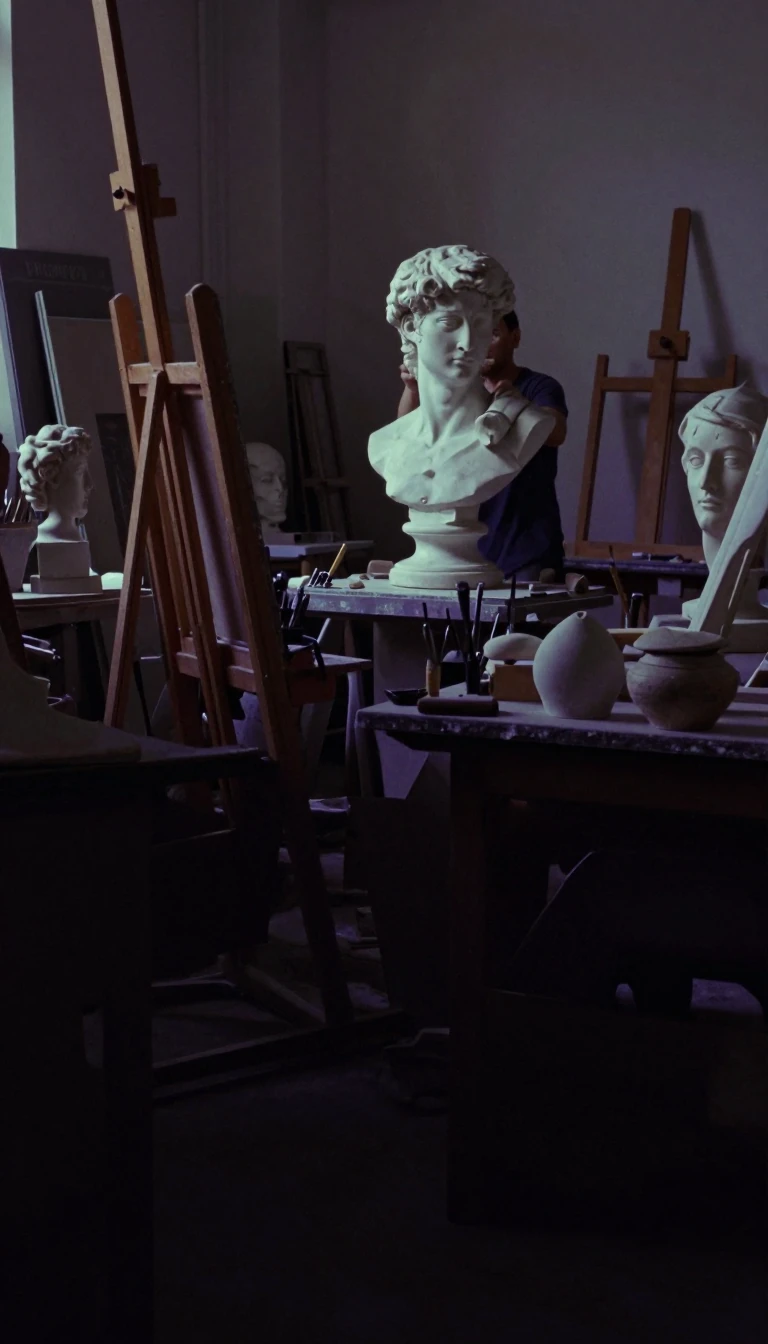 Why medieval miniatures were named for a toxic red lead pigment, not their size.The term miniature has nothing to do with being small. It derives from the Latin miniare, meaning to color with minium, a vibrant red lead pigment used in early manuscripts. While…
 Beyond the Polka Dots: The Evolution of Minnie Mouse from Flapper to IconCreated in 1928 as a flapper-inspired love interest, Minnie Mouse has transcended her origins as a damsel in distress. From her early days in silent shorts to her status as a glob…
 The secret to stage magic is not what you see, but what you ignore.Magic relies on a fundamental psychological vulnerability: the human brain struggles to process multiple focal points simultaneously. By manipulating where an audience looks and w…
 How a quiet puppeteer from Pittsburgh redefined the emotional landscape of children's televisionFred Rogers did not just host a show; he built a sanctuary. By blending musical composition, divinity, and puppetry, he created a space where children could navigate their fears a…
 Why the most revealing stories are told by a single person on stageA monodrama is more than just a solo performance. Whether through the psychological depth of a dramatic monologue or the singular perspective of a character’s internal world, this…
- The monologue is not a derivative of dialogue; it is the ancestor of drama.We often think of the monologue as a character speaking to themselves, but its roots run much deeper. In the earliest days of Western theatre, the monologue was the default state …
 Why did Paul Cézanne paint the same mountain over eighty times in his life?For Paul Cézanne, the craggy limestone ridge of Mont Sainte-Victoire was more than a landscape; it was an obsession. Over decades, he returned to the mountain to capture its essen…
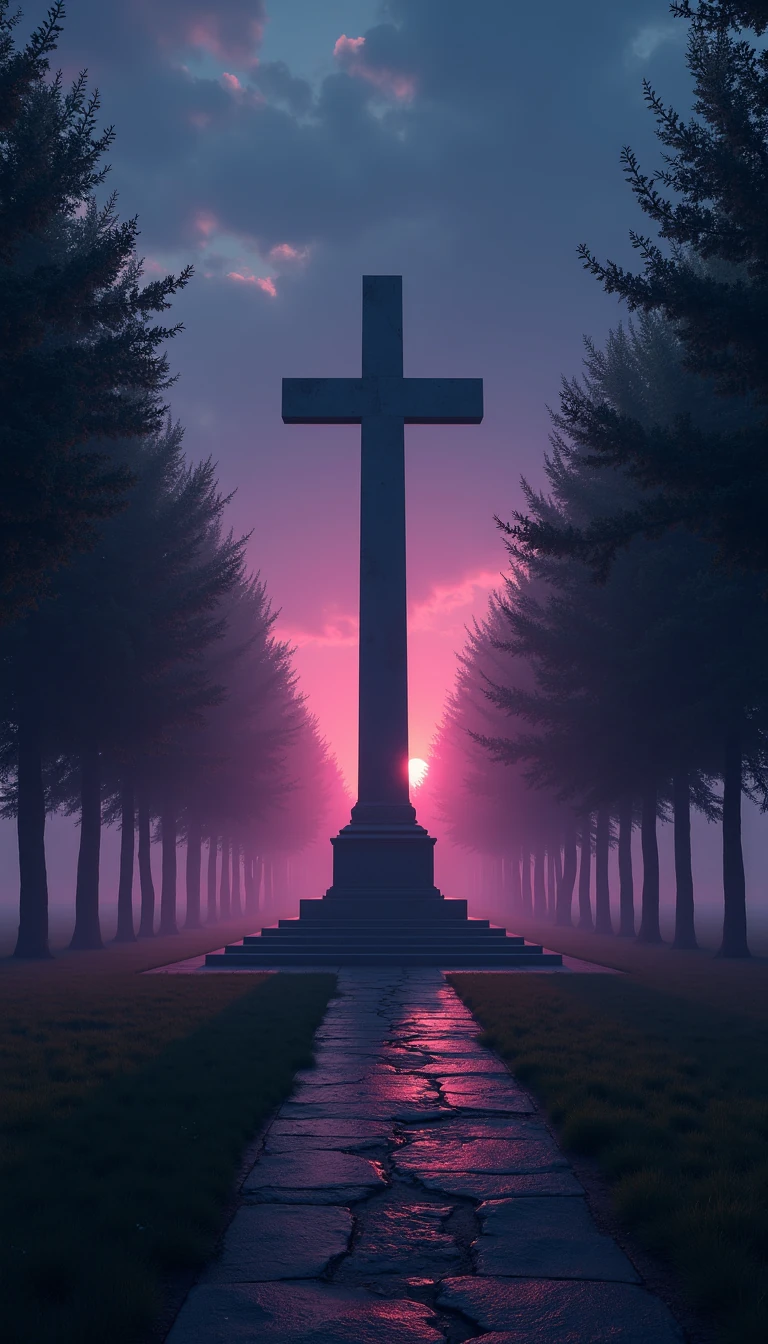 A monument is more than stone; it is a tool to shape our future.Derived from the Latin word for reminding or warning, monuments do more than preserve the past. They are active, often contested instruments of power and memory. Whether built to …
 The Moomins were born from a childhood warning to stay away from the pantry.Tove Jansson’s iconic Moomins began as a deterrent against kitchen theft. Her uncle invented the creatures to scare her away from his food, describing them as cold trolls lurking …
 Why does Michelangelo’s famous marble prophet sport a pair of mysterious, demonic-looking horns?Michelangelo’s towering sculpture of Moses, carved between 1513 and 1515, remains one of history’s most debated masterpieces. While its technical brilliance is undisputed, the fig…
 How a 1957 Indian epic challenged a colonial book to define a nation's identity.Mehboob Khan’s Mother India was more than a film; it was a deliberate, cinematic rebuttal to Katherine Mayo’s 1927 polemical book that vilified Indian culture. By casting a resili…
 Was the inspiration for Rudyard Kipling's iconic feral boy a real-life wolf child?Mowgli, the legendary feral boy of the Indian jungle, was not entirely a product of imagination. Kipling drew inspiration from historical accounts of children raised by wolves, sp…
 Why a young Gainsborough painted a haughty couple on their private estatePainted around 1750, Thomas Gainsborough’s Mr. and Mrs. Andrews is a masterpiece that blends portraiture with landscape. Yet, the stiff poses and disdainful expressions of the new…
 Was the greatest Bollywood blockbuster of the 1960s based on a real historical tragedy?Mughal-e-Azam, a 1960 epic, captivated audiences for decades with its operatic scale and forbidden romance. While it remains a pillar of Indian cinema, the story of Prince Saleem …
 Can a fictionalized historical drama reshape the global perception of a nation's imperial past?Muhteşem Yüzyıl, a lavish Turkish drama about Sultan Suleiman the Magnificent, became a global phenomenon reaching over 200 million viewers. Despite its massive success, the serie…
 Why David Lynch’s surrealist thriller Mulholland Drive remains a haunting puzzle for modern audiencesOriginally conceived as a television pilot, this 2001 neo-noir masterpiece evolved into a dreamlike exploration of the dark side of Hollywood. Its nonlinear structure and mysterio…
 How British music halls evolved from rowdy pub saloons into the birth of varietyBorn in 1830s London pub saloons, music halls were once raucous venues where audiences smoked and drank while watching comedy and song. Over a century, these working-class spaces …
 A 1609 Joseon Dynasty UFO sighting inspired this hit South Korean television seriesMy Love from the Star blends historical records with high-concept fantasy. The series follows an extraterrestrial who landed in 1609 and spent four centuries on Earth, only to fal…
 In Orhan Pamuk's masterpiece, a murdered artist narrates his own death from the afterlife.Set in 1591 Istanbul, My Name Is Red weaves a complex murder mystery through the eyes of twenty-one different narrators. From the victim and his killer to a counterfeit coin and t…
 How a forest spirit became a global cultural icon and a mascot for natureHayao Miyazaki’s 1988 masterpiece My Neighbor Totoro transformed a simple story about two sisters in postwar Japan into a global phenomenon. Beyond its critical acclaim, the film’…
 Why Willa Cather’s 1918 masterpiece remains a vital mirror for the American immigrant experiencePublished in 1918, Willa Cather’s My Ántonia transcends its era to capture the raw, transformative power of the American frontier. Through the eyes of an orphaned boy and a Bohemi…
 How MythBusters turned urban legends into a massive, explosive, and scientific television spectacle.For fourteen seasons, Adam Savage and Jamie Hyneman used high-speed cameras, ballistic gelatin, and tons of explosives to test the validity of popular myths. By applying the scien…
 Abel Gance’s 1927 epic Napoléon was a technical marvel that nearly vanished from history.Before IMAX, there was the triptych. Abel Gance’s silent masterpiece used three synchronized cameras to create a panoramic visual experience that pushed the limits of 1920s cinema…
 How a Ninja Manga Became a Global Phenomenon Rooted in Ancient Japanese MythologyMasashi Kishimoto’s Naruto transformed from a simple ninja story into one of the best-selling manga series in history. With over 250 million copies sold worldwide, the series blen…
 The accidental design choices that defined a global manga iconNaruto Uzumaki, the spiky-haired ninja, was never meant to be a fashion icon. His signature orange jumpsuit was chosen to make him pop on the page, while his sandals were a simple…
 Is the legendary wise fool Nasreddin a historical figure or a cultural mirror?Nasreddin is a beloved folk hero across the Middle East and Central Asia, appearing in thousands of witty, pedagogical anecdotes. While many regions claim him as a local historica…
 How India celebrates its cinematic excellence through a prestigious national awards ceremonySince 1954, India has honored its finest films through a rigorous national competition. These awards recognize technical and artistic mastery across diverse languages and regions.…
 The pristine wilderness you see on screen is often a carefully constructed cinematic illusionNature documentaries are rarely the unvarnished windows into the wild they appear to be. From staged animal conflicts to studio-filmed close-ups and post-production sound design, …
 How needlework evolved from a domestic necessity to a Victorian status symbolNeedlework is far more than simple sewing. From the intricate tapestries of the Italian Renaissance to the parlor-bound embroidery of the Victorian era, these textile arts have lo…
- Is the world's most famous portrait of ancient beauty an act of smuggling?The Nefertiti Bust is an icon of feminine beauty, yet its history is marred by controversy. Discovered in 1912, this limestone masterpiece has spent over a century in Germany, spa…
 How a 1937 typewriter birthed the digital future of cyberspace and cyberpunk literatureWilliam Gibson’s 1984 novel Neuromancer did not just define a genre; it predicted a world of artificial intelligence and virtual reality long before the internet became mainstream…
 Why Kazuo Ishiguro’s clones accept their grim fate without fighting backIn an alternative England, students at an elite boarding school are raised for a single, chilling purpose: to donate their vital organs until they die. Kazuo Ishiguro’s novel expl…
 How a haunting 1956 documentary transformed our collective memory of the concentration campsAlain Resnais’s Night and Fog is a landmark documentary that juxtaposes the desolate, overgrown ruins of 1955 concentration camps with harrowing archival footage. Created to confr…
 How a low-budget 1968 horror film redefined the modern zombie for global audiencesReleased in 1968, George Romero's Night of the Living Dead broke the mold for horror cinema. By shifting away from traditional Vodou origins and placing monsters in a recognizable…
 Edward Hopper’s Nighthawks captures the quiet, haunting isolation of mid-century American urban life.Completed in 1942, Nighthawks remains one of the most recognizable works in American art. While it depicts a brightly lit diner late at night, the painting is not a literal transc…
 Why the greatest Icelandic saga is a tragic meditation on the cost of honorNjáls saga is widely regarded as the finest of the 13th-century Icelandic sagas. It depicts a society where blood ties and rigid codes of honor force even the wisest men into inev…
 How a fake spy and a crop duster created the ultimate Hitchcock thriller.Alfred Hitchcock’s 1959 masterpiece North by Northwest redefined the spy thriller, blending mistaken identity with groundbreaking kinetic typography. Born from a brainstorm about …
 How Norway’s literature emerged from four centuries of Danish cultural dominanceFor four hundred years, Norway lacked a distinct literary voice, as Danish became the official language of the union. It was only after the 1814 separation that a uniquely Norwegi…
 Is a novelist a creator of worlds, a social crusader, or just a novice?The term novelist has evolved from a 16th-century label for an inexperienced novice or an innovator of new beliefs into our modern definition. Beyond the craft of writing, novelis…
 Oceanian art: A vast, diverse tradition built on stone, shell, and the human bodyFor millennia, the indigenous peoples of Oceania crafted sophisticated visual arts using only the materials provided by their environment. From intricate wood carvings to monument…
 Horace’s Odes: Ancient Roman lyric poetry that still sparkles after two millenniaHorace’s Odes are a four-book collection of Latin lyric poetry that defined an era. Published between 23 and 13 BC, these verses masterfully adapted Greek forms to Roman social li…
 Was the greatest film performance of all time actually a celebration of an informant?Elia Kazan’s 1954 masterpiece On the Waterfront is widely hailed for Marlon Brando’s electrifying, method-acting performance. Yet, the film remains deeply controversial. Critics l…
 Why a 1968 Western caused a fashion crisis on Parisian department store escalatorsSergio Leone’s epic Once Upon a Time in the West was a massive hit in Europe, sparking a trend for duster coats so popular that Parisian escalators required warning signs. While t…
 Why Op Art uses geometric precision to trick your brain into seeing movementOp art is a mid-20th-century movement that manipulates shapes and colors to create perceptual illusions. By carefully arranging patterns, artists force the viewer to experience co…
- Operetta was the light, satirical, and melodic precursor to modern musical theatreBefore musicals dominated the stage, operetta offered a blend of spoken dialogue, dance, and song. Born in mid-19th-century France, this genre provided a lighter, more accessible …
 Why the term oral literature is a contradiction that scholars struggle to defineThe phrase oral literature is an oxymoron, as literature is rooted in the Latin word for letter. Yet, this term remains the standard way to describe stories, epics, and myths pass…
 How a minimalist Danish drama achieved the impossible through absolute, obsessive cinematic controlCarl Theodor Dreyer’s 1955 masterpiece Ordet is a haunting exploration of faith and resurrection. Renowned for its stark, painterly cinematography and long, deliberate takes, the …
 How a rejected television script became Japan’s most watched serial of all timeOshin, a serialized drama about a woman’s grueling life in Meiji-era Japan, was initially rejected by every network, including NHK. Its creator, Sugako Hashida, based the story on…
 Ottonian art: A grand, visionary style that defined the Holy Roman Empire's cultural rebirth.Emerging from the shadow of the Carolingian Empire, Ottonian art fused Late Antique, Byzantine, and local traditions into a powerful, expressive visual language. From monumental b…
- A Doctor Who episode inspired the historical fantasy phenomenon that sold 25 million copies.Diana Gabaldon intended to write a straightforward historical novel for practice. But after watching a classic Doctor Who serial, she became captivated by a young Scotsman in a ki…
 Why British pantomime is a chaotic, cross-dressing, audience-shouting, slapstick-filled Christmas traditionPantomime is a uniquely participatory British theatre form that blends fairy tales with slapstick, music, and gender-bending roles. Far from silent miming, it demands that audienc…
 From ancient maps to modern 3D models, paper is the ultimate artistic mediumPaper craft is far more than simple folding. It is a versatile, accessible medium that spans centuries and cultures, from intricate Japanese origami to Mexican papel picado. Wheth…
 Why do we use simple stories to explain the most complex human truths?A parable is more than a bedtime story; it is a rhetorical tool designed to bypass our defenses. By placing a moral dilemma in a world that feels distant, these short narratives f…
 Is a documentary a neutral window or a tool of the filmmaker's own power?Jennie Livingston’s 1990 documentary Paris Is Burning captured the vibrant, high-stakes world of New York City’s ballroom scene. While celebrated as a masterpiece of queer culture…
 Why Gustave Caillebotte’s Rainy Parisian Masterpiece Is Not Quite What It SeemsGustave Caillebotte’s 1877 masterpiece captures a rain-slicked Parisian intersection with startling, almost photographic precision. While often grouped with the Impressionists, Ca…
 Wolfram von Eschenbach's Parzival: A Medieval Masterpiece of Chivalry, Spirituality, and Hidden OriginsComposed in the 13th century, this Middle High German romance follows the Arthurian hero Parzival on a transformative quest for the Holy Grail. Beyond its knightly adventures, the…