 Intellect Plus
Ideas & Philosophy
17,867 cards. Each one is a 40-second story with a five-minute read behind it. Page 251 of 298.
Subtopics: Abrahamic religions · Artificial intelligence · Attention · Classic philosophy · Cognitive biases · Consciousness · Cooperation · Cynicism · Decision making · Decision theory · Descartes · Dharmic religions · Dreams · Eastern philosophy · Eastern religions · Epistemology · Ethics · Evidence · Existentialism · Fairness · Famous psychology experiments · Free will · Game theory · Greek mythology · Historians · Identity · Infinity · Justice · Logic · Logical fallacies · Mathematics · Medieval philosophy · Mind · Mythology · Mythology of the ancient world · Other religions · Paradoxes · Philosophers · Philosophers, historians, political and social scientists · Philosophy · Philosophy of mind · Philosophy of science · Political philosophy · Probability · Psychology · Reality · Religion · Religion and spirituality · Religious figures · Self knowledge · Statistics · Stoicism · Strategy · Taoism · Thought experiments · Trivia & curiosities · Truth · Utopias & ideal worlds · Wellbeing · World religions · Writers
 The libretto is the unsung hero of opera, yet its writers often remain forgotten.A libretto is far more than just a script; it is the backbone of musical theater and opera. While composers often steal the spotlight, the librettist provides the essential words,…
 The 7th-century desert romance that inspired Eric Clapton and centuries of mystical poetry.Long before Romeo and Juliet, the tragic tale of Qays and Layla defined the archetype of the star-crossed lover. Known as Majnun, the poet whose obsession drove him into the wilde…
 The Tang Dynasty scholar who dreamed of a lifetime while his millet cooked.Lü Dongbin is a legendary Daoist immortal whose life supposedly spanned two centuries. Before his ascension, he was a failed scholar who, according to folklore, experienced an ent…
 Robert Nozick: The Philosopher Who Challenged His Own Libertarian Foundations and Redefined TruthRobert Nozick was a titan of American philosophy, best known for his 1974 masterpiece, Anarchy, State, and Utopia. Yet, the man who provided the intellectual bedrock for modern li…
 Robert Anton Wilson and the Art of Escaping Your Own Reality TunnelRobert Anton Wilson was a writer and futurist who spent his life teaching people how to dismantle their own belief systems. By blending science fiction, occultism, and quantum phy…
 Robert G. Ingersoll was the most famous American orator who never held high office.Known as the Great Agnostic, Robert G. Ingersoll was a brilliant lawyer and political orator during the Golden Age of Free Thought. Despite his immense popularity and influence on…
 Did a medieval bishop invent the Big Bang theory seven centuries before modern science?Robert Grosseteste, a 13th-century polymath, proposed that the universe began as an explosion of light crystallizing into matter. Long before modern cosmology, he used mathematics…
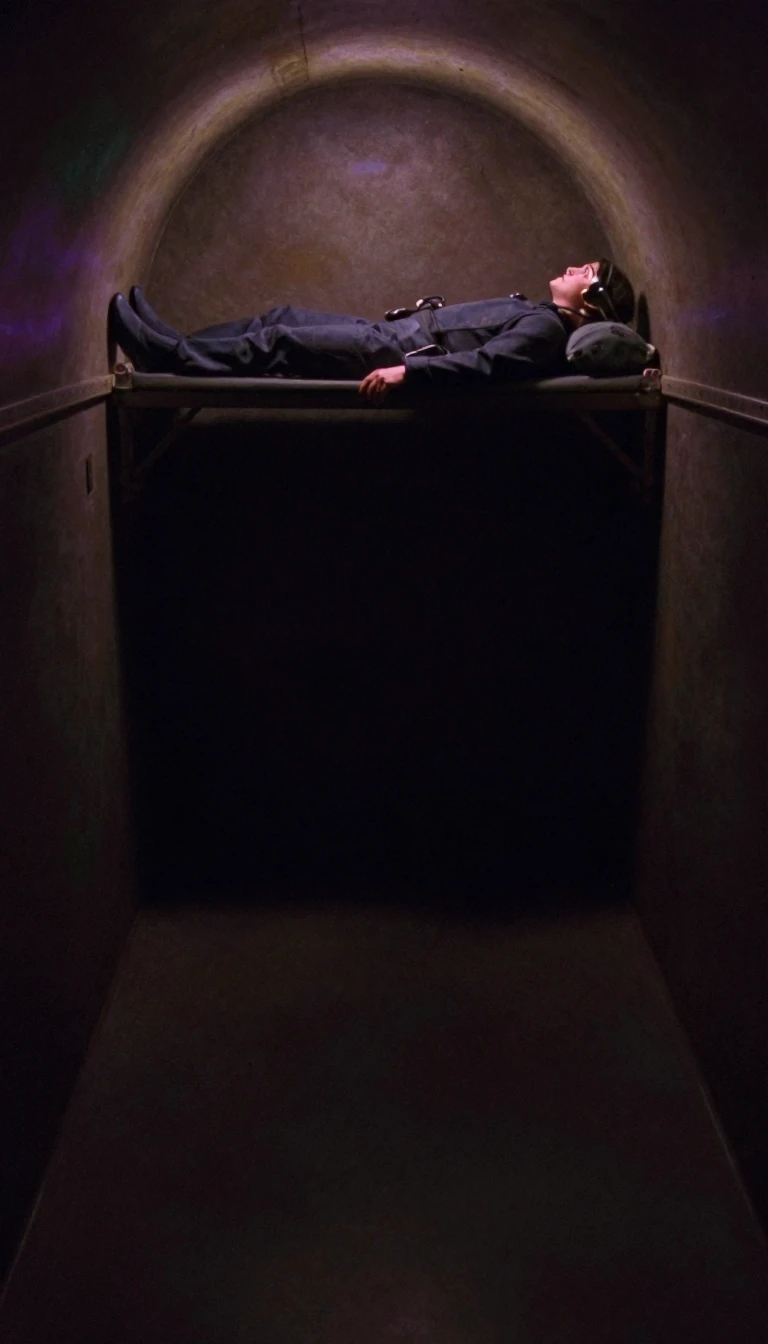 The sociologist who predicted the collapse of modern materialist civilizationFleeing a death sentence in revolutionary Russia, Pitirim Sorokin arrived in America to deliver a chilling prophecy. He believed our modern, technology-driven world is trapped in …
 Why Richard Rorty believed that truth is a human invention, not a cosmic discovery.Richard Rorty challenged the foundational assumption that our minds mirror an objective reality. Instead, he argued that knowledge is purely linguistic and historical. By rejectin…
 Richard Avenarius and the radical quest to strip philosophy of all hidden assumptionsRichard Avenarius was a German-Swiss philosopher who sought to purge human knowledge of both metaphysics and materialism. By developing the doctrine of empirio-criticism, he aimed…
 Why a 15th-century Italian widow became the patron saint of impossible causesRita of Cascia lived a life defined by tragedy, from an abusive marriage to the loss of her sons. Yet, she transformed these hardships into a legacy of peace and devotion. Today, …
 René Guénon: The French Intellectual Who Sought to Reclaim Ancient Universal WisdomRené Guénon was a French-Egyptian thinker who dedicated his life to reviving traditional metaphysics for Western readers. By bridging Eastern spiritual doctrines with Western inte…
 Remy de Gourmont: The critical conscience who shaped modern literature from the shadowsA disfigured recluse who became the intellectual heartbeat of the Symbolist movement, Remy de Gourmont influenced giants like T.S. Eliot and Ezra Pound. Though his name is less fa…
 The eighteenth-century polymath who decoded the secret lives of insects and industrial steel.René Antoine Ferchault de Réaumur was a French intellectual whose curiosity spanned from the chemical composition of steel to the social habits of wasps. Often called the Pliny of…
 Why your deepest desires are not actually your own, according to René GirardRené Girard argued that human desire is not spontaneous but imitative. We do not want objects because they are inherently valuable; we want them because others want them. This mim…
 Why modern class conflict is about authority rather than just who owns the factoryRalf Dahrendorf argued that Karl Marx’s focus on property ownership was too narrow for the modern era. Instead, he proposed that social conflict stems from the distribution of aut…
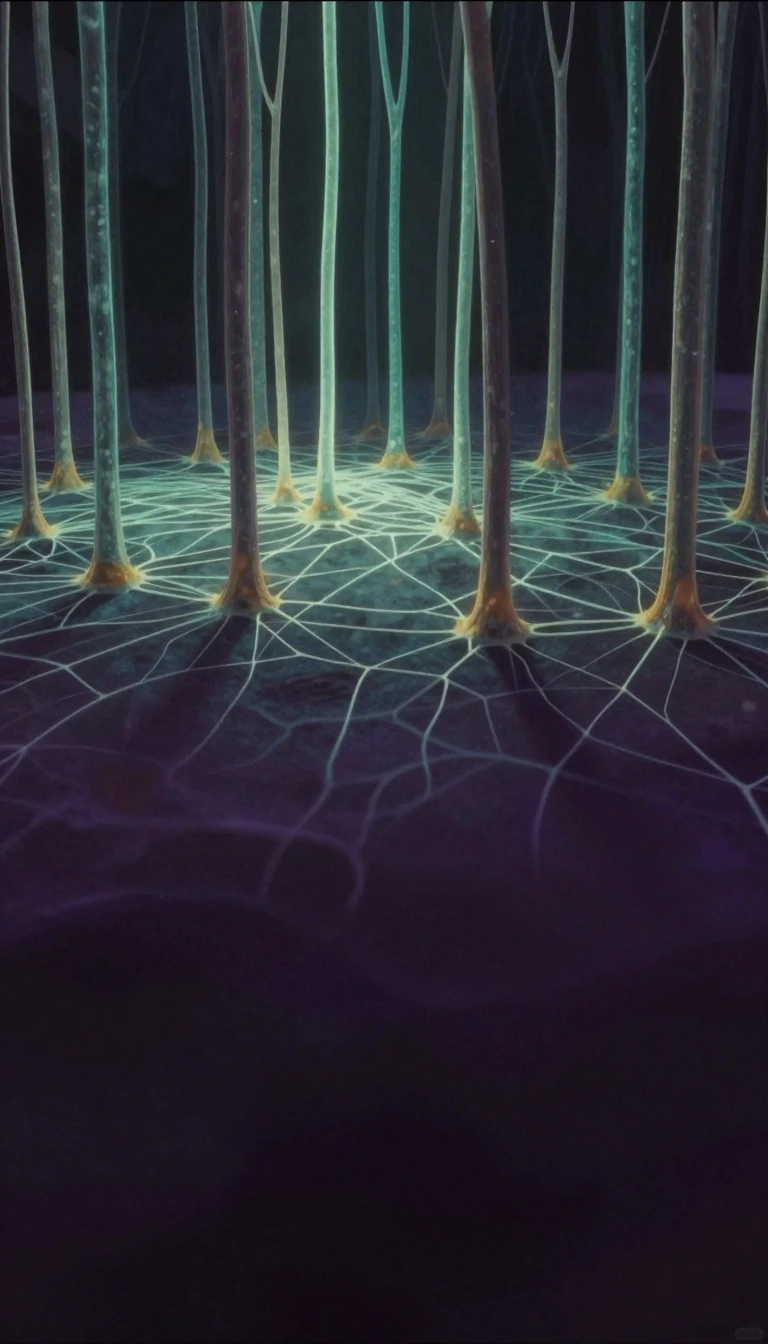 Why Plato's ancient cave allegory remains the ultimate metaphor for our distorted realityIn Plato's Republic, prisoners chained in a dark cave mistake flickering shadows for reality. When one is dragged into the sunlight, he realizes the truth, only to be rejected by …
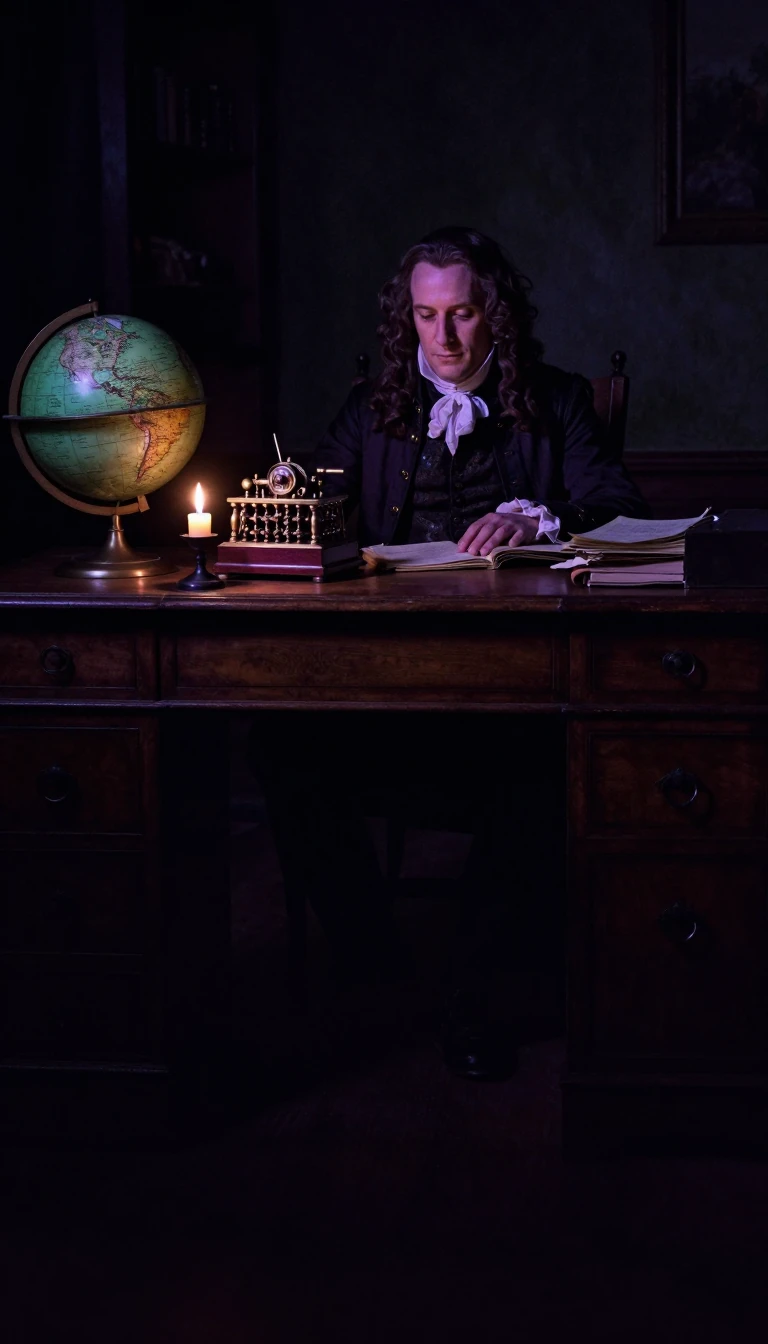 Did a medieval knight invent the first computer-like system to convert the world?Ramon Llull, a 13th-century knight turned philosopher, created a universal logic system called the Art. By using diagrams and combinatorial operations to prove religious truths, h…
 Why Raymond Aron was the most important French thinker you have never heard ofWhile his friend Jean-Paul Sartre captured the public imagination, Raymond Aron emerged as the preeminent voice of French intellectualism. A rational humanist who rejected existen…
 Why the most influential American theologian of the 20th century rejected liberal optimismReinhold Niebuhr transformed from a socialist pacifist into the architect of Christian realism. By arguing that human pride and the lust for power are inescapable, he challenged b…
 Pope Francis: The First Jesuit and Latin American Leader of the Catholic ChurchJorge Mario Bergoglio, known as Pope Francis, broke centuries of tradition as the first non-European pope since the 8th century. His papacy was defined by a commitment to humility…
 Is the universe inherently irrational, or are we just trapped by our own expectations?Absurdism suggests that human existence is defined by a fundamental conflict: our desperate, innate desire for meaning colliding with a silent, indifferent universe. While some se…
 Was Raja Ram Mohan Roy the architect of India's modern intellectual and social renaissance?Known as the Father of the Indian Renaissance, Raja Ram Mohan Roy was a polymath who navigated the tension between traditional scholarship and Western administration. He campaigne…
 Why science can never truly isolate a single hypothesis for a crucial testPierre Duhem, a brilliant French physicist, argued that experiments never test isolated ideas. Instead, they evaluate entire theoretical frameworks at once. Because physics relies…
 Can you be truly virtuous if you only act to avoid hell or gain heaven?Renaissance philosopher Pietro Pomponazzi argued that morality does not require the promise of an afterlife. By asserting that the human soul is tethered to the physical body and …
- Pierre Gassendi: The Catholic Priest Who Reconciled Ancient Atomism With Modern Scientific ThoughtA French priest and polymath, Pierre Gassendi was a pivotal figure in the 17th-century scientific revolution. He bridged the gap between ancient Epicurean atomism and Christian th…
 Can a Jesuit priest reconcile the cold logic of evolution with the divine?Pierre Teilhard de Chardin was a Jesuit priest and world-class paleontologist who spent decades hunting fossils in China. While he helped discover Peking Man, his true obsession w…
 Did this 18th-century polymath accidentally invent the theory of natural selection?Pierre Louis Maupertuis was a French mathematician who led a daring expedition to Lapland to prove the Earth is oblate. Yet his most enduring legacy may be his radical, often over…
 Is the modern welfare state a fiscal kleptocracy?German philosopher Peter Sloterdijk has built a career on provocation. From accusing the state of pillaging its most productive citizens to suggesting that human civilizations are…
 Before philosophy became a science, Pherecydes of Syros reimagined the universe as a cosmic tapestry.Living in the 6th century BCE, Pherecydes of Syros bridged the gap between ancient mythology and early rational thought. He was the first to write philosophical ideas in prose, en…
 How a wealthy Alexandrian philosopher attempted to merge the Hebrew Bible with Greek thought.Philo of Alexandria was a noble, influential thinker who spent his life bridging the gap between Platonic philosophy and Second Temple Judaism. By treating the Torah as a series o…
 Philip K. Dick believed reality was a mass delusion imposed by an obscure power.A master of paranoid science fiction, Philip K. Dick spent his life questioning the nature of existence. He argued that our perceived world is merely a fragile construct, often ma…
 Why the father of modern management believed business is a liberal artPeter Drucker transformed how we perceive organizations, shifting the focus from cold numbers to human potential. He argued that management is not merely a technical function but …
- Was the most condemned heretic in Christian history actually an orthodox theologian?Pelagius, a fifth-century monk, championed human free will and moral responsibility, clashing violently with Augustine of Hippo. Long branded a dangerous heresiarch, modern schola…
 Why a sheltered Roman poet became the most earnest voice of Stoic morality.Aulus Persius Flaccus lived a quiet, bookish life, yet his satires reached the highest moral intensity in Roman literature. By rejecting the political rancor of his peers, this Et…
 The 11th-century monk who argued God could undo the past and restore lost virginityPeter Damian was a reluctant cardinal and fierce reformer who lived as an ascetic hermit. He famously clashed with the church establishment over corruption, championed the use of …
 Is the life of a newborn baby equivalent to the life of a person?Peter Singer, one of the world's most influential living philosophers, argues that personhood requires rationality, autonomy, and self-consciousness. By this definition, he sugges…
 How Paul Ricœur transformed our understanding of the self through the power of interpretationPaul Ricœur was a titan of 20th-century philosophy who bridged the gap between phenomenology and hermeneutics. By arguing that we understand ourselves only by interpreting the wor…
 Why the God of traditional religion might be the root of modern atheism.Paul Tillich, a titan of 20th-century theology, argued that defining God as a supreme being actually fuels modern despair. By treating the divine as an object to be known or contr…
 Paul Valéry wrote fewer than a hundred poems, yet became a titan of intellect.Though celebrated as a poet, Paul Valéry considered his true work to be the 28,000 pages of notebooks he filled over a lifetime. A skeptic of human nature, he spent decades in sil…
 Why modern manners are actually a hidden map of state power and controlNorbert Elias, a German sociologist who spent decades in obscurity, revealed that our most basic social norms—from table manners to emotional restraint—are not natural. Instead, t…
- Why the distinction between Left and Right remains the ultimate political divideNorberto Bobbio, one of the 20th century's most influential Italian intellectuals, argued that the divide between Left and Right is defined by their view of inequality. While the …
 Paul Lafargue: The revolutionary who argued that humanity should embrace the right to be lazy.Born in Cuba to a diverse heritage, Paul Lafargue became a central figure in European socialism and Karl Marx's son-in-law. Best known for his provocative work The Right to Be Laz…
- Why the Soviet Union expelled a philosopher who refused to fear its secret policeNikolai Berdyaev was a Christian existentialist who openly defied the Bolsheviks. After surviving interrogations by the head of the Cheka, he was exiled on a ship of intellectuals…
- Did a nineteenth-century Russian novelist provide the emotional spark for the Russian Revolution?Nikolay Chernyshevsky was the dominant intellectual of 1860s Russia, a socialist philosopher whose prison-penned novel, What Is to Be Done?, became a manual for revolutionaries. W…
- How a Russian Prince Transformed Language and Paved the Way for Modern StructuralismNikolai Trubetzkoy was a linguist of aristocratic lineage whose work on phonology fundamentally altered how we understand human communication. By defining the phoneme as the small…
 Why the 17th-century priest Nicolas Malebranche believed God is the only true causeNicolas Malebranche, a French philosopher and priest, argued that human minds and physical objects cannot actually influence one another. Instead, he proposed that God is the sole…
 How a forgotten philosopher from Jordan shaped a thousand years of Western education.Nicomachus of Gerasa, an ancient Neopythagorean, wrote textbooks that became the bedrock of medieval learning. By blending mystical number theory with music and mathematics, his w…
 Did a famous philosopher really defy a fascist general, or was it a myth?Miguel de Unamuno, a towering Spanish intellectual, supposedly delivered a blistering rebuke to a military leader during the Civil War. Yet, modern historians suggest this iconic …
 Why do we lose track of time when we are deeply engaged in work?Mihaly Csikszentmihalyi identified the psychological state of flow, where total absorption in an activity makes the ego fall away and time seem to vanish. This optimal state of in…
 Why the Russian philosopher Mikhail Bakhtin argued that no human can ever be finished.Mikhail Bakhtin believed that human identity is never fixed, but rather a constant, open-ended dialogue. By rejecting the idea that people are objects to be defined by science or …
- Nicholas Roerich: The Artist Who Dreamed of a Sacred Union Across Central AsiaNicholas Roerich was a prolific painter, mystic, and peace activist who believed art could unify the world. From designing sets for the Ballets Russes to leading expeditions acros…
 Why Michel Butor was the structuralist who refused to be a structuralistMichel Butor was a master of rigid literary architecture, yet he rejected the nouveau roman label. By blending mathematical precision with a deeply lyrical sensibility, he transfo…
 Michel Onfray wants to rescue philosophy from the heavens and bring it to earth.A prolific French philosopher, Michel Onfray rejects the spiritualist traditions of Western thought. Instead, he champions a materialist, hedonistic approach that celebrates the b…
 Was Meister Eckhart a heretic, or just a mystic ahead of his time?Meister Eckhart, a 13th-century Dominican theologian, remains one of history's most controversial spiritual figures. Though he was posthumously condemned by a papal bull in 1329, …
 Was the last great Eleatic philosopher a brilliant logician or just a crude thinker?Melissus of Samos, a 5th-century BC naval commander, refined the Eleatic school’s radical view that reality is one, changeless, and eternal. While Aristotle dismissed his argument…
 Why the most important knowledge you possess is impossible to put into wordsMichael Polanyi, a polymath who bridged chemistry and philosophy, argued that our greatest achievements rely on tacit knowledge—the skills we master but cannot fully explain. He c…
 How a competitive cyclist became the world's most prominent advocate for scientific skepticism.Michael Shermer transitioned from a fundamentalist Christian evangelist to a leading voice in scientific skepticism. His journey, shaped by a tragic accident and the rigors of ult…
 Max Stirner: The German Philosopher Who Declared That All Social Institutions Are Mere SpooksMax Stirner was a radical 19th-century thinker who argued that the state, morality, and even society itself are illusions—or spooks—designed to control the individual. By urging p…
 Why your brain prefers the big picture over the sum of its partsMax Wertheimer, a founder of Gestalt psychology, discovered that our minds are wired to perceive patterns and wholes rather than isolated fragments. His work on the phi phenomenon…