 Intellect Plus
Ideas & Philosophy
17,867 cards. Each one is a 40-second story with a five-minute read behind it. Page 34 of 298.
Subtopics: Abrahamic religions · Artificial intelligence · Attention · Classic philosophy · Cognitive biases · Consciousness · Cooperation · Cynicism · Decision making · Decision theory · Descartes · Dharmic religions · Dreams · Eastern philosophy · Eastern religions · Epistemology · Ethics · Evidence · Existentialism · Fairness · Famous psychology experiments · Free will · Game theory · Greek mythology · Historians · Identity · Infinity · Justice · Logic · Logical fallacies · Mathematics · Medieval philosophy · Mind · Mythology · Mythology of the ancient world · Other religions · Paradoxes · Philosophers · Philosophers, historians, political and social scientists · Philosophy · Philosophy of mind · Philosophy of science · Political philosophy · Probability · Psychology · Reality · Religion · Religion and spirituality · Religious figures · Self knowledge · Statistics · Stoicism · Strategy · Taoism · Thought experiments · Trivia & curiosities · Truth · Utopias & ideal worlds · Wellbeing · World religions · Writers
 Why wanting something is not the same as intending to do itYou can desire a sunny day, but you cannot intend one. While we often use these words interchangeably, philosophy reveals a sharp distinction: intentions require a practical commi…
 Why the best solutions often feel like common sense in hindsightMost problems are solved by moving from one known idea to a new one, rather than following a straight line of logic. This is lateral thinking: a deliberate shift from familiar pat…
 Your brain chooses the easiest path, even when it's wrongWhy do we repeat familiar habits even when a better way is right in front of us? This cognitive trap, known as the Einstellung effect, shows how our brains prioritize efficiency o…
 How to meet a stranger in New York without any prior communicationIf you had to meet a stranger in New York City at a specific time and place, but could not send a single text or call, where would you go? The answer reveals a profound psychologi…
 A single ribbon can mean everything from radical democracy to organ donationIn the visual language of symbols, the green ribbon is a polysemic powerhouse. Depending on where you stand—from a 17th-century English tavern to a modern hospital ward—it can sig…
 To win the game, you must first imagine the endHow do you make the perfect choice today when the consequences won't be felt for years? Backward induction suggests the answer lies in reversing time. By identifying the final opt…
 Why thinking about how you walk might actually make you tripHave you ever felt clumsy the moment you became aware of your own movement? This is the centipede effect: a psychological phenomenon where conscious attention disrupts well-rehear…
 Can an omnipotent God create free will without the possibility of evil?If a creator is all-powerful and all-good, why does suffering exist? In 1977, Alvin Plantinga proposed a logical defense suggesting that even an omnipotent being might be unable t…
 Why two rational people cannot agree to disagree on the factsIf two rational people share the same starting assumptions and have access to all relevant information, they cannot logically maintain different beliefs. This mathematical certain…
- Is the gold standard of modern medicine failing the individual patient?Evidence-Based Medicine (EBM) promises better care by integrating research, expertise, and patient values. But as we rely more on massive databases and statistical averages, a cri…
 How we moved from practical navigation to direct orbital observationFor centuries, humans inferred the Earth's shape through mathematics and sea voyages. It took the dawn of the space age to finally provide the visual proof we see today: a complet…
 Is your behavior a choice or a biological script?The great golden digger wasp follows a rigid, step-by-step program to build nests and hunt prey. When researchers disrupt its routine, the wasp falls into an infinite loop of repe…
 The physics of homeopathy: How a 30C dilution would require a planet-sized containerHomeopathy relies on the idea that extreme dilution creates a medicinal effect. However, at certain potencies, the preparations lack even a single molecule of the original substan…
 Mapping the human psyche across 120 countries since 1981How do we measure the invisible architecture of human belief? The World Values Survey tracks the shifting tides of social, religious, and political values globally. By capturing t…
 Can we ever truly know anything, or are we just guessing?In the 3rd century BCE, Plato's Academy underwent a radical transformation. Instead of seeking absolute truths, a new group of thinkers began questioning whether the human mind is…
 The magician's trick of stacking the deck with factsWhen you see a perfect success story, you are likely seeing a curated sample. Cherry picking is the art of highlighting the ripest fruit while concealing the rot. It is a powerful…
 The patient who broke the analyst: Freud's most famous therapeutic failureIn 1900, a young woman named Ida Bauer sought treatment for a loss of voice. The resulting case study became a cornerstone of psychoanalysis, but for Sigmund Freud, it was a bitte…
 The logical fallacy of kicking a stone to end a debateImagine trying to argue against the existence of matter. You could spend years in complex philosophy, or you could simply kick a rock. This physical act became the namesake for a …
 Why your brain 'zones out' is more complex than just being boredWe often dismiss absent-mindedness as a simple lack of focus. However, it is a sophisticated mental state where our brains fail to process information deeply enough to form lastin…
 Is cynicism a defense mechanism or a form of depression?Modern cynicism is often dismissed as mere negativity, but it may be a sophisticated psychological state. It is defined by a distrust of human motives and a rejection of social in…
 Is your belief a principle or just an unexamined opinion?The word dogma describes beliefs held definitively without the possibility of reform. While often used as a pejorative for stubbornness, it historically refers to formal systems o…
 The 736-year reign of a single coin designImagine a currency so stable that a single design remained valid for nearly eight centuries. The Chinese Wu Zhu cash coin achieved this feat, outlasting empires and maintaining it…
 The viral logic of chain letters is a mathematical impossibilityFrom ancient Egyptian scrolls to modern recipe swaps, chain letters have persisted for millennia. They rely on a specific psychological architecture: they exploit our identity, fe…
 Could a world without suffering actually be worse than our own?The philosopher Gottfried Wilhelm Leibniz proposed a staggering idea: that our current reality is the absolute best version of existence possible. It sounds like blind optimism, b…
 The art of deciding what actually matters for your soulIn Stoic philosophy, most things in life are neither good nor bad—they are simply indifferent. This concept, known as adiaphora, creates a radical mental filter. By categorizing t…
 How variations in light and radio waves carry our digital worldWhen you send a text or a pulse of light through fiber, you aren't just sending data; you are manipulating the very strength of a wave. Amplitude-shift keying allows us to encode …
 Can we predict a drug's power just by looking at its shape?In the hunt for new medicines, scientists face a daunting problem: how do you know if a molecule will work before you ever test it in a living body? The answer lies in QSAR—a meth…
- The 1955 book that provided the world's first large-scale random numbersBefore modern computers could generate randomness on demand, scientists faced a physical bottleneck: how do you get enough truly random data for complex simulations? The answer wa…
- Why an ant can eventually cross an infinitely stretching ropeImagine an ant crawling on a rubber band that stretches faster than the ant can move. It seems impossible for the ant to ever reach the end, yet mathematics proves it will. The se…
 How a high-speed rocket sled ride saved millions of livesIn 1954, Colonel John Stapp endured forces equivalent to four tons of pressure to study human survival. While his experiment left him with broken bones and temporary blindness, hi…
 Why the world's funniest people often carry the heaviest inner burdensThe sad clown paradox describes a striking contradiction: performers who master the art of making others laugh often struggle with profound depression and anxiety. For these indiv…
 A symbol of rebirth carved into the stone of historyThe Armenian eternity sign is more than a decorative motif; it is a visual manifestation of the concept of everlasting life. From ancient steles to modern digital encodings, this …
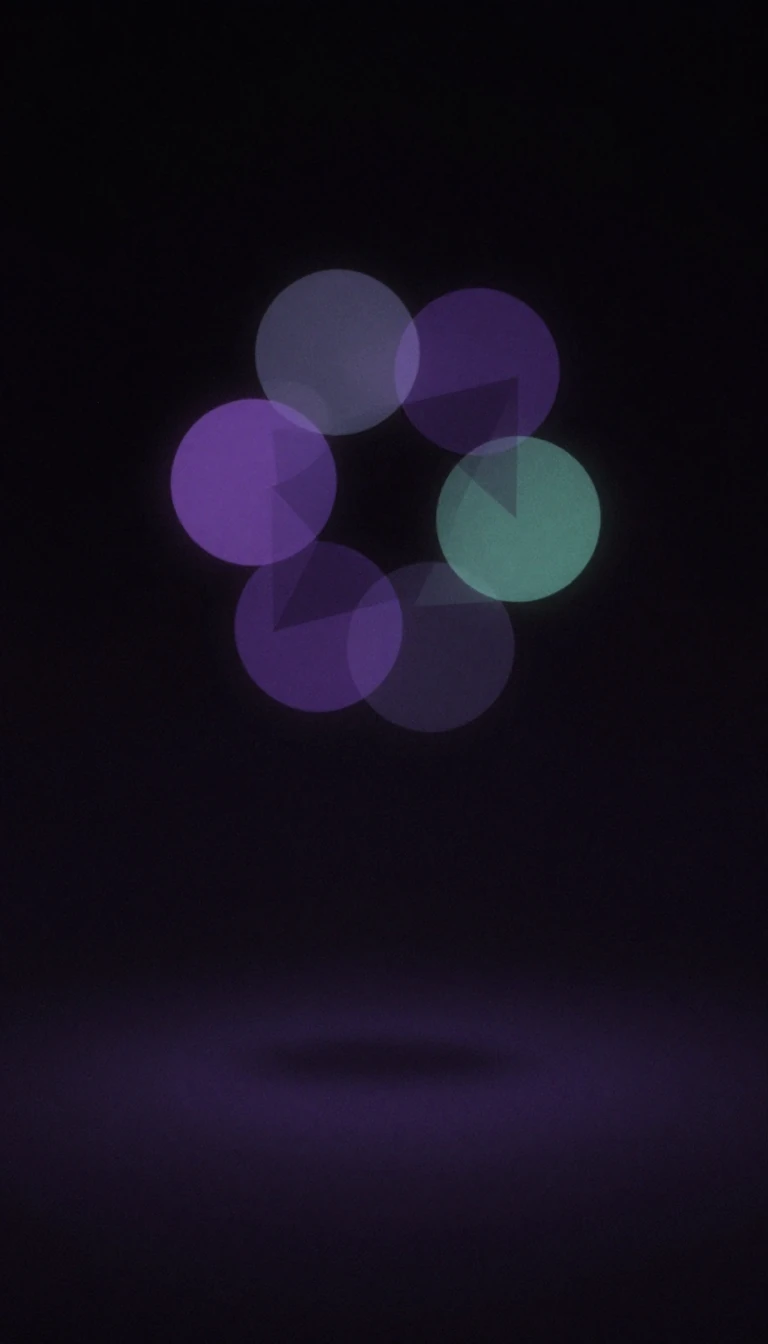 Geometry's answer to infinity: a polygon with endless sidesImagine a shape that never closes, stretching forever across space. In geometry, this is the apeirogon—a figure with an infinite number of sides. While it sounds like a paradox, m…
 How to measure the layers of infinity using Beth numbersIn the realm of set theory, not all infinities are created equal. While the aleph numbers count the sequence of infinite sizes, the Beth numbers describe a much more explosive gro…
- Is infinity a completed object or just an endless process?For centuries, philosophers argued whether infinity could ever be 'finished.' While we often treat it as a destination, some thinkers argue it is merely a direction—a process that…
- Beyond the reach of math: the mystery of the absolute infiniteMathematicians have long proven that some infinities are larger than others. But what happens when you try to grasp the collection of all possible infinities? For Georg Cantor, th…
- The mathematical blueprint for a perfect artificial general intelligenceImagine an agent that can master any environment, from playing chess to navigating human society, simply by following a single mathematical rule. AIXI is a theoretical framework t…
- How to make the best guess when uncertainty is your only constantIn statistics, choosing the 'best' estimate isn't just about being right; it is about minimizing regret. The Bayes estimator provides a mathematical framework for this by balancin…
 Why adding a third option can fundamentally change your original choiceIf you prefer apple pie to blueberry, does the sudden arrival of cherry pie change your mind? In decision theory, this is known as the Independence of Irrelevant Alternatives. Whi…
- Your brain is running two different operating systems at onceMost of our decisions aren't the result of logical calculation, but of a fast, instinctive, and emotional process. While we like to believe we are rational, we often substitute di…
 Why a clumsy mistake makes some people more likable and others lessWe often assume that perfection is the key to popularity. However, social psychology reveals a counterintuitive twist: making a blunder can actually boost your appeal—but only if …
 Why successful disaster prevention often looks like an unnecessary overreactionIf a massive catastrophe is averted by your preparation, the world may conclude that the danger never existed. This creates a psychological trap: the more effective your defenses …
 Why your brain assumes a pretty face equals a smart mindWe often assume that attractive people are more intelligent, trustworthy, or successful. This isn't just a social preference; it is a documented psychological phenomenon where a s…
 You are likely a narrator of your own mental fictionWhen you explain why you made a choice, you believe you are reporting a fact. In reality, your brain may be constructing a plausible story on the fly. This cognitive bias suggests…
 The virtue of knowing exactly how little you actually knowTrue intelligence isn't just about the volume of facts you can recall; it is defined by an awareness of your own cognitive limits. Intellectual humility allows you to navigate a w…
 The art of the heap: why we inflate reality to feel biggerFrom the 'braggart soldier' of classical tragedy to the clickbait in your feed, exaggeration is a fundamental human tool. It is more than just a lie; it is a sophisticated psychol…
 You are currently undergoing your most significant period of personal growthWe tend to look back at our past and see a whirlwind of transformation, yet we view our future as a static plateau. This psychological blind spot, known as the end-of-history illu…
 Why we trust the lab coat even when it's wrongHumans possess a deep-seated psychological drive to obey authority, often prioritizing a title over actual evidence. This bias is so potent that it can override official safety pr…
 Why we blame personalities instead of circumstances for others' mistakesWhen a driver cuts you off, you rarely think they are having a bad day; you assume they are a rude person. This isn't just a personal quirk—it is a systematic cognitive shortcut. …
- From Mormon upbringing to a pioneer of sex-positive educationLaci Green transformed a personal journey of questioning faith and gender roles into a massive digital platform. By breaking taboos around sexuality and mental health, she moved f…
 How a Pencil Is Made From Trees, Clay and GraphiteA look at the global supply chain and historical innovation behind the creation of the humble pencil.
 Henry David Thoreau on truth“Rather than love, than money, than fame, give me truth.” (Henry David Thoreau, Walden)
 The detective who solves crimes by embracing the impossibleDirk Gently doesn't just look for clues; he looks for the fundamental interconnectedness of all things. While Sherlock Holmes demands that the impossible be eliminated, Dirk argue…
 Can a child make a hat out of the sky?In Terry Pratchett’s fantasy world, becoming a witch isn't just about magic; it is an internal battle for autonomy. When an 11-year-old girl faces a creature that seeks shelter in…
 A radical experiment in total communal living and shared propertyImagine a life where you own nothing, earn no salary, and vow to put your entire life at the disposal of a community. This is the Bruderhof, an intentional Christian movement that…
 From Greek comedies to economic crashes, the geography of impossibilityCloud cuckoo land is more than just a metaphor for being out of touch. It describes a specific psychological state where perfection replaces reality—a realm that has served as bot…
- The paradox of a paradise that is defined by its lossUnlike most utopias, which envision a future we can build, Arcadia is defined as an unattainable past. It is not a blueprint for progress, but a poetic mourning for a lost harmony…
 The myth of human progress is actually a story of decayIn Greek mythology, humanity isn't moving toward perfection; it is sliding backward. From the divine harmony of the Golden Age to the toil of our own, these ancient stories sugges…
- Your brain is a theater where the spotlight creates your realityImagine your mind as a vast stage. While thousands of unconscious processes run in the wings, only a tiny fraction is illuminated by a spotlight. This is the core of Global Worksp…
 Is your 'self' just a wall built by habit?Philosophers and mystics alike suggest that our everyday identity is merely a shell. By peeling back the layers of ego and instinct, they argue we can access a 'higher consciousne…