 Intellect Plus
Ideas & Philosophy
17,867 cards. Each one is a 40-second story with a five-minute read behind it. Page 33 of 298.
Subtopics: Abrahamic religions · Artificial intelligence · Attention · Classic philosophy · Cognitive biases · Consciousness · Cooperation · Cynicism · Decision making · Decision theory · Descartes · Dharmic religions · Dreams · Eastern philosophy · Eastern religions · Epistemology · Ethics · Evidence · Existentialism · Fairness · Famous psychology experiments · Free will · Game theory · Greek mythology · Historians · Identity · Infinity · Justice · Logic · Logical fallacies · Mathematics · Medieval philosophy · Mind · Mythology · Mythology of the ancient world · Other religions · Paradoxes · Philosophers · Philosophers, historians, political and social scientists · Philosophy · Philosophy of mind · Philosophy of science · Political philosophy · Probability · Psychology · Reality · Religion · Religion and spirituality · Religious figures · Self knowledge · Statistics · Stoicism · Strategy · Taoism · Thought experiments · Trivia & curiosities · Truth · Utopias & ideal worlds · Wellbeing · World religions · Writers
 To find the Japanese heart, scholars first had to purge a millennium of Chinese influenceDuring the Edo period, a radical intellectual movement sought to strip away 1,000 years of foreign philosophy to uncover a 'pure' national essence. They believed that by excavatin…
 The invisible threads that weave the fabric of realityIn ancient Indian philosophy, nothing exists in isolation. Instead, everything is composed of three fundamental forces known as guṇas. These are not just abstract qualities, but t…
 How ancient mathematical harmonics shaped the sounds of the Silk RoadLong before Western equal temperament, Chinese musicology used complex mathematical ratios to define its scales. From the harmonic series of the Guqin to the twelve-tone lü system…
 The spirit that walks ahead of your destinyIn Norse mythology, the fylgja is a supernatural companion tied to an individual's fate. Unlike a loyal pet or a simple shadow, it often moves ahead of its host, appearing in drea…
 The high cost of winning without ever having to tryImagine a life where every desire is met by a stroke of impossible luck. For Gladstone Gander, this isn't a dream—it is a character trait that defies probability. But while his co…
 Is spiritual progress a matter of personal effort or divine intervention?Across the world's great traditions, a profound tension exists between self-discipline and unmerited favor. While some paths demand rigorous merit-building, others suggest that tr…
 The biological answer to the chicken-and-egg paradox is actually quite literalFor centuries, this riddle served as a philosophical trap about infinite regress. While ancient thinkers debated the nature of origins, evolutionary biology provided a concrete an…
 The geometry of missing: how we measure the 'average' mistakeIn ballistics and navigation, missing your target isn't just a failure; it's a statistical distribution. To understand precision, scientists use the Circular Error Probable (CEP).…
 Can a cat with toast on its back achieve perpetual motion?If buttered toast always lands butter-side down, and cats always land on their feet, what happens when you attach the toast to the cat? This classic thought experiment suggests a …
 How dropping needles on a wooden floor can reveal the value of piIn the 18th century, Georges-Louis Leclerc, Comte de Buffon, posed a geometric puzzle that seems simple but hides a profound mathematical constant. By calculating the probability …
 Why we can give perfect advice to others but fail ourselvesKing Solomon was legendary for his wisdom, yet his own reign ended in personal ruin. This irony describes a cognitive bias where we excel at solving others' problems while remaini…
 Beyond true or false: the ancient logic of the four-cornered argumentMost Western logic relies on a binary: something is either true or false. But ancient Indian traditions developed the Catuṣkoṭi, a sophisticated four-cornered system designed to e…
 Is common opinion a dangerous illusion or the foundation of all knowledge?In Ancient Greece, the concept of doxa represented the shifting sands of public belief. While some philosophers dismissed it as a deceptive shadow of the truth, others saw it as t…
 A full hotel with infinite rooms can always host more guestsIn a standard hotel, a full house means no more vacancies. But in the realm of mathematics, infinity behaves differently. Hilbert’s Grand Hotel is a thought experiment where a com…
 To the ancient Egyptians, a million was not just a numberIn modern mathematics, a million is a large but finite quantity. For the ancient Egyptians, it represented something far more profound: infinity. By personifying this concept as a…
- What if the infinite does not actually exist?Most mathematicians navigate a world of infinite sets, but a radical philosophical minority disagrees. Finitism rejects the existence of infinite mathematical objects entirely, ar…
- Should you choose the action that causes the best outcome?When faced with a choice, do you act based on what your decision will physically cause, or what your decision reveals about the world? While most people intuitively follow their g…
 From plague-bearing demon to guardian of gold: the evolution of a godZhao Gongming is the most widely venerated Military God of Wealth in Chinese folk religion. But his divine status wasn't always about prosperity. His legendary biography is a comp…
 Can a white horse ever truly be called a horse?During China's Warring States period, a group of linguistic rebels known as the School of Names used dizzying paradoxes to challenge the very nature of reality. Far from mere word…
 The hidden cost of knowing what works bestIf you always choose the safest, most proven path, you may miss a superior discovery just around the corner. This is the exploration–exploitation dilemma: the fundamental tension …
 Geography is the mother of strategy, but not its only parentWhile geography dictates the boundaries of what is possible, geostrategy is the deliberate exercise of power within those limits. It is the art of matching a nation's limited reso…
 Is fiction actually more real than the life we live?We often use 'real life' to describe the world outside our screens or the mundane routines of adulthood. But literary history suggests a paradox: the curated types and archetypes …
 You are living inside a mental filter you didn't know you builtWe believe we see the world as it truly is, but we are actually navigating a private interpretation. This theory suggests our minds use subconscious filters—shaped by biology, cul…
 How do we decide what is 'fair' when resources are scarce?Distributive justice isn't just about who gets what; it is a fundamental debate over the moral architecture of society. From rewarding hard work to prioritizing the vulnerable, di…
 Why pointing at a sign can slash human error by 85 percentIn high-stakes environments like railways and factories, the simplest physical actions often provide the strongest mental safeguards. By combining a deliberate gesture with a verb…
 Is your attention actually shrinking, or just shifting?We are told our focus is collapsing under the weight of modern technology. But while data suggests a rapid decline in how long we stay on a single task, the reality is a complex m…
 Why your brain ignores the important to focus on the flashyYour attention is a finite resource, constantly filtered by a mechanism called salience. While this helps you survive by highlighting threats, it also creates a cognitive bias, ma…
 Why your brain needs the gentle distraction of a drifting cloudModern life demands constant, effortful focus, leading to a state of mental exhaustion known as directed attention fatigue. But there is a way to recover. By engaging with environ…
 Is the 'ground truth' actually true, or just a useful consensus?In machine learning and remote sensing, 'ground truth' is the gold standard—the data we assume is real. But as AI scales, this concept reveals a fascinating tension between object…
 Can fact-checking actually change minds, or does it just reinforce our biases?We often view fact-checkers as the ultimate arbiters of truth. Yet, research suggests that while corrections can curb the spread of falsehoods, they often fail to sway deeply held…
- Animals may possess an approximate number system like our ownFrom fish to primates, many animals seem to grasp the concept of quantity without ever learning to count. They navigate a world of relative sizes using a mental framework that mir…
 Your eyes might not reveal what you are actually thinkingWe often assume that where we look is exactly what we process. But research into eye-tracking reveals a complex gap between physical gaze and internal attention, suggesting our ey…
- You do not perceive the world; you enact it through actionMost people view the mind as a passenger processing data from a pre-existing world. Enactivism flips this, arguing that your world is not a landing pad for your consciousness. Ins…
 Why choosing a 'good enough' option is actually the peak of logicIn a world obsessed with optimization, we often view compromise as a failure of intellect. However, bounded rationality suggests that when faced with infinite complexity and finit…
- Is your behavior a choice or a conditioned response?Philosophy questions whether the human will is truly free or bound by fate. While Aristotle debated if virtue is a deliberate choice, behaviorism suggests our actions might be pro…
 Is your mind a servant to your will, or vice versa?Most people assume reason is the master of our actions. Voluntarism argues the opposite: that the will is the fundamental driver of reality. From medieval theology to modern psych…
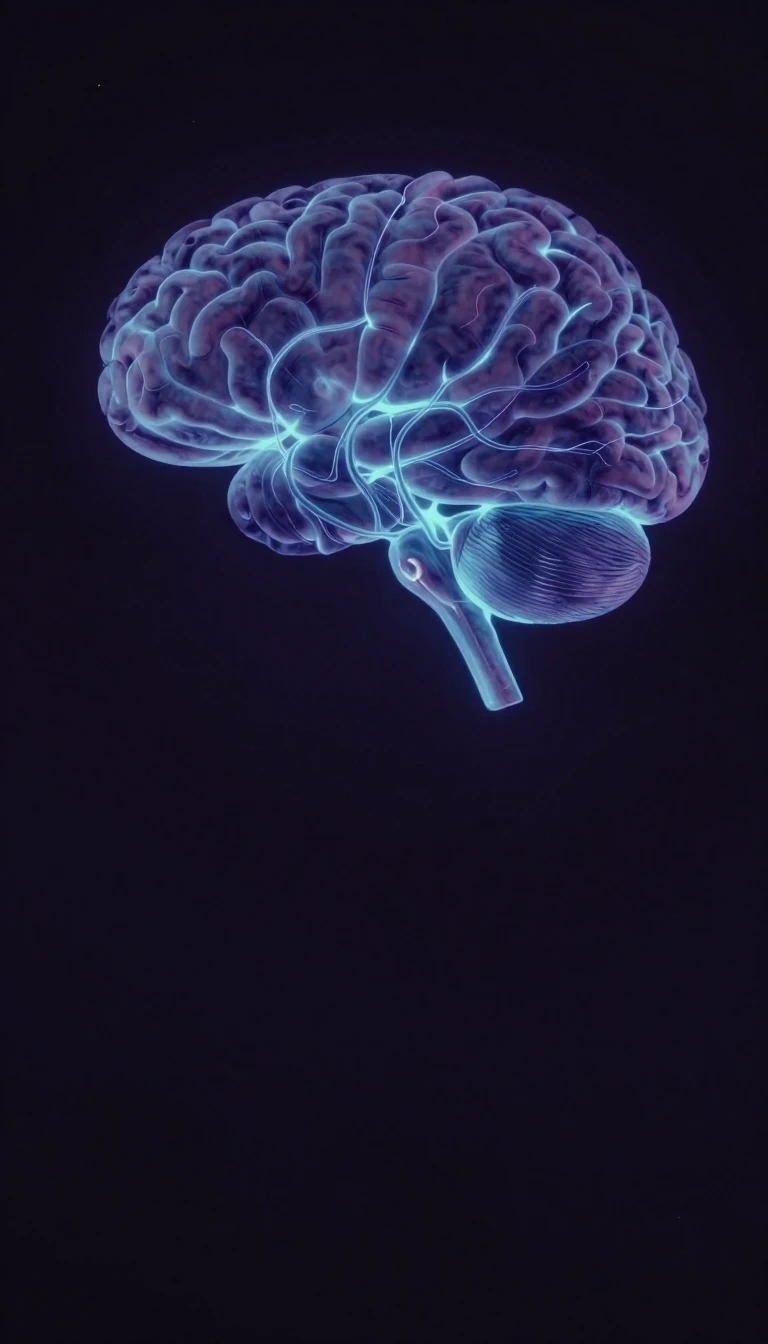 Does your brain decide to move before you even know it?Neuroscientist Benjamin Libet discovered that electrical signals for physical actions often appear in the brain before a person feels a conscious urge. His research suggests that …
 If God knows your future, are you actually choosing it?The paradox of free will suggests that an all-knowing deity and human agency cannot coexist. If a higher power already knows what you will do tomorrow, does that mean your choice …
 Is your choice a meaningful decision or just a random whim?We often assume our choices are guided by reason, but many of our most fundamental systems are built on pure convention. From the letters in your name to the way we assign meaning…
 Why some of our greatest discoveries were once considered 'impossible'Is a radical new idea just a fantasy, or is it about to change everything? The Sagan standard suggests that the more shocking a claim feels, the higher the bar for proof. But if w…
 In some languages, you cannot speak without proving how you know itImagine a world where every sentence requires a mandatory 'source' tag. For speakers of certain languages, this isn't a stylistic choice—it is a grammatical requirement. To speak …
 To prove something exists, you must actually find it.In classical mathematics, you can prove an object exists simply by showing its non-existence is impossible. Constructivism rejects this shortcut. For a constructivist, a mathemati…
- Why your mental map of the world is a deliberate abstractionWe don't see the world as it is; we see it through conceptual models. These are not just pictures in our heads, but formal generalizations designed to filter out noise. From the e…
 Why giving your wallet to a mugger might be mathematically rationalIf a thief promises you a reward so vast it outweighs any chance of them lying, standard logic says you should hand over your money. This paradox, known as Pascal's mugging, expos…
 Why 'If' doesn't always mean what we think it meansWhen you say, 'If I had won the lottery, I would have bought a boat,' you are describing a world that doesn't exist. But how does our brain distinguish these imaginary scenarios f…
 To understand what happened, we must imagine what did notHow do we know a specific battle or invention actually changed the world? Historians use counterfactual history to test the weight of the past. By imagining a world where a key ev…
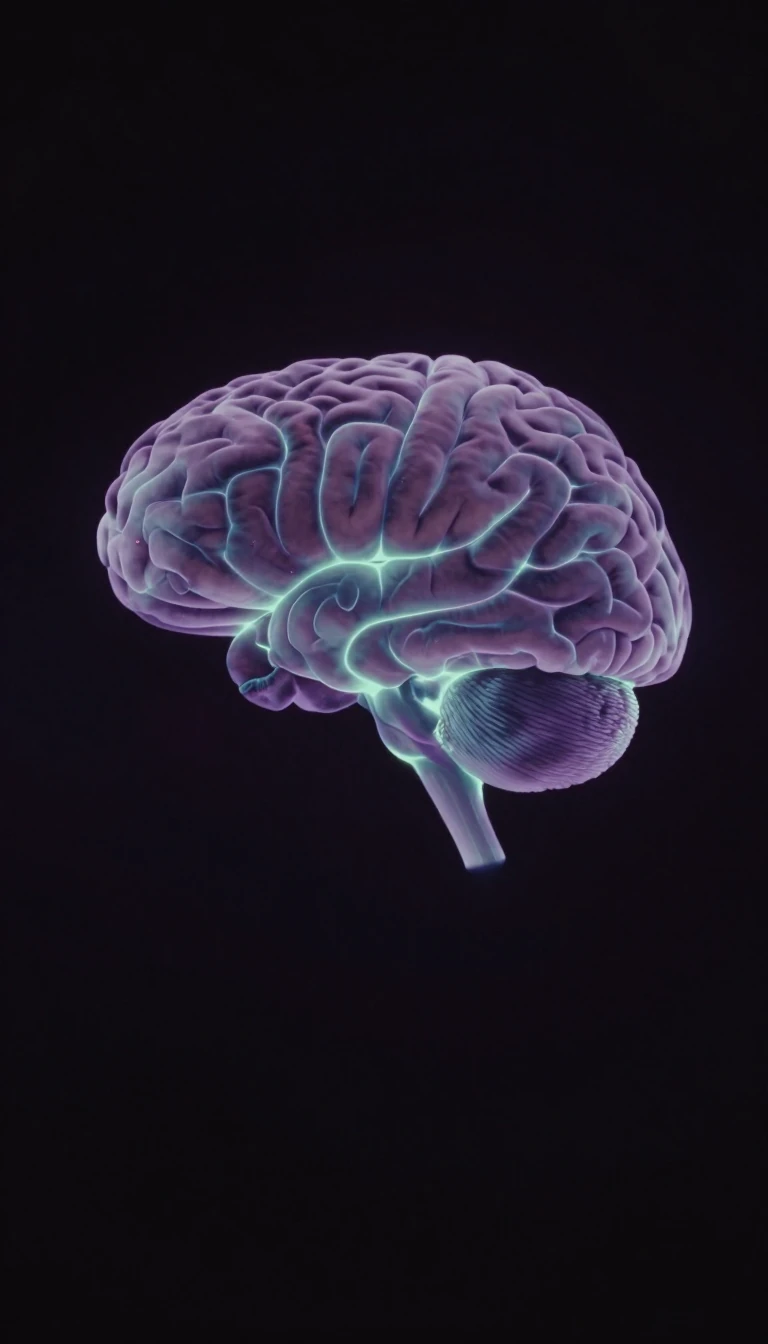 The grotesque 'little man' in your brain is being rewrittenFor nearly a century, neuroscience textbooks have featured a bizarre, distorted figure: a hairless goblin with massive lips and hands. This 'homunculus' was long considered the de…
 Gravity is a label, not an object: the power of constructsYou cannot see 'intelligence' or 'anxiety,' yet they govern how we study the human mind. In psychology, these are called constructs—mental tools that turn a messy cluster of behav…
- Your beliefs and desires might not actually exist.We treat our inner lives as certainties, but some philosophers argue that 'beliefs' and 'desires' are just useful fictions. They suggest that as neuroscience matures, these common…
- Beyond the physical: the five elements that structure the Japanese universeWhile many know the classic four elements, Japanese Buddhist philosophy introduces a fifth: the void. Known as Godai, this system classifies everything from solid stone to subatom…
 The divine right to bring the entire world under one roofIn 1940, a Japanese political slogan transformed a spiritual metaphor into a blueprint for global conquest. Hakkō ichiu—meaning "eight crown cords, one roof"—was weaponized to jus…
 The Tamil Veda: How 4,000 verses democratized the divineIn the 9th century, a theologian named Nathamuni compiled a collection of hymns so profound they were dubbed the "Dravida Veda." These weren't just poems; they were a revolutionar…
- How a Chinese philosophy became the blueprint for Tokugawa JapanIn the 17th century, the Tokugawa shogunate adopted Neo-Confucianism to stabilize a nation. Moving away from the mysticism of Zen Buddhism, this rationalistic framework introduced…
 Can returning sexual essence actually nourish the human brain?For over two millennia, Daoist practitioners have practiced huanjing bunao, a method of retaining semen to replenish the brain. While modern anatomy suggests this process might si…
 Why we blame others' character but our own circumstancesWhy do we assume a stranger's mistake is a personality flaw while our own failures are just 'bad luck'? This cognitive shortcut, known as the fundamental attribution error, shapes…
- Truth is not a statement; it is an opening.In Western thought, we often treat truth as a fact to be stated or a system to be verified. But the ancient Greek concept of Aletheia suggests something far more radical: truth is…
- The divine constables who escort souls and judge the livingIn Chinese folk religion, the Heibai Wuchang are the ultimate arbiters of destiny. Known as the Black and White Impermanence, these two deities serve as the underworld's escort se…
 If your mind can build a world while you sleep, is this one real?Every night, your brain constructs entire universes that feel indistinguishable from reality. If your senses can be tricked into believing a mental fabrication so completely that …
 Creation is not a necessity, but a spontaneous act of divine playIn Hindu philosophy, the universe isn't a product of divine need or a goal-oriented machine. Instead, it is described as Lila—a spontaneous, effortless expression of the Absolute.…
- Is the world you see real, or just a shared social agreement?We move through the world assuming a single, objective truth exists. But what if our shared reality is actually a social construct, maintained by habit and common belief rather th…