 Intellect Plus
Geology
572 cards. Each one is a 40-second story with a five-minute read behind it. Page 6 of 10.
 This yellow mineral is a byproduct of zinc refining and a trap for Martian rovers.Jarosite is a brittle, yellow-brown sulfate mineral often overlooked by geologists due to its crumbly, earthy nature. While it forms naturally through the oxidation of iron sulfid…
 Why this ancient spotted stone is actually a record of Earth's oxygen historyJasper is more than a decorative gemstone polished for jewelry. This opaque, silica-rich rock preserves intricate patterns formed by volcanic ash and ancient sediments. More impor…
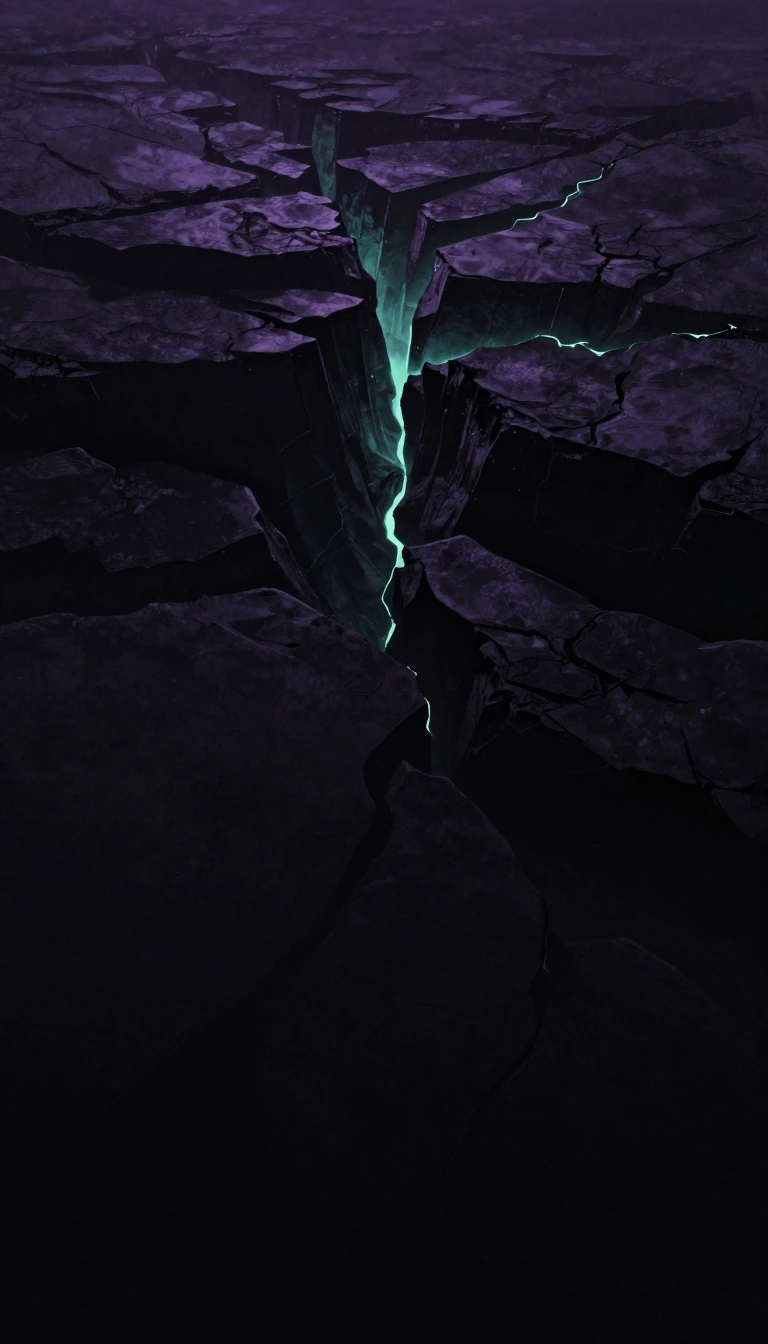 Why the world's most common rock fractures are often hiding in plain sightLook closely at almost any rock exposure and you will likely see a joint. Unlike faults, which involve visible shifting of the earth, joints are brittle fractures where the rock h…
 The Juan de Fuca plate is not just sinking; it is actively tearing apartDeep beneath the Pacific Northwest, the Juan de Fuca plate is undergoing a rare geological transition. Rather than sliding smoothly into the Earth's mantle, the massive tectonic s…
 How scientists use the decay of potassium to date rocks on other planetsPotassium-argon dating is a cornerstone of geochronology, allowing researchers to determine the age of rocks by measuring the accumulation of argon gas trapped within mineral crys…
 Kainite is a rare double salt that holds the key to potassium extractionFound primarily in ancient salt deposits, kainite is a unique mineral containing both sulfate and chloride. While it remains a vital source of potassium and magnesium for agricult…
 Was Kenorland the Earth's first supercontinent, or just a massive geological puzzle?Kenorland is a hypothetical supercontinent that potentially unified Earth's landmasses 2.72 billion years ago. Reconstructed through volcanic dikes and magnetic data, this ancient…
 Kernite: The massive, transparent crystals that once powered the global borax industryDeep beneath the arid Mojave Desert lie vast, stratified beds of kernite, a hydrated sodium borate mineral. These colorless, vitreous crystals can grow to staggering sizes, someti…
 Kimberlite is the violent, deep-earth elevator that brings diamonds to the surface.Diamonds are not born in kimberlite; they are merely accidental passengers. Formed deep within the Earth, these gems are carried upward by the most rapid and violent volcanic erup…
 Earth once erupted lava as fluid as water, but it stopped billions of years ago.Komatiites are rare, ancient volcanic rocks that erupted at temperatures exceeding 1600 degrees Celsius. Unlike the thick, honey-like basaltic lava we see today, these ultramafic …
 This blue mineral acts as a geological compass for the Earth's deepest crustKyanite is more than just a striking blue crystal. Because it only forms under intense pressure, geologists use it as a high-stakes index mineral to map the history of metamorphic…
 The iridescent shimmer of labradorite is a secret written in submicroscopic stone layers.Labradorite is more than a pretty rock; it is a geological puzzle. Its signature iridescent glow, or labradorescence, requires a precise chemical composition and an incredibly slo…
 A lahar is a deadly volcanic mudflow that can travel faster than a car.Often mistaken for simple mudslides, lahars are violent slurries of volcanic debris and water that can reach speeds exceeding 200 kilometres per hour. These flows can bury entire …
 Was the Laramide Orogeny actually a two-stage event rather than a single collision?For decades, geologists believed the Laramide orogeny was triggered by a single, massive collision of an oceanic plateau. New evidence from the Southern California Batholith sugge…
 Did a violent storm of asteroids reshape the early solar system four billion years ago?The Late Heavy Bombardment theory suggests a cataclysmic spike in asteroid impacts once battered the inner planets. While long considered a cornerstone of early planetary history,…
 How ancient coal forests and tectonic shifts triggered a 100-million-year global deep freeze.Between 360 and 255 million years ago, Earth entered a prolonged icehouse period. Driven by massive carbon sequestration in equatorial swamps and tectonic shifts that altered ocea…
- Laurentia is the ancient geological core that eventually became the North American continent.Long before North America existed as we know it, a massive, independent paleocontinent called Laurentia drifted across the globe. Composed of Greenland, most of North America, and…
 Why the oldest layers of Earth are almost always found at the very bottomThe law of superposition is a foundational principle of stratigraphy, stating that in undisturbed rock sequences, the oldest layers sit at the base while younger material accumula…
 The deep blue pigment that defined history is actually a complex, metamorphic rock componentLazurite is the secret behind the iconic, intense blue of lapis lazuli. While often confused with other blue minerals, this tectosilicate is a product of contact metamorphism. Bey…
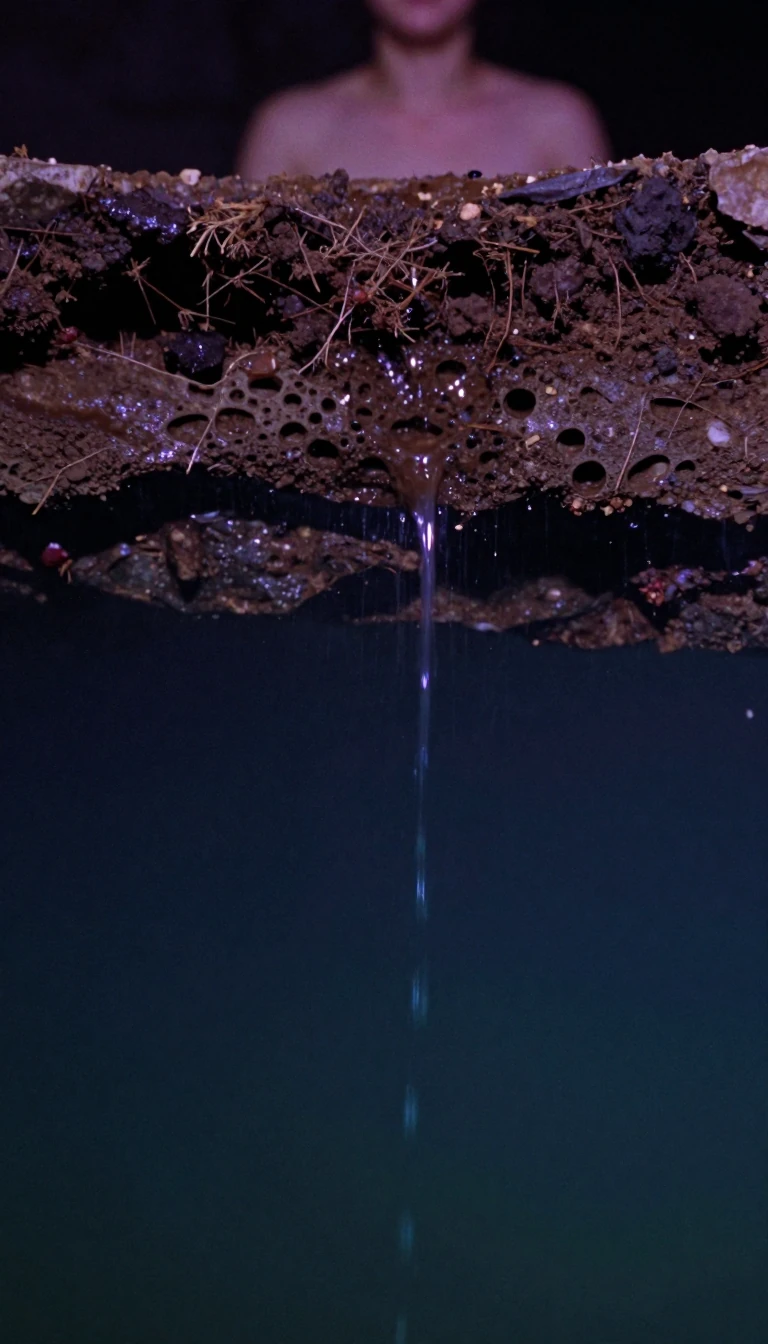
- How water reshapes the earth beneath our feet through the process of leachingBeneath the surface, soil is constantly in motion. As water travels through the earth, it strips away soluble materials, carrying them from the topsoil into deeper layers. This in…
 This lilac-colored mineral is the secret source of a rare alkali metalLepidolite is more than just a beautiful, rose-colored mica. While often mistaken for a simple gemstone, this mineral is a vital geological reservoir for lithium and the primary s…
 Limonite: The deceptive brown ore that shaped human history and modern batteriesOnce a humble pigment for Neolithic cave art, limonite is actually a complex mixture of iron minerals rather than a single species. This versatile material has served as a guide f…
 How geologists read the history of rock deformation through hidden linear patternsDeep within the Earth, rocks behave like molasses under pressure. By analyzing linear features known as lineations, geologists can reconstruct the violent forces that once stretch…
 How geologists read the Earth's history through the physical language of rock layersLithostratigraphy is the science of classifying rock layers by their physical traits rather than their age. By observing composition, color, and texture, geologists map the Earth'…
 Why the perfect garden soil is a precise, balanced mix of three distinct particlesLoam is the gold standard for agriculture, prized for its ability to hold nutrients and moisture while ensuring water drains away. Composed of a specific blend of sand, silt, and …
 Loess is a mysterious, wind-blown sediment that can stand in vertical, habitable cliffs.Loess is a unique, porous, and yellowish-brown deposit covering ten percent of Earth's land. Named for the German word meaning loose, this silt-rich material forms stable, vertica…
- Why the most destructive earthquake vibrations are named after a British mathematicianWhen an earthquake strikes, the shaking you feel most intensely is likely caused by Love waves. Named after A.E.H. Love, who mathematically predicted their existence in 1911, thes…
 The lower mantle is Earth's hidden engine, a solid rock layer that flows like liquid.Spanning from 660 to 2,900 kilometers deep, the lower mantle makes up the vast majority of our planet's volume. It is not a static shell but a dynamic, high-pressure realm where m…
- Deep beneath the Earth, massive pools of molten rock wait for their moment to erupt.Magma chambers are hidden reservoirs of molten rock that fuel volcanic activity. By collecting magma rising from the mantle and crust, these chambers build internal pressure until…
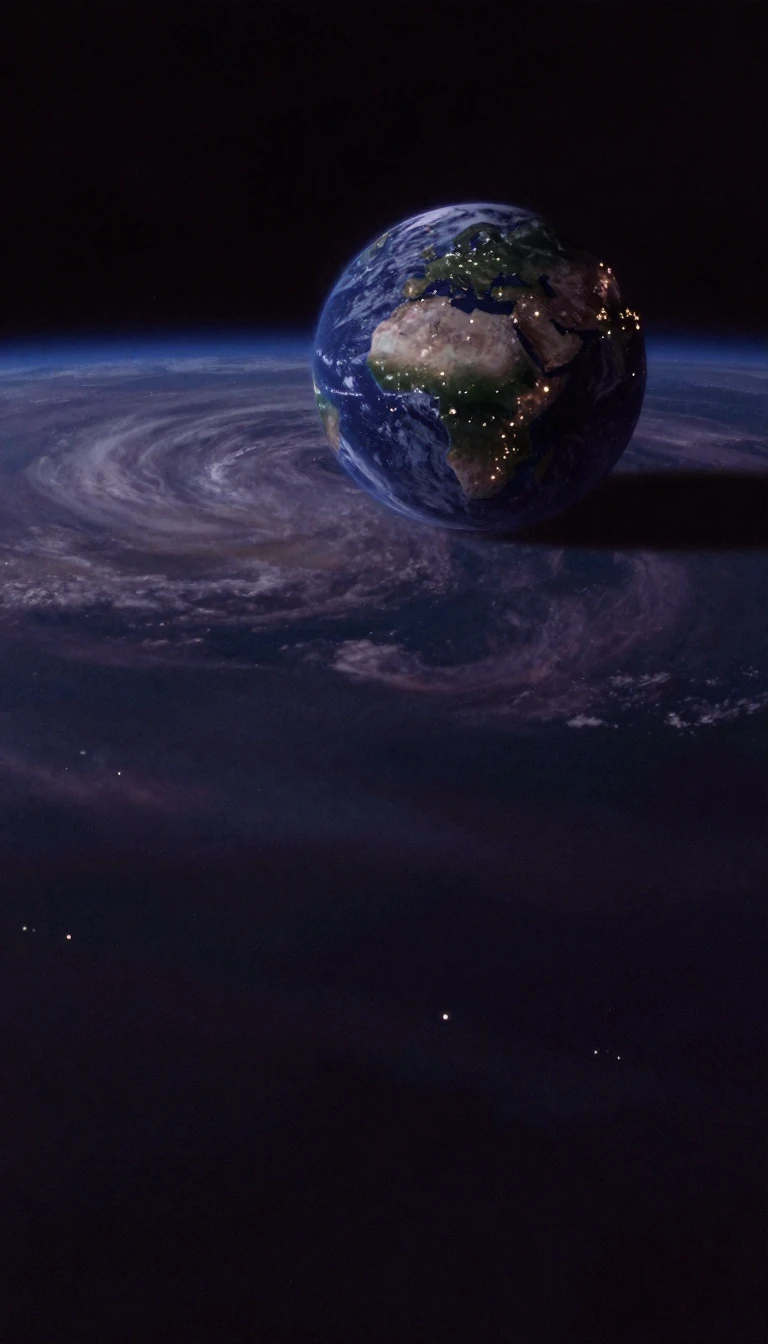 Earth’s magnetic field is shifting, creating a massive, radiation-prone weak spot over the Atlantic.A vast, weakening region in our planet's magnetic field is expanding rapidly, now covering a territory equivalent to nearly fifty percent of the European continent. This South Atl…
 Why you cannot identify an earthquake's true scale until the shaking finally stopsWe often label earthquakes as they happen, but in seismology, the term mainshock is retrospective. You cannot definitively identify the largest event in a sequence until the entir…
 Why this vibrant green mineral was once feared as a copper-stealing demonMalachite has captivated humanity for millennia, from ancient Egyptian funerary rites to the opulent halls of Russian tsars. Yet, this striking copper carbonate mineral holds a de…
- Is the Earth's solid interior actually flowing like a slow-moving, heated liquid?Beneath our feet, the Earth's mantle is not static. Driven by the decay of radioactive elements, this massive layer of rock undergoes a process of solid-state creep. This slow, ci…
 Are mantle plumes the hidden engines driving Earth's most massive volcanic eruptions?Deep beneath our feet, narrow columns of superheated material rise from the core-mantle boundary. These mantle plumes, once controversial, are now understood as a vital part of Ea…
- When the ocean retreats, does it trigger the planet's most devastating mass extinctions?Marine regression occurs when sea levels drop, exposing vast stretches of previously submerged seafloor. While these geological shifts are often linked to the world's most catastr…
- Did a global deep freeze turn Earth into a giant, ice-covered snowball?Around 650 million years ago, Earth entered a period of extreme cooling known as the Marinoan glaciation. This event, part of the Snowball Earth hypothesis, suggests our planet wa…
- Ancient Grand Canyon mudstones reveal how Earth’s orbit looked 1.2 billion years agoDeep within the Grand Canyon lies a 1.2-billion-year-old mudstone formation that acts as a cosmic time capsule. By analyzing its rhythmic layers, researchers have uncovered how Mi…
 Before humanity mastered smelting, our only source of iron fell from the starsLong before the Iron Age, ancient civilizations crafted tools and sacred objects from iron that arrived on Earth via meteorites. This celestial metal, distinct from terrestrial or…
 This common mineral is a master of ice formation and massive crystal growthMicrocline is a potassium-rich mineral found in granite and pegmatites. While it shares a chemical formula with orthoclase, its unique triclinic structure creates a distinct cross…
 Migmatites are rocks caught in the act of transforming from solid to liquidDeep within the Earth's crust, extreme heat and pressure force rocks to partially melt. This creates migmatites, a strange hybrid of metamorphic and igneous material. These rocks …
 How scientists recreate the crushing, hellish conditions of the Earth's deep interiorTo understand what lies thousands of miles beneath our feet, scientists must replicate the extreme pressures and temperatures of the planet's core in the lab. By crushing material…
 Why a massive earthquake can feel weaker than a minor tremor at your feetEarthquake magnitude measures total energy released, but intensity measures the actual shaking you feel. A deep, high-magnitude quake might barely rattle windows, while a shallow,…
- The Moho is the hidden, shifting boundary between Earth's crust and its mantle.Deep beneath our feet lies a seismic speed bump. Known as the Mohorovičić discontinuity, this boundary marks a sudden acceleration in seismic waves, revealing a fundamental shift …
- Why the Richter scale is a misleading relic for measuring the world's largest earthquakesWhile news reports frequently cite the Richter scale, it has been largely superseded by the moment magnitude scale. Developed in the 1970s, this modern method avoids the saturatio…
 This reddish-brown mineral is a radioactive powerhouse that could revolutionize nuclear waste storage.Monazite is a phosphate mineral rich in rare-earth elements and thorium. Long prized as the foundation of the rare-earth industry, its radioactive nature once made it a liability.…
 Monazite crystals act as geological time capsules, preserving complex histories within their microscopic layers.Most minerals lose their internal clock when heated, erasing the record of past geological events. Monazite is different. Its exceptional thermal resistance and unique habit of gr…
- Mud is far more than just dirt; it is a complex, life-sustaining geological material.Often dismissed as a nuisance, mud is a sophisticated mixture of loam, silt, or clay and water. From ancient architectural marvels to the intricate burrows supporting marine ecosy…
- Ancient mudcracks act as a geological compass to reveal which way was once up.When fine, water-saturated mud dries, it contracts into a network of polygons. These humble cracks, often preserved for hundreds of millions of years, serve as vital stratigraphic…
- Mudrocks make up half of all sedimentary rocks, yet they remain geologically mysterious.These fine-grained deposits are the most widespread rocks on Earth, yet they are notoriously difficult to classify and study. From the Himalayas to the Amazon, mudrocks record the…
 Before glass windows were common, medieval Russia used a mineral called Muscovy-glass.Muscovite is a common mineral known for its perfect, elastic sheets that can be peeled thinner than paper. Historically prized as a durable, cold-resistant alternative to glass in…
- Mylonite: The deep-crustal rock forged by intense shearing, not mechanical millingContrary to its name, which implies a milling process, mylonite is not ground down by friction. Instead, these fine-grained rocks are the result of ductile deformation deep within…
- Why the world's largest native copper deposits are hidden in Michigan's rugged northern wildernessMost metals hide within complex ores, but copper occasionally appears in its pure, metallic state. While rare, these native deposits shaped human history long before industrial mi…
 Most chemical elements are locked in compounds, but nineteen exist as pure minerals.Of the ninety chemical elements found in nature, only a tiny fraction appear in their uncombined, elemental form. These rare native elements defy simple categorization, appearing …
 Most metals in their pure form are rare, but some exist naturally in the wild.While we associate metals with industrial smelting, nature occasionally yields them in their pure, metallic state. From gold nuggets in riverbeds to massive copper deposits in the…
- Beneath our feet, ancient rocks are quietly generating a massive, untapped clean energy reserve.For decades, we have manufactured hydrogen using fossil fuels, ignoring the Earth's own production. New research confirms that ancient rocks in Canada naturally release hydrogen g…
- The Nazca plate is a geological powerhouse shaping the Andes and triggering massive quakesDeep beneath the Pacific Ocean, the Nazca plate races eastward at one of the fastest speeds of any tectonic plate. As it dives beneath South America, it fuels the rise of the Ande…
 How geophysics lets us see through solid ground without ever picking up a shovelNear-surface geophysics uses remote sensing to map the top tens of meters of the Earth. By measuring magnetic, electrical, and seismic anomalies, scientists can locate everything …
- The Neoarchean era was the crucible where Earth's modern biological and geological systems ignited.Spanning 2800 to 2500 million years ago, the Neoarchean era fundamentally reshaped our planet. It saw the rise of oxygen, the formation of early supercontinents, and the potential…
- The Neoproterozoic Era was a time of extreme climate shifts and emerging complex life.Spanning from one billion to 541 million years ago, the Neoproterozoic Era reshaped Earth. It saw the breakup of the supercontinent Rodinia, the rise of oxygen levels, and the eme…
- These mysterious deep-sea rocks grow like tree rings over millions of yearsScattered across the vast, dark abyssal plains of our oceans lie millions of round, mineral-rich stones known as ferromanganese nodules. These peculiar formations accrete layer by…