 Intellect Plus
Cards starting with W
29,907 cards. Page 259 of 499.
 Why George Clooney Mortgaged His Own Home to Film a Black-and-White Journalism DramaTo capture the tense atmosphere of 1950s newsrooms, George Clooney took a massive financial risk, mortgaging his house to fund a film about Edward R. Murrow. The result was a crit…
 Why George Lucas keeps changing the Star Wars filmsSince 1977, the Star Wars saga has undergone constant revision. From minor audio tweaks to massive CGI insertions, the films are never truly finished. For creator George Lucas, th…
 Why George R. R. Martin’s Epic Fantasy Shares Its Name With Modernist MasterpiecesThe title A Song of Ice and Fire evokes a grand, fictional struggle, yet it echoes a tradition of artistic naming. From Arshile Gorky’s 1946 painting The Plow and the Song to Jule…
 Why George Soros believes mainstream economic theory is fundamentally flawedGeorge Soros, a prominent macro hedge fund investor, argues that traditional economic models overlook a critical feedback loop. This video examines his theory of general reflexivi…
 Why George Washington's 18th-century eggnog recipe requires days of aging in the cold.Max Miller explores the historical roots of eggnog, featuring a traditional 18th-century recipe attributed to George Washington. This video demonstrates how to prepare the classic…
 Why Georgia and Tennessee have spent centuries fighting over a single riverThe Tennessee River is a vital economic artery, but its path has sparked a long-running border dispute. Because of a flawed 1818 survey, Georgia lost access to the water it believ…
 Why Georgia legally classifies 20 percent of its sovereign territory as under Russian occupationFollowing the 2008 Russo-Georgian War, Georgia enacted legislation designating Abkhazia and South Ossetia as occupied territories. This law criminalizes unauthorized entry and res…
 Why Georgia Pecan Brownies Were Once A Rare Luxury In MichiganDiscover the history of the Georgia Pecan Pecan Brownie recipe and the surprising scarcity of pecans in 19th-century Michigan. This video explores the logistical challenges of sou…
 Why German audiences refuse to call Gounod’s most famous opera by its nameCharles Gounod’s 1859 masterpiece turned a legendary German tale into a French romantic tragedy. While it became an international sensation, the work sparked lasting outrage in Ge…
 Why German children still calculate according to a sixteenth-century master of arithmeticAdam Ries was a German mathematician who transformed how common people handled numbers. By writing his textbooks in German rather than Latin and teaching practical methods for dai…
 Why German chocolate cake has nothing to do with GermanyLanguage is full of eponyms—words derived from the names of specific people. This video explores 20 surprising examples where common terms hide personal histories rather than geog…
 Why German composers ignored Walt Whitman for nearly a centuryDespite a public fascination with Walt Whitman, German-speaking composers were remarkably slow to set his poetry to music. While writers embraced his work early on, the musical wo…
 Why German hunters became the elite skirmishers that redefined modern infantry warfareOriginally recruited from the ranks of foresters and gamekeepers, the Jäger evolved from independent scouts into a specialized class of light infantry. Their mastery of the rifle …
 Why Germans call B an H and Indian musicians sing Sa Re GaA musical note seems universal, yet its name depends on where you learn it. English speakers use the letters A to G, much of Europe sings do re mi, Germany and Czechia swap B for …
 Why Germany Built a Massive Defensive Wall to Save Its Exhausted Western ArmiesIn 1916, Germany’s western front was crumbling under the strain of relentless battles. To survive, commanders Hindenburg and Ludendorff ordered the construction of the Siegfriedst…
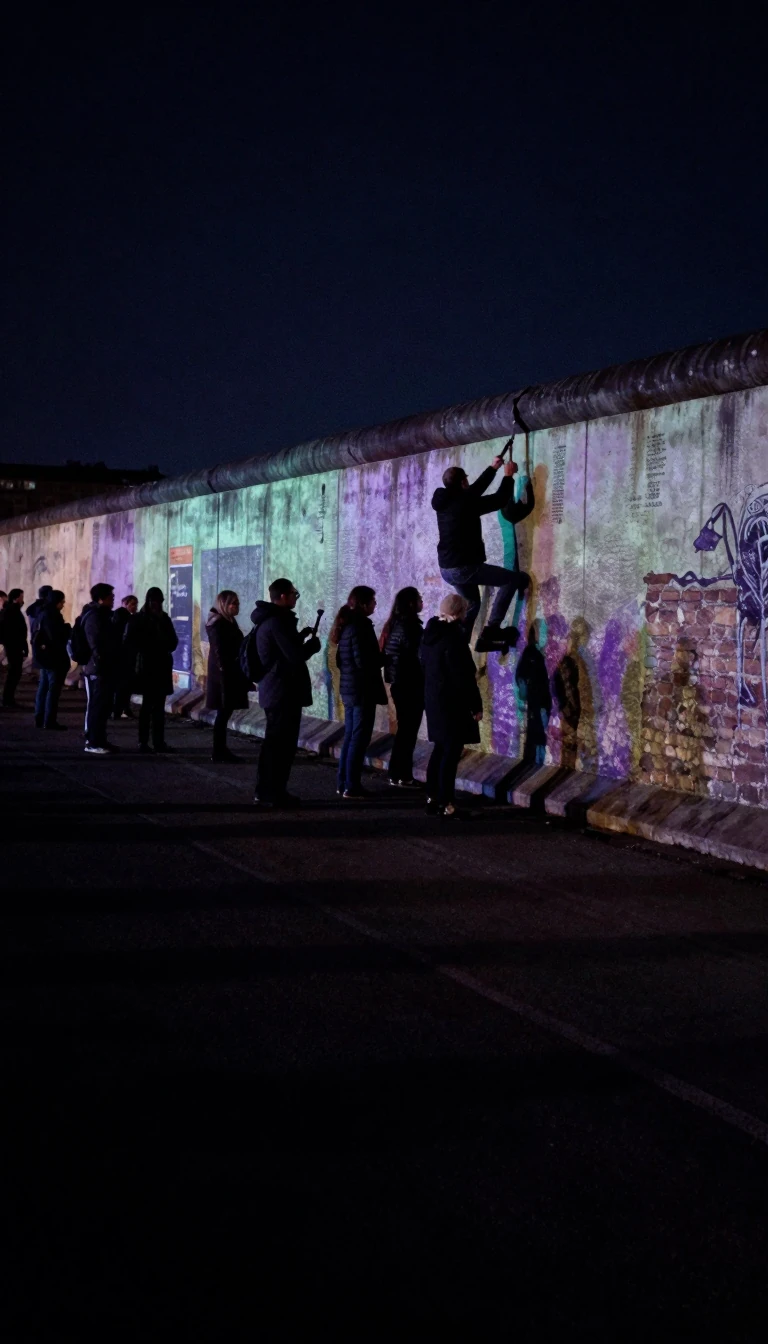 Why Germany chose October 3rd instead of the fall of the Berlin WallIt seems logical to celebrate the day the Wall fell. But for Germany, November 9th carried a much darker shadow. To build a new national identity, leaders had to navigate a minefi…
 Why Germany has more names than any other nation in modern EuropeGermany is a linguistic anomaly, possessing a vast collection of names across different languages. While most countries have a single primary identifier, Germany is known by terms…
 Why Germany was late to the armored warfare raceWhile Britain and France were already deploying tanks on the battlefield, Germany struggled to respond. This video examines the development of the A7V, the German response to the …
 Why Germany was once a chaotic puzzle of hundreds of tiny, independent statesBefore unification, Germany was defined by Kleinstaaterei, a term for the extreme territorial fragmentation that left the region split into hundreds of sovereign principalities an…
- Why Germany's 2025 Snap Election Faced Unprecedented Uncertainty Over Parliamentary RepresentationThe 2025 German federal election, held on 23 February, was defined by a volatile landscape where nearly half of the major parties risked falling below the critical 5% threshold. T…
 Why Germany's cleanest lake is likely named after a noble, not a kingNestled in the Bavarian Alps, the Königssee is famous for its crystal-clear waters and fjord-like mountain walls. While its name translates to king's lake, history suggests a more…
 Why Germany's Free Voters prioritize local control over traditional party politicsThe Free Voters began as a grassroots network of local associations, shunning the rigid structure of traditional political parties. By focusing on regional governance, they have c…
 Why Germany's Greatest Realist Novelist Did Not Start Writing Fiction Until Age Fifty-EightTheodor Fontane spent decades as an apothecary and a journalist, only turning to the novels that defined his legacy late in life. A sharp observer of Prussian society, he used his…
 Why Germany's half-trillion euro investment plan has failed to move the needleGermany allocated half a trillion euros to modernize its economy, yet eighteen months later, the funds remain largely untouched. This video examines why a nation once considered E…
- Why Germany's least populated state is a landscape shaped by ice and historyMecklenburg-West Pomerania is a quiet, coastal expanse defined by its glacial past and a complex political evolution. Once part of East Germany, this northeastern state remains on…
 Why Germany's longest-running crime drama is actually a collection of local moviesTatort is not a typical police series but a cultural phenomenon. Since 1970, Germany's public broadcasters have pooled resources to produce feature-length, 90-minute crime stories…
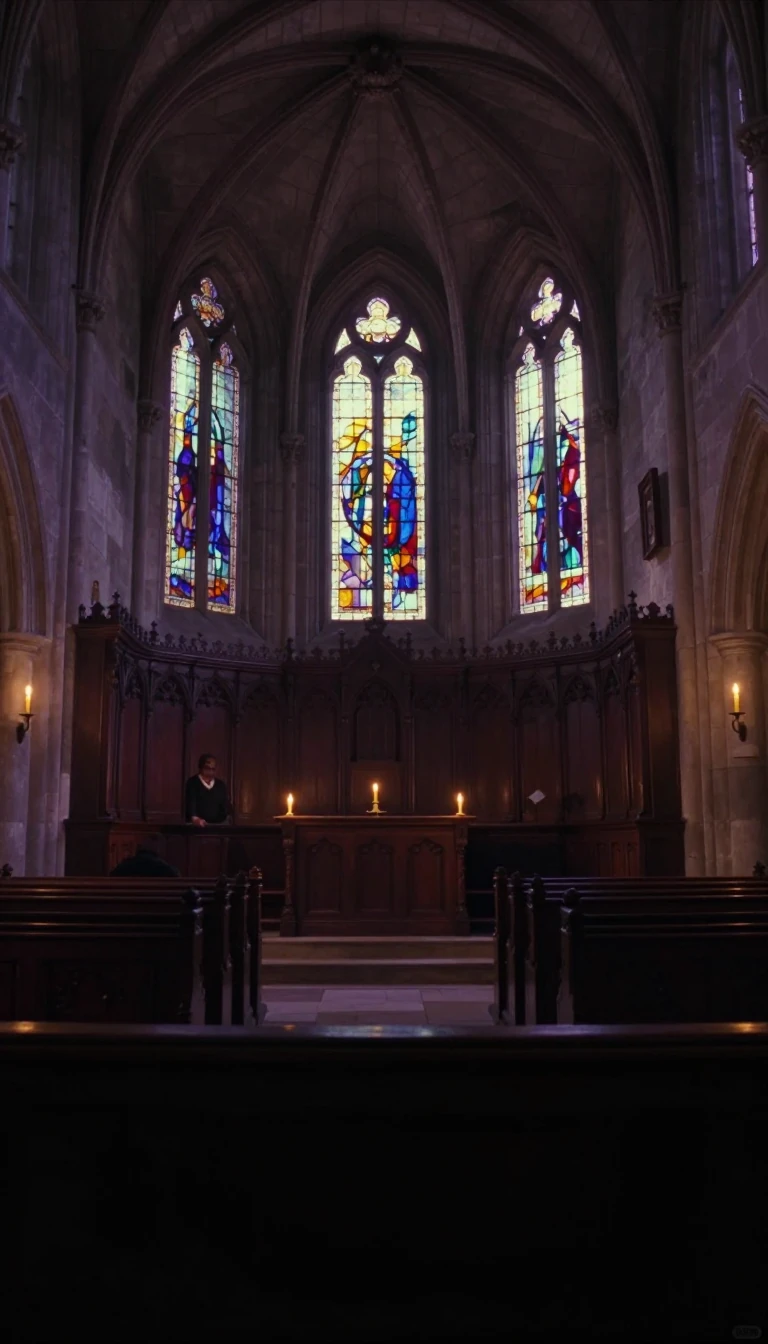 Why Germany's most famous cathedral may never be seen without scaffolding againCologne Cathedral is a masterpiece of Gothic architecture and a UNESCO World Heritage site, yet it remains in a state of perpetual repair. From acid rain to earthquake damage and …
- Why Germany's shift in debt policy sent European markets rallyingEuropean markets experienced a significant surge following news from Germany. This video examines how a historic decision to loosen the nation's strict 'debt brake' rule is reshap…
 Why Germany's smallest state capital is often labeled its most dangerous citySchwerin is a historic gem of lakes and palaces, yet it once topped German crime statistics. The secret lies not in violent unrest, but in how the city counts its offenses. By inc…
 Why Germany's strategic gamble for a swift victory in 1914 ultimately collapsedFacing encirclement by France and Russia, Germany entered the First World War banking on a rapid, decisive strike. This video examines the military strategy behind their initial o…
 Why Germany's top handball league relies on a grueling 34-week round-robin marathonThe Handball-Bundesliga is the pinnacle of German professional handball, defined by its relentless structure. Unlike many sports that rely on high-stakes playoff brackets to crown…
 Why Germany’s 1914 invasion of neutral Belgium triggered a four-year struggle for national survivalIn the summer of 1914, Germany violated Belgian neutrality to bypass French defenses. The resulting invasion forced the Belgian government into exile and trapped the army in a nar…
- Why Germany’s ancient kings were rarely called kings of Germany at allThe title King of Germany is a modern convenience, not a historical reality. For centuries, rulers of Germanic lands navigated complex titles like King of the Romans or Emperor of…
 Why Germany’s government is designed to prevent the political chaos of the pastGermany’s parliamentary system is built on a unique safeguard: the constructive vote of no confidence. Unlike many other democracies where a leader can be ousted by a simple major…
 Why Germany’s greatest national heroes were not kings or generals, but poets and philosophers.Germany once defined itself not through military might or political borders, but as a nation of the mind. For centuries, its identity was anchored in intellectual and artistic ach…
 Why Germany’s massive aerial defense failed to stop the Allied bombing campaignThe Defence of the Reich was one of the longest aerial campaigns in history, pitting the Luftwaffe against relentless Allied bombing. Despite massive industrial mobilization and t…
 Why Germany’s most beloved comedian found humor in the total destruction of a room.Bernhard-Viktor von Bülow, known as Loriot, mastered the art of the absurd by placing dignified, big-nosed characters into catastrophic situations. Whether conducting the Berlin P…
- Why Germany’s most expensive war film became a historic box office disasterWith a budget of 18 million euros, the 2008 film The Red Baron was intended to be a major international success. Instead, it became one of German cinema’s greatest financial failu…
 Why Germany’s most powerful political alliance is actually two separate, competing partiesThe CDU/CSU alliance dominates German centre-right politics, yet it is not a single party. These two sister parties maintain separate memberships, leaderships, and organizations, …
- Why Germany’s national library is a fragmented puzzle of history and lawThe German National Library is a massive, unified institution today, but its origins are fractured. Born from a 1913 agreement in Leipzig, it spent decades split between East and …
- Why Germany’s parliament is the ultimate check on federal powerThe Bundestag is the heartbeat of German democracy, holding sole budgetary authority and the power to appoint the chancellor. Unlike many other legislatures, it operates under a s…
 Why Getting Angry Is Often the Worst Strategy for Winning a Competitive GameWe often assume that rage fuels peak performance, but science suggests the opposite. While athletes use trash talk to provoke opponents, this tactic works precisely because anger …
 Why getting reinfected with COVID-19 is a complex scientific puzzleYou can catch COVID-19 more than once, but the implications of these repeat infections are still being mapped out by researchers. While we know reinfection is possible, scientists…
 Why Ghana rejected a regional university to build its ownIn 1948, a pivotal decision shaped West African education. Rather than accepting a shared colonial university in Nigeria, the people of the Gold Coast demanded their own instituti…
 Why Ghostbusters II was a box office disappointment despite its high-profile pedigreeReleased five years after the original, Ghostbusters II faced an arduous production, internal cast disputes, and a rushed schedule. Despite earning $215.4 million, the sequel was …
 Why Giacomo Puccini’s most famous opera was a disaster on its opening nightWhen Madama Butterfly debuted in 1904, the audience jeered and hissed, mocking the Japanese theme and dismissing the tragic heroine as a derivative copy. Yet, after significant re…
 Why Gian Carlo Menotti rejected the cold complexity of modern classical musicGian Carlo Menotti was a titan of 20th-century opera who defied the era's obsession with atonality. By prioritizing expressive lyricism and natural speech rhythms, he crafted work…
 Why giant panda mothers often abandon one of their newborn twins in the wildGiant pandas typically focus their care on a single cub, often leaving the second twin behind. This video, narrated by David Attenborough, explores a clever conservation strategy …
 Why giant pandas cover themselves in fresh horse manure during the winterWhen temperatures drop, giant pandas engage in a messy ritual: rolling in fresh horse manure. While it looks like strange play, researchers suggest this behavior is actually a cle…
 Why Gimli is the only dwarf in Middle-earth immune to dragon-sicknessGimli defies the traditional dwarven archetype. Unlike his kin, he is free from the legendary greed for gold and holds a unique, poetic appreciation for beauty. His journey from a…
 Why Git is the essential tool for every modern programmer and developerBrian Yu introduces Git, the industry-standard version control software used at Harvard and across open-source projects. This session covers how to track code changes, collaborate…
- Why Git is the essential tool for every modern software developerGit is a powerful version control and collaboration system used globally in software engineering. Mastering its features can transform your development workflow, whether you are w…
 Why giving AI a face changes how we trust and learnMost famous virtual assistants lack a visual presence, but adding a body—physical or digital—transforms the interaction. Beyond simple utility, embodied agents use gestures and ex…
 Why giving an AI a simple task could accidentally lead to catastropheWe often treat AI as a passing trend, but it is actually the start of a fundamental shift in how we solve complex problems. The challenge lies in our inability to program common s…
 Why giving everyone a laptop won't solve global inequalityAccess to technology is only one piece of the puzzle. This talk explores why true digital inclusion requires moving beyond hardware to provide the human infrastructure of training…
 Why giving out subatomic particles is physically impossibleTo celebrate the discovery of the Higgs Boson, Veritasium creator Derek Muller took to the streets with Vi Hart. This video explores why handing out actual Higgs particles would b…
 Why giving young people a platform is the most effective way to drive changeAnshul Tewari explains how he transformed a simple blog into India's largest citizen media platform. By empowering youth to share their own stories, he demonstrates how authentic …
 Why giving your body just a piece of a virus worksMost vaccines use weakened or killed pathogens to teach the immune system how to fight. Subunit vaccines take a different approach: they strip away everything except the specific …
 Why giving your wallet to a mugger might be mathematically rationalIf a thief promises you a reward so vast it outweighs any chance of them lying, standard logic says you should hand over your money. This paradox, known as Pascal's mugging, expos…
 Why glass fiber is the silent powerhouse behind modern construction and high-tech engineeringGlass fiber is far more than just insulation in your attic. By combining the tensile strength of glass filaments with the compressive resilience of plastic, this versatile materia…