 Intellect Plus
History
21,004 cards. Each one is a 40-second story with a five-minute read behind it. Page 324 of 351.
Subtopics: 19th century · 20th century · Africa · Age of Exploration · Ages & eras · Ancient · Ancient China · Ancient egypt · Ancient greece · Ancient rome · Ancient trade · Archaeological discoveries · Archaeology · Astronomy · Australia · Auxiliary historical sciences · Babylon · Basics · Born on this day · Bronze age · Buddhism · Case studies · Chefs, bartenders and winemakers · China · Cities · Climate · Columbus · Contemporary (1945-) · Cosmetics people · Crime · Criminals · Decipherment · Deep time · Disasters · Early modern · Education · Egypt · Empires · Empires & civilisations · Exploration · Explorers · Extinction · Fandom, conventions and festivals · History by continent and large region · History by continent and region · History by country · History by country, small region and city · History by ethnicity · History by subject matter · History by topic · Inca · India · Industrial Revolution · Japan · Kings & queens · London · Mass hysteria · Medicine · Medieval kingdoms · Medieval life · Mediterranean · Mercedes-Benz History · Mesopotamia · Middle ages · Military leaders and theorists · Military leaders, personnel, and theorists · Ming dynasty · Misconceptions · Modern · Modern (1800-1945) · Napoleon · Navigation · North africa · Other · Pacific · Pharaohs · Philippines · Pirates · Post-classical · Prehistory · Propaganda · Public health · Rebels, revolutionaries and activists · Renaissance · Researched · Second world war · Shipwrecks · Silk Road · South america · Tradespeople · UK & Ireland: history · United states · Vikings · Volcanoes · Women in history
 Before it meant a policy institute, think tank was slang for your skullFrom the 1890s until the 1950s, Americans used think tank to mean the braincase, often to mock someone's poor judgment. Only later did the phrase attach to organisations like the …
 Stalin built seven Moscow skyscrapers so foreign visitors would not sneerIn 1946 Stalin decided Moscow needed skyscrapers, reportedly fearing that visiting foreigners would compare it unfavourably with capitalist cities. The result was seven towers bui…
 From Egyptian tombs to Maya plazas, upright slabs of stone kept the recordsA stele is simply a slab, usually taller than it is wide, set upright and covered in carving, painting or text. Egypt and Mesopotamia raised them, while China and the Maya seem to…
 The London museum built from a marquess's hoard, left to his sonWhen Lady Wallace gave about 5,500 artworks to Britain in 1897, she attached a strict condition: nothing could ever leave, not even on loan. For over a century the Wallace Collect…
 Wembley Arena started life as a swimming pool with no pillarsBefore it hosted Queen, ABBA and Madonna, Wembley Arena was a swimming pool. Built for the 1934 British Empire Games and used for Olympic swimming and diving in 1948, it was desig…
 The Nottingham suburb once won in a card gameIn 1523 the Musters family acquired the West Bridgford estate by winning it at cards. Four centuries later their name is still on its main road, and their tight rules on house siz…
 Voice of America opened its first German broadcast with a promise to be honestOn 1 February 1942, weeks after Pearl Harbor, a shortwave programme aimed at Germany began with the Battle Hymn of the Republic and an unusual pledge for wartime radio: the news m…
 Third World first meant politically unaligned, not poorWhen the French demographer Alfred Sauvy wrote of a third world in 1952, he was echoing the Third Estate of pre-revolutionary France: ignored and exploited commoners who wanted to…
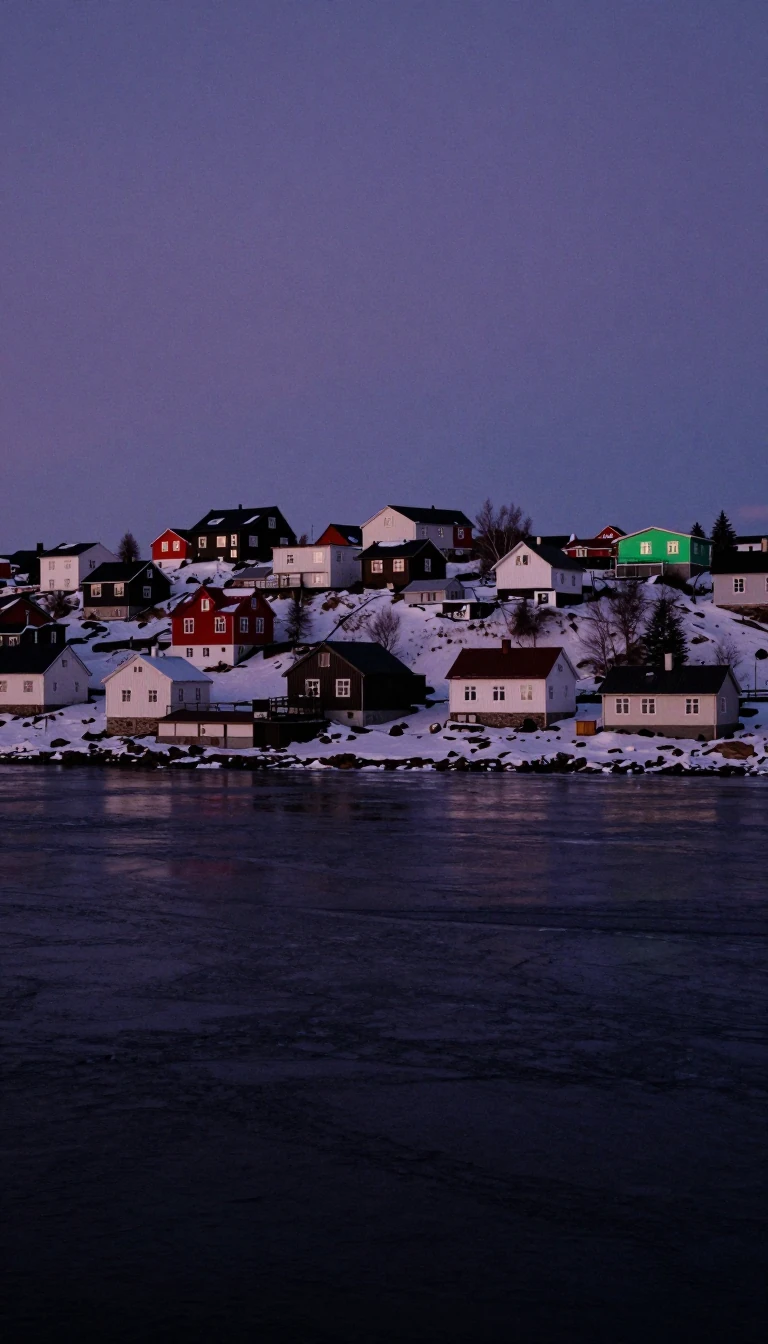 Tampere grew rich on an 18-metre drop between two Finnish lakesTampere sits on a strip of land squeezed between Lake Näsijärvi and Lake Pyhäjärvi, whose surfaces differ by 18 metres. The rapids linking them, Tammerkoski, powered mills, a Scot…
 There is no such thing as a London 0207 numberLondoners often write their numbers as 0207 or 0208, but the area code is simply 020 and the local part has eight digits. The mistake is a fossil of two great renumberings. Britai…
 Olympe de Gouges rewrote the Rights of Man to include women, two years inIn 1791, when revolutionary France proclaimed equal rights and quietly left women out, a playwright from Montauban answered with her own declaration. If a woman could be sent to t…
 Otto Bauer tried to steer Austrian socialism between reform and revolutionAt 26, Otto Bauer published a 600-page answer to the problem tearing at Austria-Hungary: how can dozens of nationalities share one state? He went on to write roughly 4,000 newspap…
 The Teutons gave Germans a nickname, but they may not have been GermanicTeutonic has meant German for more than a thousand years. The original Teutones, who shook the Roman Republic in the late 2nd century BC, are harder to pin down: their name and th…
 The most notorious antisemitic forgery was copied from a satire about Napoleon IIIIn 1921 a Times correspondent laid two texts side by side and showed that the Protocols of the Elders of Zion, sold as secret minutes of a Jewish plot, lifted passage after passag…
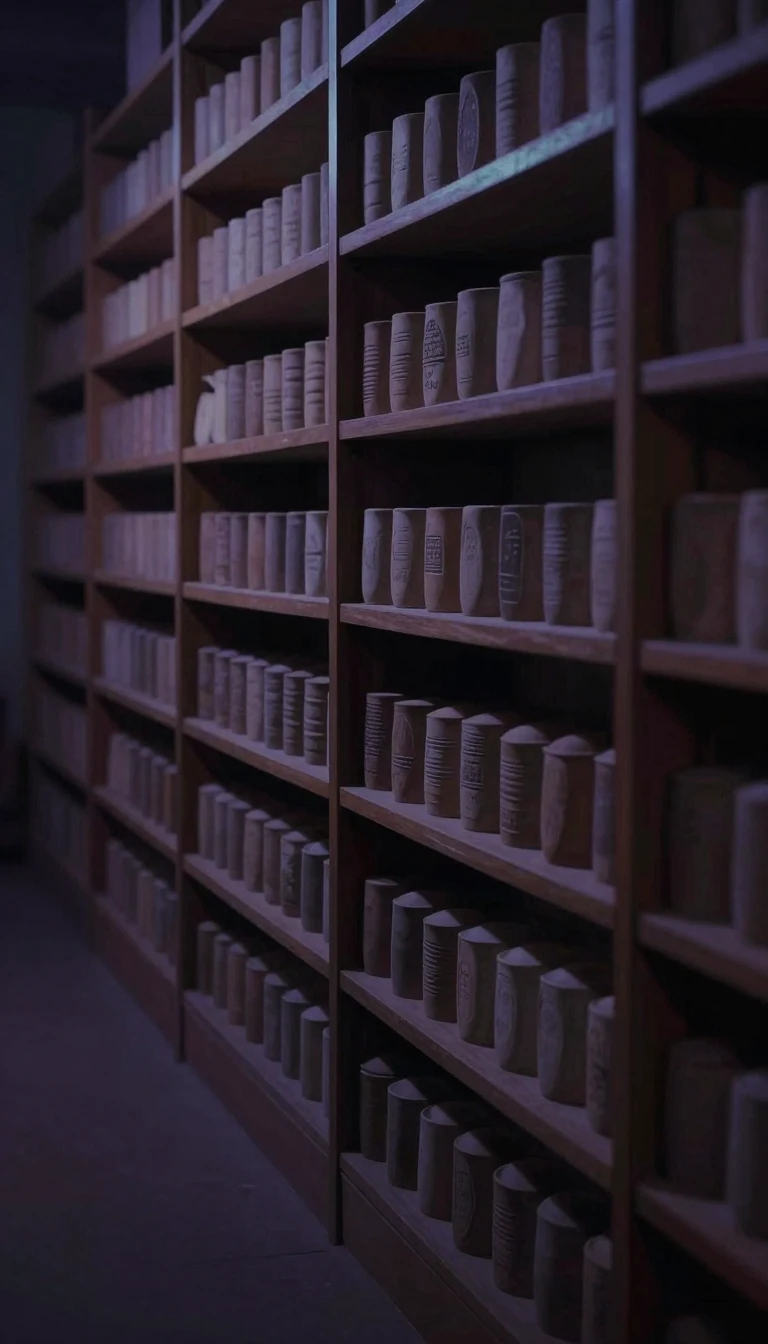 A 4,000-year-old empire left behind around 120,000 clay receiptsThe Third Dynasty of Ur lasted roughly a century, yet it is among the best-documented states of the ancient world. Excavators have recovered around 120,000 of its clay tablets, an…
 Octavio Paz quit as ambassador to protest a massacre, then won the NobelIn 1968 Mexico's ambassador to India resigned after his government's forces killed student protesters at Tlatelolco. The diplomat was Octavio Paz, a poet who had already written a…
 The novel that most shaped independent Ukraine's first fifteen years was a feminist provocationWhen philosopher Oksana Zabuzhko published Fieldwork in Ukrainian Sex in 1996, critics and readers erupted. A decade later a poll named it the book that had most influenced Ukrain…
- The thrice-wounded soldier who taught America that law grows from experienceOliver Wendell Holmes Jr. was shot at Ball's Bluff, Antietam and Chancellorsville before he ever opened a law book. He went on to argue that judges follow the needs of their time …
 A royal wedding meant to heal France's religious split set off its worst massacreIn August 1572 Catherine de' Medici married her Catholic daughter to the Protestant Henry of Navarre to seal a fragile peace. Leading Huguenots flocked to Paris for the ceremony. …
 Albert Einstein spent five years as a citizen of nowhereAt 16, Albert Einstein gave up his Württemberg citizenship to avoid military service and belonged to no country until Switzerland accepted him in 1901. Millions of people today sh…
 The Suebi left their name on Swabia and a kingdom in north-west SpainJulius Caesar met the Suebi as a single tribe between the Rhine and the Elbe. Within a few centuries the name covered a web of peoples who would found a kingdom in north-west Iber…
 Iron and copper turned thinly populated Sweden into a Baltic superpowerFor about a century Sweden ruled most of the Baltic shoreline, an empire more than twice the size of the modern country but home to only around 2.5 million people. Its rise was pa…
 The Pope's famous striped uniforms were designed in 1914, not the RenaissanceThe Vatican's Swiss Guard looks like a painting come to life, all red, blue and yellow stripes and plumed helmets. Yet that costume was worked out by a commander who studied 16th-…
 Before the katana, Japanese warriors carried the tachi, worn with its edge pointing downMost Japanese swords named National Treasures are not katana at all. About 70 percent are tachi, the longer, more curved blades that samurai slung from the waist edge-downward. Th…
 For most of history, mathematicians were also accountants, lawyers and doctorsDuring the Renaissance many leading mathematicians held other day jobs. Luca Pacioli founded accounting, Tartaglia worked as an engineer and bookkeeper, Robert Recorde was a physi…
 Singapore's Straits Times was born from a bankrupt merchant's printing pressAn Armenian merchant in Singapore ordered a printing press from England to start a newspaper, but his editor died before it arrived and he went bankrupt. A friend bought the equip…
 The Sunday Times borrowed a famous name and then kept inventing newspaper firstsThe Sunday Times had nothing to do with The Times when it took that name in 1822. It began as The New Observer, apparently hoping to ride another paper's success. Over the next ce…
 The Sydney Morning Herald started as a 750-copy weekly in 1831Three employees of the Sydney Gazette launched a four-page weekly in 1831 with a print run of just 750. Renamed The Sydney Morning Herald after John Fairfax bought it, it became A…
- How India's biggest media group changed hands through a jail sentenceIn 1947 the industrialist Ramkrishna Dalmia took over Bennett, Coleman and Co., owner of The Times of India, using money moved from a bank and an insurer he chaired. A parliamenta…
 Time's Person of the Year began as a fix for a missed coverIn 1927 Time embarrassed itself by failing to put Charles Lindbergh on its cover after his transatlantic flight. Facing slow news days before New Year, the editors found a way to …
 Tippu Tip, the slave trader European explorers relied on in Central AfricaHenry Morton Stanley and David Livingstone both depended on help from Tippu Tip, the most notorious ivory and slave trader in nineteenth-century Africa. In 1887 Stanley even arran…
 Thoothukudi, India's Pearl City, has traded by sea for two thousand yearsPearl divers off Korkai, near modern Thoothukudi, were famous enough to appear in Ptolemy's geography, which described trade linking India with Roman Alexandria. Two millennia lat…
 Pope Gregory VIII reigned just 57 days but launched the Third CrusadeAlberto di Morra spent decades as a papal diplomat before being elected pope in October 1187. Within weeks he had patched up relations with the Holy Roman Emperor and issued the b…
 The Dominican scholar accused of heresy who became the first conclave popeIn 1264 critics branded 108 statements in Pierre de Tarentaise's theology commentary heretical, and Thomas Aquinas was assigned to defend them. Twelve years later his fellow cardi…
- The only Portuguese pope was killed when his private study's ceiling collapsedJohn XXI wanted peace and quiet for his medical studies, so he had a private apartment added to the papal palace at Viterbo. In May 1277, while he worked there alone, the ceiling …
 The scholar pope who brought the abacus and Arabic digits back to EuropeAround the year 1000, Gerbert of Aurillac could run calculations on his abacus that left contemporaries struggling with Roman numerals far behind. He had learned from Arabic schol…
 A royal summit in 1335 still names a Central European alliance todayIn 1335 the kings of Poland, Bohemia and Hungary-Croatia met at Visegrád castle and agreed to cooperate on politics and trade. Six centuries later, the post-Cold War Visegrád Grou…
 Humans and chimpanzees may have split slowly, over millions of yearsSomewhere in Africa lived the last ancestor we share with chimpanzees and bonobos. No fossil of it has ever been confirmed, and estimates of when our lines parted swing from thirt…
 Humans left Africa long before Homo sapiens even existedUntil the early 1980s, researchers assumed early humans stayed in Africa until roughly 800,000 years ago. Now possible stone tools in central China are dated to 2.12 million years…
 Pak Chungyang served Japan's rule of Korea and never apologised for itPak Chungyang rose from a poor family to govern province after province under Japanese colonial rule in Korea, tearing down Daegu's old city walls along the way. Arrested as a tra…
 The Italian communist who turned down Stalin to stay in democratic politicsIn 1951 Stalin offered Palmiro Togliatti the top job at the Cominform. He said no, preferring to keep leading Italy's Communist Party, by then the largest in Western Europe. His s…
 Australia once had a wombat the weight of a small carDiprotodon, a marsupial shaped like a giant wombat, stood two metres at the shoulder and weighed up to 2,780 kilograms. It shared Pleistocene Australia with a kangaroo taller than…
 Australopithecines walked upright with brains barely bigger than a chimp'sLong before our own genus appeared, African hominins were striding on two legs with teeth much like ours and brains of roughly 350 to 600 cubic centimetres. The australopithecines…
 The humble pile of stones is one of humanity's most universal monumentsScottish clansmen once each dropped a stone on a heap before battle; survivors took one back, and the stones left over became a memorial to the fallen. From the Highlands to Hawai…
 A dead prince kept coming back to claim Russia's throneTsarevich Dmitry was officially reported dead in 1591, killed by his own knife during a seizure. Yet within a decade a man claiming to be him marched out of Poland-Lithuania, took…
- Japan's longest-ruling shoguns may have invented their own noble ancestryOnly descendants of the Seiwa Genji line could traditionally become shogun. Tokugawa Ieyasu duly claimed that lineage, tracing his family back through the Nitta to the Minamoto. H…
 Japan's last shogun gave up power, then took up photography and cyclingTokugawa Yoshinobu never once entered Edo Castle as shogun. Within a year of taking the title he handed power back to the emperor, fled a battle his side outnumbered, and retired …
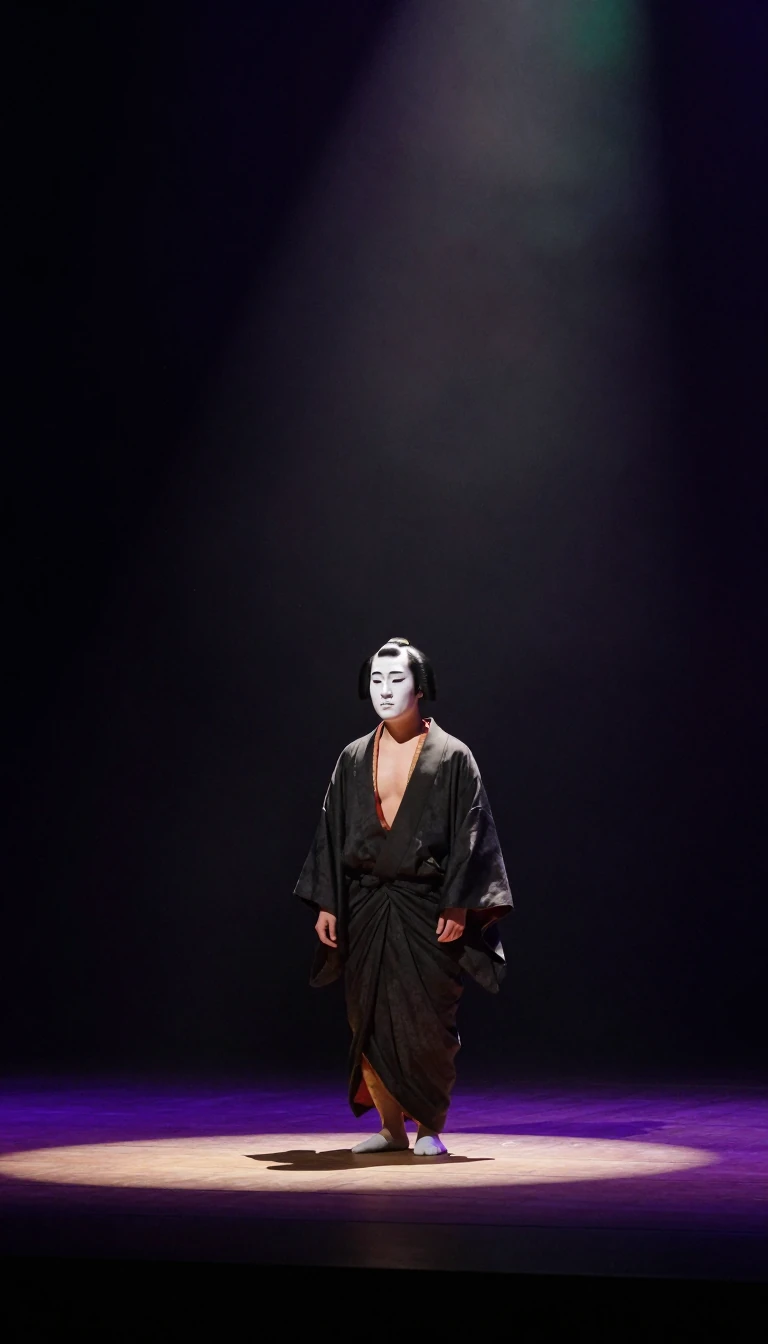 Godzilla was a man in a suit stomping a miniature city, by designJapan's special-effects tradition, tokusatsu, rests on a gloriously physical trick: put an actor in a monster costume, surround him with scaled-down buildings and film from just t…
 Trajan's Column tells a war story almost nobody could actually readA stone ribbon 190 metres long spirals 23 times around Trajan's Column in Rome, packed with 2,662 carved figures. Yet tall libraries hemmed it in so tightly that no Roman could fo…
 London's black cabs descend from 17th-century hackney coachesNo law has ever required London taxis to be black. They simply came in one standard colour after the Second World War, and the nickname black cab caught on in the 1970s. The offic…
- Green Bay was founded by a Frenchman hunting a route to ChinaIn 1634 Jean Nicolet paddled into a bay on Lake Michigan hoping he had found the people of the sea and a shortcut toward China. He had not, but the trading post he set up became G…
 Grocers were once wholesale spice dealers, and groceries were barsThe word grocer comes from an old French term for wholesaler, because medieval grocers sold spices, sugar and later tea and coffee in bulk. For roughly two centuries afterwards, a…
 Middlesex, the Saxon county that London's suburbs swallowed wholeIn 1771 the novelist Tobias Smollett joked that if London kept spreading, all of Middlesex would one day be covered in brick. He was right. The small county framed by the Thames, …
- The Independent: from brash 1986 launch to online-only newspaperThree journalists walked out of The Daily Telegraph and launched a rival in 1986 under the cheeky slogan It is. Are you? Within three years The Independent sold over 400,000 copie…
 Transoxiana: the land beyond the Oxus that every empire wantedBetween two great Central Asian rivers lies a stretch of dry but fertile plain that Persians, Greeks, Arabs, Chinese and Mongols all fought to hold. Its Latin name means simply th…
 How a string of truces with Britain became the United Arab EmiratesThe sheikhdoms along the southern Gulf coast got their old name from a series of truces signed with Britain in the 19th century. For about 150 years they sat under an ambiguous Br…
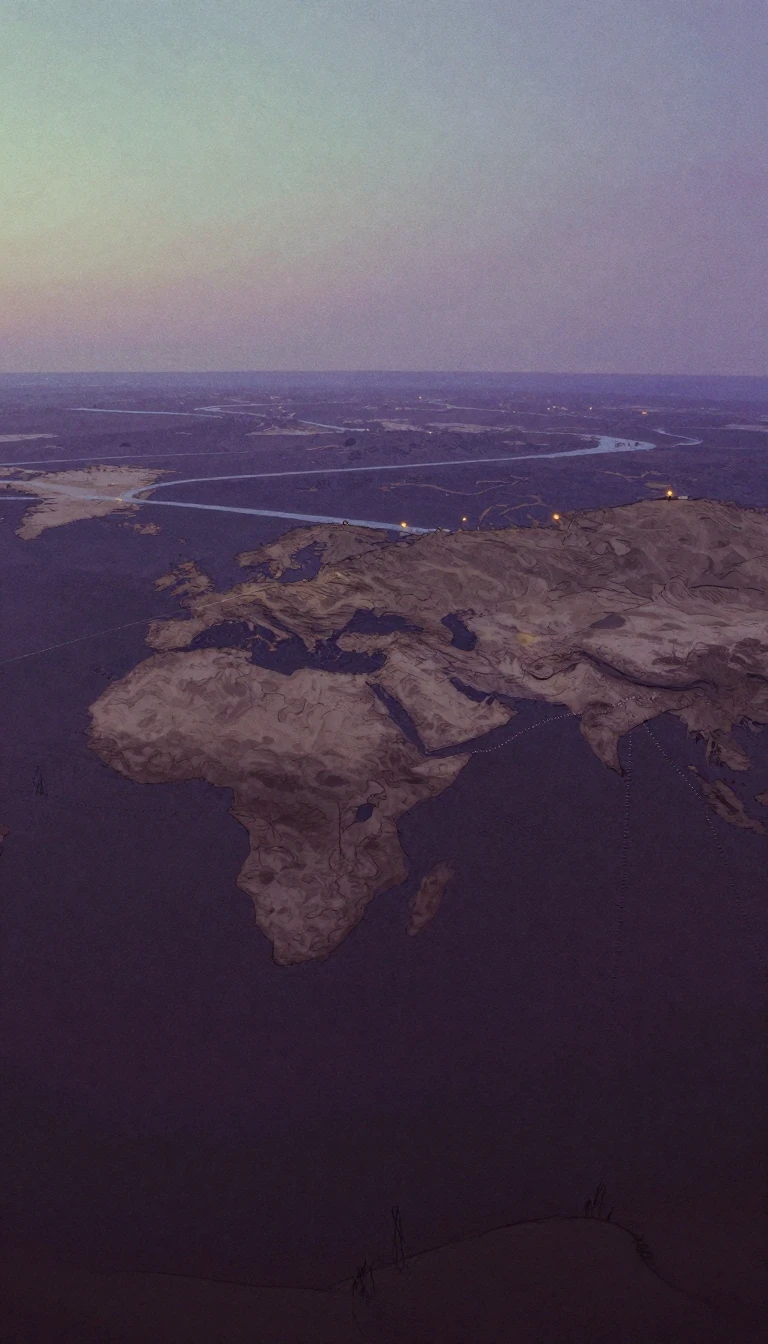 Topographic maps were born as military tools for planning battlesThose wavy contour lines joining points of equal height began as military intelligence: armies needed to know the lie of the land for battles and defences, which is why Britain's …
- Toruń, Copernicus's birthplace, where citizens took their castle apart brick by brickIn 1454 the people of Toruń, fed up with the Teutonic Knights, stormed the Order's castle and dismantled its walls brick by brick, sparing only one tower, later used to hold gunpo…
 The monk called the teacher of Germany wrote a hymn Mahler later setRabanus Maurus ran one of Europe's great monastic schools, compiled an encyclopedia, rewrote a Roman military manual for Frankish armies and became Archbishop of Mainz. He is also…
 A village bought in 1639 grew into British rule over most of South IndiaIn 1639 an East India Company agent named Francis Day secured a grant of land at a fishing village called Madraspatinam and built Fort St George there. From that foothold grew the…