 Intellect Plus
Technology
10,995 cards. Each one is a 40-second story with a five-minute read behind it. Page 78 of 184.
Subtopics: 3D printing & manufacturing · AI & machine learning: practical · Aircraft · Automata · Aviation · Batteries · Binary · Biotechnology · Bridges · Cameras & imaging · Cars · Chemical engineering · Chips · Codes · Compression · Computing · Computing and information technology · Computing history · Cryptography · Cybersecurity · Electric vehicles · Electronics · Energy · Engineering · Everyday tech · Famous patents · Future Frontier · How it works · How Things Work: GPS to the Phone · How Things Work: Jets, Propellers and Ships · Industry · Infrastructure · Internet · Inventions · Inventors · Machinery and tools · Maths · Media and communication · Medical technology · Medieval clockmaking · Mercedes-Benz Engineering · Military technology · Motorbikes · Navigation and timekeeping · Networks · Nuclear power · Optical technology · Physics · Pioneers · Programming · Programming languages · Radar · Radio · Researched · Robotics: practical · Robots · Rockets · Security · Semiconductors · Ships & boats · Skyscrapers · Smartphones · Software · Sound & audio technology · Spaceflight · Super-series Wave 1: Car To Wheels · Super-series Wave 1: From Power Station To Pc · Super-series Wave 1: The Journey Of Crude Oil · Technology today · Technology: General · Textiles · Trains & locomotives · Transportation · UK & Ireland: inventions · Video game technology · Web · Wireless
 The humble plastic bag is a marvel of engineering with a dark environmental shadowInvented to be a durable, lightweight solution for modern logistics, the plastic bag has transformed global commerce. Yet, this ubiquitous tool now faces intense scrutiny as its r…
 Why the world’s most common bottle neck is a masterpiece of industrial engineeringThe PCO 1881 standard is a global triumph of design, unifying beverage production lines worldwide. Finalized in 2009, this lightweight neck finish revolutionized how we package li…
 Why military engineers prefer explosives that feel like clay rather than solid blocksPlastic explosives are engineered to be molded by hand, allowing combat engineers to shape them perfectly for cutting through steel or concrete. Unlike standard blasting materials…
 Plating is far more than just decoration; it is a critical pillar of modern engineering.From the microscopic precision of nanotechnology to the heavy-duty protection of industrial machinery, plating transforms base materials. Whether through electrical currents or ch…
 Before modern convenience, adding hardware to your computer often required a soldering iron.Today, plugging in a device is seamless, but early computing was a manual nightmare. Users once had to physically cut wires, solder connections, or toggle tiny switches to avoid r…
 Plug-ins allow software to evolve without requiring a complete system rebuild or update.Ever wonder how your browser suddenly plays new file types or your photo editor gains advanced filters? These capabilities often come from plug-ins. These modular software compone…
 The ancient tool that defines verticality and still anchors our modern worldBefore digital levels and lasers, humanity relied on a simple weight on a string to defy gravity. The plumb bob, named for the Latin word for lead, has been our primary reference …
 From ancient mechanical toys to modern robotics, air is a powerful industrial engine.Pneumatics harnesses the simple physics of compressed gas to drive everything from factory machinery to soft robots. By using air instead of hydraulic fluid, these systems offer a…
 From Iron Age tools to tactical folders, the evolution of the pocketknife is complex.The pocketknife is a deceptively simple tool with a history spanning millennia. While early versions date back to the Iron Age, modern innovations have transformed these folding b…
 Pointers are the secret keys that allow software to navigate computer memory directlyA pointer is a variable that stores a memory address rather than a raw value. By acting as a direct reference to data, pointers allow programs to manipulate memory with extreme ef…
 Why your mouse cursor moves faster when you flick your wrist quicklyEvery time you move your mouse, you are navigating a complex relationship between physical space and digital output. From the physics of Fitts's Law to the hidden mechanics of Con…
- The humble polearm: how a simple wooden shaft conquered the medieval battlefieldBy mounting blades, hooks, or spikes onto long wooden shafts, ancient and medieval soldiers created the ultimate equalizer. Cheap to produce and easy to master, these versatile we…
 The ancient Greek repeating ballista that fired bolts like a modern machine gunLong before the invention of modern automatic weaponry, ancient engineers designed the polybolos. This sophisticated repeating catapult utilized a complex chain drive and a gravit…
 The polygraph is a scientifically discredited tool that cannot actually detect human liesDespite its prevalence in American law enforcement and security screening, the polygraph is widely considered pseudoscience. It measures physiological arousal—like heart rate and …
 From rubber bands to stealth bombers: how polymer engineering reshaped the modern worldPolymer engineering is the silent architect of our material reality. By manipulating long-chain molecules, scientists have transformed simple resins into everything from flexible …
 Polymorphism allows code to handle multiple data types through a single unified interface.In computer science, polymorphism enables a single operation to function across various data types. Borrowed from biology, this concept allows programs to be more flexible and exp…
 How Paris hid a massive engineering feat inside an ornate, gilded masterpieceThe Pont Alexandre III is celebrated as the most extravagant bridge in Paris, dripping with Art Nouveau lamps and golden statues. Yet, beneath its decorative excess lies a feat of…
 For millennia, armies have turned rivers into roads using nothing but floating boats.A pontoon bridge is a feat of ancient engineering that remains vital today. By tethering shallow-draft boats or floats together and topping them with a deck, engineers create inst…
 Before the smartphone, a digital revolution fit in your pocket and changed music forever.The portable media player transformed how we consume sound, evolving from clunky hard-drive prototypes to the sleek devices that defined a generation. While often remembered as a …
 Beyond the porta-potty: The surprising history and mechanics of the portable toiletPortable toilets are more than just festival staples. From 17th-century royal furniture to life-saving tools for segregated travelers and wartime bomber crews, these self-containe…
 Why the classic portrait lens is designed to flatten your facial featuresPortraiture is more than just a snapshot; it is a deliberate manipulation of light, perspective, and optics. From the early days of long exposures to modern telephoto techniques, …
 How a naming suggestion from Richard Stallman defined the modern computing landscapeThe Portable Operating System Interface, or POSIX, is the invisible glue holding modern computing together. Born from a 1984 project to standardize Unix-like systems, it ensures y…
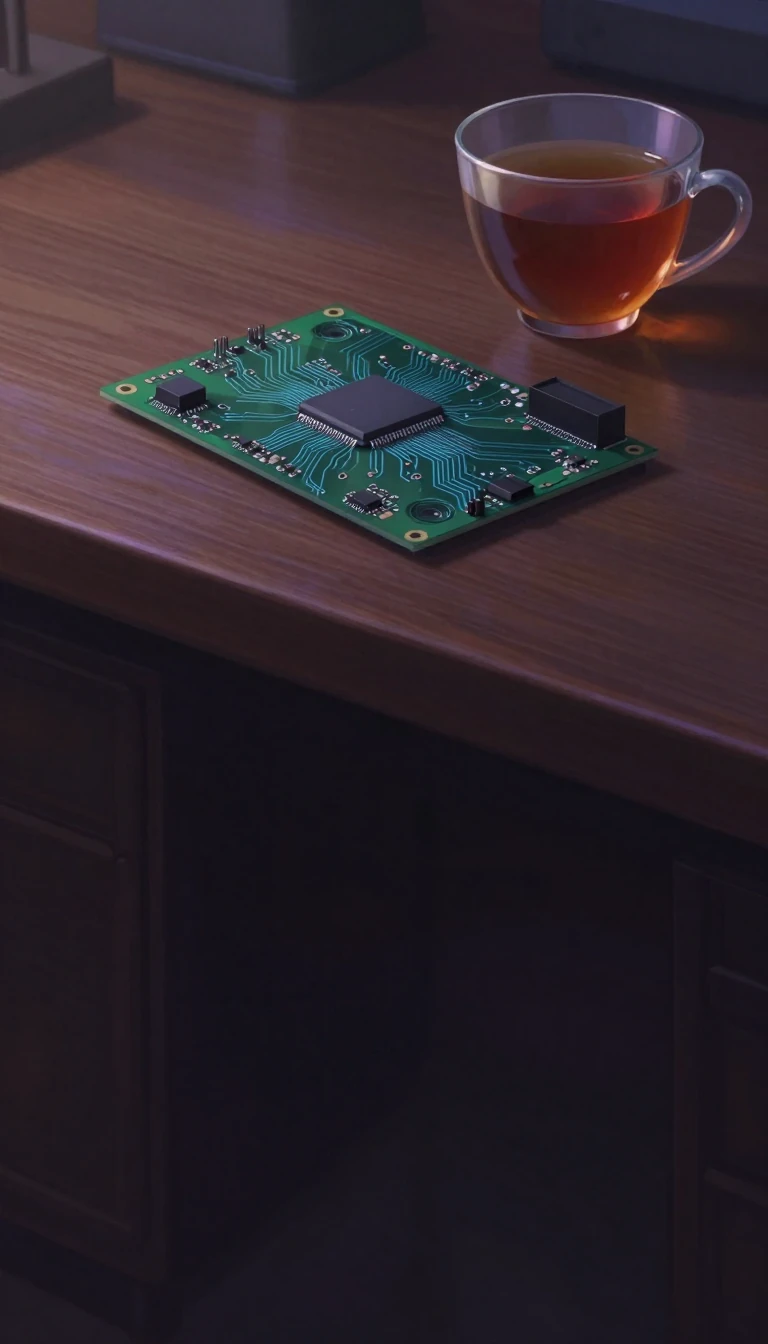 The humble potentiometer is the hidden interface between physical motion and electrical signalsWhether you are adjusting the volume on an amplifier or tracking the precise position of a joystick, you are likely using a potentiometer. This three-terminal device translates me…
- Why this industrial coating process is tougher and cleaner than traditional liquid paintPowder coating replaces liquid solvents with a dry, electrostatic finish that is exceptionally durable. By eliminating volatile organic compounds and allowing for efficient oversp…
 From wooden barrels to geopolitical metaphors: the volatile history of the powder kegBefore it became a common metaphor for unstable regions, the powder keg was a literal, dangerous necessity of warfare. These small wooden casks stored black powder until the late …
 The hidden engineering that keeps the modern world powered and connectedPower cables are far more than simple wires. They are complex, multi-layered assemblies engineered to survive extreme environments, from deep underground to high-voltage transmiss…
 How the war of the currents shaped the modern electrical grid we use todayPower engineering is the invisible backbone of modern life, managing everything from global transmission lines to local microgrids. Born from a fierce 19th-century rivalry between…
 How engineers map the invisible flow of electricity through our massive power gridsA power-flow study is the essential numerical analysis that keeps our electrical grids stable. By calculating voltage angles and magnitudes across a complex network, engineers can…
 How the power hammer revolutionized metalwork by replacing gravity with controlled mechanical forceBefore the late 1880s, blacksmiths relied on gravity-fed trip hammers to shape metal. The invention of the power hammer changed everything by using steam, compressed air, or mecha…
 Power inverters transform direct current into alternating current to run your household electronics.A power inverter does not create energy; it acts as a bridge, converting direct current from batteries or solar panels into the alternating current required by most appliances. Wh…
 How the power grid survives: the invisible science of automatic fault protectionWhen a lightning strike hits a transmission line, the power grid does not just collapse. Instead, a sophisticated network of sensors, relays, and circuit breakers acts in millisec…
 Turning surplus renewable energy into fuel, heat, and chemicals to stabilize our power gridsWhen wind and solar farms produce more electricity than we need, that energy is often wasted. Power-to-X technologies solve this by converting surplus power into hydrogen, methane…
 Why modern skyscrapers and bridges are increasingly built in factories, not on site.Precast concrete transforms construction by moving production from chaotic job sites to controlled factory environments. By casting components like wall panels and beams in reusab…
 How engineers use heat and time to lock metal structures into permanent strengthPrecipitation hardening transforms soft alloys into high-strength materials by manipulating microscopic impurities. By carefully controlling temperature and time, metallurgists fo…
- How your computer juggles dozens of tasks without ever dropping the ballEver wonder how your computer runs music, a browser, and background updates simultaneously? It relies on preemption: a mechanism where the operating system forcibly interrupts tas…
 Why simple pressure vessels require strict safety compliance before reaching the marketPressure vessels are ubiquitous, yet their potential for catastrophic failure demands rigorous oversight. In the UK, specific regulations define what constitutes a simple pressure…
 Why nuclear reactors using heavy water can run on natural, unenriched uranium fuelMost nuclear reactors require expensive, energy-intensive uranium enrichment to sustain a chain reaction. Pressurized heavy-water reactors bypass this by using deuterium oxide as …
- Why modern skyscrapers and bridges rely on concrete that is intentionally squeezed under pressure.Concrete is incredibly strong under compression but brittle when pulled. Prestressed concrete solves this by pre-loading the material with internal tension, effectively squeezing …
 Why the future of publishing is printing only what you actually sellPrint on demand transforms the economics of creation by eliminating the need for bulk inventory. By shifting from traditional offset runs to digital, order-triggered production, b…
 How Victorian-era glass prisms are revolutionizing modern daylighting and interior brightnessBefore electric light dominated our interiors, architects used clever prismatic glass to pull daylight deep into dark rooms. Today, this forgotten technology is seeing a high-tech…
 The razor-sharp stone technology that defined Mesoamerican life for over two millenniaBefore the arrival of the Spanish, Mesoamerican civilizations mastered a sophisticated method of stone knapping to produce standardized, razor-like tools. By applying precise pres…
 Why your home Wi-Fi doesn't need a unique address on the global internetYour home devices share a single public IP address, yet they communicate seamlessly. This magic is powered by private networks, which use reserved address spaces that never touch …
 Why your computer feels like it is doing everything at onceA computer program is just a passive file on your disk, but a process is that program brought to life in memory. Through the magic of multitasking and rapid context switching, you…
 How process engineers transform raw materials into the products society relies on every dayProcess engineering is the invisible engine of modern industry. By applying fundamental natural laws to pressure, temperature, and mass, engineers design the complex systems that …
 Why your computer's fastest memory is hidden in plain sightProcessor registers are the elite tier of computer memory, sitting at the very top of the hierarchy. These tiny, ultra-fast storage locations are where data goes to be manipulated…
 Why your projection screen is more than just a simple white sheetA projection screen is not merely a surface for light; it is a complex optical tool designed to manipulate reflection, contrast, and geometry. From high-gain materials that fight …
 Before digital screens, humans used fire and mirrors to conjure ghosts and moving images.Long before modern video projectors, inventors harnessed sunlight, candles, and clever optics to cast light into the dark. From ancient Chinese shadow play to 17th-century magic l…
 Why rockets must carry up to 95 percent of their weight in propellantTo reach orbit, a rocket must overcome gravity and drag, a feat that requires immense force. Because rockets carry all their fuel and oxidizer on board, the vast majority of their…
 How a simple rotating screw evolved from ancient irrigation to modern flight and navigation.The propeller is a masterclass in fluid dynamics, turning rotational motion into linear thrust. From ancient water screws to the high-speed blades of modern aviation, this technol…
- The silent sentinels keeping the world's power grids from catastrophic failureProtective relays are the unsung guardians of electrical infrastructure. These devices monitor power systems for faults like overcurrent or voltage surges, tripping circuit breake…
 Can we design proteins from scratch to perform tasks nature never intended?Protein engineering is the art of creating unnatural polypeptides by modifying natural amino acid sequences. Scientists now use two primary strategies: rational design, which reli…
 The proximity fuze turned artillery into smart weapons by miniaturizing radar for the battlefield.Before the proximity fuze, hitting a fast-moving aircraft required immense luck or perfect timing. By shrinking radar technology into a shell-sized package, engineers created a tr…
 A proxy server acts as a digital middleman to control, secure, or mask traffic.Think of a proxy server as an intermediary between your device and the internet. Instead of connecting directly to a website, your request passes through this gatekeeper first. Wh…
- How the invention of paper pulp transformed a rare luxury into a global commodityFor centuries, paper was a scarce material crafted from rags and plant fibers. The transition to wood pulp in the 19th century triggered a massive industrial shift, turning paper …
 The simple push-button: a mechanical interface that transformed our relationship with modern technologyBefore they were ubiquitous in our pockets and homes, push-buttons were a source of public anxiety. Emerging in the late 19th century, these tactile switches bridged the gap betwe…
- A massive engineering feat in China that once held a world record titleSpanning the waters of Jiaozhou Bay, this T-shaped bridge connects districts in Qingdao, cutting travel times significantly. While it was once celebrated as the world's longest br…
- Why blacksmiths once quenched steel in the urine of a small red-headed boyQuenching is the art of rapid cooling to transform soft, layered iron into a hard, durable material. By plunging hot metal into fluids, smiths manipulate its internal crystal stru…
 Why the humble goose feather defined centuries of human record-keeping and lawBefore the fountain pen, the quill was the primary instrument of the written word. Crafted from the flight feathers of birds like geese and swans, these tools enabled the creation…
- Beyond the Bed: How Quilts Evolved from Colonial Necessity to High-Stakes Textile ArtQuilting is far more than a way to stay warm. From colonial survival tools to modern artistic movements and complex social narratives, these multi-layered textiles serve as histor…
 Beyond the Bed: How Quilting Evolved from Ancient Utility to Modern Artistic ExpressionQuilting is far more than a cozy craft. It is a sophisticated, global tradition of joining fabric layers that spans millennia. From ancient Egyptian pharaohs to contemporary art g…