 Intellect Plus
Technology
10,995 cards. Each one is a 40-second story with a five-minute read behind it. Page 76 of 184.
Subtopics: 3D printing & manufacturing · AI & machine learning: practical · Aircraft · Automata · Aviation · Batteries · Binary · Biotechnology · Bridges · Cameras & imaging · Cars · Chemical engineering · Chips · Codes · Compression · Computing · Computing and information technology · Computing history · Cryptography · Cybersecurity · Electric vehicles · Electronics · Energy · Engineering · Everyday tech · Famous patents · Future Frontier · How it works · How Things Work: GPS to the Phone · How Things Work: Jets, Propellers and Ships · Industry · Infrastructure · Internet · Inventions · Inventors · Machinery and tools · Maths · Media and communication · Medical technology · Medieval clockmaking · Mercedes-Benz Engineering · Military technology · Motorbikes · Navigation and timekeeping · Networks · Nuclear power · Optical technology · Physics · Pioneers · Programming · Programming languages · Radar · Radio · Researched · Robotics: practical · Robots · Rockets · Security · Semiconductors · Ships & boats · Skyscrapers · Smartphones · Software · Sound & audio technology · Spaceflight · Super-series Wave 1: Car To Wheels · Super-series Wave 1: From Power Station To Pc · Super-series Wave 1: The Journey Of Crude Oil · Technology today · Technology: General · Textiles · Trains & locomotives · Transportation · UK & Ireland: inventions · Video game technology · Web · Wireless
 MPEG-4 is not a single format but a vast, evolving toolkit for digital mediaYou likely encounter MPEG-4 daily, yet it is rarely what you think. Rather than a simple file type, it is a massive, modular collection of international standards for compressing …
 Why your computer stopped getting faster and started getting more cores insteadFor decades, engineers boosted performance by cranking up clock speeds. But they eventually hit a wall of heat and power consumption. The solution was to stop building one faster …
 Why your camera struggles with shadows and highlights, and how it cheats to fix them.Standard cameras often fail to capture the full range of light our eyes perceive, leaving shadows pitch black or highlights blown out to white. Multi-exposure HDR solves this by m…
 Why your phone might be the weakest link in your digital security chainMulti-factor authentication is designed to keep intruders out by requiring more than just a password. While it significantly reduces the risk of compromise, relying on your smartp…
 The memory card that failed to conquer the world became the heart of your phone.The MultiMediaCard was designed to unify a fragmented market of proprietary storage formats. While it lost the battle for removable memory to the SD card, its architecture survive…
 How a simple tool for telecommunications maintenance became the universal language of electronics.Before the digital age, technicians carried a bag of specialized instruments to test circuits. Donald Macadie, a British Post Office engineer, changed everything by inventing a si…
 From medieval fire-arrows to precision-guided missiles, the evolution of the multiple rocket launcher.Multiple rocket launchers have transformed from simple medieval fire-arrow arrays into sophisticated, GPS-guided systems capable of pinpoint accuracy. By firing volleys of self-pr…
 How modern infrastructure squeezes infinite data through a single, finite physical wireMultiplexing is the silent engine of the digital age, allowing multiple signals to share one physical medium. By dividing capacity through time, frequency, or space, it transforms…
 Why modern computers use multiple brains to handle your daily digital workloadMultiprocessing is the engine room of modern computing, moving beyond single-processor limitations by coordinating two or more CPUs to share the load. Whether through tightly inte…
 Why modern processors juggle multiple tasks to keep their internal pipelines from running dry.Modern CPUs often struggle to speed up single tasks, so they turn to multithreading. By running multiple instruction streams simultaneously, processors can fill idle computing slo…
 Why the ancient art of muzzleloading is thriving in the modern eraA muzzleloader is any firearm loaded through the barrel's open end, a design that predates modern breech-loading technology. While once the standard for military and civilian use,…
 How a database named after a daughter became the backbone of the modern webBorn in 1995 to replace slow, inflexible predecessors, MySQL evolved from a personal project into the world's most ubiquitous relational database. Powering giants like Facebook an…
 The Naginata: From Battlefield Terror to Symbol of Noble FemininityOnce a fearsome polearm that forced Japanese armorers to invent greaves, the naginata evolved from a brutal anti-cavalry tool into a refined martial art. While its battlefield dom…
 From the Spruce Goose to your garage: how the nail gun changed constructionDesigned to build Howard Hughes' massive H-4 Hercules aircraft, the nail gun has since become a staple of modern construction. While these tools drastically increase efficiency, t…
 Why your power plant's maximum output is rarely what you actually getNameplate capacity represents the theoretical maximum output of a facility under ideal conditions, yet it is rarely achieved in practice. Whether it is a solar farm or a coal plan…
 The humble NAND gate is the universal building block of modern digital computingA NAND gate is a simple logic circuit that outputs false only when all inputs are true. While it seems basic, it possesses a profound property called functional completeness. This…
 How a college student’s music sharing app triggered a global legal revolution in copyrightCreated in 1999 by Shawn Fanning, Napster transformed how the world accessed music. By enabling peer-to-peer file sharing, it sparked a massive legal battle over digital rights. T…
- Why your smartphone can talk to a sticker from four centimeters awayNear-field communication, or NFC, powers everything from contactless payments to instant device pairing. By using magnetic fields rather than radio waves to transmit data over tin…
 How to turn a real-world generator into an ideal power source using negative impedanceStandard electrical loads consume energy, but a negative impedance converter does the opposite: it injects energy back into a circuit. By creating a negative resistance that cance…
 Beyond the sign: how neon gas shaped modern displays and urban artNeon lighting is more than just vintage advertising. Born from the discovery of a rare atmospheric gas, this technology evolved from glowing tubes into the foundation of plasma te…
 Nerve agents were born from a failed search for better, cheaper agricultural insecticides.Originally synthesized in 1930s Germany as potential pesticides, nerve agents evolved into the deadliest chemical weapons in history. These organophosphorus compounds hijack the b…
 The ancient grid that changed human history by doing more with less materialA net is a masterclass in efficiency, using knotted threads to block large objects while letting fluids and small items pass through. From Mesolithic hunting tools to modern safet…
 The unsung hardware bridge that connects your computer to the digital worldEvery time you connect to the internet, a specialized piece of hardware works behind the scenes to translate digital data into physical signals. Known as a network interface contr…
 Why modern computer chips are adopting the architecture of global communication networksAs integrated circuits grow more complex, traditional wiring methods are hitting a wall. To keep pace, engineers are moving away from rigid, dedicated connections in favor of pack…
- The digital envelope: how network packets move the world's information across the internetEvery piece of data you send online is chopped into tiny, formatted units called packets. Like a postal letter, each packet carries a payload inside a header that contains routing…
- How network switches transformed the internet from a noisy broadcast into a precise conversationEarly computer networks were chaotic, broadcasting data to every device regardless of the intended recipient. The invention of the network switch changed this, allowing hardware t…
- Your network's physical layout and logical data flow are often two different things.A network is more than just wires and devices. It is a dual-layered system: the physical topology defines where cables run and nodes sit, while the logical topology dictates how d…
 How a massive masonry dam submerged an entire landscape to quench a city's thirstWhen New York City outgrew its water supply in the late 19th century, engineers embarked on a monumental task: building the world's tallest dam. The resulting New Croton Dam requi…
 The Nimitz-class aircraft carriers are massive, nuclear-powered floating fortresses of the U.S. Navy.Spanning over 1,000 feet and displacing 100,000 tons, these ten nuclear-powered giants have defined American naval power since 1975. They are not just ships; they are mobile airba…
- What exactly defines a node in the complex architecture of modern digital networks?A node is more than just a connection point; it is a fundamental building block of communication. From simple modems to complex supernodes, these devices create, receive, or trans…
 Electronic noise is not just interference; it is a fundamental property of the physical universe.We often think of electronic noise as a nuisance to be filtered out, but it is deeply rooted in thermodynamics and quantum physics. From the random thermal motion of electrons to …
 Why the term non-lethal weapon is often considered a dangerous misnomer by expertsNon-lethal weapons are designed to incapacitate without killing, yet they frequently cause serious injury or death. Because these tools carry inherent risks, many organizations no…
 Why your computer forgets everything when the power cuts, but your phone remembersNon-volatile memory is the reason your data survives a power outage. While volatile RAM clears instantly when the lights go out, non-volatile storage uses clever physical mechanis…
- The humble NOR gate is powerful enough to build an entire computer processorThe NOR gate is a digital logic gate that produces a high output only when all inputs are low. While it may seem simple, it is functionally complete, meaning you can construct any…
 Why Microsoft's NTFS remains the backbone of Windows after three decades of evolutionDeveloped in the 1990s to replace the aging File Allocation Table, the NT File System introduced journaling, encryption, and robust access controls. While it has evolved through f…
- How the NTSC standard solved the impossible problem of color television compatibility.When color television arrived, it threatened to render millions of black-and-white sets obsolete. The NTSC standard, adopted in 1953, performed a technical miracle: it hid color i…
 Nuclear engineering is far more than just power plants and atomic weaponsWhile the discipline was born from the race to build weapons during World War II, modern nuclear engineering is a multifaceted field. It encompasses everything from medical diagno…
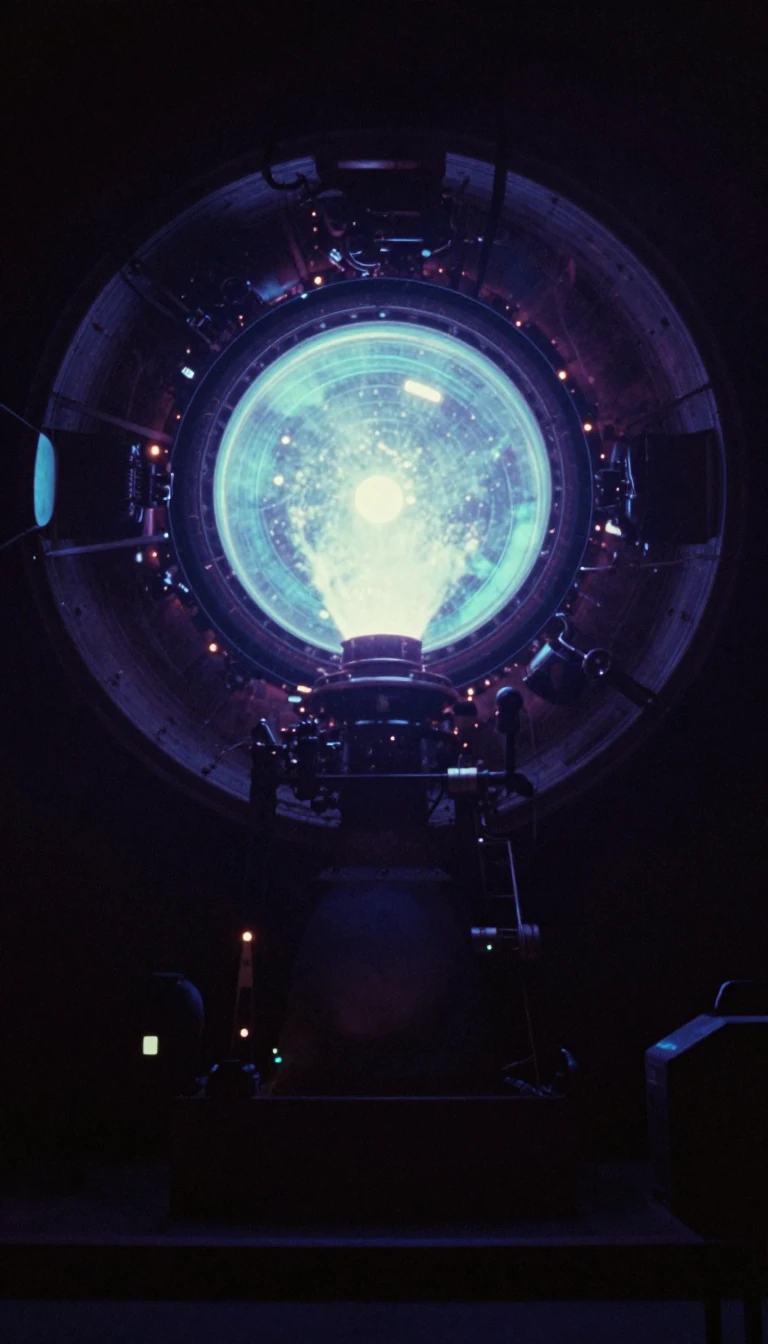 How a single ceramic pellet powers a city by splitting the smallest of atomsNuclear fuel is not burned like coal; it is harnessed through the precise, controlled fission of uranium atoms. From raw ore to high-tech ceramic pellets, the journey of nuclear f…
 Can international treaties actually stop the spread of nuclear weapons to new nations?Nuclear proliferation involves the spread of fissile material and the technical expertise required to build weapons. While the Non-Proliferation Treaty aims to contain this risk, …
 How tiny microprocessors became the silent guardians of the global electrical gridBefore modern computing, protecting power grids meant relying on heavy mechanical springs and magnetic coils. Today, numerical relays use high-speed digital algorithms to detect f…
 The Nunchaku: A Martial Arts Icon Born from Ambiguous Origins and Modern MediaOften associated with Bruce Lee and pop culture icons like Michelangelo, the nunchaku remains a misunderstood tool. While frequently banned due to fears of criminal misuse, its tr…
 The Soviet-era earth-fill giant that still powers the majority of Tajikistan todayRising 304 meters above the Vakhsh River, the Nurek Dam is a marvel of engineering that once held the title of the world's tallest dam. Completed in 1980, this massive structure r…
- How to perfectly capture reality in digital form using the Nyquist–Shannon sampling theoremTo convert a continuous signal into digital data without losing information, you must follow a strict mathematical rule. By sampling at a rate higher than twice the signal's bandw…
 Why developers intentionally write code that is nearly impossible for humans to readObfuscation is the art of making software intentionally difficult to understand. While it serves as a recreational puzzle for programmers, it is also a powerful tool for protectin…
 Why your computer cannot run code directly after it leaves the compilerWhen you write software, your human-readable instructions must undergo a transformation before a processor can understand them. The result is object code, a specialized intermedia…
 Objective-C: The language that bridged C with Smalltalk-style messaging for modern computingDeveloped to solve software reusability challenges, Objective-C became the backbone of Apple's ecosystem for nearly two decades. By blending the efficiency of C with the dynamic, …
 From Roman pebbles to digital chips, the odometer has tracked our path for millennia.Before modern sensors logged mileage into engine control modules, distance was measured by dropping stones into boxes or striking drums. From ancient chariot wheels to the wagon-m…
- Ogg is a free, open-source multimedia container designed to handle complex digital streams efficiently.Named after Netrek gaming jargon, Ogg is a versatile container format that multiplexes audio, video, and metadata. Unlike proprietary formats, it is unrestricted by software paten…
 Before electricity, the oil lamp was the primary tool for conquering the night.For thousands of years, humans relied on simple vessels of oil and wick to illuminate their world. From ancient stone bowls to the sophisticated Argand lamp, these devices provide…
- The Roman Onager: A Siege Engine So Violent It Could Not Stand On WallsNamed for the wild ass, this Roman torsion-powered catapult was notorious for its brutal recoil. While it could hurl massive stones to shatter enemy lines, the machine was so unst…
 The only encryption method mathematically proven to be impossible to crackThe one-time pad is the gold standard of secrecy. By combining a message with a truly random, single-use key of equal length, it creates ciphertext that defies decryption. Even if…
 The one-way mirror is a masterclass in light manipulation, not a magic trick.A one-way mirror is not actually one-way. It is a semi-transparent pane that reflects and transmits light equally in both directions. The illusion of secrecy relies entirely on a …
 Why the promise of endless digital romance often leads to a paradox of choiceOnline dating platforms offer a vast pool of potential partners, yet this abundance frequently triggers a psychological paradox. Rather than simplifying the search for love, the p…
 How a 1990s Microsoft project became the universal language for modern data connectivity.Before Open Database Connectivity, accessing data was a fragmented nightmare of proprietary systems. By creating a translation layer between applications and databases, ODBC allow…
- How a 1963 Czech invention revolutionized global textile production without using a spindleOpen-end spinning, also known as rotor spinning, transformed yarn manufacturing by ditching the traditional spindle. By mimicking the mechanics of a clothes dryer, this high-speed…
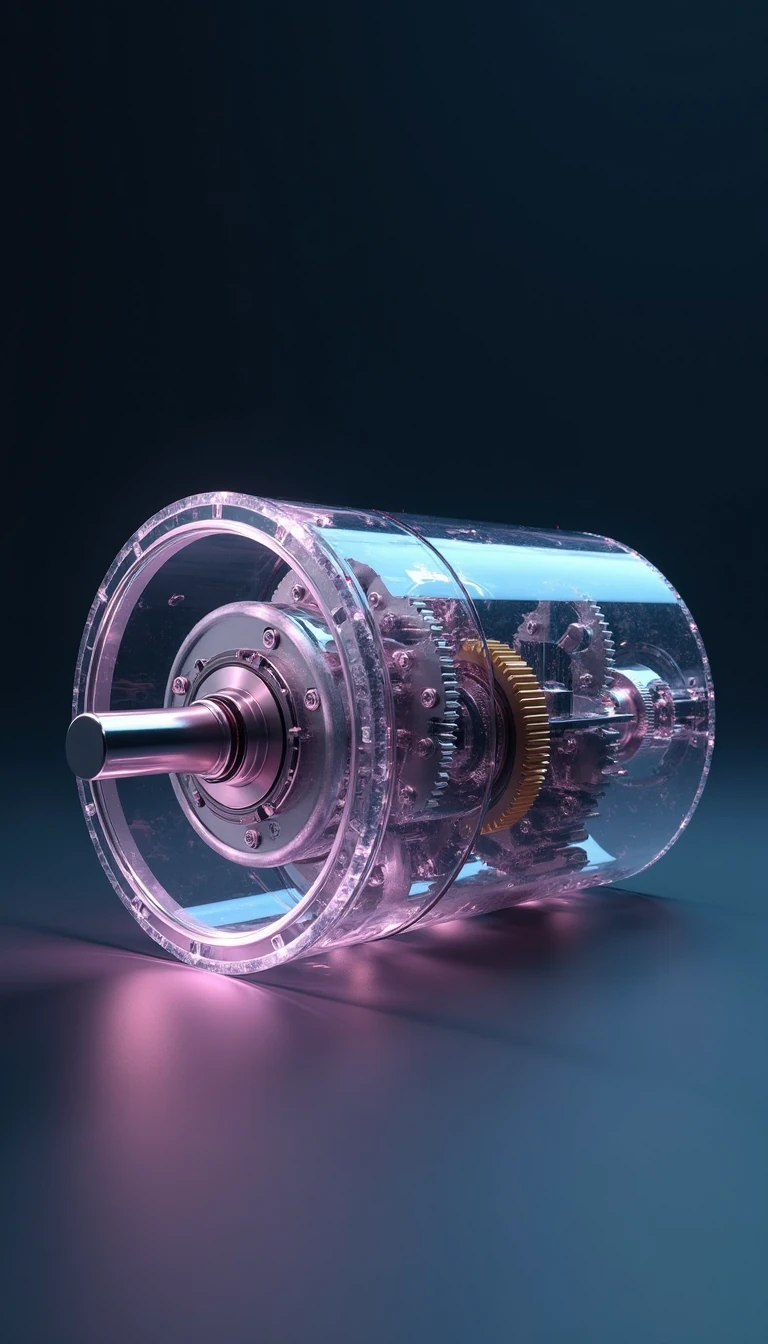 How a 1990s graphics standard conquered the world before fading into the backgroundBefore OpenGL, developers wasted resources writing custom drivers for every piece of hardware. Silicon Graphics changed the industry by releasing a cross-platform, language-indepe…
- Why programmers use operator overloading to make code read like a math textbookOperator overloading allows developers to redefine how standard symbols like plus or equals behave for custom data types. By treating these operators as flexible shortcuts, progra…
 Optical coatings are the invisible thin-film marvels that manipulate light to our precise specifications.From the anti-reflective layers on your camera lens to the high-tech mirrors in deep-space telescopes, optical coatings are essential. By depositing microscopic layers of metal or…
- Optical computing uses light instead of electricity to potentially revolutionize speed and efficiencyBy replacing electrons with photons, researchers aim to overcome the bandwidth limitations of traditional silicon chips. While current systems often rely on energy-intensive conve…
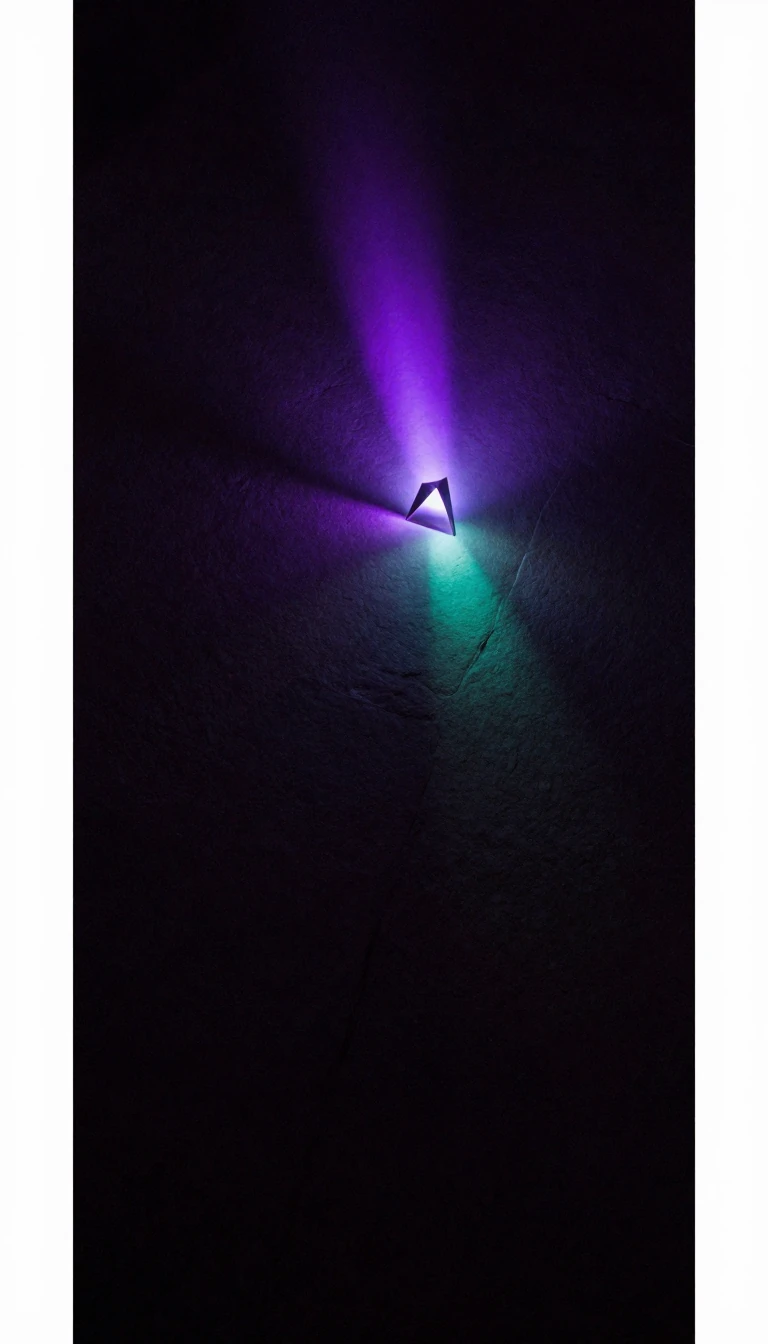 How optical filters manipulate light to reveal the hidden world around usOptical filters are the unsung heroes of modern vision, selectively transmitting specific wavelengths while blocking others. From the precision of scientific instruments to the cr…