 Intellect Plus
Art
5,849 cards. Each one is a 40-second story with a five-minute read behind it. Page 54 of 98.
Subtopics: Art crime · Art history · Art museums · Arts: General · Baroque · Calligraphy · Ceramics · Children's literature · Classic literature · Colour · Concepts of fiction and narrative · Conceptual art · Conservation · Craft · Cultural venues · Dada · Detective fiction · Directors, producers and screenwriters · Dye · Entertainers · Expressionism · Fantasy literature · Fictional and legendary characters · Film and television · Filmmakers and theatre directors · Forgery · Fresco · History painting · Illustration · Impressionism · Literature · Medieval art · Michelangelo · Modern art · Mosaics & stained glass · Oil painting · Optics · Painting · Paris salon · Performing arts · Photography · Pigments · Poetry · Poets · Portraiture · Post impressionism · Printmaking · Renaissance · Romanticism · Science fiction literature · Sculpture · Shakespeare · Spanish golden age · Street art · Symbolism · Textiles · Theatre · UK & Ireland: arts · Van gogh · Vermeer · Victorian · Visual artists · Visual arts
 Why Hunter S. Thompson’s Gonzo Masterpiece Was Actually a Failed ExperimentHunter S. Thompson’s 1971 novel Fear and Loathing in Las Vegas is a defining work of gonzo journalism, yet the author considered it a failure. He originally intended to publish ra…
 Can a single act of faith transcend the universal laws of human morality?In 1843, Søren Kierkegaard published a radical meditation on the biblical story of Abraham. Writing as Johannes de silentio, he argued that faith is an incommunicable paradox that…
 Why Jorge Luis Borges believed that making stories feel natural is a literary failureFicciones is not just a collection of short stories; it is a deliberate subversion of reality. By rejecting the attempt to make fiction appear natural, Borges transformed the page…
 Why do those outside a fortress want in, while those inside want out?Qian Zhongshu’s 1947 masterpiece, Fortress Besieged, captures the irony of human desire through a satirical lens. Drawing on a French proverb about the nature of marriage, the nov…
- How a simple swinging weight proved the Earth rotates beneath our feetIn 1851, a French physicist invited skeptics to witness the Earth turn. By suspending a heavy brass bob from a long cable, he created a pendulum that traced a shifting path, provi…
 A 1997 Russian book outlines a grand strategy to dismantle Western geopolitical influence globally.Aleksandr Dugin’s Foundations of Geopolitics has influenced Russian military and political elites for decades. The text advocates for a neo-Eurasian empire, proposing the systemat…
 The Five Classics: How Ancient Chinese Wisdom Shaped a Millennia-Long Imperial Education SystemFor centuries, the Five Classics served as the intellectual bedrock of Chinese civilization. Far more than mere historical relics, these texts provided a comprehensive framework f…
 Why a sixteenth-century giant’s tale remains the ultimate test of intellectual independenceFrançois Rabelais’ pentalogy about two giants, Gargantua and Pantagruel, is a masterpiece of satire, wordplay, and vulgarity. Though often dismissed as obscene by his contemporari…
 The Geneva Bible was the radical, annotated bestseller that King James desperately tried banning.Before the King James Version dominated, the Geneva Bible was the primary text of English Protestantism. Known as the Breeches Bible, it was the first to use Roman type and schola…
 How a banned satirical poem turned an exiled poet into a German literary icon.Heinrich Heine’s 1844 epic, Germany, a Winter’s Tale, was a stinging critique of his homeland that triggered arrest warrants and widespread censorship. By transforming the melanch…
 How a 12th-century Danish history book laid the groundwork for Shakespeare's HamletSaxo Grammaticus, a 12th-century historian, compiled the Gesta Danorum to chronicle Denmark's legendary past. This sixteen-volume work, written in eloquent Latin, transformed anci…
 How a collection of devotional songs made Rabindranath Tagore a global literary iconIn 1913, Rabindranath Tagore became the first non-European to win the Nobel Prize for Literature. The catalyst was Gitanjali, a collection of poems that bridged the gap between me…
 How R. L. Stine turned childhood fears into a global publishing phenomenonWith over 400 million copies sold in 35 languages, the Goosebumps series transformed children's literature. R. L. Stine’s formula of funny, scary, and fast-paced horror captivated…
 Is rhetoric a noble art or merely a dangerous knack for flattering the masses?In Plato’s Gorgias, written around 380 BC, Socrates dismantles the prestige of Athenian orators. He argues that rhetoric is not a craft but a form of pandering, akin to cosmetics …
 How a single ancient text shaped the mind of an entire civilization for centuriesThe Great Learning, a foundational pillar of Confucian thought, argues that global peace begins with personal moral refinement. By linking the individual to the state through a ri…
 The Great Soviet Encyclopedia was a state-directed weapon designed to win the ideological war.Published between 1926 and 1990, the Great Soviet Encyclopedia was more than a reference work. It functioned as a government-mandated propaganda tool, with editors directly accoun…
 A fifty-dollar bet birthed a literary icon written with only fifty distinct words.Dr. Seuss wrote his most famous book after his editor wagered he could not craft an engaging story using such a limited vocabulary. The resulting masterpiece, Green Eggs and Ham, …
- The dark origins of Hansel and Gretel reveal a history of survival and famineBeyond the candy-coated house and the oven-bound witch, Hansel and Gretel is a complex tapestry of ancient motifs. Collected by the Brothers Grimm in 1812, this tale of abandoned …
 How a nineteenth-century Swiss orphan became a global icon of mountain freedom and faithPublished in 1880, Johanna Spyri’s Heidi remains one of the world’s most enduring stories. The tale of a young orphan transforming her reclusive grandfather’s life in the Swiss Al…
 Is the greatest saga of Norwegian kings actually a work of historical fiction?Heimskringla is the definitive collection of medieval Norse sagas, yet its authorship remains a mystery. While often attributed to the Icelandic historian Snorri Sturluson, no sur…
 Why did King Henry IV wish his son had been swapped at birth?King Henry IV viewed his own son, Prince Hal, as a dissolute disappointment compared to the valiant Hotspur. This royal frustration sets the stage for a dramatic conflict where po…
- Shakespeare’s Henry IV, Part 2 is the only true sequel in his entire canon.While Shakespeare often revisited historical figures, Henry IV, Part 2 stands alone as a direct, modern-style sequel to his previous work. It continues the narrative of the rebell…
 Is Shakespeare's Henry V a patriotic masterpiece or a chilling portrait of war crimes?Shakespeare's history play about the Battle of Agincourt is a Rorschach test for audiences. While some see a celebration of national glory and leadership, others detect a cynical …
 Can a life defined by intellectual obsession ever find peace in the real world?Saul Bellow’s 1964 novel Herzog captures the frantic interior life of a Jewish intellectual drowning in his own brilliant, unsent letters. As he navigates a midlife crisis and per…
 How a single magazine issue forced the world to confront the atomic ageIn 1946, The New Yorker took the unprecedented step of dedicating its entire editorial space to one article: John Hersey’s account of six survivors in Hiroshima. By stripping away…
 Philip Pullman’s fantasy epic explores the nature of consciousness through a multiverse of parallel worlds.His Dark Materials follows two children, Lyra Belacqua and Will Parry, as they navigate parallel universes. Beyond its fantasy elements—witches and armoured bears—the trilogy func…
 For over a century, the world read a censored, pirated version of Casanova's life.Giacomo Casanova is remembered as a legendary adventurer, yet his massive autobiography remained distorted for generations. While he wrote his life story in French, early editions…
- Were the original Mother Goose tales actually written for sophisticated adults, not children?Charles Perrault’s 1697 collection, Histoires ou contes du temps passé, is synonymous with childhood folklore today. Yet, these tales were crafted for the elite of Parisian litera…
- Why did Rome conquer the world? A Greek hostage explains the secret of power.Polybius, a Greek hostage in Rome, wrote a massive history to explain how a republic transformed into a global hegemon. He argued that Rome’s success was not mere luck, but the re…
- Tacitus wrote his Histories to explain how a single ruler could save the empire.Written between 100 and 110 AD, the Histories chronicles the chaotic Year of Four Emperors. Tacitus, a Roman aristocrat, used this grim narrative to argue that only a stable, adop…
 How a single state-mandated textbook became the definitive manual for Stalinist ideological controlCommissioned to replace the Bible, the 1938 Short Course served as the mandatory, authoritative history of the Soviet Communist Party. It enforced a rigid narrative of struggle be…
- Can a collection of ancient animal fables teach us the secrets of statecraft?The Hitopadesha is an Indian classic of moral wisdom, blending human and animal tales to offer advice on friendship, war, and peace. Though its origins remain shrouded in mystery,…
 Why did the father of the atomic bomb name his test site Trinity?J. Robert Oppenheimer named the first nuclear test site Trinity, drawing inspiration from the intense, soul-searching poetry of John Donne. These nineteen devotional poems, writte…
- How a colonial policeman’s disillusionment in Burma fueled a definitive anti-totalitarian masterpieceGeorge Orwell’s 1938 memoir, Homage to Catalonia, chronicles his time as a volunteer fighting fascism in the Spanish Civil War. It marks the pivotal moment when the former British…
 Can a novel be a game? Julio Cortázar’s masterpiece invites you to play along.Julio Cortázar’s 1963 novel Hopscotch is not just a book; it is a structural puzzle. By offering multiple reading sequences, including a path that loops infinitely, the author tra…
 How a Soviet classic transformed a broken life into an icon of steelNikolai Ostrovsky’s How the Steel Was Tempered is the best-selling book in the Russian language, with over 36 million copies sold. This fictionalized autobiography mirrors the aut…
- How a failed actor’s guide to human relations became a global business phenomenonDale Carnegie’s 1936 bestseller transformed the self-help genre by shifting the focus from individual thrift to the art of influencing others. With over 30 million copies sold, it…
 How a terrifying peyote vision and a jazz-inspired rhythm birthed a literary masterpiece.Allen Ginsberg’s Howl, a defining work of the Beat Generation, was born from a nightmarish hallucination and a radical shift in poetic form. Initially dismissed by academics and t…
- Can a starving man maintain his dignity while his mind unravels in the city?Knut Hamsun’s 1890 masterpiece Hunger captures the descent of an unnamed vagrant in Kristiania. As he wanders the streets, his physical decay and mental instability collide with a…
- Why a pompous, fictional cat became the voice of Japanese literary arroganceNatsume Sōseki’s 1905 satire, I Am a Cat, features a feline narrator who speaks with the grandiloquence of a nobleman. This ironic choice of voice, intended to mock the middle-cla…
- Why a poem about Victorian stoicism became a global cultural touchstone for the massesRudyard Kipling’s If— was intended as private paternal advice, yet it snowballed into an international phenomenon. From the walls of military academies to the entrance of Wimbledo…
 A novel about a reader trying to finish a book that keeps breakingItalo Calvino’s 1979 masterpiece is a meta-fictional puzzle where you, the reader, are the protagonist. You attempt to read a book, only to find the pages misprinted. Your quest f…
 How a grieving soldier’s poem transformed a battlefield weed into a global symbolWritten in the back of an ambulance during the First World War, John McCrae’s In Flanders Fields became an instant sensation. It turned the red poppy into a permanent emblem of re…
- Is the most famous satire of the Renaissance actually a sermon on divine madness?Erasmus wrote In Praise of Folly in 1509 while staying with Sir Thomas More. Though it began as a playful, satirical attack on human vanity and religious corruption, the work pivo…
- Why did David Foster Wallace name his masterpiece after a line from Hamlet?Published in 1996, Infinite Jest is a sprawling, endnote-heavy satire of American consumerism and addiction. Its title, borrowed from Shakespeare, hints at a world where entertain…
- How a fugitive lawyer’s handbook became the definitive blueprint for the Reformed faithJohn Calvin’s Institutes of the Christian Religion began as a desperate plea to a French king. It evolved into a massive, systematic theology that reshaped Protestant life across …
- Before the flood, a king offered life advice that still echoes through historyDating back to the early third millennium BCE, the Instructions of Shuruppak stand as some of the oldest literature ever discovered. Attributed to a king who lived before the grea…
- The 14th-century world history that served as a political tool for Mongol hegemonyProduced in the Ilkhanate, the Jami' al-tawārīkh is often cited as the first true world history. Commissioned to justify Mongol rule, this massive project employed hundreds of art…
- In 1819, John Keats transformed English poetry with six legendary, experimental lyrical odes.Facing financial ruin and personal despair, John Keats abandoned his medical career to pursue poetry. During a single, intense spring, he crafted a new lyrical form that redefined…
- A seagull who defied gravity and dogma became a global literary phenomenon by accident.Richard Bach’s 1970 novella about a bird obsessed with flight was initially ignored by critics and publishers. Yet, through word-of-mouth, it transformed into a massive bestseller…
- A 1790 travelogue that terrified an Empress and sparked two centuries of Russian dissent.Aleksander Radishchev’s Journey from St. Petersburg to Moscow was no mere travel diary. By documenting the brutal realities of serfdom and autocracy under Catherine the Great, thi…
 Jules Verne’s subterranean epic was fueled by 19th-century scientific curiosity and hollow-earth theories.In 1864, Jules Verne published a tale of three explorers descending into an Icelandic volcano to reach the Earth's core. Combining rigorous geological detail with wild adventure, …
 A nihilistic masterpiece: Why Louis-Ferdinand Céline’s 1932 novel remains a literary earthquakePublished in 1932, Journey to the End of the Night follows Ferdinand Bardamu through a world stripped of beauty and morality. This semi-autobiographical novel redefined French lit…
 Thomas Hardy’s final novel was a brutal critique of Victorian social and religious institutions.Published in 1895, Jude the Obscure stands as Thomas Hardy’s last work of fiction. It is a bleak, fatalistic narrative that dismantles the era’s rigid expectations regarding marri…
 How a 19th-century physician stitched together the fractured soul of a nationElias Lönnrot, a district health officer, spent fifteen years traveling to collect vanishing oral traditions. By weaving together ancient ballads, incantations, and lyrical songs,…
 Rudyard Kipling’s Kim defined the Great Game and remains a masterpiece of colonial literature.Set in late 19th-century India, this picaresque novel follows an orphaned Irish boy living as a street urchin. Kim’s immersion in local culture makes him the perfect asset for Bri…
- Was the most famous poem about a dream actually a calculated work of art?Samuel Taylor Coleridge claimed his masterpiece, Kubla Khan, was a spontaneous vision born from an opium-induced sleep and cut short by a mysterious visitor. Yet, modern scholars …
 How a rejected poem became the cornerstone of French Symbolism and modern artStéphane Mallarmé’s L'après-midi d'un faune was twice rejected by publishers before its 1876 debut. Yet, this dreamlike monologue about a faun’s sensual memories evolved into a fo…
 Why a banned novel about a gamekeeper changed the course of literary freedomD. H. Lawrence’s final novel, Lady Chatterley’s Lover, was once a global pariah, banned for its explicit language and illicit affair between an aristocrat and a gamekeeper. Yet, a…
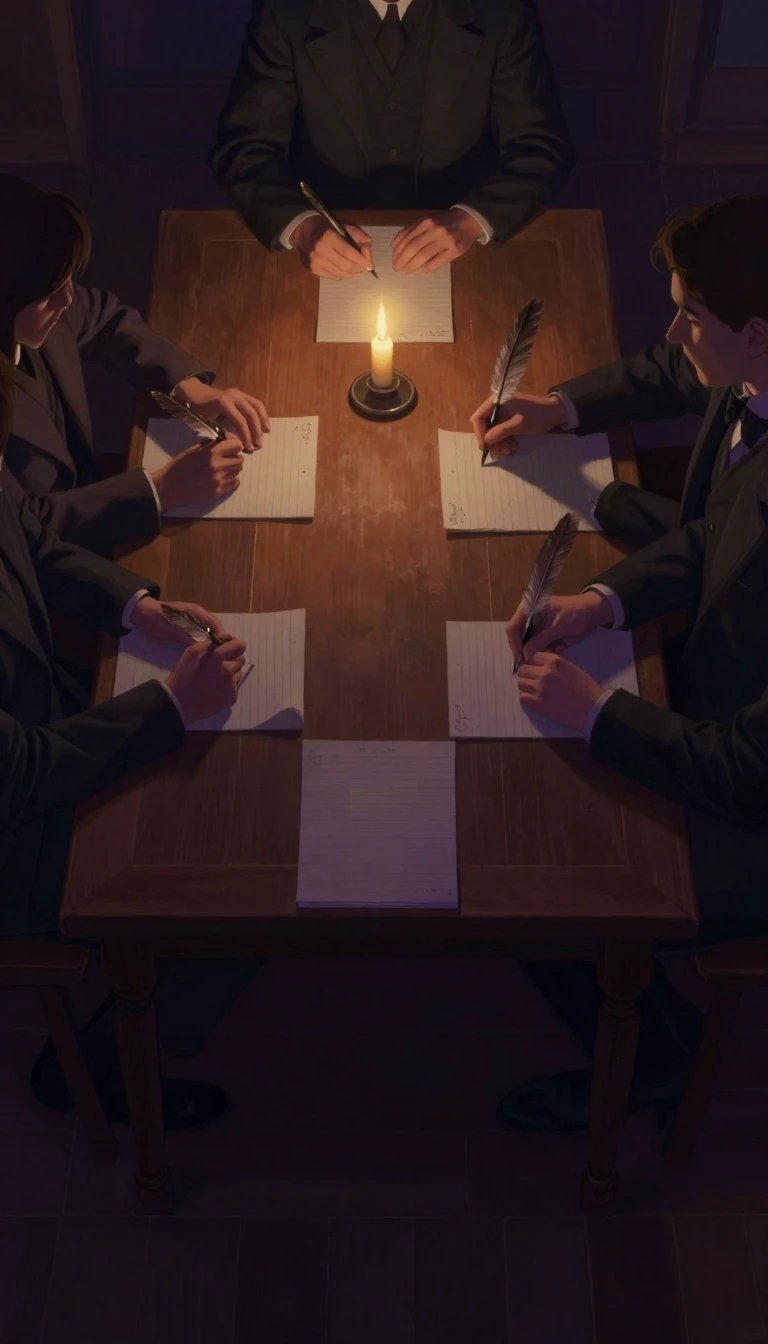 The 13th-century French prose collection that defined the modern legend of King Arthur.Before modern fantasy novels, there was the Lancelot-Grail Cycle. This massive, anonymous 13th-century literary project wove disparate Arthurian myths into a single, sprawling chr…