 Intellect Plus
Science
17,267 cards. Each one is a 40-second story with a five-minute read behind it. Page 282 of 288.
Subtopics: Acids and bases · Algebra · Alloys and ceramic compounds · Analysis · Applied mathematics · Atomic and molecular physics · Atoms · Basics · Biochemistry · Biochemistry and molecular biology · Biological processes and physiology · Biology · Biology and health sciences: General · Biology basics · Calculus and analysis · Cell biology · Cells · Chemical elements · Chemistry · Climate · Cold · Color · Computer scientists and programmers · Condensed matter physics · Discrete mathematics · Earth science · Electricity & magnetism · Electromagnetism · Elements · Entropy · Everyday Science Questions · Evolutionary biology · Famous equations · Famous experiments · Found by OrchestratorBot · Foundations · Functions · Future Frontier · Genetics and molecular biology · Geology · Geometry · Glass · Global Curiosity Questions · Heat · How Did the Dinosaurs Become Extinct? · How Things Work: Gas from Source to Supply · How Things Work: The Journey of Crude Oil · Human body & genes · Ice · Infinity · Inventors and engineers · Isotopes · Light · Magnetism · Materials · Mathematicians · Maths · Measurement · Mechanics · Microbiology · Minerals & crystals · Molecular compounds · Nature: How Long Can It Live? · Nuclear physics · Number theory · Optics & light · Organic compounds · Other · Particle physics · Physics · Physics basics · Pre-modern figures · Prime numbers & number theory · Probability · Proof · Pseudoscientists · Quantum · Quantum Biology · Reactions and synthesis · Relativity · Research methods · Researched · Salts and ions · Science basics · Scientific discoveries · Scientific instruments · Scientists, inventors and mathematicians · Separation processes · Social scientists · Stars · Statistics and probability · Theoretical computer science · Theory · Thermodynamics · Thermodynamics & heat · UK & Ireland: science · Units & measurement · Volcanoes · Water · Waves · Women in science
 Carl Sagan asked a Brooklyn librarian about stars and got film starsA small boy in Bensonhurst walked into the public library and asked for a book on stars. The librarian handed him portraits of Hollywood actors. When she found the right book, it …
 Avicenna's medical textbook was still taught in Europe six centuries laterIbn Sina, known in the West as Avicenna, was a royal physician at 17, a vizier, a fugitive and a prisoner. Along the way he wrote The Canon of Medicine, which European universitie…
 Barbara McClintock found jumping genes, then stopped publishing because nobody believed herIn the 1940s and 1950s Barbara McClintock discovered that pieces of DNA can move around a genome, switching traits on and off. Colleagues were so sceptical that in 1953 she quit p…
 A coastline looks just as jagged from space as at your feetBenoit Mandelbrot noticed that clouds, coastlines and even cotton prices share a hidden kind of order: they stay equally rough however closely you look. He named such shapes fract…
 Riemann's housekeeper threw away some of his unpublished mathematicsBernhard Riemann, a shy pastor's son who died at 39, laid the geometric groundwork for Einstein's relativity and posed the most famous unsolved problem in mathematics. He refused …
 In 628, Brahmagupta wrote the first rules for calculating with zeroBabylonians used zero as a placeholder and Romans as a sign of absence, but a 30-year-old Indian astronomer was the first to treat it as a number you can add, subtract and multipl…
- Apollonius named the ellipse, parabola and hyperbola after a bookkeeping ideaSlice a cone at different angles and you get three curves whose names we owe to Apollonius of Perga. They come from a Greek geometric test of whether an area fits a square exactly…
 Archimedes' famous legends are shakier than his mathematicsThe naked dash shouting Eureka comes from a writer two centuries later. The water screw probably predates him, the sun-focusing heat ray first appears centuries after his death, a…
 Arthur Cayley wrote hundreds of maths papers while working as a London lawyerFor fourteen years Arthur Cayley earned his living drawing up property deeds, and in his spare hours produced between two and three hundred mathematics papers. He and his friend J…
 The word sine began as Aryabhata's 'half-chord' and a translator's mix-upAryabhata called the sine ardha-jya, half-chord. Arabic translators wrote it jiba, which without vowels became jb, then was misread as jaib, a fold in a garment. In the 12th centu…
 Augustin Fresnel's stepped lens made lighthouses visible for milesSuspended from his road-building job after opposing Napoleon's return from Elba, a sickly French engineer used the idle months at his mother's house to begin experimenting with li…
 Augustin-Louis Cauchy: brilliant mathematician, stubborn royalist, dreadful tutorMore concepts and theorems carry Cauchy's name than any other mathematician's, sixteen in elasticity alone. Yet he spent five years in exile tutoring a teenage prince who hated ma…
 André-Marie Ampère, the self-taught 'Newton of electricity'Ampère never attended school. His father, a devotee of Rousseau, let him educate himself in the family library, where he began advanced mathematics at 12. In 1820 he heard of a co…
 Andrey Kolmogorov gave probability its rules in a single 1933 bookAt six, Andrey Kolmogorov noticed that 1, then 1 plus 3, then 1 plus 3 plus 5 always add up to a perfect square. By 30 he had written the axioms modern probability still rests on,…
 Lavoisier weighed his way to modern chemistry, and tax farming cost him his lifeAntoine Lavoisier named oxygen, showed that mass survives every chemical change, and helped design the metric system. He paid for it all with money from the Ferme générale, France…
- A Delft cloth merchant found microbes and hid how he did itAntonie van Leeuwenhoek sold linen and ribbon in Delft and wanted a better look at his thread. His homemade lenses revealed bacteria, sperm cells and red blood cells, yet he guard…
 Handed fourteen open problems, a stateless student solved them all within monthsAround 1949, two leading mathematicians in Nancy showed a newcomer their latest paper, which closed with 14 unsolved questions. Within a few months Alexander Grothendieck had inve…
 Before crossing the Americas, Humboldt was a mine inspector who paid for a miners' schoolLong before he climbed higher than any Westerner had gone, Alexander von Humboldt inspected Prussian mines. In his first year, gold ore output beat the previous eight years combin…
 Alfred Kinsey spent two decades measuring gall wasps before he studied peopleSome 5 million of the insects in the American Museum of Natural History are gall wasps, all gathered by one man. Alfred Kinsey took 26 measurements of each of hundreds of thousand…
 The famous merchant of death obituary may never have been printedThe tale goes that a French paper mistook his brother's death for Alfred Nobel's in 1888 and branded him the merchant of death, shaming him into founding the prizes. Historians ca…
- Wallace lost his Amazon collection to fire at sea, then sailed eastIn 1852, twenty-five days out from Brazil, the cargo of Alfred Russel Wallace's ship caught fire. Two years of his finest Amazon specimens went down, and he drifted ten days in an…
 A lecture invitation put Alfred Tarski on the last ship from PolandIn August 1939 the logician Alfred Tarski sailed for a congress at Harvard on what proved the final ship from Poland to America before the invasion. He went reluctantly, leaving h…
 Avogadro's big idea was ignored until four years after he diedIn 1811 a provincial physics teacher proposed that equal volumes of any gas, at the same temperature and pressure, hold equal numbers of molecules. Almost nobody paid attention. O…
 For 1,400 years anatomists kept finding holes in the heart that weren't thereGalen's theory needed tiny openings between the heart's two ventricles, and generation after generation of anatomists dutifully reported seeing them. Andreas Vesalius simply admit…
- Every algorithm carries the name of a ninth-century scholar from KhwarazmWhen Europeans translated a Baghdad arithmetic book into Latin in the 12th century, its author's name came out as Algoritmi. That garbled label became our word algorithm, and the …
- A monkey chewing lute strings pointed a Cordoba surgeon toward dissolving stitchesAl-Zahrawi, a tenth-century surgeon in Cordoba, reportedly noticed that his pet monkey had eaten the gut strings of his oud and digested them. Catgut, he realised, was a natural m…
 Alexander Graham Bell's telephone began with a book he misreadAs a teenager, Alexander Bell struggled through a French edition of Helmholtz's work on sound and wrongly concluded the German scientist had sent vowels electrically. If vowels co…
 Before cracking Enigma, a teenage Turing cycled 60 miles to reach schoolHis first day at Sherborne School fell during the 1926 General Strike, with no trains running. Thirteen-year-old Alan Turing simply got on his bicycle and rode alone from Southamp…
 Michelson chased the speed of light for fifty years because it was funAsked why he devoted his life to light, Albert Michelson reputedly answered that it was so much fun. He timed beams bouncing between California mountains 22 miles apart, fought fo…
 Einstein promised his Nobel money to his ex-wife before he had won itWhen Albert Einstein and Mileva Marić divorced on 14 February 1919, part of the settlement said that if he ever won a Nobel Prize, the cash would go to her. It was a bet on his ow…
 The first battery grew out of an argument about frogs' legsLuigi Galvani believed twitching frog legs revealed a special animal electricity. Alessandro Volta suspected the frog was merely a detector and the real source was the two differe…
 Fleming paid lab staff threepence per tear, years before penicillinIn 1921 Alexander Fleming noticed that a drop of his own runny-nose mucus dissolved bacteria on a culture plate. To test other fluids, his team spent weeks squeezing lemons into t…
 The Baghdad doctor who chose a hospital site by watching meat rotAsked to build the largest hospital of the Abbasid Caliphate, the Persian physician al-Razi reportedly hung pieces of fresh meat around Baghdad and picked the spot where they spoi…
 For two centuries, the famous portrait of Legendre showed the wrong manTextbooks, paintings and articles long illustrated the mathematician Adrien-Marie Legendre with a profile sketch labelled simply Legendre. In 2005 someone noticed it actually depi…
 Al-Biruni reasoned his way to an unknown continent across the oceanIn 1037, centuries before Columbus sailed, the Persian scholar al-Biruni argued that land must lie in the great ocean between Asia and Europe. His logic was geometric: Afro-Eurasi…
 Is there really a scientific method? Some scientists call it a mythSchoolbooks present it as a neat recipe: observe, hypothesise, test, conclude. Yet in 1975 Paul Feyerabend published Against Method, denying that science follows any universal rul…
 Why scientists deliberately build wrong versions of the worldJohn von Neumann claimed the sciences barely try to explain anything; mostly they make models, mathematical constructs justified only because they work. Every model is a simplifie…
 Just a theory? In science that phrase gets things backwardsIn everyday talk a theory is a hunch. In a laboratory it means almost the opposite: an explanation that has survived repeated testing, draws on many independent lines of support a…
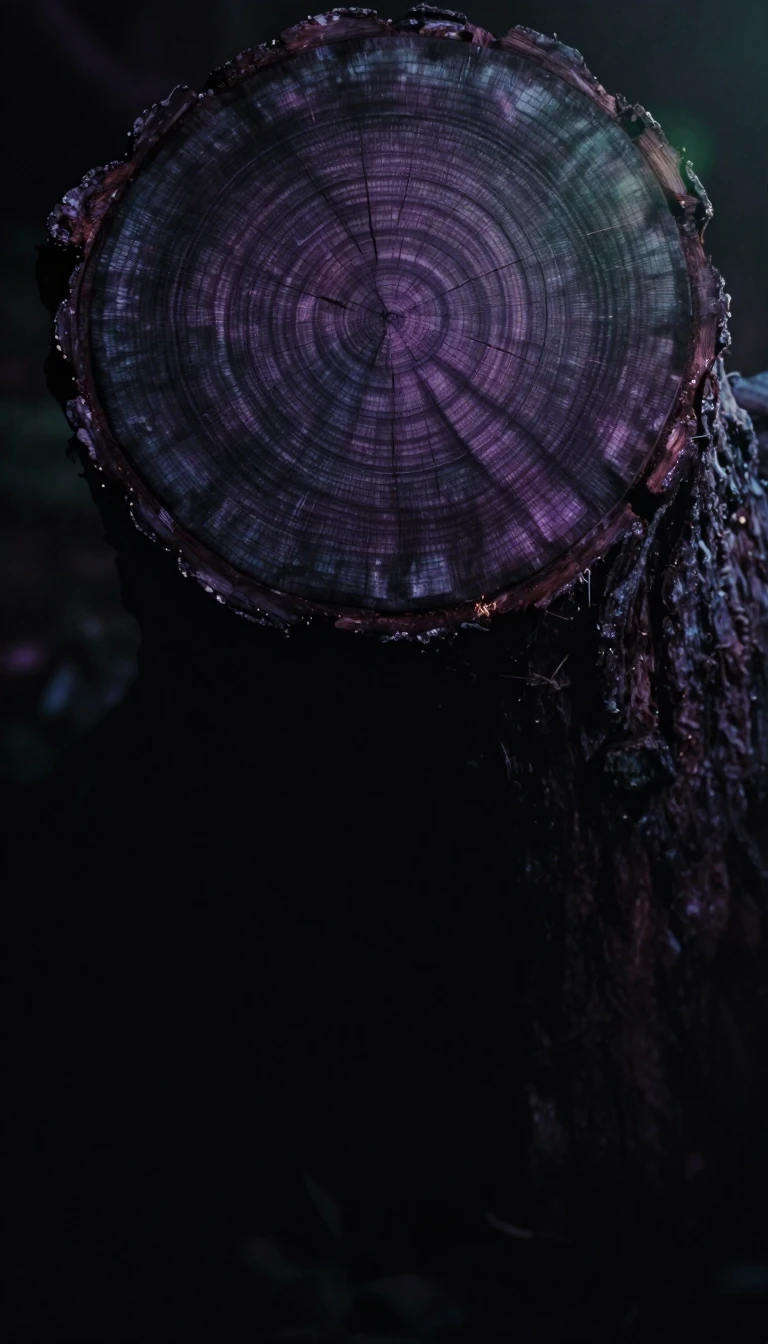 Tree rings let scientists measure rainfall from centuries before thermometersQuantitative research runs on measurement, but some things cannot be measured directly. So researchers use proxies: the width of a tree's growth rings, for instance, reliably trac…
 A scientific law tells you what happens, never why it happensNewton's laws, conservation of energy and the laws of thermodynamics all summarise what repeated observation shows, often in a single equation. Unlike theories, they offer no mech…
 Information science was named in 1955, but its questions date back to AssyriaThe phrase information science first appeared in 1955, yet people were analysing and organising knowledge at least as far back as the Assyrian Empire. Today the field studies how …
 One lab freezer can use as much power as a householdAn ultra-cold laboratory freezer held at minus 80 degrees Celsius can consume about 25 kilowatt-hours a day, roughly what a family home uses. Nudging it to minus 70 cuts energy us…
 Methodology is not a fancy word for method, most theorists insistA method is a planned procedure for reaching a goal, like testing a claim. Methodology, in the strict sense, is the study of such procedures: when to use which one and what hidden…
 The Latin root of nature literally meant birthNature comes from the Latin natura, meaning innate character and, originally, birth, and it translated the Greek physis, the root of physics. Over the centuries the idea has shift…
 Checking a tyre's pressure changes the pressure you are measuringTo read the air pressure in a car tyre, you have to let a little air out, so the act of measuring alters the thing measured. Scientists call this the observer effect. Every observ…
 Some researchers train as paramedics just to understand paramedicsQualitative researchers want to know how people experience their world, not just how often something happens. That can mean joining the group under study; one example trains as an…
 One of the earliest controlled trials may be a diet test in DanielIn the first chapter of the Book of Daniel, Daniel and his companions ask for ten days on vegetables and water while other young men eat from the king's table, and the steward jud…
 Long fieldwork reveals the gap between what people say and doA one-off survey can return neat, consistent answers. Spend months or years living alongside a community, though, and the contradictions surface: the official rules on one side, a…
- Data literally means things given, and it can outlast its disksThe Latin datum meant something given, and English borrowed the plural in 1645. Three centuries later, in 1946, it came to mean computer information. Now science produces so much …
- Magna Carta demanded one measure of ale for all of EnglandAmong the promises barons extracted from King John in 1215 was a surprisingly practical one. Clause 35 of Magna Carta required a single measure for wine, ale and corn throughout t…
 For decades America ran on two slightly different feetUntil recently the United States used two feet. The international foot, fixed in 1959, is exactly 0.3048 metres; the older survey foot, kept for land mapping, is a hair longer. Th…
- The volt was sized to match a telegraph battery cellWhen scientists fixed the volt in 1881, they chose a value close to the push of a Daniell cell, the workhorse battery of telegraph lines. Today the unit is realised with arrays of…
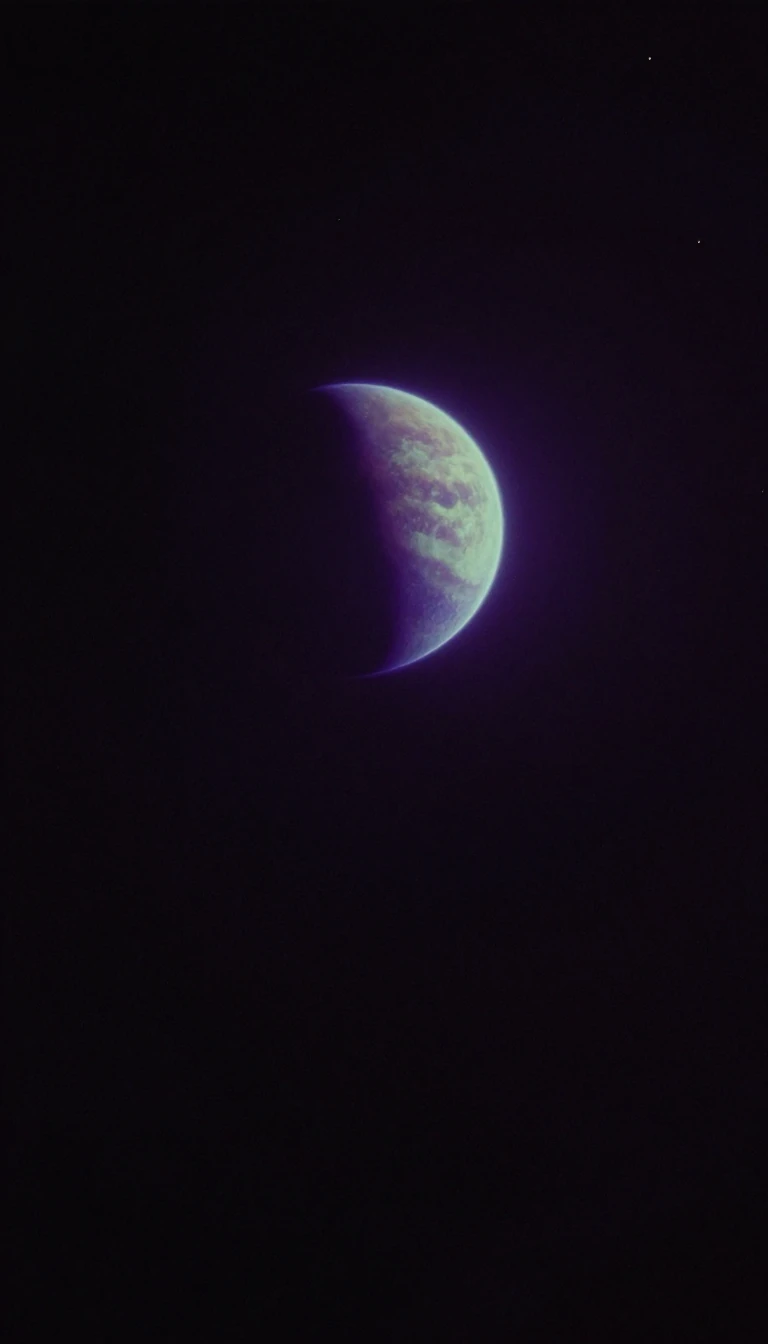 Why the weekday planets skip around instead of following their sky orderOur days honour seven classical sky wanderers, the Sun, the Moon and five planets, yet not in their traditional order of distance. Each day's planet sits three places along that o…
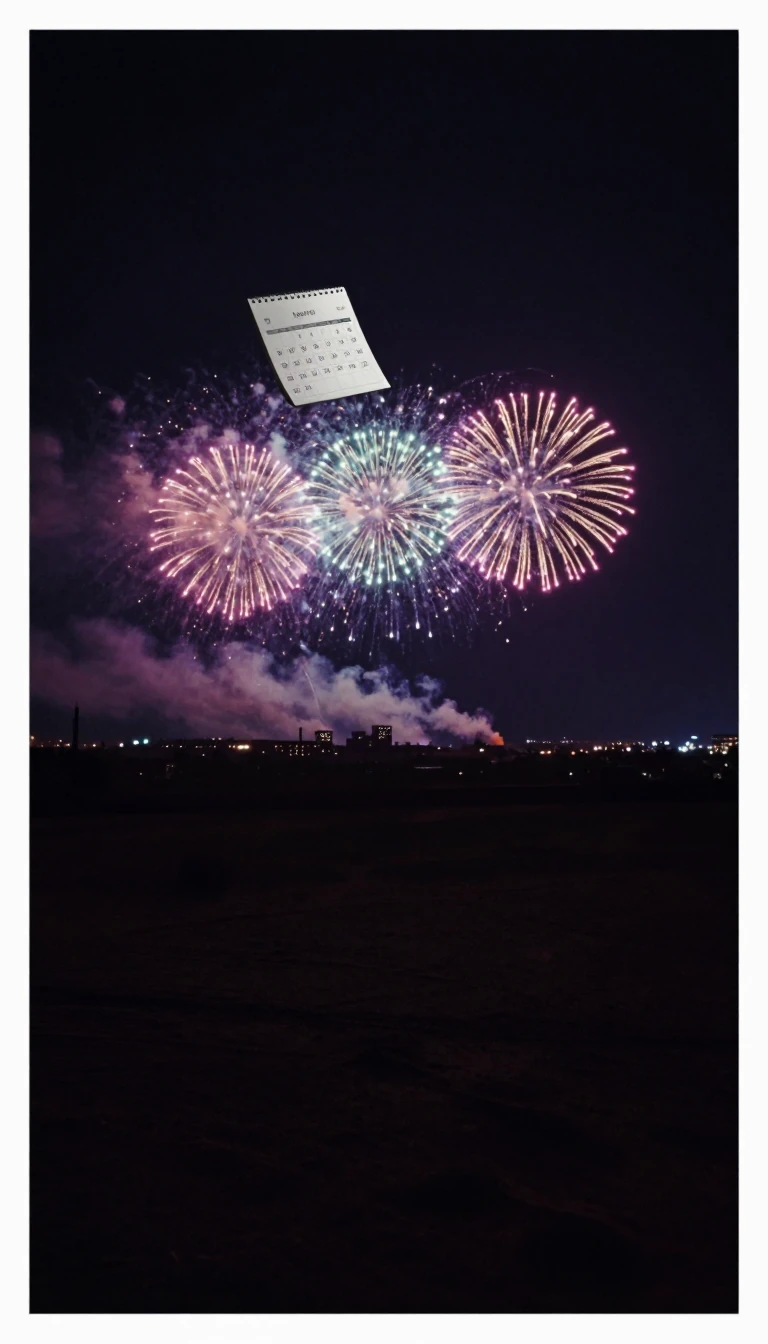 The words year and hour grew from the same ancient rootEnglish year, German Jahr and Old Norse ár all trace back to a Proto-Indo-European word meaning year or season. The same ancestor produced Greek hora, a season or stretch of time,…
 The sievert and the gray are both joules per kilogram, yet mean different thingsOn paper, the gray and the sievert are identical: one joule of energy per kilogram. But the gray records physical energy deposited in matter, while the sievert estimates the long-…
- A whole sphere contains about 12.57 steradians, the unit of solid angleA radian measures a slice of a circle; a steradian measures a cone's worth of a sphere. Stand at the centre of any sphere and the whole surrounding view spans four pi steradians, …
- It takes a 16-tesla magnet to make a living frog floatA fridge magnet manages about 5 millitesla. A hospital MRI scanner works at 1.5 to 3 tesla. Push to 16 tesla and the water in a frog's body is repelled strongly enough to levitate…
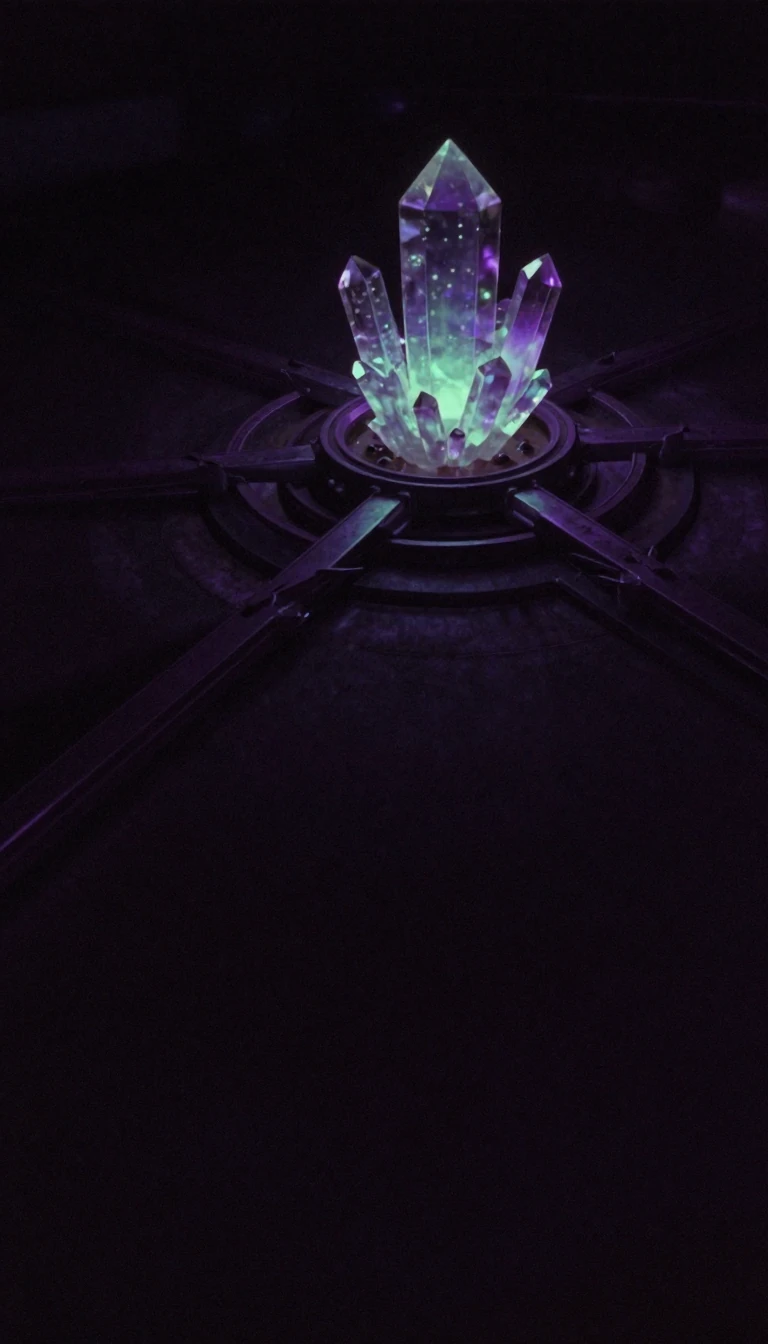 Planck units measure the universe using nature's constants instead of metal barsMost units start with an arbitrary object, a bar or a weight. In 1899 Max Planck proposed a set built only from universal constants: the speed of light, the gravitational constant…
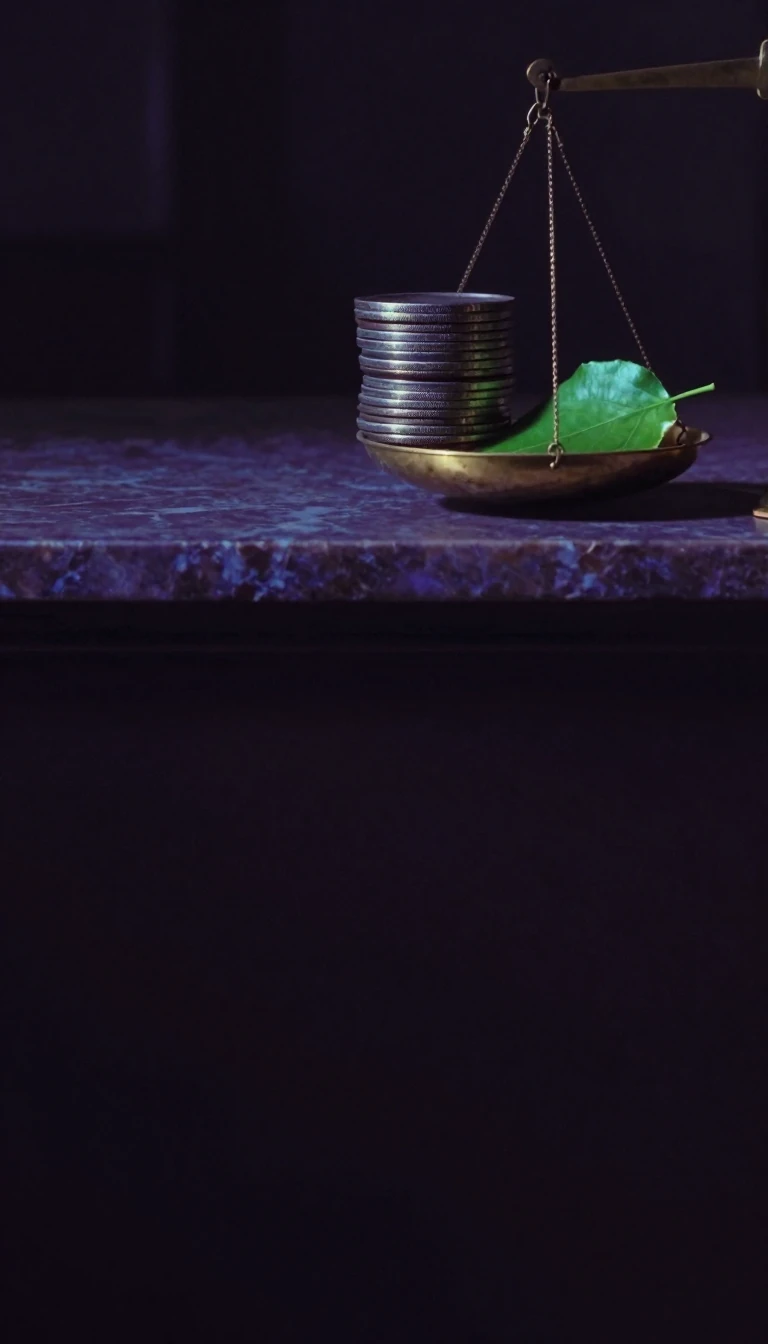 The pound's abbreviation lb comes from a Roman word meaning balanceWhy is pound written lb? Because the unit descends from the Roman libra, a word for scales, and its full phrase libra pondo, weight measured by the balance, gave English the word …
- The radian is officially equal to the number one, and physics teachers hate itWrap a circle's radius around its edge and the angle you mark out is one radian. Since the 2019 update of the SI, the radian has been defined as exactly 1, a pure number. That mak…