 Intellect Plus
Science
17,267 cards. Each one is a 40-second story with a five-minute read behind it. Page 270 of 288.
Subtopics: Acids and bases · Algebra · Alloys and ceramic compounds · Analysis · Applied mathematics · Atomic and molecular physics · Atoms · Basics · Biochemistry · Biochemistry and molecular biology · Biological processes and physiology · Biology · Biology and health sciences: General · Biology basics · Calculus and analysis · Cell biology · Cells · Chemical elements · Chemistry · Climate · Cold · Color · Computer scientists and programmers · Condensed matter physics · Discrete mathematics · Earth science · Electricity & magnetism · Electromagnetism · Elements · Entropy · Everyday Science Questions · Evolutionary biology · Famous equations · Famous experiments · Found by OrchestratorBot · Foundations · Functions · Future Frontier · Genetics and molecular biology · Geology · Geometry · Glass · Global Curiosity Questions · Heat · How Did the Dinosaurs Become Extinct? · How Things Work: Gas from Source to Supply · How Things Work: The Journey of Crude Oil · Human body & genes · Ice · Infinity · Inventors and engineers · Isotopes · Light · Magnetism · Materials · Mathematicians · Maths · Measurement · Mechanics · Microbiology · Minerals & crystals · Molecular compounds · Nature: How Long Can It Live? · Nuclear physics · Number theory · Optics & light · Organic compounds · Other · Particle physics · Physics · Physics basics · Pre-modern figures · Prime numbers & number theory · Probability · Proof · Pseudoscientists · Quantum · Quantum Biology · Reactions and synthesis · Relativity · Research methods · Researched · Salts and ions · Science basics · Scientific discoveries · Scientific instruments · Scientists, inventors and mathematicians · Separation processes · Social scientists · Stars · Statistics and probability · Theoretical computer science · Theory · Thermodynamics · Thermodynamics & heat · UK & Ireland: science · Units & measurement · Volcanoes · Water · Waves · Women in science
 A total order means any two things can be ranked against each otherPick any two real numbers and one is always less than or equal to the other. Pick any two letters and the dictionary settles which comes first. Mathematicians call an arrangement …
 Almost every number is transcendental, yet proving any single one is hardPi and e are the celebrities, but transcendental numbers, those that are not the root of any polynomial with integer coefficients, make up almost all real numbers. The strange par…
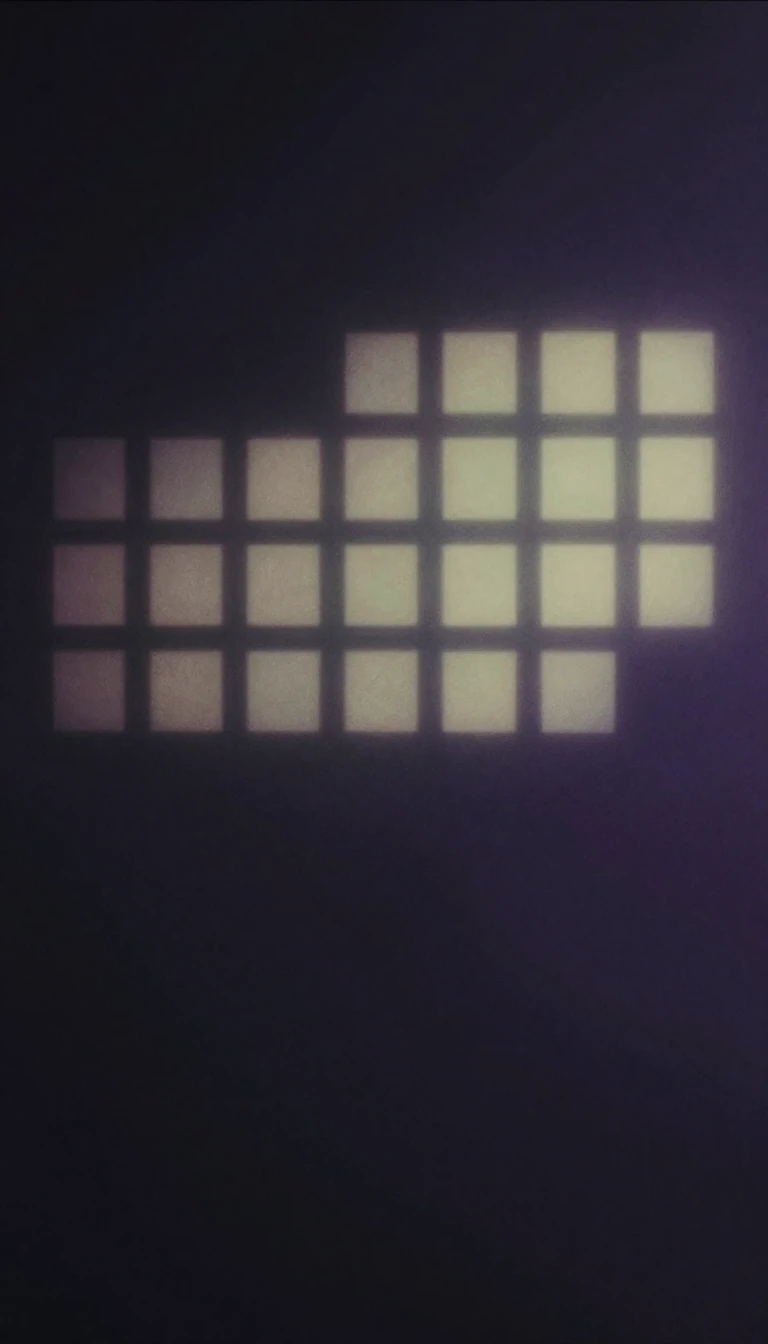 Triangular numbers, the stacked dots behind a famous schoolboy legendArrange dots in rows of one, two, three and so on until they form a neat equilateral triangle, and the total is a triangular number. A popular tale says young Gauss found their sh…
 Surreal numbers grew out of Go endgames and contain infinity itselfWhile studying endgames in the board game Go, John Horton Conway stumbled onto a number system that holds every real number plus infinite and infinitesimal ones. Donald Knuth gave…
 The symmetric group: every way of shuffling a set, treated as algebraTake a handful of objects and list every possible rearrangement. Treat each rearrangement as an action you can perform one after another, and you have the symmetric group. It soun…
 Why a set of linear equations has one answer, none, or infinitely manyTwo straight lines on a page can cross once, run parallel forever, or lie exactly on top of each other. That picture explains every system of linear equations: any such system has…
 In logic, a tautology is a statement that simply cannot be falseEither it is raining right now or it is not. Whatever the weather, the sentence holds. Logicians call such statements tautologies: formulas true under every possible assignment of…
 Tetration stacks exponents into towers that explode almost immediatelyMultiplication is repeated addition and exponentiation is repeated multiplication. Repeat exponentiation and you get tetration, where a number is raised to itself again and again.…
 A Babylonian clay tablet pinned down the square root of 2 almost perfectlyDraw a square with sides of one unit and its diagonal measures the square root of 2, roughly 1.4142. Scribes pressed a remarkably good value into a clay tablet now called YBC 7289…
 The integral sign began as Leibniz's stretched-out S for sumIn a 1675 letter, Gottfried Wilhelm Leibniz proposed a tall, elongated S to mark a sum of differentials, from the Latin for summing calculus. That symbol later became the integral…
 A rounding habit quietly halved the Vancouver Stock Exchange indexIn 1982 the Vancouver Stock Exchange launched a new index at 1000. Twenty-two months later it stood near 520, even though the market seemed to be climbing. The culprit was not a c…
 Every glance at a clock uses a Sumerian counting system around 5,000 years oldSixty minutes to the hour and 360 degrees to the circle are leftovers from base 60, a way of counting that began with the Sumerians in the 3rd millennium BC. Its appeal is simple:…
 Why 1.0 and 1 are not quite the same number to a scientistWrite 1 and you are claiming one digit of certainty; write 1.0 and you are claiming two. Significant figures are the digits in a measurement that genuinely carry information, and …
 Finding a square root means guessing, then improving the guess until it stops changingUnless a whole number is a perfect square, its square root is irrational and its digits never end. So no algorithm finds it exactly. Instead, most methods start with a sensible gu…
 Humid air weighs less than dry air, despite how muggy days feelA cubic metre of air at sea level and 15 °C has a mass of about 1.225 kilograms under the International Standard Atmosphere, roughly one eight-hundredth of the same volume of wate…
 Depleted uranium is the dense leftover from enriching nuclear fuelMaking one kilogram of reactor fuel enriched to 5 per cent uranium-235 takes 11.8 kilograms of natural uranium and leaves around 10.8 kilograms behind. That residue, depleted uran…
 Principia Mathematica tried to build mathematics from pure logicAlfred North Whitehead and Bertrand Russell meant to write a sequel to a single book. Instead the subject swelled into three dense volumes, published between 1910 and 1913, attemp…
 One formula solves every quadratic, and its inside-out twin is called citardauqAny equation with a squared unknown, a plain unknown and a constant can be cracked with a single expression: negative b, plus or minus the square root of b squared minus four a c,…
- A matrix's rank counts its truly independent directionsLine up the columns of a matrix and ask how many genuinely point in new directions rather than being combinations of the others. That count is the rank. Surprisingly, asking the s…
 Ratios began as Greek logos and now shape your TV screenEight oranges and six lemons give a ratio of 8 to 6, which reduces to 4 to 3. That same 4:3 once described television screens, before widescreen sets moved to 16:9. Behind the hum…
 Root mean square tells you how hard a changing current really worksHousehold alternating current keeps reversing direction, so its simple average is useless for judging power. Engineers instead square every value, average the squares and take the…
 Roots of unity sit evenly spaced around a circleSome complex numbers return exactly 1 when raised to a whole-number power. The nth such roots mark n evenly spaced points on the unit circle, one of them always 1 itself. Named oc…
- Power series treat functions as polynomials that never endAdd 1, then x, then x squared, then x cubed, forever, and for small enough x you get exactly 1 divided by 1 minus x. Power series like this let mathematicians rebuild sine, the ex…
 The safe refrigerant gas that turned out to be eating the ozone layerIn 1930 Thomas Midgley Jr. inhaled a lungful of his new refrigerant gas before the American Chemical Society and blew out a candle with it, proving it was neither toxic nor flamma…
 After 2,000 years, nobody knows if an odd perfect number existsAdd up the divisors of 6, leaving out 6 itself, and you get 1, 2 and 3, which total exactly 6. Numbers with that neat property have fascinated thinkers since Euclid, yet only 52 a…
 The plus sign is probably a squashed version of the Latin word etPlus and minus feel as ancient as counting, yet they are fairly recent inventions. Medieval scribes wrote P and M instead, a German arithmetic book used the signs for surplus and …
 A straight border line stranded Point Roberts as a piece of America inside CanadaIn 1846 diplomats made the 49th parallel the dividing line between American and British land in the Pacific Northwest, without checking where it fell. The line clipped the tip of …
- Numbers whose digits run forever to the left, not the rightOrdinary decimals trail off endlessly after the point. The p-adic numbers flip that picture: pick a prime p, write in base p, and let the digits stretch infinitely leftwards inste…
 Paul Erdős lived out of a suitcase and co-wrote with 500 mathematiciansFor most of his adult life Paul Erdős had no fixed home. He travelled from one colleague to the next, expecting hosts to feed him, house him and wash his clothes, and in return pr…
- The set-membership symbol in every maths textbook began as Peano's Greek epsilonCounting feels too obvious to need rules, yet in 1889 Giuseppe Peano set down a short list of axioms from which the arithmetic of whole numbers could be rebuilt using just zero an…
- The gas behind the smell of a burnt match also guards wineStrike a match and the sharp whiff that follows is sulfur dioxide. Volcanoes pour it out by the million tons, it fills the thin air of Jupiter's moon Io, and Roman winemakers burn…
- The word electron first named a unit of charge, not a particleIn 1874 George Johnstone Stoney proposed using a single basic lump of electric charge as a unit, and he later suggested calling it the electron. The particle had not yet been disc…
 Every speck of soot hides tiny grains of diamond and graphiteThe black grime from a candle flame or a diesel exhaust carries a surprise: soot always contains nanoparticles of graphite and diamond, a quirk chemists call gemmy soot. It forms …
 Stoichiometry is chemistry's bookkeeping, and atoms never go missingA chemical reaction can rearrange atoms but never create, destroy or transform them. Every atom of carbon, hydrogen or oxygen that goes in must come out. That strict accounting, c…
 Your downward-pointing nostrils mark you as an Old World monkeyLook at a spider monkey's nose and then at your own. Its nostrils open sideways; yours point down. That small difference splits the simians into two great branches, and it places …
 Your body splits cells about 10 quadrillion times in a lifetimeOver a single human life, cells divide roughly 10 quadrillion times. Each split has one overriding job: copy the full set of genetic instructions and hand an exact duplicate to ea…
 Robert Hooke named cells after monks' rooms while staring at corkIn 1665 Robert Hooke peered at a paper-thin slice of bottle cork and saw a mass of tiny pores. He called them cells, after the Latin for a small room like a monk's lodging. What h…
- Francis Crick admitted he never knew what the word dogma meantFrancis Crick called his big idea about genetic information the central dogma, and it haunted him. Years later Jacques Monod told him a dogma is a belief beyond doubt. Crick, who …
 The tiny cell antenna biologists dismissed as useless for a centuryAlmost every animal cell sprouts a single hair-thin projection called a primary cilium. Found in 1898, it was written off for about a hundred years as a leftover with no real purp…
 A Jesuit timed falling objects with a choir chanting to a pendulumIn seventeenth-century Bologna, Giovanni Battista Riccioli dropped balls from the Asinelli tower while fellow Jesuits chanted in time with a pendulum to mark the seconds. The resu…
 Empty fishing nets off Ghana pushed hunters deeper into its forestsWhen foreign and local trawlers depleted West African fish stocks, people in Ghana turned to wild animals for protein. More than 30 years of records tie falling fish supplies to s…
- Candida albicans reads one word of the genetic code differently from nearly all lifeIn almost every organism, the DNA triplet CUG tells the cell to add the amino acid leucine to a protein. In the common yeast Candida albicans it means serine instead. That quirk m…
 The chemical once in lava lamps, fire extinguishers and dry shampooFor about 70 years carbon tetrachloride was sold as the safe cleaner, a non-flammable swap for gasoline. It filled fire extinguishers, weighted the wax in lava lamps and even went…
 Your wrist bones harden in a spiral order that can reveal your ageA newborn's wrist contains no true bone, only cartilage. The eight small carpal bones start hardening after birth in a roughly spiral sequence, beginning with the capitate and ham…
- Magenta has no place on the rainbow; your brain invents itNo single wavelength of light looks magenta. The colour appears when your eyes pick up strong blue and some red with little green in between, and the brain fills the gap. Its name…
 Only up to 60 people a year join the Royal Society's fellowshipEach spring, from roughly 700 nominees, the Royal Society elects at most 60 new fellows, foreign members and honorary fellows. The honour, given to Isaac Newton in 1672 and Charle…
 Charles Drew scaled up plasma processing from test tubes to mass production in wartimeIn August 1940 New York hospitals began collecting blood so its plasma could be shipped to Britain. Charles Drew, the project's medical supervisor, turned laboratory test-tube met…
 Biophysics turns the tools of physics on life, down to single moleculesRichard Feynman once imagined repair machines so tiny that a patient could swallow the doctor. That 1959 idea belongs to biophysics, the field that aims the methods of physics at …
- A 45-degree slope is a 100 percent grade, and a vertical wall is infiniteGrade is usually quoted as rise over run times 100, which leads to a quirk: a 45-degree hill is a 100 percent grade, and as the slope nears vertical the percentage races toward in…
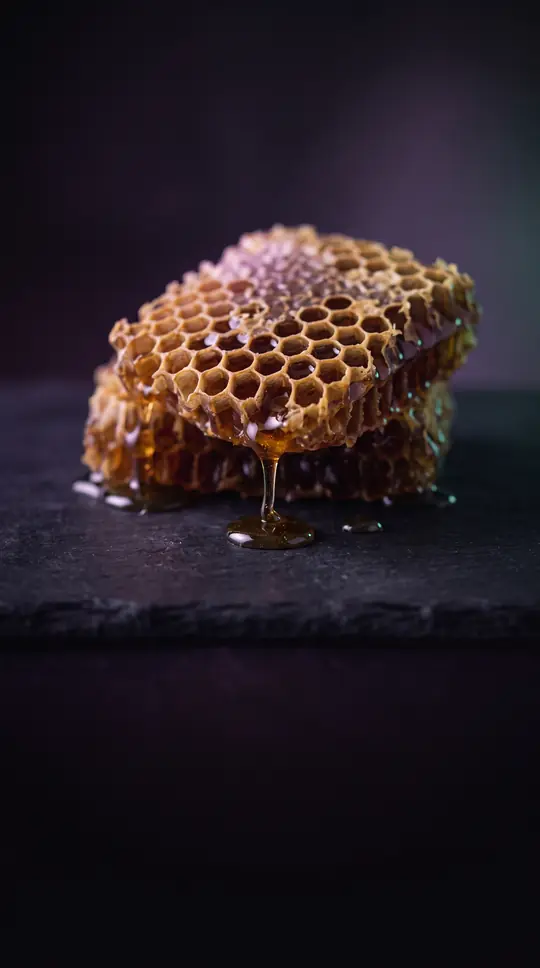 Bees build hexagons because six-sided cells tile a surface using the least wallRegular hexagons fit together with no gaps, three meeting at every corner, and a hexagonal grid keeps its lines as short as possible when filling a large area. That is why honeyco…
 Mother-of-pearl is a wall of microscopic bricks thin enough to bend lightNacre, the shimmering lining of oyster and abalone shells, is built like a wall of tiny hexagonal bricks of aragonite glued together with springy protein. Each brick is thin enoug…
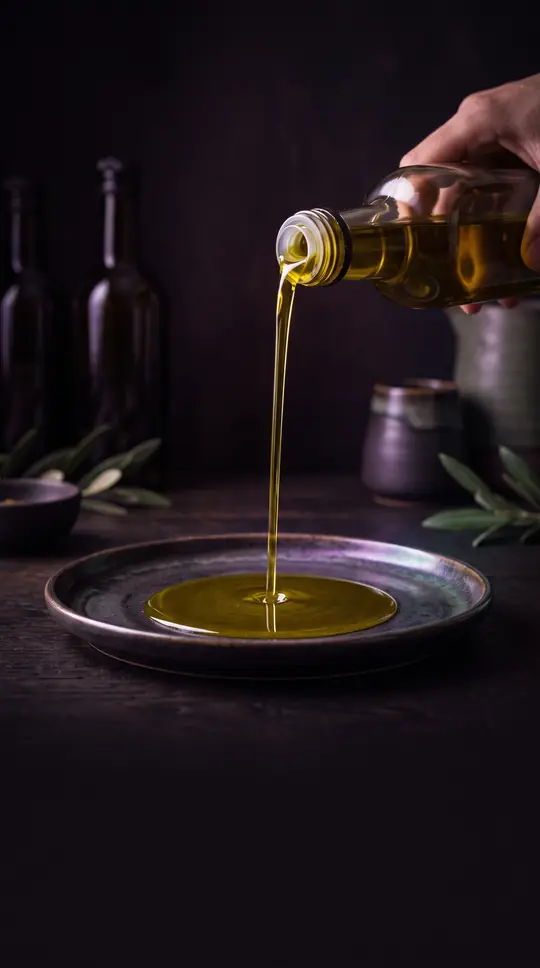 The same cheap oil fills transformers, glosses Swedish Fish and ages poker chipsMineral oil is a clear, odourless by-product of refining crude oil into petrol. Because it neither conducts electricity nor absorbs water and has almost no taste, it turns up in s…
 Euclid never measured distance with numbers, only with matching line segmentsThe straight-line distance between two points is named after Euclid, yet in his Elements distances were not numbers at all. Two segments were simply equal or not. Linking distance…
 Three turns are always enough to point any object in any directionLeonhard Euler showed that any orientation of a rigid body, however twisted, can be reached with just three rotations about coordinate axes. His three angles remain a standard way…
- Calculus worked brilliantly for two centuries before anyone could justify itNewton and Leibniz built calculus on infinitesimals, numbers somehow infinitely close to zero, and used it to explain why planets move in ellipses. The philosopher George Berkeley…
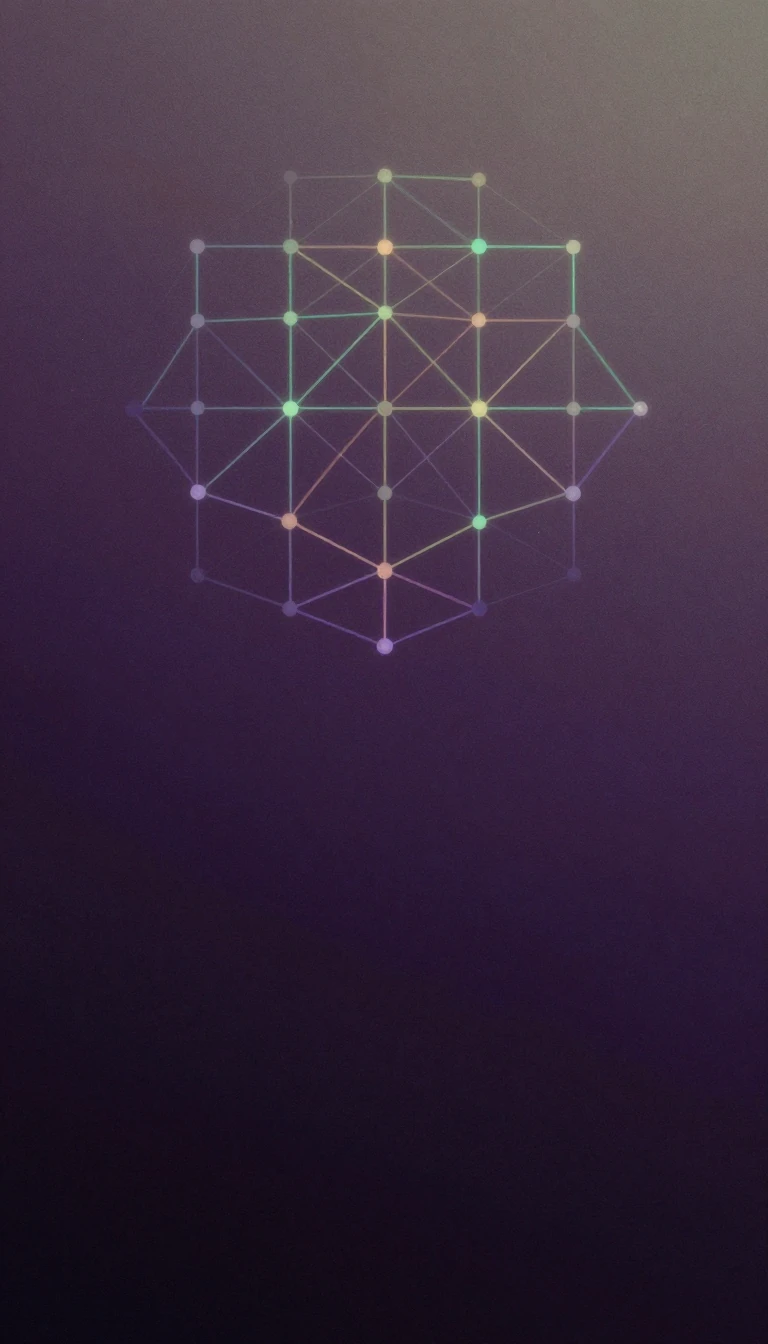 Proving four colours suffice for any map took 124 years and a computerIn October 1852 Francis Guthrie, colouring a map of English counties, noticed he never needed more than four colours to keep neighbouring counties distinct. His question baffled A…
 In four dimensions, you can untie any knot in a piece of stringAdd a fourth direction at right angles to the usual three and strange things happen. A knotted string can be slipped free by nudging it along the new axis, while flat surfaces suc…
 Potassium chloride feeds crops, calibrates radiation detectors and once fought firesPotassium chloride looks and tastes a lot like table salt, and some people sprinkle it on food. But most of it ends up in fields as potash fertiliser, and a trace of natural radio…
- Asking whether a gram is bigger than an hour is physically meaninglessYou can compare metres with feet, or seconds with years, because each pair measures the same kind of thing. But grams and hours belong to different dimensions, so no conversion li…
- One number tells you what a polynomial's roots look like without solving itThe discriminant is built from a polynomial's coefficients alone, yet it reveals whether roots repeat and whether they are real. For a quadratic it is the familiar b squared minus…