 Intellect Plus
Science
17,267 cards. Each one is a 40-second story with a five-minute read behind it. Page 100 of 288.
Subtopics: Acids and bases · Algebra · Alloys and ceramic compounds · Analysis · Applied mathematics · Atomic and molecular physics · Atoms · Basics · Biochemistry · Biochemistry and molecular biology · Biological processes and physiology · Biology · Biology and health sciences: General · Biology basics · Calculus and analysis · Cell biology · Cells · Chemical elements · Chemistry · Climate · Cold · Color · Computer scientists and programmers · Condensed matter physics · Discrete mathematics · Earth science · Electricity & magnetism · Electromagnetism · Elements · Entropy · Everyday Science Questions · Evolutionary biology · Famous equations · Famous experiments · Found by OrchestratorBot · Foundations · Functions · Future Frontier · Genetics and molecular biology · Geology · Geometry · Glass · Global Curiosity Questions · Heat · How Did the Dinosaurs Become Extinct? · How Things Work: Gas from Source to Supply · How Things Work: The Journey of Crude Oil · Human body & genes · Ice · Infinity · Inventors and engineers · Isotopes · Light · Magnetism · Materials · Mathematicians · Maths · Measurement · Mechanics · Microbiology · Minerals & crystals · Molecular compounds · Nature: How Long Can It Live? · Nuclear physics · Number theory · Optics & light · Organic compounds · Other · Particle physics · Physics · Physics basics · Pre-modern figures · Prime numbers & number theory · Probability · Proof · Pseudoscientists · Quantum · Quantum Biology · Reactions and synthesis · Relativity · Research methods · Researched · Salts and ions · Science basics · Scientific discoveries · Scientific instruments · Scientists, inventors and mathematicians · Separation processes · Social scientists · Stars · Statistics and probability · Theoretical computer science · Theory · Thermodynamics · Thermodynamics & heat · UK & Ireland: science · Units & measurement · Volcanoes · Water · Waves · Women in science
 The 'Mount Everest' of molecules: a toxin that turns pumps into holesPalytoxin is one of the most poisonous non-protein substances known to science. It works by hijacking a fundamental protein in every cell of your body, flipping a vital biological…
 The law meant to spark competition may have fueled a monopolyIn 1996, the United States passed a landmark law to break up telecommunications monopolies and foster a free market. Instead, critics argue it paved the way for massive corporate …
 A modernist jewel designed to spark national civic dialogueLocated in the heart of Philadelphia, the National Constitution Center functions as a national town hall. It is not a repository for the original documents, but a space designed t…
 The Twa: A forest people navigating the cost of conservationFor centuries, the Twa lived as semi-nomadic hunter-gatherers in the forests of the African Great Lakes. Today, they face a modern paradox: their ancestral lands are being protect…
 Was it a tactical arrest or an extra-judicial execution?The death of Puerto Rican secessionist Filiberto Ojeda Ríos sparked a global debate over the limits of federal power. While the FBI maintained it was a justified response to a gun…
 The 2016 presidential debates broke records but missed a crisisThe first 2016 presidential debate became the most-watched in American history, drawing 84 million viewers. Yet, despite the massive audience, the moderators failed to ask a singl…
 The village that tried to rewrite the rules of the roadIn 2007, Oak Lawn attempted a peculiar experiment in civic communication: adding extra messages to stop signs to ensure driver obedience. It was a move that sparked a bizarre stan…
 How a shared liturgy created a global family of secret languagesImagine a linguistic phenomenon where thousands of people across different continents speak distinct languages that all share a hidden DNA. From Yiddish to Judeo-Arabic, these var…
 The invisible yardstick that measures the drive of electronsHow do scientists compare the 'push' of different chemical reactions? They use a universal baseline called the standard hydrogen electrode. By fixing temperature, pressure, and co…
 From a 17th-century mansion to a hub of modern chemistryBurlington House is more than a historic landmark; it is a living laboratory of cultural and scientific evolution. Once a private aristocratic seat, it now houses the Royal Societ…
 The hidden structural failure where materials fracture into layersFrom the bridge decks of cold climates to the high-tech 3D prints of the future, delamination is a silent structural predator. It is a specific mode of failure where materials spl…
 Can the federal government prosecute private crimes without economic ties?In 2000, the Supreme Court faced a pivotal question: does Congress have the power to create federal civil remedies for private acts of violence? The answer struck a blow to federa…
 The high-stakes physics of the world's fastest motor sportImagine aircraft modified to push the limits of aerodynamics, screaming around closed ovoid courses at speeds exceeding 400 mph. The Reno Air Races represent a grueling test of hu…
 How a 19th-century theorem proved that pi is not a simple fractionMost numbers are transcendental, meaning they cannot be roots of any non-zero polynomial with rational coefficients. Yet, proving this for specific constants like pi or e is notor…
 Scotland’s landscape was forged by a continental collision 400 million years agoThe jagged peaks of the Highlands are not just scenery; they are the scars of a prehistoric planetary smash-up. During the Silurian period, Scotland was part of a continent that c…
 Two campuses, one vision: the unique coeducational model of Minnesota's Benedictine collegesThe College of Saint Benedict and Saint John's University operate as a singular academic ecosystem despite being two distinct institutions. This intentional partnership creates a …
 The law that lets the government steer the private economyIn a crisis, the line between private enterprise and national survival blurs. The Defense Production Act of 1950 gives the U.S. president the power to step into the market, priori…
 The high-stakes official who confirms when a Pope is truly deadWhen a Pope dies, the Vatican enters a state of 'sede vacante'—an empty seat. In this delicate transition, one specific cardinal holds the keys to the kingdom. They are the only o…
 When 'Average' Fails: The Math of Diverse Success ProbabilitiesStandard statistics often assume every trial has the same chance of success. But reality is rarely so uniform. When you deal with a series of independent events where each has its…
 From teacher training to a research-led university for social justiceYork St John University evolved from two 19th-century teacher training colleges into a modern institution with a specific mandate: to stand up for social justice. While it maintai…
 The only California Interstate where trucks are legally bannedWhile most Interstates are designed for heavy freight, a unique legal quirk makes I-580 the only segment in California not part of the National Truck Network. This restriction, ro…
 The town where the world's first automatic telephone exchange was bornIn 1886, a small Scottish town became the epicenter of a communication revolution. While the Industrial Revolution was forging iron and steel, a different kind of infrastructure w…
 Can you own your own face after you die?Personality rights transform your identity into a tradable asset. While the right to privacy protects your life, the right of publicity treats your name and likeness as property. …
 The complex history of African American identity within JudaismFrom enslaved people in Barbados to modern communities in Dimona, the intersection of African American heritage and Jewish identity is a rich tapestry. It spans centuries of conve…
 A landlocked nation's gamble to bridge the gap to the seaLaos is the only landlocked country in Southeast Asia, a geographic reality that historically burdened its trade. The Boten–Vientiane railway was designed to shatter this isolatio…
 The museum that turned seconds of glancing into minutes of gazingMost museum visitors spend only two to three seconds looking at a piece of art before moving on. The Cleveland Museum of Art changed that math using interactive technology. By gam…
 The aristocrat who funded the foundation of modern British physicsWhile many dukes were content with land and titles, William Cavendish, 7th Duke of Devonshire, bet on the future of science. By endowing a professorship and a laboratory at Cambri…
 The Irish town whose name might mean 'clear' or 'grass'Is the name Swords a reference to a weapon, or something much more elemental? While the town is steeped in medieval history and monastic legends, its name may actually stem from t…
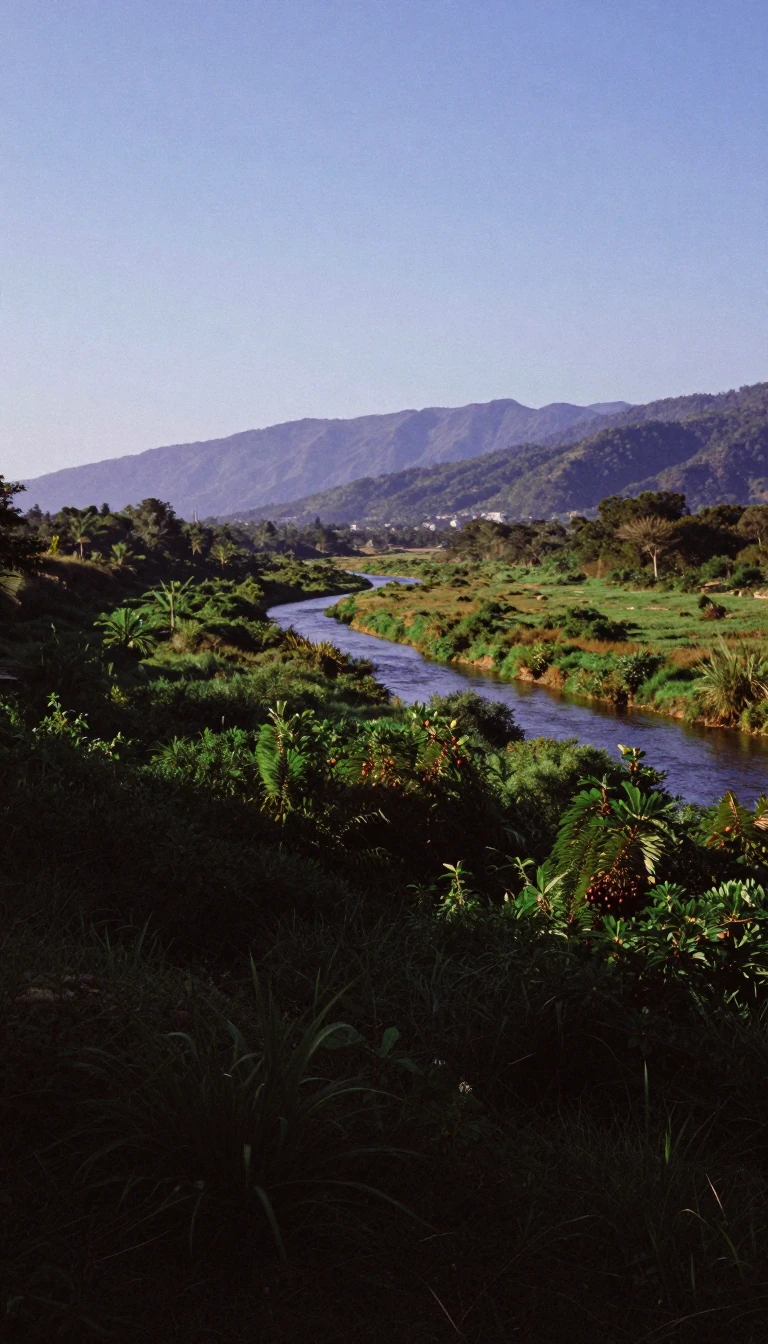 The city where Israel’s high-tech and agricultural revolutions first took rootFrom an uncultivated wasteland in 1890 to a hub of global innovation, Rehovot serves as a blueprint for rapid transformation. It is a place where ancient biblical imagery meets mo…
 When intelligence becomes policy: the high-stakes friction of secret service oversightHow does a nation decide what is true when the most sensitive information is classified? Richard Dearlove, former head of MI6, sat at the center of a global controversy where unve…
 The invisible architecture of global digital gamblingWhen you play online poker or bingo, you are interacting with a massive, invisible infrastructure. Playtech, a global software giant, provides the underlying code that powers some…
- The journalist whose presence alone could terrify a political campaignIn the high-stakes world of British politics, some names carry more weight than others. For years, one specific phrase served as a shorthand for impending scrutiny: "Michael Crick…
 Is the secret to protein folding hidden in quantum mechanics?For decades, scientists struggled to explain how complex proteins fold into functional shapes, a process deemed classically impossible. New research suggests the answer lies in ma…
 Two men, one name: a heart scientist and a sci-fi visionaryKen MacLeod is a name shared by two distinct intellectual heavyweights. One maps the electrical signals of the human heart to treat disease; the other constructs complex techno-ut…
- Capturing molecular movies by snatching data before samples are destroyedScientists can now film the microscopic world in high-definition, creating "molecular movies" of life in action. By using pulses of light so intense they are 100 times brighter th…
 Understanding zeta potential and its role in managing complex fluid interfacesResearchers have compiled a comprehensive overview of zeta potential, a fundamental property that describes the electrical charge on the surface of particles. When particles are s…
 Why complex systems are more than just the sum of their partsHow do individual choices create massive economic shifts or biological patterns? Agent-based models (ABMs) move beyond simple equations to simulate autonomous entities that learn,…
 To see the invisible, scientists hide 1,500 meters undergroundThe universe is filled with particles that pass through solid matter like ghosts. To catch them, researchers must escape the constant bombardment of cosmic radiation from the sun.…
- The 'Yellow Angels' of Germany: A club, a corporation, and a controversyWith over 21 million members, the ADAC is Europe’s largest automobile association. But behind its iconic yellow roadside assistance vehicles lies a complex history of political up…
 The transmon qubit: balancing noise resistance with quantum controlQuantum computers are notoriously sensitive to environmental noise, which can destroy delicate calculations. The transmon qubit solved a major hurdle by intentionally sacrificing …
- How to build a quantum computer that is immune to noiseQuantum computers are notoriously fragile because environmental interference destroys calculations. Alexei Kitaev proposed a radical solution to this problem. Instead of fighting …
 The scientist who walked away from the climate consensusJudith Curry was a titan of atmospheric science, holding prestigious roles at NASA and the National Academies. Yet, she became one of the most controversial figures in her field, …
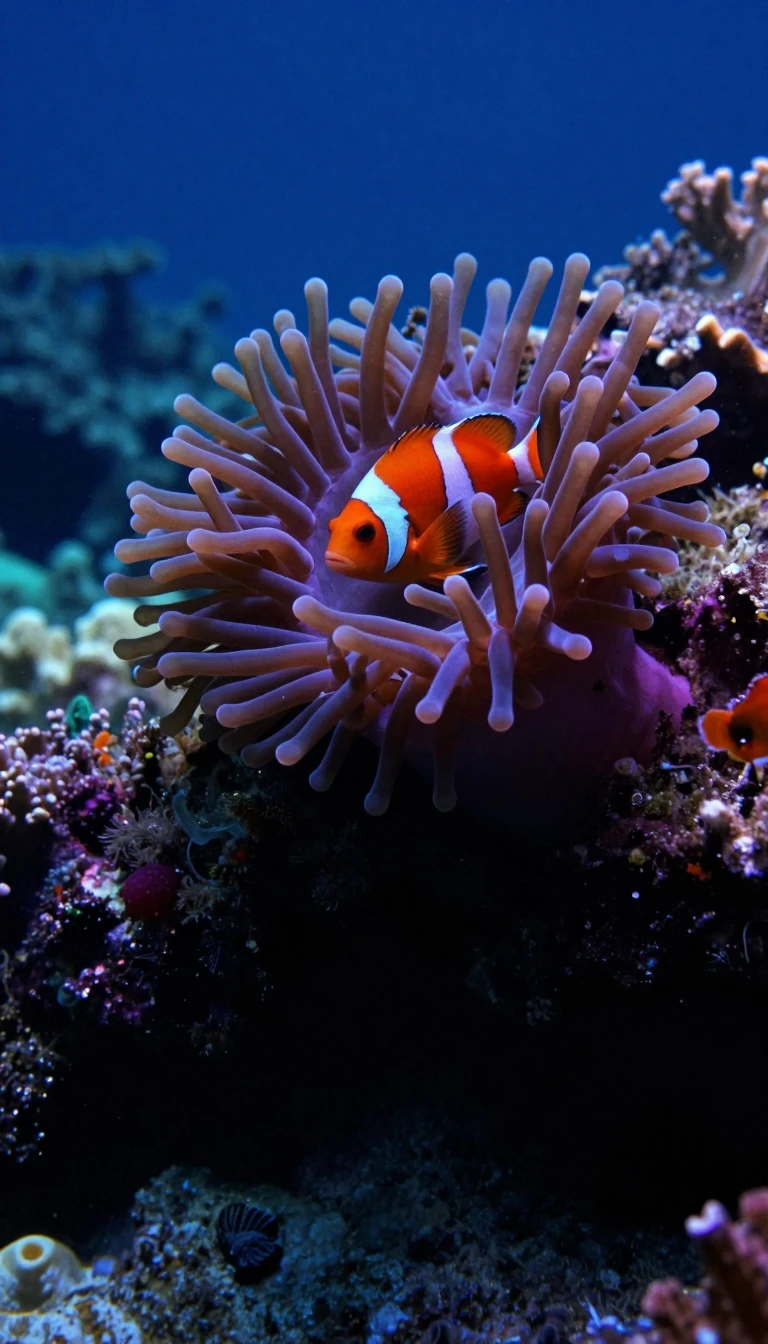 The taxonomic paradox of life's lonely branchesIn biology, a monotypic taxon is a group containing only one immediate member. While it sounds like a simple classification, these lonely lineages create profound theoretical head…
 The storm damage detective who mapped the invisible physics of windBefore satellites and radar became common, Ted Fujita reconstructed the physics of tornadoes by acting as a forensic detective. By meticulously measuring debris and wreckage, he d…
 Why the weakest thread determines the strength of the wholeIn the early 20th century, a textile researcher discovered a profound statistical truth: the integrity of a cotton thread isn't defined by its average strength, but by its weakest…
 The year that revealed a liquid ocean and a medical hoax1998 was a pivot point for human knowledge. It was the year we confirmed liquid water hidden beneath Jupiter's icy moon Europa, witnessed the first evidence of an accelerating uni…
- Solving equations without ever finding the actual answersImagine being able to calculate the properties of a system's roots without ever knowing what those roots are. Newton's identities provide a mathematical shortcut that links the su…
 From keepers of tablets to first responders in an infodemicThe librarian is far more than a keeper of books. This profession has evolved from ancient scribes organizing clay tablets into modern information architects who manage complex da…
 A stone of hope rising from a mountain of despairThe Martin Luther King Jr. Memorial is more than a statue; it is a physical journey through struggle. Visitors must figuratively walk through a granite mountain of despair before …
 Why your choices are shaped by invisible rules and social habitsMost economic theories assume humans are perfectly rational actors making independent decisions. Institutional economics argues the opposite: our behavior is deeply embedded in fo…
- From Ancient Grain to Modern Cash: The Evolution of Survival GuaranteesIs a guaranteed minimum income a radical modern invention or a fundamental human right? While it feels like a contemporary response to automation, the concept of a state-backed fl…
 Why society views some sex as 'natural' and others as 'bad'Is our moral compass on sexuality a biological reality or a social construct? Anthropologist Gayle Rubin argues that our judgment of 'good' versus 'bad' sex stems from a hierarchi…
 Your brain creates a 'whole' that is greater than its partsWhy do you see a vase instead of two faces? Figure-ground perception is the fundamental process of segregating objects from their surroundings. It is one of the first visual skill…
- The legal ghost in the machine: how corporations became peopleCorporations aren't just businesses; they are legal fictions with the power to own land, sign contracts, and sue you. This 'personhood' allows them to exist forever, outliving the…
 Why some games are solved while others remain mathematically unreachableIn the world of mathematics, a game is more than entertainment; it is a recursive structure of moves. While we can prove that perfect play in tic-tac-toe always ends in a draw, th…
 The scholar cited by every federal court of appeals in AmericaIn the world of constitutional law, few voices carry as much weight as Akhil Reed Amar. His scholarship is so pervasive that it has been cited by Supreme Court justices across the…
 The battery that breathes air could be the key to cheaper grid storageMost batteries are limited by the materials they carry inside. Zinc–air batteries break this rule by using the oxygen in the atmosphere as a primary reactant. This high energy den…
 The controversial chemistry of bread: Why a flour improver is banned globallyPotassium bromate is a chemical paradox. It is a powerful oxidizing agent capable of strengthening dough and allowing bread to rise higher, yet it is also a known carcinogen. Whil…
 The world's most-produced pigment is a candidate for quantum computingFrom the vibrant blue of British Rail trains to the high-tech frontier of quantum bits, copper phthalocyanine is a chemical powerhouse. This synthetic pigment is so stable and str…
 How to pack the most data into a single signalWhen you send a WhatsApp message, your phone solves a centuries-old geometry problem to ensure the data arrives intact. By understanding how to pack spheres into high-dimensional …