 Intellect Plus
Technology
10,995 cards. Each one is a 40-second story with a five-minute read behind it. Page 63 of 184.
Subtopics: 3D printing & manufacturing · AI & machine learning: practical · Aircraft · Automata · Aviation · Batteries · Binary · Biotechnology · Bridges · Cameras & imaging · Cars · Chemical engineering · Chips · Codes · Compression · Computing · Computing and information technology · Computing history · Cryptography · Cybersecurity · Electric vehicles · Electronics · Energy · Engineering · Everyday tech · Famous patents · Future Frontier · How it works · How Things Work: GPS to the Phone · How Things Work: Jets, Propellers and Ships · Industry · Infrastructure · Internet · Inventions · Inventors · Machinery and tools · Maths · Media and communication · Medical technology · Medieval clockmaking · Mercedes-Benz Engineering · Military technology · Motorbikes · Navigation and timekeeping · Networks · Nuclear power · Optical technology · Physics · Pioneers · Programming · Programming languages · Radar · Radio · Researched · Robotics: practical · Robots · Rockets · Security · Semiconductors · Ships & boats · Skyscrapers · Smartphones · Software · Sound & audio technology · Spaceflight · Super-series Wave 1: Car To Wheels · Super-series Wave 1: From Power Station To Pc · Super-series Wave 1: The Journey Of Crude Oil · Technology today · Technology: General · Textiles · Trains & locomotives · Transportation · UK & Ireland: inventions · Video game technology · Web · Wireless
 From humor magazines to tech giants: the century-long evolution of Ziff DavisFounded in 1927 as a publisher of hobbyist magazines, Ziff Davis transformed into a digital media powerhouse. By pivoting from pulp fiction and comics to the cutting edge of compu…
 Why your ZIP code is a postal tool, not a legal address boundaryIntroduced in 1963 to help inexperienced clerks sort mail, the ZIP code was never designed to define municipal or county borders. While essential for logistics, these codes often …
 The US Navy's most expensive destroyer was designed for guns that now have no ammunition.The Zumwalt-class destroyer was envisioned as a stealthy, high-tech successor to the battleship, capable of precision land bombardment. But after soaring costs and the cancellatio…
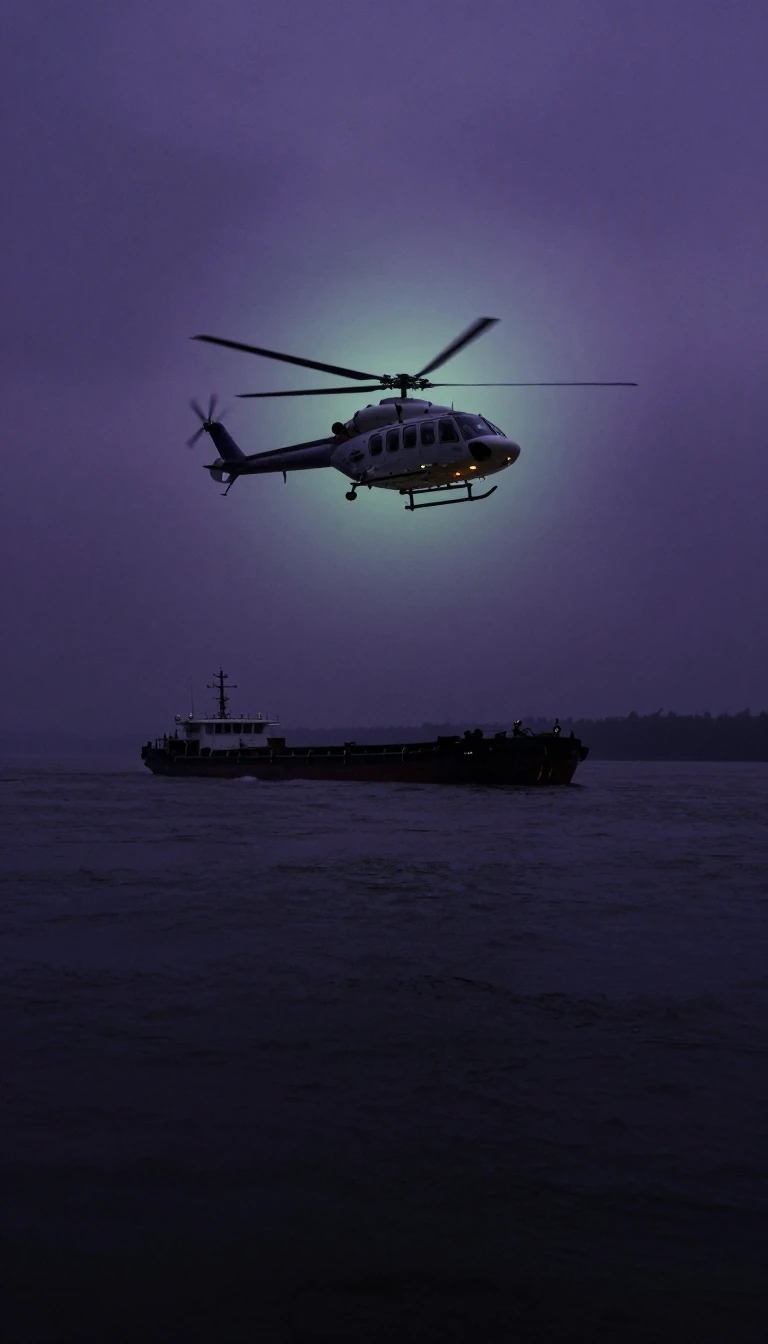 The Aérospatiale SA 330 Puma: A Cold War Workhorse That Defined Modern Helicopter UtilityDeveloped in the 1960s to meet a French Army requirement for an all-weather transport, the Puma became a global success. Known for its rugged reliability from Arctic climates to d…
 When an eighteen-foot section of a Boeing 737 roof tore off mid-flightOn April 28, 1988, Aloha Airlines Flight 243 suffered a catastrophic structural failure at 24,000 feet. An eighteen-foot section of the fuselage roof ripped away, exposing passeng…
 From a bedroom hobby to a tech media powerhouse: the story of Ars TechnicaFounded in 1998, Ars Technica evolved from a small, distributed project into a major publication under Condé Nast. Known for its deep-dive technical reporting, the site balances t…
 How a simple ship-to-ship radio signal became the world's global maritime tracking networkOriginally designed as a short-range collision avoidance tool, the Automatic Identification System (AIS) has evolved into a global surveillance network. By broadcasting identity, …
 The BrahMos missile combines Russian engineering and Indian innovation to dominate supersonic cruise technology.Named for the Brahmaputra and Moskva rivers, the BrahMos is a high-speed cruise missile born from a strategic partnership between India and Russia. Capable of striking from land, …
 How a former industrial powerhouse reinvented itself as the nation's premier high-speed connectivity hubOnce dubbed the dirtiest city in America, Chattanooga has undergone a radical transformation. By leveraging its own municipal utility to launch groundbreaking internet infrastruct…
 Osaka's Expo 2025 Transformed an Artificial Island Into a Global Testing Ground for Future LivingHeld on the man-made island of Yumeshima, Expo 2025 served as a living laboratory for future societal integration. Beyond its record-breaking wooden architecture and futuristic mo…
 Why the most important software you have never heard of is no longer a machineLLVM began as a research project to build a virtual machine, but it evolved into the backbone of modern computing. Today, it powers the compilers for languages like Rust, Swift, a…
 The Motorola 68000: How a 'Texas Cockroach' Became the Heart of the Digital RevolutionEngineers at Motorola needed a miracle to compete with Intel in the late 1970s. They designed a powerful, hybrid 16/32-bit processor that fit into a compact package, earning it a …
 The Su-57 Felon: Russia's attempt to balance stealth with traditional high-performance air combatThe Sukhoi Su-57 is a heavyweight multirole fighter designed to challenge the limits of modern aerial warfare. While often labeled a fifth-generation aircraft, it prioritizes supe…
 The trimaran is an ancient Austronesian innovation that redefined modern high-speed maritime travel.Long before they were high-tech racing machines or stealth warships, trimarans were the ingenious solution to a stability problem in Southeast Asian waters. By adding a second out…
 The life-saving airbag was once a failed invention that no automaker wanted to buy.Today, airbags are standard safety features in modern vehicles, but their path to mass adoption was fraught with rejection. Despite early patents in the 1950s, inventors struggled…
 The hidden choreography of the bus garage: more than just a parking lotEver wonder where the city bus sleeps? A bus garage is a complex, high-stakes logistical hub designed to keep urban transit moving. From specialized night-shift shunting to the st…
 From Steam Shovels to Precision Robots: The Evolution of the Modern Hydraulic ExcavatorModern excavators are far more than simple digging machines. These versatile powerhouses have evolved from clunky steam-powered shovels into sophisticated hydraulic systems capabl…
 Beyond the bucket: how the humble loader became a versatile engineering powerhouseThe loader is far more than a simple shovel on wheels. From navigating tight urban construction sites to serving in military combat zones, these machines use sophisticated articul…
 How naval architects ensure a massive steel ship stays perfectly balanced on the waterDesigning a ship is a delicate balancing act of physics. To keep a vessel upright and level, naval architects must precisely calculate the interplay between weight and buoyancy. B…
 From electric wagons to armored tactical units, the evolution of the modern police car.The first police car was an electric wagon in 1899, reaching a top speed of 16 mph. Today, law enforcement fleets range from specialized high-performance traffic interceptors to a…
 How Seoul built a world-leading transit network from a single line in 1974The Seoul Metropolitan Subway is a sprawling, high-tech marvel that connects millions across South Korea. From its humble beginnings as a single line influenced by Japanese engine…
 How Taiwan built a world-class high-speed rail network on a volcanic, typhoon-prone islandTaiwan High Speed Rail transformed the island's western corridor, turning a congested transit landscape into a high-efficiency artery. By blending Japanese Shinkansen technology w…
 Why 16-bit computing defined the transition from room-sized machines to the modern eraBefore 32-bit systems dominated, 16-bit architecture bridged the gap between early experimental computers and the personal computing revolution. By standardizing data units and me…
 Why 32-bit computing defined the digital revolution before hitting a hard memory wall.Before 64-bit systems became the standard, 32-bit architecture powered the rise of the World Wide Web and the personal computer. By processing data in 32-bit chunks, these machine…
 Why 64-bit computing is the invisible ceiling that powers our modern digital world.A 64-bit processor can access an address two billion times higher than its 32-bit predecessor. While this massive capacity for memory addressing seems like overkill today, it solv…
 Why 7z is the gold standard for squeezing massive files into tiny spacesThe 7z format is more than just a file compressor; it is a modular, open-architecture powerhouse. By stacking advanced algorithms like LZMA and specialized pre-processors, it achi…
 The 8-bit era defined the modern computing landscape by making technology affordable and personal.Before modern multi-core processors, 8-bit computing sparked a revolution. By shifting power from massive mainframes to compact, accessible microprocessors, these machines brought…
 Abstraction is the art of hiding complexity to make massive computing systems humanly manageableComputing operates largely independent of the physical world. By using abstraction, programmers hide intricate, low-level binary operations behind intuitive interfaces. This allow…
 Why your wall charger is a silent, high-tech marvel of modern engineeringThat humble block plugged into your wall is a sophisticated power converter. Once bulky, inefficient linear transformers, modern adapters use switched-mode technology to shrink ha…
- Why your wall socket is a complex, localized, and potentially dangerous engineering puzzleModern power sockets are far more than simple holes in the wall. They are the final, critical link in a global electrical infrastructure that has evolved over 140 years. From safe…
 The silent digital heartbeat that tracks every commercial flight across the globeBefore automated data links, pilots relied on voice reports to log flight times, a process prone to human error and inefficiency. Introduced in 1978, the Aircraft Communications A…
 Acrylic paint is a synthetic marvel that bridges the gap between oil and watercolor.Born from German chemical research in the 1930s, acrylic paint transformed art by offering the durability of plastic with the versatility of traditional media. Whether you want th…
 The action is the mechanical heart that defines how a firearm functions and fires.In firearms technology, the action is the essential mechanism that handles the loading, locking, firing, and ejection of ammunition. While muzzleloaders rely on locks for ignition…
- Designed to prevent catastrophe, Ada is the language behind the world's most critical systems.Born from a United States Department of Defense initiative to consolidate over 450 disparate programming languages, Ada was engineered for extreme reliability. Today, this high-le…
 The digital circuit that powers every calculation inside your computer's processorAt the heart of every computer lies the adder, a digital circuit responsible for performing arithmetic. From calculating memory addresses to executing complex logic, these circuit…
 The humble adhesive bandage is a sophisticated tool for minor wound management and healingBeyond the simple act of covering a scrape, the adhesive bandage is a marvel of material science. From specialized blue strips for food safety to transdermal patches that deliver …
 From Ancient Egyptian Medicine to Modern Packaging: The Surprising Evolution of Adhesive TapeAdhesive tape is far more than a simple household convenience. Its origins trace back to the medical practices of Ancient Egypt, where it was used to treat wounds. Today, this ver…
 Why Adobe Acrobat cannot truly reformat your PDF documents after they are createdAdobe Acrobat is the industry standard for managing PDFs, yet it faces a fundamental limitation. While you can edit text and images, the software cannot meaningfully repaginate a …
 How Adobe Creative Suite defined the digital era before shifting to the cloudBefore the subscription model became the industry standard, Adobe Creative Suite was the definitive toolkit for digital creators. From its debut in 2003 to its final boxed release…
 How a tool for pen-based computers became the internet's dominant multimedia engineBefore it defined the web, Flash was a vector drawing tool for failed pen-based tablets. It evolved into a powerhouse for games, video, and rich applications, eventually reaching …
 Aerial refueling turns fuel-limited aircraft into long-range assets, extending missions indefinitely.Aerial refueling allows aircraft to stay airborne for days, limited only by crew fatigue and mechanical oil consumption. By topping off mid-flight, planes can take off with heavie…
 Can NASA turn the deafening roar of supersonic flight into a gentle, manageable thump?NASA is currently testing the X-59, an experimental jet designed to break the sound barrier without the typical window-rattling sonic boom. By transforming supersonic travel into …
 Why aerostats float: the physics of buoyancy in the skyAerostats rely on the simple principle of buoyancy to remain airborne, displacing air with lighter-than-air gases like helium or hydrogen. Unlike aerodynes, which require constant…
 Can molecular biology and precision gene editing solve the global food security crisis?Agricultural biotechnology is moving beyond traditional breeding. By integrating molecular biology, genetics, and microbiology, scientists are developing crops that are more resil…
 The forgotten invention that defined how every modern airplane banks and turnsAilerons, the hinged surfaces on wings, are the unsung heroes of flight. While the Wright brothers famously fought to patent their wing-warping technique, a British scientist had …
- How aircraft use controlled drag to master the art of slowing down mid-flightTo land a jet, you cannot simply rely on engine power. Unlike propeller planes, jet engines offer little natural braking when throttled back. Engineers developed air brakes—surfac…
 Why your car's air filter is a masterclass in engineering and physicsAir filters are more than just simple screens. From the labyrinthine oil baths of the early 20th century to the precision-pleated paper elements in modern engines, these devices b…
- Are air ambulances actually faster and safer than traditional ground-based emergency medical services?While helicopters are iconic symbols of trauma care, evidence suggests they do not always improve survival or response times. These high-stakes operations balance life-saving pote…
- Beyond the filter: how air purifiers actually clean the air you breatheAir purifiers range from simple mechanical filters to complex chemical reactors. While HEPA technology remains the gold standard for capturing particles, newer methods like photoc…
 Why modern fighter jets have traded raw supersonic speed for stealth and intelligenceThe era of the fighter jet defined by sheer velocity is fading. While mid-20th-century aircraft pushed the boundaries of Mach numbers, 21st-century designs prioritize stealth, adv…
- From simple rockets to hypersonic hunters: the evolution of air-to-air combat technologyAir-to-air missiles have transformed from crude, unguided World War I rockets into sophisticated, autonomous systems capable of tracking targets through clouds or electronic inter…
- How modern aircraft avoid mid-air collisions without relying on ground-based air traffic controlThe Airborne Collision Avoidance System (ACAS) acts as a vital safety net for pilots, functioning independently of ground controllers to prevent mid-air collisions. By monitoring …
 How NATO’s flying radar domes act as the ultimate eyes in the skyHigh above the clouds, modified Boeing 707s equipped with distinctive rotating radar domes provide NATO with an immediate, mobile command center. These AWACS aircraft can monitor …
 From Soviet purges to Hollywood makeup, the airbrush is history's most versatile tool.An airbrush is more than a painter's tool; it is a precision instrument that atomizes liquid into a fine mist. From the early days of retouching photographs to the modern era of h…
 How a risky, free-lease gamble turned a struggling European airliner into a global icon.The Airbus A300 was nearly a failure, with production stalling and no new orders for eighteen months in the mid-1970s. To break into the American market, Airbus took a massive gam…
 The Airbus A320 family revolutionized aviation by pioneering digital fly-by-wire controls in commercial airliners.Launched in 1984, the A320 family transformed the single-aisle market by introducing advanced digital flight controls and a wider fuselage than its competitors. From its humble or…
 Why aircraft rely on hidden shells to slice through the sky with easeAn aircraft fairing is a specialized structure designed to smooth out an airplane's silhouette, effectively minimizing drag. By covering gaps and junctions between various compone…
- How pilots command the skies: from manual wing warping to fly-by-wire intelligenceModern flight control systems are far more than simple levers. They are complex networks that translate a pilot's physical input into precise aerodynamic maneuvers. Whether using …
 Why every civil aircraft carries a unique code that functions like a license plate.Every civil aircraft is required by international law to display a unique alphanumeric registration code. This identifier, which must be prominently marked on the fuselage, acts a…
 The airframe is the skeleton of flight, balancing gravity against the physics of lift.An airframe is more than just a shell; it is the fundamental structure of an aircraft, excluding the engine and instruments. From wings to landing gear, every component must be me…