 Intellect Plus
Technology
10,995 cards. Each one is a 40-second story with a five-minute read behind it. Page 68 of 184.
Subtopics: 3D printing & manufacturing · AI & machine learning: practical · Aircraft · Automata · Aviation · Batteries · Binary · Biotechnology · Bridges · Cameras & imaging · Cars · Chemical engineering · Chips · Codes · Compression · Computing · Computing and information technology · Computing history · Cryptography · Cybersecurity · Electric vehicles · Electronics · Energy · Engineering · Everyday tech · Famous patents · Future Frontier · How it works · How Things Work: GPS to the Phone · How Things Work: Jets, Propellers and Ships · Industry · Infrastructure · Internet · Inventions · Inventors · Machinery and tools · Maths · Media and communication · Medical technology · Medieval clockmaking · Mercedes-Benz Engineering · Military technology · Motorbikes · Navigation and timekeeping · Networks · Nuclear power · Optical technology · Physics · Pioneers · Programming · Programming languages · Radar · Radio · Researched · Robotics: practical · Robots · Rockets · Security · Semiconductors · Ships & boats · Skyscrapers · Smartphones · Software · Sound & audio technology · Spaceflight · Super-series Wave 1: Car To Wheels · Super-series Wave 1: From Power Station To Pc · Super-series Wave 1: The Journey Of Crude Oil · Technology today · Technology: General · Textiles · Trains & locomotives · Transportation · UK & Ireland: inventions · Video game technology · Web · Wireless
 From ancient clay vessels to modern labs, the crucible has shaped human industry.For millennia, the crucible has been the silent engine of metallurgy and chemistry. From early copper smelting in the Chalcolithic period to the precise gravimetric analysis of mo…
 The cruiser is not a ship type, but a mission that evolved into a weapon.For centuries, the cruiser was defined by its purpose: independent scouting, commerce raiding, and long-range patrol. It began as a flexible mission for frigates and sloops, event…
 How the machines that built our modern world turn massive boulders into fine dust.Crushers are the silent giants of industrial progress, transforming raw rock into the building blocks of civilization. By applying immense mechanical force to overcome molecular b…
 Why the crutch has barely evolved since the days of ancient EgyptFor thousands of years, the crutch has remained a fundamental mobility aid, transferring weight from damaged legs to the upper body. While modern materials like titanium and carbo…
 Cryptanalysis is the art of finding patterns in secrets that seem perfectly random.Breaking a code is rarely about raw power alone. It is a subtle game of intuition and pattern recognition. From the telegrams that shifted the course of world wars to the modern m…
 From Medieval Monastic Games to Modern Newspaper Puzzles, the Enduring Allure of CryptogramsLong before they became daily entertainment in newspapers, cryptograms were serious tools for protecting military and personal secrets. While today we solve them for fun, their or…
 How a slice of quartz keeps the modern world running on timeYour phone, computer, and radio all rely on a tiny, vibrating piece of quartz to stay synchronized. By exploiting the inverse piezoelectric effect, these oscillators turn electric…
 The radio that runs on nothing but the airwaves themselvesA crystal radio is a marvel of simplicity, requiring no batteries or wall plugs to function. It harvests all its energy directly from the radio waves it captures. While modern dev…
- The Confederate ironclad that changed naval warfare forever, only to be destroyed by its crew.Born from the charred remains of a scuttled frigate, the CSS Virginia became a symbol of naval power during the American Civil War. As the first steam-powered ironclad to engage i…
 Why your electronics rely on a circuit that ignores voltage to maintain steady flow.An ideal current source is a mathematical model that delivers constant current regardless of voltage fluctuations. While no physical device is perfectly ideal, engineers use cleve…
 The curtain wall was the backbone of ancient and medieval defensive architectureBefore gunpowder changed the rules of war, the curtain wall served as the primary barrier between a fortress and its attackers. By linking towers and bastions into a single, formi…
 The digital revolution of cut, copy, and paste began with physical scissors and glue.Before computers, editors literally cut paragraphs from paper and pasted them elsewhere. In 1974, Larry Tesler and his team at Xerox PARC digitized this workflow, creating a parad…
 The cutlass was more than a pirate weapon; it was a versatile naval tool.Famous for its role in pirate lore, the cutlass was actually a practical, robust blade designed for the harsh realities of life at sea. Beyond combat, it served as an essential ut…
 The D-subminiature connector: A 1950s engineering marvel that defined the digital ageIntroduced by Cannon in 1952, the D-subminiature connector became the backbone of early computing. Recognizable by its iconic D-shaped metal shield, this versatile interface power…
 Damask: The Ancient Reversible Fabric That Defined Luxury Through Light and ShadowDamask is a reversible, patterned textile defined by its unique ability to play with light. By alternating warp-faced satin weaves with duller ground weaves, it creates soft, shif…
 How China built the world's longest bridge to conquer the Yangtze River deltaSpanning over 102 miles, the Danyang-Kunshan Grand Bridge is a marvel of modern infrastructure. Completed in 2011, this massive viaduct slashes travel times across China’s wealthi…
- The dao was China's military workhorse, but its most famous version is a movie myth.The dao, a single-edged Chinese sword, dominated battlefields for centuries, favored for its durability and ease of use compared to the complex jian. Yet, the iconic oxtail saber …
 The invisible mechanical hand that stops doors from slamming and buildings from swayingA dashpot is a silent guardian of motion, converting kinetic energy into heat to prevent abrupt movements. Whether smoothing the closing of a door, cushioning a vehicle against ro…
 Data types are the hidden rules that keep computer programs from falling apart.At the lowest level, computers only understand bits. Data types are the conceptual framework programmers use to impose order on that chaos. By defining what values a variable can …
 Can we truly undo extinction, or are we just creating sophisticated biological proxies?De-extinction promises to resurrect lost species like the woolly mammoth, but the reality is far more complex. Rather than faithful replicas, scientists are creating functional pr…
 How the Dash 8 evolved from a failed city-hopper to a global aviation stapleBorn from the shadow of the Dash 7, the Dash 8 traded short-field performance for efficiency. It survived corporate buyouts, a high-stakes production pause, and shifting market de…
 Why your deadbolt might be a security feature that becomes a lethal trapA deadbolt is designed to resist forced entry by requiring a key or handle to retract, unlike spring-bolt locks. While this makes your home more secure, specific configurations ca…
- How a Toy Story-themed project became the backbone of the modern internetFounded in 1993, Debian is the second-oldest Linux distribution, powering servers and devices worldwide. Known for its rigorous commitment to stability and open-source principles,…
 Debugging is more than fixing errors; it is a systematic hunt for hidden logicDebugging is the art of finding the root cause of software malfunctions. While the term evokes images of moth-ridden hardware from the 1940s, modern debugging is a sophisticated d…
 Stop telling your computer how to think and start telling it what you want.Declarative programming shifts the focus from explicit, step-by-step instructions to defining the logic of a problem. By describing the desired outcome rather than the execution p…
 When a computer beat the world chess champion, was it actually intelligent?In 1997, IBM's Deep Blue became the first machine to defeat a reigning world chess champion in a formal match. While the victory was hailed as a milestone for artificial intellige…
 Delimiters are the invisible boundaries that allow computers to make sense of raw dataIn computing, a delimiter is a character or sequence that marks the boundary between independent regions of data. While essential for organizing information, these markers create …
- How the Dutch engineered a massive defense against the encroaching North SeaThe Netherlands is a low-lying nation where half the land sits below sea level. To survive, the Dutch built the Delta Works, a colossal infrastructure project that transformed dan…
 Why your home electrical system is rarely rated for every appliance running at onceYou might assume your home electrical system is built to handle every light, heater, and appliance running simultaneously. In reality, engineers use a metric called the demand fac…
 Why your power grid is shifting from adjusting supply to managing your demandFor decades, power grids balanced supply and demand by throttling power plants. Today, as renewable energy grows, that model is failing. Demand response flips the script: instead …
- How we extract meaning from invisible waves traveling through the air around usDemodulation is the essential process of recovering information from a carrier wave. Whether it is sound, video, or digital data, a demodulator acts as the bridge between raw radi…
 Demolition is not just destruction; it is a highly regulated, precise engineering discipline.Tearing down a building requires more than a wrecking ball. It is a complex, legally mandated process that demands rigorous planning, structural analysis, and safety protocols. Fr…
 How a simple canister of explosives changed the nature of underwater warfare foreverBefore sonar, hunting submarines was a game of blind luck. The depth charge transformed the sea into a lethal environment for submerged vessels. By relying on hydrostatic pressure…
 Why the desktop computer refuses to die in the age of mobile computingOnce considered the pinnacle of personal technology, the desktop computer was declared obsolete by the rise of laptops and smartphones. Yet, this stationary machine remains a powe…
 How desktop publishing transformed the personal computer from a typewriter into a printing pressBefore the mid-1980s, professional document design required expensive, proprietary hardware. The arrival of desktop publishing software and laser printers democratized this power,…
 The tiny device that turns a spark into a massive, controlled explosionA detonator is the essential bridge between a simple trigger and a high-explosive charge. By utilizing a multi-stage sequence of energy, these small devices transform minor electr…
 Device drivers are the invisible translators that allow your software to command physical hardware.Without device drivers, your computer would be a collection of disconnected parts. These specialized software components act as translators, converting high-level application requ…
 The digital buffer: how electronics isolate signals to keep complex systems running smoothlyIn digital systems, connecting components directly can cause signal interference that crashes data flow. The digital buffer acts as a protective intermediary, isolating circuits s…
 How South Korea pioneered mobile television for high-speed travel and handheld devicesDigital Multimedia Broadcasting (DMB) transformed mobile media by delivering television and radio to phones and vehicles. Developed in South Korea, this technology maintains stabl…
 Why digital signals are the silent, indestructible backbone of our modern computing worldDigital signals represent data through discrete values rather than continuous ones, granting them a unique resilience against interference. By grouping information into specific b…
- Why your phone needs a specialized brain to process the real worldDigital signal processors are the unsung heroes of modern electronics. Unlike general-purpose microprocessors, these specialized chips are engineered to handle continuous streams …
- How digital signatures mathematically guarantee that your electronic documents have not been tampered withA digital signature is more than just an electronic image of your handwriting. It is a sophisticated mathematical scheme that binds a document to its sender, making forgery comput…
 Why the iconic DSLR mirror mechanism is becoming a relic of photographic historyThe digital single-lens reflex camera defined professional photography for decades, using a clever mechanical mirror to provide a direct optical view through the lens. Yet, this h…
- How a breakthrough in data compression transformed the way we watch television foreverDigital television was once considered impossible due to massive bandwidth demands. By the 1990s, engineers solved this by transmitting only the changes between video frames. This…
- How do digital numbers become the physical sounds and images we experience every day?A digital-to-analog converter acts as the bridge between abstract binary code and the physical world. Whether you are listening to music, watching a video, or making a phone call,…
- Digital video transformed how we capture, store, and share the moving image forever.Digital video is more than just a modern convenience; it is an electronic revolution. By encoding visual information as data rather than analog signals, it eliminated generation l…
- From professional studio tools to living room staples, the DVR changed how we watch.Before the digital video recorder, television was a fleeting experience. By shifting storage from tape to disk, the DVR granted viewers the power to pause, rewind, and skip commer…
- How a 1999 video standard bridged the gap between analog and digital worldsBefore high-definition streaming, the Digital Visual Interface (DVI) emerged as a vital bridge. By integrating both analog and digital signals into a single connector, it became t…
 The elegant four-diode bridge that turns chaotic alternating current into steady direct powerEvery modern electronic device relies on a silent, invisible workhorse: the diode bridge. By cleverly arranging four diodes in a diamond configuration, this circuit forces alterna…
 How Microsoft’s Graphics API Evolved from Awkward Beginnings to Industry StandardDirect3D began as a clunky, misunderstood experiment that developers once begged Microsoft to abandon in favor of OpenGL. Today, it is the backbone of Windows gaming, having survi…
- How engineers learned to steer a drill bit a mile beneath the earthDirectional drilling transformed the oil industry by allowing operators to reach reservoirs from miles away, navigate around obstacles, and even extinguish massive fires. Once con…
- Why your computer treats a folder like a file and a list like a treeA directory is more than just a digital folder. It is a sophisticated cataloging structure that organizes files into hierarchical trees. While your desktop interface uses icons to…
- How a rebellious trio of Microsoft engineers saved PC gaming from total irrelevanceIn 1994, Microsoft was losing the gaming war. Developers hated the Windows environment, preferring the direct hardware access of MS-DOS. To fix this, three rogue employees launche…
 Why a dirty bomb is a weapon of mass disruption, not mass destructionA dirty bomb combines conventional explosives with radioactive material to contaminate an area, yet it is not a nuclear weapon. Its primary power lies not in the blast, but in the…
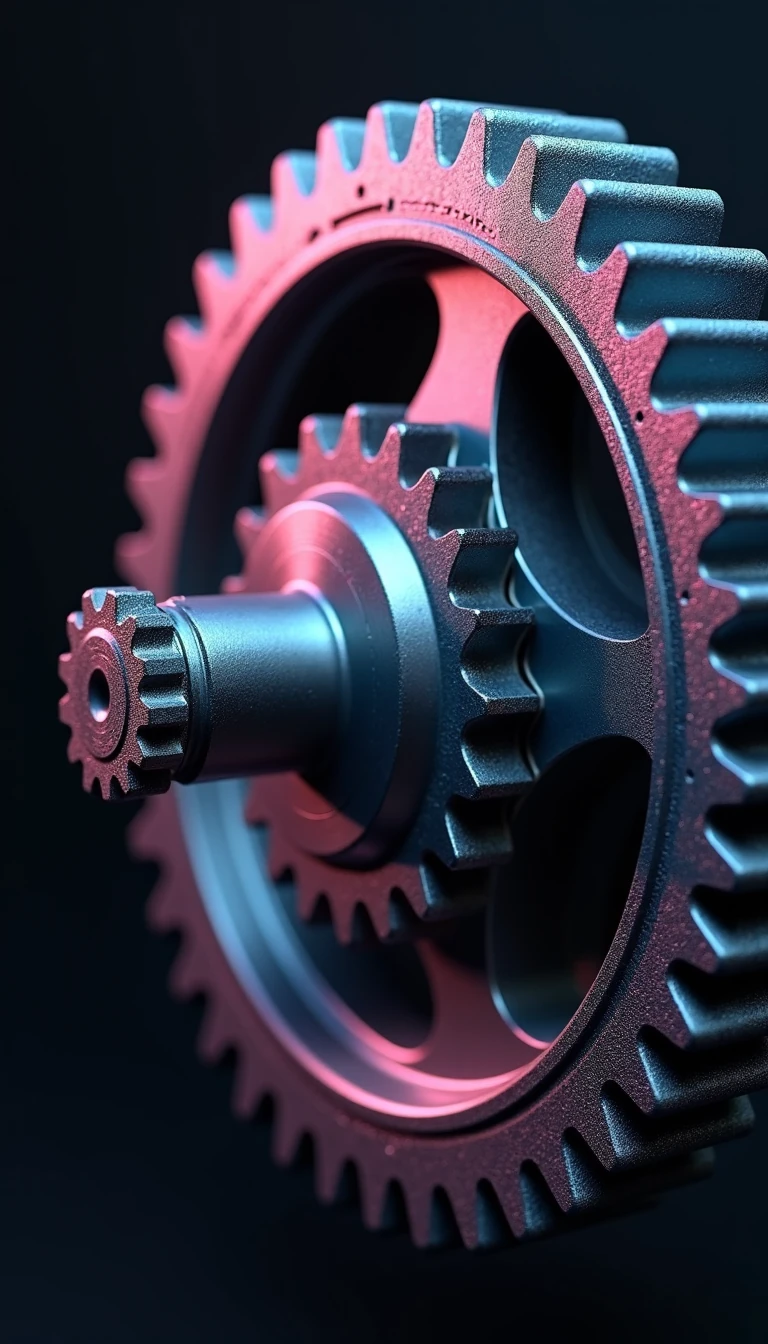 Why the disc brake conquered the world of motion despite early, unreliable failuresDisc brakes convert motion into heat to stop vehicles, but their path to dominance was far from smooth. Early designs were often impractical, expensive, or prone to corrosion. Yet…
 Why the disc tumbler lock is the ultimate defense against lock bumpingInvented in 1907, the disc tumbler lock abandons the fragile springs found in standard pin locks. By using rotating detainer discs instead, it creates a mechanism that is immune t…
 Why your computer’s hard drive is actually a collection of virtual slicesDisk partitioning turns a single physical storage device into multiple logical segments. By creating these distinct regions, you can isolate system files from user data, run multi…
 From glowing segments to tactile surfaces: how we visualize the digital worldDisplay devices are more than just screens for your television or computer. They are sophisticated output systems that translate electrical signals into visual or tactile informat…
 The future of plastic was once declared to be in the trash canIn the mid-twentieth century, the plastics industry pivoted from marketing durable, superior materials to championing a culture of disposability. By 1956, industry leaders openly …
 How a simple spinning tool became the enduring symbol of the female side of lifeLong before it became a metaphor for matrilineal heritage, the distaff was an essential piece of industrial technology. By keeping unspun fibers organized and tangle-free, this hu…