 Intellect Plus
Health
6,621 cards. Each one is a 40-second story with a five-minute read behind it. Page 107 of 111.
Subtopics: Ageing & longevity · Anaesthesia · Anatomy and morphology · Bacteria · Biology · Blood · Bones & muscles · Brain · Clinical trials · Consciousness · Diabetes · Diagnosis · Digestion · Dreams · Drugs and medication · Epidemiology · Ethics · Exercise · Exercise & fitness · Eyes & vision · First aid · Future Frontier · Germ theory · Global health · Health and fitness · Health, medicine and disease · Heart & circulation · History of medicine · Hormones · Hygiene · Immunology · Infection · Medical basics · Medical history · Medical procedures · Medicine · Medicines · Memory · Mental health · Mind · Morbidity · Neuroscience · Nutrition · Pandemics & epidemics · Psychiatry · Public health · Researched · Skin & hair · Sleep · Surgery · Teeth & dentistry · Vaccines · Vitamins
 Therapy sits between holistic care and single interventionsTreatment and therapy—often abbreviated Tx—mean attempted remediation after diagnosis. Not every therapy works, and many bring adverse effects. In mental-health speech, therapy ma…
 The first virus discovered still paints tobacco leaves mottledIn 1892 Dmitri Ivanovsky showed that infectious tobacco sap passed filters that stopped bacteria. Martinus Beijerinck later named the reproducing agent a virus. Tobacco mosaic vir…
 Most strokes starve the brain, not flood itAbout eighty-seven percent of strokes are ischemic: a clot or blockage cuts blood to brain tissue. The rest are hemorrhagic, from bleeding into or around the brain. High blood pre…
 Dependence is not the same as addictionSubstance dependence means the body adapts so that stopping brings withdrawal and drives reuse. Addiction is compulsive use despite harm. DSM-5 dropped separate abuse and dependen…
- Eleven criteria turn use into a disorderSubstance use disorder means keeping going despite serious harm. DSM-5 merges older abuse and dependence labels and grades mild, moderate, or severe by how many of eleven criteria…
 Not every cut in medicine counts as surgerySurgery uses hands and instruments to diagnose, treat, reshape, or remove tissue. Urgency splits elective, urgent, and emergency work. Minimally invasive routes can enter through …
 Treating symptoms can hide the real diseaseSymptomatic treatment eases signs of illness without fixing the cause. For many viral diseases it is still the only option available. Yet muffling fever or headache can delay diag…
 Shock means tissues are starving for blood flowCirculatory shock is not emotional jolt—it is insufficient blood reaching body tissues. Early signs can be weakness, racing pulse, fast breathing, sweat, anxiety, and thirst. Untr…
 Most skin cancers ride ultraviolet light into DNAAmong cancers that doctors identify in people, skin tumours top the list worldwide, and more than 90 percent of cases link to ultraviolet radiation from the sun or tanning devices…
 Smallpox is the only human disease ever eradicatedVariola virus killed with fever, mouth ulcers, and dented fluid-filled blisters that scarred survivors—and blinded some. The last natural case was diagnosed in October 1977; the W…
 One cigarette a day still halves the distance to heart riskBurning plant leaves and inhaling the fumes delivers drugs to the brain in under a second via hundreds of millions of alveoli. Tobacco smoking, practiced by over a billion people,…
 Most quit attempts fail alone; meds and counseling helpNicotine dependence makes stopping smoking hard, yet quitting halves heart-attack risk after one year and halves lung-cancer risk after ten. From 2001 to 2010, about 70 percent of…
 Sterilization aims for permanence; reversal is never sureMedical sterilization intentionally ends fertility for good. The common surgeries are tubal ligation or salpingectomy for women and vasectomy for men. Procedures are meant to last…
 Stimulants wake the brain—until the dose tips too farFrom caffeine and nicotine to cocaine and amphetamine, stimulants raise alertness by goosing sympathetic nerves and excitatory transmitters. Low prescribed doses can sharpen focus…
 Stress is the body fighting to restore its steady stateWhen a stressor jolts your world, two major systems usually answer: the autonomic fight-or-flight cascade and the HPA axis that releases cortisol. Adrenaline and cortisol are the …
 "Plastic" surgery means reshaping flesh, not operating with polymersThe label comes from Greek plastikē, the art of modelling malleable flesh—an English sense by 1598. In surgery the word appears by 1816 and was fixed by Eduard Zeis in 1838, about…
 In hospitalized pneumonia, most tests still find no pathogenPneumonia inflames the lung’s alveoli, bringing cough, chest pain, fever, and hard breathing in shifting mixes. Each year it hits about 450 million people—roughly 7% of the world—…
 Paracelsus’s rule still stands: the dose makes the poisonIn science, a poison is any chemical that harms or kills a living organism. The sixteenth-century physician Paracelsus, often called toxicology’s father, put it sharper: everythin…
- About three in four polio infections never show any symptomsPoliovirus infects only humans and spreads mainly by fecal–oral routes—or sometimes mouth to mouth. Roughly 75% of infections stay silent, yet carriers can shed virus for up to si…
 Rubella is often mild—until it crosses the placentaAlso called German measles or three-day measles, rubella is a vaccine-preventable viral infection that half of those infected may not notice. A pale rash can start about two weeks…
 Scarlet fever’s rash is written by bacterial toxins from a virusScarlet fever follows a minority of strep throat or skin infections with Streptococcus pyogenes. The sandpaper rash is not from the bacterium alone: strains need bacteriophages—es…
 Schizophrenia has no blood test—diagnosis waits on months of lived signsHallucinations, delusions, disorganized thought or behavior, and flat or mismatched emotion can mark schizophrenia, usually emerging in young adulthood. There is no objective diag…
 World wars put Gillette blades in millions of kitsCopper razors appeared around 3000 BC, yet the modern mass market arrived with disposable blades. In 1918 Gillette sold 3.5 million razors and 32 million blades to U.S. forces. In…
 U.S. guidelines dropped the ten-minute exercise bout ruleAdults should still accumulate 150 to 300 minutes of moderate aerobic activity each week, or 75 to 150 vigorous minutes, plus twice-weekly muscle strengthening. The 2018 U.S. Phys…
- Physical therapy began as gymnastics for the injuredHippocrates and Galen already prescribed massage and water cures around 460 BCE. Sweden registered physiotherapists in 1887; Britain's Chartered Society formed in 1894. Polio and …
 Rats did not start plague—starving fleas didYersinia pestis still causes roughly 600 reported cases a year, mostly in places like Congo, Madagascar, and Peru. Antibiotics cut death risk to about 10% from roughly 70% untreat…
 PPE is the last rung on the workplace safety ladderHelmets, gloves, respirators, and goggles sit at the bottom of the hazard-control hierarchy—used when elimination, substitution, engineering, and administrative fixes cannot cut r…
 Pharmacists moved from counting pills to owning outcomesOnce mainly checkers and dispensers for physicians' orders, pharmacists now counsel on doses, interactions, and side effects—and in some places prescribe or immunize. "Pharmaceuti…
 Pharmacokinetics asks what the body does to the drugWhile pharmacodynamics tracks a drug's effects on the organism, pharmacokinetics (PK) maps the chemical's journey from dosing to total elimination—usually summarized as ADME: abso…
 Pharmacology is not pharmacy—one studies drugs, one applies themThe words share a Greek root for drug or poison, yet pharmacology is the biomedical science of how chemicals alter life, while pharmacy is the health profession that applies that …
- Baghdad’s ninth-century pharmacies were already state-regulatedThe World Health Organization counts at least 2.6 million pharmacists and pharmaceutical workers worldwide. Their craft is older than the modern shop: Sumerian tablets list recipe…
 Most people with a phobia actually live with severalA phobia is an anxiety disorder: irrational, persistent, excessive fear lasting over six months, with avoidance far beyond real danger. About three in four sufferers have multiple…
 Physical disability is broad—and environments decide how limitingThe label spans blindness, deafness, epilepsy, respiratory disease, limb loss, and more. Severity and daily restriction vary wildly. An inclusive, accessible setting can lift many…
- Rabies almost never forgives once symptoms beginRabies inflames the brain after a lyssavirus travels nerves from a bite or infectious saliva. Incubation is usually one to three months, sometimes under a week or over a year. Onc…
 Half of U.S. invasive cancers still meet the radiation beamRadiation therapy aims ionizing beams—usually from a linear accelerator—to damage tumor DNA while sparing neighbors. About half of America’s 1.2 million invasive cancers diagnosed…
 Radiology began with X-rays—and now often skips themWilhelm Röntgen found X-rays on 8 November 1895 and won the first Physics Nobel in 1901. The specialty still bears “radio,” yet today’s toolkit spans ultrasound and MRI that use n…
- About five percent of working-age adults have tried controlled drugsRecreational use means taking psychoactive substances for pleasure or pastime—depressants, stimulants, or hallucinogens. As of 2015, roughly five percent of people aged fifteen to…
 A knee tap can bypass the brain and still move your legA reflex is an almost instant, unplanned response to a stimulus traveling a reflex arc—sometimes through a single synapse, sometimes many. Signals need not reach awareness; the sp…
 One to two billion people see the world slightly out of focusRefractive error means the eye’s optics fail to land a sharp image on the retina. Myopia, hyperopia, astigmatism, and age-related presbyopia blur distance, near vision, or stretch…
 When lungs fail, the brain is soon starved of clear thoughtRespiratory failure means arterial oxygen, carbon dioxide, or both slip off normal rails—hypoxemia, hypercapnia, or both—raising breathing work and often clouding consciousness th…
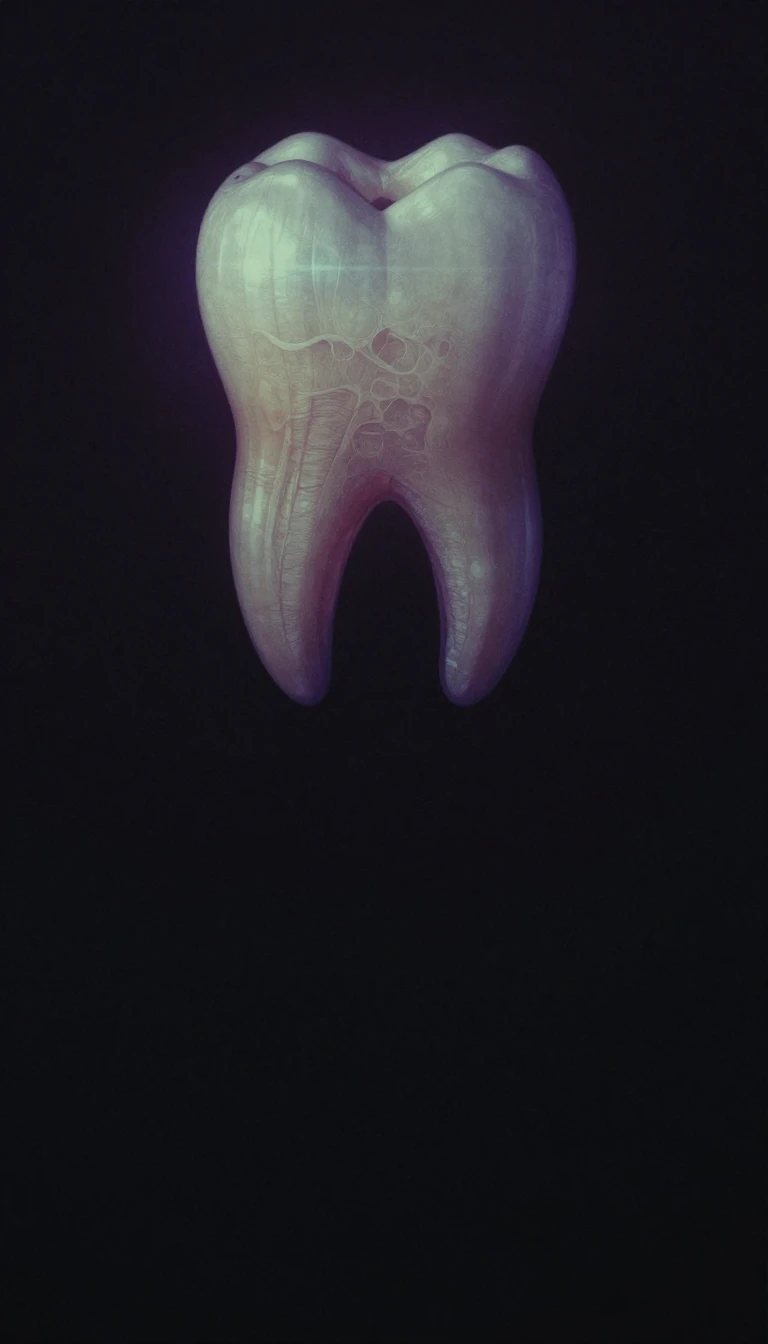 Root canals are mazes—and missed branches keep infections alive“Root canal” names both the hollow pulp space inside a tooth and the endodontic cleaning that fills it. Walter Hess showed in 1917 that roots are not smooth cones but branching sy…
 Nearly every child meets rotavirus before age fiveRotaviruses are the leading cause of severe diarrhoea in infants and toddlers. Almost every child worldwide is infected at least once by five; later bouts weaken. Ruth Bishop’s te…
- Personality disorders may be degrees, not ten sealed boxesPsychiatry still argues whether personality disorders are distinct types or points on a severity spectrum. DSM-5-TR keeps ten categorical diagnoses in three clusters; ICD-11 rates…
 The first chemical cure for an infection came from tree barkQuinine, isolated from Peruvian cinchona in 1820, treated malaria long before germ theory matured. Bark extracts reached Spain by 1636 via Jesuit missionaries; use dates to at lea…
 Starfish thorns helped launch modern immunologyIlya Mechnikov stuck tiny thorns into starfish larvae and watched unusual cells swarm them. That observation of phagocytosis, shared with Paul Ehrlich in the 1908 Nobel Prize, hel…
 Infectious disease that carries no DNA or RNAPrions are misfolded proteins that coerce normal copies into the same bad shape. Stanley Prusiner coined the name in 1982 for a proteinaceous infectious particle—no nucleic acid i…
 Most prostate tumors never threaten a man's lifeAbout 1.2 million prostate cancer cases and 350,000 deaths occur each year, yet most diagnosed men have low-risk disease confined to the gland—and roughly 99 percent of them live …
 Asylums became hospitals built around treatmentPsychiatric hospitals grew out of older lunatic asylums, but successive reforms and evidence based care shifted the mission from mere containment toward therapy. Today that means …
- Psychiatry means medical treatment of the soulGerman physician Johann Christian Reil coined psychiatry in 1808 from Greek roots for soul and healing. The specialty still sits between biology and social science, diagnosing men…
 Psychopathy is measured but not an official diagnosisNo psychiatric body sanctions a formal diagnosis named psychopathy, yet checklists of its traits are widely used in criminal justice settings around the world today. The construct…
- About three percent of Americans experience psychosisPsychosis is the inability to tell what is real from what is not—delusions, hallucinations, or scrambled thought and speech. In the United States roughly three percent of people d…
- Public health works on populations, not just patientsPublic health is the craft of preventing illness, lengthening life, and fostering wellbeing through coordinated choices by societies, organizations, communities, and private actor…
- Pulmonology began with rediscovering lung circulationLong before lung clinics, Ibn Al Nafis and later Western anatomists overturned Galen's idea that blood punched pores through the heart wall. That pulmonary circulation insight sti…
- Your pulse is an artery answering each heartbeatPulse is the rhythmic expansion of an artery as the heart cycles. Felt wherever a vessel can be pressed against bone or muscle—wrist, neck, groin, foot—it offers a quick bedside w…
 Quackery sells false cures and steals real chancesQuackery promotes fraudulent or ignorant medical practice: dubious tests, unproven remedies, and overhyped claims, especially around serious illness such as cancer. Beyond empty p…
- Hypoxia means tissues starve for oxygen, not just thin bloodHypoxia is tissue oxygen shortage—local or whole-body—distinct from hypoxemia, which names low oxygen in arterial blood. Total absence is anoxia. Healthy people meet hypoxia climb…
- Nine in ten lymphomas are non-Hodgkin; Reed–Sternberg marks HodgkinLymphomas are cancers of lymphocytes. Non-Hodgkin lymphomas make up about ninety percent of cases; Hodgkin lymphoma about ten percent, marked by Reed–Sternberg cells. Worldwide in…
 Major depression needs two weeks of pervasive low mood to diagnoseMajor depressive disorder, or clinical depression, requires a stretch of at least fourteen days marked by persistent sadness, battered self-worth, and vanishing pleasure in usual …
- Malaria’s parasites hide in the liver before wrecking red cellsMalaria spreads when infected female Anopheles mosquitoes inject Plasmodium parasites. Symptoms usually start ten to fifteen days later—fever, fatigue, vomiting, headache—and can …
 Malnutrition covers both empty plates and too-heavy onesMalnutrition means too few, too many, or badly balanced nutrients harming tissues and form. It spans undernutrition—stunting, wasting, underweight—and overnutrition such as obesit…