 Intellect Plus
History
21,006 cards. Each one is a 40-second story with a five-minute read behind it. Page 52 of 351.
Subtopics: 19th century · 20th century · Africa · Age of Exploration · Ages & eras · Ancient · Ancient China · Ancient egypt · Ancient greece · Ancient rome · Ancient trade · Archaeological discoveries · Archaeology · Astronomy · Australia · Auxiliary historical sciences · Babylon · Basics · Born on this day · Bronze age · Buddhism · Case studies · Chefs, bartenders and winemakers · China · Cities · Climate · Columbus · Contemporary (1945-) · Cosmetics people · Crime · Criminals · Decipherment · Deep time · Disasters · Early modern · Education · Egypt · Empires · Empires & civilisations · Exploration · Explorers · Extinction · Fandom, conventions and festivals · History by continent and large region · History by continent and region · History by country · History by country, small region and city · History by ethnicity · History by subject matter · History by topic · Inca · India · Industrial Revolution · Japan · Kings & queens · London · Mass hysteria · Medicine · Medieval kingdoms · Medieval life · Mediterranean · Mercedes-Benz History · Mesopotamia · Middle ages · Military leaders and theorists · Military leaders, personnel, and theorists · Ming dynasty · Misconceptions · Modern · Modern (1800-1945) · Napoleon · Navigation · North africa · Other · Pacific · Pharaohs · Philippines · Pirates · Post-classical · Prehistory · Propaganda · Public health · Rebels, revolutionaries and activists · Renaissance · Researched · Second world war · Shipwrecks · Silk Road · South america · Tradespeople · UK & Ireland: history · United states · Vikings · Volcanoes · Women in history
 The dual anchors of Bosnian-American identity: Chicago and St. LouisWhile many immigrant groups cluster in a single hub, Bosnian Americans are defined by two distinct geographic poles. From the early 20th-century pioneers in Chicago to the massive…
 The divergent paths of freedom: How escape shaped Afro-Surinamese identityFor the Afro-Surinamese, freedom was not a single event but a branching history. While some sought liberty through the radical act of escaping into the jungle to build autonomous …
 The final guardians of a 44-year aviation legacyBolivia held a unique distinction in the skies for nearly half a century. As the final operator of the Lockheed T-33, the Bolivian Air Force (FAB) maintained a lineage of aviation…
 The hidden history of a town named for underground waterBefore it was a hub for oil and gas, Artesia was defined by what lay beneath its soil. The city’s very name was born from a geological discovery that fueled a regional agricultura…
 The man who saw the North in a visionDuring the ninth century, a noble Frankish monk named Ansgar embarked on a perilous journey to evangelize the northern lands. Guided by mystical visions and enduring extreme ascet…
 The man who faced the scaffold with a smileIn 1660, Thomas Harrison was executed for his role in the death of King Charles I. Despite facing a brutal sentence of being hanged, drawn, and quartered, witnesses described his …
 The 'Qiang' were never a single people but a moving labelFor centuries, the Chinese empire used the term Qiang to describe their western neighbors. But rather than a unified nation, the Qiang were a shifting collection of tribes—shepher…
- The king who traded peace for power and built a dynastyWhile his predecessor ruled through piety, Tullus Hostilius ruled through the sword. He believed Rome had grown soft in an era of peace, deliberately seeking out war to forge a mi…
 The 1913 murder that forced a state to create a police forceBefore 1917, New York lacked a centralized state police force. It took a specific, high-profile failure of local law enforcement—the murder of a construction foreman—to overcome i…
 The 1839 uprising that nearly ended in a hanging.In 1839, 4,000 people marched on Newport, Wales, demanding the right to vote. It was the last large-scale armed rising in the country. What followed was a chaotic, bloody confront…
 The priest who helped vote away German democracyHow does a religious leader justify supporting a totalitarian dictator? Ludwig Kaas, a high-ranking Catholic priest, became a pivotal figure in the Weimar Republic. His actions du…
 The heavy price of industrial progress in a mill townIn the late 19th century, Homestead, Pennsylvania, became the epicenter of a violent struggle for the soul of American labor. While it built the steel that forged a nation, the hu…
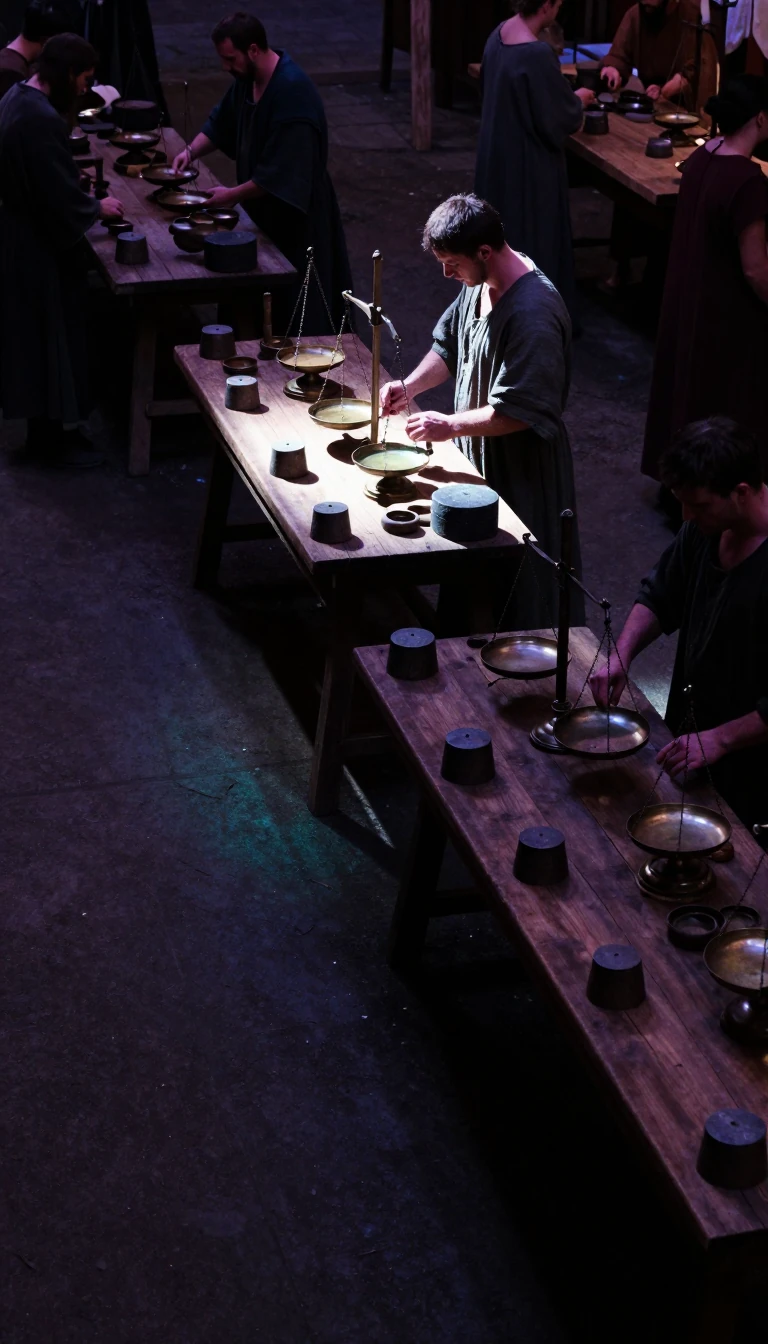 The physical weight of sovereignty: how a 6-inch seal rules a nationA single silver matrix, weighing over 275 troy ounces, carries the weight of the British state. From the 11th century to the present, this physical object has functioned as the ul…
 The village that traded miraculous springs for industrial mightBefore it was a bustling London suburb, Willesden was a site of spiritual pilgrimage and rural isolation. From a 10th-century 'hill of the spring' to a hub of car manufacturing an…
 From slave labor to scholarship: Alabama's oldest private HBCUTalladega College began with a radical pledge: that education was vital to preserving liberty. Founded by formerly enslaved men, the institution transformed a building constructed…
 When peacekeepers take the shot: the controversy of Operation BøllebankIn 1994, Danish peacekeepers engaged in the first combat since World War II, sparking a debate that still haunts international law. Was it a necessary act of self-defense or a vio…
 The man who traded political patronage for a merit-based governmentBefore the late 19th century, federal jobs were often handed out as rewards for political loyalty rather than skill. George Pendleton changed that trajectory forever. By championi…
 Neandertals likely invented specialized bone tools before modern humans arrived in EuropeResearchers have identified specialized bone tools, known as lissoirs, in a Neandertal context that predates the arrival of modern humans in Europe. These tools, which were previo…
- The high price of loyalty: Ireland's disproportionate toll in World War IIreland entered World War I with a complex identity, caught between the push for independence and the pull of imperial duty. While over 200,000 Irishmen served, they faced a uniqu…
 Two men share a name but lead vastly different livesOne is a former Marine and U.S. Representative who faced federal indictments for campaign finance violations. The other is a British academic specializing in Applied Linguistics. …
 The university that survived a French revolution to lead German researchIn 1798, the French First Republic abolished the University of Cologne as part of a sweeping constitutional overhaul. It would take over a century for the institution to rise agai…
 The 1964 primary that exposed the 'backlash' of American politicsIn 1964, a Democratic primary was supposed to be a foregone conclusion for Lyndon B. Johnson. Instead, it became a laboratory for a new political phenomenon: the white backlash. B…
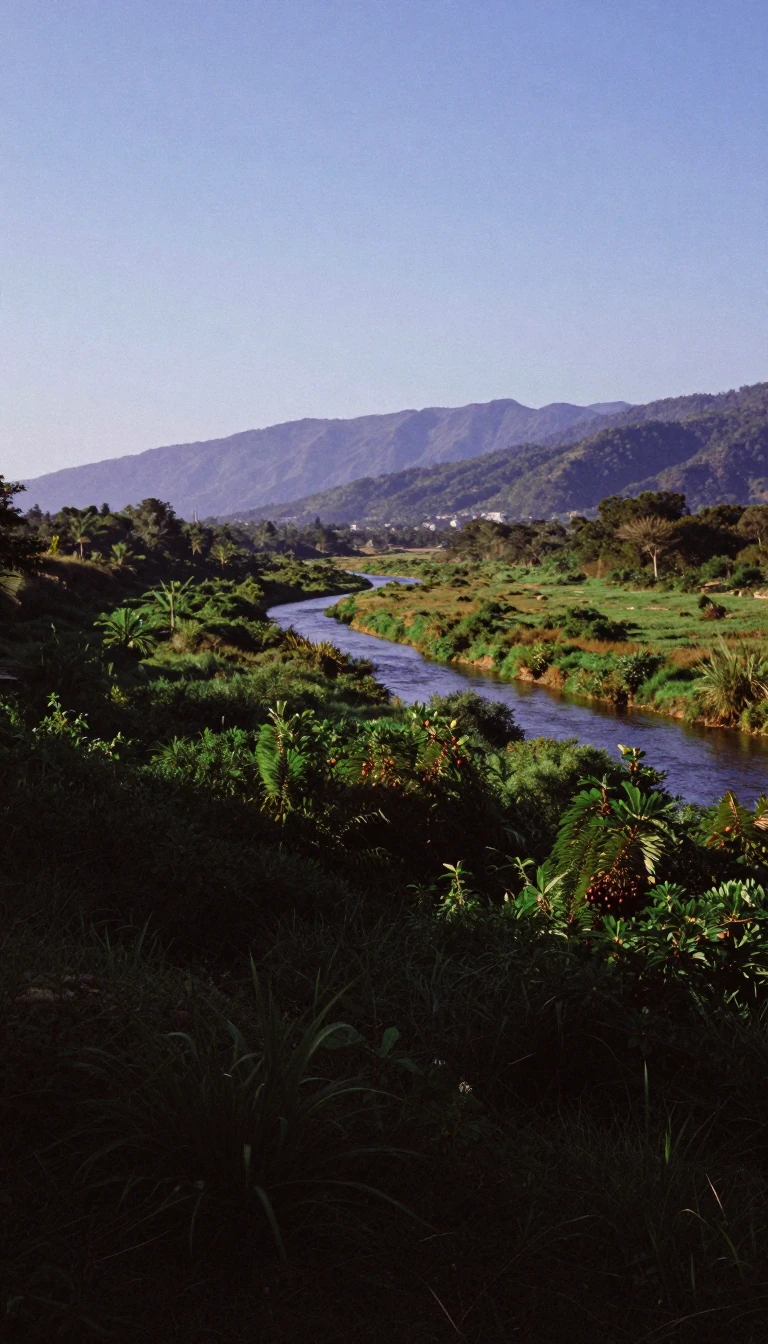 How a cattle ford gave a city its nameIn the 1850s, a simple creek crossing defined the identity of a growing Alabama settlement. Oxford was named for a narrow point in the Chocolocco Creek, where farmers could move c…
 The high-altitude sanctuary of people who chose to be ungovernedIn the rugged highlands of Southeast Asia lies a vast social space where communities have historically avoided the reach of empires. Rather than being subjects of kings, these peo…
 How a marginalized religious group seized a capital to spark a civil warThe Houthi movement didn't emerge from a vacuum; it was forged by decades of systemic exclusion. By exploiting the fractures left by a long-standing presidency, they transformed f…
 A city born from convict labor and shaped by river floodsMaitland wasn't always a unified city. It began as a series of convict settlements on the Hunter River, eventually splitting into two distinct townships to escape the very water t…
 From liberal activist to a pariah of the far-rightJason Kessler's political transformation is a study in radicalization. Once a liberal activist who voted for Barack Obama, he became the primary organizer of the violent 2017 Unit…
 The first recorded reconciliation between Europeans and Indigenous Australians happened hereIn 1770, a skirmish over stolen turtles led to a historic moment of peace at the mouth of the Endeavour River. While many colonial encounters were defined by violence, this specif…
 The historian who sees Abraham Lincoln through the lens of CalvinismMost historians view the American Civil War through the lens of political science or social movements. Allen C. Guelzo argues that to understand Abraham Lincoln, you must first un…
 A city named for a surveyor who became a Confederate officerAlbert Lea, Minnesota, carries a name rooted in 19th-century exploration and civil war history. While it serves as a modern agricultural and manufacturing hub, its origins link ba…
 The man who held the presidency in a land that didn't existRyszard Kaczorowski spent decades as a leader of a nation in exile. From surviving Soviet death rows to leading a government in London, his life was a masterclass in political con…
 The mosque that served as a medieval hospital and mental asylumArchitecture is rarely static. The Mosque of Ibn Tulun, a 9th-century masterpiece of Abbasid design, has lived many lives. Beyond its role as a place of worship, it served as a mi…
 The hidden history of the public water fountainDrinking fountains are more than just convenient hydration points. They are artifacts of urban engineering, temperance movements, and public health battles. From ancient stone spo…
 Was Japanese ultranationalism a grassroots revolution or a top-down imposition?Japan's path to totalitarianism in the 1930s is often debated as a bottom-up radical uprising or a calculated elite maneuver. While radical factions sought to overthrow the old gu…
 The strangers who became a nation: the dual origins of the OgoniHow does a minority group maintain its distinct identity while surrounded by powerful neighbors? For the Ogoni of Nigeria, history offers two competing narratives: one of inland m…
 From Elite Academies to Public High Schools: A Century of EvolutionIn the 18th century, an 'academy' was the pinnacle of secondary education, often reserved for the elite. Today, the American high school is a massive public infrastructure. This s…
 The 1960 moment that fractured a city and redefined a nationOn November 14, 1960, a six-year-old girl walked into a New Orleans elementary school. This seemingly mundane act of enrollment triggered a massive social crisis, met with mobs, d…
- From royal farmland to a global stage for the United NationsNew Hyde Park’s history is a study in rapid adaptation. It transformed from a 17th-century royal estate into a cattle ranch, then an industrial hub, and eventually a commuter vill…
 The neighborhood that renamed its streets to dodge World War I sentimentLogan Square’s street names are a living record of shifting geopolitical tides. From Polish origins to German influence, the area's identity was literally rewritten by the city co…
 The diplomat who chose economic expansion over military conquestIn the 1920s, Japan faced a crossroads: aggressive expansion or international cooperation. Kijūrō Shidehara championed the latter, crafting a liberal foreign policy that prioritiz…
- The admiral who was blinded by a bomb and kept in the darkIn 1941, Kichisaburō Nomura was the Japanese ambassador to the U.S., tasked with preventing war. Yet, he was kept in the dark about the impending attack on Pearl Harbor. A hard-no…
 The college that almost became a monument to a US PresidentIn 1931, a community debate nearly renamed Hiram College to honor James A. Garfield, the 20th US President. While the name change was ultimately abandoned, the institution remains…
- The noble fellow who cut the enemy line aloneAt the Battle of Trafalgar, the HMS Royal Sovereign didn't just participate; it dominated. Because of a specific maintenance upgrade, it became a superior sailer in light winds, a…
 The high-stakes trade that saved Britain—and redefined American powerIn 1940, with France fallen and the British Empire standing alone, Winston Churchill struck a desperate bargain. To save his nation from Nazi Germany, he traded land for ships. It…
 The soldier who bankrolled the first English colony in AmericaWhile Captain John Smith captured the public imagination, Edward Maria Wingfield provided the actual machinery of empire. As one of the primary financial backers and organizers of…
- Japan's conservative rule has been nearly uninterrupted since the 1880sWhile Japan underwent a radical transformation from a feudal society to a modern industrial power, its political backbone remained remarkably steady. Despite the introduction of W…
 The city that stood firm against a thousand-man siegeIn 1857, a tiny two-story building in Arrah became the epicenter of a desperate military standoff. While the British Raj faced a massive uprising, a small garrison of just 16 peop…
 The oldest university building west of the Mississippi is still in useHidden in plain sight in Salem, Oregon, stands a redbrick structure that survived a fire and a state government relocation. It is a rare architectural survivor, serving as a livin…
 How a railroad transformed Michigan's wilderness into a lakefront playgroundWaterford Township owes its identity to the water. Named for its vast number of lakes, this northern Detroit suburb evolved from a rugged frontier of first farms and sawmills into…
 The 1973 power-sharing plan that collapsed under the weight of a general strikeIn December 1973, a glimmer of hope emerged for Northern Ireland. The Sunningdale Agreement aimed to create a revolutionary power-sharing government and a cross-border Council of …
- The century where the Roman Republic died and the Empire was bornThe 1st century BC was a period of violent transition. As the Roman Republic buckled under the weight of civil war and autocratic ambition, the Mediterranean was unified under a s…
 The lost Hebrew roots of a 'meaningless' Greek psalmFor centuries, scholars debated whether Psalm 151 ever existed in Hebrew. It was often dismissed as a Greek invention—a 'desiccated' and 'jumbled' addition to the Bible. However, …
 The anarchist geographer who mapped the world from exileImagine a scholar so radical that he was sentenced to life in prison for his politics, yet so brilliant that scientists pleaded with the government to set him free. Élisée Reclus …
 The first woman governor and 'Mother of Pakistan' who shaped a nationBefore she was a stateswoman, she was an economist mobilizing students and training women for the front lines. Ra'ana Liaquat Ali Khan didn't just witness the birth of Pakistan; s…
- The Silk Road city that survived the Mongols to become a libraryHidden in the Mongolian desert, Khara-Khoto was once a thriving hub of the Western Xia dynasty. While many cities fell to Genghis Khan, this fortress not only endured but expanded…
- The dry earth system: why our modern flush toilets won a historical warBefore the roar of sewers dominated urban life, an English clergyman proposed a revolution in sanitation. He didn't want to wash waste away; he wanted to manage it. His 'dry earth…
 The enslaved woman who tailored the First Lady's private lifeElizabeth Keckley bought her freedom for $1,200 and rose from a brutal life of servitude to become the personal modiste of Mary Todd Lincoln. Beyond sewing gowns, she became a con…
 From 1788 artisans to 1.7 million people: Canada's Chinese historyThe first Chinese people arrived in Canada in 1788, yet for over a century, they were systematically excluded from the rights of citizenship. This portrait of a population reveals…
 The first American immigration station was a former military fortLong before Ellis Island became the famous gateway to the United States, a circular sandstone fort in Manhattan served as the primary processing center for newcomers. From 1855 to…
- The world's oldest continuous cultures may have mastered aquaculture firstFor decades, the prevailing narrative was that Australian Aboriginal peoples were purely nomadic hunter-gatherers. New archaeological evidence is dismantling this myth, suggesting…