 Intellect Plus
History
21,006 cards. Each one is a 40-second story with a five-minute read behind it. Page 49 of 351.
Subtopics: 19th century · 20th century · Africa · Age of Exploration · Ages & eras · Ancient · Ancient China · Ancient egypt · Ancient greece · Ancient rome · Ancient trade · Archaeological discoveries · Archaeology · Astronomy · Australia · Auxiliary historical sciences · Babylon · Basics · Born on this day · Bronze age · Buddhism · Case studies · Chefs, bartenders and winemakers · China · Cities · Climate · Columbus · Contemporary (1945-) · Cosmetics people · Crime · Criminals · Decipherment · Deep time · Disasters · Early modern · Education · Egypt · Empires · Empires & civilisations · Exploration · Explorers · Extinction · Fandom, conventions and festivals · History by continent and large region · History by continent and region · History by country · History by country, small region and city · History by ethnicity · History by subject matter · History by topic · Inca · India · Industrial Revolution · Japan · Kings & queens · London · Mass hysteria · Medicine · Medieval kingdoms · Medieval life · Mediterranean · Mercedes-Benz History · Mesopotamia · Middle ages · Military leaders and theorists · Military leaders, personnel, and theorists · Ming dynasty · Misconceptions · Modern · Modern (1800-1945) · Napoleon · Navigation · North africa · Other · Pacific · Pharaohs · Philippines · Pirates · Post-classical · Prehistory · Propaganda · Public health · Rebels, revolutionaries and activists · Renaissance · Researched · Second world war · Shipwrecks · Silk Road · South america · Tradespeople · UK & Ireland: history · United states · Vikings · Volcanoes · Women in history
 The legal precedent that broke California's school segregationIn 1945, a nine-year-old girl was denied entry to a school because of her Mexican ancestry. While the law technically classified Mexican-Americans as white, local districts were b…
 The city that fueled a presidential campaign with a songIn 1840, a local poet in Marysville, Ohio, penned a simple tune that would redefine American politics. The "Log Cabin Song" didn't just capture the imagination of a nation; it pro…
 The first city in Texas to light up the nightBefore the modern grid, Marshall, Texas, became a pioneer of the electric age. While the surrounding region was defined by cotton and railroads, this city secured a technological …
 The cathedral that survived being destroyed seven times by natureThe Manila Cathedral is a masterpiece of architectural resilience. Since 1571, it has been razed by fire, earthquakes, and war, only to be rebuilt repeatedly. This cycle of destru…
 The London stage that first conquered the darkness with gasBefore the modern era of electric lights, the Lyceum Theatre revolutionized the theatrical experience by mastering a new element of physics: gas lighting. In 1817, it became the f…
 From placing dishes to presiding over trials: the evolution of a royal officeThe Lord High Steward began as a humble household servant responsible for setting the royal table. Over centuries, this role transformed from a domestic task into a position of im…
 A city forged by fire, flood, and colonial tradeLegazpi is more than a gateway to the Bicol Region; it is a palimpsest of human resilience. From pre-Hispanic maritime networks to a catastrophic 1814 volcanic eruption that level…
 The man who held the Yugoslav presidency for only ten daysLazar Koliševski was a master of political survival, rising from a poor orphan to a high-ranking communist leader. He navigated complex ethnic identities and orchestrated massive …
 The poet who rewrote a folk song to outsmart a dynastyLaxmi Prasad Devkota didn't just write poetry; he engineered it to survive political censorship. By strategically altering the identity of a tragic folk ballad's hero, he bypassed…
 The 'Lawless Law' that dismantled Irish landlordism through social ostracismIn 1879, a movement of desperate farmers turned a rural economic crisis into a revolutionary campaign. By weaponizing social isolation and collective defiance, they didn't just pr…
 The city that fought to exist against its neighborLacey, Washington, wasn't always a city. In the mid-20th century, it faced a literal existential threat: being swallowed whole by its neighbor, Olympia. The community had to navig…
 The school that pioneered the sliding-scale tuition modelIn 1906, Frederick Herbert Sill founded a school that broke the mold of elite education. Instead of catering only to the wealthy, he created a system where the rich covered the co…
 The 1968 report that diagnosed a nation's fractureIn 1967, American cities erupted in violence, killing dozens and destroying millions in property. While many blamed outside agitators, a presidential commission reached a startlin…
 The president who intentionally weakened his own power to save a republicIn an era of charismatic leaders and imperial ambitions, Jules Grévy took a radical path: he sought to make the presidency as powerless as possible. By intentionally diminishing h…
 Can a forest erase the history of a vanished village?The Jewish National Fund (JNF) has planted over 240 million trees across Israel, transforming arid landscapes into lush forests. But beyond the ecological shift, these trees have …
 How an all-Ireland alliance fractured under the weight of partitionIn 1891, a political merger aimed to create a united front against Irish Home Rule. But as the threat of British rule shifted toward the reality of island division, this coalition…
- The century-long struggle for Kurdish autonomy in IraqFrom the fall of the Ottoman Empire to modern federalism, the Iraqi–Kurdish conflict is a complex saga of secession, genocide, and shifting borders. It is a story of how a distinc…
 From elected leaders to divine right: the evolution of English powerThe English monarchy began as an elective system where a council chose the strongest royal candidates. This changed after 1066 when primogeniture became the standard. Over centuri…
 The man who turned an emperor into a prisonerWhen Napoleon surrendered, the British needed a jailer who wouldn't mind isolation. They chose Hudson Lowe—a man described by his peers as lacking tact and education, but possessi…
 The hurricane that redefined the limits of Atlantic destructionHurricane Georges was a marathon of meteorological violence. Traversing the Caribbean and Gulf of Mexico in 1998, it made more landfalls than almost any other storm in modern hist…
- From ancient olive presses to a modern center of global educationHidden beneath the modern streets of Hod HaSharon lies a 1,300-year-old commercial olive oil factory. This site reveals a history of organized production that predates the city's …
 The King Who Minted Two Different Realities in One CurrencyImagine a monarch who issued silver coins honoring a Persian ruler while striking copper coins featuring the Russian double-headed eagle. Heraclius II of Georgia navigated a geopo…
 The minister who traded fire-and-brimstone for the theory of evolutionBorn into a household of strict religious fear, Harry Emerson Fosdick arrived at college ready to believe the Bible was literal science. Instead, he sparked a national theological…
 The massive wooden fort that shaped the American MidwestBefore it was a quiet Ohio city, Greenville was the site of North America's largest wooden fort. This massive military base served as the primary staging ground for the forces tha…
 How a pub meeting in Coventry birthed a national movementIn 1972, thirteen people met at a pub and were asked to leave because they were being too loud. Instead of moving on, they stayed to form a political party. This small, overwhelme…
- The gold coin so small it was accused of being 'too delicate'In 1849, the United States Mint released a gold dollar so tiny it sparked a national debate over whether it was practical currency or merely a piece of jewelry. At just 0.5 inches…
- The systematic dismantling of Hungary's German industrial heartlandBy the late 18th century, over one million German speakers lived in the Kingdom of Hungary, fueling an industrial boom in glass-blowing and metalworking. Yet, following World War …
 The first white child born in Ohio was born in this villageIn 1773, a small settlement on the Tuscarawas River became the site of a historical first. While the village is now remembered for a tragic massacre, its origins are rooted in a u…
- The playwright who used satire to defuse a potential massacreIn 1531, a devastating earthquake struck Lisbon. While friars used the disaster to incite violence against the Jewish community, one man stepped in to stop the bloodshed. Gil Vice…
 The wealthy reformer who funded a slave insurrection by mistakeBorn into a massive fortune, Gerrit Smith used his wealth to champion radical causes like temperance and abolition. While he provided significant financial support to the activist…
 The aristocrat who traded religious austerity for a parody of monastic lifeFrancis Dashwood was a man of extreme contradictions. A high-ranking politician and Fellow of the Royal Society, he also founded a secret society that mocked Catholic monasticism …
- The French aristocrats who founded a city on a legal technicalityIn 1790, 500 French refugees fled the Revolution to find a new life in the American wilderness. They arrived with deeds to land that turned out to be completely worthless, forcing…
 The island that almost powered Australia with nuclear energyIn the 1960s, French Island was slated to become the site of Australia's first nuclear power plant. While the project was ultimately abandoned, the island's history remains a comp…
- The legal machinery designed to turn human freedom into a federal crimeIn 1850, the U.S. government didn't just allow the return of enslaved people; it weaponized the federal government to enforce it. By stripping away jury trials and imposing heavy …
 The Scandinavian Renaissance masterpiece built in under ten yearsIn the early 17th century, King Christian IV of Denmark-Norway achieved an architectural feat of staggering speed. He transformed a modest manor into the largest Renaissance resid…
 The aristocratic socialist who spent 70 years visiting the nation's prisonersFrank Longford was a political paradox: a wealthy hereditary peer who championed social outcasts. From the halls of Oxford to the cells of high-security prisons, he spent seven de…
 How a wartime economic crisis forged a radical political allianceWhen World War I sent agricultural prices plummeting and retail costs soaring, a desperate alliance formed between two of America's most exploited classes. Farmers and urban labor…
 The medieval barony: a strategic puzzle of land and loyaltyIn medieval England, a barony wasn't just a title; it was a sophisticated geographic strategy. To prevent any single lord from becoming too powerful, Norman kings scattered baroni…
- Why a 19th-century educator argued women were not 'satellites of men'In an era that viewed women's education as a means to enhance beauty, Emma Willard championed a radical alternative: intellectual mastery. She argued that women were primary exist…
 The nobleman who saved a king and lost his lifeEdward, 2nd Duke of York, was a high-stakes political survivor who navigated the treacherous waters of the English court. From being a royal favorite to a prisoner of the state, h…
 The pneumatic tyre was a discovery stolen by a patent battleJohn Boyd Dunlop didn't just invent the pneumatic tyre; he lost the rights to it almost immediately. While his child's tricycle revolutionized travel, a 1845 patent by a different…
- The man who united the Liberals and the Social DemocratsIn 1988, David Steel achieved a political feat that many thought impossible: merging two distinct parties into a single force. His journey from the "Baby of the House" to a life p…
 A post-dated cheque drawn on a failing bankIn 1942, the British Empire faced a desperate dilemma: they needed Indian manpower and resources to fight Japan, but the Indian people demanded immediate independence. The resulti…
- The school that trained the architects of a continentBorn from the ashes of World War II, this elite postgraduate institute was designed to heal European wounds through shared study. It doesn't just teach policy; it cultivates a spe…
 The 1.25-mile straight line defining a town's urban geometryCookstown is home to what is claimed to be Ireland's longest main street. This isn't just a local landmark; it is a physical manifestation of 18th-century urban planning, designed…
 The geography of a name: How a county became a monumentColumbia County, New York, carries a name that was once a radical proposal for the very nation it inhabits. While its borders were carved from the wilderness of the late 18th cent…
 The heralds who survived the Great Fire and a Civil WarThe College of Arms is not just a repository for family trees; it is a royal corporation that survived the destruction of its home, the execution of its patrons, and the literal b…
 The statesman who fed a nation by championing a humble rootCharles Townshend was a heavyweight of British diplomacy, yet he is often remembered for his obsession with turnips. By revolutionizing how England farmed its soil, he helped trig…
 The industrial heartbeat of the North was forged in cottonPreston wasn't just a town; it was a global engine of the Industrial Revolution. From the invention of the water frame to the massive spinning mills that dominated the skyline for…
 The 1974 merger that redefined a historic English cityLancaster's modern identity is a product of 20th-century administrative engineering. While the town holds a charter from 1193, the current district was forged in 1974 by dissolvin…
 From Bronze Age burials to the largest LDS temple in EuropeChorley’s history is a dense layer of human persistence. While the town is known for its industrial past, its roots stretch back to 3500 BC. From Roman roads to medieval raids and…
 The aristocrat who developed radar and hosted Hitler's personal negotiatorBefore he became a controversial figure of the 1930s, Lord Londonderry was a pivotal architect of British defense. While he is often remembered for his pro-Nazi sympathies, his te…
 The general who warned against the 'disaster' of a European ArmyCharles Guthrie reached the pinnacle of British military leadership, serving as Chief of the Defence Staff. Yet, his legacy is defined as much by his warnings as his commands—spec…
- The pirate-turned-emperor who used high-culture poetry to build a rogue stateA humble pilot and naval commander turned the English Channel into a private kingdom. By seizing Roman legions and minting sophisticated propaganda, Carausius didn't just rebel; h…
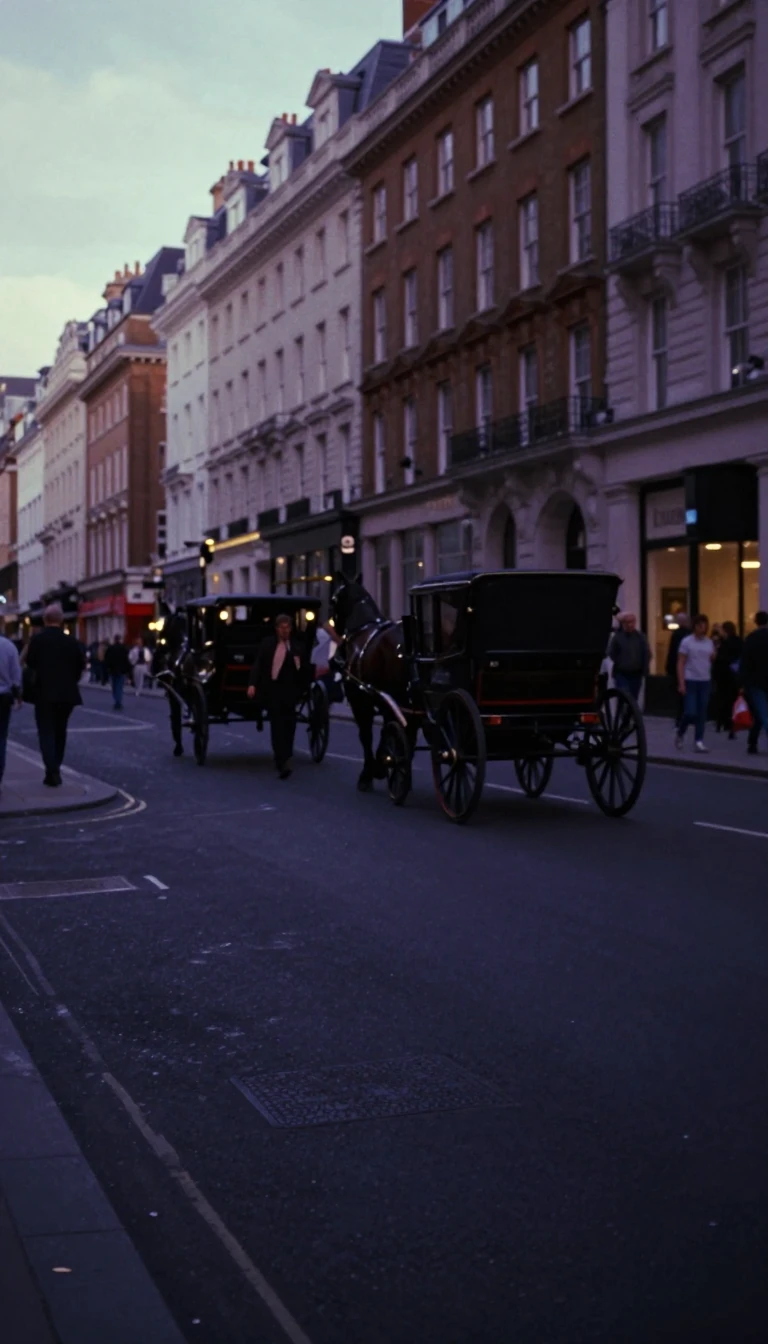 A century of failed schemes birthed one of London's busiest hubsCharing Cross station is a triumph of persistence over catastrophe. Before it became a seamless interchange, it was the site of dozens of rejected plans, abandoned projects, and f…
- The palace that was demolished to fund a king's new homeIn 1826, one of London's most opulent residences was systematically dismantled. It wasn't just a demolition; it was a strategic architectural sacrifice. The proceeds from its dest…
 The American street that paved the way for modern infrastructureIn 1891, a small stretch of road in Bellefontaine, Ohio, became a laboratory for the future of transportation. By experimenting with Portland cement on a local courthouse street, …
 The 1,300-year-old irrigation system that predates the United StatesIn the arid American Southwest, a community-operated water system has survived for centuries by prioritizing collective survival over private profit. These gravity-fed ditches, kn…
- The rise and dissolution of Europe's most prominent Eurosceptic blocIn the halls of the European Parliament, one group championed the radical idea of dismantling the Union itself. From its populist roots to its eventual collapse, the Europe of Fre…
 The people who taught Assam how to grow teaWhile the British struggled to establish tea plantations in India, they found a group of people who had already mastered the craft. The Singpho—a subgroup of the Jingpo people—pro…