 Intellect Plus
Technology
10,995 cards. Each one is a 40-second story with a five-minute read behind it. Page 92 of 184.
Subtopics: 3D printing & manufacturing · AI & machine learning: practical · Aircraft · Automata · Aviation · Batteries · Binary · Biotechnology · Bridges · Cameras & imaging · Cars · Chemical engineering · Chips · Codes · Compression · Computing · Computing and information technology · Computing history · Cryptography · Cybersecurity · Electric vehicles · Electronics · Energy · Engineering · Everyday tech · Famous patents · Future Frontier · How it works · How Things Work: GPS to the Phone · How Things Work: Jets, Propellers and Ships · Industry · Infrastructure · Internet · Inventions · Inventors · Machinery and tools · Maths · Media and communication · Medical technology · Medieval clockmaking · Mercedes-Benz Engineering · Military technology · Motorbikes · Navigation and timekeeping · Networks · Nuclear power · Optical technology · Physics · Pioneers · Programming · Programming languages · Radar · Radio · Researched · Robotics: practical · Robots · Rockets · Security · Semiconductors · Ships & boats · Skyscrapers · Smartphones · Software · Sound & audio technology · Spaceflight · Super-series Wave 1: Car To Wheels · Super-series Wave 1: From Power Station To Pc · Super-series Wave 1: The Journey Of Crude Oil · Technology today · Technology: General · Textiles · Trains & locomotives · Transportation · UK & Ireland: inventions · Video game technology · Web · Wireless
 Why solving a few problems can fix almost everything in your business processesThe Pareto chart is a simple yet powerful tool that separates the vital few from the trivial many. By visualizing data in descending order, it reveals exactly which defects or iss…
 The parking meter was born from a legal battle over public street rights.Invented in 1935 to manage traffic in Oklahoma City, the parking meter transformed urban space into a commodity. While early mechanical models relied on simple coin slots and spri…
 Before the digital age, a teenage mathematician built the world's first mechanical calculator.In 1642, eighteen-year-old Blaise Pascal sought to ease his father's grueling tax administration work in Rouen. He engineered the Pascaline, a revolutionary device that performed …
- PCI-X was the high-speed server standard that lost the war to serial connectivity.Before modern serial buses dominated, engineers built PCI-X to push parallel computing to its absolute physical limits. Designed to supercharge servers, it promised massive bandwi…
 How a Swan-Shaped Ice Sculpture Inspired a Culinary Classic at the Savoy HotelIn 1892, French chef Auguste Escoffier crafted a dessert to honor soprano Nellie Melba. Originally served in a silver dish atop an ice swan, the dish evolved from a simple pairing…
 How electricity can move heat to create cooling without any moving partsThe Peltier effect allows for the direct conversion of electricity into temperature differences. By running a current through a junction of two different conductors, heat is absor…
 Why the pentagonal rotunda is a cornerstone of complex geometric constructionAs the sixth Johnson solid, the pentagonal rotunda is a convex polyhedron defined by seventeen regular faces. Beyond its aesthetic symmetry, it serves as a fundamental building bl…
- Twelve simple shapes that have challenged mathematicians and computer scientists for over a century.A pentomino is a polygon formed by connecting five equal-sized squares edge to edge. While only twelve distinct shapes exist, they have spawned a vast universe of tiling puzzles, …
 How Mao Zedong turned rural peasants into a force capable of defeating professional armies.Mao Zedong’s people’s war strategy transformed revolutionary movements by trading technological superiority for deep popular support. By drawing well-equipped state armies into re…
 The 1950s machine that promised to walk, talk, and think like a humanIn 1958, the US Navy unveiled the Perceptron, a machine designed to mimic human vision. While early reports claimed it would soon be conscious, the reality was a room-sized analog…
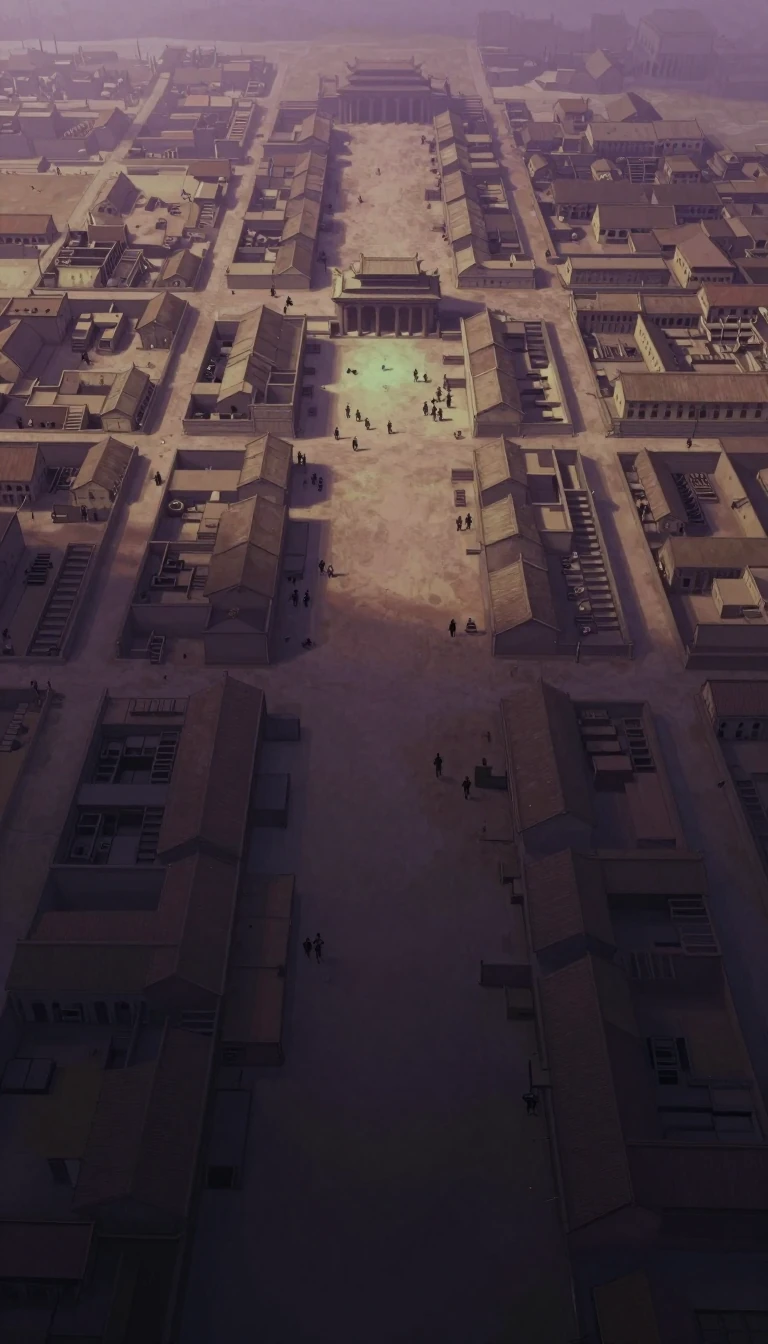 The Pergamon Altar: A monumental Hellenistic masterpiece once dismissed as a mere quarryBuilt in the 2nd century BC, this massive marble structure was once considered one of the Seven Wonders of the Ancient World. Today, it sits in Berlin, but its origins, purpose, a…
 From Broadway to Tokyo, the photo booth has evolved from a novelty to icon.The automated photo booth, once a 1920s Broadway sensation, has transformed from a simple coin-operated machine into a global cultural phenomenon. From Japanese purikura sticker b…
 Plants are constantly waging chemical warfare to survive, and we can harness itPlants do not just sit there; they actively defend themselves by releasing potent antimicrobial and insecticidal compounds known as phytoncides. Coined in 1928, this term describe…
 Why Nintendo's most unique strategy series relies on plant-animal hybrids and time managementCreated by Shigeru Miyamoto, the Pikmin series challenges players to command legions of tiny, multicolored plant-animal hybrids. By balancing resource management with strict time …
- How a simple 18th-century tube remains critical to modern aviation safetyInvented by Henri Pitot to measure water flow in aqueducts, the pitot tube is now the primary sensor for determining an aircraft's airspeed. By capturing stagnation pressure, this…
 The non-drying clay that stopped bombs, measured jumps, and won OscarsInvented to solve the frustration of drying sculpture clay, Plasticine became an unlikely industrial and artistic staple. From cooling down volatile World War II bomb fuzes to ena…
 The 1854 cipher that turned secret military communication into a simple pencil-and-paper gameInvented to secure telegraphy, the Playfair cipher was the first to encrypt pairs of letters rather than single symbols. Though initially dismissed as too complex for diplomats, i…
 Is your democracy actually a polyarchy, a system designed to limit true mass participation?Robert Dahl coined polyarchy to describe a government that is neither a dictatorship nor a true democracy. While it features elections and political competition, critics argue it …
 Polynomial long division is the algebraic secret to breaking down complex mathematical structures.Think of polynomial long division as the algebraic cousin of the arithmetic long division you learned in grade school. By systematically breaking down complex polynomials into sim…
 Why a simple tomato-shaped kitchen timer might be the ultimate productivity hackDeveloped in the late 1980s by Francesco Cirillo, the Pomodoro Technique uses timed intervals to combat distraction. By breaking work into twenty-five-minute chunks, it aims to pr…
 Why your brain insists that identical objects are different sizes based on contextThe Ponzo illusion tricks the mind into perceiving two identical lines as different lengths by placing them against converging lines. This phenomenon reveals how our visual system…
 Why positive psychotherapy reframes a sleep disorder as a talent for staying alertDeveloped by Nossrat Peseschkian, positive psychotherapy is a humanistic, integrative method that views human nature as a mine rich in gems. Rather than focusing solely on patholo…
 Why the Prawn Nebula remains invisible to the naked eye despite its massive sizeLocated 6,000 light-years away in the constellation Scorpius, the Prawn Nebula is a sprawling stellar nursery spanning 250 light-years. While it covers an area four times larger t…
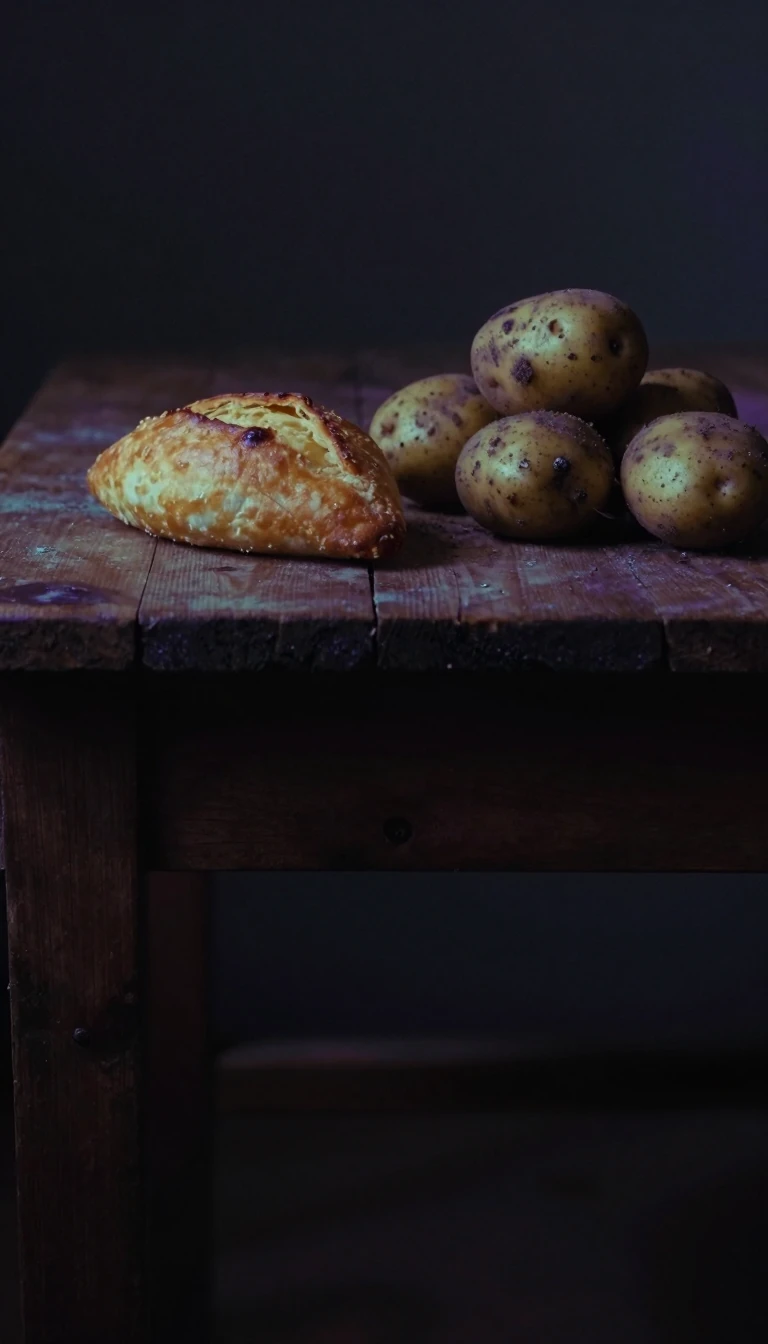 The mathematical secret behind the world's most famous stackable potato snackPringles are not sliced from potatoes; they are an extruded snack made from a dough of dried potatoes, starches, and flours. Their iconic saddle-shape is a hyperbolic paraboloid, …
 Why a professional driver leaves amateurs in the dust on the racetrackComparing a professional driver in an Acura NSX to an amateur in an Alfa Romeo Giulia Quadrifoglio reveals a massive performance gap. While car specs matter, the driver's techniqu…
- Can an inkblot reveal your hidden mind, or is it just a messy Rorschach test?Projective tests use ambiguous stimuli like inkblots to bypass your conscious filter. By asking you to describe what you see, psychologists aim to uncover internal attitudes and m…
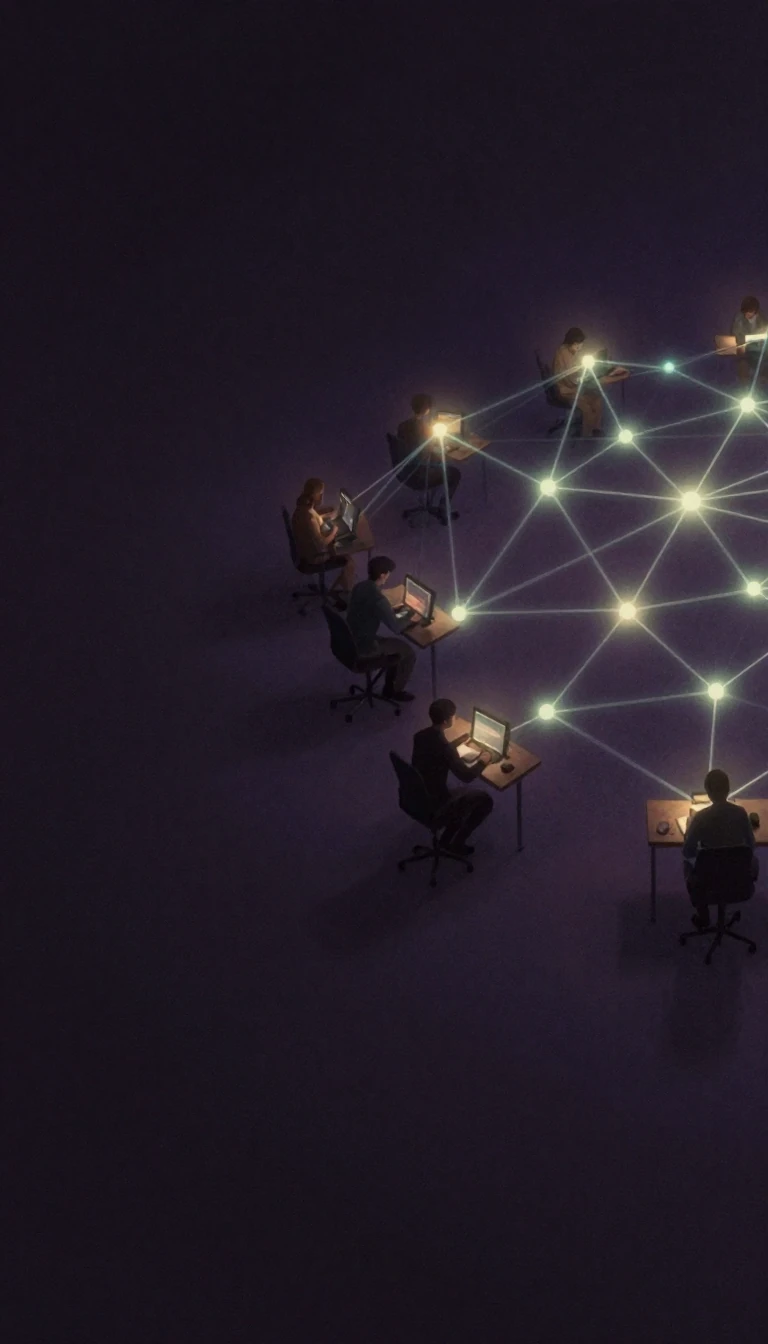 Why your personal space bubble is a complex, invisible language of power and culture.Proxemics is the study of how we use physical space to navigate social interactions. From the intimate bubble of a close friend to the public distance of a stranger, our positioni…
 Can mathematics predict the future of a civilization spanning twenty-five thousand years?Psychohistory is the fictional science at the heart of Isaac Asimov's Foundation series. It uses statistical analysis to predict the future behavior of massive populations, allowi…
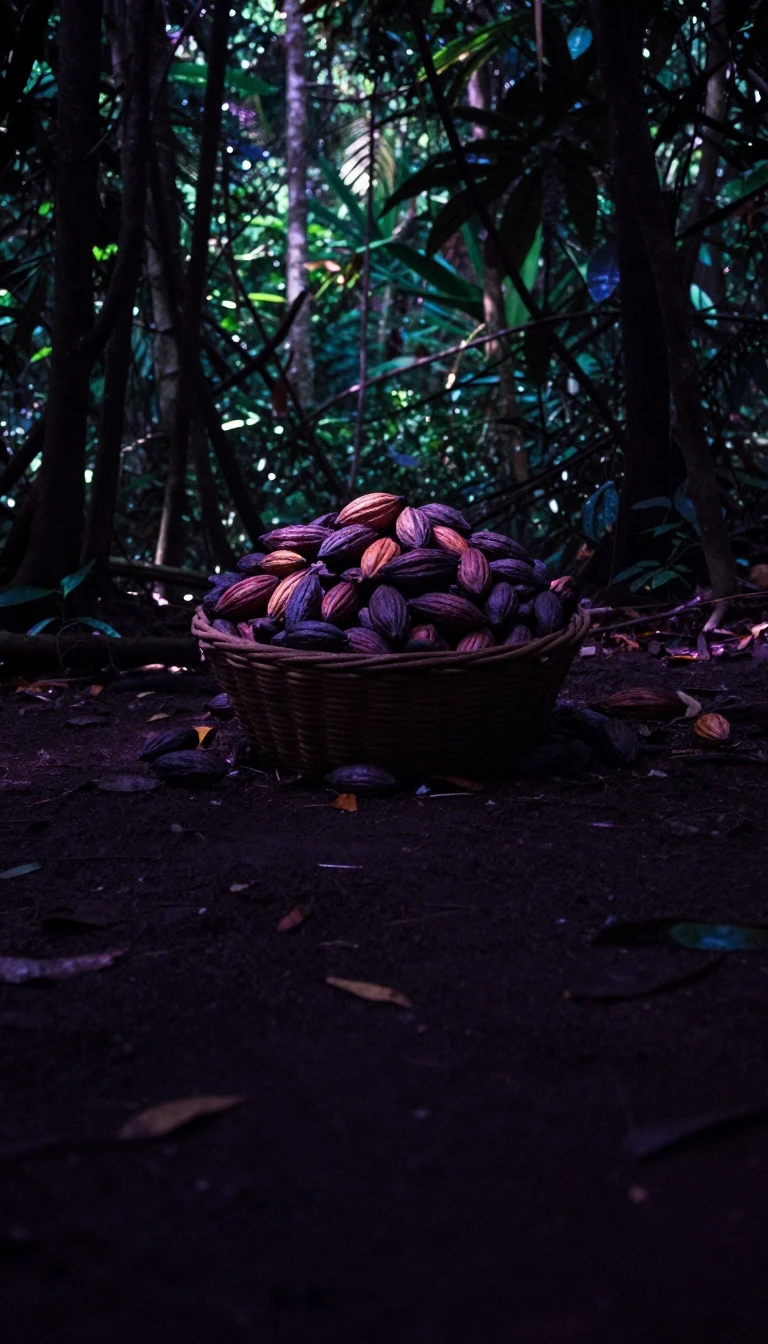 Why a Polish chocolate bar is named after a mythical bird's impossible milkThe name Ptasie mleczko, or bird's milk, sounds like a whimsical invention, but it draws on an ancient idiom for the unattainable. From Greek plays to Slavic fairy tales, bird's m…
 How do we measure the sun's power to keep our energy grid running?A pyranometer is the essential sensor behind the global solar energy boom. By measuring solar irradiance, these devices allow engineers to verify the performance of massive power …
 Why your daily driver would likely fall apart on a professional racing circuitEngineering a race car is a brutal exercise in compromise, balancing extreme performance with minimal weight. While your personal vehicle is built for longevity and low maintenanc…
 Why your economic predictions might be smarter than government policy assumesRational expectations theory suggests that individuals are not just passive observers of the economy but active, forward-looking agents. By using all available information to anti…
 A medical patent birthed one of the most powerful explosives in military history.Discovered in 1898 by Georg Friedrich Henning, RDX was initially patented for its potential medical properties rather than its destructive power. It remained largely unused until …
- How Red Bull Air Race pilots manage 12 g's in a plane lighter than a carRed Bull Air Race pilots endure forces up to 12 g's in aircraft that weigh less than a Smart Car. These machines are marvels of minimalist engineering, relying on raw mechanical p…
- How ancient Athenian potters turned clay into a global luxury export marketRed-figure pottery revolutionized ancient art by swapping black silhouettes for naturalistic, detailed figures. Developed in Athens around 520 BC, this technique allowed artists t…
 The world's most kissed face belongs to an unidentified woman from the 1880sYou have likely seen her, or perhaps even practiced life-saving measures on her. Resusci Anne, the ubiquitous CPR training mannequin, hides a haunting history. Her iconic, serene …
 The surprising history of the rhinestone, from river stones to high-tech glassLong before they were synonymous with country music stars and stage costumes, rhinestones were literal river stones. Today, these diamond simulants are marvels of material science…
- How the Riemann–Stieltjes integral unifies discrete and continuous probability in one elegant toolStandard calculus struggles with discrete jumps, but the Riemann–Stieltjes integral handles them with ease. By integrating a function against an integrator rather than a simple va…
 The mysterious Latvian elixir that cured an Empress and evolved into a global iconCreated in 1752 as a medicinal tonic, Riga Black Balsam has survived imperial patronage, lost recipes, and Soviet-era scarcity. Once a white-coloured cure-all for everything from …
 The failed bass guitar replacement that accidentally birthed a global dance music revolutionWhen Roland released the TB-303 in 1981, it was a commercial disaster. Marketed as a computerized replacement for bass players, its unrealistic sound alienated its target audience…
 The drum machine that failed commercially but defined the sound of modern dance musicWhen Roland released the TR-909 in 1983, it was a commercial flop. Musicians found its sounds unrealistic compared to competitors, leading Roland to cancel production after just o…
 Why this tiny, uninhabited Pacific atoll is a critical sanctuary for endangered marine life.Rose Atoll is the southernmost point of the United States, a remote coral ring in American Samoa. Though it lacks human residents, it serves as a vital refuge for rare species, fr…
 Ross Island is the world's highest island and a gateway to the South Pole.Though often mistaken for part of the Antarctic mainland, Ross Island is a volcanic powerhouse. It serves as the world's southernmost reachable island, hosting the largest human s…
 How a simple Indian flatbread became the culinary backbone of Southeast Asian street foodRoti canai is more than just breakfast. This unleavened, layered flatbread, brought to Southeast Asia by Indian traders, has evolved into a regional staple. From the streets of Ma…
 What is the Runet, and why do Russian officials and users disagree on it?The term Runet describes the Russian-speaking digital sphere, but its meaning is a battleground. While users see it as a borderless community defined by language, government offic…
- Rust is decades-old research designed to save the future of software from itself.Born from a developer's frustration with a crashing elevator, Rust has evolved from a secret Mozilla side project into a cornerstone of modern infrastructure. By blending function…
 The century-long legal battle over the world's most famous chocolate cakeIs the ultimate Sachertorte defined by one layer of sponge or two? For decades, Vienna's elite pastry institutions fought in court to claim the original recipe. Beyond the courtro…
 How a 1920 equation unlocked the secrets of the stars using thermal equilibriumIn 1920, physicist Meghnad Saha derived a groundbreaking equation linking a gas's ionization state to its temperature and pressure. By applying statistical mechanics to stellar at…
- How a viral internet meme transformed into a million-dollar humanitarian machine for UkraineWhen journalist Christian Borys commissioned a sticker of a Madonna cradling a Javelin missile, he sparked a global phenomenon. This unlikely religious icon became a symbol of Ukr…
 Why the simplest wind turbine design is still the king of reliabilityInvented in 1922, the Savonius turbine is a vertical-axis machine that prioritizes durability over raw power. While it cannot match the efficiency of modern horizontal turbines, i…
 How a simple glass plate revolutionized our view of the entire night skyInvented in 1930, the Schmidt camera solved a fundamental problem in astronomy: how to capture wide, clear images of the heavens without the distortions typical of traditional tel…
 How a student studying squid nerves accidentally invented a cornerstone of modern digital electronics.In 1934, Otto Schmitt was investigating neural impulses in squid when he developed a circuit that would change computing forever. By applying positive feedback to a comparator, he…
 Why the scorched bottom of your rice pot is a global culinary treasureAcross cultures, the thin, crispy crust formed at the bottom of a rice pot is not a cooking failure, but a prized delicacy. From the Iranian tahdig to the Japanese okoge and the K…
- The Segway was predicted to change the world, but it became a niche curiosity.Before its 2001 launch, tech titans like Steve Jobs and John Doerr hailed the Segway as a revolutionary invention, even comparing it to the PC and the Internet. Yet, despite the m…
- The 21st amino acid defies the genetic code by hijacking a stop signal.Most amino acids are written directly into the genetic code, but selenocysteine is an outlier. It forces the cell to repurpose a standard stop codon, UGA, to insert itself into pr…
 Why the self-balancing scooter became the most controversial gadget of the mid-2010sThe self-balancing scooter, popularly dubbed the hoverboard, promised a futuristic mode of personal transit. Instead, it delivered a chaotic saga of patent wars, celebrity endorse…
 Why Leonardo da Vinci painted without lines to capture the essence of human visionLeonardo da Vinci revolutionized Renaissance art by abandoning rigid outlines for a technique he called sfumato, meaning smoked off. By blending colors into soft, imperceptible tr…
 The digital fingerprint that defined an era is finally being retired for goodFor decades, SHA-1 served as the bedrock of digital trust, verifying everything from website authenticity to software integrity. But as computing power has surged, this once-unbre…
 Could a forty-eight letter alphabet fix the inefficiencies of the English language?George Bernard Shaw despised the inconsistencies of English spelling. He envisioned a phonetic, forty-eight character system designed to replace the Latin alphabet entirely. Creat…
 The Shebang: How Two Simple Characters Transformed Unix Scripting into Seamless ExecutablesEver wonder how a plain text file becomes a runnable program? The shebang, a cryptic sequence of two characters at the start of a script, acts as a magic number. It instructs the …