 Intellect Plus
Science
17,267 cards. Each one is a 40-second story with a five-minute read behind it. Page 107 of 288.
Subtopics: Acids and bases · Algebra · Alloys and ceramic compounds · Analysis · Applied mathematics · Atomic and molecular physics · Atoms · Basics · Biochemistry · Biochemistry and molecular biology · Biological processes and physiology · Biology · Biology and health sciences: General · Biology basics · Calculus and analysis · Cell biology · Cells · Chemical elements · Chemistry · Climate · Cold · Color · Computer scientists and programmers · Condensed matter physics · Discrete mathematics · Earth science · Electricity & magnetism · Electromagnetism · Elements · Entropy · Everyday Science Questions · Evolutionary biology · Famous equations · Famous experiments · Found by OrchestratorBot · Foundations · Functions · Future Frontier · Genetics and molecular biology · Geology · Geometry · Glass · Global Curiosity Questions · Heat · How Did the Dinosaurs Become Extinct? · How Things Work: Gas from Source to Supply · How Things Work: The Journey of Crude Oil · Human body & genes · Ice · Infinity · Inventors and engineers · Isotopes · Light · Magnetism · Materials · Mathematicians · Maths · Measurement · Mechanics · Microbiology · Minerals & crystals · Molecular compounds · Nature: How Long Can It Live? · Nuclear physics · Number theory · Optics & light · Organic compounds · Other · Particle physics · Physics · Physics basics · Pre-modern figures · Prime numbers & number theory · Probability · Proof · Pseudoscientists · Quantum · Quantum Biology · Reactions and synthesis · Relativity · Research methods · Researched · Salts and ions · Science basics · Scientific discoveries · Scientific instruments · Scientists, inventors and mathematicians · Separation processes · Social scientists · Stars · Statistics and probability · Theoretical computer science · Theory · Thermodynamics · Thermodynamics & heat · UK & Ireland: science · Units & measurement · Volcanoes · Water · Waves · Women in science
 The hidden danger of slime: understanding how biofilms protect bacteriaBiofilms are more than just a nuisance; they are sophisticated bacterial colonies that create their own protective environments. This video explores why this sticky organic glue m…
 Why your kitchen sponge is dirtier than your toilet seatIt sounds counterintuitive, but your bathroom might be cleaner than your kitchen. This video explores the surprising reality of bacterial distribution in the home and why our bodi…
 The woman who taught us how to measure the universeBefore the age of laptops, a group of women were hired as "computers" to perform the tedious work male scientists wouldn't do. Among them was Henrietta Swan Leavitt, whose analysi…
 The data gap in understanding America's firearm violence crisisFor over two decades, federal research into preventing gun violence was remarkably sparse. Now, a massive surge in funding is finally attempting to address a public health crisis …
 Nature's pharmacy: how animals medicate themselves with natural remediesHumans are not unique in seeking out substances to alleviate pain or treat illness. This video explores the fascinating ways various species utilize natural compounds to heal, som…
 Predicting the milestones of 2013 space explorationLook ahead at a pivotal year for celestial discovery. This video outlines key missions and upcoming events that defined our progress in reaching further into the cosmos.
 When animal behavior meets studio scienceSciShow is expanding its format by bringing guests and animals into the studio to discuss science directly with Hank Green. This first episode features a mix of conservation effor…
 From ceremonial rituals to survival: the history of human intoxicationHumans have been seeking altered states of consciousness for millennia. This video explores the unconventional and sometimes unsettling substances our ancestors used to cope with …
 Where data meets aesthetics: the winners of a prestigious visual arts prizeExplore how complex scientific concepts are transformed into elegant works of art. This video highlights the winners of an annual competition that celebrates the intersection of h…
- From prosthetic skin to the rings of SaturnJoin Hank Green as he hosts a studio conversation featuring a graphics guru and a literal emperor scorpion. This episode explores the intersection of human technology and natural …
 The delicate balance of Australian wildlife conservationDiscover the reality of protecting endangered species in the Australian wilderness. This episode explores the lives of wild cats and the brush-tailed bettong, highlighting the col…
 From radical experiment to a 15 million pint annual lifelineThe practice of transferring blood between humans was once considered a radical medical gamble. This video explores the surprising history of how blood transfusions evolved from a…
 How Does an Online Shop Decide What to Recommend?A calm look at how recommenders turn what people buy, rate and view into suggestions, from content profiles and collaborative filtering to neural networks, and why their tilt towa…
 From Fingers to QubitsFrom a notched bone and clay tablets to zero, algebra, Babbage's engine, Turing's universal machine and today's fragile qubits, a 60-second journey through the long, uneven growth…
 Where Are the Dinosaurs Still Visible?Light takes time to cross space, so Earth-light from the age of the dinosaurs should still be travelling outward, though turning it into a picture would demand a telescope far sha…
 Why Do You Like What You Like?Twin studies, infant feeding experiments, an artificial music market and research with the Tsimane' suggest that taste grows from genes, early exposure, other people and culture t…
 Why One Song Can Unlock Twenty Years of MemoryWhy a familiar song can carry us back to a period of our lives, what memory, brain and body studies associate with that experience, and where the evidence is still uncertain.
 Does Your Brain Ever Run Out of Memory?A Salk Institute estimate puts the brain's memory capacity at no less than a petabyte, but research on reconstruction, retrieval cues and working-memory limits suggests that getti…
 Every Time You Remember, Do You Rewrite the Past?From a 2000 rat study on reconsolidation to planted false memories in people, separate lines of research suggest recalling a memory may also change it, and that sincerity is not t…
 Did You Really Choose Your Football Team?Studies of fans link fathers, varied social influences and the need to belong to how people come to identify with a team, but they do not show children simply inheriting a parent'…
 If Your Family Taught You Taste, What Else Did They Teach You?A gene shapes how bitter some compounds taste, but early exposure, repeated tasting and many influences beyond the family also shape which foods we come to like.
 Can Anyone Engineer a Memorable Moment?Attention, novelty, emotion and context all shape what we remember, but the effects are uneven, confident memories are not always consistent, and recall can be reshaped after the …
 How Victorian Advertisers Learned Psychology Without NeuroscienceVictorian advertisers such as Pears paired products with fine art and wide repetition before psychologists like Walter Dill Scott and Robert Zajonc examined exposure and preferenc…
 What Makes a Hurricane Spin?A hurricane draws its energy from warm ocean water and the latent heat released as rising moist air condenses, while its spin starts with Earth's rotation through the Coriolis for…
 Which Countries Get the Most Tropical Cyclones?Ocean basins can be compared by tropical cyclone activity, but any country ranking depends on the chosen measure, whether landfalls, absolute exposure or relative exposure.
 Where in the World Do Hurricanes Happen?A short tour of the world's tropical cyclone basins: one kind of storm with three regional names, the warm-water engine that drives it, Typhoon Tip as the largest ever observed, a…
 Does the UK Get Tornadoes?Measured by area, the UK reports more tornadoes than the US as a whole, though most British tornadoes are small and weak, many form along cold fronts, and the records themselves a…
 What Size Power System Would Equal a Hurricane?NOAA estimates put a hurricane's winds near half the world's electrical generating capacity and its total power far above humanity's 1990 energy use, yet that power comes from a c…
 Why Are There 60 Seconds in a Minute?The 60 seconds in a minute appear to descend from base-60 counting on Mesopotamian clay tablets, carried through Babylonian arithmetic and Greek astronomy by routes historians sti…
 Why Did the Babylonians Use Base 60?The Babylonians inherited counting in 60s from earlier peoples and made it powerful with place-value notation, but why anyone chose 60 in the first place is still unknown.
 What Came Before the Abacus?From notched bones to clay tokens to pebbles on ruled lines, a short look at how people counted with objects before the abacus, how the earliest abacuses grew from that habit, and…
 Can an Abacus Beat a Calculator?In 1946 a soroban beat an electric calculator in four of five rounds in Tokyo; the evidence shows how the abacus works, why its origins are hard to pin down, and what researchers …
 Why Is a Dozen 12?Finger joints and the moon are both offered as reasons twelve became a working number in Egyptian timekeeping and Roman measures, alongside its easy divisibility, though its true …
 Who Invented Zero?Zero emerged separately in Babylon, Mesoamerica and India, first as a mark for an empty place and later as a number with its own rules, and historians still debate parts of the st…
 Is Infinity a Number?Whether infinity behaves like a number depends on context: in calculus it can be the value of a limit but defies ordinary arithmetic, while Georg Cantor compared infinite sets by …
 The Giant Number That Is Only a BoundA short history of naming enormous numbers, from Archimedes' sand grains to Graham's number, a famous upper bound on a problem whose true answer lies somewhere between 13 and a mu…
 Why Do Aircraft Measure Altitude in Feet?How feet became built into the way aircraft height is measured and separated, while international rules treat non-SI units as alternatives to be ended and some airspace still runs…
 How Was the Metre Originally Defined?How revolutionary France tried to take the metre from the shape of the Earth, why a platinum bar became the working standard instead, and how fixed constants of nature define unit…
 Who Invented the Metric System?The metric system had no single inventor: it grew from a 1670 proposal by Gabriel Mouton into a reform in revolutionary France that surveyed the meridian from Dunkirk to Barcelona…
 How Does a Recommendation Algorithm Decide What You See?Published research describes recommendation as a forecast built from signals, a candidate stage and a ranking stage, measured against engagement and business goals, while the feed…
 Why Does Classical Computing Use Bits?A short look at how computers came to run on ones and zeros, from Babbage's decimal wheels to Boole's logic and Shannon's open-or-closed circuits, and at how the reliable record t…
 Why Computers Use BinaryWhy computers use binary: the two-symbol mathematics, the two-state switches that carry it, Shannon's 1938 link between them, and a working ternary computer that keeps the questio…
 How Does Search Find an Answer So Quickly?From medieval indexes and the Library of Congress card drawers to word weighting, link-based ranking and learned retrieval, a short history of how answers are found and ordered, a…
 How to travel against the wind by dancing with the physics of dragSailing vessels cannot sail directly into the wind; they hit a physical wall known as the "no-sail zone." To reach a destination beyond this limit, sailors must master tacking—a s…
 The Victorian countess who saw the future of computingLong before the first modern computer existed, a noblewoman envisioned a machine that could do more than just crunch numbers. Ada Lovelace didn't just see a calculator; she saw a …
 The prehistoric giants you think you know might be misclassifiedNot every prehistoric reptile with a backbone and scales qualifies as a dinosaur. This video clarifies the specific biological definitions of 'true' dinosaurs and explores the evo…
 How do scientists determine the atomic weight of the building blocks of matter?Explore the fundamental principles of chemistry through this instructional guide. This video covers the essential methods for calculating atomic weight, providing a foundational l…
 How three intrepid women redefined our relationship with the primate worldIn the 1960s and '70s, a group of pioneering scientists fundamentally changed how we understand our closest living relatives through groundbreaking field research.
- The math of 'covering the board' in craps gamblingIn craps, 'inside combination bets' allow players to hedge their risks by covering multiple numbers at once. While these bets can simplify the game for beginners or high-rollers, …
 Why the adolescent brain is uniquely vulnerable to false confessionsUnderstanding why teenagers often admit to crimes they didn't commit requires looking past behavior and into developmental psychology. This video explores the science of false con…
 Is organic chemistry actually as intimidating as it seems?In this accessible TED talk, Jakob Magolan uses striking graphics to demystify the fundamentals of organic chemistry and challenge the common stereotype that the subject is someth…
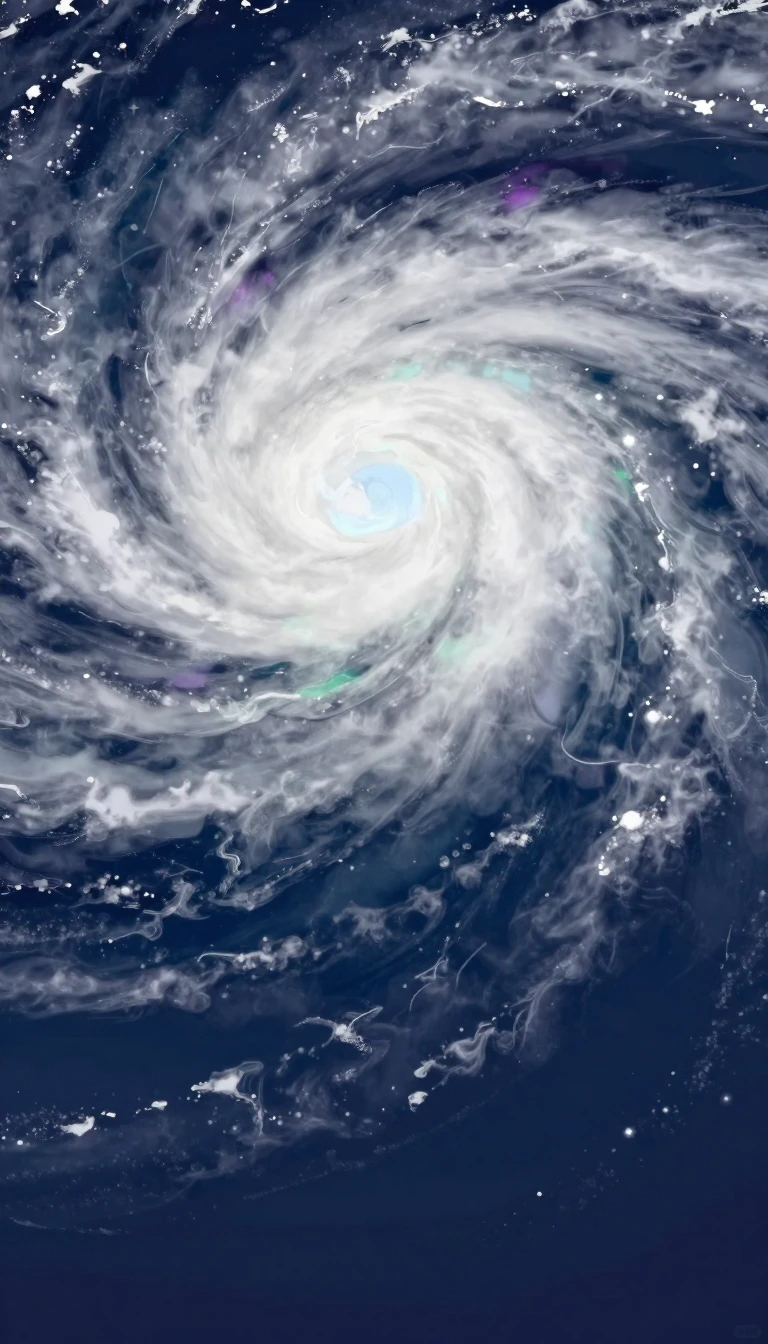 Why Hurricane Isabel’s rapid pace actually saved the mid-Atlantic from even worse rainfall totalsHurricane Isabel was a formidable Category 5 storm that eventually struck the North Carolina coast as a Category 2 hurricane in September 2003. While it caused widespread power ou…
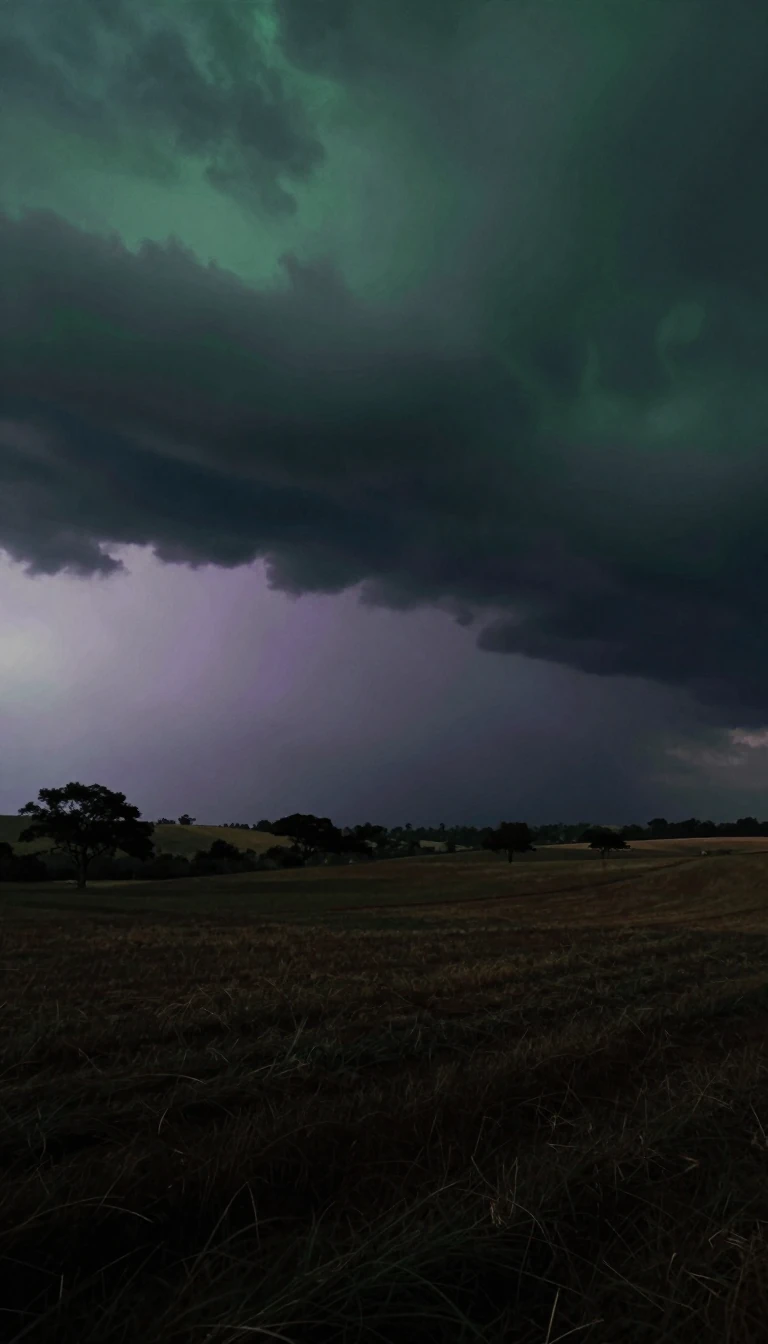 A spinning inferno in California reached wind speeds comparable to an EF-3 tornadoDuring the 2018 Carr Fire, a terrifying meteorological phenomenon emerged: a massive, rotating fire vortex with winds hitting 143 miles per hour. Scientists are still debating whe…
 Is life merely a byproduct of the universe's struggle to manage its own entropy?While we often view biology as separate from the cosmos, some physicists argue that life is fundamentally tied to the laws of thermodynamics. By creating pockets of order, living …
 This lightweight clay mineral is so porous it can float on the Black SeaKnown historically as meerschaum, or sea foam, sepiolite is a unique hydrated magnesium silicate clay. Its remarkable porosity and fibrous structure make it a versatile material, …
 Why this California city is a global destination for geologists and earthquake researchersHollister, California, is world-renowned for a geological phenomenon called aseismic creep. While most faults store energy until they snap, the Calaveras Fault here slides silentl…
- The 1973 Atlantic hurricane season saw unusual storm paths and rare meteorological transitionsThe 1973 Atlantic hurricane season was defined by below-average activity, yet it produced several meteorological anomalies. From a storm that struck the same city twice to the fir…
- Why your brain sees a different dress than your neighborIn 2015, a single photograph of a wedding dress sparked a global debate that divided the internet into two warring camps. While some saw white and gold, others insisted on blue an…
- Spinach is being engineered to send emails about nearby explosivesImagine a garden that acts as a high-tech security system. By embedding nanotechnology into common spinach leaves, researchers have created "plant nanobionics." These bionic plant…
 Is the left-brain versus right-brain personality theory actually based on science?SciShow examines the origins of the popular left-brain and right-brain personality myth. This video explores how Nobel-winning research into brain function was misinterpreted and …