 Intellect Plus
Science
17,267 cards. Each one is a 40-second story with a five-minute read behind it. Page 269 of 288.
Subtopics: Acids and bases · Algebra · Alloys and ceramic compounds · Analysis · Applied mathematics · Atomic and molecular physics · Atoms · Basics · Biochemistry · Biochemistry and molecular biology · Biological processes and physiology · Biology · Biology and health sciences: General · Biology basics · Calculus and analysis · Cell biology · Cells · Chemical elements · Chemistry · Climate · Cold · Color · Computer scientists and programmers · Condensed matter physics · Discrete mathematics · Earth science · Electricity & magnetism · Electromagnetism · Elements · Entropy · Everyday Science Questions · Evolutionary biology · Famous equations · Famous experiments · Found by OrchestratorBot · Foundations · Functions · Future Frontier · Genetics and molecular biology · Geology · Geometry · Glass · Global Curiosity Questions · Heat · How Did the Dinosaurs Become Extinct? · How Things Work: Gas from Source to Supply · How Things Work: The Journey of Crude Oil · Human body & genes · Ice · Infinity · Inventors and engineers · Isotopes · Light · Magnetism · Materials · Mathematicians · Maths · Measurement · Mechanics · Microbiology · Minerals & crystals · Molecular compounds · Nature: How Long Can It Live? · Nuclear physics · Number theory · Optics & light · Organic compounds · Other · Particle physics · Physics · Physics basics · Pre-modern figures · Prime numbers & number theory · Probability · Proof · Pseudoscientists · Quantum · Quantum Biology · Reactions and synthesis · Relativity · Research methods · Researched · Salts and ions · Science basics · Scientific discoveries · Scientific instruments · Scientists, inventors and mathematicians · Separation processes · Social scientists · Stars · Statistics and probability · Theoretical computer science · Theory · Thermodynamics · Thermodynamics & heat · UK & Ireland: science · Units & measurement · Volcanoes · Water · Waves · Women in science
 The atomic force microscope sees surfaces by touch, not by lightOrdinary microscopes are limited by how light bends. The atomic force microscope sidesteps that entirely: it drags a tiny sharp tip across a surface and feels its bumps, resolving…
 Is the fear of spiders wired in by evolution or picked up from culture?In lab tests, people spot a spider hidden among flowers faster than a flower hidden among spiders, and a fear of spiders can be conditioned after a single pairing. Yet in parts of…
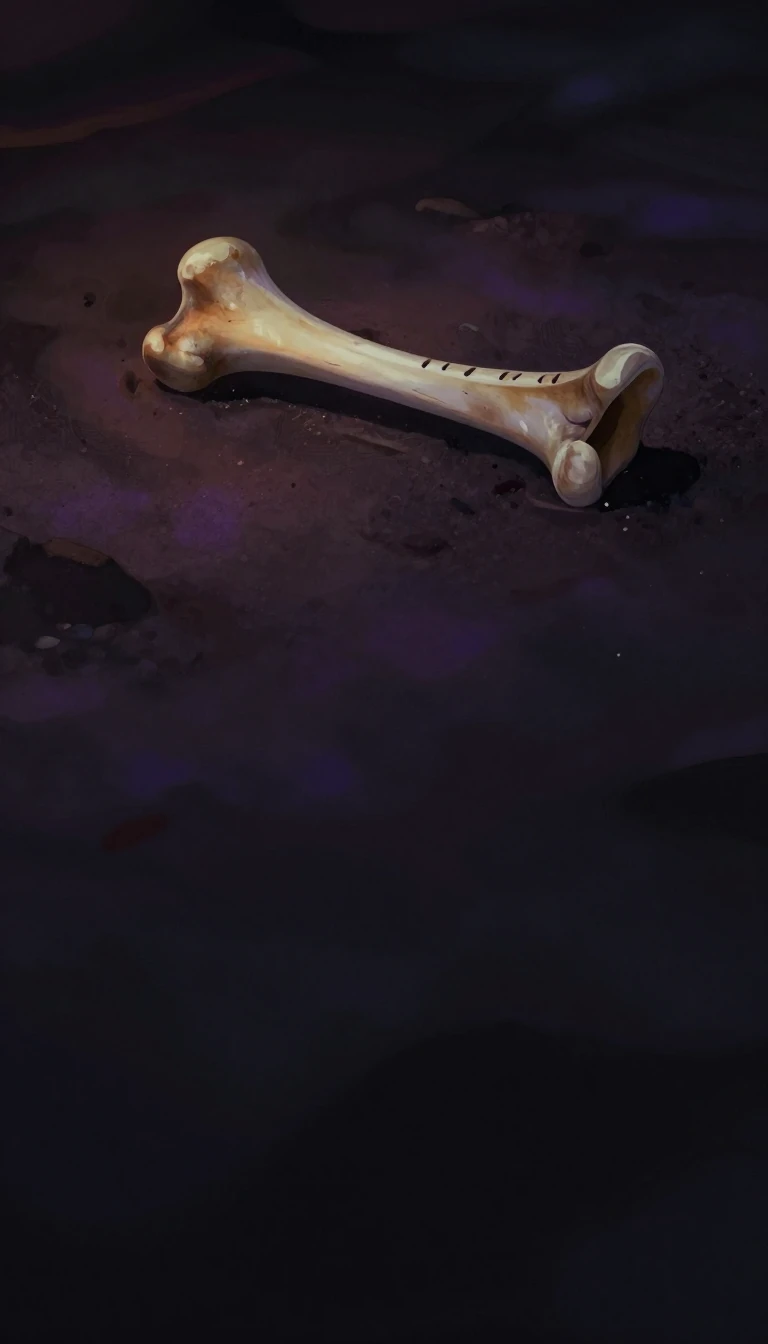 Ardi, a 4.4-million-year-old skeleton, walked upright yet grasped branches with her toesFound in Ethiopia's Afar desert and unveiled in 2009, the skeleton nicknamed Ardi belonged to a 50-kilogram female who lived more than a million years before Lucy. She had a small…
 arXiv began as an overflowing physics mailbox and changed how science gets sharedAround 1990 a physicist's habit of emailing papers to colleagues kept filling their inboxes. Paul Ginsparg's fix, a central mailbox at Los Alamos in 1991, became arXiv, where Grig…
 Carlsberg gave the world lager yeast and the idea of pHA Danish brewery lab gave chemistry the pH scale. Brewer J. C. Jacobsen founded the Carlsberg Laboratory in 1875 to tackle brewing problems, and there Emil Christian Hansen isolat…
 Button, cremini and portobello are all the same mushroom at different agesThe white button mushroom, the brown cremini or chestnut, and the big flat portobello are one species, Agaricus bisporus, sold at different stages and colours. The white version d…
 The angstrom outgrew the metre, then quietly fell out of the official systemOne angstrom is a ten-billionth of a metre, about the radius of a phosphorus atom. For half a century spectroscopists defined it by a glowing line of cadmium light rather than tru…
 The aquatic ape hypothesis won fans and celebrities but never convinced anthropologistsA distinguished marine biologist sat on his idea for thirty years because colleagues advised him to. When Alister Hardy finally proposed in 1960 that human ancestors had waded and…
 The Adam's apple may owe its name to a Hebrew mistranslationAccording to an old folk belief, a piece of the forbidden fruit lodged in Adam's throat and passed to all his descendants. A 1662 anatomy translation recorded the idea. A linguist…
 A whip crack is a tiny sonic boom, the first human-made oneFlick a long whip and a ripple races down the lash, gathering speed until the tip outruns sound itself, more than 30 times faster than the handle moved. The crack you hear is a mi…
 A European computer model saw Sandy's sharp left turn nearly eight days earlyOn October 23, 2012, a forecast from the European Centre for Medium-Range Weather Forecasts in Reading, England, predicted something unusual. Instead of curving out to sea, Hurric…
 Every nerve signal is a tiny electrical explosion that feeds on itselfA neuron at rest holds its interior at around minus 70 millivolts. Nudge it up to roughly minus 55 and something runaway happens: gates in the membrane swing open, sodium rushes i…
 A coin-sized glass disc holding the human genome now sits in an Austrian salt mineIn 2024 researchers laser-etched all three billion characters of the human genome onto a glass disc the size of a coin, added a picture key inspired by the Pioneer spacecraft plaq…
- How to build a four-dimensional cube, one sliding step at a timeSlide a line segment sideways and it sweeps out a square. Push that square at right angles to itself and you get a cube. Now shove the cube along a fourth direction we cannot pict…
 Six months on the space station leaves astronauts slightly younger than everyone elseOrbiting Earth at about 7,700 metres per second, an astronaut who spends six months aboard the International Space Station comes home roughly 5 milliseconds younger than people wh…
 To a topologist, a coffee cup and a doughnut are the same shapeSpin a circle around an axis lying in its own plane and you trace out a torus, the doughnut shape of swim rings and inner tubes. Topologists care only about holes, so they count t…
 Flipping a matrix across its diagonal reveals surprisingly deep propertiesTake a grid of numbers and mirror it across the line running from top left to bottom right, so rows become columns. That simple move, the transpose, was introduced by Arthur Cayle…
 Two orbiting bodies can be solved exactly, but adding a third breaks everythingPredicting how two stars or a planet and its moon move around each other is a solved problem with a neat, complete answer. Add just one more body and no general solution exists ex…
 In taxicab geometry, circles are squares and pi equals exactly 4Measure distance the way a cab crosses Manhattan, block by block along the grid, and geometry turns strange. A circle becomes a tilted square. The ratio of its circumference to it…
 Some rectangles cross themselves, and some have no right angles at allEveryone knows a rectangle has four right angles. Geometers are less sure. A crossed rectangle folds over itself like a bow tie, and on curved surfaces the shapes called rectangle…
 The oldest trick in logic: assume the opposite and watch it collapseTo prove something is true, you can pretend it is false and follow the consequences until they fall apart. This move, reductio ad absurdum, runs from a satirical Greek poem about …
 The rhombus is named after an ancient spinning toyDiamond, lozenge, calisson: the four-sided shape with equal edges has a menu of names, one of them a French sweet. The word rhombus itself comes from a Greek term for something th…
- One infinite sum quietly encodes the pattern of every prime numberAdd one, a half squared, a third squared and so on forever, and you have touched the Riemann zeta function. Euler found it was secretly built from the primes. Riemann then pushed …
 The universe measures flat, yet it could still loop back on itselfDraw a giant triangle across space and add up its angles. Measurements so far say they total 180 degrees, meaning space is flat to within a fraction of a percent. That settles the…
 Shing-Tung Yau won the Fields Medal while holding no passport at allIn 1982 Shing-Tung Yau became the first ethnic Chinese mathematician to win the Fields Medal. He accepted it officially stateless, his Hong Kong residency revoked and American cit…
- Squaring the circle took two thousand years to prove impossibleBuild a square with exactly the area of a given circle, using only compass and straightedge, in a finite number of steps. Greek geometers tried. So did prisoners, Jesuits and legi…
 A teenager on a ship to England worked out how heavy dead stars can getSailing to Cambridge in 1930, a young Indian graduate spent the voyage adding relativity to the physics of collapsed stars. The upshot, now called the Chandrasekhar limit, says no…
 A slanted box hides one of geometry's most stubborn unsolved puzzlesTake a cube and push it sideways so every face leans into a parallelogram. The result is a parallelepiped. In 2009 mathematicians found dozens whose edges and diagonals are all wh…
 The humble parallelogram depends on Euclid's most controversial assumptionEveryone learns that a parallelogram's opposite sides match in length. What schoolbooks rarely mention is that this cannot be proved without Euclid's contested parallel postulate.…
- Three lengths of chain in the ratio 3, 4, 5 make a right angleGardeners and surveyors have a low-tech way to mark out a square corner across a large field: lay three chains in the ratio 3:4:5 into a triangle. The corner opposite the longest …
 From Pythagorean triples to Gauss, quadratic forms connect ancient puzzles and modern mathsWhich whole numbers can be written as the sum of two squares? That question, answered by Fermat, belongs to the theory of quadratic forms, polynomials where every term has degree …
 Give a paper strip one half-twist and it loses a sideTape the ends of a paper strip together after a single half-twist and you get a surface with just one side and one edge. Mathematicians described it in 1858, but Roman mosaic make…
 How many misses before the third six? The negative binomial knowsRoll a die and count every non-six until the third six appears. That tally follows the negative binomial distribution, a workhorse of statistics that also describes why a few infe…
 Right angles escaped geometry and now describe Wi-Fi, DNA and vinyl recordsOrthogonal started life as a Greek word for a rectangle. Today mathematicians use it for vectors that meet at right angles, but engineers, chemists, statisticians and philosophers…
 For two thousand years, mathematicians tried to prove Euclid's awkward fifth ruleEuclid's first four postulates are almost obviously true. The fifth, about when two lines must eventually meet, is long and clumsy, and generations of brilliant thinkers were sure…
- John Conway grew tired of being famous for the Game of LifeIn October 1970 Martin Gardner's Scientific American column described a pen-and-paper pastime in which cells on a grid live or die by simple rules. It became Gardner's most-read c…
 From body cells to chess games, real numbers get astonishingly bigYour body holds an estimated 37.2 trillion cells, and your brain around 100 trillion neural connections. Those figures are tiny next to the possible games of chess, estimated at a…
 The law of cosines is Pythagoras stretched to fit every trianglePythagoras's theorem works only when a triangle has a right angle. The law of cosines fixes that by adding a correction term that depends on the angle between two sides, and it be…
- The law of sines hides a circle behind every triangleDivide any side of a triangle by the sine of the angle facing it and you get the same answer for all three sides. That shared number is no coincidence: it equals the diameter of t…
 The world's oldest dated four-by-four magic square was a perfume recipeAround 550 CE the Indian scholar Varahamihira drew a four-by-four grid for blending perfumes. Each cell named an ingredient and its proportion, and any four picked along a row, co…
 Calculus took two thousand years and many countries before Newton and LeibnizThe word calculus means small pebble in Latin, after the stones once used for counting. The ideas it names were gathered almost as slowly as pebbles: Greek geometers, Chinese and …
- A horoscope is a geometric sky map, even though its predictions failStrip away the fortune-telling and a horoscope is a piece of geometry: a stylised map of the sky above one spot at one moment, with the planets and key angles plotted on a wheel. …
- Change one rule of Euclid and parallel lines multiply without endEuclid's geometry says that through a point off a line, exactly one parallel can be drawn. Hyperbolic geometry keeps every other rule but allows at least two, and therefore infini…
 Why arcsin is called arc, and why sin to the minus one confuses peopleSine turns an angle into a ratio; its inverse turns the ratio back into an angle. Naming that reverse step has caused two centuries of muddle, from John Herschel's 1813 superscrip…
 John Wheeler named black holes, wormholes and quantum foam, and taught FeynmanJohn Archibald Wheeler had a gift for names. He popularised black hole, coined wormhole, quantum foam and it from bit, and even renamed Enrico Fermi's slower downer the neutron mo…
 One theorem about differential forms swallows four famous results of calculusStokes' theorem, Green's theorem, the divergence theorem and even the fundamental theorem of calculus look like separate facts in a textbook. Written in the language of differenti…
 A Hiroshima regret helped inspire the idea of the digital libraryVannevar Bush had backed research behind the bomb dropped on Hiroshima. After seeing the destruction, he imagined the Memex, a desk with two screens and a keyboard giving rapid ac…
 The first clickable banner ad got clicked by 44 percent of viewersIn 1994 AT&T ran the first clickable web banner, its You Will campaign, and within four months 44 percent of the people who saw it clicked. That banner belongs to the early years …
 Sample a sound at twice its highest pitch and nothing is lostThe Nyquist–Shannon sampling theorem makes a startling promise: a signal can be rebuilt exactly from snapshots, provided they come faster than twice its highest frequency. That ru…
 Divergence measures how much a flow swells or shrinks at a pointWarm a pocket of air and it expands in every direction, so arrows describing its motion all point outward. Mathematicians capture that outward push with a single number called div…
 Count every faucet and drain inside a box to know its total outflowPicture a closed surface floating in a tank of water. The divergence theorem, also named after Gauss and Ostrogradsky, says the net amount of water crossing that surface equals th…
 A beam theory from around 1750 waited for the Eiffel TowerEngineers can predict how far a beam will sag and how much it can carry thanks to Euler–Bernoulli beam theory. It was first stated around 1750, but it saw no large-scale use until…
 Leibniz used the chain rule first, and fumbled a sign doing itIf a car is twice as fast as a bicycle and the bicycle four times faster than a walker, the car beats the walker eightfold. That multiplication of rates is the chain rule of calcu…
- Christoffel symbols track how coordinates twist across a curved spaceOn a curved surface, the directions you call north and east quietly rotate as you move. Christoffel symbols are the bookkeeping for that drift, a three-dimensional grid of numbers…
 Solving the cubic sparked secret formulas, betrayal and a maths duelRenaissance Italy settled mathematical rivalries with public contests, money on the table. The prize problem was the cubic equation. A method guarded as a secret, a broken promise…
- Curl measures how much a flowing field spins at each pointDrop a tiny paddle wheel into moving water and it may start to turn. The curl of a vector field captures that spin as an arrow: its length gives the strength of the swirl, its dir…
 Two vertical bars around a number trace back to Weierstrass in 1841The absolute value strips a number of its sign, so both 3 and minus 3 become 3. Think of it as distance from zero. That simple idea, written with the twin bars Karl Weierstrass in…
- Some infinities are bigger than others, and Cantor labelled them with alephGeorg Cantor realised that infinite sets come in different sizes and named those sizes after the Hebrew letter aleph. The smallest, aleph-null, counts the natural numbers. Whether…
 Every crystal fits one of just 14 repeating point patternsSalt, diamond and quartz look nothing alike, yet the scaffolding beneath every crystal belongs to one of only 14 point arrangements in three dimensions. Auguste Bravais catalogued…
 The Cauchy–Schwarz inequality caps how much two vectors can agreeMultiply two vectors together with a dot product and the result can never exceed the product of their lengths. That modest-sounding cap, the Cauchy–Schwarz inequality, took three …