 Intellect Plus
Science
17,267 cards. Each one is a 40-second story with a five-minute read behind it. Page 274 of 288.
Subtopics: Acids and bases · Algebra · Alloys and ceramic compounds · Analysis · Applied mathematics · Atomic and molecular physics · Atoms · Basics · Biochemistry · Biochemistry and molecular biology · Biological processes and physiology · Biology · Biology and health sciences: General · Biology basics · Calculus and analysis · Cell biology · Cells · Chemical elements · Chemistry · Climate · Cold · Color · Computer scientists and programmers · Condensed matter physics · Discrete mathematics · Earth science · Electricity & magnetism · Electromagnetism · Elements · Entropy · Everyday Science Questions · Evolutionary biology · Famous equations · Famous experiments · Found by OrchestratorBot · Foundations · Functions · Future Frontier · Genetics and molecular biology · Geology · Geometry · Glass · Global Curiosity Questions · Heat · How Did the Dinosaurs Become Extinct? · How Things Work: Gas from Source to Supply · How Things Work: The Journey of Crude Oil · Human body & genes · Ice · Infinity · Inventors and engineers · Isotopes · Light · Magnetism · Materials · Mathematicians · Maths · Measurement · Mechanics · Microbiology · Minerals & crystals · Molecular compounds · Nature: How Long Can It Live? · Nuclear physics · Number theory · Optics & light · Organic compounds · Other · Particle physics · Physics · Physics basics · Pre-modern figures · Prime numbers & number theory · Probability · Proof · Pseudoscientists · Quantum · Quantum Biology · Reactions and synthesis · Relativity · Research methods · Researched · Salts and ions · Science basics · Scientific discoveries · Scientific instruments · Scientists, inventors and mathematicians · Separation processes · Social scientists · Stars · Statistics and probability · Theoretical computer science · Theory · Thermodynamics · Thermodynamics & heat · UK & Ireland: science · Units & measurement · Volcanoes · Water · Waves · Women in science
 Becquerel's wrapped photographic plate revealed atoms that change into other elementsIn 1896 Henri Becquerel wrapped a photographic plate in black paper, set uranium salts on top, and found it fogged anyway. Something invisible was streaming out of the atoms thems…
 Every screen you own fakes millions of colours with three tiny lightsLook closely at any television or phone and each pixel is really three separate specks of red, green and blue light. From normal viewing distance your eye blends them into one sol…
 The same law keeps bicycles upright and makes neutron stars spin furiouslySpin something and it resists changes to that spin. That is angular momentum, and in an isolated system its total never changes. The rule explains why a moving bicycle stays uprig…
 In shogi, captured pieces switch sides and come back to fightTake an opponent's piece in Western chess and it is gone for good. In shogi, Japanese chess, you keep it in hand and can drop it back onto the board as your own. That single rule,…
 Stanisław Ulam filled a café notebook with problems, then invented the Monte Carlo methodIn 1930s Lwów, mathematicians argued for hours at the Scottish Café and wrote their unsolved puzzles in a thick notebook supplied by Stefan Banach's wife. Stanisław Ulam contribut…
- Why Britain and France kept paying for Concorde long after it made senseBy the time Concorde's economics had collapsed, London privately called it a commercial disaster that should never have begun. Yet both governments kept funding it. Economists now…
 Perturbation theory tackles hard problems by nudging easy ones, one correction at a timeThe Moon's orbit defeated even Isaac Newton, who reportedly complained that the problem made his head ache. Earth and Sun both tug on it, so no tidy formula fits. The fix mathemat…
 The PID controller began with an engineer watching a ship's helmsmanIn 1922 Nicolas Minorsky, designing automatic steering for the US Navy, noticed that a good helmsman reacts to three things at once: how far off course the ship is, how long it ha…
 Gold stays shiny because it barely wants to bond with oxygenGold pulled from a riverbed after thousands of years still gleams, because it has almost no appetite for oxygen; its oxides are so unstable they fall apart on their own. That aloo…
 John Nash won a Nobel for 28 pages, but mathematicians prize his geometry moreMost people know John Nash from A Beautiful Mind and from the equilibrium in game theory that earned him an economics Nobel. Yet the mathematician Mikhael Gromov called one of Nas…
 Why fewer fishing boats in wartime meant more sharks in the netsDuring the First World War, Adriatic fishing almost stopped, and when catches resumed a marine biologist noticed something odd: a larger share of predatory fish. He asked his girl…
 One mathematical idea covers length, area, mass and the odds of an eventLength, area, volume, mass and probability look like separate notions, yet mathematicians treat them all as versions of one thing, called a measure. The instinct behind it goes ba…
- Nobody agrees what makes a country a microstate, but tiny nations thrive anywayVatican City covers just 49 hectares and has fewer than a thousand residents, making it the smallest recognised sovereign state. Yet there is no agreed definition of a microstate.…
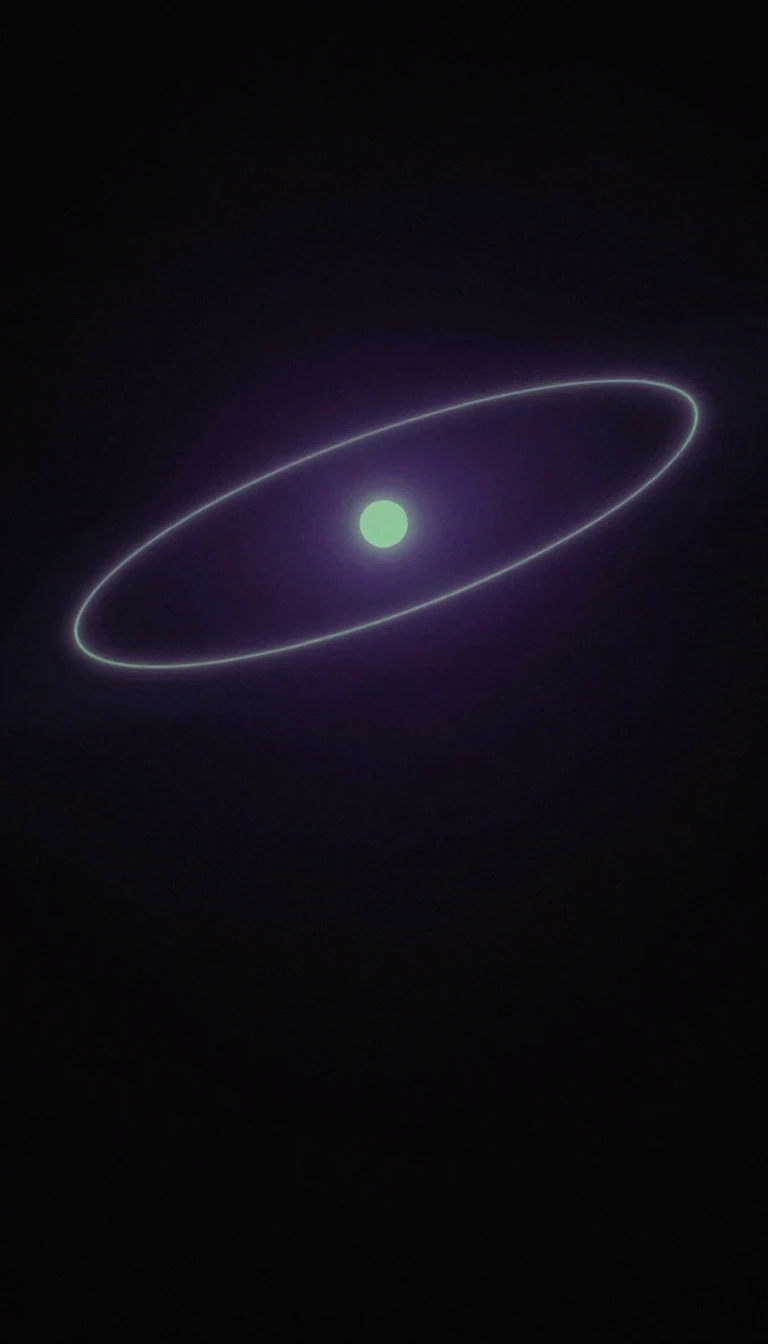 Pluto crosses Neptune's path yet never gets close, thanks to rhythmPluto's orbit cuts inside Neptune's, and yet the two can never collide. Pluto goes around the Sun twice for every three Neptune laps, and that fixed rhythm guarantees Neptune is a…
 How engineers crash a car thousands of times without building oneThe equations describing how metal bends, heat spreads or air flows around a wing are usually impossible to solve exactly for a real, awkward shape. The finite element method side…
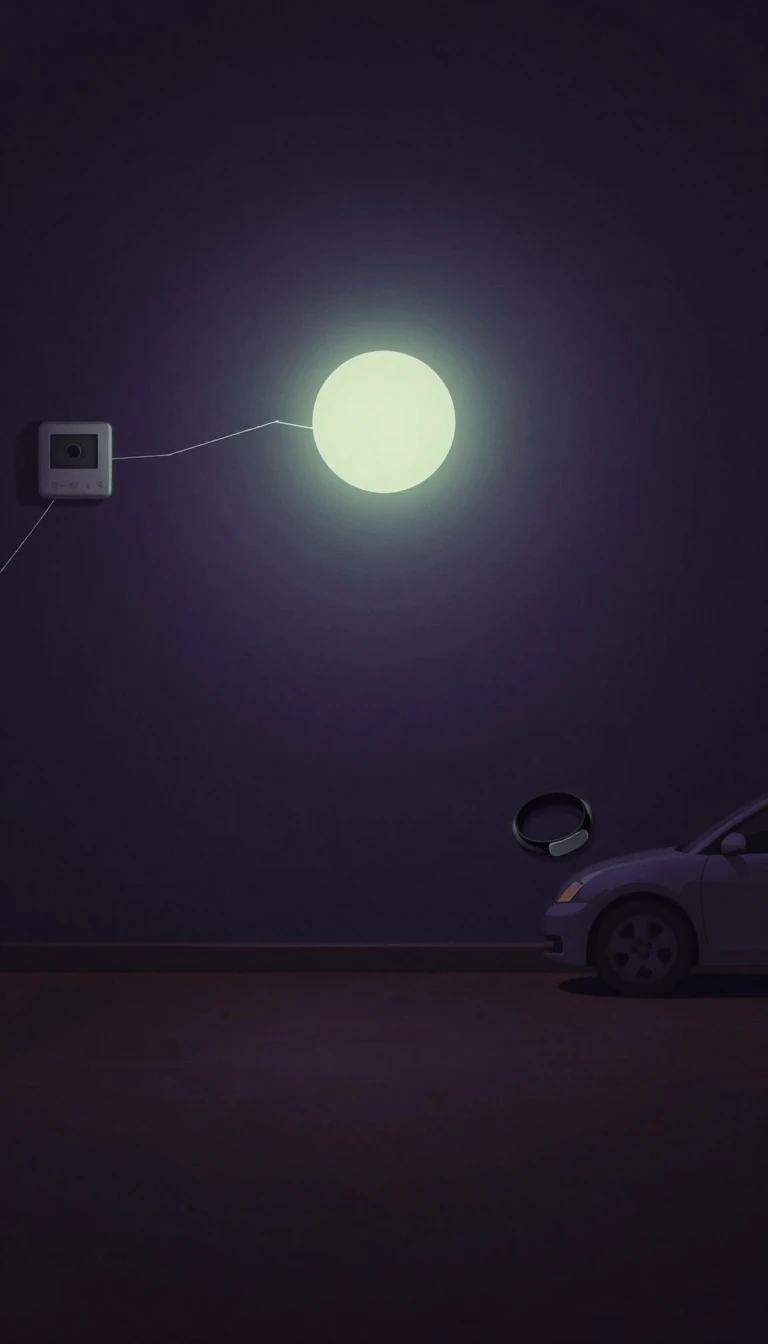 Everything warmer than absolute zero is quietly shining, including youEvery object above absolute zero gives off electromagnetic radiation simply because its particles jiggle. At room temperature that glow is infrared and invisible, which is why the…
- Epoxy glue works by building one giant molecule that can never melt againSqueeze out the two tubes of an epoxy kit and you are mixing a resin with a hardener. Once they meet, their molecules link up into a dense network, a thermoset that will not softe…
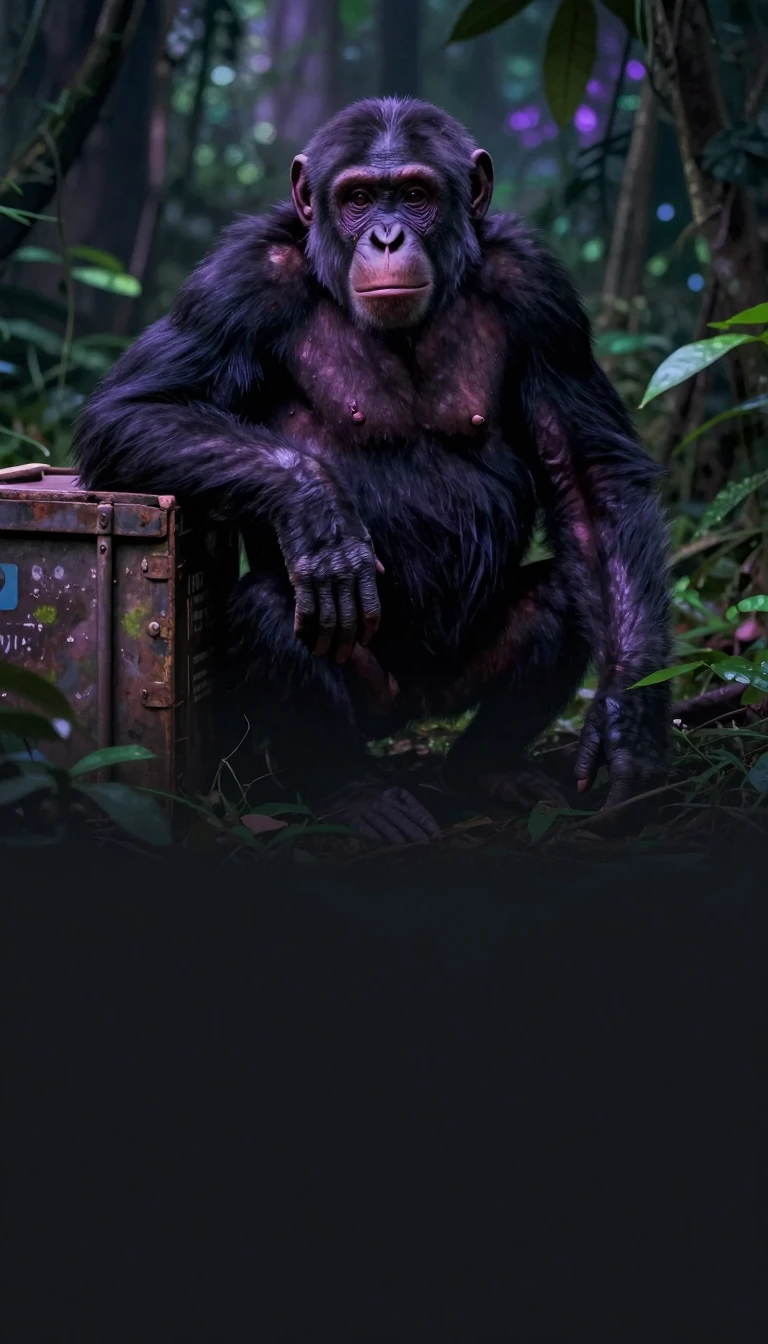 A river split our two closest relatives into warlike chimps and peaceful bonobosChimpanzees live north of the Congo River, bonobos to its south, and the two were treated as one species until 1928. They parted ways only about a million years ago, yet chimp gro…
 Peptides are the short protein chains doing much of your cells' talkingString a few amino acids together and you get a peptide; keep going past a certain size and it becomes a protein. These short chains act as hormones, antibiotics and venoms, and b…
 Why your thumb has one bone fewer than your fingers, and whales have many moreCount the bones in your fingers and toes and you reach 56, fourteen per hand and foot. Each finger has three, the thumb only two. That same pattern holds for most land mammals, ye…
 The ankle joint that unites pigeons, pterosaurs and Tyrannosaurus in one familyEvery bird at your feeder belongs to a lineage that also produced the giant dinosaurs and the leathery-winged pterosaurs. Palaeontologists call it Avemetatarsalia, meaning bird me…
 Wilhelm Weber helped build the first electromagnetic telegraph and give light its letter cIn 1833 two Göttingen scientists strung a wire between an observatory and a physics lab and sent signals along it electrically. One was Carl Friedrich Gauss; the other was Wilhelm…
- The Orang Asli descend from several migrations spanning 60,000 yearsThe oldest inhabitants of Peninsular Malaysia are not one people but many. The Orang Asli, just 0.7 per cent of the peninsula's population in 2017, include descendants of the firs…
 Ovarian cancer risk tracks how many times a woman has ovulatedEvery ovulation prompts cells in and around the ovary to divide, and each round of division is a small chance for something to go wrong. That is why ovarian cancer risk rises with…
 The moment of human ovulation was first filmed by accident in 2008Nobody had ever filmed a human egg leaving its follicle until 2008, when a gynaecologist performing a routine hysterectomy happened to catch it on camera. The egg emerged and was …
 Oxygen damage to DNA may explain why complex cells, and sex, evolvedWhen cyanobacteria began filling Earth's air with oxygen about 2.45 billion years ago, the gas was probably poisonous to much surrounding life. One hypothesis holds that the press…
 Elephants carry 20 copies of the gene nicknamed the guardian of the genomeElephants have huge bodies and trillions of dividing cells, yet they rarely get cancer. Part of the explanation may be that they carry 20 copies of TP53, the gene for a protein ca…
 Why paywalls hit scientific papers harder than novels, and the colours of escapeA literature class can swap a modern bestseller for a free classic without much loss. An emergency doctor treating severe poison ivy cannot swap today's paywalled review for a 90-…
 Opioid, opiate and narcotic mean different things, and tolerance is unevenYour own body makes opioids: endorphins are one family of them. The word covers anything, natural or lab-made, that binds the brain's opioid receptors, from poppy-derived morphine…
 The surgical specialty that counts as dentistry in one country, medicine in anotherIn the United States, the surgeons who rebuild shattered jaws, repair cleft palates and remove head and neck cancers are formally dental specialists; a medical degree is optional.…
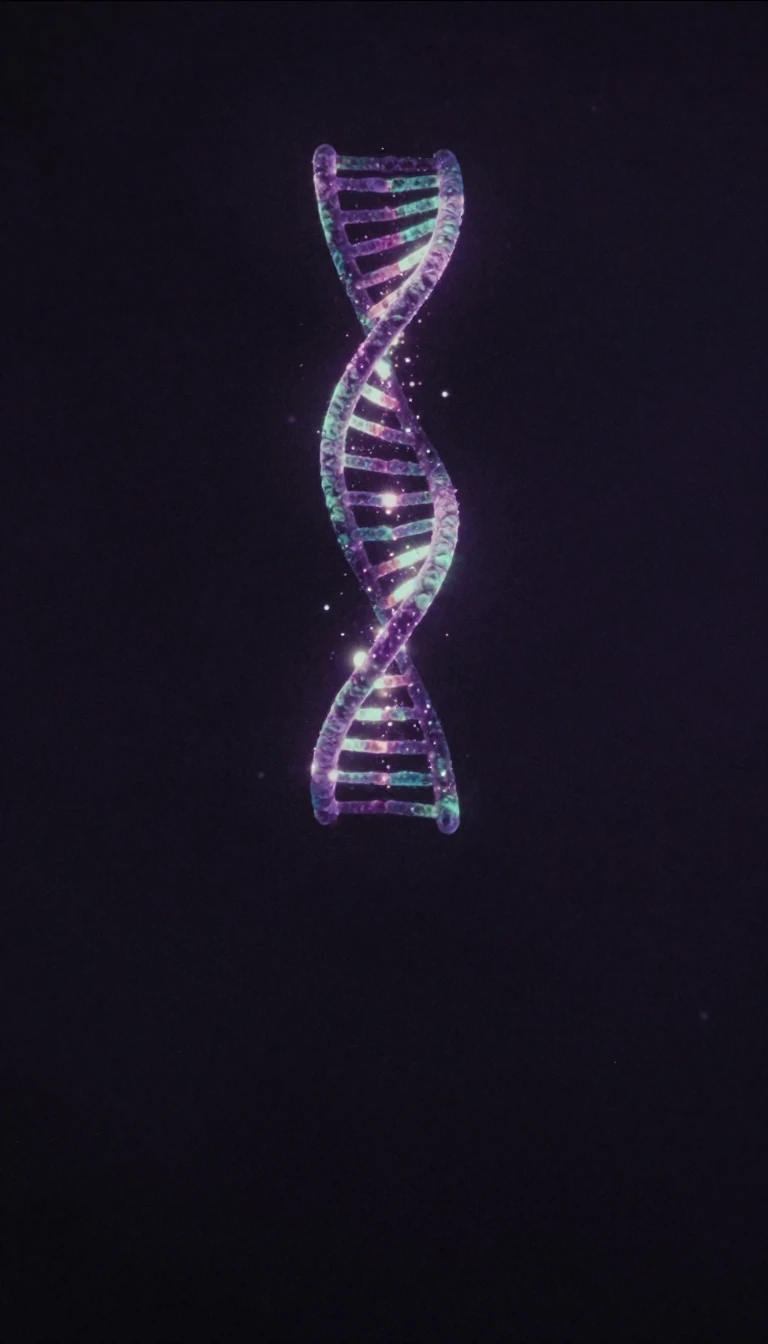 DNA's double helix has a wide groove where proteins read the codeTwist two strands of DNA around each other and the gaps between them form grooves of unequal size, 22 and 12 ångströms across. The wider one leaves the edges of the bases exposed,…
 Frog eggs without a nucleolus revealed the cell's ribosome factoryIn 1964 John Gurdon and Donald Brown noticed that a quarter of their clawed-frog eggs had no nucleolus, and none of those eggs survived. Two years later hybridisation experiments …
- Nucleotides build your genes, fuel your cells and even boost umamiThe same molecules that string together into DNA and RNA also power nearly everything a cell does. ATP, a nucleotide carrying three phosphates, funds protein building, movement an…
- Five small nitrogen rings spell out every gene on EarthAdenine, cytosine, guanine, thymine and uracil are compact molecules built around rings of carbon and nitrogen. Pair a big one with a small one and the DNA ladder keeps a constant…
 Chemists grumble that their Nobel Prize keeps going to biologistsIn the thirty years up to 2012, the Nobel Prize in Chemistry went ten times to biochemistry or molecular biology, and in the final decade of that stretch only four awards honoured…
 The physics Nobel waits decades to be sure a discovery really mattersSubrahmanyan Chandrasekhar worked out how stars are built and evolve during the 1930s, yet received his share of the physics Nobel only in 1983. That delay is deliberate: the priz…
 The medicine Nobel skipped Salk and Freud to reward basic discoveriesEveryone expected Jonas Salk or Albert Sabin to win a Nobel for polio vaccines. Instead the prize went to three researchers who first grew the virus in monkey cells, the step that…
- The 'merchant of death' obituary said to inspire the Peace Prize may never have existedA popular tale says that in 1888 a French paper mistook Ludvig Nobel's death for Alfred's and damned him as a merchant of death, shaming him into endowing a peace prize. Investiga…
 John Watson's famous 'dozen healthy infants' boast is usually quoted without its confessionThe behaviourist John B. Watson is remembered for promising that, given a dozen healthy babies, he could train any of them into a doctor, lawyer or thief. The usual quotation stop…
 Your belly button is a one-of-a-kind scar, and birds have one tooThe navel is the scar left where the umbilical cord once attached, so no two are quite alike. Doctors sort them into innies and outies with a surprising list of sub-shapes, surgeo…
 Scattered across living people, about a fifth of the Neanderthal genome still survivesMost people carry only a few percent of Neanderthal DNA, yet different people carry different pieces. Pooled together, roughly 20 percent of the Neanderthal genome survives in mod…
- Your neck packs airway, gullet, glands and the brain's blood supply into four compartmentsThe neck holds up the head, lets it swivel in every direction, and shields the nerves linking brain and body. Crammed inside a surprisingly small column are the windpipe, the thro…
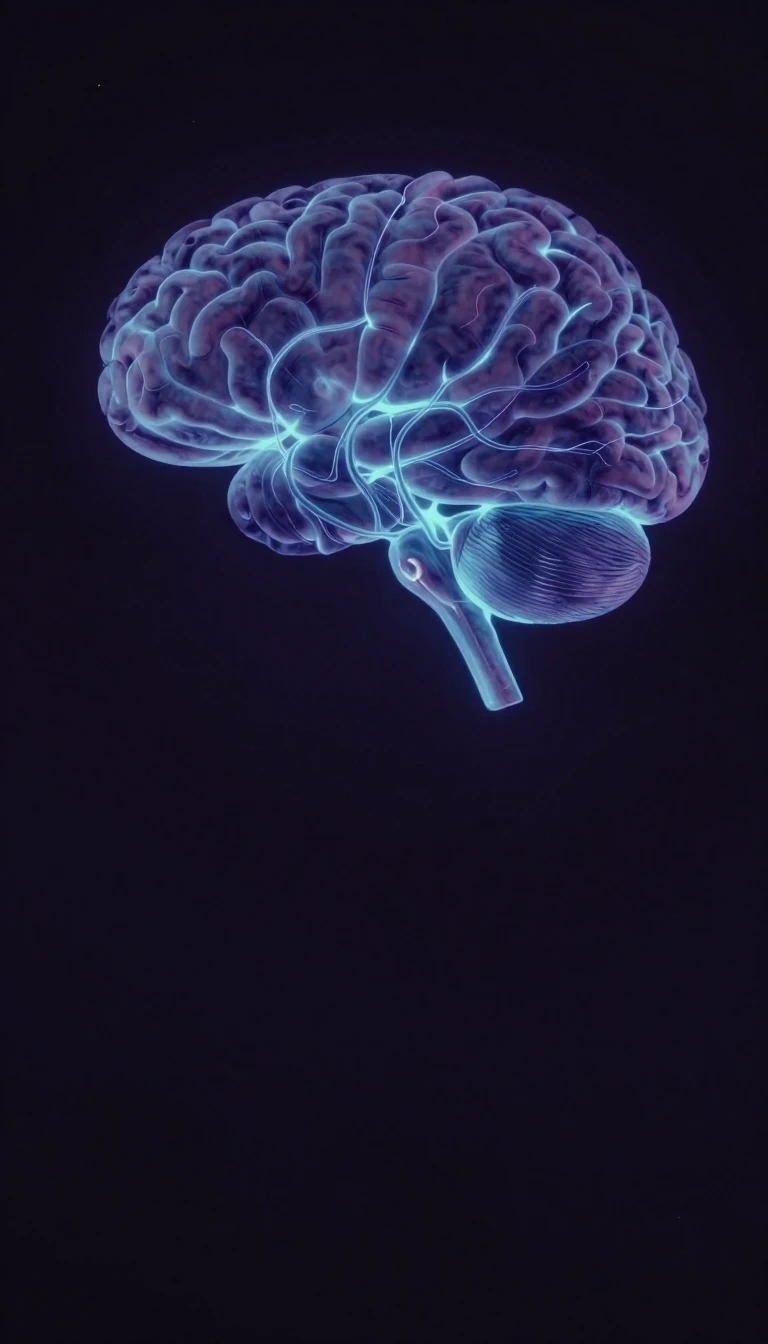 In 1879 a Scottish surgeon found a brain tumour using only the patient's symptomsWith no scanners of any kind, William Macewen pinpointed a tumour in 1879 purely from neurological signs, then removed it successfully. Five years later Rickman Godlee went a step…
 Why do men have nipples? Because losing them offered no advantageAlmost every mammal has nipples, including males, who cannot use them to feed young. Biologists broadly agree the reason is anticlimactic: nothing was gained by getting rid of the…
 The black goo under your tyres is not tar, and never really wasRoads are glued together with bitumen, a thick residue of petroleum so viscous it can seem solid while slowly flowing over long spans of time. People call it tar, and the word tar…
 Seven million fish in jars: inside the world's largest natural history collectionThe Smithsonian's National Museum of Natural History in Washington holds over 148 million specimens, the largest natural history collection on Earth. Visitors see only a sliver. B…
- A five-year fight over who controls science shaped America's research funderEveryone in 1940s Washington agreed the government should back science. They could not agree how. One camp wanted scientists in charge; the other wanted the public to own the resu…
- Identical twins don't run in families, but fraternal twins canFraternal twins come from two separate eggs, and a gene that makes some women release extra eggs can pass down the generations. Identical twins arise when a single fertilized egg …
 Early strength gains come mostly from the brain, not bigger musclesWhen someone starts lifting weights, they often get stronger quickly before their muscles visibly grow. Most of that early progress is the nervous system learning to recruit and c…
 The slow, waxy microbe behind tuberculosis hides inside the cells sent to eat itMost bacteria split every few minutes; E. coli can manage roughly every 20. The germ that causes tuberculosis takes 18 to 24 hours. What it lacks in speed it makes up for in armou…
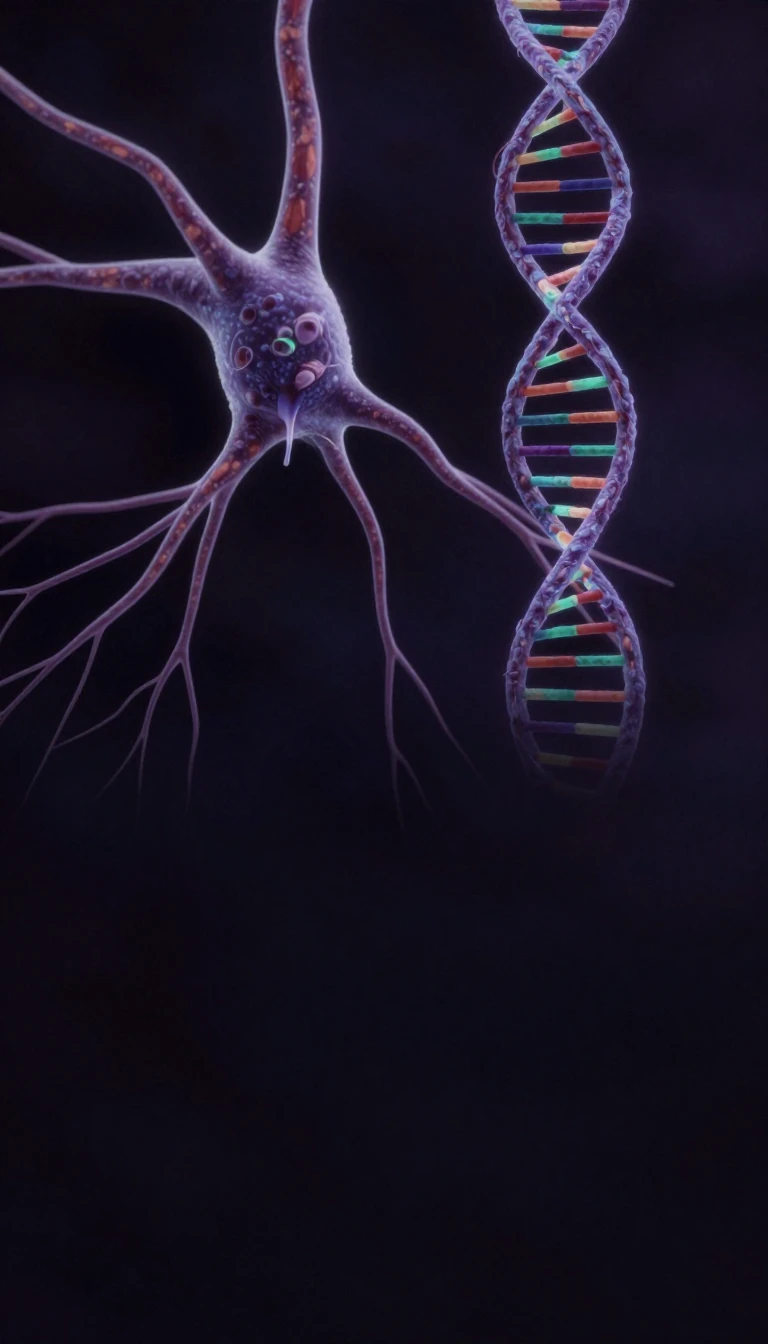 Nerve signals leap between gaps in a fatty wrapping named after bone marrowMany of your nerve fibres are wrapped in myelin, a fatty insulating sheath. Unlike the plastic on a wire, it comes in segments separated by tiny bare gaps about a micrometre long.…
 River dolphins, caribou people and backwards-footed women: folklore's almost-humansNearly every culture imagines beings that are part human or pass for human. In the Amazon, river dolphins are said to step ashore as people. Inuit tradition tells of caribou folk …
 Earth's tilted axis gives us seasons, and the Moon keeps it steadySummer and winter exist because Earth spins on an axis leaning about 23.44 degrees from upright. That lean keeps pointing the same way among the stars all year, so each hemisphere…
- Mathematical models trade realism for clarity, and the trade is the pointBend a coin slightly, flip it once, then try to predict the next toss. With so little data, you have to lean on a hunch from the coin's shape. That dilemma sits at the heart of ma…
- Messenger RNA is the short-lived working copy that turns genes into proteinsYour DNA stays locked in the cell nucleus like a reference library, so cells make disposable copies of individual genes to carry out to the protein factories. These copies, called…
 Why cancer cells that travel keep the identity of where they startedWhen breast cancer spreads to the lungs, the new growth is made of breast cells, not lung cells, and doctors call it metastatic breast cancer. That journey from one organ to anoth…
 Microtubules are the hollow scaffolding and railways inside your cellsInside nearly every cell with a nucleus runs a network of tiny hollow tubes, each about 25 nanometres wide yet sometimes 50 micrometres long. These microtubules hold the cell's sh…
 The American mink escaped the fur farm and remade European riversidesA mink with no white patch on its upper lip is certainly American, because every European mink has one. That small detail matters in Europe, where American mink bred for their fur…
 The Magdalenians painted Lascaux and hunted across an Ice Age EuropeThe first excavators of a rock shelter in France's Dordogne called the era the age of the reindeer. Today it is known as the Magdalenian, a culture of Ice Age hunters who carved s…
 The same brain protein behind mad cow disease may also help us rememberEvery human nerve cell carries a protein called PrP, and nobody is quite sure what it is for. When it folds into the wrong shape, it drives fatal brain illnesses such as mad cow d…