 Intellect Plus
Science
17,267 cards. Each one is a 40-second story with a five-minute read behind it. Page 276 of 288.
Subtopics: Acids and bases · Algebra · Alloys and ceramic compounds · Analysis · Applied mathematics · Atomic and molecular physics · Atoms · Basics · Biochemistry · Biochemistry and molecular biology · Biological processes and physiology · Biology · Biology and health sciences: General · Biology basics · Calculus and analysis · Cell biology · Cells · Chemical elements · Chemistry · Climate · Cold · Color · Computer scientists and programmers · Condensed matter physics · Discrete mathematics · Earth science · Electricity & magnetism · Electromagnetism · Elements · Entropy · Everyday Science Questions · Evolutionary biology · Famous equations · Famous experiments · Found by OrchestratorBot · Foundations · Functions · Future Frontier · Genetics and molecular biology · Geology · Geometry · Glass · Global Curiosity Questions · Heat · How Did the Dinosaurs Become Extinct? · How Things Work: Gas from Source to Supply · How Things Work: The Journey of Crude Oil · Human body & genes · Ice · Infinity · Inventors and engineers · Isotopes · Light · Magnetism · Materials · Mathematicians · Maths · Measurement · Mechanics · Microbiology · Minerals & crystals · Molecular compounds · Nature: How Long Can It Live? · Nuclear physics · Number theory · Optics & light · Organic compounds · Other · Particle physics · Physics · Physics basics · Pre-modern figures · Prime numbers & number theory · Probability · Proof · Pseudoscientists · Quantum · Quantum Biology · Reactions and synthesis · Relativity · Research methods · Researched · Salts and ions · Science basics · Scientific discoveries · Scientific instruments · Scientists, inventors and mathematicians · Separation processes · Social scientists · Stars · Statistics and probability · Theoretical computer science · Theory · Thermodynamics · Thermodynamics & heat · UK & Ireland: science · Units & measurement · Volcanoes · Water · Waves · Women in science
 Class field theory: the century-long project that grew from Gauss's reciprocity lawDavid Hilbert usually gets credit for class fields, but Leopold Kronecker already knew the idea and Heinrich Weber coined the name before Hilbert's key papers appeared. What follo…
 Why a scratched CD still plays: the mathematics of deliberate redundancyA music CD survives dust and scratches because its data is written twice over in a clever way. A Reed–Solomon code adds carefully chosen extra information, and the bits are shuffl…
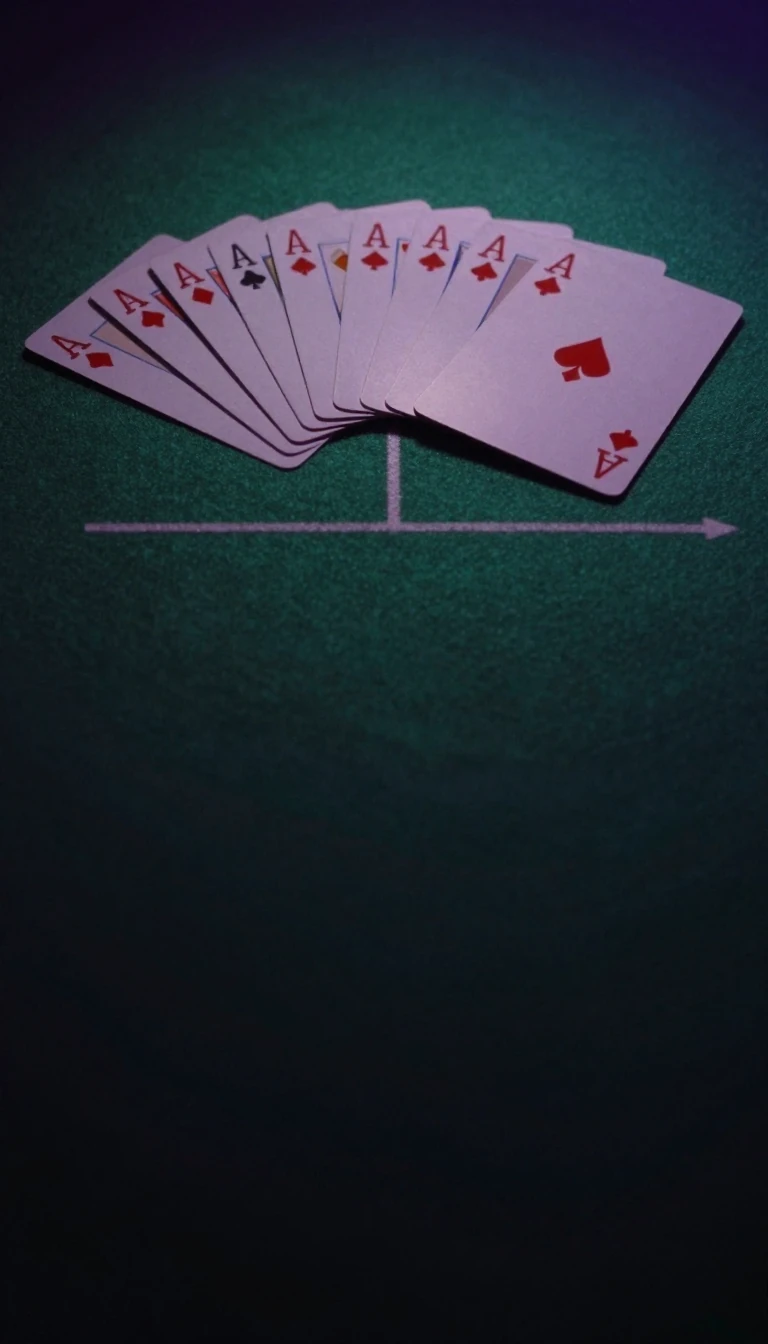 Exactly 2,598,960 different poker hands, and how to count them fastDeal five cards from a standard 52-card deck and the odds of getting any one particular hand are 1 in 2,598,960. Nobody listed them all to find that out. The figure comes from a s…
 An ancient Indian physician counted 63 ways to mix six tastesThe Sushruta Samhita, a classic of Indian medicine, notes that six basic tastes can be combined in 63 different ways, singly, in pairs, in threes and so on. That tally, every poss…
 Almost every collection of numbers is beyond the reach of any computerThere are only countably many possible Turing machines, so only countably many sets of whole numbers can ever be computed. Cantor showed the sets of whole numbers themselves are u…
- A function can be computable even if no real computer could ever finish itIn mathematical logic, computable does not mean practical. A function counts as computable if some finite set of instructions produces its answer eventually, with unlimited time a…
 Complexity theory asks how hard a problem is for every possible algorithmAsking whether a tour of Germany's 14 biggest cities can be done in under 2,000 kilometres is one question. Asking how hard that kind of question is in general, no matter which me…
 Predicting the next symbol well is the same skill as compressing dataA language model built for text, DeepMind's Chinchilla 70B, squeezed images to 43.4 percent and audio to 16.4 percent of their original size, beating the PNG and FLAC formats. Tha…
 Rob Pike's rule: pick the right data layout and the algorithm writes itselfProgrammer Rob Pike has argued that how you arrange your data almost always matters more for speed than which algorithm you choose, because once the layout is right the method ten…
- The imaginary computers that let programs run anywhereLong before Java promised write once, run anywhere, computer scientists in the late 1950s dreamed of a universal in-between language that every machine could understand. That drea…
 The famous number theory book Dedekind wrote and credited to his teacherIn 1863 Richard Dedekind published Lectures on Number Theory under Peter Gustav Lejeune Dirichlet's name and called it Dirichlet's book for the rest of his life. Yet he wrote near…
 A teenage Gauss scribbled the rule for primes in his logarithm tableAround 1792, aged 15 or 16, Carl Friedrich Gauss jotted a short note in his book of logarithms guessing how many primes lie below any large number. He never published it and only …
 Mathematicians stopped asking whether axioms are true and started asking what followsFor Euclid, a starting assumption in geometry was a plain fact about the world, like the ability to draw a straight line between any two points. Modern mathematicians treat axioms…
- You can tell two piles are equal without counting either oneLay out a heap of apples and a heap of oranges, then match them off one apple to one orange. If nothing is left over, the heaps are the same size, and you never needed a single nu…
 Wolfgang Pauli, the physicist whose mere presence supposedly broke equipmentColleagues joked that laboratory apparatus failed whenever Wolfgang Pauli walked nearby, and he loved the reputation. The Austrian theorist was also the sharpest critic in physics…
 The Wright brothers solved flight by thinking like cyclists, not engineersRivals of Wilbur and Orville Wright bolted powerful engines onto airframes and hoped to stay aloft. The Dayton bicycle makers believed the real puzzle was control. Their first pat…
 Yang Chen-Ning showed nature is not perfectly mirror-symmetricPhysicists long assumed that any process and its mirror image obey the same laws. In 1956 Yang Chen-Ning and Tsung-Dao Lee proposed that the weak nuclear force breaks that rule. C…
 W. D. Hamilton turned kindness toward relatives into a simple equationWhy would an animal sacrifice itself for another? W. D. Hamilton's answer, published in 1964, was that helping a relative can spread your own genes, provided the benefit multiplie…
 Hay fever sent Heisenberg to a rocky island where quantum mechanics took shapeIn June 1925, Werner Heisenberg was so miserable with hay fever that neither aspirin nor cocaine helped. He fled to Helgoland, a nearly pollen-free island in the North Sea, and wo…
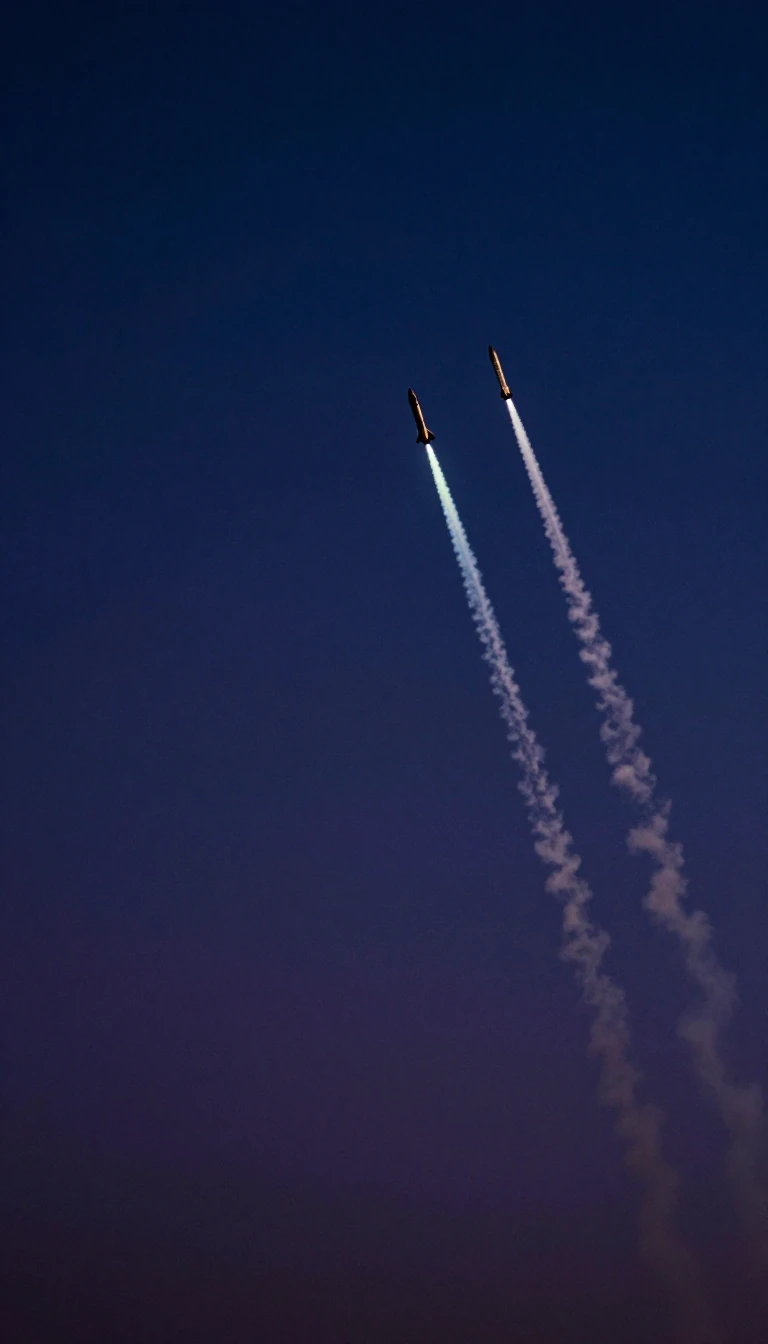 Wernher von Braun's rockets reached space for Hitler, then the Moon for AmericaIn 1944 a V-2 rocket co-designed by Wernher von Braun became the first human-made object to cross into space. Twenty-five years later, the Saturn V he architected sent Apollo astr…
 Queen Elizabeth's doctor worked out that Earth itself is a magnetWhy does a compass point north? Before 1600, some blamed the pole star or a giant magnetic island at the top of the world. William Gilbert, physician to Elizabeth I, built a small…
- William Harvey mapped blood's circuit and exposed a witch's ordinary toadIn 1628 William Harvey published the first complete description of blood being pumped by the heart around the body and through the lungs. Patients deserted him over it. The same s…
 William Henry Bragg shared a Nobel Prize with his own sonIn November 1915, William Henry Bragg and his son Lawrence jointly won the Nobel Prize in Physics for using X-rays to reveal how atoms sit inside crystals, the only father and son…
 A Bath church organist found the first new planet since antiquityWilliam Herschel earned his living playing the organ and writing symphonies in the spa town of Bath. In his spare hours he ground telescope mirrors, sometimes for 16 hours a day. …
 Hamilton carved his breakthrough equation into a Dublin bridge with a penknifeOn 16 October 1843, walking beside Dublin's Royal Canal with his wife, William Rowan Hamilton suddenly saw how to multiply numbers in four dimensions. Afraid to lose the idea, he …
 William Shockley brought silicon to California, then drove his best people awayIn 1956 William Shockley opened the first company working on silicon devices in what became Silicon Valley, staffed with brilliant recruits. Within about a year, eight of them qui…
 Su Song built a 40-foot clock tower nobody could rebuildIn 11th-century Kaifeng, Su Song crowned a water-driven tower with a rotating bronze armillary sphere turned by the oldest known endless chain drive. When the capital fell and the…
 Arrhenius's near-failed thesis on salty water later won a Nobel PrizeUppsala's professors were so unimpressed by Svante Arrhenius's 1884 dissertation that they initially graded it fourth class. Its central idea, that dissolved salts split into char…
 Darwin's Bulldog left school at ten and taught himself nearly everythingThomas Henry Huxley had just two years of formal schooling before his family's money ran out when he was ten. He went on to teach himself German well enough to translate for Darwi…
 Thomas Young proved light is a wave using sunlight and a cardIn November 1803 Thomas Young told the Royal Society his experiments needed nothing more than sunshine and everyday objects. By sliding a thin card into a beam from a window openi…
 Tycho Brahe lost his nose in a duel over mathematicsAt an engagement party in December 1566, a 20-year-old Tycho Brahe drunkenly argued with his third cousin about which of them was the better mathematician. Weeks later they settle…
 Évariste Galois cracked a 350-year-old puzzle and died at twentyBefore turning 20, Évariste Galois found exactly which polynomial equations can be solved using roots, settling a question open for 350 years and founding group theory. He also tw…
 Poisson tried to sink the wave theory of light and proved it insteadIn 1817 Siméon Denis Poisson sat on a prize committee judging Augustin-Jean Fresnel's paper on diffraction. Sure that light was made of particles, he calculated that Fresnel's wav…
 Sofya Kovalevskaya first met calculus on the wallpaper of her childhood bedroomWhen the family ran short of wallpaper at their country estate, one child's room was covered with old lecture notes on calculus from her father's student days. Eleven-year-old Sof…
 Ramanujan flunked college and hunted clerk jobs before his notebooks got noticedSrinivasa Ramanujan won a college scholarship in 1904 and promptly lost it, because he could not make himself study anything except mathematics and failed most other subjects. A f…
 An overheard phrase on a park bench launched Stefan Banach's mathematical careerStrolling through Kraków's Planty park in 1916, the mathematician Hugo Steinhaus was startled to hear two young men on a bench discussing the Lebesgue integral, then a fairly new …
 Young Stephen Hawking built a computer from clock parts and a switchboardFrom 1958, a group of St Albans schoolboys, guided by their maths teacher Dikran Tahta, assembled a working computer out of clock parts, an old telephone switchboard and other sal…
 Evolution by jerks or by creeps: Stephen Jay Gould's famous fossil fightCritics mocked the theory Stephen Jay Gould championed as evolution by jerks. Gould shot back that the older view, in which species change smoothly and steadily, deserved the name…
 Steve Wozniak's fake computer brochure fooled even his friend Steve JobsAt a West Coast computer show, Steve Wozniak and two friends handed out glossy brochures for the Zaltair, a miracle machine running a language called BAZIC. The product did not ex…
 Robert Millikan spent ten years trying to prove Einstein wrong and confirmed himWhen Einstein proposed in 1905 that light comes in particles, Robert Millikan was sure the idea must fail, because a mountain of experiments said light was a wave. He devoted abou…
 Why so much of science still judges results by a one-in-twenty chanceThe famous p = 0.05 cutoff traces back to a 1925 handbook by Ronald Fisher. He called a deviation of about 1.96, or nearly 2, a convenient limit for deciding whether a result look…
 Before DNA, Rosalind Franklin made her name studying the holes in coalIn 1945, looking for work after the war, Rosalind Franklin described herself as a physical chemist with a poor grasp of physical chemistry but an expert's knowledge of the holes i…
 The first diesel engines could run on peanut oil without anyone noticingAt the Paris exhibition of 1900, a small diesel engine built by the Otto company quietly ran on peanut oil at the French government's suggestion. Rudolf Diesel later wrote that it…
 Samuel Morse was a celebrated painter long before he touched a telegraphOn a ship home from Europe in 1832, the painter Samuel Morse watched a fellow passenger, Charles Thomas Jackson of Boston, demonstrate experiments with an electromagnet. Morse set…
 The rebellious boy with a homemade cannon who mapped the brain's cellsIn 1863, aged eleven, Santiago Ramón y Cajal was locked up for blowing apart a neighbour's gate with a cannon he had built himself. The same restless boy loved to draw, a talent h…
 The Soviet space program's mastermind was known publicly only as Chief DesignerWhile Sputnik and Yuri Gagarin made world headlines, the engineer behind them had no public name. Sergei Korolev appeared only as the glavny konstruktor, the chief designer, partl…
 A Song dynasty official who read ancient climate change in buried bambooIn eleventh-century China, Shen Kuo came across petrified bamboo buried underground in a dry northern region where no bamboo could grow in his day. He concluded the climate there …
 Robert Boyle, founder of modern chemistry, also hoped to turn metals into goldRobert Boyle is remembered as the first modern chemist and the man behind the law linking gas pressure and volume. He was also a committed alchemist who believed metals could be t…
- Robert Woodward was nominated for the Nobel Prize 111 times before winningBetween 1946 and 1965 the American chemist Robert Burns Woodward was put forward for the Nobel Prize 111 times. When he finally won, in 1965, he used his lecture to describe build…
 Before his famous steamboat, Robert Fulton built a submarine for NapoleonRobert Fulton is celebrated for the first commercially successful steamboat. Years earlier, working in France, he designed Nautilus, a hand-powered submarine that stayed underwate…
 How a country doctor's back-room lab pinned anthrax on a single microbeIn the 1870s Robert Koch was a district physician in the small Prussian town of Wollstein, running experiments in a room beside where he examined patients. With cramped, poor equi…
 A coffeemaker, Biosphere 2 and the Universe sort neatly into three kinds of systemYour coffeemaker swaps both matter and energy with its surroundings, which makes it an open system, like a car or planet Earth. A computer or the Biosphere 2 project trades energy…
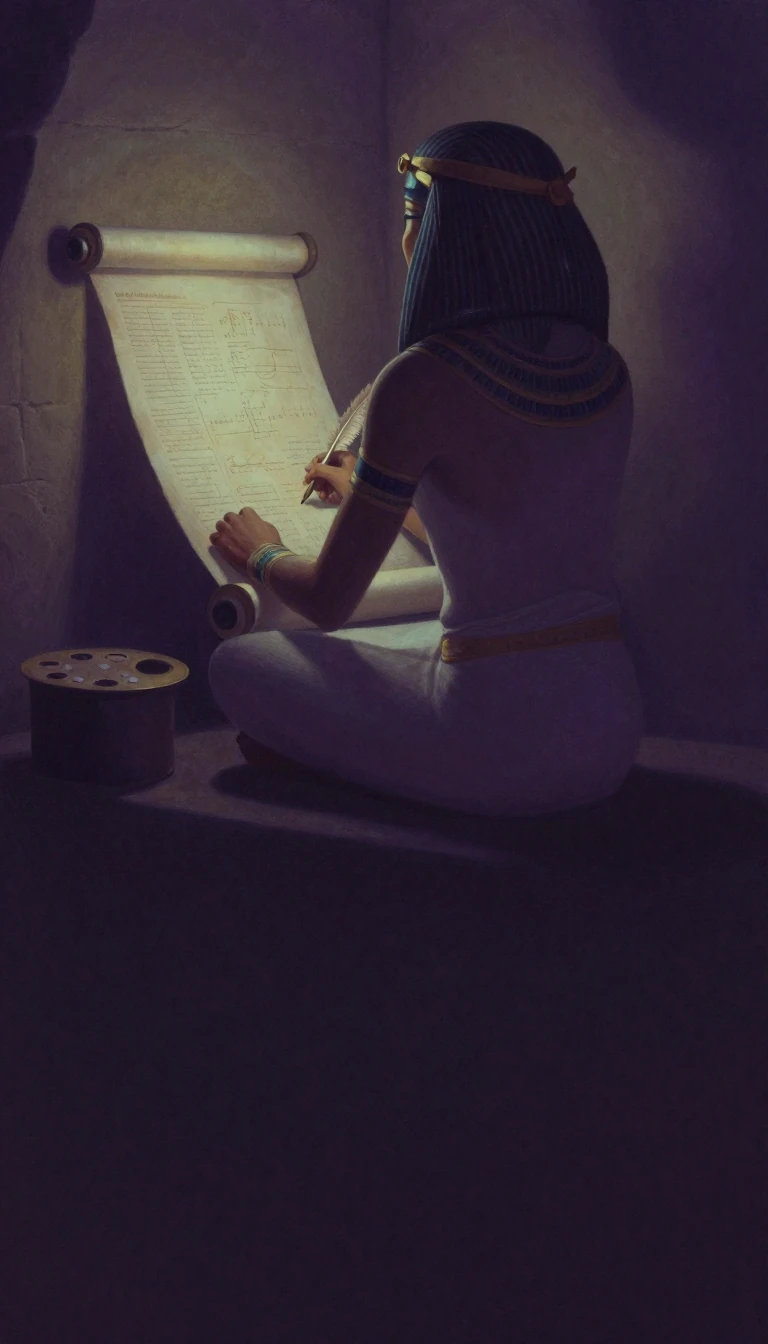 Was Ptolemy a fraud? A rediscovered star catalogue changed the verdictIn 1977 physicist Robert Newton branded Claudius Ptolemy history's most successful scientific fraud, accusing the Alexandrian astronomer of inventing or doctoring his data. Then i…
 Pythagoras may not have discovered his own theorem, and his life is mostly legendEvery schoolchild learns the theorem named for Pythagoras, yet he left no writings, and historians doubt many of the discoveries pinned on him. The best-attested thing he taught w…
 Before Silent Spring, Rachel Carson wrote radio scripts about fish for the governmentIn the depths of the Depression, a young zoologist supporting her mother took a temporary job writing 52 seven-minute radio shows about underwater life for the U.S. Bureau of Fish…
 Teaching calculus for the first time, Dedekind worked out what a real number isPreparing his first calculus course in Zurich, Richard Dedekind was bothered that nobody had properly defined the number line. His answer, the Dedekind cut, treats a number like t…
 Richard Feynman's school IQ test scored him at a merely respectable 125A high school IQ test put Richard Feynman at 125, one point below his younger sister Joan, who later teased that she was the smarter sibling. He turned down Mensa, saying his scor…
- Otto Hahn began nuclear chemistry in a Berlin basement woodworking shopWhen Otto Hahn came back to Berlin in 1906, the only room offered to the young radiochemist was a disused carpentry workshop under the Chemical Institute. He built electroscopes f…
 Paracelsus burned the medical classics in a Basel market squareOn 23 June 1527 the new city physician of Basel set fire to a copy of Avicenna's Canon of Medicine, the enormous textbook every university doctor revered. Theophrastus von Hohenhe…
- Paul Dirac spoke so rarely that Cambridge colleagues named a unit after himAt Cambridge, a 'dirac' meant one word per hour, a joke about the quietest man in physics. Paul Dirac grew up in a Bristol home where his father allowed only French at the table, …