 Intellect Plus
History
21,004 cards. Each one is a 40-second story with a five-minute read behind it. Page 138 of 351.
Subtopics: 19th century · 20th century · Africa · Age of Exploration · Ages & eras · Ancient · Ancient China · Ancient egypt · Ancient greece · Ancient rome · Ancient trade · Archaeological discoveries · Archaeology · Astronomy · Australia · Auxiliary historical sciences · Babylon · Basics · Born on this day · Bronze age · Buddhism · Case studies · Chefs, bartenders and winemakers · China · Cities · Climate · Columbus · Contemporary (1945-) · Cosmetics people · Crime · Criminals · Decipherment · Deep time · Disasters · Early modern · Education · Egypt · Empires · Empires & civilisations · Exploration · Explorers · Extinction · Fandom, conventions and festivals · History by continent and large region · History by continent and region · History by country · History by country, small region and city · History by ethnicity · History by subject matter · History by topic · Inca · India · Industrial Revolution · Japan · Kings & queens · London · Mass hysteria · Medicine · Medieval kingdoms · Medieval life · Mediterranean · Mercedes-Benz History · Mesopotamia · Middle ages · Military leaders and theorists · Military leaders, personnel, and theorists · Ming dynasty · Misconceptions · Modern · Modern (1800-1945) · Napoleon · Navigation · North africa · Other · Pacific · Pharaohs · Philippines · Pirates · Post-classical · Prehistory · Propaganda · Public health · Rebels, revolutionaries and activists · Renaissance · Researched · Second world war · Shipwrecks · Silk Road · South america · Tradespeople · UK & Ireland: history · United states · Vikings · Volcanoes · Women in history
 Why banditry was often a rational career choice for the desperate and dispossessedBanditry is rarely just simple crime. Throughout history, it has functioned as a fluid, temporary occupation for peasants facing famine, soldiers abandoned by their states, and re…
 Containment was the Cold War strategy that defined American foreign policy for decades.Born from a 1946 diplomatic cable, containment sought to limit Soviet influence without triggering global war. It occupied a precarious middle ground between passive relaxation an…
 The executioner was often a social pariah who also managed the town's latrines.While we imagine the executioner as a singular figure of death, history reveals a complex, often ostracized professional. From managing waste and animal carcasses to serving as un…
 The Irishman who launched India's first newspaper from the confines of a debtors' prisonJames Augustus Hicky was a restless soul who transitioned from law clerk to surgeon before finding his true calling in Calcutta. After his shipping business collapsed in 1776, he …
 How a printer’s acquittal in 1735 became the bedrock of American press freedomWhen colonial authorities failed to silence a critic, they arrested his printer, John Peter Zenger. Facing a stacked court and a charge of seditious libel, Zenger’s defense took a…
 A mutiny at sea birthed the first framework of government in the American colonies.When storms forced the Mayflower off course in 1620, passengers realized they were outside their legal jurisdiction. With some threatening to abandon the group, Pilgrim leaders dr…
 How a failed politician revolutionized global journalism with a single, radical newspaper designRoberto Noble, a former socialist turned publisher, transformed the media landscape by launching Clarín in 1945. By abandoning traditional broadsheet layouts for a reader-friendly…
 The brilliant, volatile journalist who became the voice of a generation in AmericaBorn into slavery, T. Thomas Fortune rose to become the most influential African American journalist of his era. A fierce advocate for civil rights and a vocal critic of political…
 Why the father of modern bodybuilding was cast in plaster for scienceEugen Sandow, the Victorian strongman who redefined the male physique, became a living statue in 1901. To prove that the muscular perfection of Greek art was attainable, he endure…
 Did a cyclist’s Tour de France victory really avert an Italian civil war?Gino Bartali was a cycling titan, but his most legendary feat occurred off the bike. In 1948, as Italy teetered on the brink of revolt following the shooting of a communist leader…
 The Buddhist priest who taught Japan's three great unifiers how to play GoHon'inbō Sansa was more than a master of the board. As a Nichiren priest and the first official Go-dokoro, he navigated the volatile politics of feudal Japan, instructing Oda Nobu…
 Was this ancient Greek wrestling champion truly defeated by a tree stump?Milo of Croton was a legendary athlete who dominated wrestling for decades, securing six Olympic victories. Yet, his fame rests as much on his theatrical displays of superhuman st…
 The chess prodigy who conquered the world before retreating into a life of madnessPaul Morphy was a nineteenth-century chess phenomenon who dominated the global stage with intuitive genius. Yet, at the height of his fame, he abruptly abandoned the game. He spen…
 How a legendary Olympic decathlete became a pivotal figure in American civil rights historyRafer Johnson was more than a gold-medal athlete. After dominating the 1960 Olympic decathlon, he pivoted to a life of public service. From tackling the assassin of Robert F. Kenn…
 Why a Cold War security pact split over nuclear ships and never fully healedSigned in 1951, the ANZUS treaty was designed to secure the Pacific against communism. Yet, by 1986, it fractured when New Zealand banned nuclear-capable vessels from its waters. …
 The First International: How a Global Workers' Union Collapsed Under Its Own Ideological WeightFounded in 1864 to unite the global working class, the First International promised a new era of solidarity. Yet, it became a battleground for competing visions of socialism and a…
 The 1889 global forum that helped build the modern international orderFounded in Paris to champion representative democracy and peace, the Inter-Parliamentary Union remains a unique global assembly. While its early focus was on conflict arbitration,…
- How a clandestine Luanda meeting birthed a movement that ruled Angola for decadesBorn in 1956 from a secret gathering in a private home, the MPLA evolved from a quiet nationalist collective into the dominant force of Angolan politics. After fighting a brutal i…
 How Singapore’s dominant political force transformed a nation through decades of continuous governanceThe People’s Action Party has steered Singapore since 1959, maintaining control through rapid economic expansion and social welfare programs. By blending free-market principles wi…
 What defined human existence before the massive shift of the Industrial Revolution?Before machines enabled mass production, life was defined by rural isolation, limited labor specialization, and a reliance on peasant agriculture. While we often view this era as …
 How a group of Hollywood actors fought back against oppressive studio control in 1933Before the Screen Actors Guild, Hollywood studios exerted near-total control over performers through restrictive, multi-year contracts. Actors lacked basic protections like rest p…
 Before the printing press, scribes were the essential architects of human knowledge and power.Long before digital archives, scribes were the gatekeepers of civilization. From Mesopotamia to Japan, these professionals did more than copy texts; they managed empires, codified…
 How a global network of socialist parties navigated the Cold War and beyondBorn from the ashes of World War II, the Socialist International sought to unite democratic socialist parties under a single banner. From its 1951 Frankfurt founding, the organiza…
 From patriotic secret societies to the world's premier money launderers for global drug cartels.Triads began as 18th-century underground movements aiming to overthrow the Qing dynasty. Today, these complex syndicates have evolved into transnational criminal powerhouses. They…
 How Malaysia's Oldest Political Party Shaped a Nation Through Affirmative Action and IdentityFounded in 1946 to resist colonial rule, the United Malays National Organisation (UMNO) evolved into the architect of modern Malaysia. By championing Malay nationalism and the con…
 How a wartime labor shortage launched a Nobel-winning physicist's career in the 1940sRosalyn Yalow was a determined physicist who broke barriers in a male-dominated field. Entering the University of Illinois in 1941 as the only woman among 400 faculty members, she…
- How a Shakespearean actor used the power of protest to reshape American labor rights.A. Philip Randolph was more than a civil rights icon; he was a master strategist who leveraged the threat of mass mobilization to force presidential action. By organizing the firs…
 Why a single commander’s death at the Battle of Tours halted an entire empireAbd al-Rahman al-Ghafiqi was an accomplished Umayyad governor whose invasion of Gaul seemed unstoppable until it met Charles Martel. His defeat in 732 did more than end a campaign…
 How a Spanish-educated judge became the architect of a short-lived North African republicAbd el-Krim was once a trusted Spanish administrator and journalist who championed European technology. Yet, by 1920, he had abandoned his colonial career to lead a fierce Berber …
 How a Zaydi religious scholar became the central figure of Yemen's ongoing civil warAbdul-Malik al-Houthi rose from the northern mountains of Yemen to lead the Ansar Allah movement. Since 2004, he has transformed a regional religious group into a dominant politic…
 Can a prisoner orchestrate the end of a decades-long militant insurgency from his cell?Abdullah Öcalan, the founder of the Kurdistan Workers’ Party, spent over two decades in solitary confinement after his 1999 capture. Despite his isolation, he maintained profound …
 How a philosophy professor built a guerrilla army to overthrow the Peruvian stateAbimael Guzmán transformed from a quiet academic into the leader of the Shining Path, a militant organization that plunged Peru into two decades of chaos. By blending Maoist theor…
 The Trusted Trustee: How a Humble Commander Shaped the Early Islamic ConquestsAbu Ubayda ibn al-Jarrah was more than a military leader; he was the Prophet Muhammad's chosen custodian of the community. From the battlefields of Badr to the strategic conquest …
 Did a sandstorm kill Iraq's Defence Minister, or was it a calculated political assassination?Adnan Khayr Allah, the powerful Iraqi Defence Minister and cousin to Saddam Hussein, died in a 1989 helicopter crash. While officially deemed an accident caused by a sandstorm, pe…
 How an Argentine sculptor became a global symbol of nonviolent resistance against military dictatorships.Adolfo Pérez Esquivel was an architect and professor who traded his academic career for the dangerous work of human rights advocacy. By coordinating nonviolent movements across La…
 The daring French pilot who defined the first fighter ace in historyAdolphe Pégoud was a pioneer of aerobatics who transformed early aviation through death-defying stunts. Before becoming the first fighter ace of World War I, he mastered inverted …
 From student activist to political exile: the complex trajectory of Agnes ChowAgnes Chow rose to prominence as a teenage activist in Hong Kong, eventually becoming a central figure in the pro-democracy movement. Her path—marked by electoral disqualification…
 Ahmed Urabi: The Peasant Who Challenged the British Empire and Egypt's AristocracyBorn to a village sheikh, Ahmed Urabi rose from the peasantry to lead a nationalist movement against foreign control and an entrenched elite. His defiant slogan, Egypt for Egyptia…
- Ahn Chang Ho: The Architect of Korean Identity and Independence in the United StatesAhn Chang Ho was a pivotal figure in the Korean independence movement and a pioneer of the Korean-American community. From establishing the first Korean settlement in California t…
 Was this Japanese spy worth more than ten full army divisions to his country?Baron Akashi Motojiro was a master of espionage who destabilized the Russian Empire from within. By funding revolutionaries and orchestrating chaos across Europe, he became a lege…
 Albert Luthuli: The Zulu Chief Who Led South Africa’s Nonviolent Fight Against ApartheidAlbert Luthuli was a teacher, tribal chief, and the first African to win the Nobel Peace Prize. As president of the African National Congress, he championed nonviolence against ap…
 Aleksandr Vasilevsky: The Underestimated Architect of Soviet Victory in World War IIAleksandr Vasilevsky rose from a humble priest's son to a Marshal of the Soviet Union, orchestrating the most decisive campaigns of the Second World War. Despite his pivotal role …
 Was Aleksey Yermolov a gallant hero of the Napoleonic Wars or a brutal conqueror?Aleksey Yermolov was a titan of 19th-century Russian military history, celebrated in St. Petersburg as a brilliant, Latin-quoting strategist. Yet, in the Caucasus, he remains a fi…
 Aletta Jacobs: The Physician Who Revolutionized Women's Healthcare and Political Rights in the NetherlandsAletta Jacobs was a trailblazer who defied 19th-century norms to become the first woman to attend a Dutch university and earn a medical doctorate. She founded the world's first bi…
 How a former Russian security officer became the target of a radioactive assassination.Alexander Litvinenko, a former FSB officer who turned into a vocal critic of the Russian state, died in London after being poisoned with polonium-210. His death sparked a years-lo…
 A Soviet Marshal who survived the front lines but fell to Stalin's private archivesAlexander Yegorov rose from a volunteer in the Imperial Army to become one of the inaugural five Marshals of the Soviet Union. Despite his pivotal role in defeating White forces d…
 From mine electrician to separatist leader: the rise and fall of Alexander ZakharchenkoAlexander Zakharchenko, a former mine electrician, became the face of the Donetsk People's Republic. His ascent from a local militant to a major general was marked by Russian supp…
 Alexandra Kollontai: The Revolutionary Who Became the World's First Female AmbassadorAlexandra Kollontai was a radical Bolshevik who shattered glass ceilings, becoming the first woman in history to serve as a cabinet minister and a modern state's ambassador. Yet, …
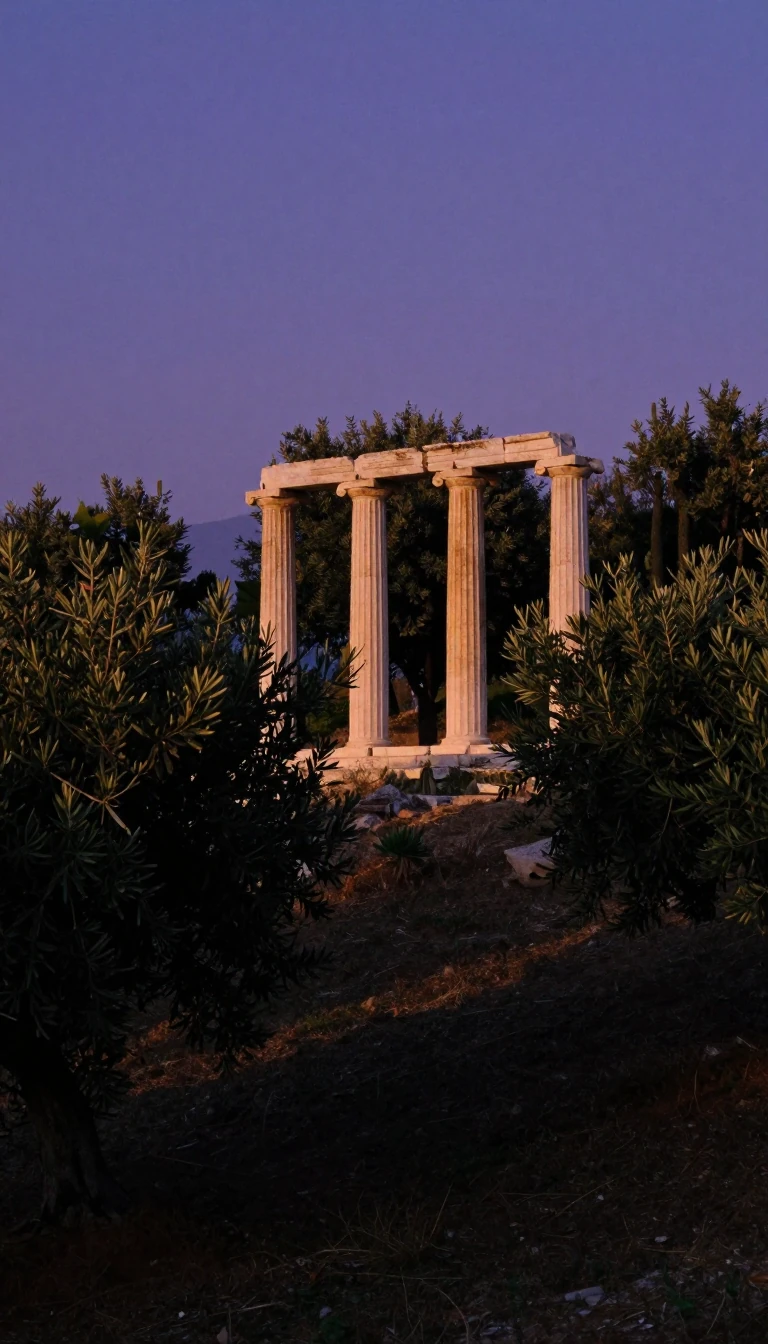 Alexandros Papagos: The Only Field Marshal in the History of the Greek ArmyAlexandros Papagos was a central figure in 20th-century Greece, transitioning from a career military officer who commanded forces in World War II and the Civil War to the nation's…
 How a lawyer turned blogger became the most dangerous critic of the KremlinAlexei Navalny transformed from a corporate lawyer into Russia's most prominent opposition figure by weaponizing transparency. Through shareholder activism and a viral whistleblow…
- Was the legendary Soviet miner Alexei Stakhanov a hero or a publicity stunt?Alexei Stakhanov became a Soviet icon for shattering coal production records, sparking a national movement in his name. Yet, behind the propaganda of his superhuman efficiency lay…
 The General Who Signed the Orders That Sealed His Own Execution at NurembergAlfred Jodl was the primary strategist for the German Armed Forces during the Second World War. As the head of operations for the High Command, he signed the brutal orders that ma…
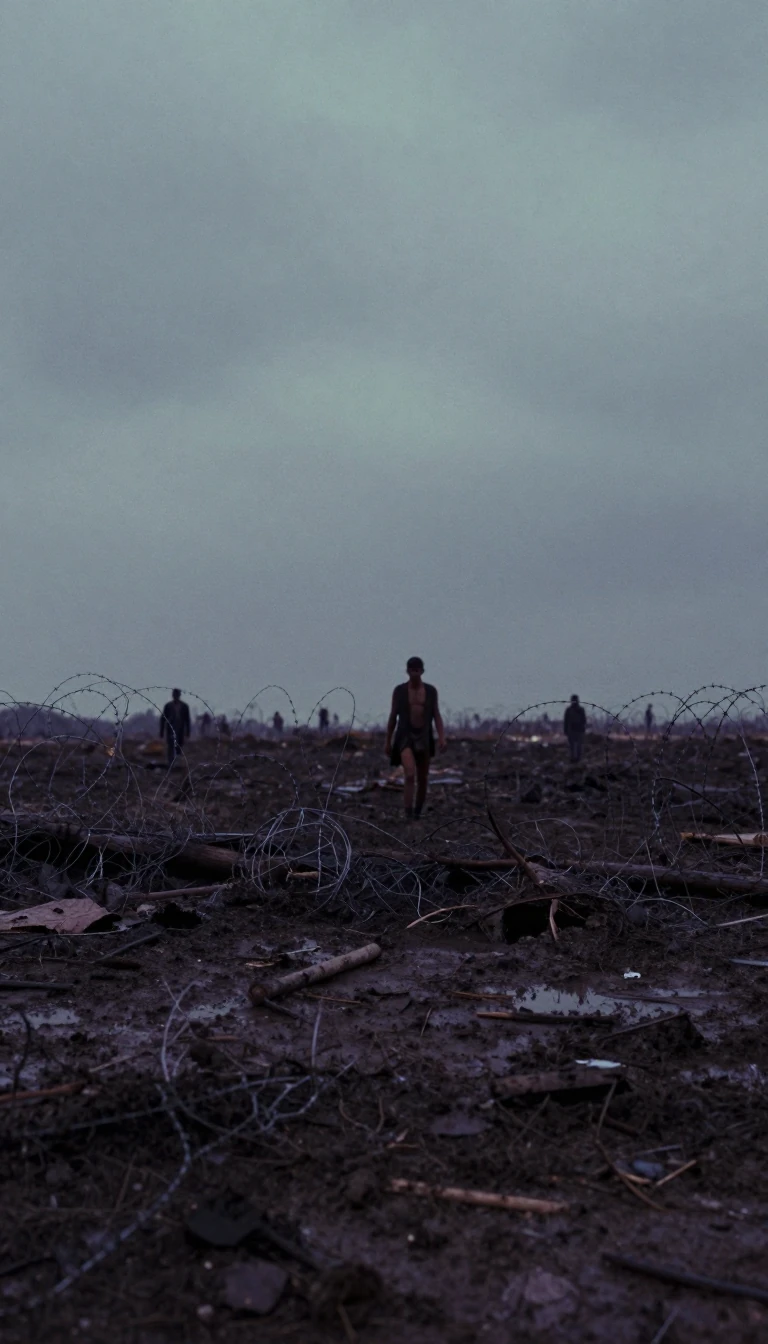 Did a single German general's obsession with an ancient battle trigger World War I?Alfred von Schlieffen, chief of the German general staff, believed modern warfare could be won by replicating Hannibal’s double envelopment at Cannae. His 1905 plan sought a swift…
- Did a German admiral’s obsession with naval expansion accidentally trigger a global arms race?Alfred von Tirpitz transformed the German Navy into a world-class force, yet his grand strategy backfired. By building a massive fleet to intimidate Britain, he instead solidified…
 How a naval commander became the most wanted rebel in East TimorAlfredo Reinado was a trained military officer who once commanded East Timor's naval unit. By 2006, he had deserted his post, led a violent insurgency, escaped a high-security pri…
 The Iraqi official who ordered mass chemical attacks and showed no remorse for genocide.Known as Chemical Ali, Ali Hassan al-Majid was the ruthless enforcer behind Saddam Hussein’s most brutal campaigns. From the systematic destruction of Kurdish villages to the supp…
 How a decorated Iranian general became the target of a street-sweeper assassinAli Sayad Shirazi was a pivotal commander during the Iran-Iraq War, credited with turning the tide against Iraqi forces. Yet, his career was defined by intense internal rivalries …
- Alice Paul: The militant Quaker who brought radical suffrage tactics to the United StatesBefore she became the elder stateswoman of American feminism, Alice Paul learned the art of radical protest in England. Arrested repeatedly for her militant activism, she returned…
 The miner who asked for a bigger shovel instead of fame and fortuneAlija Sirotanović was the ultimate Yugoslav hero of labor, a man whose record-breaking coal production made him a national icon. Yet, when offered anything he desired by Josip Bro…
- Why did Spain appoint a land-based administrator to lead its most critical naval invasion?In 1588, King Philip II entrusted the Spanish Armada to the 7th Duke of Medina Sidonia, a man who openly admitted he lacked naval experience and suffered from seasickness. This de…