 Intellect Plus
History
21,004 cards. Each one is a 40-second story with a five-minute read behind it. Page 137 of 351.
Subtopics: 19th century · 20th century · Africa · Age of Exploration · Ages & eras · Ancient · Ancient China · Ancient egypt · Ancient greece · Ancient rome · Ancient trade · Archaeological discoveries · Archaeology · Astronomy · Australia · Auxiliary historical sciences · Babylon · Basics · Born on this day · Bronze age · Buddhism · Case studies · Chefs, bartenders and winemakers · China · Cities · Climate · Columbus · Contemporary (1945-) · Cosmetics people · Crime · Criminals · Decipherment · Deep time · Disasters · Early modern · Education · Egypt · Empires · Empires & civilisations · Exploration · Explorers · Extinction · Fandom, conventions and festivals · History by continent and large region · History by continent and region · History by country · History by country, small region and city · History by ethnicity · History by subject matter · History by topic · Inca · India · Industrial Revolution · Japan · Kings & queens · London · Mass hysteria · Medicine · Medieval kingdoms · Medieval life · Mediterranean · Mercedes-Benz History · Mesopotamia · Middle ages · Military leaders and theorists · Military leaders, personnel, and theorists · Ming dynasty · Misconceptions · Modern · Modern (1800-1945) · Napoleon · Navigation · North africa · Other · Pacific · Pharaohs · Philippines · Pirates · Post-classical · Prehistory · Propaganda · Public health · Rebels, revolutionaries and activists · Renaissance · Researched · Second world war · Shipwrecks · Silk Road · South america · Tradespeople · UK & Ireland: history · United states · Vikings · Volcanoes · Women in history
 The Bolshevik poet who lived in the Kremlin until his books offended StalinDemyan Bedny was the Soviet Union's most celebrated propagandist, a man so favored he was the only writer granted a residence inside the Kremlin. Yet, his career was a volatile cy…
 A physicist turned novelist who navigated the dark, complex currents of Argentine political history.Ernesto Sabato abandoned a prestigious career in atomic physics to confront the human condition through literature. His journey took him from the surrealist cafes of Paris to the …
 Was the continent of Europe named after a Phoenician princess abducted by a bull?In Greek mythology, Europa was a Phoenician princess carried to Crete by Zeus in the form of a white bull. While her name may have inspired the continent, the myth likely masks an…
 Why Hungary's most beloved novelist spent his final decades in self-imposed isolationGéza Gárdonyi was a prolific journalist and teacher who transformed into a literary titan through his historical epics. Yet, despite his massive popularity, he spent his final twe…
 Why Ancient Egyptians Believed the Earth God Geb Caused Every EarthquakeIn the complex pantheon of Heliopolis, Geb stood as the foundational deity of the Earth. While modern science attributes seismic activity to shifting tectonic plates, the ancient …
 Georgette Heyer invented the Regency romance, then spent her life battling tax inspectors.Georgette Heyer defined a genre, yet she treated her own massive success as a chore. While her historical romances sold hundreds of thousands of copies, she viewed her writing as …
 The North Korean writer who invented the cult of Kim Il SungHan Sorya was the architect of the North Korean personality cult, transforming Kim Il Sung into a national deity through his literature. Though his name was later erased from offi…
 How a struggling Meiji-era novelist transformed the landscape of modern Japanese literatureHiguchi Ichiyō emerged from poverty and social isolation to become Japan's most significant female writer of her era. By blending classical training with the gritty realities of T…
 Is Iram of the Pillars a lost city, a nomadic tribe, or a desert mirage?Mentioned in the Quran, Iram of the Pillars has captivated imaginations for centuries. While some search for a physical city buried beneath the sands, others argue it refers to a …
 Why a 17th-century epic poem remains the pinnacle of Croatian Baroque literatureIvan Gundulić defined the Croatian Baroque with his stirring epic, Osman. Written in the 17th century, the work captured the dramatic clash between the Ottoman Empire and Christia…
 Before he became a legendary playwright, Jean-François Regnard survived life as a pirate slave.Jean-François Regnard is remembered as the seventeenth century's most accomplished comic poet after Molière. Yet, his path to the stage was forged through extraordinary misfortune…
 The Northamptonshire peasant who became a giant of English poetry through sheer observationJohn Clare, a farm labourer with minimal formal schooling, captured the English countryside with unmatched precision. While his contemporaries focused on Romantic ideals, Clare do…
 John Fletcher: The Playwright Who Defined the Jacobean Stage Beyond ShakespeareWhile history often remembers Shakespeare alone, John Fletcher was the era's true powerhouse. A prolific collaborator who shaped the King's Men, Fletcher pioneered a distinct dram…
 How a failed silk mercer’s apprentice became the toast of 18th-century London theatre.John Gay was an unlikely literary titan, moving from a failed apprenticeship to the heights of London society. Best known for the satirical masterpiece The Beggar’s Opera, he navi…
 The surgeon who wrote the world's most famous war poem from a muddy bunkerJohn McCrae was a Canadian physician and artillery officer who found himself treating the wounded during the Second Battle of Ypres. Amidst the carnage, he penned In Flanders Fiel…
 How a poet became the most dangerous enemy of an Argentine dictatorJosé Mármol was not just a writer; he was a political force whose scathing verses against Juan Manuel de Rosas earned him the title of the dictator's literary executioner. Forced …
 How a soldier who survived a massacre became Japan's most unlikely literary sensationJunpei Gomikawa was an unknown author who transformed his harrowing experiences in the Kwantung Army into a publishing phenomenon. His semi-autobiographical masterpiece, The Human…
 A Bank of England Secretary who wrote a children's classic while dodging bulletsKenneth Grahame lived a double life. By day, he was a high-ranking officer at the Bank of England, once surviving an assassination attempt by a gunman in his office. By night, he …
 The mysterious disappearance of the man who defined modern Armenian literatureKhachatur Abovian was a polymath and educator who vanished without a trace in 1848. Though he is now celebrated as the father of modern Eastern Armenian literature, his progressiv…
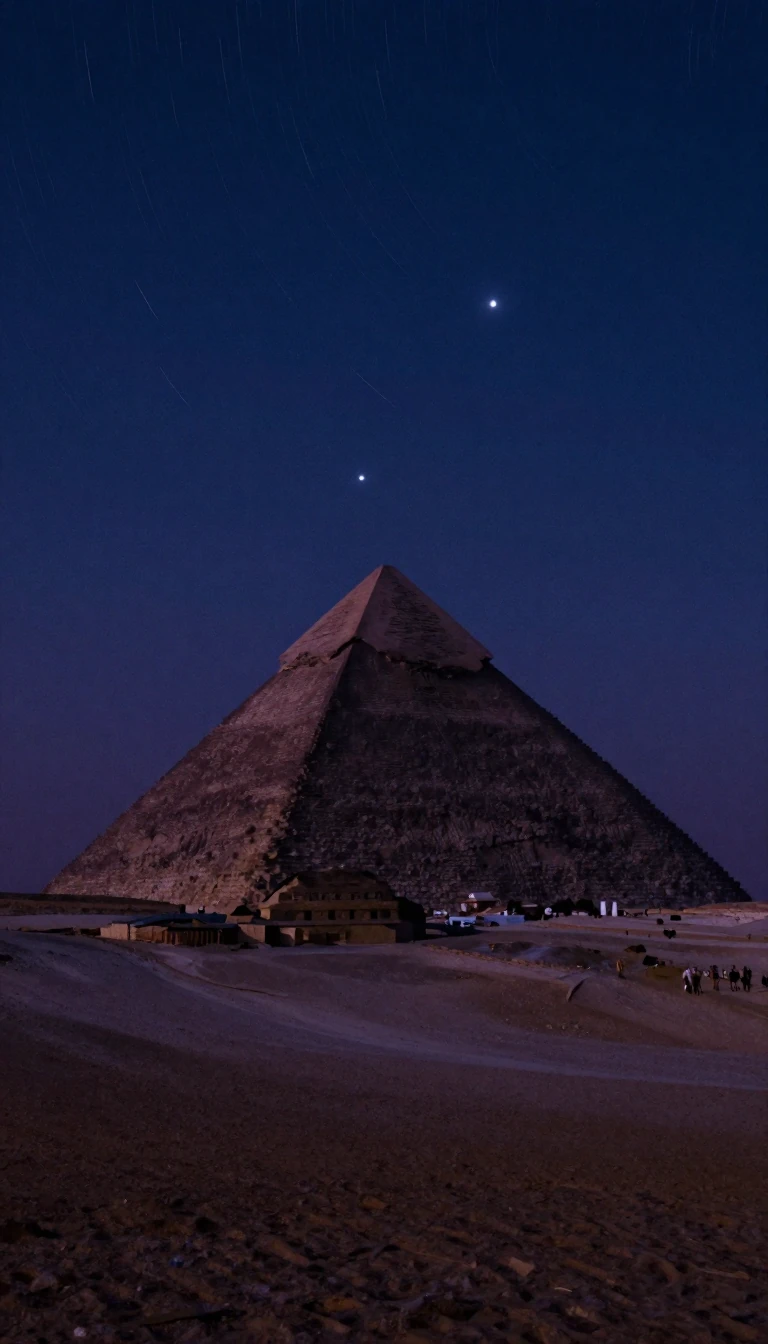 How a feathered serpent deity became a bridge between ancient Mesoamerican civilizationsKukulkan is more than a mythological snake. Originating as a Classic Period Maya deity, this plumed figure evolved into a powerful symbol of trade and diplomacy. By transcending e…
- The name Lucifer originally described the planet Venus, not a fallen angel or devil.For centuries, the name Lucifer has been synonymous with Satan. Yet, in its original Latin context, the word simply meant light-bringer, referring to the morning star. How did a c…
 Mao Dun: The Chinese Revolutionary Who Wrote His Way Through a Century of ConflictBorn Shen Dehong, the writer known as Mao Dun chose a pen name meaning contradiction to capture the ideological tension of 1920s China. As a founding member of the Communist Party…
- How Margaret Walker became the first black woman to win a national writing prizeMargaret Walker was a literary pioneer who transformed the African-American experience into verse and prose. From the Chicago Black Renaissance to her decades as a professor in Mi…
 How one woman memorized a poet's legacy to defy a totalitarian regimeNadezhda Mandelstam lived in constant fear, yet she became the guardian of her husband Osip’s forbidden poetry. By committing his verses to memory and dodging the NKVD for decades…
 How a forgotten poet saved Greek tragedy from its own unruly, bearded satyrsPratinas, a Dorian poet active in early fifth-century Athens, faced a structural crisis in Greek theater. As tragedy grew more serious and heroic, the traditional chorus of frolic…
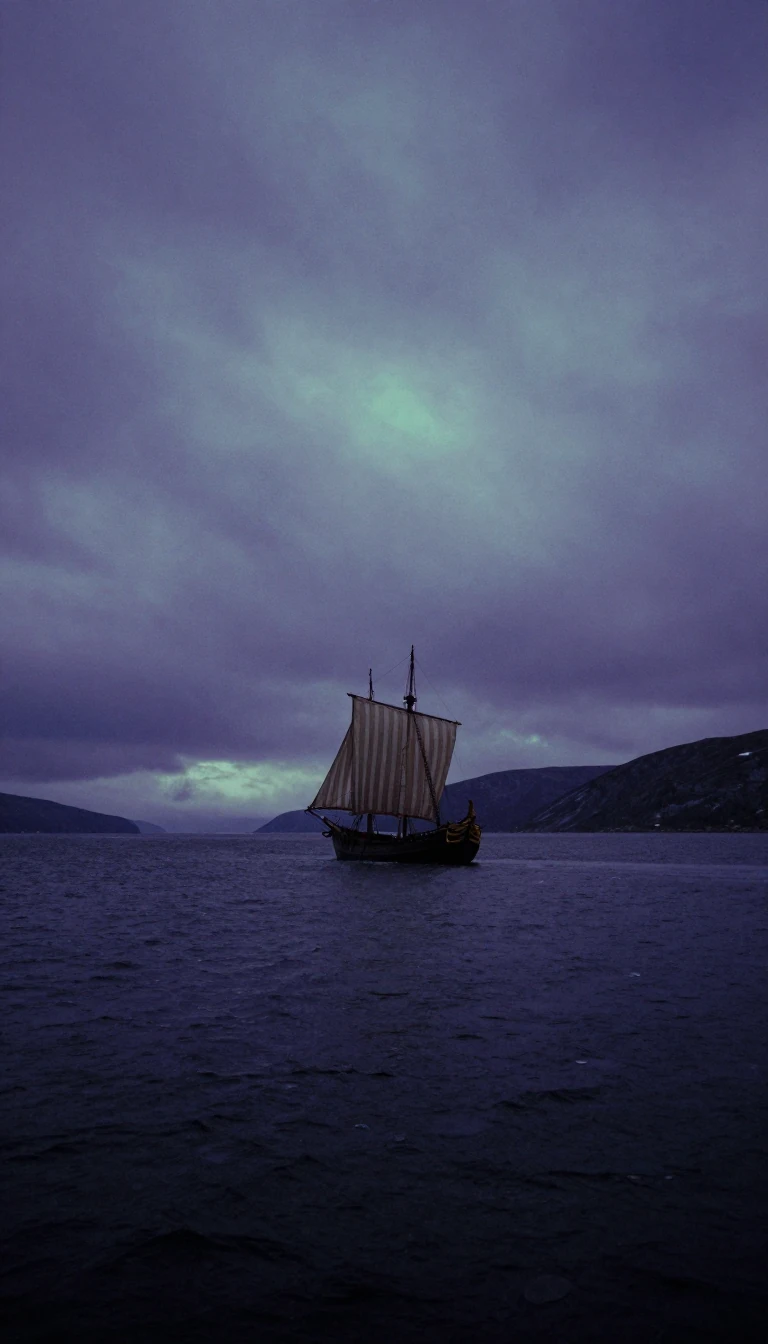 Was the legendary Viking hero Ragnar Lodbrok a single man or a composite myth?Ragnar Lodbrok is a titan of Norse legend, famous for his dragon-slaying, shield-maiden wives, and a tragic death in a snake pit. Yet, while his sons were undeniably real historic…
 Richard Aldington: The Irascible Modernist Who Challenged the Hypocrisy of His GenerationA central figure in the Imagist movement, Richard Aldington was a prolific writer whose career spanned poetry, biography, and searing social critique. Haunted by the disillusionme…
 Robert Graves: The War Poet Who Found His Muse in Ancient MythologyRobert Graves was a prolific writer whose life was defined by the trauma of trench warfare and a lifelong obsession with the divine feminine. From his grim memoirs of World War I …
 How a civil engineer became the voice of Italy’s tragic twentieth-century experienceSalvatore Quasimodo began his career as a government engineer, yet he evolved into a Nobel-winning poet who redefined Italian literature. By moving from the abstract, closed world…
 The Chinese novelist who traded his pen for the study of ancient artifactsShen Congwen was a celebrated lyric novelist who rose from a military clerk in rural Hunan to a literary giant in Beijing. After facing intense political pressure in 1949, he aban…
 Why Thailand’s greatest poet, the Shakespeare of the East, was once a jailed alcoholic.Sunthorn Phu, the legendary Thai poet, navigated a life of extreme highs and lows. From a celebrated court scribe under King Rama II to a disgraced merchant and monk, his journey …
 How a disgraced samurai wrote his way back into the Japanese elite classTakizawa Bakin was born into a declining samurai household, but he spent his life obsessed with restoring his family's lost status. Through a prolific career as a novelist, he ach…
 Why a forgotten Scottish poet helped shape the modern university systemThomas Campbell was a literary sensation in 1799, yet today he is largely remembered for his activism and institutional influence. Beyond his celebrated poetry, he was a key archi…
 Vasil Bykaŭ: The Soviet War Hero Who Became a Fierce Dissident CriticVasil Bykaŭ transformed from a decorated Red Army lieutenant into a profound literary voice, capturing the moral agony of World War II. His uncompromising realism drew both state …
 The Green Cobra Goddess Who Guarded Pharaohs and Inspired Modern SymbolsWadjet, the ancient Egyptian deity of Lower Egypt, evolved from a local protector into a powerful symbol of royal authority. Often depicted as a rearing cobra, she guarded pharaoh…
 Willa Cather: The Frontier Novelist Who Found Community in the Vast American LandscapeWilla Cather transformed the American frontier into a literary stage, crafting stories of immigrants and settlers that captured the spirit of the Great Plains. Though she became a…
 William Wycherley: The Restoration Dramatist Who Lived as Both Rake and PenitentWilliam Wycherley was a central figure in the London theater scene of the 1670s, known for his sharp, satirical comedies. Yet, his life was a turbulent cycle of courtly favor, sec…
 The loose river sediment that built the cradle of human civilizationAlluvium is the unassuming mix of clay, silt, sand, and gravel left behind by flowing water. While it may look like simple dirt, this geologically young deposit is the foundation …
- Cinnabar: The toxic scarlet mineral that defined ancient art and deadly laborThis brilliant red mineral has captivated humanity for millennia, from Neolithic burials to Chinese lacquerware. Yet, its beauty masks a lethal secret. As the primary ore for merc…
 Why medieval miners feared the bewitched ore that birthed the name cobaltCobaltite is a striking mineral that once terrified medieval miners. Its name derives from the German word for a goblin or underground spirit, reflecting the foul, poisonous fumes…
- Why these ancient green rocks were the ultimate prehistoric status symbolGreenschist is more than just a colorful geological curiosity. Defined by its signature green minerals and thin, layered structure, this metamorphic rock was once a prized commodi…
 Why these shallow cliffside openings were the preferred homes of our prehistoric ancestorsA rock shelter is more than a simple overhang; it is a geological masterpiece formed by the uneven erosion of resistant rock layers. These natural alcoves provided essential prote…
 Ur: The ancient, tiny supercontinent that may have been Earth's only landmassThree billion years ago, long before the familiar continents we know today, a small landmass called Ur likely stood alone as Earth's only continent. Though smaller than modern Aus…
 Avoirdupois: How a medieval term for heavy goods became our standard for weightThe term avoirdupois sounds like a refined French measurement, but it originally referred to a class of bulky merchandise rather than a system of units. Emerging in the 13th centu…
 Why the dessert spoon is the most inconsistent tool in your kitchen drawerThe dessert spoon is a culinary enigma. Designed to bridge the gap between a teaspoon and a tablespoon, its actual capacity shifts depending on where you live and when you are mea…
 The ancient alloy that paved the way for the world's first metal currencyLong before modern mints, ancient civilizations turned to electrum, a naturally occurring blend of gold and silver. This shimmering, pale-yellow metal was more than just a decorat…
 The word era originally referred to brass counters used for calculating ancient financial taxesWe use eras to organize history, but the term has humble, metallic roots. Derived from the Latin word for brass money, it evolved from a system of counting tax years into a tool f…
 Why the hundredweight is a confusing relic of imperial and customary measurement systemsThe hundredweight is a unit of mass that refuses to be consistent. Depending on whether you are in the United States or the United Kingdom, this single term refers to two differen…
 Why the American gallon and the British gallon are not the same sizeThe United States and the United Kingdom share a common ancestry in medieval English weights and measures, yet they diverged significantly over time. While Britain overhauled its …
 The Jin: How a Traditional Chinese Unit of Mass Became a Global VariableThe jin, or catty, is a traditional East Asian unit of mass that defies a single definition. While modern China rounds it to 500 grams, other regions maintain historical variation…
 The ancient weight that became the word for money across East AsiaThe mace is a traditional East Asian unit of weight that doubled as a currency denomination. While its modern metric value varies slightly by region, its linguistic roots trace ba…
 Why the color of unripe fruit became the definitive shade of modern warfareOlive is more than a dark yellowish-green. It is a cultural chameleon, shifting from the hue of raw wool to the standard of military camouflage. From the trenches of the twentieth…
 The palm was once a universal human ruler, but it never stayed the same.Before standardized inches and centimeters, the human body provided our primary measurement tools. The palm, based on hand width or length, served civilizations from Ancient Egypt…
 Why the pennyweight is a relic of medieval silver and modern jewelry designThe pennyweight, abbreviated as dwt, is a unit of mass that bridges ancient Roman coinage and modern precious metal valuation. While it shares a name with common currency, it has …
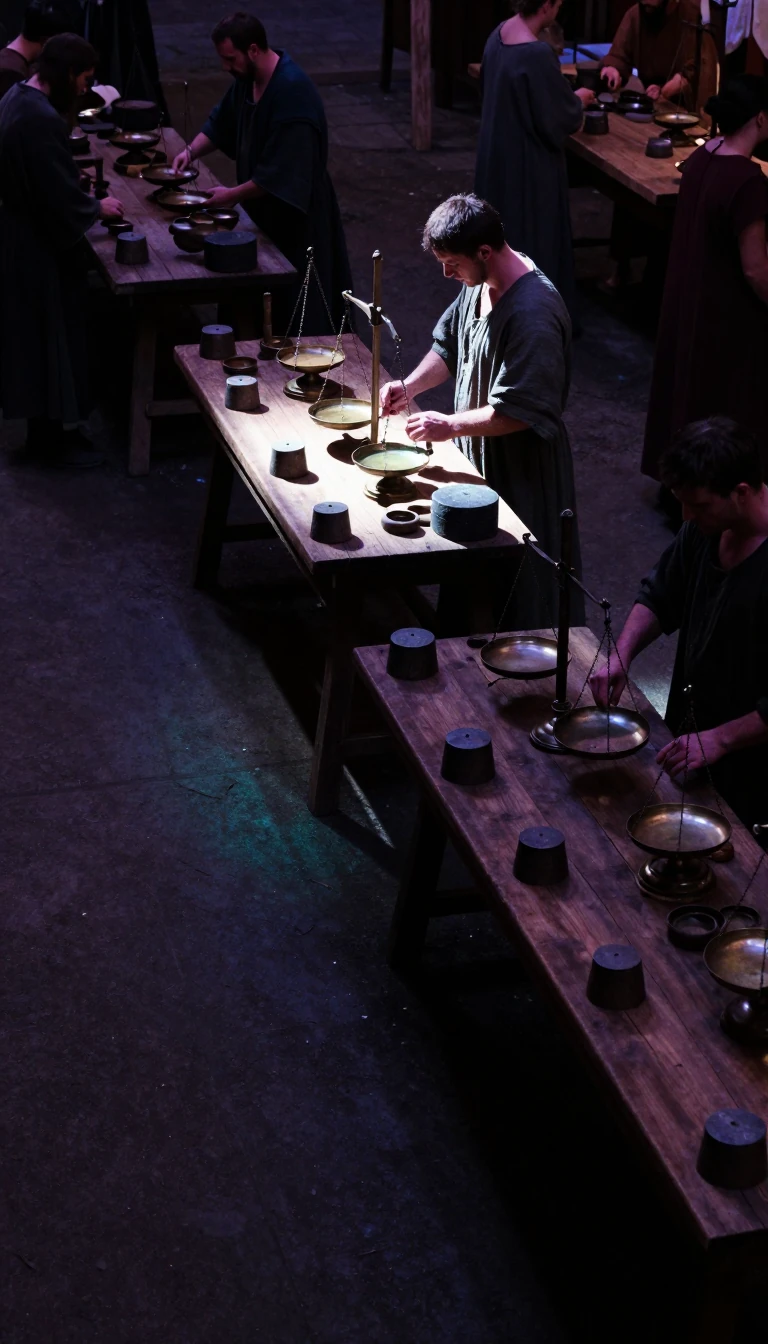 The Picul: How an Ancient Shoulder-Pole Load Became a Global Trade StandardDefined originally as the weight a person could carry on a shoulder-pole, the picul evolved from an ancient Chinese grain measure into a vital lingua franca for maritime trade. Fr…
- From ancient ship waterproofing to baseball controversies, the sticky history of pine tar.Produced by heating pine wood in anoxic conditions, pine tar is a versatile substance with a history spanning millennia. Once essential for naval dominance and maritime survival, …
 The rod: a medieval surveyor's tool that still dictates modern land boundaries todayBefore GPS, surveyors used a simple rod to map the world. Standardized at 16.5 feet, this humble unit helped Henry VIII seize church lands and still influences property titles, pi…
- Why the color turquoise is named after a country that never produced itTurquoise is a vibrant cyan hue derived from a rare mineral, yet its name is a historical misnomer. While the word implies a Turkish origin, the stone actually traveled to Europe …
 How a waitress who needed money for stockings became a legendary Los Angeles city editor.Agness Underwood started as a switchboard operator in 1926 after a domestic argument over the cost of silk stockings. She rose to become one of the first women to lead a major met…
 The Atlantic Charter was a world-changing document that never actually existed in writing.In August 1941, Franklin D. Roosevelt and Winston Churchill met in Newfoundland to outline a vision for a peaceful postwar world. Though it became the foundation for the United Na…