 Intellect Plus
History
21,004 cards. Each one is a 40-second story with a five-minute read behind it. Page 343 of 351.
Subtopics: 19th century · 20th century · Africa · Age of Exploration · Ages & eras · Ancient · Ancient China · Ancient egypt · Ancient greece · Ancient rome · Ancient trade · Archaeological discoveries · Archaeology · Astronomy · Australia · Auxiliary historical sciences · Babylon · Basics · Born on this day · Bronze age · Buddhism · Case studies · Chefs, bartenders and winemakers · China · Cities · Climate · Columbus · Contemporary (1945-) · Cosmetics people · Crime · Criminals · Decipherment · Deep time · Disasters · Early modern · Education · Egypt · Empires · Empires & civilisations · Exploration · Explorers · Extinction · Fandom, conventions and festivals · History by continent and large region · History by continent and region · History by country · History by country, small region and city · History by ethnicity · History by subject matter · History by topic · Inca · India · Industrial Revolution · Japan · Kings & queens · London · Mass hysteria · Medicine · Medieval kingdoms · Medieval life · Mediterranean · Mercedes-Benz History · Mesopotamia · Middle ages · Military leaders and theorists · Military leaders, personnel, and theorists · Ming dynasty · Misconceptions · Modern · Modern (1800-1945) · Napoleon · Navigation · North africa · Other · Pacific · Pharaohs · Philippines · Pirates · Post-classical · Prehistory · Propaganda · Public health · Rebels, revolutionaries and activists · Renaissance · Researched · Second world war · Shipwrecks · Silk Road · South america · Tradespeople · UK & Ireland: history · United states · Vikings · Volcanoes · Women in history
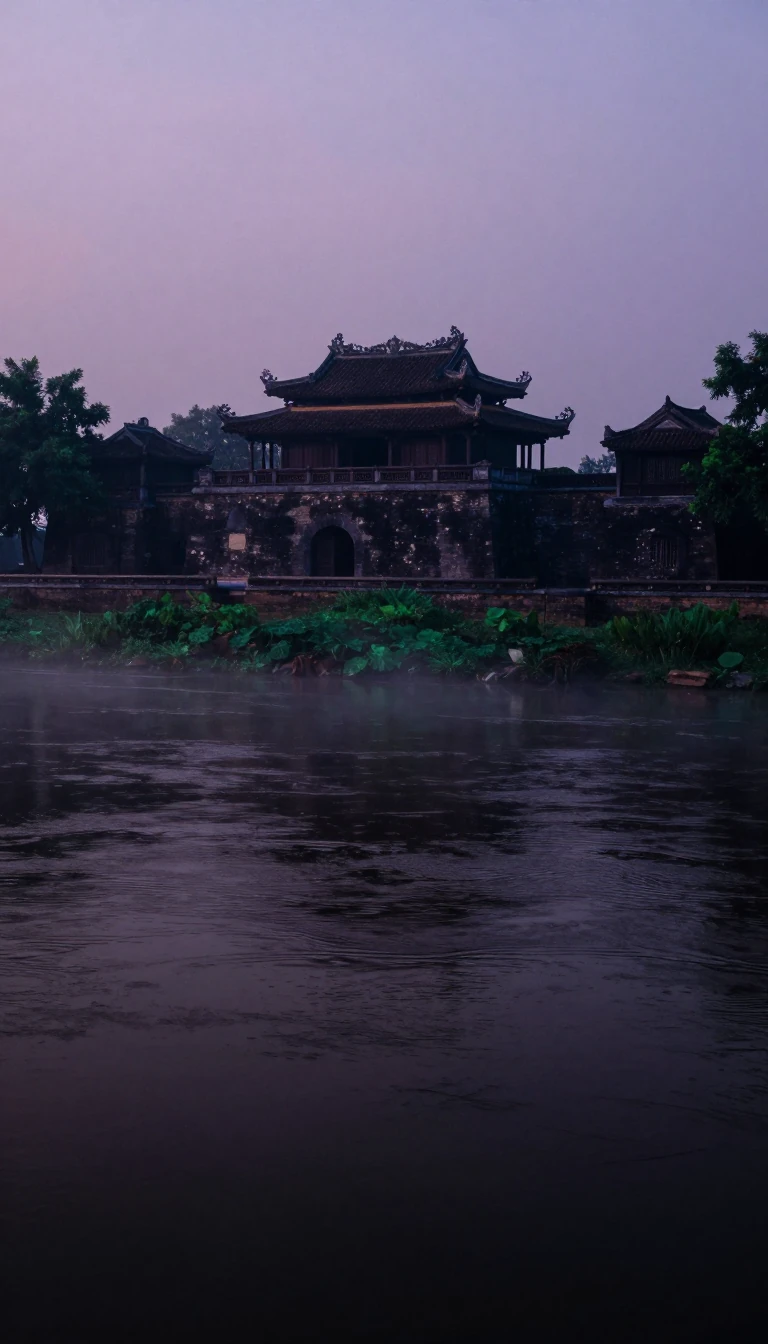 Vietnam's last dynasty ruled from 1802 into French IndochinaThe Nguyen dynasty was Vietnam's final imperial house, ruling a unified realm independently from 1802 until French protectorate arrangements began in 1883. Nguyen Phuc lords had a…
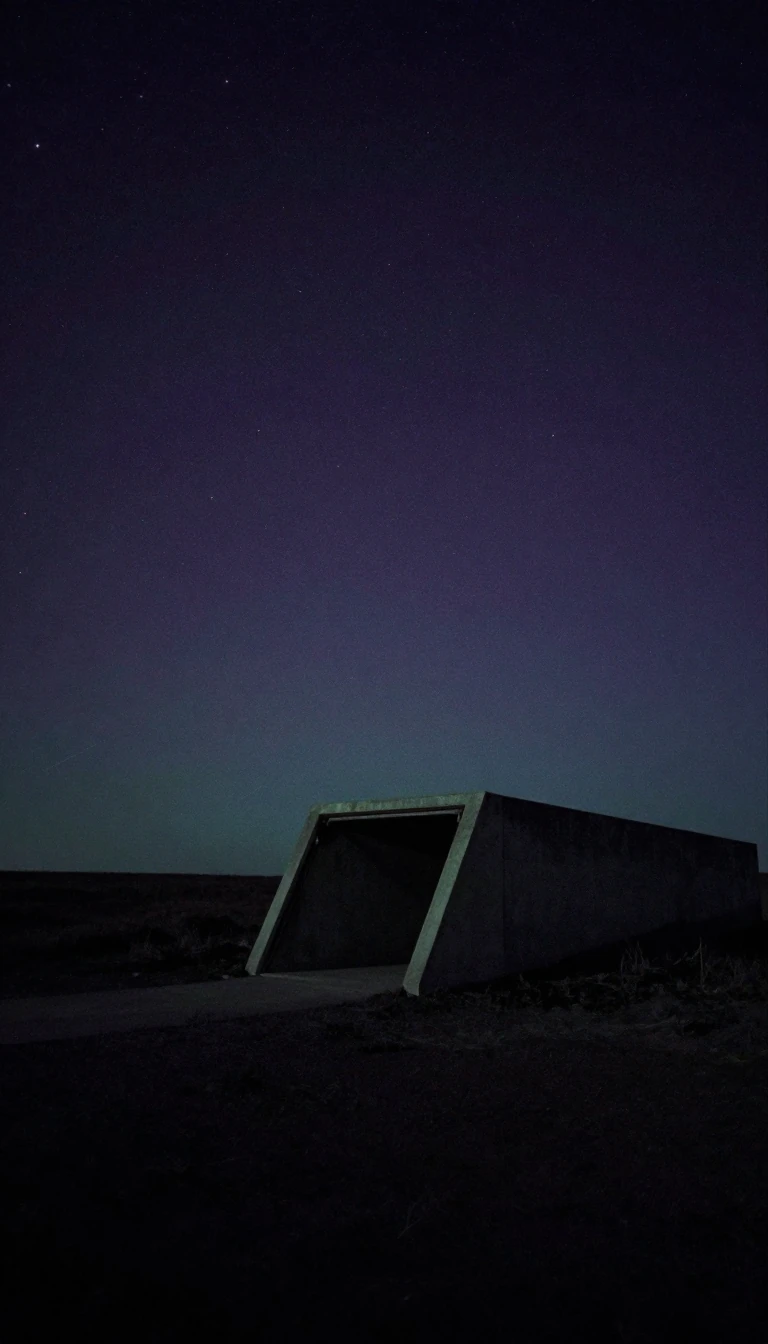 Bombers to ICBMs: a Cold War contest measured in megatonsThe nuclear arms race was the Cold War competition for nuclear supremacy between the United States, the Soviet Union, and their allies. It began with the Manhattan Project and Sov…
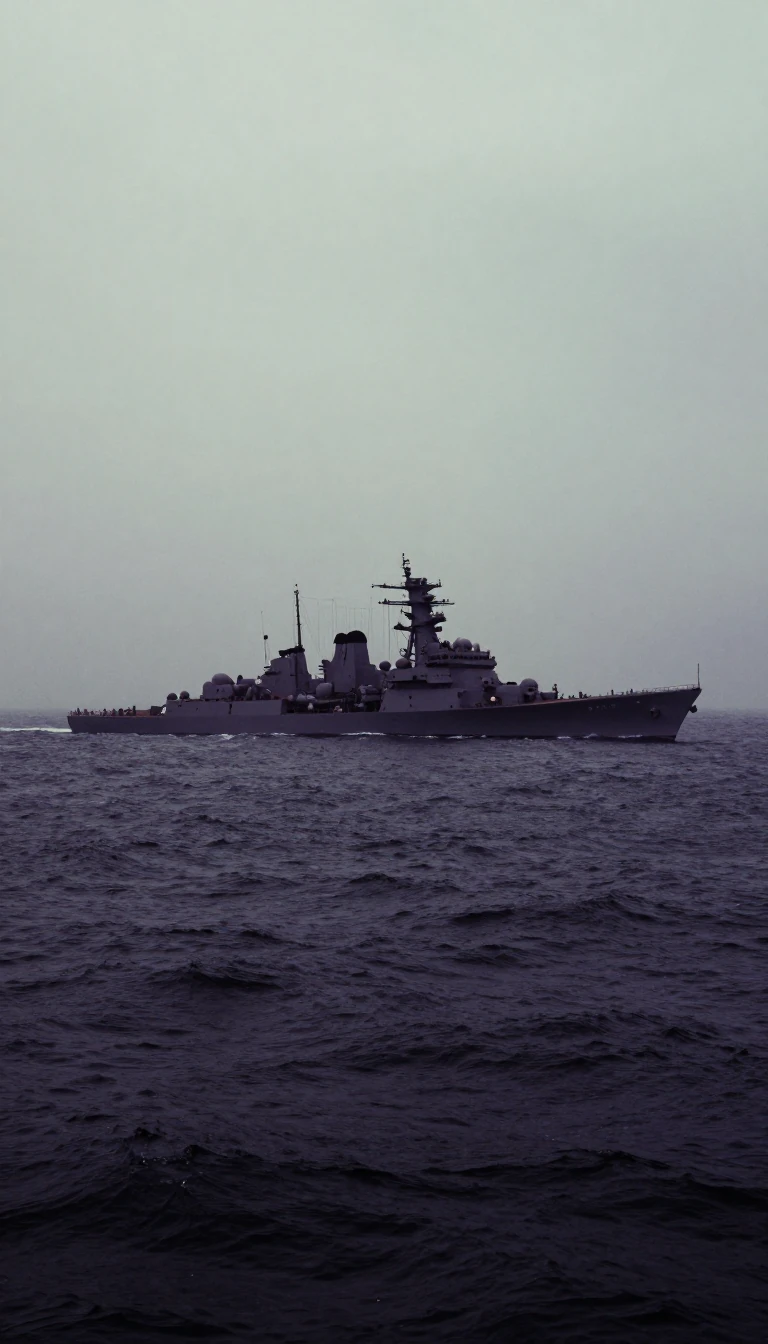 The Second World War's largest theater stretched across oceans and continentsThe Pacific War pitted Japan against the Allies across East and Southeast Asia, two oceans and Oceania. It folded in the war in China and the brief Soviet–Japanese War, and it sta…
 Triple Alliance war that nearly erased ParaguayThe Paraguayan War, or War of the Triple Alliance from 1864 to 1870, matched Paraguay against Argentina, Brazil's Empire, and Uruguay. It remains the deadliest war between states …
 Seventy-two days that haunted Marx and French politicsThe Paris Commune seized the French capital on 18 March 1871 and held parts of the city until 28 May. For two months Communards chased progressive, often anti-clerical experiments…
 Iran's 1905–1911 uprising beat the Young Turks to a constitutionThe Persian Constitutional Revolution from 1905 to 1911 under the late Qajar dynasty produced Iran's first constitution—the earliest such upheaval in the Islamic world, preceding …
 Mexico's decade of regional wars wrote the 1917 constitutionThe Mexican Revolution, 20 November 1910 to 1 December 1920, is often called modern Mexico's defining event: it destroyed the Federal Army, raised revolutionary forces, and remade…
 Hidalgo's Dolores cry began eleven years to Mexican independenceMexico's War of Independence (16 September 1810 – 27 September 1821) was a patchwork of regional fights, not one coherent campaign, ending Spanish rule after Napoleon's invasion o…
- Ottoman fronts stretched from Caucasus oil dreams to Arab revoltThe Middle Eastern theatre of World War I ran 30 October 1914 to 30 October 1918, pitting the Ottoman Empire—with Kurdish, Circassian, and many Arab allies—plus other Central Powe…
 Modernity's year 1500 is a convenient European fiction that stuckThe modern era usually names history after medieval centuries, often from around 1500 in Europe—Reformation, print, and Atlantic expansion—though periodization resists clean edges…
- Monroe told Europe to stay out—then lacked a navy to insistThe Monroe Doctrine, voiced by President James Monroe on 2 December 1823, opposed foreign interference in the Western Hemisphere as potentially hostile to the United States. Aimed…
 Six flags of soft landers broke a decades-long lunar quietLuna 2 first touched the Moon in 1959; Apollo 11 made the first crewed landing in 1969. Six Apollo crews landed between 1969 and December 1972. After Luna 24 in 1976, soft landing…
 1857's sepoy rising ended Company rule and remade the RajThe Indian Rebellion of 1857–58 began as a Meerut sepoy mutiny on 10 May 1857 against East India Company sovereignty exercised for the British Crown. Contested names—Sepoy Mutiny,…
- Indonesia's revolution mixed guerrilla war with two diplomatic crisesThe Indonesian National Revolution or War of Independence ran from the 1945 independence proclamation to Dutch recognition after four years of bloody skirmishes, communal upheaval…
 Britain's factories remade population, power, and the working dayThe Industrial Revolution, sometimes tagged the First against a later Second, began in Great Britain around 1760 and spread to Europe and the United States, swapping handcraft for…
 The transistor's 1947 spark still names our whole eraThe Information Age, dating from mid-twentieth-century shifts from Industrial Revolution industries toward information technology, is often tied to the 1947 transistor. UN public-…
- An eight-year Gulf war killed hundreds of thousands for no border changeIraq invaded Iran in September 1980; a UN-brokered ceasefire took effect in August 1988 after roughly half a million deaths excluding wider tallies. Saddam Hussein sought to block…
- 1979 toppled a Shah and enthroned a jurist's republicThe Iranian or Islamic Revolution of 1979 replaced Shah Mohammad Reza Pahlavi's Imperial State with Ruhollah Khomeini's Islamic Republic. A CIA–MI6 1953 coup had restored the Shah…
 Churchill made the iron curtain famous, but others said it firstThe Iron Curtain labeled Europe's Cold War split from 1945 until 1990–91, with Warsaw Pact states east of a line Churchill described at Fulton, Missouri, on 5 March 1946—from Stet…
 Italy climbed Alpine ridges to win Trento and TriesteThe Italian front of World War I ran along the Italy–Austria-Hungary border from 1915 to 1918 after Rome joined the Entente despite prior Triple Alliance ties. Victory and the cap…
- Three glorious days swapped Bourbon blood for Orléans popularityFrance's July Revolution of 1830—les Trois Glorieuses—overthrew Bourbon King Charles X and raised his cousin Louis-Philippe of Orléans, restoring a constitutional July Monarchy on…
 Burma's last dynasty built an empire then lost it to BritainThe Konbaung or Third Burmese Empire ruled from 1752 to 1885 as Burma's final dynasty, second-largest in Burmese history, continuing Toungoo administrative reforms that seeded the…
 Korea's hot war froze a DMZ that still has not thawedThe Korean War ran 25 June 1950 to 27 July 1953 between North and South Korea and their allies—China and the USSR behind the North, a U.S.-led UN coalition behind the South. A 194…
 Historians can't agree when 'late modern' even endsMany periodizations start the late modern period with the French Revolution in 1789 after the early modern age, then either close it in 1945 with World War II's end or let it swal…
 A Manhattan office name hid the factories that built the bombThe Manhattan Project, a U.S.-led World War II effort with Britain and Canada, built the first nuclear weapons, peaking near 130,000 workers and almost $2 billion (about $28 billi…
- The Mediterranean war lasted from Italy's 1940 leap to 1945World War II's Mediterranean and Middle East theatre linked land, sea, and air fights for the sea, North Africa, and approaches to Asia from Italy's 10 June 1940 declarations unti…
- Meiji's 1868 oath Westernized Japan after Perry forced the gatesThe Meiji Restoration of 1868 restored practical imperial rule under Emperor Meiji and drove rapid Westernizing reform after Tokugawa crises and Perry's American expedition shatte…
 Polk's Texas annexation war redrew the map to the PacificThe Mexican–American War (25 April 1846 – 2 February 1848)—called the Mexican War in the U.S. and an intervention in Mexico—followed 1845 Texas annexation that Mexico still claime…
 Dwarf wheat and hybrid rice rewrote the twentieth-century harvestThe Green Revolution—or Third Agricultural Revolution—was a wave of technology transfer that sharply raised crop yields, starting in rich countries early in the twentieth century …
 Gulag named a directorate and came to mean an archipelago of campsThe Gulag began as the Soviet secret-police division that ran forced-labor camps from the nineteen thirties into the early nineteen fifties under Stalin, yet English usage often s…
- A forty-two-nation coalition reversed Iraq’s grab of KuwaitThe Gulf War matched Iraq against a forty-two-country coalition led by the United States after Saddam Hussein invaded Kuwait on two August nineteen ninety. Desert Shield built for…
- Ukraine’s Holodomor was a man-made famine whose intent is debatedThe Holodomor—also called the Ukrainian famine—was a catastrophic engineered hunger across Soviet Ukraine from nineteen thirty-two to nineteen thirty-three that killed millions. I…
 Fifteen days in 1956, Hungary rose—and Soviet tanks answeredThe Hungarian Revolution of nineteen fifty-six lasted from twenty-three October to four November as a nationwide rising against the Hungarian People’s Republic and its subordinati…
- From Congress petitions to Partition, India exited the RajThe Indian independence movement was a multi-decade political struggle from the mid-eighteen eighties to nineteen forty-seven to end British colonial rule on the subcontinent. It …
 Japan’s 1894 victory shoved East Asia’s center of gravityThe First Sino-Japanese War ran from twenty-five July eighteen ninety-four to seventeen April eighteen ninety-five as Qing China and Meiji Japan fought mainly over Korea. After ro…
- A doctored telegram helped birth the German EmpireThe Franco-Prussian War—also called the Franco-German War or France’s War of eighteen seventy—pitted France against Prussia’s North German Confederation from nineteen July eightee…
- French Indochina lasted from union in 1887 to Dien Bien PhuFrench Indochina—officially the Indochinese Union, then after nineteen forty-one the Indochinese Federation—grouped French-dependent Southeast Asian territories from eighteen eigh…
- Napoleon’s 1812 march lost hundreds of thousands in six monthsNapoleon’s French invasion of Russia—also the Russian campaign, Second Polish War, or Russia’s Patriotic War of eighteen twelve—aimed to force the Tsar back into the continental b…
 Thirty-nine German states shared a diet that could not leaveThe German Confederation linked thirty-nine mostly German-speaking sovereign states in Central Europe from eighteen fifteen to eighteen sixty-six. The Congress of Vienna built it …
 Imperial Germany united twenty-five states under a Prussian emperorThe German Empire—Imperial Germany or the Second Reich—was the German Reich from unification in eighteen seventy-one until the November Revolution of nineteen eighteen turned Germ…
- East Germany vanished into an enlarged West on 3 October 1990German reunification—Deutsche Wiedervereinigung—rebuilt Germany as one sovereign state from nine November nineteen eighty-nine to three October nineteen ninety, when the German De…
 Bolívar’s Great Colombia lasted only twelve fractious yearsGran Colombia—Greater Colombia, officially the Republic of Colombia—spanned a vast northern South American expanse plus some Central American ground from eighteen nineteen to eigh…
 A 1929 crash became a decade-long global economic freefallThe Great Depression was a severe worldwide downturn from nineteen twenty-nine to nineteen thirty-nine, marked by mass unemployment and poverty, collapsing industry and trade, and…
 Potato blight plus landlordism emptied mid-century IrelandThe Great Famine—an Gorta Mór, the Great Hunger, or Irish Potato Famine—was mass starvation and disease in Ireland from eighteen forty-five to eighteen fifty-two. Western and sout…
- Britain and Russia shadowed each other across Central AsiaThe Great Game was a nineteenth-century rivalry between the British and Russian empires for influence in Central Asia—above all Afghanistan, Persia, and Tibet. Through interventio…
- Mao’s leap for steel communes helped cause a mega-famineThe Great Leap Forward was a Chinese Communist Party industrialization drive from nineteen fifty-eight to nineteen sixty-two under Chairman Mao Zedong, meant to yank China from ag…
 Stalin’s 1936–38 terror emptied the party with show trialsThe Great Purge—or Great Terror, Year of ’37, Yezhovshchina—was a Soviet political purge from nineteen thirty-six to nineteen thirty-eight. After Sergei Kirov’s nineteen thirty-fo…
 Greek rebels and three fleets carved a nation from the OttomansThe Greek War of Independence—Greek Revolution of eighteen twenty-one—pitted Greek revolutionaries against the Ottoman Empire from eighteen twenty-one to eighteen twenty-nine. Fro…
- Railways and telegraphs met their first great-power warFrom October 1853 to February 1856, Russia fought the Ottoman Empire, France, Britain, and Sardinia in the Crimean War. A quarrel over protecting Ottoman Orthodox subjects became …
- Thirteen days when nuclear missiles faced each other at seaThe Cuban Missile Crisis, lasting 16–28 October 1962, was a thirteen-day standoff after Soviet nuclear deployments in Cuba matched earlier U.S. missiles in Britain, Italy, and Tur…
- Batista fell on New Year's Eve to Sierra Maestra rebelsThe Cuban Revolution toppled Fulgencio Batista's 1952–1959 dictatorship after legal challenges failed and armed struggle began. Fidel Castro's 26th of July Movement regrouped in t…
- A paper democracy carved from Austria-Hungary twice remadeCzechoslovakia sat in Central Europe between Austria, Hungary, Germany, Poland, and Ukraine. Nationalists Tomáš Masaryk and Edvard Beneš steered 1918 independence as Habsburg rule…
 Ending empire became the twentieth century's largest remappingDecolonization means closing colonialism—the domination of foreign territories by imperial metropoles. As independence politics it is often dated from the 1775 American Revolution…
 The USSR vanished as a legal person on Boxing Day 1991On 26 December 1991 the Soviet Union formally ceased to exist as a sovereign state. Economic stagnation, arms-race costs, reform chaos, and republic revolts culminated when a fail…
- A forged letter split France for twelve bitter yearsThe Dreyfus affair convulsed France's Third Republic from 1894 to 1906 after Jewish captain Alfred Dreyfus was wrongly convicted of treason. Counter-espionage chief Georges Picqua…
- Plows and drought turned prairie topsoil into black blizzardsThe Dust Bowl of the 1930s blasted American and Canadian prairies with storms that wrecked farms and lungs. Homestead Acts had pushed settlement onto arid High Plains west of the …
 From VOC takeover to Sukarno's proclamation of IndonesiaThe Dutch East Indies became a formal colony in 1800 when the Batavian Republic assumed the Dutch East India Company's lands. Spices, then coal and oil, enriched the metropole und…
- Warsaw Pact neighbors were the narrow Eastern Bloc coreThe Eastern Bloc was an informal coalition of communist states tied to Soviet power in Central and Eastern Europe. Western usage usually meant the USSR plus Warsaw Pact members—Ea…
- Russia's war ended at Brest-Litovsk, not in BerlinWorld War I's Eastern Front stretched along the Russian and Romanian frontiers with Austria-Hungary and Germany. Early Russian lunges into East Prussia failed; the 1916 Brusilov o…
- Barbarossa opened history's largest military confrontationThe Eastern Front—Great Patriotic War to Soviets—pitted European Axis forces against the USSR and its allies after Germany launched Operation Barbarossa on 22 June 1941. Stalin ig…