 Intellect Plus
History
21,006 cards. Each one is a 40-second story with a five-minute read behind it. Page 37 of 351.
Subtopics: 19th century · 20th century · Africa · Age of Exploration · Ages & eras · Ancient · Ancient China · Ancient egypt · Ancient greece · Ancient rome · Ancient trade · Archaeological discoveries · Archaeology · Astronomy · Australia · Auxiliary historical sciences · Babylon · Basics · Born on this day · Bronze age · Buddhism · Case studies · Chefs, bartenders and winemakers · China · Cities · Climate · Columbus · Contemporary (1945-) · Cosmetics people · Crime · Criminals · Decipherment · Deep time · Disasters · Early modern · Education · Egypt · Empires · Empires & civilisations · Exploration · Explorers · Extinction · Fandom, conventions and festivals · History by continent and large region · History by continent and region · History by country · History by country, small region and city · History by ethnicity · History by subject matter · History by topic · Inca · India · Industrial Revolution · Japan · Kings & queens · London · Mass hysteria · Medicine · Medieval kingdoms · Medieval life · Mediterranean · Mercedes-Benz History · Mesopotamia · Middle ages · Military leaders and theorists · Military leaders, personnel, and theorists · Ming dynasty · Misconceptions · Modern · Modern (1800-1945) · Napoleon · Navigation · North africa · Other · Pacific · Pharaohs · Philippines · Pirates · Post-classical · Prehistory · Propaganda · Public health · Rebels, revolutionaries and activists · Renaissance · Researched · Second world war · Shipwrecks · Silk Road · South america · Tradespeople · UK & Ireland: history · United states · Vikings · Volcanoes · Women in history
 The 1877 Brazilian drought killed half a million people while elites ignored their suffering.Known as the Grande Seca, this catastrophe devastated Brazil's Northeast, claiming up to 500,000 lives. While peasants starved, political biases and economic obsession with coffee…
 How a Unitarian summer mansion in Tarrytown evolved into a prestigious modern preparatory school.Founded in 1899 by philanthropist Frances Hackley, this Tarrytown institution began as a Unitarian alternative to traditional Episcopal boarding schools. Over the last century, it…
 The maverick senator who dismantled autocratic power and electrified the American rural landscapeGeorge W. Norris spent four decades in Congress challenging the status quo. From stripping a powerful House Speaker of his dictatorial control to architecting the Tennessee Valley…
 How do presidential libraries manage the massive scale of modern historical record keeping?Presidential libraries are more than museums; they are vast archival engines preserving the American presidency. While the George H. W. Bush Library holds millions of documents, t…
 The only Indian signatory of the Treaty of VersaillesImagine a royal ruler who navigated the complex gears of colonialism to become a global statesman. Maharaja Ganga Singh of Bikaner didn't just rule a princely state; he broke thro…
 How a self-made financier became the architect of American public service and educationGeorge Foster Peabody rose from an impoverished errand boy to a titan of the Gilded Age investment world. Yet, he famously retired at fifty-four to dedicate his life to social ref…
 The Turkish National Police has roots stretching back to the 19th-century Ottoman Empire.While modern policing often feels like a product of the digital age, the Turkish National Police traces its origins to the 1845 Tanzimat reforms. Today, this massive, centralized …
 Before the welfare state, ordinary people built their own safety nets through friendly societies.Long before government-backed insurance or employer-provided benefits, communities formed mutual aid groups to survive hardship. These friendly societies offered everything from s…
 How a rural schoolteacher’s surprise presidential victory triggered a political earthquake in PeruWhen Pedro Castillo, a union-leading schoolteacher from a remote village, won Peru’s 2021 presidency, he promised to end poverty in a wealthy nation. Yet, his tenure collapsed in …
 A French Prince who was elected King of Poland but never wore the crown.François-Louis de Bourbon, Prince of Conti, was a brilliant, charming, and sexually complex aristocrat who constantly clashed with Louis XIV. Despite his military renown and a suc…
 How a massive earthen fortress became the Confederacy's most vital maritime lifelineKnown as the Southern Gibraltar, Fort Fisher protected Wilmington, the Confederacy's last major Atlantic port. By utilizing innovative earthen designs that absorbed heavy naval fi…
 A former Alabama governor once threatened to deploy the National Guard over a courtroom plaque.Fob James, a two-term Alabama governor who served as both a Democrat and a Republican, was known for his staunch conservatism and combative relationship with federal authority. Hi…
 Why provincial French cities rebelled against Paris during the height of the 1793 RevolutionIn the summer of 1793, several major French cities rose up against the central government in Paris. Known as the federalist revolts, these uprisings were not a push for a fragment…
 The political longevity of a three-generation Arkansas dynastyHow does a politician maintain influence across four decades and three different branches of government? David Pryor’s career provides a blueprint for enduring political power, mo…
 Was extermination through labour a deliberate Nazi policy or a byproduct of wartime conditions?The term Vernichtung durch Arbeit—extermination through labour—evokes the horrific reality of Nazi concentration camps where prisoners were worked to death. Yet, historians debate…
- How Britain’s early factory laws evolved from toothless suggestions into a powerful regulatory system.For decades, early British factory laws were mere suggestions, ignored by mill owners and lacking any enforcement. It took a surge of humanitarian outrage and a radical shift in g…
 Did a high-ranking Nazi diplomat successfully rewrite his own history after the war?Ernst von Weizsäcker, a senior official in Nazi Germany’s Foreign Office, was convicted of war crimes at Nuremberg. Yet, through a carefully constructed defense and later memoirs,…
 From Oak Pastures to Industrial Powerhouses: The Evolution of EcclesBefore it was a hub of the Industrial Revolution, Eccles was a landscape of oak pastures and pre-historic settlements. Its name might even be a linguistic fossil, preserving a Rom…
 The 1848 document that mirrored America's founding to demand its inclusionIn 1848, a group of activists drafted a document so bold it intentionally mimicked the language of the Declaration of Independence. By framing women’s rights as a violation of una…
 How English poetry evolved from illiterate herdsman hymns to the birth of nonviolent protest.English poetry began with an illiterate herdsman’s extemporaneous hymns in the 7th century. Over a millennium, it transformed through the influence of Norman invaders, Renaissance…
 A fourth-century bishop cataloged eighty heresies, comparing his theological rivals to poisonous beasts.Epiphanius of Salamis was a relentless defender of orthodoxy who authored the Panarion, a massive handbook designed to cure the faithful of heretical ideas. By mapping diverse phi…
 The mystery of a missing letter that haunted the Bible for over a millennium.A single verse in the Epistle to the Colossians mentions a letter from Laodicea, sparking centuries of speculation. Was it a lost Pauline text, a circular letter, or a clever forg…
 The statesman who shared Cabinet secrets to prevent a world warEdward Stanley, the 15th Earl of Derby, was a master of British diplomacy who famously risked his career for peace. While serving as Foreign Secretary, he engaged in a clandestine…
 Why a brilliant Civil War general believed that writing was his most vital missionEmory Upton was a celebrated tactician who rose to brevet major general by age twenty-five. Yet, he viewed his battlefield success as secondary to his intellectual labor. Convince…
 Did early Christian leaders use the figure of Satan to demonize their political opponents?Historian Elaine Pagels argues that the early Christian church was not a monolith, but a collection of competing factions. By examining non-canonical texts like the Gospel of Thom…
 How a small Arkansas town transformed from an oil boomtown into a cultural hub.El Dorado, Arkansas, earned its reputation as the state's original boomtown during the 1920s oil rush. Today, this Union County seat balances its industrial roots in chemicals and…
 The lawyer who heard the Nixon tapes and chose a different pathBefore becoming a high-ranking religious leader, D. Todd Christofferson was a law clerk for a judge presiding over the Watergate trials. He was among the first people outside the …
- The life and death of Ehsan Jafri, a parliamentarian caught in sectarian violenceEhsan Jafri was a former Indian parliamentarian, poet, and attorney who became a central figure in the 2002 Gujarat sectarian violence. His death at the Gulbarg Society remains a …
 How one man turned Memphis into a personal fiefdom for nearly fifty yearsEdward Hull Crump Jr. dominated Tennessee politics from the 1910s to the 1950s by building a formidable machine. While he officially served as mayor for only a few terms, he hand-…
 How a nationalist movement transformed Egyptian football from a colonial pastime into national pride.Modern football arrived in Egypt via occupation forces in 1882, initially played in streets and schoolyards. By the early 20th century, a push for independence sparked a movement …
- How a moderate Republican from South Dakota navigated the shifting tides of national politicsDustin Michael Johnson, a Truman Scholar and former utilities commissioner, carved a distinct path in Washington. As a member of the centrist Problem Solvers Caucus, he frequently…
- How a medieval fortress evolved into a Victorian mansion and modern tourist attractionDunster Castle began as a strategic Norman motte and bailey fortification, designed to pacify Somerset and guard the coast. Over nine centuries, it transformed from a military str…
- The anarchist militia that tried to reshape Spain while fighting a brutal civil war.Led by Buenaventura Durruti, the Durruti Column was a self-organized anarchist militia that rejected traditional military hierarchy. While fighting to capture Zaragoza from Nation…
 Do early Quranic manuscripts confirm traditional accounts or reveal a more complex history?The discovery of ancient Quranic fragments, some dating to within decades of Muhammad's death, has ignited a fierce academic debate. While radiocarbon dating provides a scientific…
 The ancient 'Gospel of the Mixed' merged four stories into oneIn the 2nd century, a Christian scholar named Tatian took the four separate Gospels and fused them into a single, coherent narrative. This 'Gospel of the Mixed' became the standar…
 Did a Greek rhetorician invent the Roman identity to soothe his conquered peers?Dionysius of Halicarnassus spent decades in Rome, crafting a massive history to reconcile Greeks to their new imperial masters. By arguing that Romans were actually long-lost desc…
 The city that lost a single vote to become Ohio's capitalIn 1812, Delaware and Columbus were locked in a fierce competition to become the capital of Ohio. The margin of defeat was razor-thin: a single vote. This near-miss shaped the tra…
 From cotton plantations to suburban sprawl: the rapid evolution of a Mississippi countyOnce defined by 19th-century cotton plantations and the forced removal of the Chickasaw people, DeSoto County has transformed into one of the fastest-growing regions in the United…
 From a small college to a regional university: the evolution of DeSales UniversityFounded in 1964 by the Oblates of St. Francis de Sales, this Pennsylvania institution began as a modest college before achieving university status in 2000. Today, it balances trad…
 How a California railroad town became the epicenter of the American farm worker movement.Founded in 1869 as a railroad terminus, Delano transformed from a bustling transit hub for bullion and mule teams into a pivotal site for social change. It was here that Filipino …
 When political protest turned into a violent urban siegeIn October 1969, a radical faction of the Students for a Democratic Society traded peaceful advocacy for a strategy of direct confrontation. They aimed to bring the war home to th…
 From Marine Corps infantry to the White House counsel's officeDavid Warrington's career trajectory is a study in political evolution. He transitioned from a Marine Corps infantryman and a libertarian populist candidate to a high-stakes legal…
 The railway town that survived fire to become a northern hubBefore it was a railway junction, Cochrane was a summer camping ground for indigenous people and a transit point for fur traders. In the early 20th century, it transformed into a …
- Why did the United States conduct hundreds of war crimes trials inside a concentration camp?Between 1945 and 1947, American military tribunals prosecuted over 1,600 individuals for Nazi war crimes. By choosing the site of the former Dachau camp as their courtroom, offici…
 From ancient Roman wards to modern supreme courts, what does a curia actually do?The term curia likely stems from an Old Latin phrase for a gathering of men. While it began as a neighborhood ward in ancient Rome, the word evolved to define the physical houses …
 Why San Francisco moved its dead to a city known as the Silent CityIn the late 19th century, American cities began abandoning cramped urban graveyards for expansive rural landscapes. Cypress Lawn Memorial Park in Colma, California, emerged as a p…
 Why the U.S. Navy’s most iconic Civil War cannons were nicknamed soda bottlesRear Admiral John A. Dahlgren revolutionized naval artillery by applying scientific design to cannon construction. After a fatal 1849 testing accident, he pioneered a distinctive,…
- A brilliant lawyer and administrator, Sir C. P. Ramaswami Iyer transformed the state of Travancore.Sir C. P. Ramaswami Iyer was a formidable legal mind and administrator who modernized Travancore through industrialization, education, and social reform. Yet, his legacy remains d…
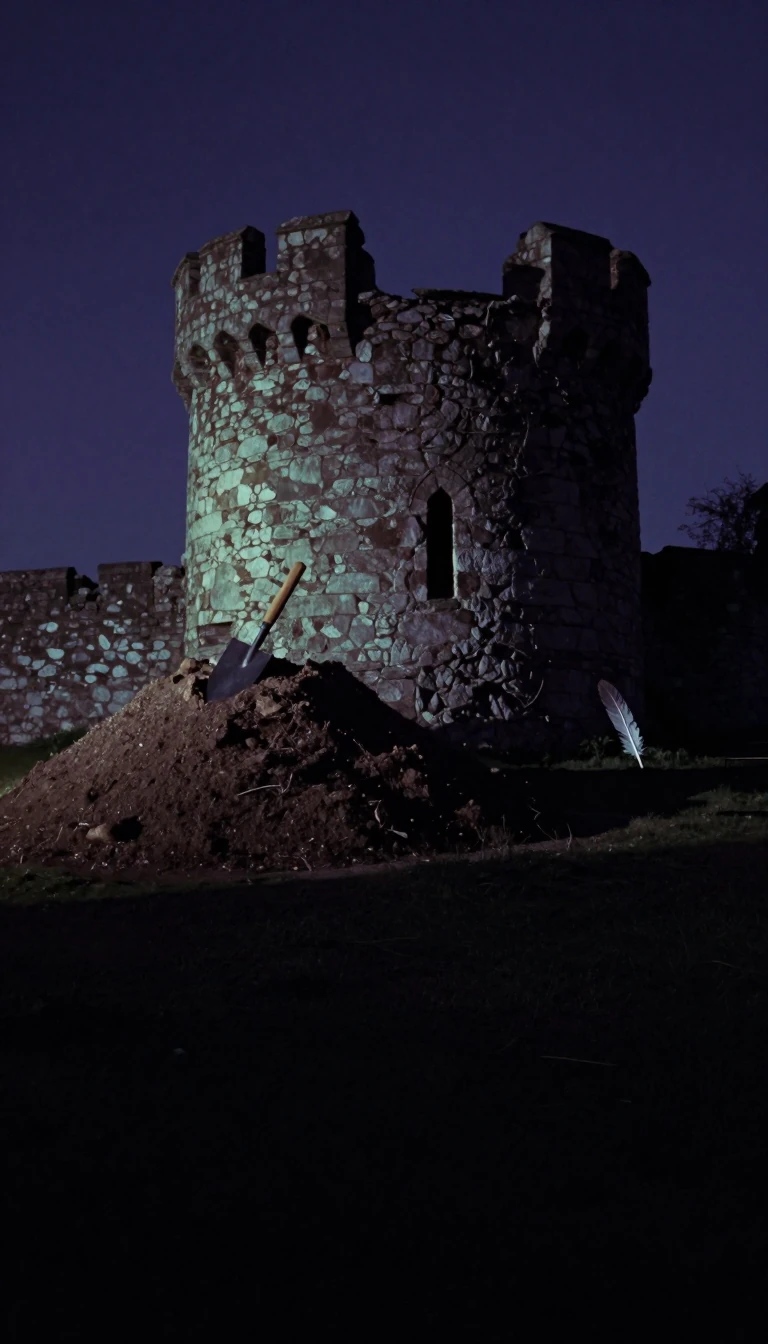 How a Dorset village became a powerhouse of stone, clay, and political intrigueNestled in a dramatic gap in the Purbeck Hills, Corfe Castle is more than a ruined fortress. From its ancient origins as a hub for stone carvers to its time as a notorious rotten …
 How a Canadian political movement sought to replace profit with human needs during the Depression.Born in 1932, the Co-operative Commonwealth Federation aimed to dismantle capitalism through democratic reform. By advocating for public ownership and socialized planning, it beca…
 The Roman Republic had no single constitution, but rather a fluid system of evolving customs.Unlike modern nations, Rome lacked a single foundational document. Its government was a shifting, uncodified web of ancient traditions, legal decisions, and assembly mandates. Thi…
- How German conservatism evolved from defending monarchies to building the modern welfare stateGerman conservatism is not a single ideology but a shifting collection of theories spanning three centuries. From protecting medieval hierarchies to Otto von Bismarck’s strategic …
- How Fidel Castro transformed a broad revolutionary movement into a Marxist-Leninist state by 1962.Following the 1959 revolution, Cuba underwent a rapid political metamorphosis. What began as a liberal-leaning coalition against dictator Fulgencio Batista shifted toward anti-cap…
- Why did the state of São Paulo wage a three-month civil war in 1932?In 1932, the state of São Paulo rose up against Brazil’s provisional government, demanding a new constitution. Known as the Constitutionalist Revolution, this 87-day conflict pitt…
 The student who coined 'Pakistan' was eventually expelled by the state he helped createIn 1933, a law student in London had a 'eureka moment' on a bus, dreaming of a Muslim homeland. He coined the name Pakistan, but his vision was so radical that the eventual govern…
 Before it defined the Soviet era, the term cold war had a strange history.We associate the cold war with the nuclear standoff between the United States and the Soviet Union. Yet, the phrase appeared in newspapers long before 1947. It was used to describ…
 Once a pristine Manhattan water source, this site became a notorious, sinking urban slum.Before it was a park in Lower Manhattan, Collect Pond was a 48-acre freshwater spring that sustained early New York. After rampant industrial pollution forced its closure, the cit…
- The king could not force a lawyer to betray their clientIn medieval England, the king presided over all trials, demanding full disclosure from those in his court. Yet, a legal revolution occurred: courts realized that forcing lawyers t…
- Cleo Fields returned to Congress after a 28-year absence following court-ordered redistricting in Louisiana.Cleo Fields is a political survivor whose career spans decades of Louisiana history. From his early days as a young state senator to his recent return to the U.S. House of Represe…
 Clericalism: How a 19th-century political insult became a label for religious overreach.Originally coined in 1860s France and Italy, clericalism was a weaponized term used to describe the Church's influence over civil government. While intended to target specific ins…