 Intellect Plus
Science
17,267 cards. Each one is a 40-second story with a five-minute read behind it. Page 2 of 288.
Subtopics: Acids and bases · Algebra · Alloys and ceramic compounds · Analysis · Applied mathematics · Atomic and molecular physics · Atoms · Basics · Biochemistry · Biochemistry and molecular biology · Biological processes and physiology · Biology · Biology and health sciences: General · Biology basics · Calculus and analysis · Cell biology · Cells · Chemical elements · Chemistry · Climate · Cold · Color · Computer scientists and programmers · Condensed matter physics · Discrete mathematics · Earth science · Electricity & magnetism · Electromagnetism · Elements · Entropy · Everyday Science Questions · Evolutionary biology · Famous equations · Famous experiments · Found by OrchestratorBot · Foundations · Functions · Future Frontier · Genetics and molecular biology · Geology · Geometry · Glass · Global Curiosity Questions · Heat · How Did the Dinosaurs Become Extinct? · How Things Work: Gas from Source to Supply · How Things Work: The Journey of Crude Oil · Human body & genes · Ice · Infinity · Inventors and engineers · Isotopes · Light · Magnetism · Materials · Mathematicians · Maths · Measurement · Mechanics · Microbiology · Minerals & crystals · Molecular compounds · Nature: How Long Can It Live? · Nuclear physics · Number theory · Optics & light · Organic compounds · Other · Particle physics · Physics · Physics basics · Pre-modern figures · Prime numbers & number theory · Probability · Proof · Pseudoscientists · Quantum · Quantum Biology · Reactions and synthesis · Relativity · Research methods · Researched · Salts and ions · Science basics · Scientific discoveries · Scientific instruments · Scientists, inventors and mathematicians · Separation processes · Social scientists · Stars · Statistics and probability · Theoretical computer science · Theory · Thermodynamics · Thermodynamics & heat · UK & Ireland: science · Units & measurement · Volcanoes · Water · Waves · Women in science
 Whistling was once studied as a natural radio phenomenon high above EarthWhistling is also a sound that drifts through space. Researchers in the mid-twentieth century recorded faint falling tones in radio signals, now called whistlers, and traced them …
 Are most real-world networks really scale free? Statistics says no.Many scientists assume that networks like the web or social ties follow a power law, in which a few hubs collect huge numbers of links. A large statistical study tested this claim…
 Your inner ear helps you know which way is up, and it can be fooledYour sense of up and down does not rely on your eyes alone. Tiny structures in your inner ear sense gravity and rotation, and when those signals clash with what you see, you can l…
 A volcano's summit collapsed and left behind Oregon's Crater LakeAbout 7,700 years ago, a volcano in southern Oregon lost its upper portion in a massive eruption. The collapse left a vast basin that now holds Crater Lake, one of the deepest lak…
 Hell Creek holds the last days of the dinosaurs, preserved in rockAcross eastern Montana and nearby states, a rock formation preserves the world just before an asteroid ended the age of dinosaurs. Its fossils include most known Tyrannosaurus rex…
 A fungus class that grows in animal dung and helps fight crop pestsSordariomycetes is the second-largest class of Ascomycota, a group of fungi with thousands of species. Its name comes from the Latin for filth, because some members grow in animal…
 Natural uranium is too weak to fuel a bomb, so enrichment is the key stepAlmost all natural uranium is the heavy isotope U-238, and only about 0.7 percent is the fissile U-235 that can sustain a chain reaction. Enrichment raises that share, turning a m…
 The Moon does not really grow near the horizon, your brain doesThe Moon looks enormous when it rises over a mountain or sea, yet photographs show it is the same width as when it sits high overhead. The effect has been noticed for thousands of…
 A Napoleonic army engineer discovered that reflected light can be polarisedÉtienne-Louis Malus, a French officer and physicist, found that light bouncing off a non-metal surface vibrates in one plane. That simple observation explains the glare on glass a…
- Patina is a layer that forms over time as metal reacts with its environmentThe green coat on old copper roofs is not paint or dirt. It is a thin layer of chemical compounds that forms as metal meets air, rain and carbon dioxide. Over years it can protect…
 A small brain region helps decide when to pay attention and when to feel alarmTucked behind the front of the brain, the anterior cingulate cortex wraps around the corpus callosum and helps monitor what we are doing. It is linked to error detection, emotion,…
 A higher quality factor means a resonator rings longer before it fadesStrike a high-quality bell and it rings with one pure tone for a long time. Physicists capture that behaviour with a single number, the quality factor, or Q. It compares how littl…
- A surface's curvature can be measured by creatures living only on itGaussian curvature is a single number at each point of a surface, and it can be worked out entirely from distances measured within the surface. A flat plane and a cylinder score z…
- Every piano key is tuned by one simple rule: multiply by the twelfth root of twoEach key on a standard piano sounds a fixed step above its neighbour, and that step is a mathematical ratio. Start at A4 at 440 hertz, multiply by about 1.059463 for each semitone…
 The soap ingredient that helps scientists read the shape of proteinsSodium dodecyl sulfate, a common cleaning and hygiene ingredient, does more than make foam. Laboratories use it to strip proteins of their natural shapes, so they can be sorted by…
 Salt melts ice by lowering the freezing point of the water on itSalt does not melt ice by heating it. Dissolved into the thin film of water on ice, salt forms a brine whose freezing point is lower than that of pure water, so it stays liquid in…
 Wi-Fi works by sending data as radio waves that nearby devices pick up and decodeWi-Fi is a family of wireless protocols built on the IEEE 802.11 standards, letting nearby devices exchange data by radio waves. Most homes and offices use it every day, yet few p…
 Some metals fizz in water, others sit quietly, and the gap is dramaticDrop sodium or potassium into water and it can ignite. Lithium reacts steadily, but the heavier alkali metals react far more violently. Chemists explain the blast as two stages: t…
 Sea water is salty because rain dissolves rock salts that rivers carry to the sea.Rain slowly dissolves tiny amounts of salt from rocks, and rivers carry that salt to the ocean. Rivers deliver roughly 4 billion tonnes each year. Water leaves the sea through eva…
 Hailstones grow in layers as they are tossed up and down inside storm cloudsA hailstone is built like an onion, with alternating layers of clear and cloudy ice. It forms inside a thunderstorm, where strong updrafts carry it up and down through the cloud, …
 Venus is hotter than Mercury despite orbiting almost twice as far from the SunMercury is closer to the Sun, yet Venus has the hotter surface. The reason is Venus's extremely thick atmosphere, which traps heat through the greenhouse effect. Surface temperatu…
 Earth's seasons come from its tilt, not its distance from the SunMany people assume seasons happen because Earth swings closer to and farther from the Sun. The real driver is the planet's axial tilt of about 23.4 degrees. Earth actually sits cl…
- Thunder is the shockwave of a lightning bolt, not the sound of clouds collidingA lightning bolt superheats its channel to tens of thousands of degrees in a fraction of a second. The violent expansion of that air is what you hear as thunder. Earlier generatio…
 Wings fly by pushing air downward, not just by a pressure trickA common textbook story says wings lift planes because air moves faster over the top. Physicists now say the real explanation is simpler and stranger: a wing lifts by constantly p…
 Leaves are green because chlorophyll, not because green is specialMost leaves are green because they are packed with chlorophyll, a pigment that captures sunlight to power photosynthesis. Chlorophyll reflects green light, so that is the color ou…
 Why onions make you cry: a chemical reaction in your own eyesSlicing an onion releases a sulfur compound that, once it meets moisture, turns into an irritant acid. Your eyes respond the only way they can: by producing tears to flush it out.…
 Sunsets look red because low sunlight crosses more air and more particlesSunsets look red partly because low sunlight must cross a thicker slice of air. Smoke particles, far larger than air molecules, scatter the longer red and orange wavelengths espec…
 Most volcanic eruptions on Earth happen hidden beneath the seaMost of Earth's tectonic plate boundaries lie under the ocean, so most volcanic activity happens on the seafloor. Underwater eruptions behave differently, since seawater cools lav…
 Water's tiny electric imbalance makes it the universal solvent that life depends onA water molecule has a slightly negative oxygen end and slightly positive hydrogen ends. This small electrical lopsidedness lets water dissolve salts and sugars, fold proteins, ho…
 Earth's magnetic field is a giant magnet that has flipped many timesEarth behaves like a giant bar magnet, generated by moving molten iron and nickel in its outer core. That field shields the planet from solar wind, guides navigators and even reco…
 Hurricanes are among the strongest storms Earth can produce, with some rivaling the mightiestA Category 5 Atlantic hurricane packs one-minute sustained winds of at least 137 knots, roughly 254 km/h. Only a handful reached that level before satellites arrived, and each one…
 Why does the ground under New York sometimes shake, when it so rarely does?Most earthquakes cluster where tectonic plates meet, yet the eastern United States sits far from any such boundary. Ancient faults still slip there, and the hard rock carries seis…
- Thunderstorms begin with warm, moist air rushing rapidly upwardA thunderstorm starts when warm, moist air is pushed rapidly upward. As it rises it cools, its water vapour condenses, and it can build a cumulonimbus cloud over twenty kilometres…
 Earthquakes start with stress in rock, and predicting them remains very hardEarthquakes happen when stress in rock builds up and then gives way. Scientists have struggled for decades to forecast them, and some now hope machine learning can help. Even so, …
 Birds are living dinosaurs, and the evidence for this is strongBirds are not just related to dinosaurs. They are dinosaurs, the only lineage that survived the mass extinction 66 million years ago. Fossils of feathered dinosaurs, and shared sk…
 Metals can be hammered flat because their atoms slide without snapping apartStrike a metal and it flattens rather than shattering. The explanation lies in loose electrons that hold atoms together as they shift position. Gold can be pounded into leaves so …
- Why do chemists drop small chips into liquids before boiling them?Heat a liquid smoothly and it can suddenly erupt. Tiny porous chips give bubbles a place to form, so the liquid boils calmly. Chemists rely on this simple trick during distillatio…
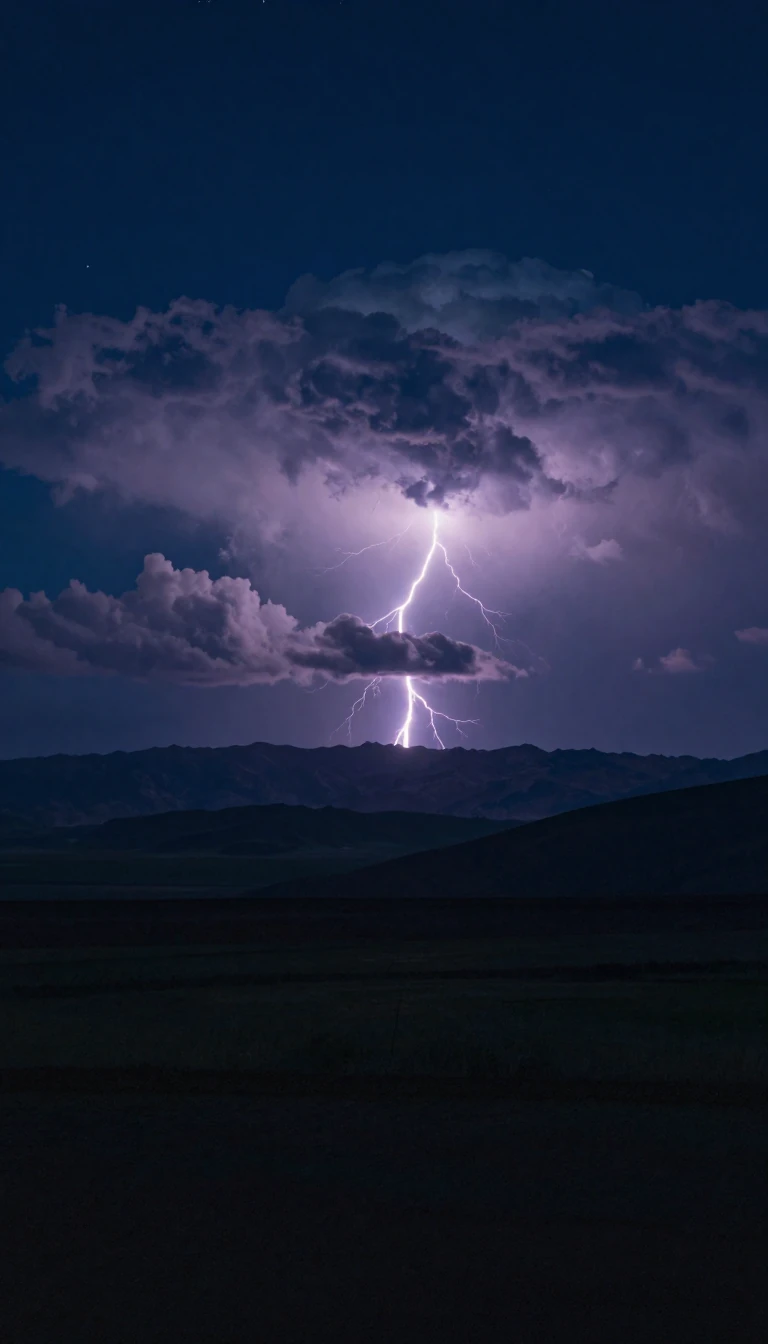
 Most lightning never reaches the ground, and scientists still study how it formsMost lightning never touches the ground. Cloud-to-ground strikes are the best-studied kind, yet flashes that stay inside clouds or leap between them are more common and far harder…
- Climate change: how emissions targets are measured and trackedScientists and governments track climate change with carefully defined numbers. Turkey's emissions, a legally binding treaty and a 1.5 degree goal all depend on how precisely each…
 Metals conduct electricity because their outer electrons are free to roamCopper wire carries power into homes because its outer electrons are not held to any single atom. They form a shared sea that drifts toward the positive end the moment a voltage i…
 Fireflies glow through a chemical reaction that produces cold lightA firefly's glow is a chemical reaction inside its abdomen. Luciferin, luciferase, oxygen and ATP meet in special light organs, giving off light with almost no heat. Fireflies pro…
- Water dissolves so much because its molecules are strongly polarWater is often called the universal solvent. Its molecules are bent, with the oxygen end slightly negative and the hydrogen ends slightly positive. That polarity lets water pull a…
 Thunderstorms form when warm, moist air rises and becomes unstableA thunderstorm is the atmosphere releasing energy stored in warm, humid air. When that air rises quickly and the surrounding air is unstable, moisture condenses into towering clou…
 The sky is blue because air scatters short blue wavelengths more than redSunlight contains every visible colour, yet the daytime sky looks blue. The reason is that tiny gas molecules in the air scatter short blue wavelengths far more strongly than long…
 A waterfall is often carved by soft rock eroding beneath a hard ledgeWaterfalls are not just rock dropping off into nothing. Many begin where a stream flows from soft rock onto hard rock, and the softer layer wears away underneath. Sediment carried…
- Astronauts aren't weightless because gravity is absent; they are in freefallGravity still reaches the International Space Station at roughly 90 percent of its ground strength. Astronauts float because the station is in perpetual freefall, its forward spee…
- Water evaporates because some surface molecules gain enough energy to escape into the airWater does not need to boil to disappear. At any temperature, fast-moving molecules at the surface can break free and drift into the air. Each water molecule is held to its neighb…
- Most volcanoes sit far from plate edges, and Hawaii shows whyMost volcanoes form where tectonic plates meet, but the Hawaiian islands sit more than 3,200 kilometers from the nearest plate boundary. Their volcanic chain stretches about 6,200…
- Sound is a push-and-pull through the air, not an up-and-down waveWhen you hear a clock, its energy reaches your ear by squeezing and stretching the air in its path. Unlike ocean waves, which move water up and down, sound compresses and spreads …
- Thunder is the shock wave from air heated by a lightning boltA lightning bolt can heat the air in its path to around 20,000 kelvin, hotter than the surface of the Sun. That sudden heating pushes the air outward faster than sound, forming a …
- Static electricity starts when two surfaces touch, slide and then separateStatic electricity is not made from nothing. When two materials contact or rub and then pull apart, electrons can move from one to the other, leaving one surface positive and the …
- Why the daytime sky looks blue: air scatters blue light most stronglyThe daytime sky looks blue because air molecules scatter short wavelengths of sunlight far more than long ones. This effect, known as Rayleigh scattering, was explained by Lord Ra…
- Satellites stay up by falling around the Earth, not by floating above itA satellite in orbit is not hovering. It is constantly falling toward Earth while moving sideways so fast that the ground keeps curving away beneath it. Altitude, speed and the pu…
 A helicopter flies by making its rotor blades act as spinning wingsA helicopter's rotor blades are shaped like airplane wings, and as they spin they create lift. The same rotor also provides thrust, so one system does both jobs an airplane splits…
- Thunderstorms are powered by warm, moist air rising fast and then cooling into towering cloudsA thunderstorm starts when warm, moist air is pushed upward rapidly, often along a front. As it climbs it cools, its water vapour condenses, and it builds a cumulonimbus cloud tha…
- Water boils at 100 °C only under standard sea-level pressureWater boils at 100 °C only at sea-level pressure. On a mountain, the boiling point drops, and on Everest it falls to about 71 °C. Boiling depends on pressure, not just heat, and i…
- Glaciers move in two ways, and the debate took centuries to settleFor a long time scientists could not agree how a solid could move at all. Some believed glaciers slid over their beds on meltwater, others thought the ice itself deformed. Today t…
 Snowflakes grow from tiny droplets, and their shape depends on temperature and humidityEvery snowflake starts as a speck around which water freezes, then grows as it drifts through the cloud. Its final shape records the temperature and humidity it passed through, an…
- The smell of rain has a name, and scientists first described it in 1964Before rain falls on dry ground, many people notice a distinct earthy scent. Australian researchers gave that smell a name, petrichor, in 1964 and traced it to an oil released fro…
- A cloud overhead is almost never really stationaryEvery cloud is carried by moving air, even when it looks frozen. Distance and perspective do most of the work: a cloud drifting at 20 or 30 kilometres per hour, several kilometres…