 Intellect Plus
Science
17,267 cards. Each one is a 40-second story with a five-minute read behind it. Page 196 of 288.
Subtopics: Acids and bases · Algebra · Alloys and ceramic compounds · Analysis · Applied mathematics · Atomic and molecular physics · Atoms · Basics · Biochemistry · Biochemistry and molecular biology · Biological processes and physiology · Biology · Biology and health sciences: General · Biology basics · Calculus and analysis · Cell biology · Cells · Chemical elements · Chemistry · Climate · Cold · Color · Computer scientists and programmers · Condensed matter physics · Discrete mathematics · Earth science · Electricity & magnetism · Electromagnetism · Elements · Entropy · Everyday Science Questions · Evolutionary biology · Famous equations · Famous experiments · Found by OrchestratorBot · Foundations · Functions · Future Frontier · Genetics and molecular biology · Geology · Geometry · Glass · Global Curiosity Questions · Heat · How Did the Dinosaurs Become Extinct? · How Things Work: Gas from Source to Supply · How Things Work: The Journey of Crude Oil · Human body & genes · Ice · Infinity · Inventors and engineers · Isotopes · Light · Magnetism · Materials · Mathematicians · Maths · Measurement · Mechanics · Microbiology · Minerals & crystals · Molecular compounds · Nature: How Long Can It Live? · Nuclear physics · Number theory · Optics & light · Organic compounds · Other · Particle physics · Physics · Physics basics · Pre-modern figures · Prime numbers & number theory · Probability · Proof · Pseudoscientists · Quantum · Quantum Biology · Reactions and synthesis · Relativity · Research methods · Researched · Salts and ions · Science basics · Scientific discoveries · Scientific instruments · Scientists, inventors and mathematicians · Separation processes · Social scientists · Stars · Statistics and probability · Theoretical computer science · Theory · Thermodynamics · Thermodynamics & heat · UK & Ireland: science · Units & measurement · Volcanoes · Water · Waves · Women in science
 Why some paths in complex space vanish to zero while others do notIn the realm of complex analysis, a specific rule dictates when a path integral results in zero. Known as the Cauchy-Goursat theorem, this principle reveals that the geometry of t…
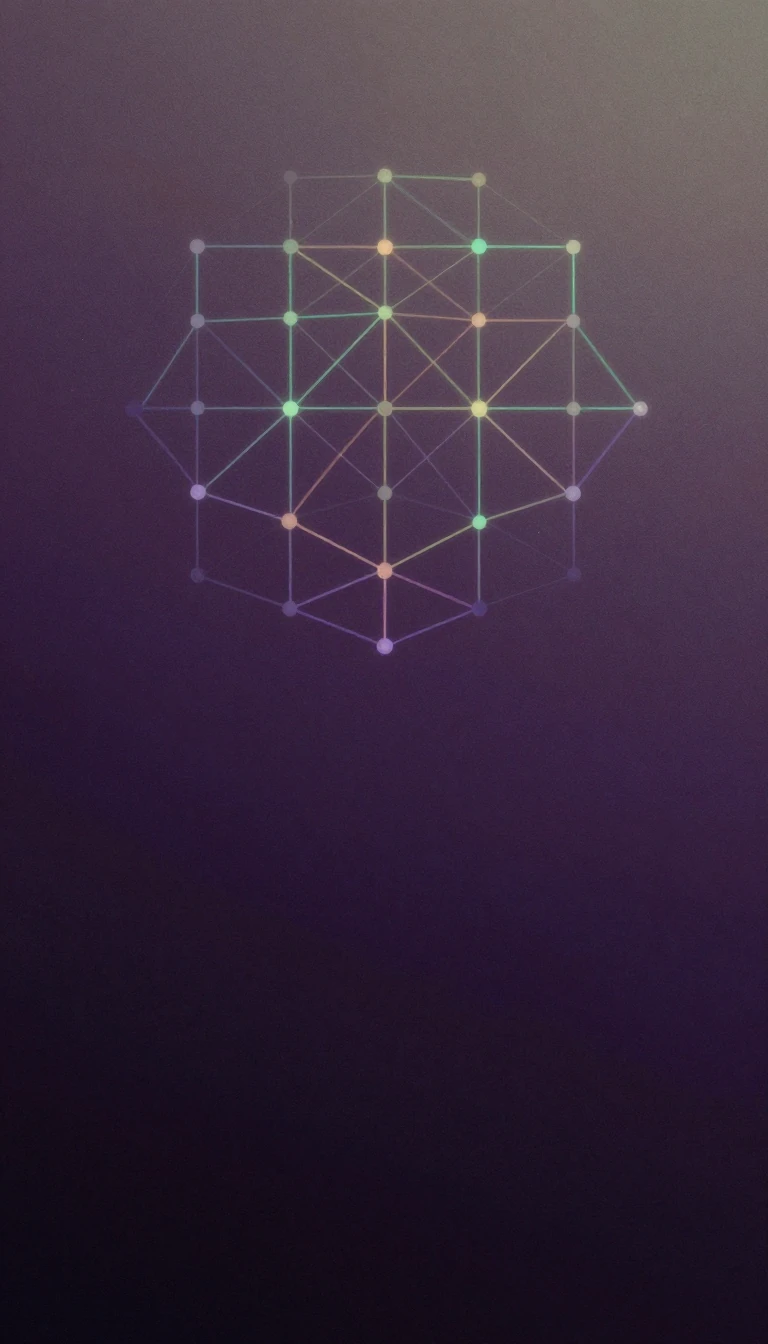 How mathematicians turn abstract group structures into visual geometric mapsA Cayley graph is a visual representation of an abstract group, turning complex algebraic structures into geometric networks. By mapping group elements to vertices and multiplicat…
 Can a grid of simple, repeating rules simulate the complexity of the entire universe?Cellular automata are discrete computational models where simple local rules generate surprisingly complex global behavior. From the 1940s work of John von Neumann to the famous G…
 Everything is a recipe: how we define the hidden architecture of matterAt its core, every substance is defined by a specific blueprint. Whether it is a single molecule held together by atomic bonds or a complex mixture of various components, understa…
 Are chemical engineers the architects of modern civilization or just glorified factory designers?Chemical engineering is far more than industrial plant design. From mapping the human genome to creating ultra-strong aerospace composites and life-saving medical implants, these …
 The fundamental rules of chemistry govern how matter transforms and maintains its balanceChemistry is not a collection of random reactions but a system governed by precise natural laws. From the conservation of mass to the complex energy barriers that dictate reaction…
 Why chemical names are more than just labels, but a map of molecular structure.Chemical nomenclature is not merely a list of names, but a rigorous system designed to standardize communication. While common names persist for convenience, formal systems like I…
 Why managing chemical risks requires more than just reading a warning labelChemical safety is not merely about avoiding spills; it is a systematic discipline governing how we acquire, store, use, and dispose of substances. From laboratory reagents to com…
 Beyond the Pharmacy Counter: What Does It Actually Mean to Be a Chemist?While Commonwealth English often labels pharmacists as chemists, the professional title describes a scientist trained to manipulate matter at the molecular level. From the ancient…
 Why Chinese financial documents use complex characters to prevent simple forgeriesIn everyday Chinese, writing the number 30 is as simple as two strokes. But in high-stakes finance, that simplicity is a liability. To stop forgers from easily adding strokes to a…
 Can a mathematical hierarchy explain the structure of human language and computer code?Noam Chomsky once proposed a nested system of four grammar classes to categorize formal languages. By imposing increasingly strict constraints on production rules, this hierarchy …
- Can a simple mathematical formula solve the age-old mystery of graph coloring?In 1912, George David Birkhoff introduced the chromatic polynomial to tackle the famous four color problem. By treating graph coloring as a function of available colors, he hoped …
 Can every human calculation be performed by a machine? The Church–Turing thesis explains.In the 1930s, mathematicians sought to define the limits of computation. They discovered that human-led rote calculation and mechanical processing are fundamentally identical. Thi…
 The circumference is more than just a circle's edge; it is a mathematical limit.While we often think of circumference as the simple distance around a circle, it represents a profound geometric concept. From the ancient method of exhaustion to modern analysis,…
 Why mathematics needs classes to avoid the logical traps of naive set theoryIn mathematics, not every collection can be a set. When we try to group everything—like the collection of all sets—we hit paradoxes that break logic. To solve this, mathematicians…
 The Enormous Theorem: Mapping the fundamental building blocks of all finite mathematical groupsIn mathematics, finite simple groups are the atomic building blocks of all finite groups. For decades, mathematicians worked to classify every single one of these structures. The …
 In mathematics, a clique is a group where everyone is connected to everyone else.In graph theory, a clique is a subset of vertices where every pair is directly connected. While the term originated from social network analysis to model groups of friends, it has…
 Why finding the perfect social circle is a notoriously hard computational problemIn computer science, a clique is a group where everyone is connected to everyone else. While this sounds simple, identifying the largest such group in a network is an NP-complete …
 In mathematics, closure is the invisible boundary that keeps operations within their own domain.When you perform an operation on numbers, do you always land back where you started? Closure is the mathematical property that ensures an operation stays within a specific set. Un…
 Why remarkable coincidences are actually inevitable outcomes of basic statistical probabilityWe often perceive coincidences as meaningful, supernatural events, yet statistics suggest they are mathematically inevitable. From the birthday problem to the law of truly large n…
 Can two simple arithmetic rules really tame every positive integer into one?The Collatz conjecture is deceptively simple: take any positive integer, halve it if even, or triple it plus one if odd. Repeat this process, and you will always eventually reach …
 How simple counting rules reveal the hidden architecture of complex discrete systemsCombinatorics is the art of counting without actually counting. By applying fundamental principles like the rule of sum, the rule of product, and the pigeonhole principle, mathema…
 Comet Encke is the solar system's fastest periodic visitor, yet it bears a stranger's name.With an orbital period of just 3.3 years, Comet Encke is the swiftest periodic comet known. Though first spotted by Pierre Mechain in 1786, it is named for the mathematician who l…
- Comet ISON: The Oort Cloud Traveler That Met a Fiery End Near the SunDiscovered in 2012, Comet ISON was a pristine time capsule from the solar system's birth. As it plunged toward the sun in 2013, it became the subject of the most extensive coordin…
 Before calculators, how did engineers multiply massive numbers without losing their minds?For centuries, the common logarithm was the secret weapon of science and navigation. By converting complex multiplication and division into simple addition and subtraction, these …
 How logic proves that infinite structures can be built from finite building blocksThe compactness theorem is a cornerstone of mathematical logic, asserting that if every finite portion of a set of statements can be satisfied, the entire collection can be as wel…
 In set theory, everything outside your chosen group defines its complementTo understand a set, you must define its boundaries. The complement is the collection of all elements that fall outside that specific group. Whether you are looking at a deck of c…
 Why the real number line is a seamless continuum without any missing gapsThe rational numbers are riddled with holes, leaving them incomplete. To bridge these gaps, mathematicians define the real numbers through the property of completeness. This ensur…
 Why the complex logarithm is not just one value but an infinite setIn the realm of complex numbers, the familiar logarithm breaks. Because the complex exponential function is periodic, it maps infinitely many inputs to the same output. This means…
 The complex plane transforms how we visualize numbers, infinity, and multi-valued functions.By mapping complex numbers onto a two-dimensional plane, mathematicians unlock a geometric language for rotation and scaling. This framework reveals that infinity is not a distant…
 How graph theory components reveal the hidden structure of complex networks and imagesIn graph theory, a component is a connected subgraph that stands alone, disconnected from the rest of the network. These building blocks are more than abstract math; they are esse…
 Beyond Primes: The Hidden Architecture of Composite NumbersEvery positive integer is either a prime, the unit one, or a composite number. While primes are the indivisible building blocks of arithmetic, composite numbers reveal the complex…
 When light hits an electron, it behaves like a billiard ball, not a wave.In 1923, Arthur Holly Compton proved that light is not just a wave, but a stream of particles. By colliding X-rays with electrons, he showed that light loses energy and changes wa…
- Most real numbers are impossible to compute, even with an infinite amount of time.In mathematics, computable numbers are real numbers that can be approximated to any desired precision by a finite algorithm. While they include familiar constants, they represent …
- Can a machine decide if a number belongs to a set? Not always.In the world of logic and computation, some sets of numbers are perfectly predictable, while others remain forever beyond the reach of any algorithm. Understanding the boundary be…
 Can a computer list everything in a set without knowing what to exclude?A computably enumerable set is a collection of numbers that an algorithm can list one by one. While the algorithm will eventually find every member of the set, it may never finish…
- What defines a calculation? The elusive search for the limits of computationComputation is more than just arithmetic; it is a fundamental process of well-defined calculation. While we rely on digital devices to perform these tasks, the theoretical boundar…
 Can supercomputers predict chemical reactions before they ever happen in a laboratory?Computational chemistry uses massive supercomputers to simulate molecular behavior, allowing scientists to model reactions that occur too quickly to observe. By blending theoretic…
 Why concentration is more than just a simple measure of chemical strengthIn chemistry, concentration measures the abundance of a substance within a mixture. While we often use qualitative terms like dilute or concentrated, the technical reality involve…
- Why some mathematical worlds refuse to be mapped to simple setsIn mathematics, a concrete category is a collection of objects that can be viewed as sets with extra structure. While many familiar systems fit this mold, some abstract categories…
 Conformal maps allow mathematicians to transform complex, irregular shapes into simple, manageable geometries.A conformal map is a mathematical function that preserves angles while distorting lengths. By warping inconvenient shapes into perfect disks or straight lines, these maps turn imp…
 Why chemical siblings are rarely identical and how they shape our worldIn chemistry, congeners are substances linked by shared origins, structures, or functions. From the complex families of industrial pollutants like PCBs to the subtle compounds in …
 Why mathematicians consider different group elements to be the exact same thingIn group theory, two elements are conjugate if one can be transformed into the other through relabeling. This equivalence relation partitions groups into distinct conjugacy classe…
- Why mathematicians struggle to agree on what it means for a relation to connectIn the world of discrete mathematics, a connected relation is the backbone of ordering systems. Yet, the terminology is notoriously inconsistent. Depending on the author, you migh…
 What makes a space whole? The mathematical definition of connectedness explainedIn topology, a space is connected if it cannot be split into two separate, open pieces. This fundamental concept helps mathematicians distinguish between different types of spaces…
 How many pieces must you break to shatter a network's integrity?Connectivity is the mathematical measure of a network's resilience. It defines the minimum number of nodes or links that must be removed to force a system into isolation. By analy…
 Why the path you take through a force field might not matter at allIn physics and calculus, some vector fields allow you to reach a destination without the specific route changing the total work done. These are called conservative vector fields. …
 Why some physical systems remain predictable even as their internal components shift and changeA conserved quantity is a value that stays perfectly still while everything else in a system moves. Whether in complex mathematical models or classical mechanics, these constants …
 Why the simplest function in mathematics is a powerhouse of logical structureA constant function ignores its input, returning the same value every time. While it seems trivial, this mathematical anchor is essential for defining derivatives, topological con…
 In mathematics, a constant is not always a fixed number; it is a perspective.We often think of constants as immutable numbers like pi, but in mathematics, constancy is relative. A value is constant only if it remains unchanged relative to a specific variab…
 Why different calculus methods for the same problem yield seemingly different, yet correct, answers.Students often worry when two valid integration techniques produce distinct results. The secret lies in the constant of integration. Because every function has an infinite number …
- Why complexity theory relies on functions that can build their own time limitsIn computer science, not every mathematical function is useful for measuring algorithm performance. To ensure we can actually bound runtime, we rely on time-constructible function…
 Why complex paths simplify the hardest problems in real-variable calculusContour integration allows mathematicians to solve difficult real-valued integrals by shifting them into the complex plane. By treating the real line as a path that can be deforme…
 Why a series whose terms approach zero might still fail to convergeIn calculus, you might assume that if the individual terms of an infinite series shrink to zero, the total sum must eventually settle on a finite value. This intuition is dangerou…
- Why complex math problems often become simple multiplication in another dimensionThe convolution theorem is a mathematical bridge that simplifies complex operations. It reveals that convolution in one domain, like time, is equivalent to straightforward point-w…
- Why most sets of four points in space refuse to share a single planeIn geometry, any three points define a flat surface, but adding a fourth point usually breaks the spell. Coplanarity is the condition where points align perfectly on a single plan…
 Why two random integers are surprisingly likely to share no common factorsPick two random integers. The odds they share no common divisor other than one are roughly 61 percent. This result, rooted in the distribution of prime numbers, connects the simpl…
 The coproduct is the least specific object that captures a family of mathematical structures.In category theory, the coproduct is the dual of the product, formed by reversing all arrows. While it sounds like a simple inversion, the results are often dramatically different…
 Why a corollary is more than just a footnote to a major discoveryIn mathematics and logic, a corollary is a proposition that follows naturally from a previously proven theorem. While often viewed as secondary, these deductions are essential too…
 Why a correlation coefficient is a map, not a mirror of realityA correlation coefficient is a numerical measure of linear relationships between two variables. While it is a powerful tool for quantifying how data points move together, it is fr…