 Intellect Plus
Science
17,267 cards. Each one is a 40-second story with a five-minute read behind it. Page 201 of 288.
Subtopics: Acids and bases · Algebra · Alloys and ceramic compounds · Analysis · Applied mathematics · Atomic and molecular physics · Atoms · Basics · Biochemistry · Biochemistry and molecular biology · Biological processes and physiology · Biology · Biology and health sciences: General · Biology basics · Calculus and analysis · Cell biology · Cells · Chemical elements · Chemistry · Climate · Cold · Color · Computer scientists and programmers · Condensed matter physics · Discrete mathematics · Earth science · Electricity & magnetism · Electromagnetism · Elements · Entropy · Everyday Science Questions · Evolutionary biology · Famous equations · Famous experiments · Found by OrchestratorBot · Foundations · Functions · Future Frontier · Genetics and molecular biology · Geology · Geometry · Glass · Global Curiosity Questions · Heat · How Did the Dinosaurs Become Extinct? · How Things Work: Gas from Source to Supply · How Things Work: The Journey of Crude Oil · Human body & genes · Ice · Infinity · Inventors and engineers · Isotopes · Light · Magnetism · Materials · Mathematicians · Maths · Measurement · Mechanics · Microbiology · Minerals & crystals · Molecular compounds · Nature: How Long Can It Live? · Nuclear physics · Number theory · Optics & light · Organic compounds · Other · Particle physics · Physics · Physics basics · Pre-modern figures · Prime numbers & number theory · Probability · Proof · Pseudoscientists · Quantum · Quantum Biology · Reactions and synthesis · Relativity · Research methods · Researched · Salts and ions · Science basics · Scientific discoveries · Scientific instruments · Scientists, inventors and mathematicians · Separation processes · Social scientists · Stars · Statistics and probability · Theoretical computer science · Theory · Thermodynamics · Thermodynamics & heat · UK & Ireland: science · Units & measurement · Volcanoes · Water · Waves · Women in science
 How a simple geometric rule anchors the security of modern digital encryptionIn 1889, Hermann Minkowski discovered a fundamental principle: any symmetric, convex shape with sufficient volume must contain a point from an underlying integer grid. This elegan…
 Why do some liquids blend perfectly while others stubbornly refuse to mix?Miscibility defines whether substances can form a single, homogeneous solution or separate into distinct phases. While we often rely on the rule that like dissolves like, the real…
 Why computer scientists use abstract mathematics to define what a machine can actually doComputers are physical objects, but the limits of what they can achieve are defined by pure mathematics. By stripping away hardware and specific technology, scientists use models …
 Why your map's boundaries might be lying to you about the worldWhen researchers group data into geographic regions, the results often depend more on the chosen boundaries than on reality. This phenomenon, known as the Modifiable Areal Unit Pr…
 Why your choice of time units can completely change the results of your researchWhen analyzing time-series data, the temporal unit you choose—whether days, months, or years—is not just a technical detail. It is a source of statistical bias that can obscure tr…
 The modular group is a mathematical powerhouse, not a product of modular arithmeticDespite its name, the modular group has nothing to do with modular arithmetic. It is a fundamental structure in mathematics that acts on the complex upper half-plane through linea…
 How mathematicians turn complex classification problems into simple geometric shapesIn mathematics, a moduli space is a geometric structure where every point represents a distinct object, such as a curve or a line. By treating these objects as coordinates in a sp…
 How we turned invisible chemical structures into the vibrant 3D models we see todayBefore computers, scientists built molecules out of wood. Today, molecular graphics allow us to visualize complex proteins and atomic interactions in three dimensions. From early …
- From croquet balls to quantum computers: how we build the invisible worldMolecular models are more than just classroom props. From August Wilhelm von Hofmann’s 1865 croquet-ball structures to modern 3D-printed proteins and quantum simulations, these to…
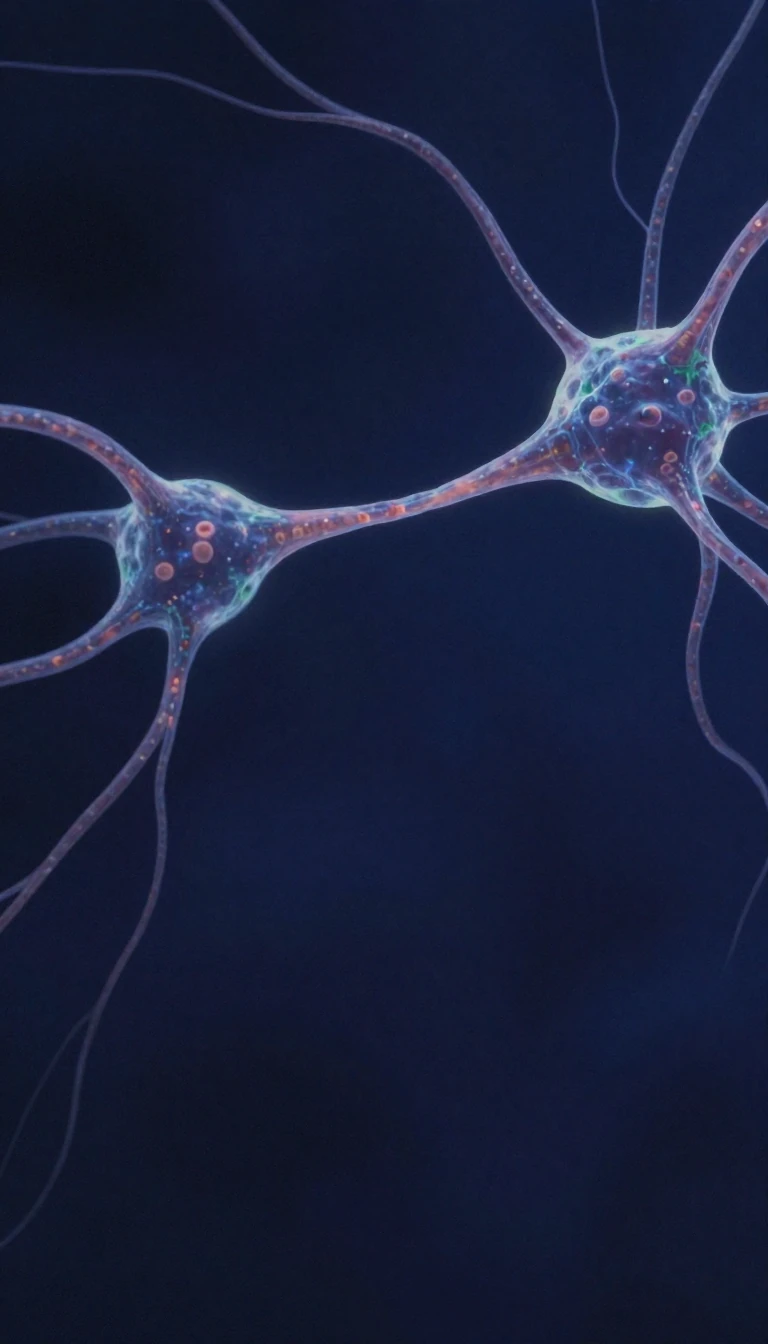 How computers simulate the dance of life at the scale of millions of atomsModern molecular modelling allows scientists to screen millions of compounds and simulate complex biological systems with near-experimental accuracy. By balancing the precision of…
 Why mathematicians use a clever shortcut to unlock the secrets of probability distributionsThe moment generating function is a powerful mathematical tool that simplifies complex probability calculations. By transforming a random variable into a different function, it al…
 Moments are the mathematical DNA that define the shape of any distributionIn mathematics and physics, moments are quantitative measures that describe the geometry of a function. By calculating these values, we can pinpoint the center of mass, variance, …
- Why the simplest building block of algebra is surprisingly difficult to defineIn mathematics, a monomial is the fundamental unit of polynomials, yet it suffers from a split personality. Depending on the context, it is either a raw product of variables or a …
 How gambling on random chance became the ultimate tool for solving impossible problemsWhen faced with problems too complex for traditional math, scientists turn to the Monte Carlo method. By simulating thousands of random scenarios, this approach transforms uncerta…
 Morphisms are the invisible architecture connecting the diverse structures of modern mathematicsIn mathematics, a morphism is not just a function; it is a fundamental bridge between objects. By generalizing how we relate structures, category theory allows mathematicians to c…
 In geometry, a motion is not about movement, but about preserving perfect symmetry.Forget physical displacement. In the abstract world of geometry, a motion is a precise mathematical transformation that maps figures onto one another while keeping distances and a…
- The mathematical search engine that defines what it means for a function to be computable.In the realm of computability theory, the mu-operator acts as a relentless search engine. It scans natural numbers to find the very first one that satisfies a specific condition. …
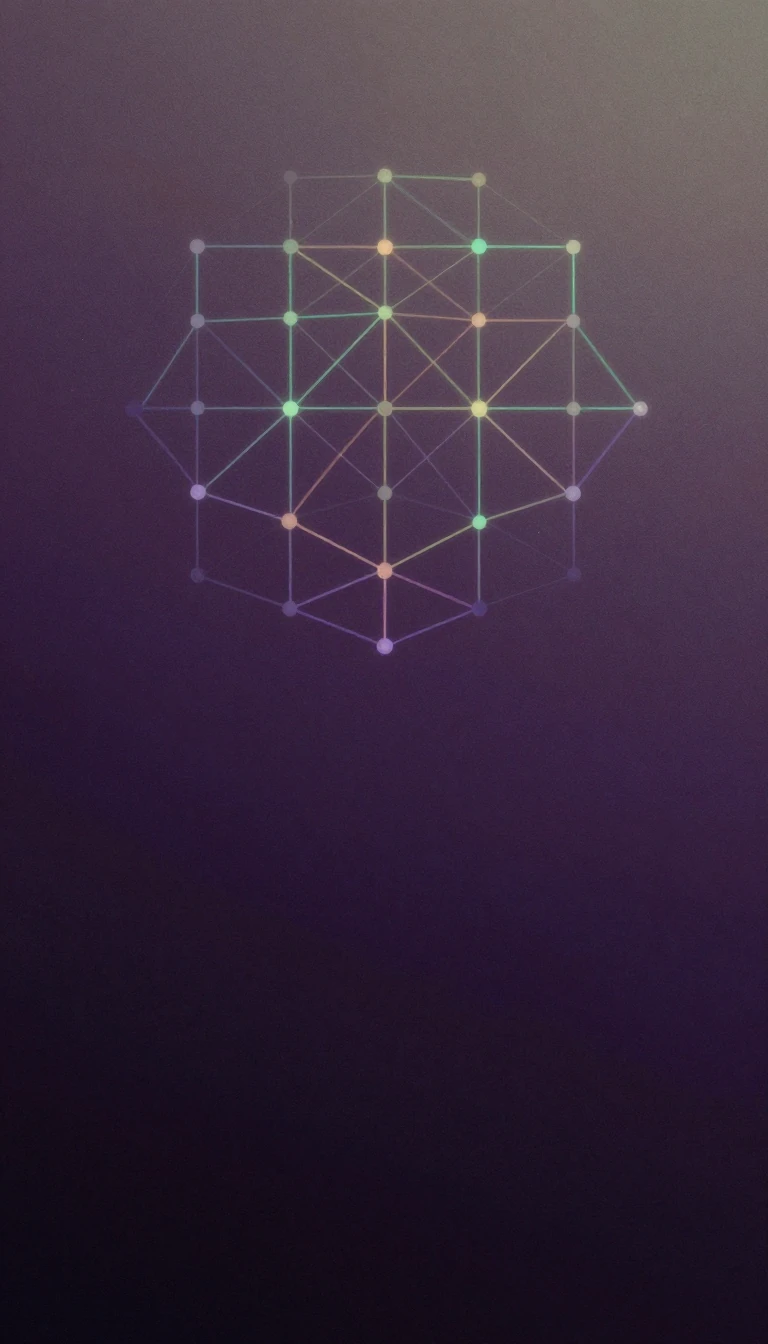 Why standard graphs fail to capture the complexity of real-world connectionsIn standard graph theory, a connection between two points is singular. But what if you need to represent multiple flight paths between cities or distinct relationships between ind…
 From ancient bamboo to modern code, the multiplication table remains a mathematical cornerstone.Long before digital calculators, humanity relied on structured grids to master arithmetic. While the multiplication table has served as a foundational tool for millennia, its role…
- Why mathematicians use multiplicative functions to simplify complex calculations in number theoryIn number theory, multiplicative functions act as shortcuts for solving complex problems. By breaking down large integers into their prime components, these functions allow mathem…
 How physicists simplify complex fields using the elegant math of multipole expansionWhen dealing with complex electromagnetic or gravitational fields, calculating every interaction is impossible. Instead, scientists use multipole expansion to break down a field i…
 Why some mathematical functions refuse to settle for just one single answerIn standard mathematics, a function maps one input to one output. But some functions are rebellious, assigning multiple values to a single point. These multivalued functions arise…
 Is music just math in disguise? The hidden numerical architecture of every melody.From the ancient ratios of Pythagoras to the complex compositions of Bach, music and mathematics share a profound, structural bond. Whether through the precise vibration of a stri…
 The 200-year-old mathematical puzzle that finally collapsed under the weight of a computerLeonhard Euler once conjectured that certain arrangements of symbols, known as Graeco-Latin squares, were impossible for specific grid sizes. This belief stood for over two centur…
 Why rational people often end up in suboptimal traps they cannot escapeIn game theory, a Nash equilibrium occurs when every participant in a noncooperative game chooses a strategy that offers no incentive to deviate. Even when a collective outcome is…
 Why nature remains the ultimate architect of the world's most complex chemical structuresNatural products are small molecules produced by living organisms, ranging from simple urea to intricate structures like Taxol. Because they are often difficult to isolate and pos…
 Natural transformations: The mathematical bridge between structures that keeps everything consistentIn category theory, a natural transformation is a way to map one functor to another while preserving the internal structure of the categories. Think of it as a morphism of functor…
 Negation is more than just saying no; it is a fundamental logical operationIn logic, negation is a unary operator that flips truth values, turning true into false and vice versa. While it seems simple, its behavior changes depending on the system you use…
- In mathematics, a neighbourhood is not just a place, but a zone of movement.In topology, a neighbourhood is a set of points surrounding a specific location where you can move in any direction without leaving the set. While it sounds like a simple spatial …
 Is Neuro-linguistic programming a breakthrough in human potential or just sophisticated psychopablum?Emerging in the 1970s, Neuro-linguistic programming promised to decode the secrets of exceptional performance and cure everything from phobias to the common cold. While it became …
 Can a set contain itself? New Foundations challenges the rigid hierarchy of traditional logic.Mathematical logic usually demands strict hierarchies to avoid paradoxes. Willard Van Orman Quine proposed New Foundations to simplify these rules. By allowing non-well-founded st…
 Why a 1959 chemical explosion created the world's most recognizable fire safety diamondWhen Charlotte firefighters arrived at a chemical plant fire in 1959, they assumed they were dealing with common kerosene. They were wrong. The resulting explosion, caused by hidd…
 Why most of the world remains mathematically unpredictable and inherently nonlinearLinear systems are tidy, but they are the exception, not the rule. In nature and engineering, most systems are nonlinear, meaning output is not proportional to input. While we oft…
 Why the most reactive elements in the periodic table are essential to lifeNonmetals are defined by what they lack—metallic luster, malleability, and high conductivity. Yet, these elements, including the highly reactive halogens, are the building blocks …
- Why a simple grid can reveal the hidden logic of complex human strategic decisions.Game theory often relies on the normal-form representation to map out every possible move and consequence. By organizing strategies into a matrix, mathematicians can identify equi…
 Why normal subgroups are the secret architects of symmetry in abstract algebraIn the landscape of abstract algebra, normal subgroups are not just subsets; they are the essential building blocks that allow us to construct quotient groups. First identified by…
 Why this famous celestial continent is actually a massive, glowing cloud of ionized gasThe North America Nebula, or Caldwell 20, is a striking emission nebula in the constellation Cygnus. While its distinct shape mimics the North American continent, it is actually a…
 Why some problems are easy to check but notoriously difficult to solveIn computer science, the class NP describes problems where a proposed solution can be verified quickly, even if finding that solution from scratch is incredibly time-consuming. Wh…
 Why NP-hard problems represent the ultimate frontier of computational difficulty and complexityIn computer science, NP-hard problems are at least as difficult as the hardest challenges in the NP class. While they often seem impossible to solve efficiently, they are not all …
 How to measure the invisible crowd: understanding the science of number densityWhether counting galaxies in the cosmos or molecules in a glass of water, number density provides the essential scale for concentration. It is an intensive quantity that reveals h…
 The number line is far more than a simple ruler for basic arithmeticWhile often introduced as a basic tool for counting, the number line is a sophisticated mathematical structure. It functions as a geometric representation of real numbers, bridgin…
 Why computers use numerical approximations to solve the equations governing our physical worldMany differential equations are impossible to solve exactly, yet they underpin physics, chemistry, and economics. Numerical methods provide a practical workaround by generating ap…
- How do we simulate the physical world using only mathematics and digital grids?Partial differential equations describe everything from aerodynamics to weather patterns, but they are rarely solvable by hand. Numerical methods bridge this gap, transforming com…
- Why the octahedron is far more than just a simple eight-sided shapeWhile you might picture a regular octahedron as two pyramids joined at the base, this geometry hides a surprising complexity. With 257 distinct convex forms and bizarre, flexible …
 Why do atoms crave eight electrons? The surprising chemistry behind the octet rule.Atoms are not just random particles; they are driven by a quest for stability. By gaining, losing, or sharing electrons to reach a magic number of eight, elements mimic the inert …
 Why the term straight-chain compound is a bit of a chemical misnomerIn chemistry, open-chain compounds are defined by their lack of rings, distinguishing them from cyclic structures. While often called straight-chain molecules, these structures ar…
- Beyond Arithmetic: How Mathematical Operations Define the Rules of Our UniverseIn mathematics, an operation is more than just addition or subtraction. It is a precise function that transforms inputs into a specific output. From unary operations that change a…
- In mathematics, an operator is a sophisticated function that acts on complex structures.While we often think of operators as simple symbols like square roots or derivatives, they are fundamentally mappings between spaces. By acting on functions or vector spaces rathe…
 Operator theory reveals how complex linear systems can be simplified into manageable diagonal formsAt the heart of functional analysis lies operator theory, the study of linear transformations on function spaces. By classifying these operators through their spectral properties,…
- In mathematics, you can flip the entire universe of a category to find truth.Category theory allows mathematicians to invert structures by reversing the direction of every relationship. This process, known as creating an opposite category, reveals hidden s…
- Where should you build? The mathematics of placing facilities for maximum efficiencyWhether you are placing a school to minimize student travel or a factory to maximize distance from homes, facility location is a complex optimization challenge. By balancing costs…
 Order theory reveals the hidden structure behind how we rank and compare everythingOrder theory provides a formal mathematical framework for understanding relationships like greater than, precedes, or contains. While we intuitively grasp simple sequences, this f…
- Why the order of elements in a pair changes everything in mathematicsIn mathematics, an ordered pair is more than just a grouping; it is a fundamental structure where position dictates identity. Unlike a simple set, where the order of elements is i…
 New cosmic measurements suggest our Milky Way galaxy is larger than previously believedFor generations, astronomers estimated the Milky Way spanned 100,000 light-years. But by using powerful gamma-ray bursts as cosmic flashlights, researchers have discovered that ou…
- Why the outcome of a coin flip is rarely as simple as you thinkIn probability theory, an outcome is a single, unique result of an experiment. While we often assume outcomes are equally likely, this is a simplification that fails to account fo…
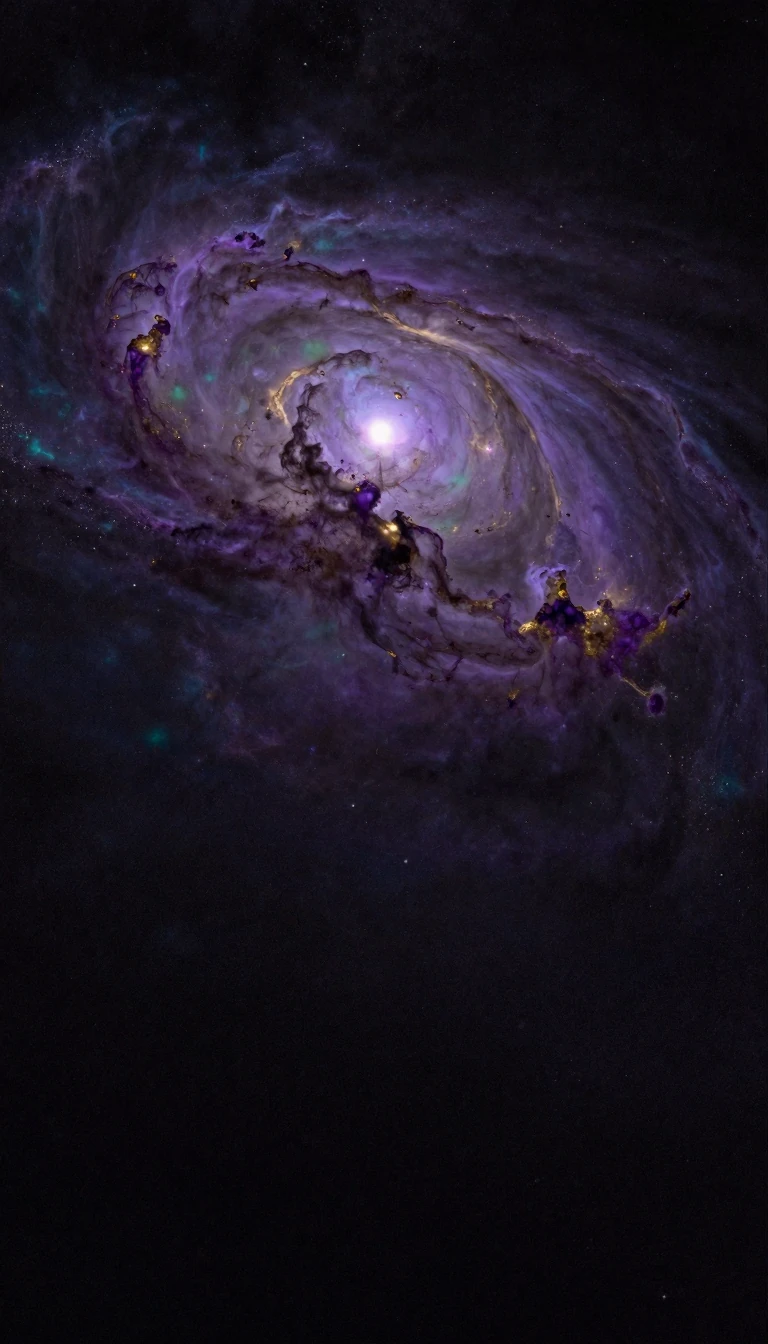 Why this 8,000-year-old celestial ghost in Ursa Major looks like a staring owlFloating 2,030 light years away, the Owl Nebula is a cosmic illusion born from a dying star. Its haunting, eye-like appearance is not a trick of the light, but a specific geometri…
 Is P the ultimate definition of efficiency, or just a useful rule of thumb?In computer science, P represents problems solvable in polynomial time. While often equated with tractability via Cobham's thesis, this classification is more of a practical guide…
 Is Saturn's moon Paaliaq actually a shattered remnant of a larger, ancient space body?Discovered in 2000, Paaliaq is an irregular moon of Saturn that defies the standard rules of planetary formation. With a highly oval orbit and a distinct reddish hue, this small s…
- Why do parabolic equations govern everything from heat flow to financial market crashes?Parabolic partial differential equations describe how systems evolve over time. From the diffusion of heat in a material to the complex dynamics of financial markets, these equati…
 Why the difference between a variable and a parameter defines your entire systemIn mathematics and engineering, a variable is what you change to see what happens, but a parameter is the setting that dictates how the system behaves. Confusing the two is a comm…