 Intellect Plus
Science
17,267 cards. Each one is a 40-second story with a five-minute read behind it. Page 190 of 288.
Subtopics: Acids and bases · Algebra · Alloys and ceramic compounds · Analysis · Applied mathematics · Atomic and molecular physics · Atoms · Basics · Biochemistry · Biochemistry and molecular biology · Biological processes and physiology · Biology · Biology and health sciences: General · Biology basics · Calculus and analysis · Cell biology · Cells · Chemical elements · Chemistry · Climate · Cold · Color · Computer scientists and programmers · Condensed matter physics · Discrete mathematics · Earth science · Electricity & magnetism · Electromagnetism · Elements · Entropy · Everyday Science Questions · Evolutionary biology · Famous equations · Famous experiments · Found by OrchestratorBot · Foundations · Functions · Future Frontier · Genetics and molecular biology · Geology · Geometry · Glass · Global Curiosity Questions · Heat · How Did the Dinosaurs Become Extinct? · How Things Work: Gas from Source to Supply · How Things Work: The Journey of Crude Oil · Human body & genes · Ice · Infinity · Inventors and engineers · Isotopes · Light · Magnetism · Materials · Mathematicians · Maths · Measurement · Mechanics · Microbiology · Minerals & crystals · Molecular compounds · Nature: How Long Can It Live? · Nuclear physics · Number theory · Optics & light · Organic compounds · Other · Particle physics · Physics · Physics basics · Pre-modern figures · Prime numbers & number theory · Probability · Proof · Pseudoscientists · Quantum · Quantum Biology · Reactions and synthesis · Relativity · Research methods · Researched · Salts and ions · Science basics · Scientific discoveries · Scientific instruments · Scientists, inventors and mathematicians · Separation processes · Social scientists · Stars · Statistics and probability · Theoretical computer science · Theory · Thermodynamics · Thermodynamics & heat · UK & Ireland: science · Units & measurement · Volcanoes · Water · Waves · Women in science
 How a wartime radio research project accidentally birthed the modern science of chaosMary Cartwright was a trailblazing mathematician who became the first woman elected to the Royal Society in her field. While investigating mundane radio engineering problems in 19…
 Why modern society treats risk like witchcraft: the enduring legacy of Mary DouglasAnthropologist Mary Douglas argued that our modern obsession with risk is not purely rational. Instead, it functions exactly like ancient witchcraft accusations: a way to name, bl…
 How a childhood of imagination and isolation created a master of mathematical counterexamplesRaised in a remote Texas town with few toys, Mary Ellen Rudin developed a habit of imagining complex structures. This mental playground eventually propelled her to become a titan …
 How one linguist preserved the voices of dying languages and transformed a fieldMary Haas was a titan of American linguistics who documented languages on the brink of extinction. By working directly with the last native speakers of tongues like Tunica and Nat…
 How a brilliant Iranian mathematician shattered the most exclusive glass ceiling in scienceIn 2014, Maryam Mirzakhani became the first woman and the first Iranian to receive the Fields Medal. Often described as the Nobel Prize of mathematics, this prestigious award is g…
 How a massive underground water tank turned the Sun's ghost particles into cosmic data.Neutrinos are subatomic ghosts that pass through Earth without leaving a trace. Masatoshi Koshiba changed physics by building an enormous detector to capture their rare, fleeting …
 How a nineteenth-century physician transformed the courtroom by turning poison into visible evidence.Before Mathieu Orfila, proving murder by poison was a guessing game. By pioneering the study of how toxins accumulate in specific organs, Orfila moved toxicology from speculation …
 How a Canadian pioneer defined the mathematical heartbeat of every living cellMaud Menten was one of the first Canadian women to earn a medical degree, yet her most enduring legacy lies in a simple equation. By mapping how enzymes interact with substrates, …
 How a Baghdad-born textile merchant's son reshaped British advertising and political discourseMaurice Saatchi rose from a refugee childhood in London to build the world's largest advertising agency. Beyond his commercial empire, he became a life peer and influential Conser…
 The man who realized that programming meant spending his life fixing his own mistakes.Maurice Wilkes built one of the world's first stored-program computers, the EDSAC, in 1949. Yet, his most enduring insight came while walking between floors at Cambridge: the sobe…
 Was Maurice Wilkins the forgotten architect of the double helix discovery?Long overshadowed by his peers, Maurice Wilkins was the biophysicist who initiated the DNA diffraction research at King’s College London. His early work with high-quality fibers p…
 Was the father of modern religious studies a colonial missionary or a cultural bridge?Max Müller, the Oxford professor who defined Indology, spent his life navigating a paradox. He was a devout scholar who sought to replace Hinduism with Christianity, yet he became…
 How a walk in a garden unlocked the secret structure of crystalsIn 1912, Max von Laue proposed that crystals could act as diffraction gratings for X-rays. This insight, sparked by a conversation during a stroll through a Munich park, proved th…
 How the brain maps its surroundings: The discovery of our internal positioning systemMay-Britt Moser transformed our understanding of how we navigate the world. By identifying grid cells in the brain, she revealed the biological mechanism that allows us to track o…
 How a high school cheerleader became a pioneering force in modern number theoryMelanie Wood shattered glass ceilings in mathematics long before joining the Harvard faculty. As the first American woman to compete on the U.S. International Mathematical Olympia…
 How Melvin Calvin mapped the secret route of carbon through the heart of plantsMelvin Calvin revolutionized our understanding of photosynthesis by tracing how plants convert light into chemical energy. While his Nobel-winning work remains a cornerstone of bi…
 How a beam of invisible particles earned a Nobel Prize in physicsNeutrinos are notoriously elusive, with only one in ten billion expected to interact with matter. To capture them, Melvin Schwartz and his colleagues devised a method to create a …
 Did a single monk's invention of an alphabet spark a golden age of literature?In 405 AD, the monk Mesrop Mashtots created a unique Armenian script, forever altering the trajectory of a culture. By bridging the gap between spoken dialects and written languag…
- How a self-described geometer bridged the gap between pure mathematics and theoretical physicsMichael Atiyah was a mathematical titan who transformed our understanding of geometry and topology. By developing tools like K-theory and the index theorem, he created a new langu…
 The 16th-century alchemist who identified oxygen 170 years before modern scienceLong before oxygen was officially discovered, Michael Sendivogius identified a life-giving substance in the air. This Polish alchemist, a fixture at the courts of Emperor Rudolf I…
 How the way we talk about language actually shapes our social realityMichael Silverstein transformed how we understand human communication. By studying how our beliefs about speech influence the way we use it, he revealed that language is not just …
 Why your degree might be a signal rather than a source of skillNobel laureate Michael Spence transformed economics by proposing that education often functions as a costly signal. In his model, degrees help employers distinguish high-ability w…
 How an amateur architect cracked the code of an ancient, lost civilizationMichael Ventris was not a professional linguist, but an architect who treated an undeciphered ancient script like a structural puzzle. By applying statistical analysis to the myst…
 A war hero turned linguist who claimed he could teach anyone any languageMichel Thomas survived Nazi concentration camps and captured thousands of war criminals before reinventing himself as a celebrity language teacher. He insisted that academic failu…
 How a truck-driving high school dropout became a towering intellectual of the American left.Mike Davis spent his youth as a meat cutter and drag racer before emerging as a fierce urban theorist. His work dissected the dark intersections of power, class, and catastrophe, …
 How Mikhael Gromov revolutionized geometry by looking at the big picture of shapes.Mikhael Gromov transformed modern mathematics by shifting focus from infinitesimal details to global structures. His work on Riemannian geometry, symplectic topology, and geometri…
 The French mathematician who mastered probability, games of strategy, and the politics of war.Émile Borel was a mathematical prodigy who transformed set theory and probability. Beyond his academic breakthroughs, he navigated the highest levels of French government, served …
 Why the best way to learn music is to stop playing instrumentsÉmile Jaques-Dalcroze believed traditional music education was fundamentally broken. Instead of starting with pianos or violins, he argued that the first instrument a student must…
 Milton H. Erickson transformed psychotherapy by treating the unconscious mind as a creative, autonomous partner.Rejecting the Freudian view of the unconscious as a reservoir of hostility, Milton H. Erickson pioneered indirect, permissive techniques that bypassed conscious resistance. By lev…
- How a mathematician architected the American computing revolution from behind the scenesMina Rees was a pivotal figure in twentieth-century science, transforming American research infrastructure during and after World War II. From directing naval mathematics to pione…
 How a Latvian immigrant revolutionized the study of human language at MITMorris Halle was a central figure in the mid-century linguistic revolution, transforming how we understand the innate structure of human speech. Beyond his groundbreaking research…
 Can we calculate the age of a language by counting its basic words?Morris Swadesh believed that by tracking how quickly core vocabulary changes over time, we could mathematically date the divergence of human languages. His controversial methods, …
- Is the engine of evolution driven by natural selection or random genetic drift?Motoo Kimura challenged the Darwinian orthodoxy by proposing that most genetic changes at the molecular level are neutral. Instead of natural selection, he argued that random gene…
 How a small-town doctor decoded the ancient heart of Japanese identity and literature.Motoori Norinaga spent forty years as a provincial physician, yet his true legacy lies in his obsession with ancient texts. By stripping away foreign influences, he sought to reco…
 How social norms and group conflict shape our perception of reality and others.Muzafer Sherif was a pioneer who proved that our social world literally pierces our skin. Through experiments on light illusions and summer camp rivalries, he demonstrated how gro…
 How a young computer programmer revolutionized global finance by solving the option valuation puzzle.Before 1973, investors had no reliable way to price stock options. Myron Scholes, alongside Fischer Black and Robert Merton, changed that by proving that shares and options could …
 Can anthropology be a weapon for justice against the world's most hidden violence?Nancy Scheper-Hughes pioneered a militant approach to social science, refusing to remain a neutral observer. By embedding herself in the lives of the marginalized, she exposes str…
 Did a famous anthropologist incite violence to prove his theories on human nature?Napoleon Chagnon’s study of the Yanomamö people turned anthropology upside down by challenging the idea that humans are naturally peaceful. His work sparked a decades-long firesto…
 How a pioneer of behavioral science proved we can consciously control our internal organsNeal E. Miller transformed psychology by bridging the gap between Freudian theory and rigorous laboratory experimentation. His work on biofeedback challenged the long-held belief …
 The geneticist who solved the mystery of sex determination was largely forgotten by historyIn 1905, Nettie Stevens discovered that sex is determined by chromosomes, a breakthrough that fundamentally changed biology. Despite her monumental contribution, she was frequentl…
 How a physicist's work on glass helped build the modern digital worldSir Nevill Mott transformed electronics by decoding the behavior of amorphous materials. By explaining how irregular atomic structures transition between conductive and insulating…
 How a Vietnamese prodigy solved a decades-old puzzle in the heart of mathematicsNgô Bảo Châu transformed a complex number-theoretic problem into a geometric one, cracking the fundamental lemma for automorphic forms. His breakthrough, which earned him the Fiel…
 How our social networks act as invisible conduits for our health and behaviorNicholas Christakis explores the hidden architecture of human connection. By applying mathematical models to social dynamics, he reveals how our health, habits, and even our genet…
- Why this economist predicted that human civilization is heading toward an inevitable, entropic collapse.Nicholas Georgescu-Roegen argued that economic activity is governed by the laws of physics, not just market forces. By applying the concept of entropy to production, he concluded …
 How a wartime survivor hiding in a Dutch attic revolutionized modern laser physicsNicolaas Bloembergen spent the final years of World War II reading physics by the light of a makeshift oil lamp. He survived by eating tulip bulbs, only to later move to Harvard a…
 Why this German sociologist claimed that human beings are not part of societyNiklas Luhmann developed a radical systems theory where society is not a collection of people, but a self-reproducing network of communications. By treating social systems as oper…
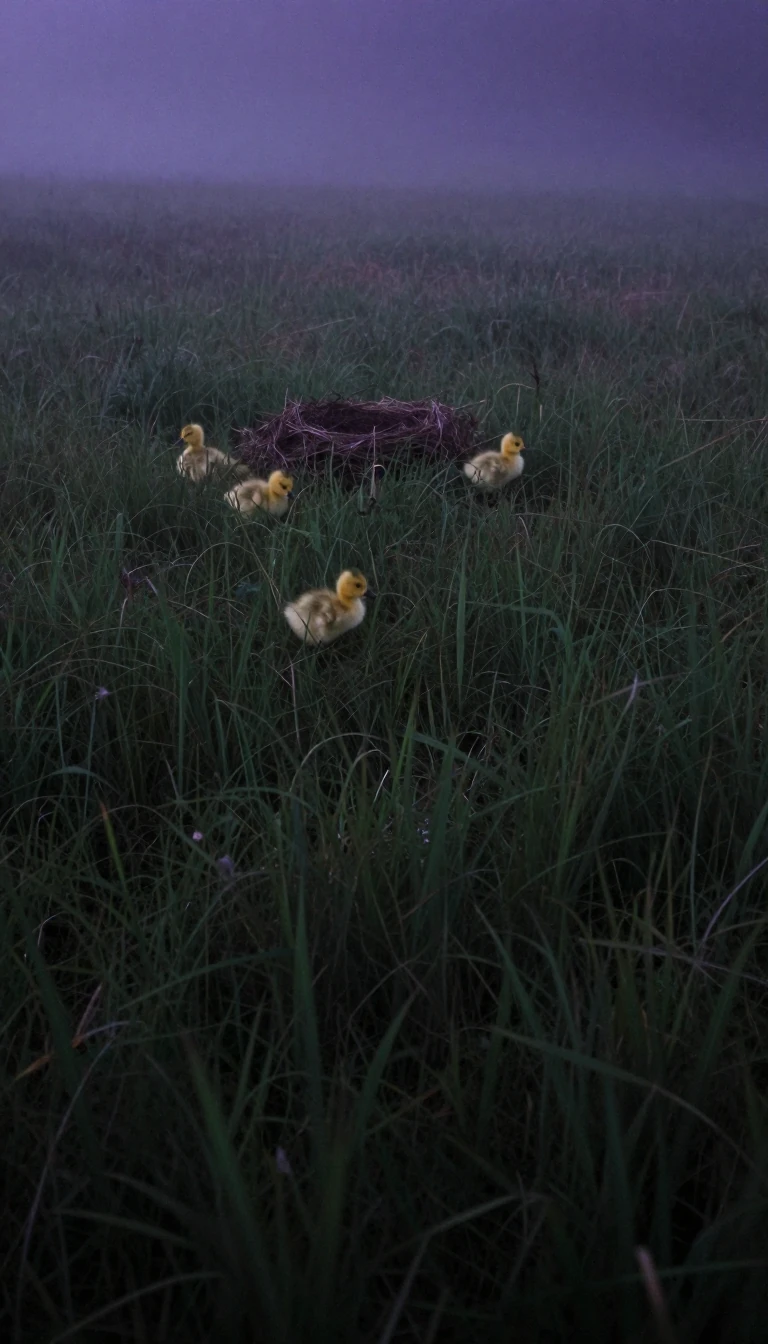 Why animals sometimes prefer artificial objects over their own natural counterpartsNikolaas Tinbergen, a Nobel-winning biologist, discovered that animals often respond more intensely to exaggerated, artificial stimuli than to natural ones. This concept of the su…
 The botanist who starved to save the world's future food supply from extinctionNikolai Vavilov was a visionary geneticist who built the world's largest seedbank to end global famine. When Soviet politics turned against his science, he was imprisoned and sent…
 How a railway worker's son engineered the most iconic sidearm of the Soviet eraNikolay Makarov was a Soviet engineer whose namesake pistol defined military sidearms for decades. Born to a railway worker, he rose from a wartime student to a Hero of Socialist …
 Is the memory of the Holocaust being weaponized to shield Israel from political criticism?Political scientist Norman Finkelstein argues that the Holocaust has been transformed into an ideological tool. By examining demographic records and historical narratives, he clai…
- How a physicist’s quest for precision redefined the very meaning of timeNorman Ramsey Jr. was a physicist whose work on atomic precision earned him the 1989 Nobel Prize. By inventing a method to stabilize electromagnetic fields, he enabled the creatio…
 Can literary criticism be a rigorous science rather than just a subjective art?Northrop Frye, one of the twentieth century's most influential theorists, argued that criticism should be a coherent discipline in its own right. By shifting focus from individual…
 Is Nouriel Roubini a visionary economic prophet or just a stopped clock?Nouriel Roubini earned the nickname Dr. Doom for accurately predicting the 2008 financial crisis. Yet, his career is marked by a string of missed calls and persistent, often incor…
 How Olivier Blanchard reshaped modern macroeconomics and challenged the IMF's fiscal orthodoxyOlivier Blanchard, a titan of New Keynesian economics, has spent decades bridging the gap between theoretical models and real-world policy. From MIT classrooms to the heart of the…
 Oronce Fine: The Renaissance polymath who mapped the world with a human heartOronce Fine was a 16th-century French mathematician who transformed how his country viewed science. From his appointment as the first royal lecturer in mathematics to his innovati…
 How a mathematician turned ballistics research into a blueprint for modern academic collaborationOswald Veblen was more than a pioneer of topology and geometry. During the First World War, he managed complex ballistics calculations at the Aberdeen Proving Ground, an experienc…
- The Bone Wars: How a Bitter Rivalry Uncovered America's Prehistoric PastOthniel Charles Marsh was a titan of nineteenth-century paleontology, but his legacy is defined by a cutthroat, decades-long feud with rival Edward Drinker Cope. Their obsessive c…
 Why Otto Rank argued that birth trauma is the true origin of human anxietyOnce Sigmund Freud’s closest collaborator, Otto Rank eventually broke away to propose a radical theory: human neurosis does not stem from sexual drives, but from the primal trauma…
- How a German photographer captured the first motion pictures of birds in flightBefore cinema became a global industry, Ottomar Anschütz revolutionized photography by freezing time. By developing ultra-fast shutters and the Electrotachyscope, he moved beyond …
 How a Manhattan Project physicist proved the existence of antimatter in 1955Owen Chamberlain helped build the atomic bomb before turning his attention to the fundamental building blocks of the universe. In 1955, his work with particle accelerators led to …