 Intellect Plus
Science
17,267 cards. Each one is a 40-second story with a five-minute read behind it. Page 214 of 288.
Subtopics: Acids and bases · Algebra · Alloys and ceramic compounds · Analysis · Applied mathematics · Atomic and molecular physics · Atoms · Basics · Biochemistry · Biochemistry and molecular biology · Biological processes and physiology · Biology · Biology and health sciences: General · Biology basics · Calculus and analysis · Cell biology · Cells · Chemical elements · Chemistry · Climate · Cold · Color · Computer scientists and programmers · Condensed matter physics · Discrete mathematics · Earth science · Electricity & magnetism · Electromagnetism · Elements · Entropy · Everyday Science Questions · Evolutionary biology · Famous equations · Famous experiments · Found by OrchestratorBot · Foundations · Functions · Future Frontier · Genetics and molecular biology · Geology · Geometry · Glass · Global Curiosity Questions · Heat · How Did the Dinosaurs Become Extinct? · How Things Work: Gas from Source to Supply · How Things Work: The Journey of Crude Oil · Human body & genes · Ice · Infinity · Inventors and engineers · Isotopes · Light · Magnetism · Materials · Mathematicians · Maths · Measurement · Mechanics · Microbiology · Minerals & crystals · Molecular compounds · Nature: How Long Can It Live? · Nuclear physics · Number theory · Optics & light · Organic compounds · Other · Particle physics · Physics · Physics basics · Pre-modern figures · Prime numbers & number theory · Probability · Proof · Pseudoscientists · Quantum · Quantum Biology · Reactions and synthesis · Relativity · Research methods · Researched · Salts and ions · Science basics · Scientific discoveries · Scientific instruments · Scientists, inventors and mathematicians · Separation processes · Social scientists · Stars · Statistics and probability · Theoretical computer science · Theory · Thermodynamics · Thermodynamics & heat · UK & Ireland: science · Units & measurement · Volcanoes · Water · Waves · Women in science
 Cellular entry pathways shift as particles grow from tiny to largeResearchers who studied non-phagocytic B16 cells found that the size of a particle determines how it enters a cell. By tracking fluorescent beads ranging from 50 to 1,000 nm in di…
 New strategies for creating complex indole molecules with axial chiralityResearchers have developed a unique method for the organocatalytic synthesis of indole derivatives that possess axial chirality. By designing specific indole-derived platform mole…
 Dietary fiber can support gut health and growth in poultryA review of existing research shows that while dietary fiber was once viewed as a nutritional hindrance in poultry, it actually plays a vital role in digestive health. The researc…
 How the scanning tunneling microscope reveals the hidden landscape of atomsResearchers developing a theoretical framework for the scanning tunneling microscope found that the electrical current flowing between a probe tip and a surface reveals how electr…
 Debating whether organisms actively shape their own evolutionary pathsResearchers exploring the niche construction theory have engaged in a critical debate over how much organisms influence their own evolution. By examining whether environmental cha…
 How nitrogen-centered radicals enable the efficient construction of complex chemical structuresA review of chemical research highlights how nitrogen-centered radicals, such as iminyl and aminyl species, can transform simple molecules into complex structures. By reacting wit…
 Random quantum circuits reveal universal patterns in complex many-body physicsResearchers studying random quantum circuits have found that these simplified models can reveal universal behaviors in complex quantum systems. By using local gates and measuremen…
- Where long noncoding RNAs live determines how they function in cellsResearchers reviewing the biology of long noncoding RNAs (lncRNAs) found that the specific location of these molecules within a cell is critical to their biological activity. Beca…
 A new mathematical framework helps machine learning models handle unexpected data changesResearchers have developed a new distributionally robust optimization framework designed to help machine learning models maintain consistent performance. By accounting for potenti…
 A new computational tool improves the accuracy of identifying genes in microbesResearchers who develop software for genomic analysis found that a new algorithm, called Prodigal, can more accurately identify genes and their starting points in prokaryotic orga…
 Metal-organic frameworks offer a versatile new blueprint for efficient industrial separationsResearchers are increasingly looking to metal-organic frameworks (MOFs) as a high-performance solution for separating gases and liquids. These highly porous, crystalline materials…
 The brain's default network activates during internal thought and mental simulationResearchers who synthesized decades of imaging data found that the brain possesses a specific, anatomically defined system known as the default network. This system becomes prefer…
 Blocking a serine-making enzyme restores a cancer-starving diet's effect in miceResearchers studying mice with tumors resistant to a serine-and-glycine-restricted diet found that adding a PHGDH-blocking drug restored the diet's effect. PHGDH is an enzyme tumo…
 How Earth's hidden mantle reservoirs saved our oceans from spaceScientists are investigating how water survived Earth's early, molten state. This video explores how a deep mineral reservoir may have preserved water volumes comparable to today'…
 The mathematician who found the hidden patterns of human speechHe was the mentor to Noam Chomsky, yet often remained in the shadows. Zellig Harris didn't just study language; he sought to strip away all intuition to find its mathematical foun…
 Did the Caribbean plantation complex birth the modern world?Sidney Mintz revolutionized anthropology by linking the sugar plantations of the Caribbean to the rise of global capitalism. He argued that these colonial systems were not just si…
 The Marxist archaeologist who redefined how we view human progressHe didn't just dig for bones; he sought the economic engines of civilization. By applying materialist theory to the prehistoric past, V. Gordon Childe transformed archaeology from…
 How to design a world where people tell the truthIn a world of hidden motives, how do you ensure honesty? Roger Myerson solved this by creating 'mechanism design.' He figured out how to structure auctions, regulations, and votin…
 How ideas drive growth: Paul Romer and the engine of innovationTraditional economics often treated technological progress as an external force, like weather or nature. But Paul Romer changed the game by proving that innovation is actually an …
- How a mathematician redefined the way we measure the power of mass mediaBefore the digital age, one man used rigorous mathematics to decode how radio and newspapers shape our votes. Paul Lazarsfeld transformed sociology from abstract theory into a pre…
 How one economist uses randomized trials to fight global povertyMichael Kremer doesn't just study poverty; he tests solutions to solve it. By using rigorous experimental methods, he has helped scale life-changing interventions—from life-saving…
- How a Princeton engineer redefined the logic of global competitionHe didn't start with business textbooks, but with the competitive drive of collegiate sports. Michael Porter transformed management from a vague art into a rigorous science, provi…
 How a failed mathematician revolutionized the way we calculate the global economyLéon Walras struggled with math entrance exams and failed as a novelist, yet he eventually built a mathematical model so powerful it redefined modern economics. By treating market…
 Can any subject be taught to any child at any stage?Jerome Bruner challenged the idea that children must reach specific milestones before learning complex concepts. He argued that with the right support, any topic is accessible. By…
 How a German physician challenged Freud to found feminist psychologyWhile Sigmund Freud focused on biological instincts, Karen Horney looked outward. She argued that our personalities are shaped not just by biology, but by the social and cultural …
 The man who saw society as a web of relations, not individualsMost sociologists study people—their attitudes, traits, and personal attributes. But Harrison White revolutionized the field by looking elsewhere. He argued that to understand soc…
 How do we actually create the social order we inhabit every day?Most sociologists look for grand, invisible structures to explain society. But Harold Garfinkel looked closer. He proposed that social order isn't a set of rules imposed from abov…
 The man who argued that capitalism was a war of the rich against the poorGeorge Fitzhugh was not your typical Southern defender. While most fought to preserve the status quo, he launched a radical attack on liberal values, arguing that the competition …
 The physicist who solved the mystery of financial randomnessBefore 1973, pricing a stock option was a subject of intense debate. Fischer Black, a physicist turned mathematician, helped bridge the gap between complex stochastic calculus and…
 Why government promises of low inflation often fail to deliverWhen policymakers try to cheat the system by boosting employment through inflation, they often lose credibility. Norwegian economist Finn Kydland discovered that economic stabilit…
 What if the modern state was originally just organized crime?Sociologist Charles Tilly proposed a provocative theory: that the foundations of the modern state were built not on social contracts, but on the predatory extraction of resources.…
 How a British Army engineer used ancient travelogues to map lost civilizationsAlexander Cunningham was not a traditional historian. A former military engineer, he bypassed classical Greek chronicles to follow the footsteps of 7th-century Chinese pilgrims, u…
 The delicate balance between genetic diversity and population unityResearchers studying the geographic structure of natural populations found that genetic variation is shaped by a constant tug-of-war. While forces like mutation and natural select…
 Simple rules of thumb fail to determine required sample sizes for regressionResearchers evaluating common guidelines for conducting multiple regression analyses found that using simple constants or fixed ratios of subjects to predictors is unreliable. The…
- Proving that certain complex geometric shapes belong to finite familiesMathematicians have long sought to understand the boundaries of Fano varieties, which are specific types of complex algebraic shapes. Researchers who studied these structures foun…
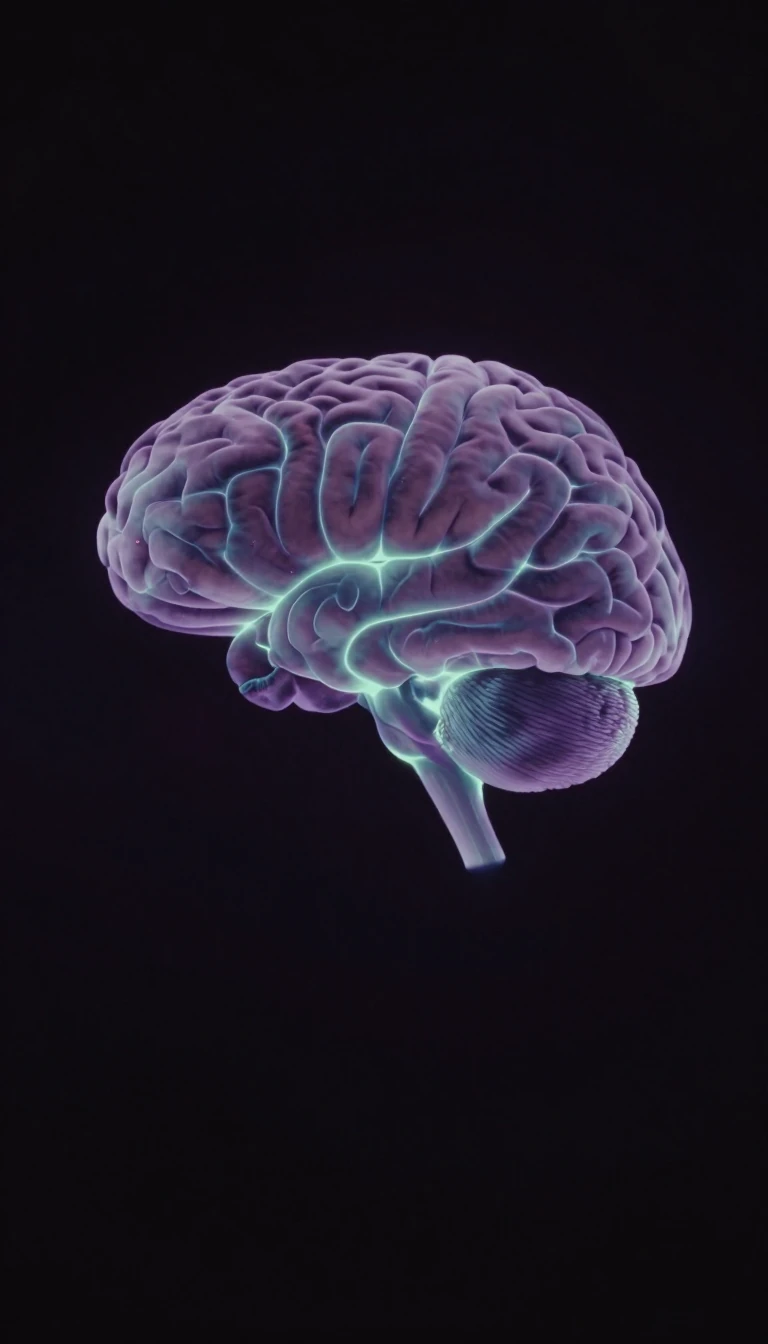 Brain activity maps space onto a mathematical shape called a torusResearchers who recorded the neural activity of hundreds of grid cells found that the brain represents physical space using a specific geometric structure. By analyzing how these …
- Silicon spin qubits reach the high-fidelity threshold needed for error correctionResearchers have developed a silicon-based quantum processor where both single-qubit and two-qubit gate fidelities exceed 99.5%. This achievement is significant because surpassing…
 The evolution of reticular chemistry from simple pores to complex structural designA review of twenty-five years of reticular chemistry shows that the field has moved far beyond simply creating highly porous materials. While the initial interest in metal-organic…
 Orientation determines how we perceive different types of active galactic nucleiResearchers suggest that many different classes of active galactic nuclei (AGN) might actually be the same type of object viewed from different angles. By accounting for how light…
 A new resource helps identify the specific genes driving complex human traitsResearchers have developed an open-access resource to help bridge the gap between genetic associations and actual disease-causing genes. By analyzing 133,441 published human GWAS …
 Nutrient deprivation boosts lipid production in outdoor microalgae culturesResearchers studying microalgae found that starving certain marine strains of nitrogen can significantly increase their oil content. By testing various species and cultivation met…
- How triplet energy transfer can drive the creation of chiral moleculesA review of photochemical research shows that scientists can use triplet energy transfer to drive enantioselective reactions. By using a sensitizer to transfer energy to a substra…
 Mammalian cells use an ancient pathway to selectively translate survival genes during stressResearchers studying murine cells found that when specific protein kinases are activated by stress, the cell undergoes a selective shift in protein production. While these kinases…
 Dopamine neurons signal reward by detecting unexpected changes in outcomesResearchers observing midbrain dopamine systems found that these neurons act as a teaching signal for learning. Rather than simply responding to rewards, dopamine neurons react to…
 How host size and geography shape the diversity of parasite communitiesA review of parasite assemblage research found that while host size and geographic range appear to drive parasite species richness, these relationships weaken significantly when r…
- New strategies for building chemically stable metal-organic frameworks expand their practical usesResearchers reviewing a decade of progress in metal-organic frameworks (MOFs) found that specific chemical design strategies can overcome the inherent instability of these materia…
 Mapping information flows reveals how scientific disciplines connect and divergeResearchers developed a new information-theoretic method to uncover the hidden community structures within complex networks. By treating the probability flow of random walks as a …
- Common psychological path models rely on unrealistic assumptions for causal inferenceResearchers who examine mediation and moderation in psychology may struggle with causal inference. A review of path modeling suggests that many applied researchers do not fully gr…
- Cells sense and respond to the stiffness of their surrounding environmentResearchers studying rat kidney and fibroblast cells found that the flexibility of a cell's surface significantly alters how it moves and attaches. When grown on flexible substrat…
 Is extreme weather a result of random chance or a changing climate?This video explores the distinction between weather and climate to investigate whether the rising frequency of extreme weather events is driven by shifting climate patterns or mer…
 Why Earth's most stagnant era was actually full of hidden activityFor nearly a billion years, Earth appeared to be stuck in a geological and evolutionary stalemate. This video challenges the idea that this period was truly dull by examining the …
- Why female cockroaches are actively avoiding the pursuit of romanceIn the insect world, courtship isn't always a smooth transition. This video explores why female cockroaches of a specific species are rejecting male advances and how evolution is …
- Can microscopic soil allies help solve the global food shortage crisis?As droughts threaten global food security, scientists are looking toward an unexpected source of resilience: the microbes living in the soil surrounding our crops.
 Can carbon itself be used to capture carbon dioxide?While most carbon capture efforts focus on filtering emissions at power plants, scientists are investigating whether carbon itself can be used to help reduce atmospheric CO2.
 Can science help you recreate your favorite Thanksgiving classics?This SciShow compilation explores the chemical and biological mechanics behind common food substitutes, from using applesauce instead of butter to the rise of animal-free meat.
- How a single parasite can turn a predator into a kingIn Yellowstone National Park, certain wolves are more successful than others. This video explores how the parasite Toxoplasma gondii might be the secret driver behind their domina…
 The next generation of telescopes will defy conventional engineeringTo peer deeper into the cosmos, astronomers are moving beyond traditional designs. This video explores the ambitious and unconventional telescope concepts currently being develope…
- Why does human evolution include grandmothers?The grandmother hypothesis suggests that our species' unique longevity is tied to the role of older generations. This video explores the anthropological theory and the significant…
 Can the toxic side effects of ergot fungi be repurposed for medicine?While ergot fungi are notorious for causing convulsions and hallucinations, scientists are investigating how their chemical properties might be used for therapeutic benefit.
- The biological mechanics behind Type 2 diabetes and its global impactWith over 400 million people affected worldwide, Type 2 diabetes is a complex condition. This video explores how insulin dysfunction leads to high blood sugar and examines the fac…