 Intellect Plus
Science
17,267 cards. Each one is a 40-second story with a five-minute read behind it. Page 245 of 288.
Subtopics: Acids and bases · Algebra · Alloys and ceramic compounds · Analysis · Applied mathematics · Atomic and molecular physics · Atoms · Basics · Biochemistry · Biochemistry and molecular biology · Biological processes and physiology · Biology · Biology and health sciences: General · Biology basics · Calculus and analysis · Cell biology · Cells · Chemical elements · Chemistry · Climate · Cold · Color · Computer scientists and programmers · Condensed matter physics · Discrete mathematics · Earth science · Electricity & magnetism · Electromagnetism · Elements · Entropy · Everyday Science Questions · Evolutionary biology · Famous equations · Famous experiments · Found by OrchestratorBot · Foundations · Functions · Future Frontier · Genetics and molecular biology · Geology · Geometry · Glass · Global Curiosity Questions · Heat · How Did the Dinosaurs Become Extinct? · How Things Work: Gas from Source to Supply · How Things Work: The Journey of Crude Oil · Human body & genes · Ice · Infinity · Inventors and engineers · Isotopes · Light · Magnetism · Materials · Mathematicians · Maths · Measurement · Mechanics · Microbiology · Minerals & crystals · Molecular compounds · Nature: How Long Can It Live? · Nuclear physics · Number theory · Optics & light · Organic compounds · Other · Particle physics · Physics · Physics basics · Pre-modern figures · Prime numbers & number theory · Probability · Proof · Pseudoscientists · Quantum · Quantum Biology · Reactions and synthesis · Relativity · Research methods · Researched · Salts and ions · Science basics · Scientific discoveries · Scientific instruments · Scientists, inventors and mathematicians · Separation processes · Social scientists · Stars · Statistics and probability · Theoretical computer science · Theory · Thermodynamics · Thermodynamics & heat · UK & Ireland: science · Units & measurement · Volcanoes · Water · Waves · Women in science
 Fool's gold is a sophisticated semiconductor with a history of sparking human innovationKnown for its brassy luster and tendency to deceive prospectors, pyrite is far more than a geological curiosity. From ancient fire-starting tools to modern lithium batteries and p…
 Why the deadliest volcanic hazard can travel over water and even across the moonPyroclastic flows are fast-moving, superheated currents of gas and volcanic debris that act as lethal gravity-driven fluids. Capable of reaching speeds up to 700 km/h and temperat…
 Why the ocean acts as a giant thermal battery for coastal weather systemsOceanic climates are defined by the ocean's ability to store solar energy, which moderates temperatures and prevents extreme seasonal shifts. By releasing this heat gradually, the…
 Witnessing the birth of an ocean in Earth's most extreme landscapeDeep within the Danakil Depression, the ground is literally pulling apart. This vast Ethiopian valley is a geological laboratory where tectonic plates are drifting away from each …
 Caesium-137 is a synthetic radioactive ghost that haunts our modern industrial landscapeBorn from nuclear fission, caesium-137 is a potent, volatile isotope that did not exist in the environment before 1945. While it serves critical roles in medicine and industrial c…
 Why Earth is called an andesite planet and what it reveals about our worldAndesite is a volcanic rock that defines the architecture of our planet. Found in abundance along the Andes, this intermediate igneous rock is a hallmark of subduction zones and i…
 Agate is a beautiful geological mystery that scientists still cannot replicate in the lab.Found on every continent, agates are banded chalcedony nodules formed within volcanic rock. Despite their ubiquity in jewelry and collections, the precise mechanisms behind their …
 Why weather reports across the globe speak the same scientific languageWeather ignores national borders, yet global data must be consistent to be useful. The World Meteorological Organization, a specialized United Nations agency, facilitates this by …
 Global sea levels are rising faster today than at any point in three millennia.The oceans are swelling at an unprecedented pace, driven by melting ice and the thermal expansion of warming water. While sea levels have shifted throughout Earth's history, the c…
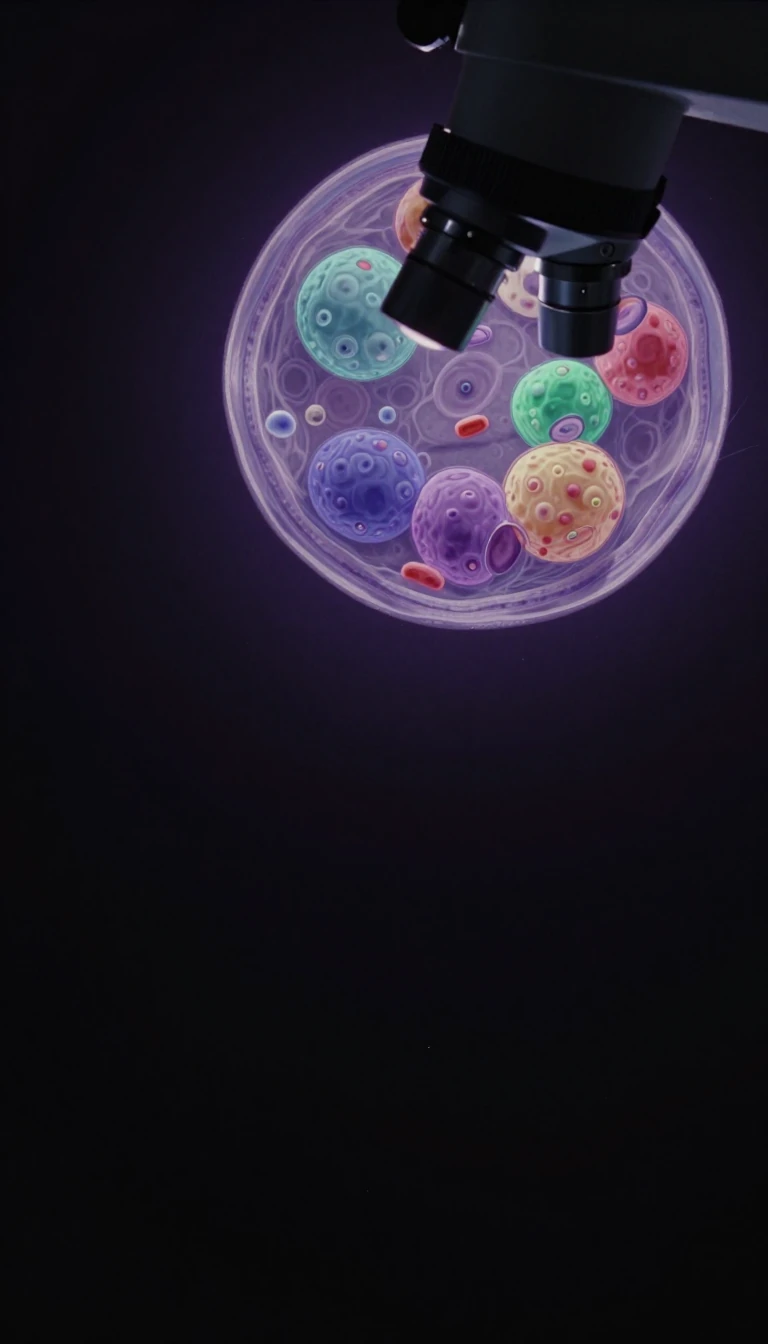 Bacteria possess an ancient, programmable immune system that scientists now use to edit DNA.Long before humans developed gene-editing tools, bacteria were already using a sophisticated defense mechanism to survive viral attacks. By capturing fragments of invading phage D…
 How much is a billion? From ancient empires to the age of the universeA billion is a number so vast that our intuition often fails to grasp its scale. Whether measuring time in gigaseconds or physical mass in Boeing 747s, this figure marks the thres…
 How small can we go before physics stops making sense?The universe operates on scales so minute they defy human intuition. From the Planck length, where physical reality as we know it dissolves, to the subatomic dance of quarks and n…
 From ancient Greek numerals to modern physics, why is lambda everywhere?The eleventh letter of the Greek alphabet, lambda, is far more than a linguistic relic. It serves as a universal shorthand for everything from the accelerating expansion of the un…
 Why your feet are technically younger than your head due to gravityTime does not tick at a constant rate across the universe. Because of gravity, clocks closer to a massive object run slower than those further away. This phenomenon, predicted by …
 Why Greenwich Mean Time is not the exact moment the sun hits the meridianGreenwich Mean Time is a statistical average, not a precise solar measurement. Because Earth orbits in an ellipse and tilts on its axis, the sun rarely reaches its zenith at exact…
 Why the shortest path between two points is rarely a straight lineOn a flat sheet of paper, a straight line is the quickest route. But on the curved surface of our planet or the warped fabric of spacetime, the shortest path takes a different for…
 Why contour lines are the secret language of hills, valleys, and weather patternsContour lines do more than map mountains; they are a universal tool for visualizing invisible data. By connecting points of equal value—whether elevation, pressure, or temperature…
 How ancient scholars calculated the size of our planet using only shadows and mathLong before satellites, Eratosthenes determined the Earth's circumference with remarkable precision using nothing but a gnomon, a well, and geometry. His work, alongside later eff…
- Why Earth does not have a single, precise radius for scientists to measureEarth is not a perfect sphere, making the concept of a single radius a useful fiction. Because our planet bulges at the equator and flattens at the poles, its radius varies depend…
- Why Earth's closest approach to the Sun actually happens during the Northern Hemisphere winterEarth travels around the Sun in an elliptical path, yet our seasons are not dictated by this distance. While we are physically closer to the Sun in January, the axial tilt of our …
 How scientists finally pinned down the age of our planet to 4.54 billion yearsFor centuries, naturalists guessed Earth's age using cooling rates and salt accumulation, leading to wildly inaccurate estimates. It was only after the discovery of radioactivity …
 How a simple mathematical rule creates an infinitely complex fractal landscapeThe Mandelbrot set is a two-dimensional shape defined by a basic iterative formula. Despite its simplicity, it generates a boundary of infinite complexity. By testing which number…
 What exactly is the close-mid front unrounded vowel and how do we produce it?The close-mid front unrounded vowel is a specific sound found in various spoken languages across the globe. Represented by the symbol e in the International Phonetic Alphabet, thi…
 Why do travellers across the globe report chasing mysterious, dancing lights in the dark?Known as the will-o'-the-wisp, this atmospheric ghost light has haunted human imagination for centuries. From Irish bogs to Australian outback plains, these flickering flames are …
 Lev Landau was the Soviet polymath who ranked his peers on a genius scale.Lev Landau was a towering figure in twentieth-century physics, known for his vast intellectual range and his rigorous, often brutal, standards for scientific talent. From superflu…
 Is the Loch Ness Monster a prehistoric relic or a century-old media hoax?For decades, the legend of Nessie has captivated the public, fueled by grainy photographs and mysterious sonar readings. Yet, scientific scrutiny consistently points toward a more…
 Why science remains skeptical of the creatures lurking in our folklore and rumorsCryptids are beings whose existence lacks scientific proof, yet they persist in the public imagination. While biologists discover new species using rigorous methods, cryptozoology…
 The Axolotl: A Mexican Salamander With The Real-Life Ability To Regrow Entire LimbsThe axolotl is a peculiar salamander that remains in its juvenile form for life, yet possesses the extraordinary power to regenerate lost limbs flawlessly and without scarring. Sc…
 Why the solid Earth actually behaves more like a giant, shifting bowl of jellyWe often view the Earth as a static, solid rock, but James Jackson’s 1995 lectures reveal a planet in constant, vigorous motion. Beneath our feet, the Earth is effectively a fluid…
- Why your favorite spreadsheet software might be silently sabotaging your scientific researchMatt Parker explores how common spreadsheet errors can compromise scientific integrity. By examining real-world cases like the Enron data and gene name misinterpretations, this vi…
 Why does light behave in such strange and unexpected ways in our world?This video explores the peculiar nature of light. It examines why light often appears weird and investigates the underlying mechanics that govern how we perceive illumination in o…
 How do reusable handwarmers generate heat by freezing?Reusable handwarmers seem to defy logic by releasing heat as they freeze. This video explores the underlying mechanism of these devices, explaining the science behind how they tra…
 What is the mysterious, shifting substance inside a classic lava lamp?This video examines the chemical composition of the iconic lava lamp. It explains the science behind the mesmerizing movement of the internal goop, while emphasizing the importanc…
 Is life built on the strange, subatomic rules of quantum mechanics?For decades, biologists ignored the subatomic world, assuming quantum mechanics was irrelevant to living systems. Now, evidence suggests life is far more complex. From enzymes acc…
 Why treating data as a continuous stream reveals patterns hidden from standard calculatorsWe often treat data as isolated numbers, ignoring the complex, unfolding reality they represent. Terry Lyons argues that by viewing information as multimodal streams—much like the…
 Why the metric system replaced the chaotic mess of using human body partsBefore the metric system, measurement was a confusing patchwork of body-based units. The French revolutionized this by creating a consistent standard based on the meter. By anchor…
- Why potential energy is exclusively linked to the behavior of conservative forces in physicsIn physics, potential energy is not a universal property of every force. It is strictly reserved for conservative forces, where the work performed depends solely on the starting a…
 Why your brain intentionally lies to you about the physical reality of the worldOur senses act as information processors, but they are not always accurate. When our brains decode visual signals incorrectly, we experience illusions—perceptions that deviate fro…
 Does an infinite pile of one-dollar bills equal an infinite pile of twenties?This video explores the counterintuitive nature of infinity in mathematics. By examining how infinite sets behave, it challenges our standard assumptions about value and quantity,…
- A fresh mathematical perspective on the fundamental properties of trianglesMathematician Matt Parker explores new equations and classifications related to triangles. This video examines the geometry of shapes, inviting viewers to engage with the specific…
- A mathematical investigation into the mechanics of United Kingdom tax calculationsMathematician Matt Parker explores a potential loophole within the United Kingdom tax system. This video documents his process of identifying and reporting the issue, offering a l…
 Can a home-made telescope with one-millionth of a megapixel reveal meaningful science?Matt Parker explores the capabilities of a custom-built, low-resolution telescope. This video documents the practical challenges and surprising results of using a device with a 0.…
 Can a bicycle with square wheels actually provide a smooth ride?Matt Parker explores the counterintuitive geometry of square-wheeled bicycles. By examining specific track designs, he demonstrates how these unconventional vehicles can travel ac…
- Exploring the geometric possibilities of connecting regular pentagons together in spaceMatt Parker investigates the mathematical constraints and configurations involved in joining regular pentagons. This video examines the spatial arrangements possible when these sp…
 Can a pencil really point in seven different directions at the same time?Mathematician Matt Parker explores the geometry of custom pencils. This video investigates the practical reality of a seven-direction pencil model and the specific quantities requ…
- Can mathematics help determine if a species is truly new to science?Matt Parker explores the use of rarefaction curves to analyze biodiversity data collected during an expedition to the Peruvian rainforest. This video examines the mathematical too…
 Why a mathematical error in Germany is destined to repeat for over a millennium.Matt Parker and Ayliean MacDonald explore a recurring mathematical mistake tied to a specific location in Germany. This video examines the nature of this persistent error and why …
- Is there a hidden geometry behind the shapes we see in our world?Matt Parker explores the mathematical properties of polyhedra and the concept of a polyhedron plane. This video examines the structural rules governing these shapes and why they o…
 Why election data visualization often fails to communicate information clearly to the public.Matt Parker, a stand-up mathematician, examines the common pitfalls in how UK election results are presented. This video explores the mathematical and design challenges inherent i…
- Why are cells so small and where did they actually come from?Explore the fundamental unit of life by examining the differences between prokaryotic and eukaryotic cells. This video tour explains why cells remain small and details the surpris…
 Are humans actually the most dominant species on our planet by total mass?We investigate the concept of biomass to weigh all living things on Earth. By comparing the total mass of different organisms, we can determine which species truly dominate the pl…
 How do geckos defy gravity to walk on glass without using sticky glue?Geckos possess the remarkable ability to scale walls and hang from glass surfaces as if gravity does not apply to them. This video explores the nanotechnology behind their grip an…
 Are we living in the Anthropocene, a new geologic age defined by human impact?Geologists suggest humanity has fundamentally altered Earth, marking the start of a new era called the Anthropocene. By examining our influence on climate, health, and economics, …
 How a simple nylon string cuts through tough vegetation at high speedsThis video examines the mechanics of a string trimmer using high-speed footage captured at 62,000 frames per second. It reveals the physics behind how a rapidly spinning nylon lin…
 How a simple geometric inquiry unlocks the foundational mechanics of calculusThis video explores the conceptual origins of calculus by demonstrating how basic geometric problems naturally evolve into the study of integrals and derivatives. It serves as an …
- How does light behave when it travels through water and hits the surface?This video explores the physics of total internal reflection by examining how lasers interact with water. It provides a practical look at the principles that allow fiber optic cab…
 Can you predict the path of water through this complex mechanical model?This video explores the behavior of water as it flows through a specialized interactive model. By observing the physical movement of the liquid, viewers can examine the mechanics …
- How snatch blocks use simple physics to multiply your pulling powerThis video explores the mechanics of snatch blocks and how they function as pulleys to make heavy lifting easier. It is worth watching to understand the practical application of m…
- Can a mechanical device hit a baseball further than any human athlete?This video investigates the physics of the longest possible home run by utilizing a custom-built mechanical device known as the Mad Batter. It explores the limits of baseball perf…
 How Hairy Bittercress Uses Mechanical Innovation to Launch Its Seeds at High SpeedThis video examines the explosive seed dispersal mechanism of Cardamine hirsuta, also known as hairy bittercress. By utilizing high-speed footage captured at 28,546 frames per sec…