 Intellect Plus
Space
9,120 cards. Each one is a 40-second story with a five-minute read behind it. Page 132 of 152.
Subtopics: Apollo · Asteroids · Astronauts · Astronomical objects · Astronomical technology · Astronomy · Astronomy and geodesy · Astronomy basics · Big bang · Black holes · Celestial mechanics · Celestial sphere · Comets · Constellations · Cosmology · Dark energy · Dark matter · Deep time · Exoplanets · Exploration · Future Frontier · Galactic and extragalactic astronomy · Galaxies · Gravity · Impacts · Interstellar · Jupiter · Light · Mars · Mars exploration · Meteorites & asteroids · Moon · Moon exploration · Moons · Navigation and timekeeping · Nebulae · Observational astronomy · Observatories · Physical cosmology · Physics · Planetary science · Planets · Quantum · Relativity · Rockets & launch vehicles · Satellites · Saturn · Seti · Space · Space agencies · Space probes · Space stations · Space telescopes · Spacecraft · Spaceflight · Stars · Stellar astronomy · Sun & solar physics · Supernovae · Telescopes · Volcanoes · Weather
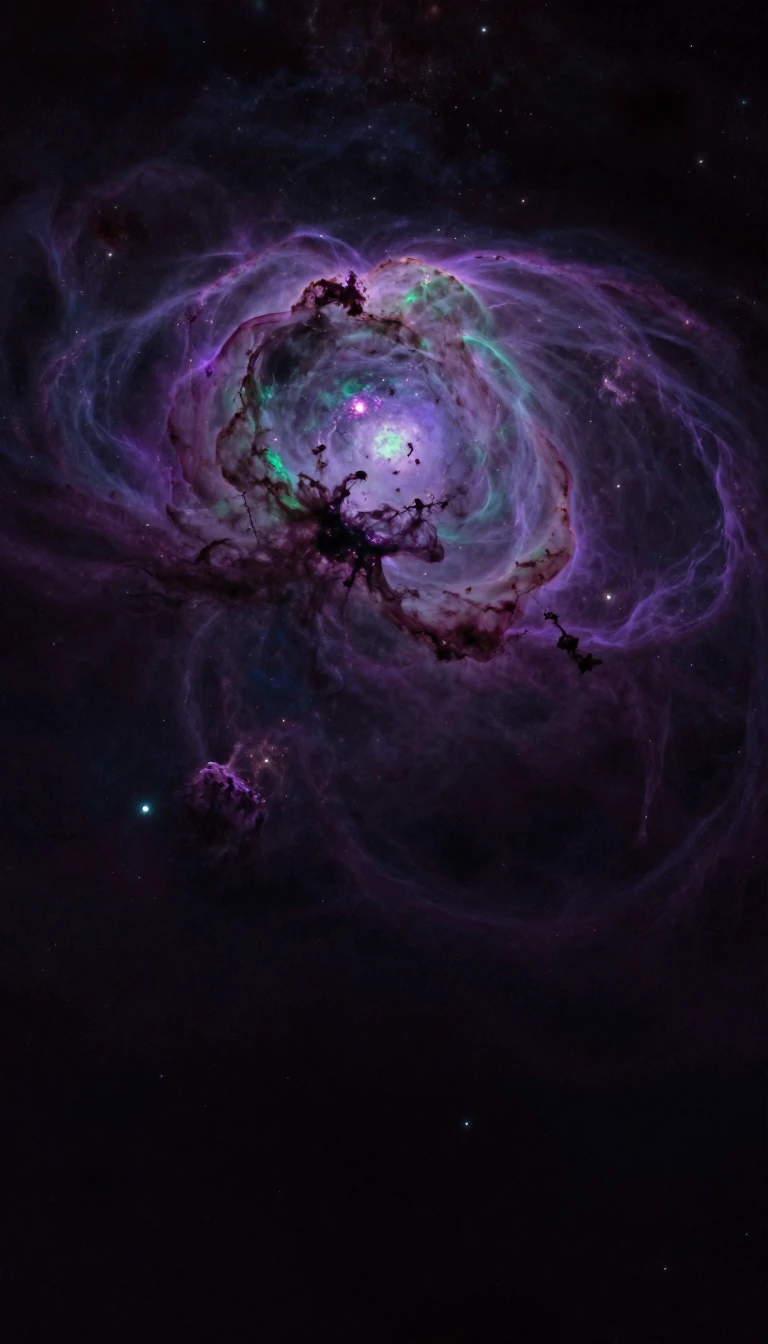 Why the term gas giant is a scientific misnomer for these massive worldsDespite their name, gas giants are not actually made of gas. Under the immense pressure of their interiors, matter exists in a state where the distinction between liquid and gas v…
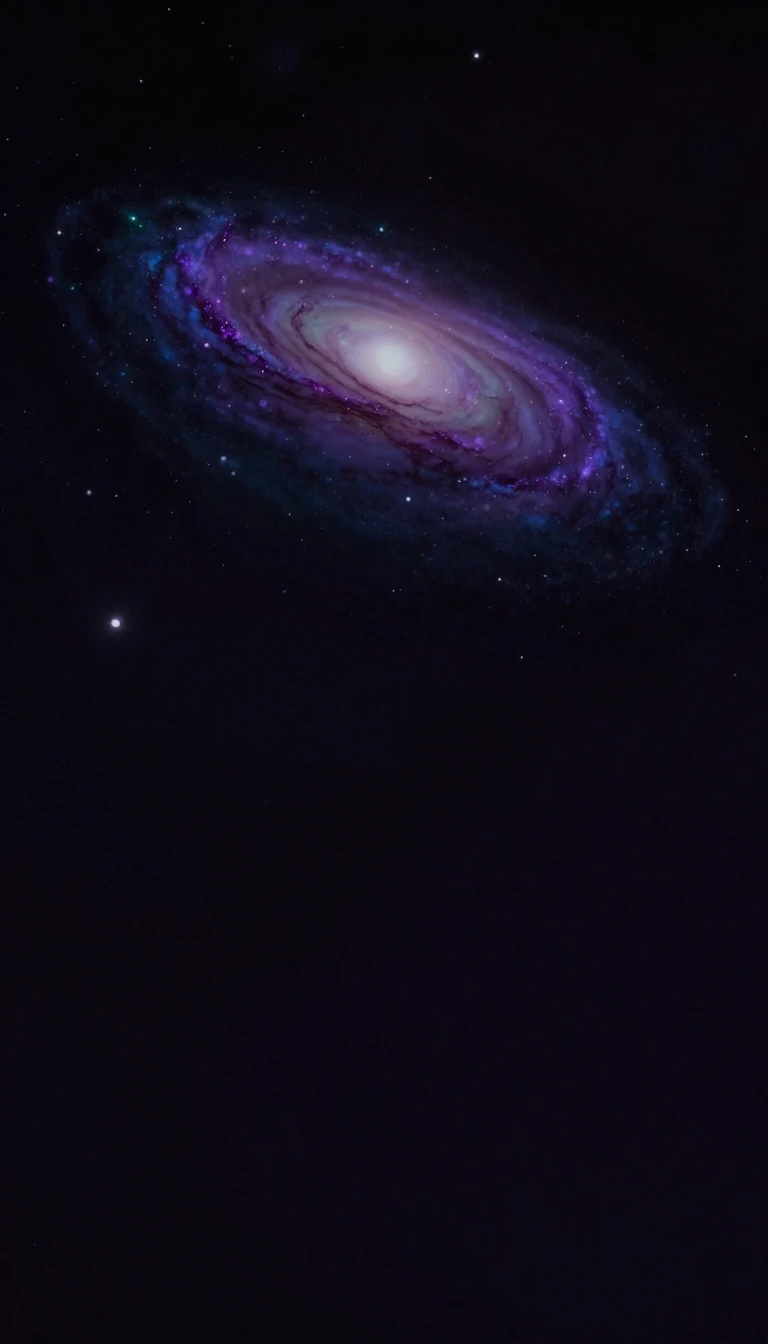 Our home in the cosmos is not a permanent structure but a fleeting cosmic basin.Laniakea, the massive structure containing our Milky Way, was defined in 2014 by mapping the flow of galaxies. While it spans 400 million light-years and holds 100,000 galaxies, a…
 Every object has a Schwarzschild radius, the point where it becomes a black hole.If you compressed the Earth into a sphere just nine millimeters wide, it would become a black hole. This threshold is the Schwarzschild radius, a mathematical boundary defined by …
 Artemis III will test lunar landers in Earth orbit instead of landing on the MoonOriginally planned as the first crewed lunar landing since 1972, Artemis III has been repurposed as a complex risk-reduction mission. Instead of heading to the Moon, the crew will…
 Jupiter’s satellite system is a chaotic, crowded graveyard of captured asteroids and ancient debris.Jupiter hosts 115 known moons, but this is merely the tip of the iceberg. While the four massive Galilean moons dominate the system, hundreds of smaller, irregular satellites orbi…
 How a near-bankrupt rocket startup became the world's most dominant space transportation companyFounded in 2002 to colonize Mars, SpaceX survived near-total financial collapse in 2008 to revolutionize orbital flight. By mastering reusable rockets and vertical integration, th…
- Why the most powerful space telescope ever built must stay frozen in deep spaceThe James Webb Space Telescope peers into the dawn of time, capturing light from the first stars. To function, this massive infrared observatory must remain colder than 50 Kelvin.…
 Four astronauts prepare for their return journey from the International Space Station to EarthThis video captures the final moments of the Crew-11 mission as the team secures their spacecraft for departure. Witness the critical steps taken by international crew members bef…
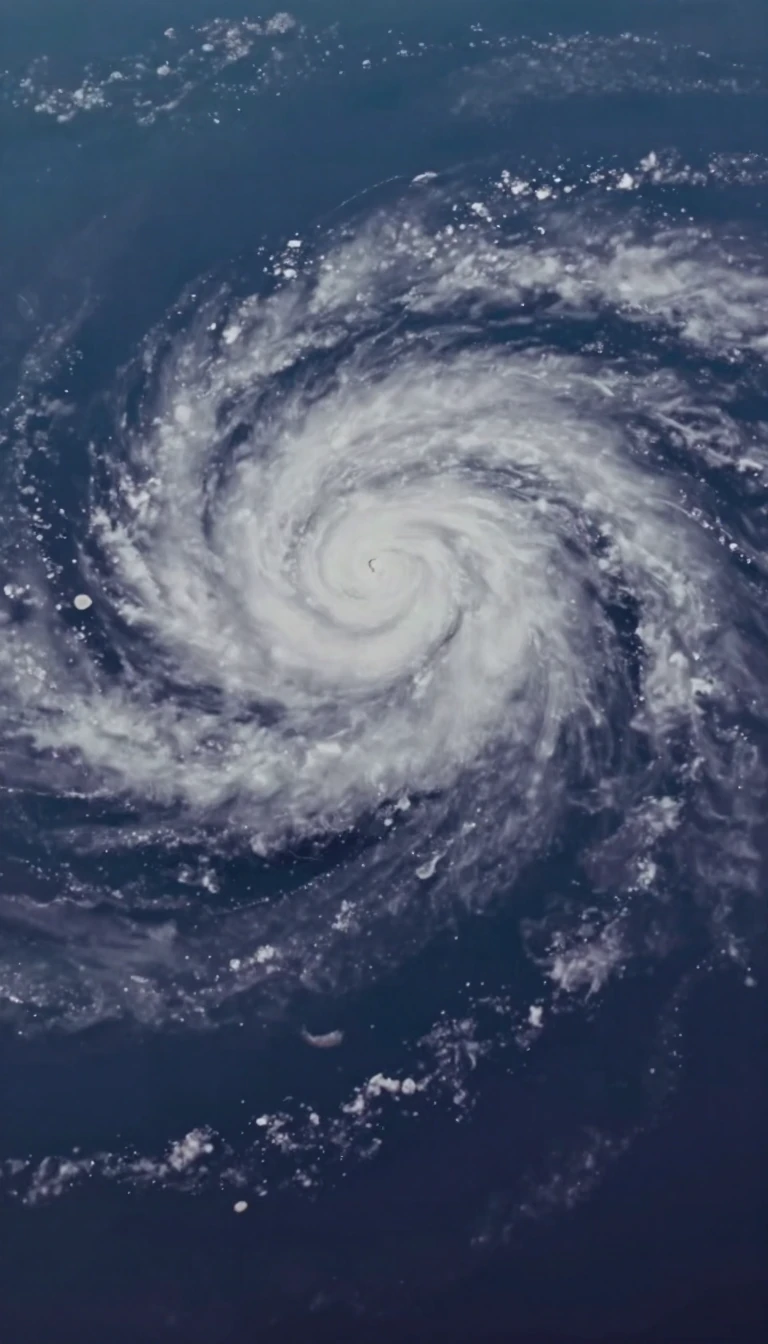 How a Florida reed bed became the launchpad for humanity's journey into the stars.Cape Canaveral is more than a geographic point in Florida. Once a Spanish-named marshland, it evolved into the epicenter of the Cold War space race. From its early days as a shipw…
 Leadership rotates on the International Space Station as a crew prepares for early departureThe International Space Station undergoes a formal change of command as Expedition 73 concludes and Expedition 74 begins. This transition occurs amidst operational shifts, includi…
- How a sudden shadow proved Einstein was right about the universeA total solar eclipse is more than a visual spectacle; it is a natural laboratory. By momentarily blocking the Sun's blinding light, these rare alignments allow astronomers to obs…
- From Antarctic winters to the frontiers of space explorationDiscover the journey of Meganne Christian, an ESA astronaut reserve trainee who transitioned from conducting atmospheric research in Antarctica to preparing for life in orbit.
 The world from the Cupola: a 20-day orbital odysseyExperience Earth and the Moon through the lens of astronaut Sławosz Uznański-Wiśniewski. This footage captures the perspective of the Ignis mission, offering a rare look at our pl…
 How do you feed a human when crumbs can destroy expensive space equipment?Feeding astronauts in zero gravity is a complex engineering challenge. This video explores the history of space nutrition, from early freeze-dried rations to the sophisticated sci…
 A rare, up-close look at the Vulcan rocket on the launch pad.This video provides an exclusive tour of the Vulcan rocket while it sits on the launch pad. It offers a unique perspective on the hardware behind modern space exploration, making …
- A rare, intimate look at the reality of living and working in space.This video offers a unique perspective on life aboard a spacecraft. It provides an immersive experience into the environment and daily operations of space travel, making it essent…
 SpaceX goes public and China tests a new high-energy rocket fuelScott Manley reviews recent aerospace developments, including a record-breaking public offering and advancements in propulsion technology. This update covers the latest launches, …
- Why simple tape cannot fix the persistent air leaks on the International Space StationPersistent air leaks in Russian modules have plagued the International Space Station for years. Scott Manley explains why these structural issues are complex, detailing why standa…
 Could antimatter propulsion be the key to unlocking interstellar travel?Scott Manley explores the theoretical potential of antimatter rockets. While often depicted in science fiction, the reality of harnessing matter-energy conversion for propulsion p…
 Why the universe warps when you approach the speed of lightScott Manley visualizes the strange optical effects of relativistic aberration. By simulating travel at 99 percent of light speed, he demonstrates how the cosmos appears to distor…
 Why did a Chinese Long March 7A rocket buckle during its recent ascent?A Long March 7A rocket experienced a catastrophic structural failure shortly after liftoff from Wenchang. By analyzing footage from social media, experts have identified the speci…
 We have officially run out of space for tracking all our orbiting satellites.The rapid increase in satellite launches has overwhelmed legacy tracking systems. Scott Manley explains how the industry hit a critical technical limit, forcing a rethink of how w…
 Why did we spend decades intentionally crashing rockets into the lunar surface?While a recent rocket stage impact on the moon made headlines, it was far from the first time humanity has collided with our satellite. This video examines the history of lunar im…
- Why did the latest Starship flight survive its ocean touchdown without exploding?Scott Manley examines the unexpected success of Starship Flight 13. While previous attempts faced engine failures and structural limitations, this mission defied expectations by r…
- China achieves a milestone in rocket recovery with a novel capture systemChina has successfully demonstrated a new rocket recovery method using the Long March 10B. This development marks a significant step in the nation's efforts to build reusable laun…
- China's rocket industry is exploding with a massive surge in private investment.Scott Manley examines the rapid expansion of China's rocket population over the last six years. This video explores how private capital and wealthy investors are driving a new wav…
- How NASA protects spacecraft from the extreme heat of atmospheric reentryScott Manley tours the Thermal Protection Materials labs at NASA Ames Research Center. This facility is the birthplace of the heat shielding technology used on iconic spacecraft, …
 Can you satisfy Cold War superiors by mastering the physics of nuclear weapon design?Nuclear Design Bureau is an upcoming game that blends the puzzle-solving mechanics of Zachtronics with realistic nuclear physics. Set during the Cold War, you play as a physicist …
- Did a Ukrainian missile strike hit the factory that builds the Soyuz rocket?Scott Manley examines reports that Ukraine launched cruise missiles at the Progress factory in Samara. This facility is responsible for manufacturing the Soyuz rocket, and the vid…
- What happens to a Starship after it lands in the Indian Ocean?Scott Manley tracks the recovery of Starship SN40, which was recently towed to Christmas Island. This video explores the complex logistics of transporting massive aerospace hardwa…
 Can Stoke Space justify its billion-dollar bet on a fully reusable rocket?Stoke Space has secured a massive investment round before launching its first vehicle. Now, the company has unveiled its Block 2 design, which promises to increase orbital mass ca…
- Why water might be the most practical fuel for exploring our solar systemWhile rarely considered a traditional propellant, water is a central component in serious research regarding space exploration and orbital refueling. This video examines why water…
 SpaceX's Starship prepares for a massive nine-hour orbital mission later this month.Scott Manley reviews the latest developments in spaceflight, from new orbital achievements in China and Europe to the evolving legal battles over Mars missions and the future of S…
- Some cosmic events leave permanent, indelible marks on the fabric of spacetime itself.While standard gravitational waves ripple through the universe and vanish, certain gravitational tsunamis leave behind a lasting memory. This video explores the physics of these p…
- Does the fundamental limit of the Planck length invalidate Einstein's famous mass-energy equivalence?This episode of PBS Space Time investigates whether the existence of a minimum physical scale, the Planck length, creates a conflict with Einstein's E=mc^2. It examines the theore…
- Did the James Webb Space Telescope just break a century-old law of physics?A newly discovered quasar challenges established theoretical limits on energy density in space. This finding might solve the mystery of how massive black holes appeared so early i…
- Could a simple experiment involving Mars finally reveal the nature of dark matter?For decades, dark matter has remained undetected by particle colliders and underground sensors. This video explores a potential new approach to solving the mystery, using only a r…
 Why fusion energy is finally moving from a fifty-year dream to realityFusion energy has long been dismissed as perpetually five decades away. However, recent massive investments from tech leaders suggest the landscape has shifted. This video explore…
 How can we predict asteroid impacts in a solar system defined by chaos?Predicting asteroid collisions with Earth seems impossible given the chaotic nature of our solar system. This video examines the science behind how we identify and assess the risk…
- Is the accelerating expansion of the universe driven by dark energy or a misunderstanding?This video examines the accelerating expansion of the universe, attributed to dark energy. It explores the theoretical fate of a cosmos where matter and energy disperse across inf…
 Did the universe actually have a beginning, or is it caught in an endless cycle?The Big Bang is often framed as the absolute start of everything, but some theories suggest it might be just one event in a recurring sequence. This video explores the possibility…
- Could the fundamental coding system of your DNA have originated in deep space?While many are aware that humans share a small percentage of DNA with Neanderthals, the origins of our genetic code may be far more ancient. This video explores the possibility th…
- Why did matter survive the Big Bang's total annihilation event?A fraction of a second after the Big Bang, the universe should have been left entirely devoid of matter. This video examines a recent discovery from the Large Hadron Collider that…
- Could the birth of the eukaryote cell be the key to the Fermi Paradox?The Fermi Paradox asks why we have not encountered extraterrestrial life. This video explores the possibility that the emergence of complex life is not an inevitability, but a rar…
- Could a 1987 physics paper provide clues to the existence of a multiverse?This video examines Steven Weinberg's 1987 work on the cosmological constant. While often overshadowed by his Nobel-winning contributions to particle physics, this research offers…
- The critical orbital facility monitoring Earth's biosphere that we are at risk of losing.Earth observation is a primary reason for space exploration. This video examines an essential satellite that tracks the planet's biosphere with remarkable precision, detailing its…
 Could discovering life on Mars actually signal the end of humanity?As researchers edge closer to verifying extraterrestrial life, we must consider the broader implications. This episode examines what finding life beyond Earth might reveal about t…
- Is the multiverse a legitimate scientific theory or just a convenient dead end?The multiverse emerges from various physics theories as a potential solution to complex problems. This video examines whether the concept is a valid scientific possibility or an u…
- Could antimatter propulsion move from the realm of science fiction to reality?Antimatter engines are often dismissed as pure fantasy, yet current research suggests a viable version could potentially launch within our lifetime. This exploration examines the …
- Is our solar system a cosmic anomaly or just one of many similar worlds?Astronomers are hunting for Earth-like planets to understand if our home is unique. This video explores the search for exoplanets orbiting Sun-type stars and why finding worlds wi…
- Is the mysterious force driving cosmic expansion actually changing over time?Since 1929, we have known the universe is expanding, and since 1998, we have known that this expansion is accelerating. This video examines the potential flaws in our current cosm…
- Could the Higgs Boson Be Our Gateway to a Hidden Dark Sector?The Large Hadron Collider was built to find the Higgs boson, but it might be doing something far more profound. This video explores the theory that this particle acts as a portal …
- Could Earth's most resilient creature survive the harsh, toxic environment of the Martian surface?The tardigrade is famous for surviving extreme conditions, from space vacuums to intense radiation. This video explores whether these extremophiles could withstand the hostile Mar…
- Does General Relativity allow for time travel without the need for exotic physics?Kurt Gödel uncovered a solution to Einstein's field equations that challenges our understanding of causality. By demonstrating that spacetime can loop back on itself, this discove…
- Are these galaxies older than the universe, or is our understanding of formation wrong?The James Webb Space Telescope has identified galaxies that appear unexpectedly ancient. This video explores the tension between these observations and current cosmological models…
 Could an invisible event horizon be forming around you right now?Standard physics suggests black holes create event horizons, but new perspectives suggest these boundaries might form independently of traditional black holes. This video explores…
- Could the heart of a black hole be a frozen Big Bang?Physicists have long struggled with the paradoxes of black holes and the theoretical nightmare of infinite density at their centers. This video explores the Planck star hypothesis…
- Are we searching for alien signals using an outdated cosmic playbook?For over six decades, humanity has scanned the stars for radio signals, yet we have found nothing but natural phenomena. This video examines why our traditional SETI methods might…
- Could primordial black holes have formed in the earliest moments after the Big Bang?LIGO may have detected a black hole that defies conventional stellar origin theories. This discovery suggests the existence of primordial black holes, potentially marking a shift …
 Did the James Webb Space Telescope just find a star powered by black holes?The existence of massive black holes shortly after the Big Bang defies current models. This video examines whether the James Webb Space Telescope has identified a new class of cel…