 Intellect Plus
Space
9,120 cards. Each one is a 40-second story with a five-minute read behind it. Page 131 of 152.
Subtopics: Apollo · Asteroids · Astronauts · Astronomical objects · Astronomical technology · Astronomy · Astronomy and geodesy · Astronomy basics · Big bang · Black holes · Celestial mechanics · Celestial sphere · Comets · Constellations · Cosmology · Dark energy · Dark matter · Deep time · Exoplanets · Exploration · Future Frontier · Galactic and extragalactic astronomy · Galaxies · Gravity · Impacts · Interstellar · Jupiter · Light · Mars · Mars exploration · Meteorites & asteroids · Moon · Moon exploration · Moons · Navigation and timekeeping · Nebulae · Observational astronomy · Observatories · Physical cosmology · Physics · Planetary science · Planets · Quantum · Relativity · Rockets & launch vehicles · Satellites · Saturn · Seti · Space · Space agencies · Space probes · Space stations · Space telescopes · Spacecraft · Spaceflight · Stars · Stellar astronomy · Sun & solar physics · Supernovae · Telescopes · Volcanoes · Weather
 Meet the Japanese engineer who turned a childhood dream into space flight realityAkihiko Hoshide is a veteran astronaut who has traveled aboard both the Space Shuttle and Soyuz. This profile covers his background and his role as a mission specialist on the Spa…
 From West Point to orbit: Meet veteran astronaut Shane KimbroughShane Kimbrough is a seasoned NASA astronaut who has piloted both the Space Shuttle and Soyuz spacecraft. As the commander of the Crew-2 mission, he brings extensive experience to…
- How NASA scientists bridge the gap between satellite data and our daily livesNASA Science Live goes behind the scenes to explore everything from the depths of outer space to the climate of our home planet. By connecting complex satellite data with real-wor…
 NASA and international partners launch the historic second SpaceX Crew Dragon rotation missionAt 5:49 a.m. EDT on April 23, 2021, the Crew Dragon Endeavour lifted off from Kennedy Space Center. Carrying four astronauts, this mission marks a significant milestone as the fir…
 Four astronauts reflect on a six-month mission aboard the International Space StationBefore returning to Earth, four crew members from the SpaceX Crew-1 mission discuss their experiences living and working in orbit. This session offers a firsthand look at the real…
- A decade after the final shuttle mission, what legacy did Atlantis leave behind?This video marks the ten-year anniversary of the final space shuttle flight, STS-135. It recounts the mission's conclusion at Kennedy Space Center and frames the retirement of the…
- How Apollo 15 revolutionized lunar exploration with the first moon-bound vehicleThe Apollo 15 mission marked a turning point in lunar exploration by introducing the Lunar Roving Vehicle. This video highlights the mission's record-breaking achievements and the…
 John Glenn: From the First American to Orbit Earth to Space Shuttle PioneerNASA celebrates the centenary of John Glenn, a legendary astronaut and politician. This video highlights his path from the Mercury program to his record-breaking return to space a…
 How to launch your career at NASA through the agency's internship programNASA internships offer more than just a resume boost; they provide a gateway into a collaborative network of diverse professionals. From engineering Mars rovers to analyzing satel…
 How NASA assembles the most powerful rocket ever builtWitness the transformation of the Space Launch System (SLS) from raw manufacturing to a massive launch vehicle. This footage tracks the complex stacking operations required to pre…
 NASA renames its premier space simulation site to honor Neil ArmstrongNASA has officially renamed its Sandusky, Ohio, testing grounds the Neil A. Armstrong Test Facility. This site houses some of the most powerful space simulation technology on Eart…
 NASA prepares new technology for future landings on distant, unexplored worldsThis update covers NASA's latest efforts, including a new Earth-observing mission, upcoming space station research, and testing materials designed to improve how future spacecraft…
 Why return to the Moon? To build a foundation for reaching Mars and beyond.NASA's Artemis missions aim to establish a lunar community, fostering a new economy and inspiring future explorers. This video explains why the Moon is the essential next step in …
- Seven Black Astronauts Share Their Journeys Toward the Stars in New NASA DocumentaryThis documentary brings together seven trailblazing Black astronauts to discuss their careers, motivations, and the significance of representation in space exploration. It feature…
- NASA highlights a historic commercial crew test mission and lunar exploration progressThis update covers a landmark test flight for a commercial crew spacecraft, honors the leadership behind the James Webb Space Telescope, and details a small spacecraft's upcoming …
 How NASA partners with private industry to fuel a growing lunar-focused space economyNASA leadership discusses the strategic integration of the Artemis Program with commercial aerospace sectors. This panel from the 2022 Space Symposium highlights how government ag…
- NASA prepares for upcoming private sector astronaut transport missions to the orbital laboratory.This update details the latest preparations for private crewed flights to the International Space Station. It also highlights NASA's broader goals for long-range space travel and …
 NASA prepares to unveil the first full-color images from the Webb space telescope.This update covers the anticipation surrounding the James Webb Space Telescope's inaugural full-color imagery, alongside progress on the Artemis I mission and a status report on a…
- Advancing space exploration through station research, Mars missions, and powerful rocket testingThis update highlights critical progress in NASA's ongoing space initiatives. From the practical benefits of research conducted on the International Space Station to the technical…
 Why the Moon turns blood red during a total lunar eclipseDiscover the mechanics behind a total lunar eclipse and why the Moon glows red. This NASA presentation explains the celestial alignment required for this event and provides a look…
 Four astronauts return to Earth after six months of research on the space station.The Crew-3 mission concludes as four astronauts return home from the International Space Station. This video highlights their contributions to hundreds of scientific experiments a…
 Mapping out the future of European space explorationWatch as the leadership of the European Space Agency addresses the global press during the International Astronautical Congress. This live session provides a direct look at the st…
 The final frontier of energy is not a grid, but a choice.While the global transition to green energy dominates headlines, 700 million people still live in literal darkness. Solving this isn't just a matter of infrastructure; it is a mat…
- How a solar eclipse happensWhen the Moon passes between the Sun and Earth, its shadow blocks the Sun's light on part of Earth.
 How the Sun makes its lightFusion in the Sun's core turns hydrogen into helium; the energy escapes as sunlight.
- Milestones of the Space AgeFrom the first satellite in 1957 to a space station begun in 1998.
- What causes the seasonsEarth's tilted axis, not its distance from the Sun, gives each hemisphere summer and winter.
- Why the Moon has phasesThe Sun always lights half the Moon; as it orbits Earth we see more or less of that lit half.
- What keeps a satellite in orbitA satellite keeps falling towards its planet while moving sideways fast enough to keep missing it.
- The cosmic speed limit that prevents stars from collapsing foreverWhy don't all stars collapse into black holes? The answer lies in a quantum-mechanical standoff between gravity and the Pauli exclusion principle. This threshold, known as the Cha…
 The moon so large it pulls its planet off-centerCharon is not your typical moon. With a mass roughly 12% that of Pluto, it is so substantial that the two bodies orbit a center of gravity located outside Pluto itself. This uniqu…
- The heavy-duty telescope that could face an extinction-level eventLaunched in 1999, the Chandra X-ray Observatory has redefined our view of the violent universe. From black holes to supernova remnants, its high-resolution mirrors see what Earth …
- Sedna is a frozen fossil from the dawn of our solar systemDiscovered in 2003, the dwarf planet Sedna orbits the Sun in a path so extreme it takes 11,400 years to complete. This mysterious object, coated in reddish organic sludge, sits fa…
- A white hole is the theoretical opposite of a black hole, but does it exist?In general relativity, a white hole is a region of spacetime that nothing can enter, yet energy and matter can escape. While black holes are born from collapsing stars, white hole…
- The violent mechanics of stellar destructionExplore the cosmic processes that allow stars to collide and destroy one another in this deep dive into stellar dynamics.
 The engineer guiding the robotic arm of the Mars 2020 missionJoin NASA's Jet Propulsion Laboratory for a live look into the mission behind the spacecraft, featuring Diana Trujillo, the Mars 2020 Phase Lead for robotic arm science.
- The first steps toward aerial exploration on the Red PlanetWitness a mission update on NASA's Mars 2020 mission, featuring the progress of the Ingenuity helicopter's historic first flight attempt and the Perseverance rover's latest scient…
- The moment Earth disappears from the view of a lunar travelerOn the sixth day of Artemis I, the Orion spacecraft captured a haunting visual: our home world sinking behind the Moon's edge. This transition marked a critical turning point wher…
- A cosmic bubble sculpted by the fury of a massive starIn our own Milky Way, a massive star is actively carving out a glowing void. The Bubble Nebula is a striking example of how stellar winds and intense radiation can sculpt the inte…
- Why the Hubble Space Telescope is facing its own version of Y2KThe Hubble Space Telescope operates on a unique internal clock that resets every 17 years. This video explores the complexities of synchronizing Hubble's distinct timekeeping with…
 The heavy price of human spaceflight and the legacy of NASA's fallenEvery January, NASA pauses to honor the explorers who lost their lives in the pursuit of discovery. From Apollo 1 to the shuttle era, these tragedies fundamentally reshaped the en…
 The tiny star that marks a tainted victory or a missing lineFrom the ancient libraries of Alexandria to modern baseball record books, the asterisk has served as a silent witness to imperfection. It is more than just a footnote; it is a sop…
- Astronauts discuss the historic Boeing Starliner mission with NASA leadership and the White HouseFollowing their arrival at the International Space Station, NASA astronauts Butch Wilmore and Suni Williams share insights from their Boeing Starliner flight. This session highlig…
- How astronauts master the art of weightlessness before leaving EarthAstronauts must adapt to the physical demands of space before they ever leave the ground. This video follows three astronauts as they undergo parabolic flight training in Bordeaux…
- Can satellite technology solve the 2050 global food crisis?To feed a growing population, global agricultural output must rise by 60% within three decades. This video explores how the European Space Agency is leveraging advanced orbital im…
- From candidates to astronauts: ESA’s newest class earns their certificationWatch the moment six new astronauts officially transition into flight-ready professionals following a rigorous year of intensive training at the European Astronaut Centre.
 Europe restores independent access to space with Vega-C return to flightWatch the highlights from the December 2024 launch of the Vega-C rocket, which successfully deployed the Sentinel-1C satellite from French Guiana to enhance Earth observation.
- The community-driven gallery capturing the world's most advanced telescopesExplore a unique visual archive where professional astronomers and amateur enthusiasts share their perspectives on ESO facilities. This episode highlights how collective photograp…
- What do astronomers do when they aren't looking at the stars?Beyond the telescopes, the people at ESO lead diverse lives. This episode introduces six specialists working in Germany and Chile, exploring the intersection of their professional…
 Decoding the cosmic impact of asteroids and meteoritesJoin the American Museum of Natural History for a live exploration of our solar system's most impactful visitors, from the distinction between meteors and meteorites to the mechan…
 Sunita Williams: The Astronaut Who Redefined Endurance in Earth's OrbitFrom running marathons in microgravity to piloting the inaugural crewed flight of Boeing's Starliner, Sunita Williams has spent a career pushing the boundaries of human spacefligh…
 A white dwarf packs the mass of our Sun into the volume of Earth.Imagine a star so dense that a single ton of its material would fit inside a matchbox. These stellar remnants are not powered by nuclear fusion, but by the strange laws of quantum…
 How a former Antarctic researcher became the first woman to travel around the MoonChristina Koch’s path to the Moon was paved in the world’s most isolated corners. From wintering at the South Pole to setting records on the International Space Station, her caree…
- Apollo 17 was the final human mission to the Moon, driven by scientific ambition.As the last crewed mission beyond low Earth orbit until 2026, Apollo 17 transformed lunar exploration. By sending a professional geologist to the Taurus-Littrow valley, NASA shift…
 A massive new camera in Chile is filming the entire night sky every few days.The Vera C. Rubin Observatory is revolutionizing astronomy with a 3.2-gigapixel camera that captures the southern sky in a continuous ten-year time-lapse. By snapping images every…
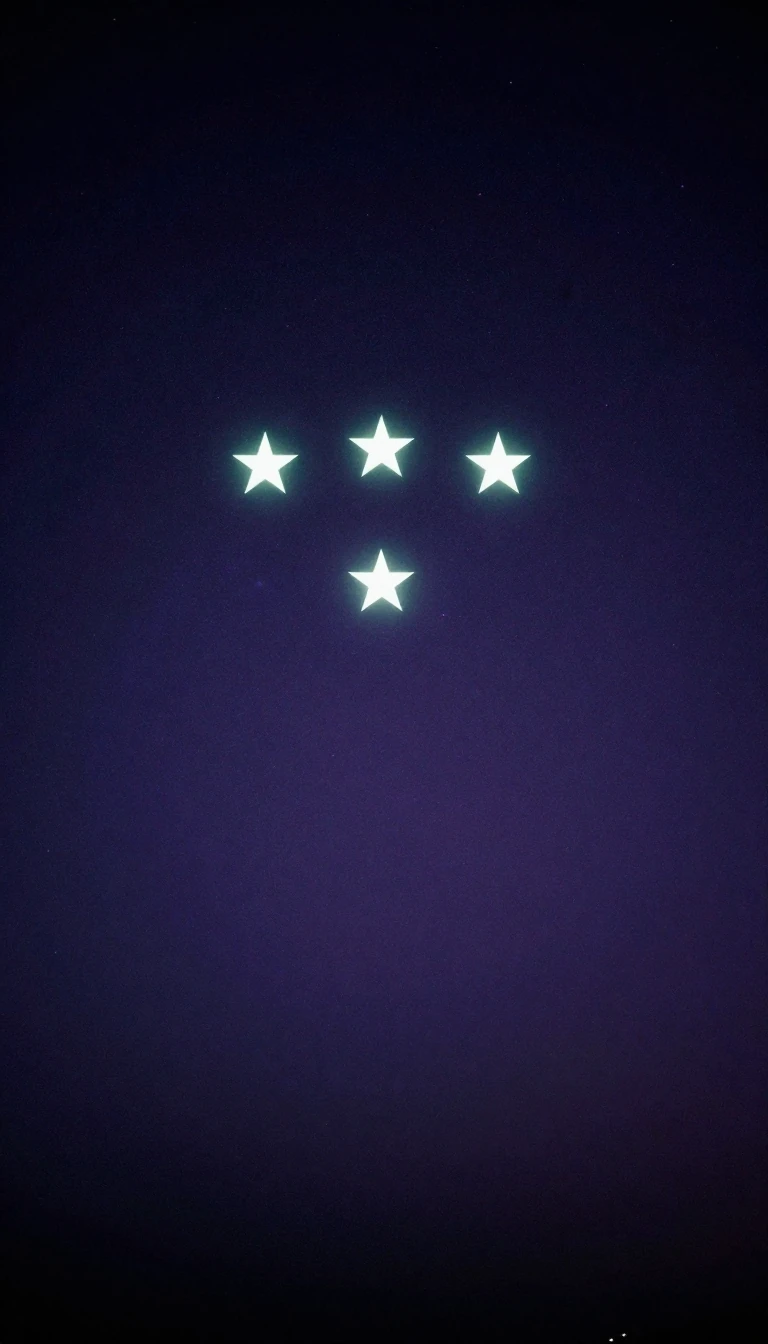 Seven stars, a thousand stories: why the Big Dipper is humanity's celestial compass.The Big Dipper is more than a ladle in the sky. Across cultures, this asterism has been a wagon, a bear, a funeral bier, and a hunter’s bow. While it serves as a vital navigationa…
- Voyager 2 is a lone traveler, still sending data from the edge of space.Launched in 1977, Voyager 2 remains our only visitor to the ice giants, Uranus and Neptune. Now drifting through the interstellar medium, this resilient probe continues to transmi…
 TON 618: The Colossal Quasar That Outshines Entire Galaxies With Its Massive Black HoleDeep in the cosmos lies TON 618, a hyperluminous quasar powered by one of the largest black holes ever discovered. This celestial engine is so brilliant it masks its own host gala…
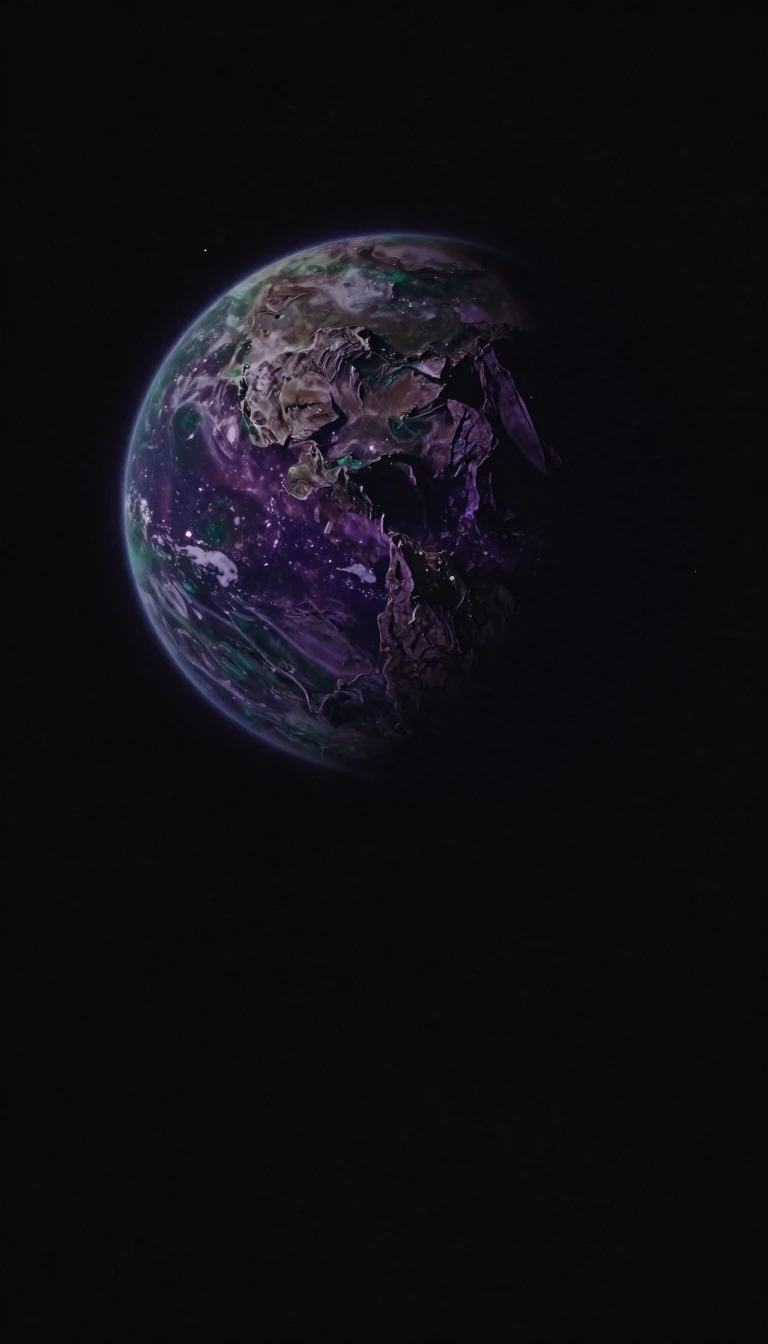 Why the mythical Planet X remains a persistent, disproven ghost in our solar systemThe Nibiru cataclysm is a persistent doomsday theory claiming a massive, hidden planet is on a collision course with Earth. Despite decades of viral warnings, scientific evidence …
 Saturn's iconic rings might be a fleeting cosmic accident rather than an ancient feature.For centuries, astronomers assumed Saturn's rings were as old as the planet itself. Today, data from the Cassini mission suggests a far more recent origin, potentially within the …