 Intellect Plus
Space
9,120 cards. Each one is a 40-second story with a five-minute read behind it. Page 110 of 152.
Subtopics: Apollo · Asteroids · Astronauts · Astronomical objects · Astronomical technology · Astronomy · Astronomy and geodesy · Astronomy basics · Big bang · Black holes · Celestial mechanics · Celestial sphere · Comets · Constellations · Cosmology · Dark energy · Dark matter · Deep time · Exoplanets · Exploration · Future Frontier · Galactic and extragalactic astronomy · Galaxies · Gravity · Impacts · Interstellar · Jupiter · Light · Mars · Mars exploration · Meteorites & asteroids · Moon · Moon exploration · Moons · Navigation and timekeeping · Nebulae · Observational astronomy · Observatories · Physical cosmology · Physics · Planetary science · Planets · Quantum · Relativity · Rockets & launch vehicles · Satellites · Saturn · Seti · Space · Space agencies · Space probes · Space stations · Space telescopes · Spacecraft · Spaceflight · Stars · Stellar astronomy · Sun & solar physics · Supernovae · Telescopes · Volcanoes · Weather
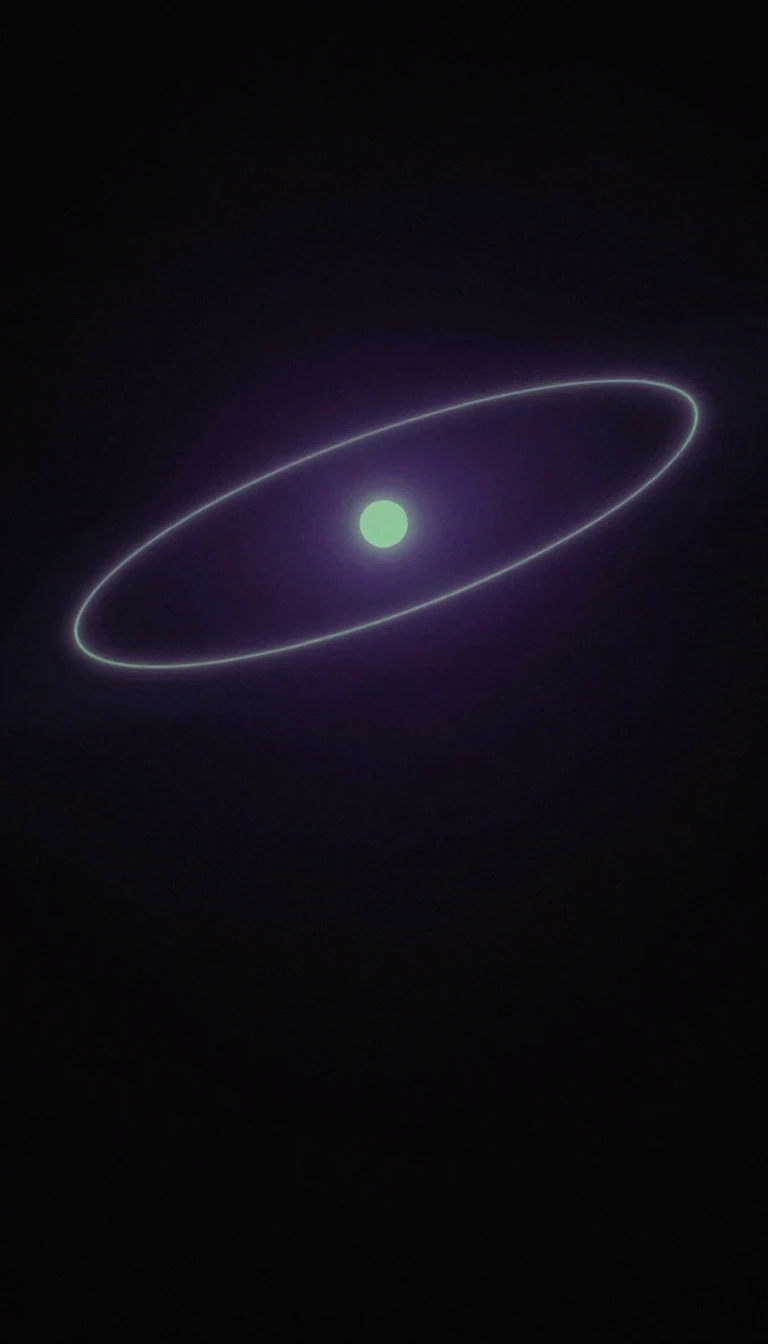 Pluto's five moons dance in a complex, chaotic, and tightly packed orbital system.Pluto is not a lonely wanderer. It hosts five distinct moons, including the massive Charon, which is so large that the two bodies are effectively a binary system. From chaotic, tu…
 Saturn holds the solar system's record for the most confirmed moons in orbit.With 274 known moons as of 2025, Saturn dominates the planetary neighborhood. These satellites range from the massive, atmosphere-shrouded Titan to tiny, icy fragments no larger t…
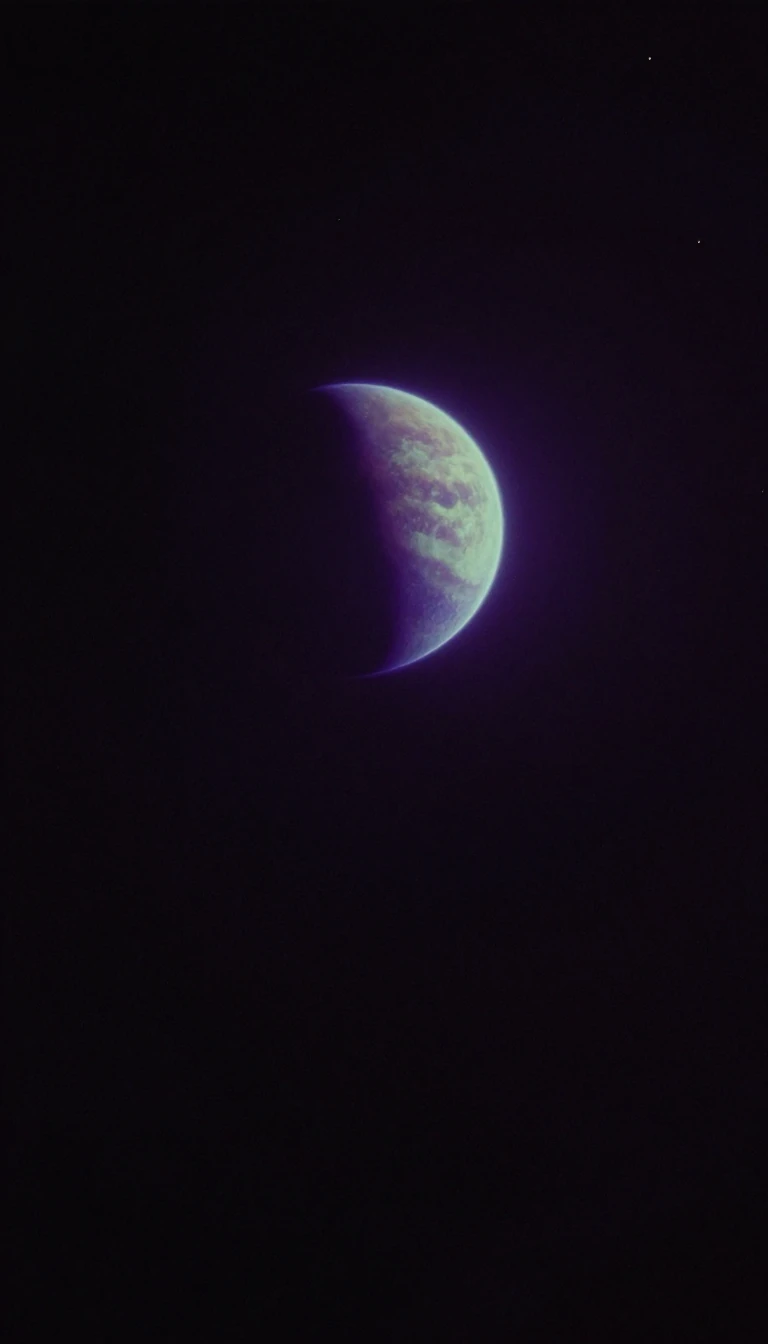 Why the morning sky is the best place to hunt for hidden celestial objectsWhile most stargazers wait for the deep darkness of night, astronomers know the morning twilight holds unique secrets. From elusive inferior planets to near-Earth asteroids, the p…
 The nadir is more than just a low point; it is a precise cosmic direction.While we often use the word nadir to describe a personal low point, its scientific roots are far more grounded. It defines the exact direction of gravity beneath your feet, servin…
 How astronomers track over one billion objects beyond our own Milky Way galaxyThe NASA/IPAC Extragalactic Database serves as the ultimate master list for deep space research. By collating cross-identifications, redshifts, and photometric data from across th…
 Are we truly in danger from the thousands of rocks orbiting our home planet?Near-Earth objects are small solar system bodies that occasionally cross our path. While media storms often amplify the fear of a catastrophic impact, scientists use sophisticated…
 Why the Moon shows us only one face and hides its scarred backThe Moon is tidally locked to Earth, meaning it rotates on its axis at the exact same rate it orbits our planet. This cosmic synchronization keeps the same lunar hemisphere perman…
 Ghost particles from a dusty galaxy are finally revealing the universe's most powerful accelerators.Neutrinos are the universe's most abundant particles, yet they are so elusive that trillions pass through you every second without a trace. By tracking these ghost particles to a …
 How a 19th-century astronomer cataloged the heavens and created a legacy of errorsIn 1888, John Louis Emil Dreyer compiled the New General Catalogue, a monumental list of 7,840 deep-sky objects. While it became the standard reference for galaxies and nebulae, i…
 The new moon is not just a phase, it is a complex celestial definitionThe new moon is often misunderstood as a simple disappearance, but it holds two distinct meanings. Astronomically, it is an invisible conjunction with the Sun. Culturally, it is t…
 A massive black hole is throwing away more matter than it actually consumesDeep within the constellation Boötes, the galaxy NGC 5548 hides a violent secret. At its center, a supermassive black hole weighing 65 million suns pulls in surrounding material, …
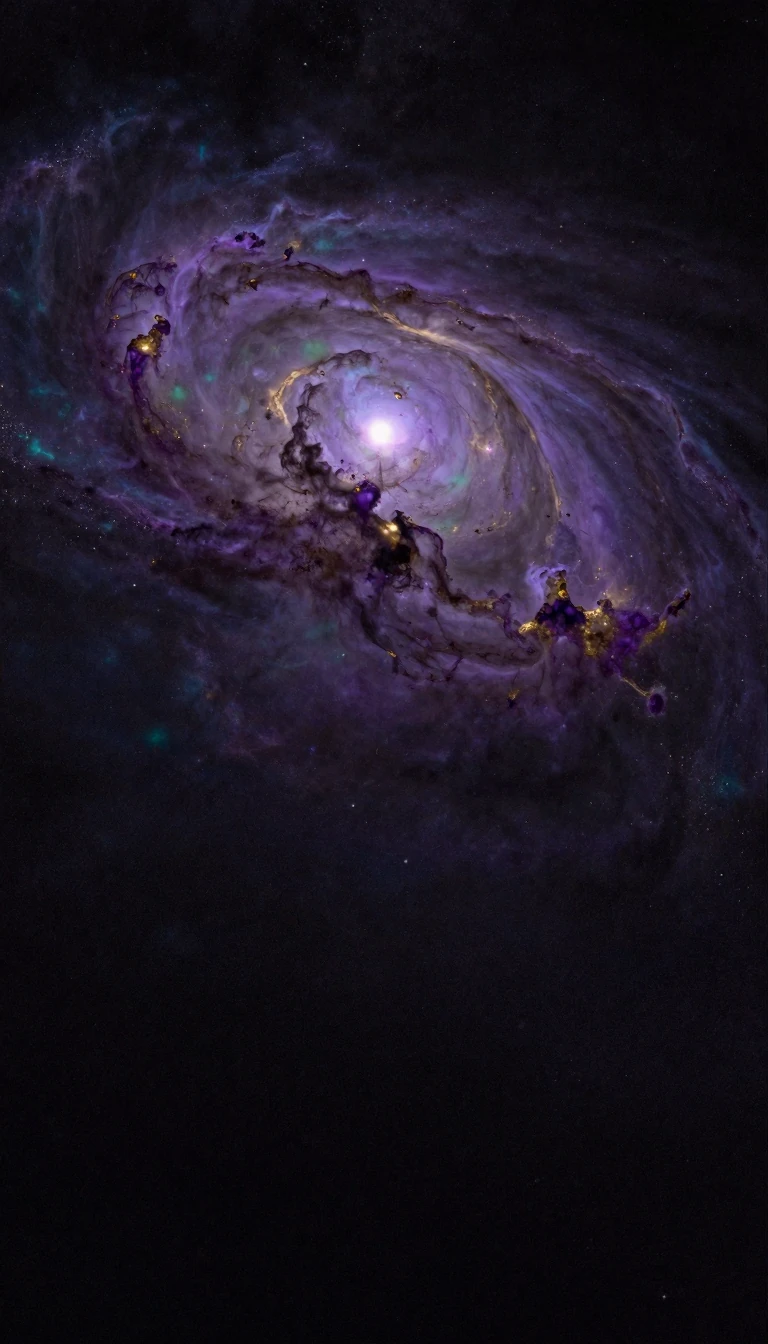 The Butterfly Nebula hides a blazing stellar engine behind a massive wall of dust.Located 3400 light-years away, the Butterfly Nebula is a masterpiece of cosmic architecture. While its wings span light-years, its heart remained a mystery for years. A dense, dou…
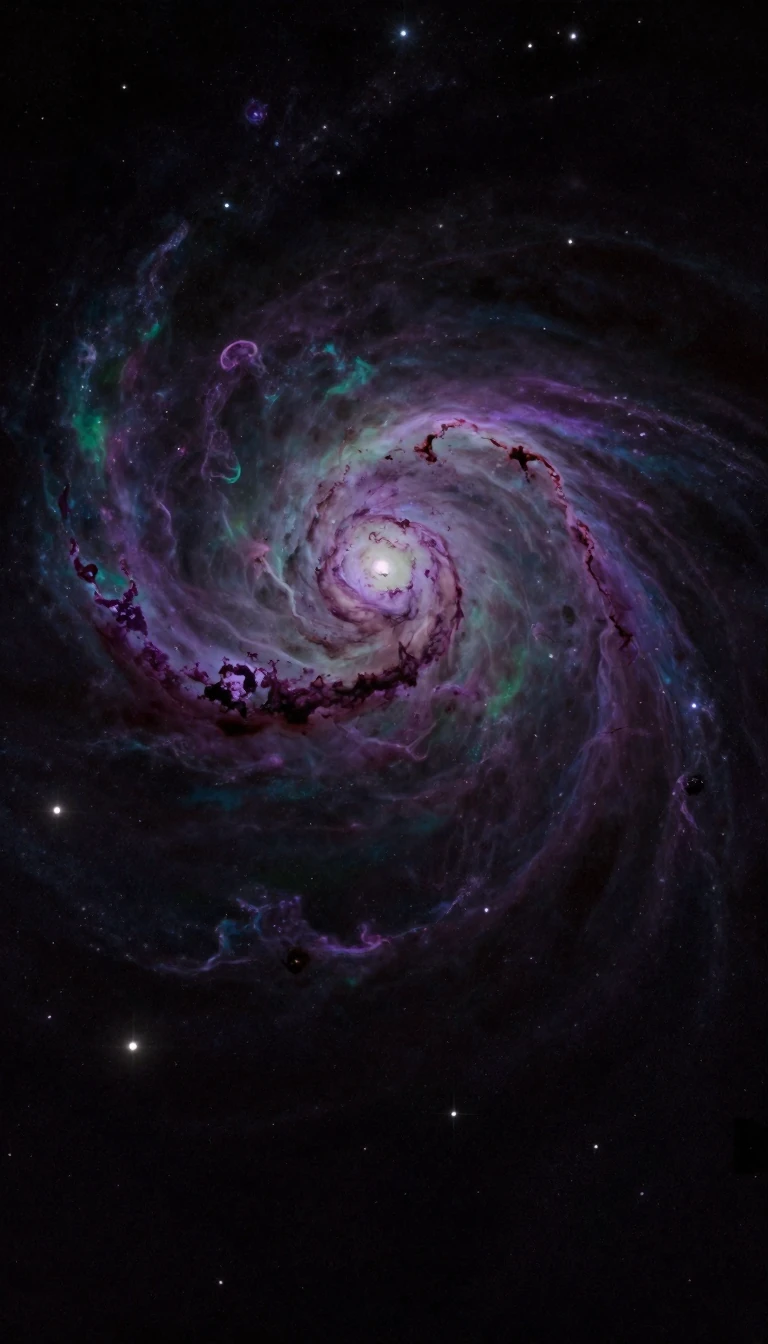 Why the Fireworks Galaxy is the most explosive neighbor in our cosmic backyardNGC 6946, known as the Fireworks Galaxy, has earned its explosive reputation by producing ten observed supernovae since 1917. This mid-sized spiral galaxy, located on the border o…
- A dying star is shedding its layers to create a stunning, jewel-like cosmic display.Located 3,000 light-years away, NGC 7027 is a planetary nebula that resembles a colorful jewel bug. This diffuse region of gas and dust is the result of a dying star violently she…
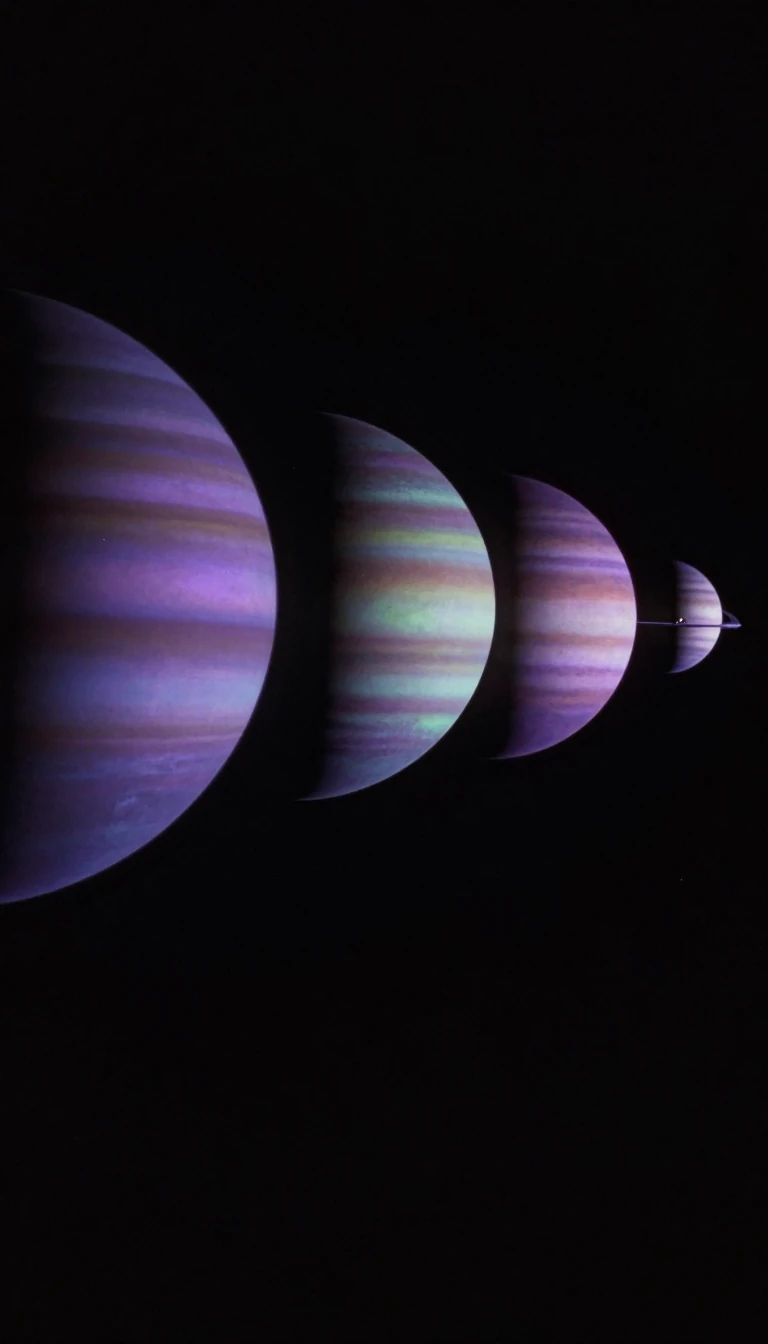 Did a chaotic planetary migration reshape our solar system billions of years ago?The Nice model suggests the giant planets did not always orbit where they do today. Originally packed into a tight, stable configuration, these worlds eventually underwent a viole…
 The night sky is never truly dark, even when the Sun is far away.Beyond the moon and stars, our sky glows with airglow, scattered starlight, and interplanetary dust. Even in the absence of artificial light, the atmosphere holds a faint, intrins…
 Why your clock is almost never perfectly aligned with the sun at noon.We treat noon as a fixed point on the clock, but solar noon—the moment the sun crosses your local meridian—is a moving target. Influenced by Earth's orbital speed and axial tilt, …
 Oberon, the outermost major moon of Uranus, remains a scarred relic of ancient impacts.Discovered in 1787, Oberon is the second-largest moon of Uranus and its most heavily cratered satellite. This distant world, named after the king of the fairies in Shakespeare's A…
 Why burning rocket fuel at high speed is more efficient than burning it slowlyIn space travel, timing is everything. By firing engines at the lowest point of a gravity well, where orbital velocity is highest, spacecraft gain significantly more kinetic energ…
 How astronomers mapped the invisible architecture of our vast and expanding universeModern cosmology began not with a theory, but with a realization that the universe is far larger than our own galaxy. By measuring the light of distant stars and the faint glow of…
- When a celestial body vanishes, astronomers gain a rare window into the deep cosmos.An occultation occurs when one space object hides another from our view. While often seen as a simple shadow, these events are powerful scientific tools. By timing exactly when a …
 Why the constellation holding Earth's southern pole star is named after a navigational toolTucked away in the deep southern sky, Octans is a faint, modern constellation that lacks ancient mythology. Instead, it serves as a tribute to the Age of Enlightenment, named by a…
- Why astronomers once suspected the Omega Nebula was changing its shape before our eyesLocated 5,000 to 6,000 light-years away, the Omega Nebula is a massive star-forming region in Sagittarius. In the 19th century, observers like John Herschel noted discrepancies in…
 Why open clusters are the essential laboratories for understanding the life of starsOpen clusters are groups of stars born from the same cloud, sharing age and chemical makeup. Because these siblings are at the same distance, astronomers use them as cosmic labora…
 Is Ophiuchus the thirteenth sign of the zodiac or just a celestial serpent bearer?Straddling the celestial equator, Ophiuchus is a massive constellation often confused with a thirteenth zodiac sign. While it does intersect the ecliptic, it remains distinct from…
- Why your orbit is never a perfect circle, but a shifting, stretched ellipseOrbital eccentricity measures how much a celestial path deviates from a perfect circle. A value of zero represents a circle, while higher numbers indicate increasingly stretched e…
- Six numbers are all you need to map a path through the stars.To define a Keplerian orbit, you do not need complex physics equations; you need exactly six parameters. These orbital elements act as a mathematical shorthand for the position an…
- Orbital inclination defines the tilt of an object's path through space relative to reference planes.Orbital inclination is a fundamental measure of how a celestial object's path tilts relative to a chosen reference plane. Whether tracking satellites around Earth or exoplanets in…
- Why satellites must constantly burn fuel just to stay in the right placeSpace is not a static void. Satellites face constant gravitational tugs, atmospheric drag, and solar pressure that threaten to drift them off course. To maintain their precise pos…
 Why astronomers call the distant dwarf planet Orcus the anti-PlutoDeep in the Kuiper belt, the dwarf planet Orcus mirrors Pluto in a cosmic dance. Locked in a 2:3 orbital resonance with Neptune, it follows a path that keeps it in the opposite ph…
 Our Moon was born from a violent, planet-sized collision billions of years ago.Earth’s Moon is not a captured wanderer or a twin formed in tandem. Instead, it is a product of destruction. Roughly 4.5 billion years ago, a massive impact between Earth and a Ma…
- Our home in the galaxy is far more significant than astronomers once assumed.We live inside the Orion Arm, a structure long dismissed as a minor galactic spur. Recent data suggests this region is actually a substantial feature of the Milky Way, rivaling ma…
- Why the three stars of Orion's Belt have guided humanity for millenniaOrion's Belt is more than a celestial trio; it is a global cultural touchstone. From ancient navigation to mythological metaphors, these three blue-white giants—Alnitak, Alnilam, …
 When a star grows too massive, it can trigger a total thermonuclear self-destruction.In the most massive stars, the core becomes so hot that gamma rays transform into electron-positron pairs. This sudden drop in radiation pressure causes the star to collapse, igni…
- Why the observable universe is much larger than its age in light-yearsYou might assume the observable universe spans 13.8 billion light-years, but that is a common misconception. Because space itself is expanding, the boundary of what we can see is …
 Why some galaxies defy the standard shape and turn into cosmic anomaliesMost galaxies follow predictable patterns, but five to ten percent are classified as peculiar. These cosmic outliers possess irregular shapes and unusual compositions, often resul…
 The Milky Way's massive Perseus Arm is closer to Earth than we once believedFor years, astronomers assumed the Perseus Arm sat 13,000 light-years away. Recent data has radically revised that figure, placing this major galactic structure at just 6,400 ligh…
- The Perseus Cluster is a massive cosmic laboratory revealing the secrets of dark matterLocated 240 million light-years away, the Perseus Cluster is one of the most massive structures in the universe. It contains thousands of galaxies swimming in a vast cloud of supe…
 The constellation Perseus holds a celestial secret that sounds like a deep bass note.Named for the Greek hero who defeated Medusa, Perseus is far more than a mythological figure in the night sky. It contains a triple-star system that mimics a demon's eye, a massiv…
- The Phoenix constellation is a celestial graveyard of ancient stars and colliding galaxy clusters.While named for the mythical bird that rises from ashes, the Phoenix constellation is actually a collection of stellar remnants, binary systems, and some of the most massive struc…
- Why Astronomers Use a Jumbled Alphabet to Measure the Light of Distant StarsTo map the cosmos, astronomers rely on photometric systems—sets of specialized filters that capture specific slices of light. While these systems use letters to label different wa…
 For 370,000 years, the early universe was a blinding, opaque soup of light.Following the lepton epoch, the universe entered the photon epoch, a period defined by a hot, dense plasma where light dominated all energy. During this time, the cosmos was essen…
 The Sun has no solid surface, yet we see a sharp, glowing edge.The Sun’s visible surface, the photosphere, is not a physical boundary but a layer of ionized gas where light finally escapes into space. Roughly 400 kilometers thick, this boilin…
 Pi Puppis: An orange supergiant illuminating the southern skies with ancient celestial promiseVisible to the naked eye, Pi Puppis stands as the second-brightest luminary in the Puppis constellation. This massive, aging star, located roughly 810 light-years away, serves as …
- Pictor: The Southern Constellation That Houses a Cosmic Painter's Easel and Violent JetsNamed for an artist's tool, the faint southern constellation Pictor hides remarkable celestial drama. From a radio galaxy launching plasma jets across 800,000 light-years to a nea…
- Is the Pisces–Cetus Supercluster Complex one of the largest structures in the universe?Spanning over a billion light-years, the Pisces–Cetus Supercluster Complex is a gargantuan arrangement of galaxies that challenges our understanding of cosmic scale. It houses our…
- The March equinox is currently drifting through the dim, sprawling constellation of Pisces.Though Pisces is a massive zodiac constellation, it remains largely invisible to the naked eye in modern cities due to extreme light pollution. Beyond its faint stars lies a celes…
- The southern fish that once saved a goddess and guided ancient solsticesPiscis Austrinus, the southern fish, is a faint constellation with a deep mythological pedigree. Once used by the Greeks to mark the solstices, this celestial swimmer is famously …
 Is a massive hidden planet shaping the outer Solar System or just a ghost?Astronomers have long suspected a massive, unseen planet lurks in the dark reaches beyond Neptune. While erratic orbits of distant objects once suggested a gravitational shepherd,…
- Mercury is essentially a giant cannonball with a massive, solid iron heart insideMercury has long puzzled scientists because its metallic core fills nearly 85 percent of the planet's volume. New analysis of gravity and spin data from the MESSENGER mission conf…
 Planetary differentiation is the hidden engine that shaped Earth from a hot, chaotic sphere.Planets are not uniform lumps of rock. Through a process called differentiation, they sort their internal materials by density and chemical affinity. This thermal evolution, drive…
- Why the search for life beyond Earth is moving beyond the classic habitable zoneThe traditional habitable zone is a convenient starting point, but it is far from the whole story. While we look for liquid water on planetary surfaces, life may thrive in hidden,…
- How astronomers use the glowing remnants of dead stars to measure the cosmic distanceThe planetary nebula luminosity function is a powerful tool for calculating distances to galaxies across the universe. By tracking the specific light emitted by dying stars, astro…
- Planetary science reveals how our solar system formed and where life might exist elsewherePlanetary science explores the history and evolution of celestial bodies, from rocky planets to distant asteroids. By analyzing the chemistry of unfamiliar worlds and mapping zone…
- Are these ancient space rocks the secret to how our entire solar system began?Planetesimals are the building blocks of planets, solid objects formed 4.6 billion years ago. Acting as cosmic time capsules, these remnants of the early solar system offer a pris…
- A newly discovered object at the solar system's edge challenges the Planet Nine hypothesisAstronomers have identified 2017 OF201, a massive trans-Neptunian object lurking far beyond Neptune. Its unusual, extreme orbit and position suggest that the outer reaches of our …
- Why the sunless winter at the poles is rarely a total blackoutPolar night is defined as a period exceeding 24 hours where the sun fails to crest the horizon. Yet, this phenomenon is rarely a state of absolute darkness. Thanks to atmospheric …
- Why astronomers study the orientation of light to map the invisible universeLight carries more than just brightness and color; it carries a directional signature called polarization. By analyzing how electromagnetic waves vibrate, astronomers can map hidd…
- Pollux is a giant star with a surprisingly weak magnetic field and a planet.The brightest star in Gemini, Pollux, is a yellow-orange giant located 34 light-years away. While it is nearly twice the mass of our sun and nine times wider, it possesses one of …
 How astronomers use a simple nautical trick to map the vast celestial sphereTo navigate the stars, astronomers rely on a concept borrowed from the open ocean: the position angle. By measuring the orientation of celestial objects relative to the north cele…