 Intellect Plus
History
21,006 cards. Each one is a 40-second story with a five-minute read behind it. Page 149 of 351.
Subtopics: 19th century · 20th century · Africa · Age of Exploration · Ages & eras · Ancient · Ancient China · Ancient egypt · Ancient greece · Ancient rome · Ancient trade · Archaeological discoveries · Archaeology · Astronomy · Australia · Auxiliary historical sciences · Babylon · Basics · Born on this day · Bronze age · Buddhism · Case studies · Chefs, bartenders and winemakers · China · Cities · Climate · Columbus · Contemporary (1945-) · Cosmetics people · Crime · Criminals · Decipherment · Deep time · Disasters · Early modern · Education · Egypt · Empires · Empires & civilisations · Exploration · Explorers · Extinction · Fandom, conventions and festivals · History by continent and large region · History by continent and region · History by country · History by country, small region and city · History by ethnicity · History by subject matter · History by topic · Inca · India · Industrial Revolution · Japan · Kings & queens · London · Mass hysteria · Medicine · Medieval kingdoms · Medieval life · Mediterranean · Mercedes-Benz History · Mesopotamia · Middle ages · Military leaders and theorists · Military leaders, personnel, and theorists · Ming dynasty · Misconceptions · Modern · Modern (1800-1945) · Napoleon · Navigation · North africa · Other · Pacific · Pharaohs · Philippines · Pirates · Post-classical · Prehistory · Propaganda · Public health · Rebels, revolutionaries and activists · Renaissance · Researched · Second world war · Shipwrecks · Silk Road · South america · Tradespeople · UK & Ireland: history · United states · Vikings · Volcanoes · Women in history
 How the sole survivor of a massacre became the ornament of Islamic worshipAfter the brutal 680 Battle of Karbala, Ali al-Sajjad emerged as the sole surviving son of Husayn. While others sought violent retribution against the Umayyad caliphate, al-Sajjad…
 Allan Nevins: The Historian Who Reframed the American Industrial Titan as a HeroAllan Nevins was a prolific historian and journalist who reshaped how we view American industrial giants. By challenging the robber baron narrative, he argued that figures like Jo…
 From noble heir to plague nurse: the brief, radical life of Aloysius GonzagaBorn into the high-stakes world of Renaissance aristocracy, Aloysius Gonzaga abandoned his inheritance and military destiny to join the Jesuits. His life was defined by a stark co…
 Ambrose Bierce: The Civil War veteran who vanished into the Mexican RevolutionA master of satire and psychological horror, Ambrose Bierce was a feared literary critic and a veteran of the American Civil War. After a lifetime of biting social commentary, he …
 Amelia Opie was a Romantic novelist who led the fight against British slavery.Before she became a celebrated abolitionist, Amelia Opie was a vivacious socialite and prolific author in the Romantic period. She navigated the intellectual circles of London and…
 Why ancient Egyptians viewed the dead as essential members of their living societyIn ancient Egypt, the boundary between life and death was remarkably porous. Rather than a final departure, the afterlife was a continuation of existence, deeply integrated into t…
 How the ancient gods of the Levant evolved into the foundations of monotheismLong before the rise of modern monotheism, the ancient Near East was a vibrant landscape of polytheistic traditions. By examining shared linguistic roots and archaeological discov…
 André Chénier: The Revolutionary Poet Who Was Executed Just Days Before His ExecutionerAndré Chénier was a brilliant neoclassical poet whose life was abruptly cut short by the French Revolution. Though he spent his final days in prison writing verses that hissed lik…
 Was Andrew Marvell a secret radical or a master of political self-preservation?Andrew Marvell was a metaphysical poet who navigated the treacherous waters of 17th-century English politics with uncanny skill. While he served as a loyal Latin secretary to Oliv…
- Why was one of Britain's most celebrated poets erased from literary history for centuries?Anna Laetitia Barbauld was a titan of 18th-century letters, shaping Romanticism and pioneering children's literature. Yet, after a vicious critical backlash against her anti-war p…
- The best-selling crime novelist who served time for a teenage murder in New ZealandBefore she was a prolific author of historical mysteries, Anne Perry was Juliet Hulme, a teenager convicted of a brutal 1954 murder. Her hidden past remained a secret for decades,…
 The pre-Islamic slave who became an Arabian knight and a global cultural iconAntarah ibn Shaddad was born into slavery in the Arabian Peninsula, yet his unmatched bravery in battle and poetic genius earned him freedom and legendary status. From the ancient…
 The caustic wit who defended the Ancien Régime with a sharp, unforgiving penAntoine de Rivarol was the preeminent royalist polemicist of the French Revolutionary era. A master of the epigram, he used his biting intellect to ridicule republicanism and cham…
 The nineteenth-century preacher who challenged Darwin’s scientific claims about female inferiorityAntoinette Brown Blackwell was the first woman ordained as a minister in a recognized U.S. denomination. Beyond the pulpit, she became a pioneering intellectual who dared to criti…
 Was the legendary feud between Apollonius of Rhodes and Callimachus actually a myth?Apollonius of Rhodes, the famed librarian and author of the Argonautica, is often remembered for a bitter, sensationalized rivalry with his mentor, Callimachus. Yet, modern schola…
 Did the Twelve Apostles actually write the creed that bears their name?The Apostles' Creed is a cornerstone of Western Christian liturgy, yet its origins are far more complex than the medieval legend of twelve apostles each contributing a single arti…
 Why your zodiac sign is a relic of ancient Babylonian and Hellenistic sky mappingWestern astrology divides the sky into twelve equal segments, a system rooted in ancient Babylonian calendars and refined by Hellenistic thinkers. While these signs are named afte…
 How a Roman monk turned a pagan kingdom into the heart of English ChristianityIn 597, a Benedictine leader arrived on the shores of Kent with a small band of monks. Sent by Pope Gregory the Great, he faced a daunting mission to convert a pagan Anglo-Saxon s…
 The 19th-century merchant who claimed to be the gateway to a new worldBorn in Shiraz in 1819, the Báb was a young merchant who launched a religious movement that challenged the foundations of Qajar Iran. By claiming he was a divine messenger prepari…
 How a medieval rogue-storyteller invented a new literary genre for the Arabic worldBadi' al-Zaman al-Hamadani, known as The Wonder of the Age, transformed Arabic literature by applying ornate, rhymed prose to secular tales. His collection of 52 episodic stories …
 How a Renaissance diplomat defined the perfect gentleman for five centuries of European history.Baldassare Castiglione’s The Book of the Courtier transformed the medieval knight into a refined, educated gentleman. By championing the art of sprezzatura—the ability to make com…
 How one scholar’s dynastic obsession shaped two millennia of Chinese historical writingBan Gu was a central figure of the Eastern Han, yet his life was defined by the precarious balance between imperial favor and political ruin. By crafting the Book of Han, he estab…
 Was Bernard Lewis the West's most influential interpreter of the Middle East?Bernard Lewis was a titan of Middle Eastern studies whose academic career spanned seven decades. While hailed as a brilliant historian of the Ottoman Empire, his later work and po…
 Did a legendary Sanskrit poet invent his own royal reputation through the power of verse?Bilhana, an 11th-century Kashmiri poet, traveled across India, securing patronage from powerful kings by crafting elaborate panegyrics. Yet, his own writings suggest that the line…
 Was the Black Church a tool of oppression or a engine of liberation?Critics once labeled the Black Church an opiate that pacified the enslaved. Yet, history reveals a far more subversive reality. Far from merely offering false comfort, these insti…
 Is the Book of Joshua a historical record or a theological construction of conquest?The Book of Joshua depicts a swift, divinely sanctioned conquest of Canaan, yet modern scholars view it with skepticism. Far from a straightforward chronicle, the text functions a…
 Why the Book of Lamentations remains a masterpiece of ancient, unresolved griefThe Book of Lamentations is a collection of five poems mourning the destruction of Jerusalem in 586 BCE. Unlike other ancient city laments that promise restoration, this text offe…
 Was the Book of Nehemiah originally just a chapter of someone else's memoir?For centuries, the Book of Nehemiah did not exist as a standalone text. It was bundled with the Book of Ezra, and even then, it was often attributed to Ezra himself. Today, schola…
 Why the Book of Numbers records a massive army that likely never existedThe Book of Numbers chronicles forty years of Israelite wandering, anchored by two massive censuses of fighting men. While these counts suggest a total population reaching into th…
- The Books of Chronicles are a calculated rewrite of Israel’s history for a new era.Far from a simple historical record, the Books of Chronicles were a deliberate editorial project. By selectively curating the past, a single author known as the Chronicler reshape…
 The Books of Samuel: A Theological History of Israel’s Rise and Royal TurmoilThe Books of Samuel chronicle the dramatic transition from tribal judges to a monarchy. From the miraculous birth of a prophet to the rise of a shepherd king, this narrative explo…
 Once America's greatest living author, why did Booth Tarkington vanish from the literary canon?In the 1920s, Booth Tarkington was a titan of American letters, winning two Pulitzer Prizes and dominating bestseller lists. Yet, he is now frequently cited as the ultimate cautio…
 Brendan Behan: The Irish Republican who became a global literary sensation through prison walls.Brendan Behan was a radical IRA volunteer who transformed his incarceration into a brilliant writing career. From a borstal youth prison to international fame, he captured the hum…
 Did Bruce Catton make the American Civil War real or just a myth?Bruce Catton was the most popular American Civil War historian of his era, celebrated for his evocative, literary prose that brought battlefields to life. Yet, critics argue his w…
- Was racial segregation in the American South an inevitable outcome of the Civil War?C. Vann Woodward challenged the prevailing wisdom that Jim Crow was a natural post-war development. By arguing it was a late, deliberate political invention, he provided the civil…
 Was Rome's greatest comic playwright a former slave from Gaul or a free-born Samnite?Caecilius Statius was once considered the premier comic poet of Rome, even ranking above Terence in the eyes of some critics. Yet, his origins remain shrouded in mystery, with con…
 The brilliant poet who lost a throne because he could not stop drinkingCao Zhi was a literary prodigy whose talent once made him the favorite to succeed his father, the warlord Cao Cao. Yet, his impulsive nature and chronic alcoholism cost him the cr…
 A Nobel Peace Prize winner who became a symbol of resistance and later disgrace.Carlos Filipe Ximenes Belo rose to global prominence as a courageous bishop in East Timor, using his moral authority to challenge Indonesian occupation. Yet, the legacy of this No…
 The 18th-century rabbi who traveled Europe to save his community and cataloged its secrets.Chaim Yosef David Azulai, known as the Hida, was a legendary Sephardic scholar who spent years traversing Europe as a fundraising emissary. Between his dangerous missions, he meti…
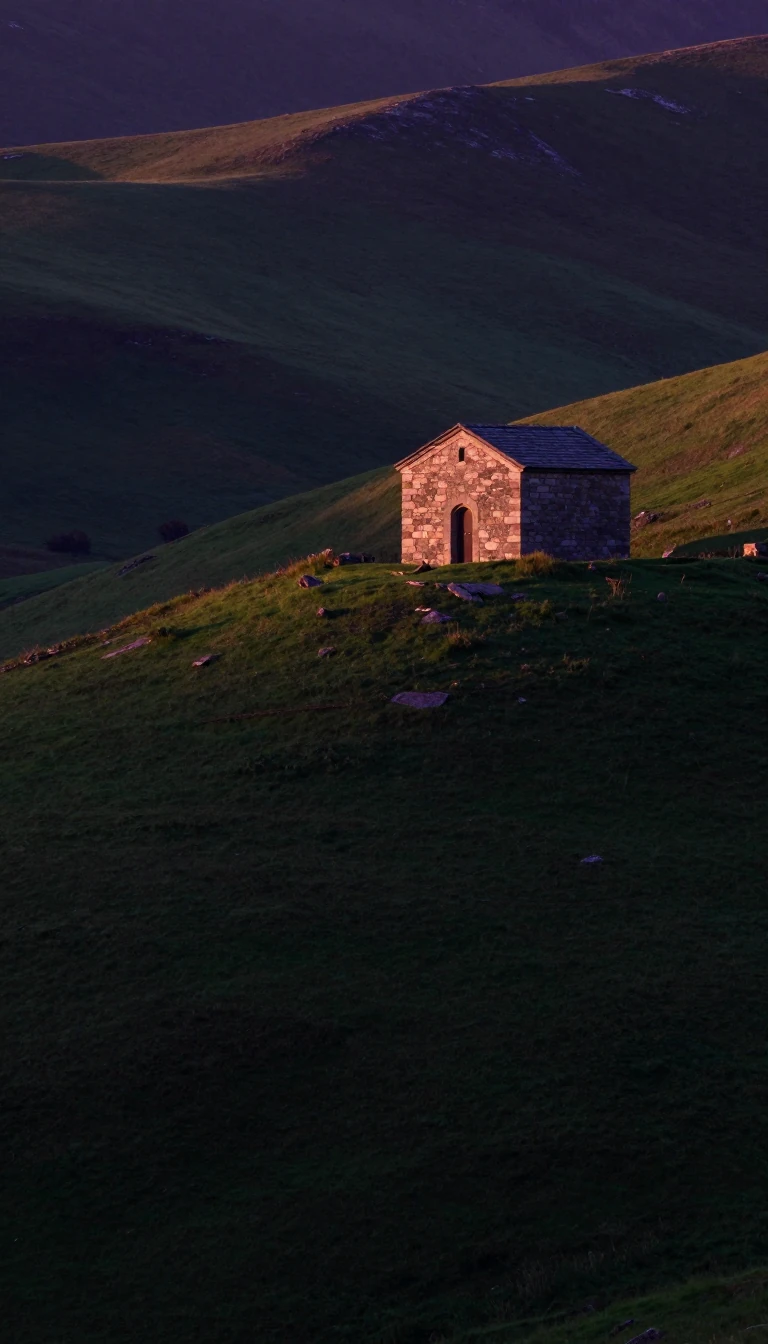 The word chapel traces its origins to a soldier’s cloak and a holy relic.A chapel is more than a small church. It is a versatile space that has evolved from a portable tent for a king’s relic into a global fixture of airports, hospitals, and universiti…
 The journalist who defined Australia’s memory of the First World WarCharles Bean was more than a war correspondent; he was the architect of Australia's national identity regarding the Great War. From the trenches of Gallipoli to the Western Front,…
- Was Charles Brockden Brown the true father of the American novel?Long before the American literary canon solidified, Charles Brockden Brown was crafting complex, dark narratives that influenced everyone from Mary Shelley to Edgar Allan Poe. Oft…
 How a Catholic priest became the most influential and controversial voice on American radioIn the 1930s, Father Charles Coughlin commanded a weekly audience of 30 million listeners, using his mellifluous voice to champion the poor and attack the establishment. Once a ce…
 Did ancient Egypt have African roots? The controversial legacy of Cheikh Anta Diop.Cheikh Anta Diop, a polymath who studied everything from physics to linguistics, argued that ancient Egyptian civilization was fundamentally African. While his work sparked intens…
- Was Christendom a unified church-state or merely a shifting map of Christian influence?Christendom was once envisioned as a singular, holy entity where spiritual and secular powers worked in tandem to govern Europe. Yet, this grand ideal of a unified church-state fr…
 Did the first Christian monks actually live in monasteries or alone in the desert?Christian monasticism began not with communal cloisters, but with solitary figures seeking extreme isolation. These early desert anchorites lived in caves and abandoned tombs to b…
 How a Marxist historian redefined the English Revolution from his desk at OxfordChristopher Hill was a titan of 17th-century history whose radical politics shaped his academic legacy. Despite being a lifelong target of MI5 surveillance and a member of the Com…
 How historians use ancient calendars and Roman records to date the life of JesusEstablishing a timeline for Jesus requires reconciling theological texts with secular history. By cross-referencing the reign of Herod the Great, the construction of the Jerusalem…
 Was Saint Clotilde a pious queen or a vengeful architect of Merovingian political violence?Clotilde, the sixth-century Queen of the Franks, is remembered as a saint who converted her husband, Clovis I, to Catholicism. Yet, historical accounts paint a complex portrait of…
 Why this radical Protestant movement dismantled the hierarchy to empower the individual believerEmerging from 16th-century English Separatism, Congregationalism challenged the necessity of bishops and central authority. By championing the autonomy of the local congregation a…
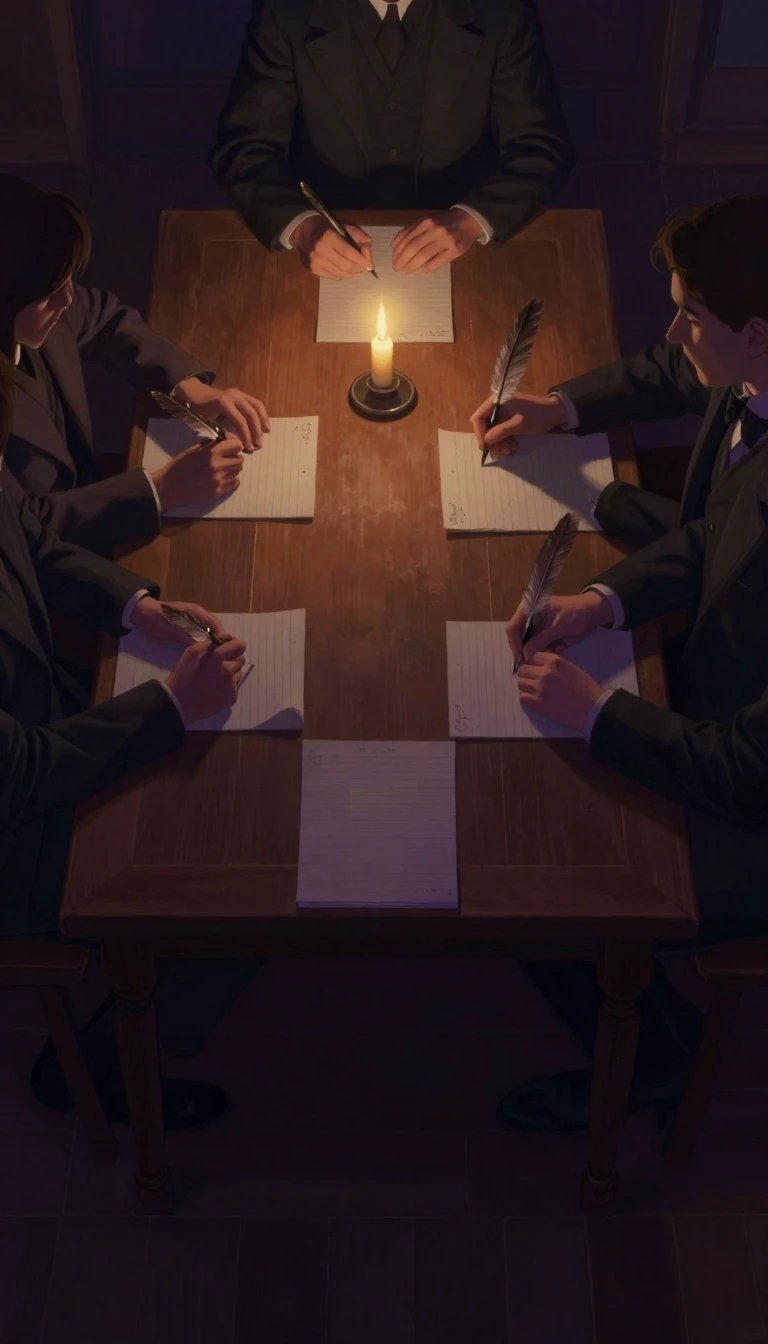 How an anonymous Anglo-Saxon poet used secret runic codes to claim his workIn an era where poetry was traditionally anonymous, one ninth-century writer broke the mold. By weaving his own name into his verses using runic symbols, he ensured his authorship…
- How a Bulgarian monk became the architect of a unified Russian Orthodox ChurchCyprian, a Bulgarian-born hesychast, navigated the volatile power struggles between Moscow and Lithuania to secure his role as Metropolitan of Kiev and all Rus'. Beyond his politi…
- Dafydd ap Gwilym transformed medieval Welsh poetry by placing himself at the center of verse.Dafydd ap Gwilym, a 14th-century Welsh poet, broke from tradition by abandoning social commentary to write about his own personal failures, desires, and wonder at nature. His inno…
 Why this historian believed American success was built by problem solvers, not grand theorists.Daniel J. Boorstin, a prominent consensus historian and former Librarian of Congress, argued that American history is defined by unity and practical innovation rather than ideolog…
 Why David McCullough Believed History Should Be Treated as the Story of PeopleDavid McCullough transformed American history into a narrative art form, turning figures like John Adams and Harry Truman into relatable human beings rather than marble statues. B…
 The monk who accidentally invented our modern calendar to avoid a tyrant's memoryDionysius Exiguus, a 6th-century monk, sought to replace the Diocletian calendar because he despised the emperor who persecuted Christians. By anchoring time to the incarnation of…
 How a medieval preacher turned a mission against heresy into a global intellectual powerhouse.Dominic de Guzmán did not just start a religious order; he revolutionized how the Church engaged with the world. By trading monastic isolation for urban scholarship and rigorous t…
 Dorothy Heyward: The Playwright Who Transformed American Theater Through Bold Collaborative VisionWhile her name is often overshadowed by the iconic opera Porgy and Bess, Dorothy Heyward was a formidable dramatist in her own right. She not only recognized the stage potential i…
 How a legendary historian built a career by rising at three every morning.Douglas Southall Freeman was a titan of American letters who balanced two full-time careers as a newspaper editor and a Pulitzer-winning historian. By rising at 3:00 a.m. and main…
 How a Tibetan monk became the spiritual architect of the vast Mongol EmpireDrogön Chögyal Phagpa was more than a monk; he was the tantric guru to Kublai Khan and the mastermind behind the priest-patron relationship that defined Yuan dynasty politics. By …